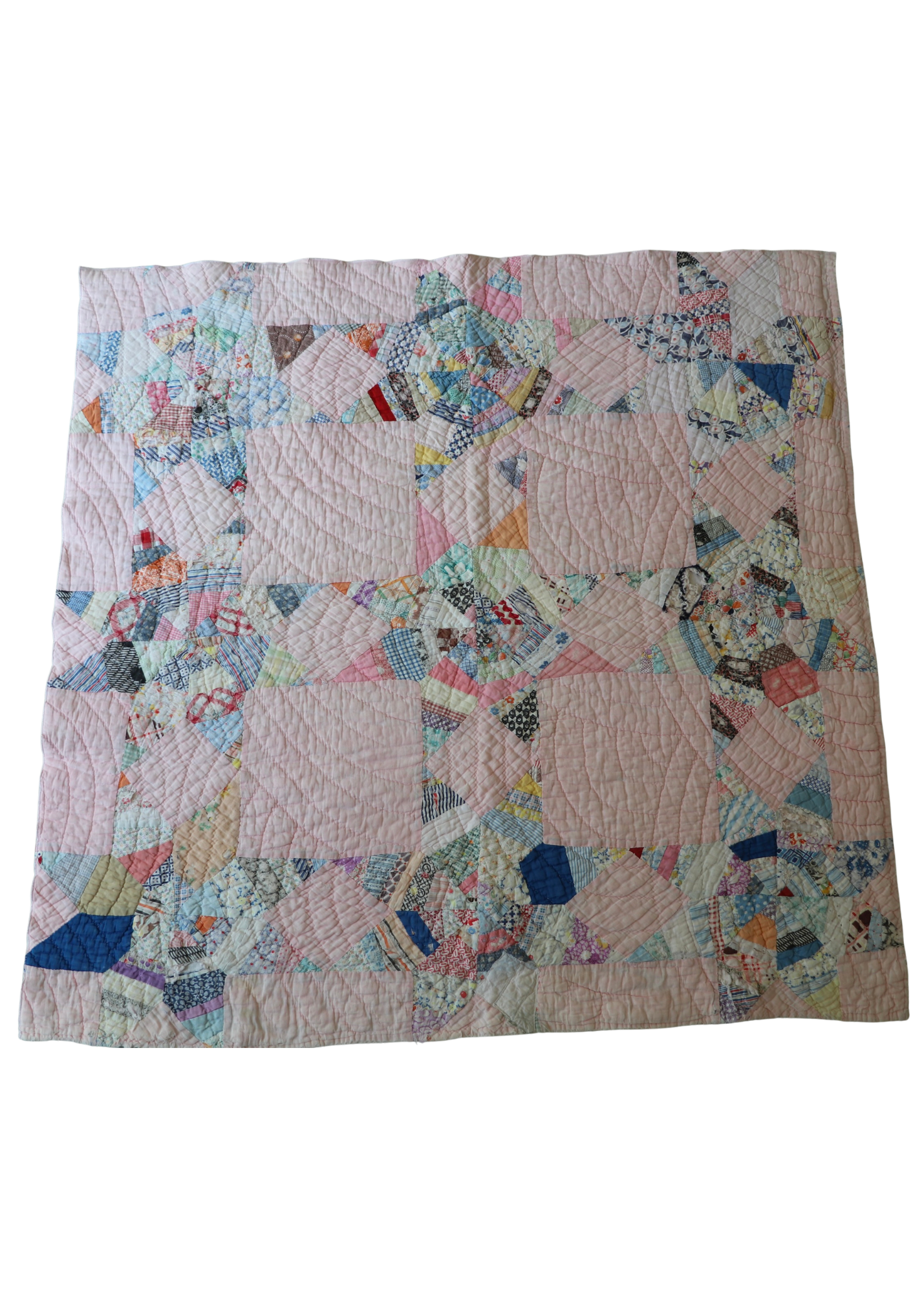
Circa: 1930s–1940s
Size: 87”x69”
Light Weight
Pattern: Double Irish Chain
Construction: Hand pieced & hand quilted
Fabrics: Cotton feedsacks, dress prints, shirtings, plaids & stripes
Description
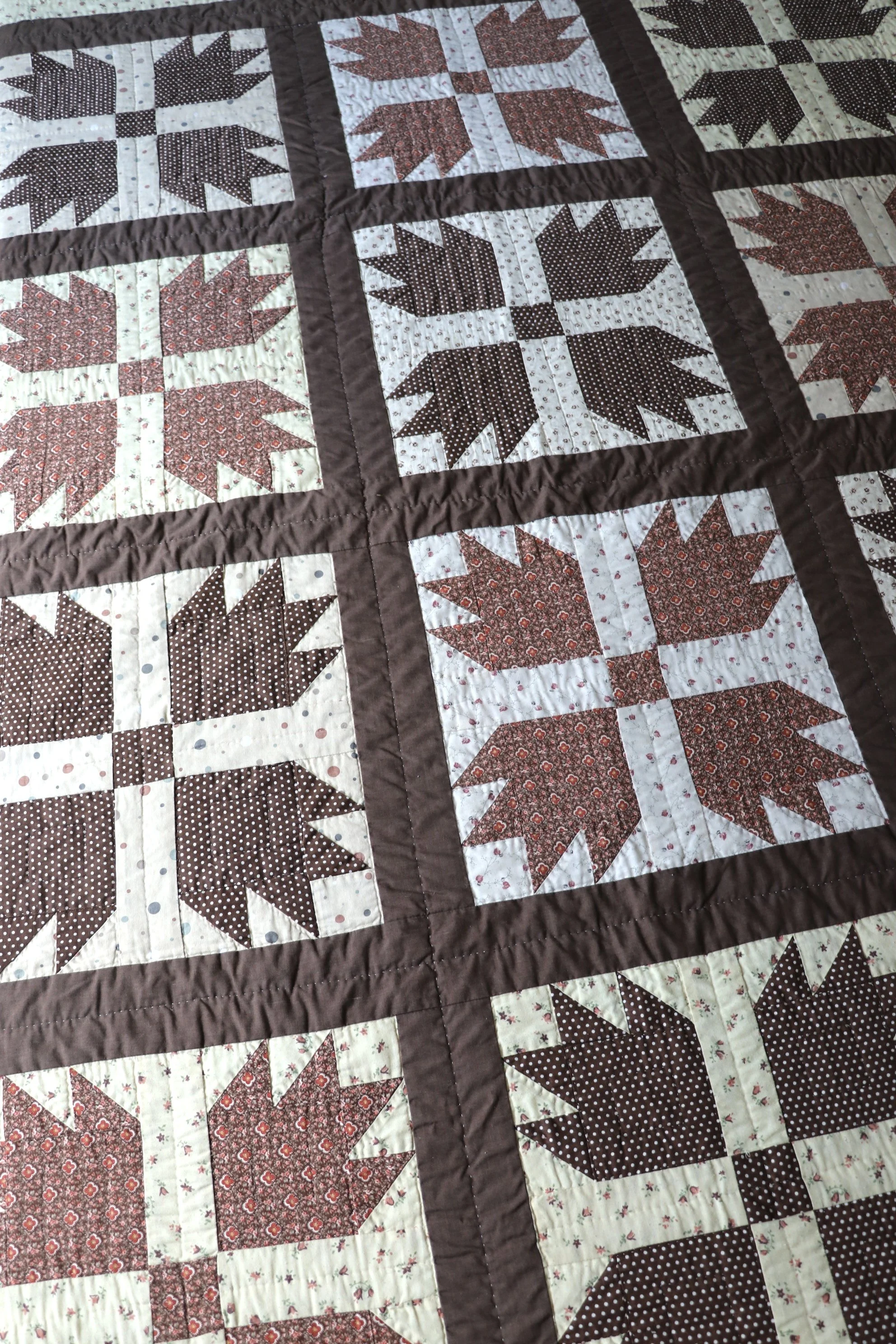
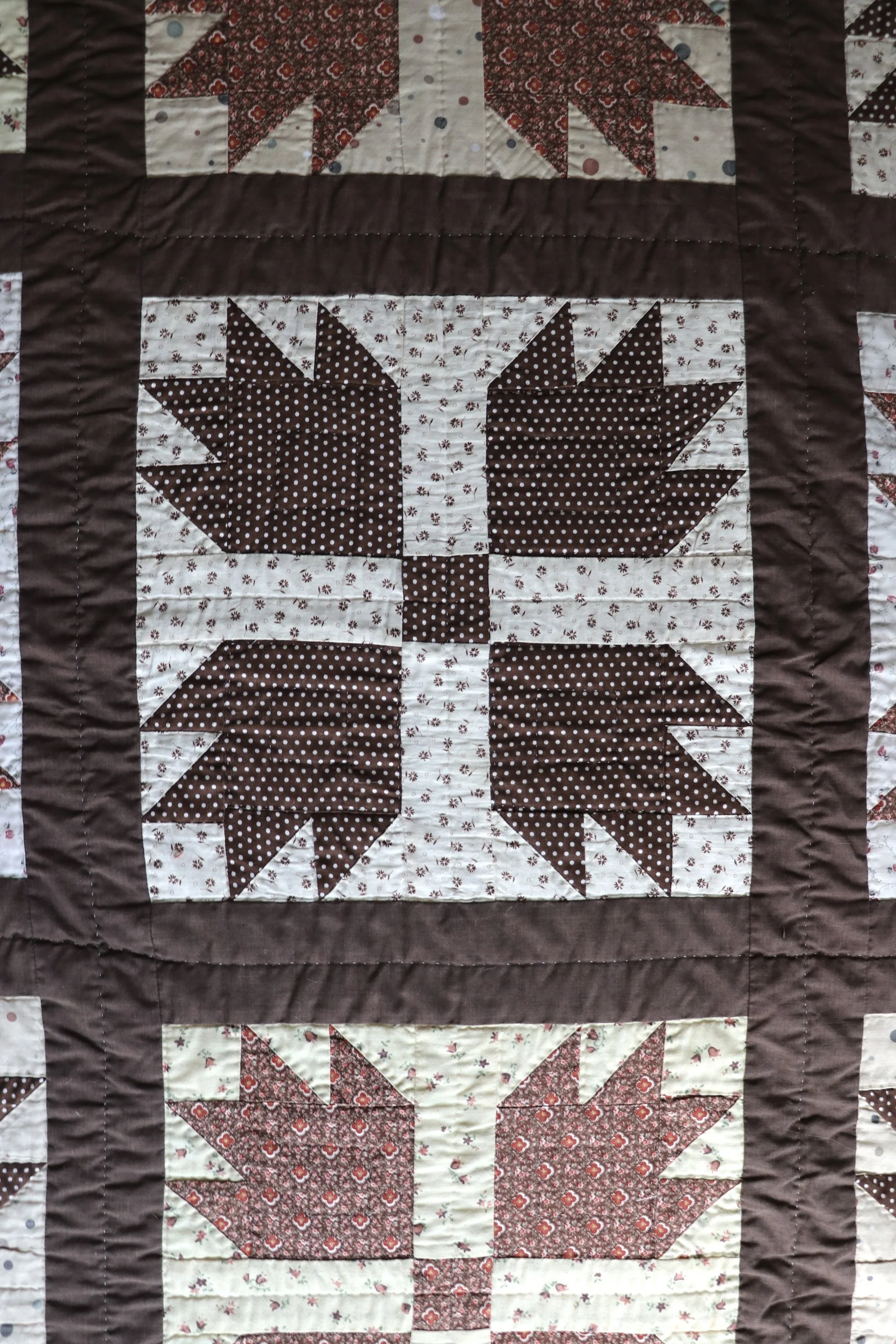
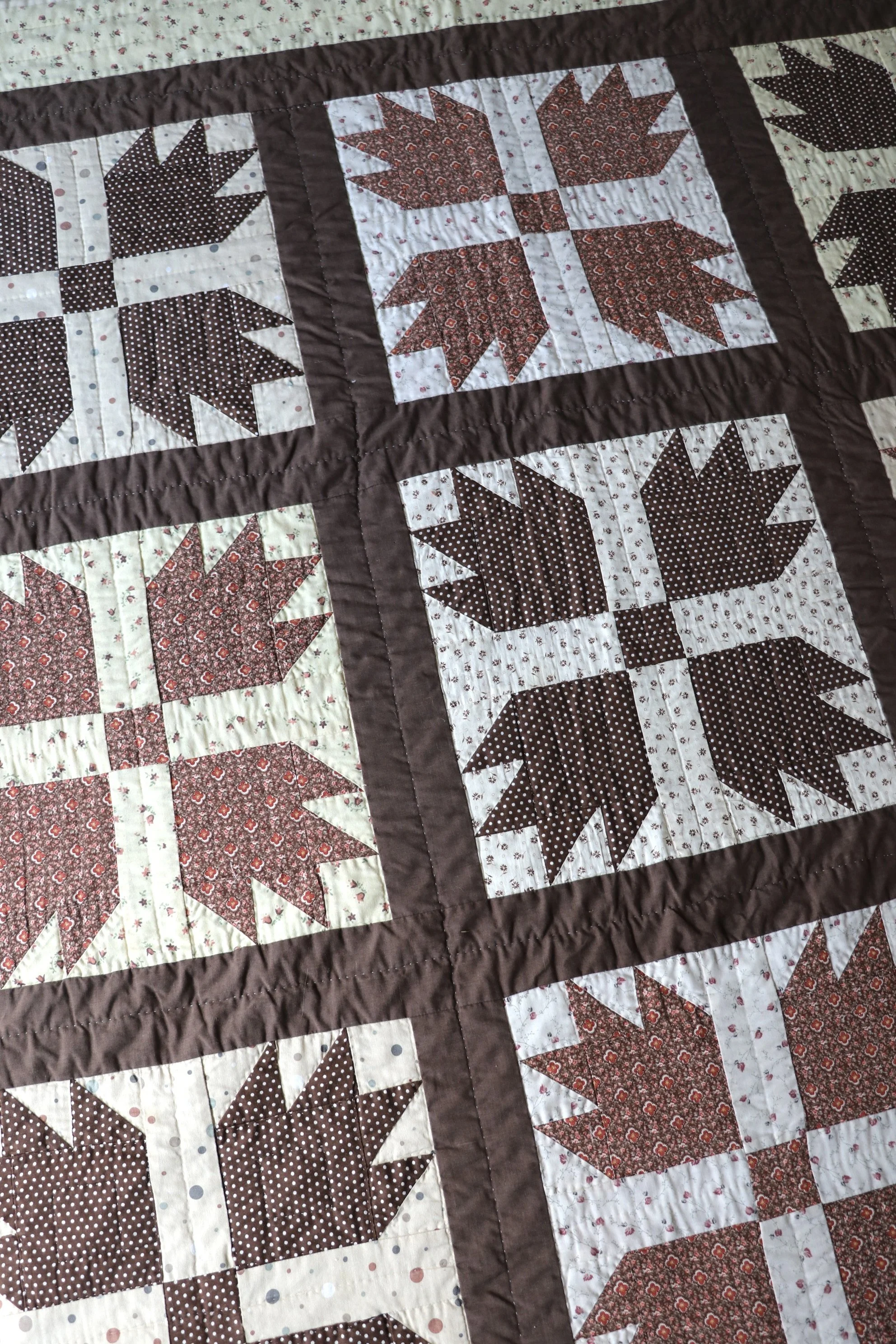
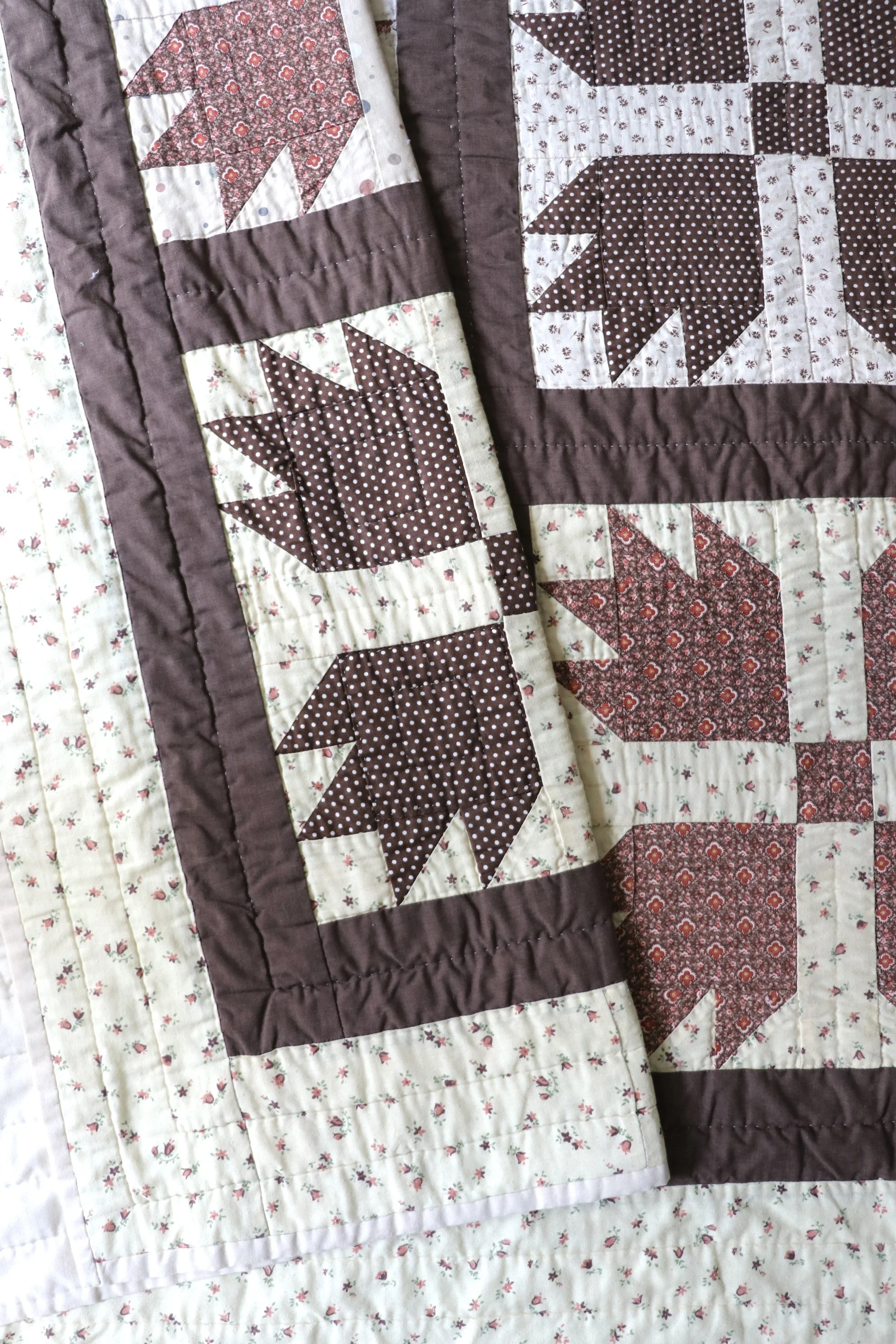
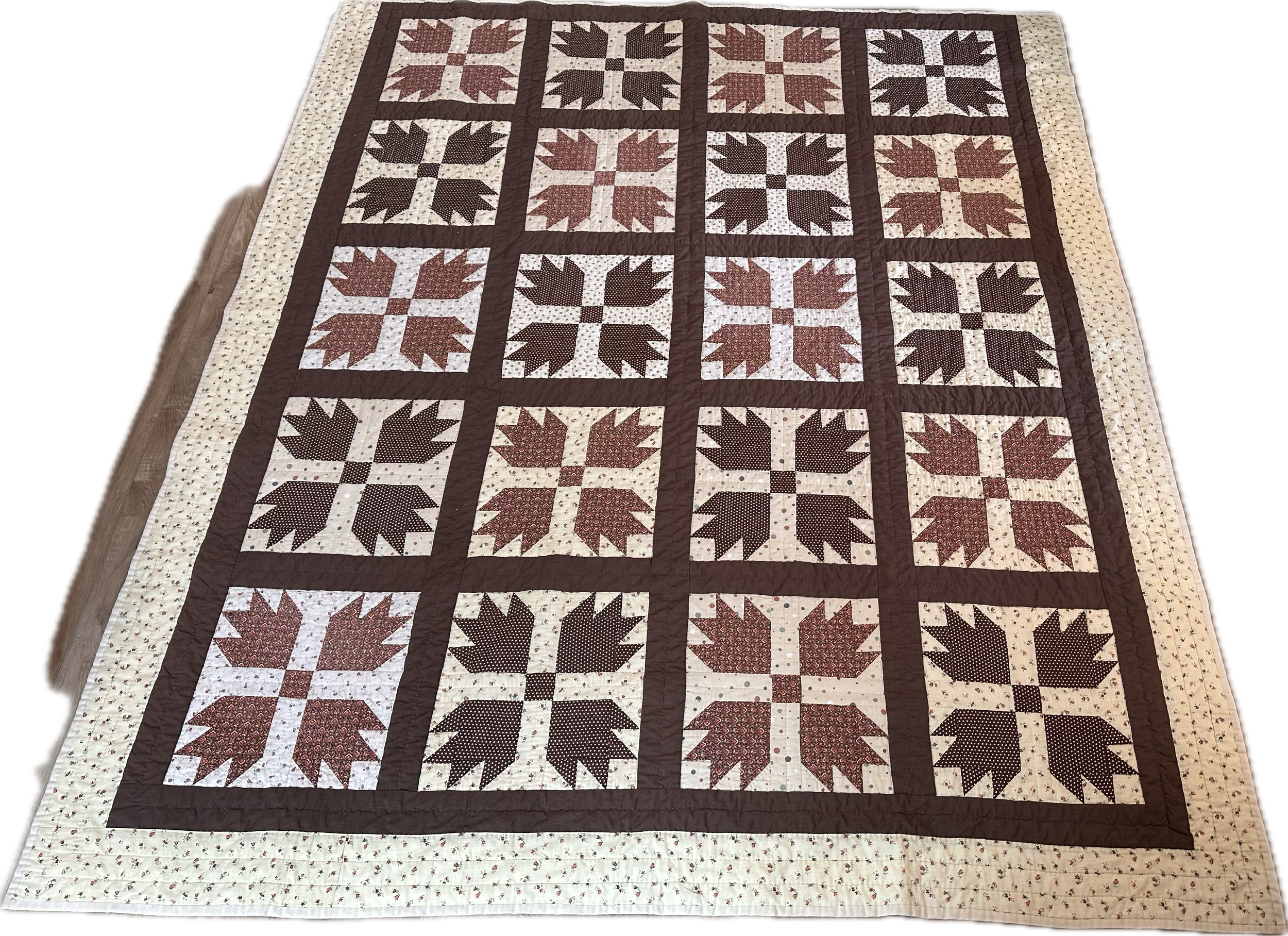
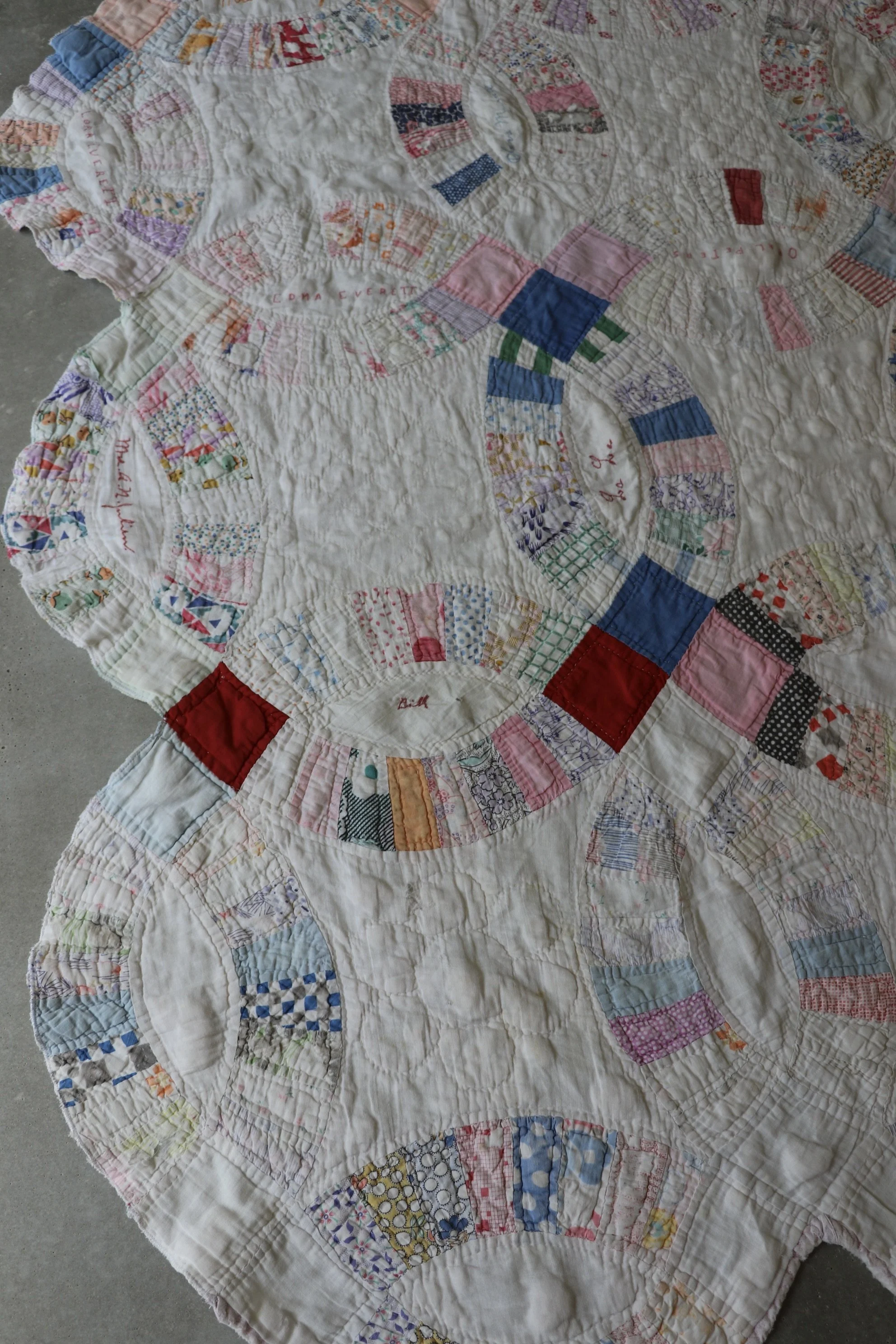
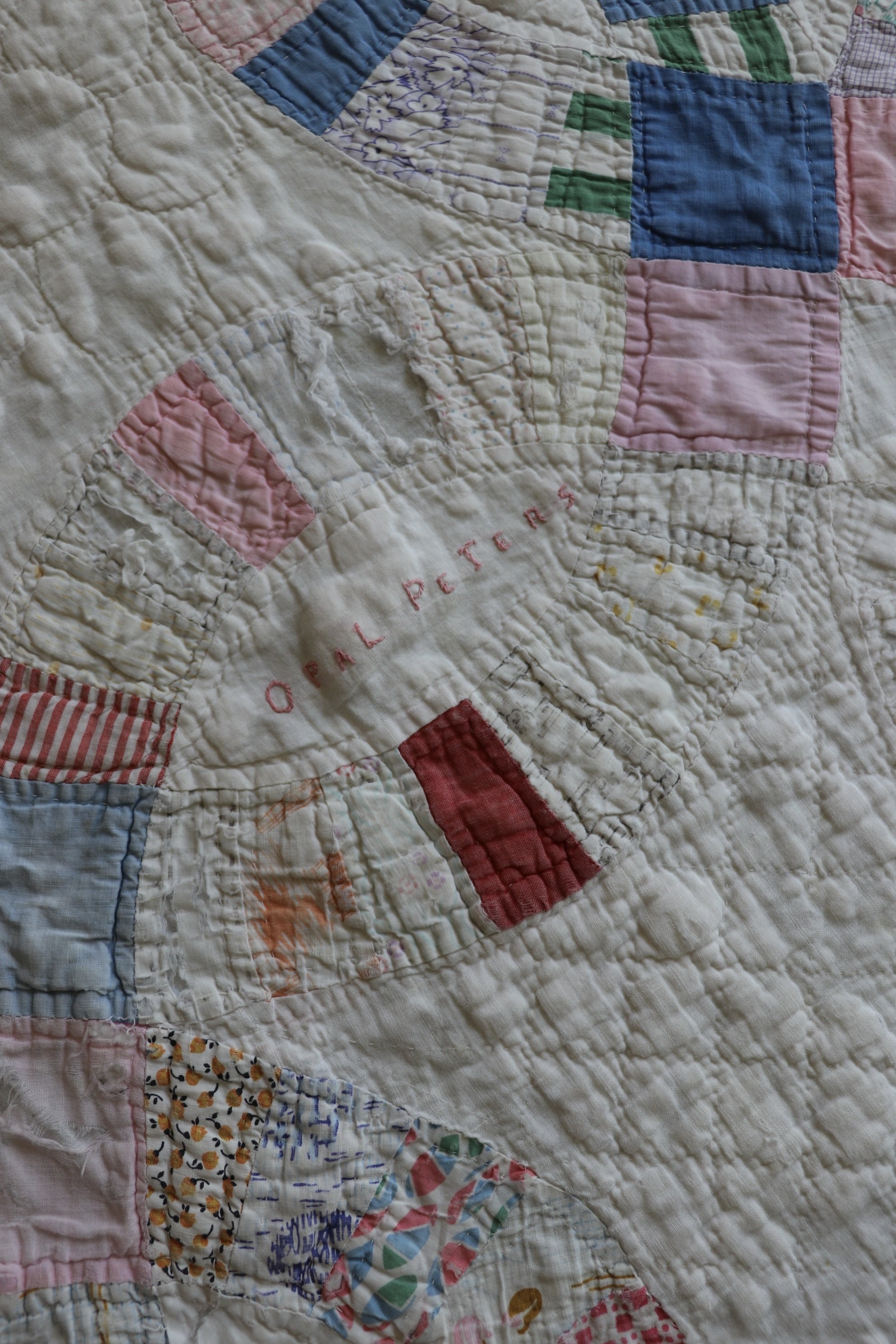
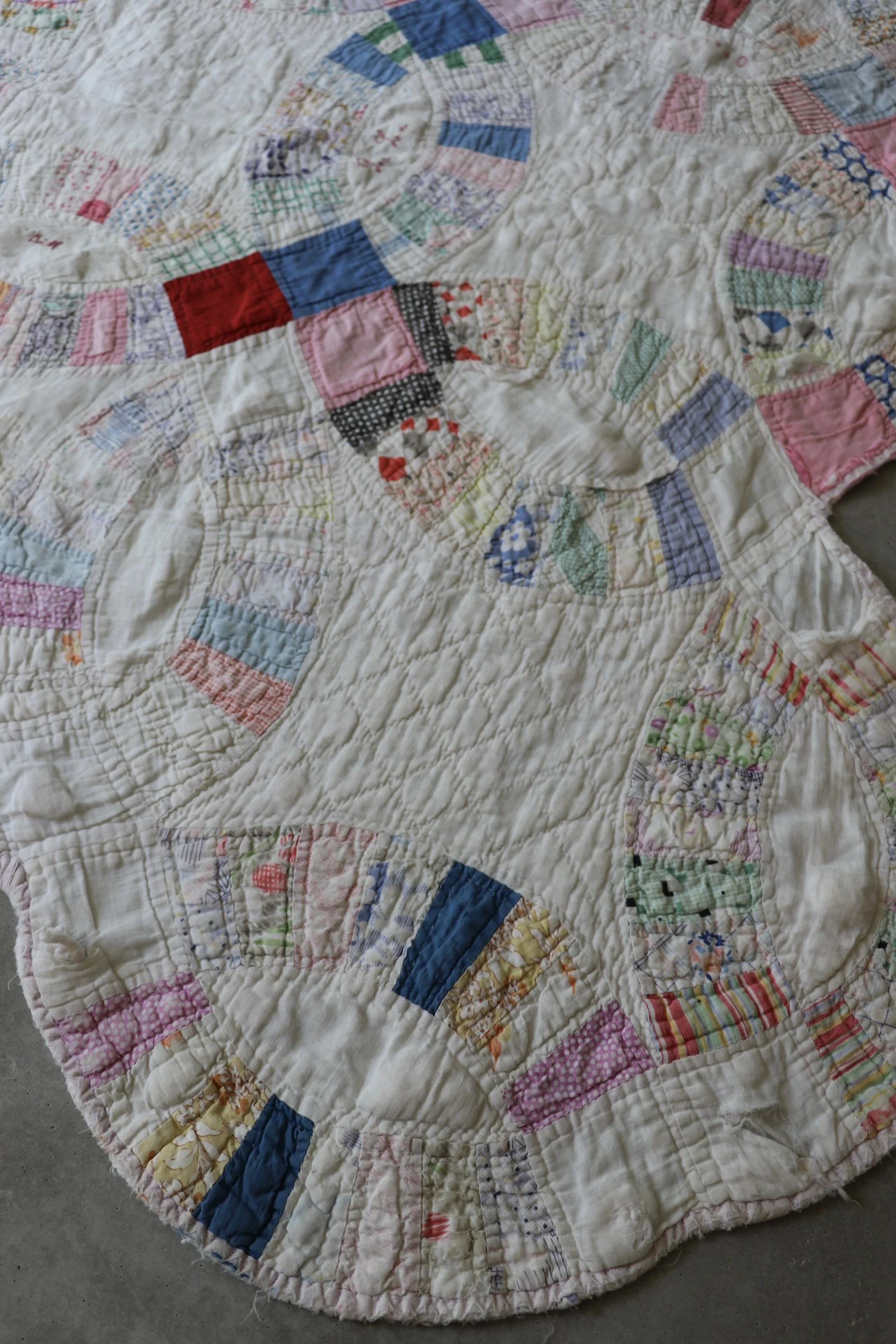
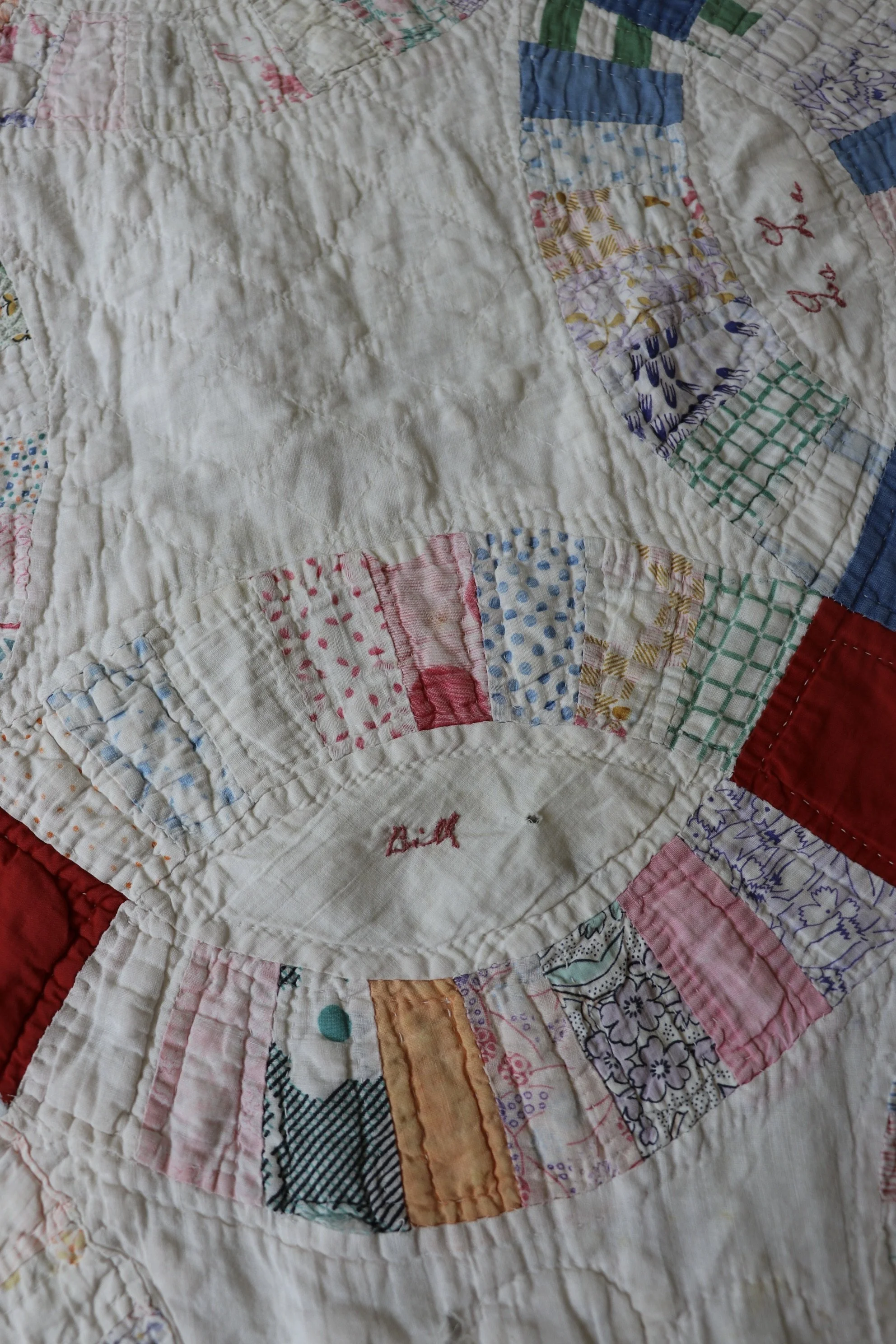
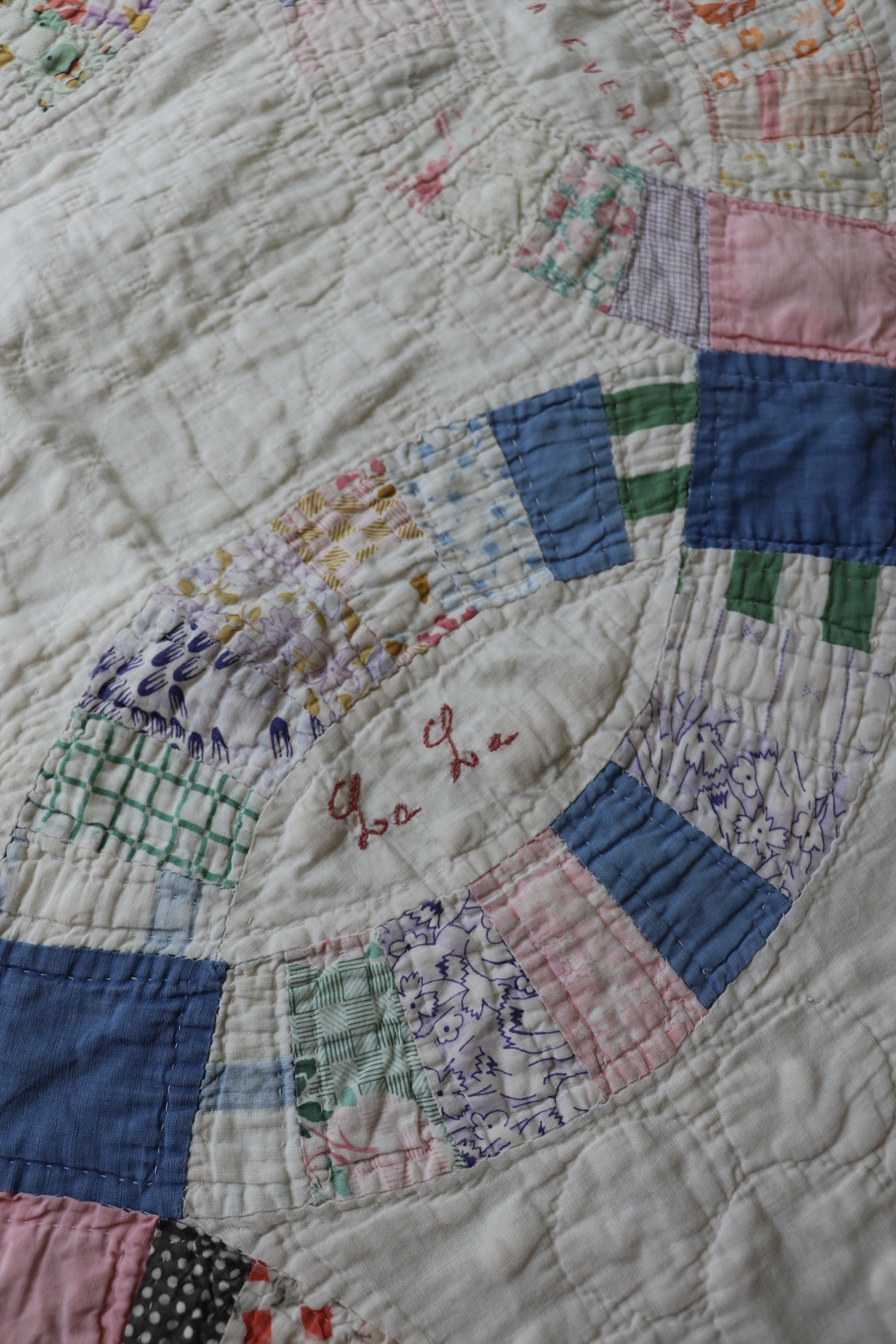
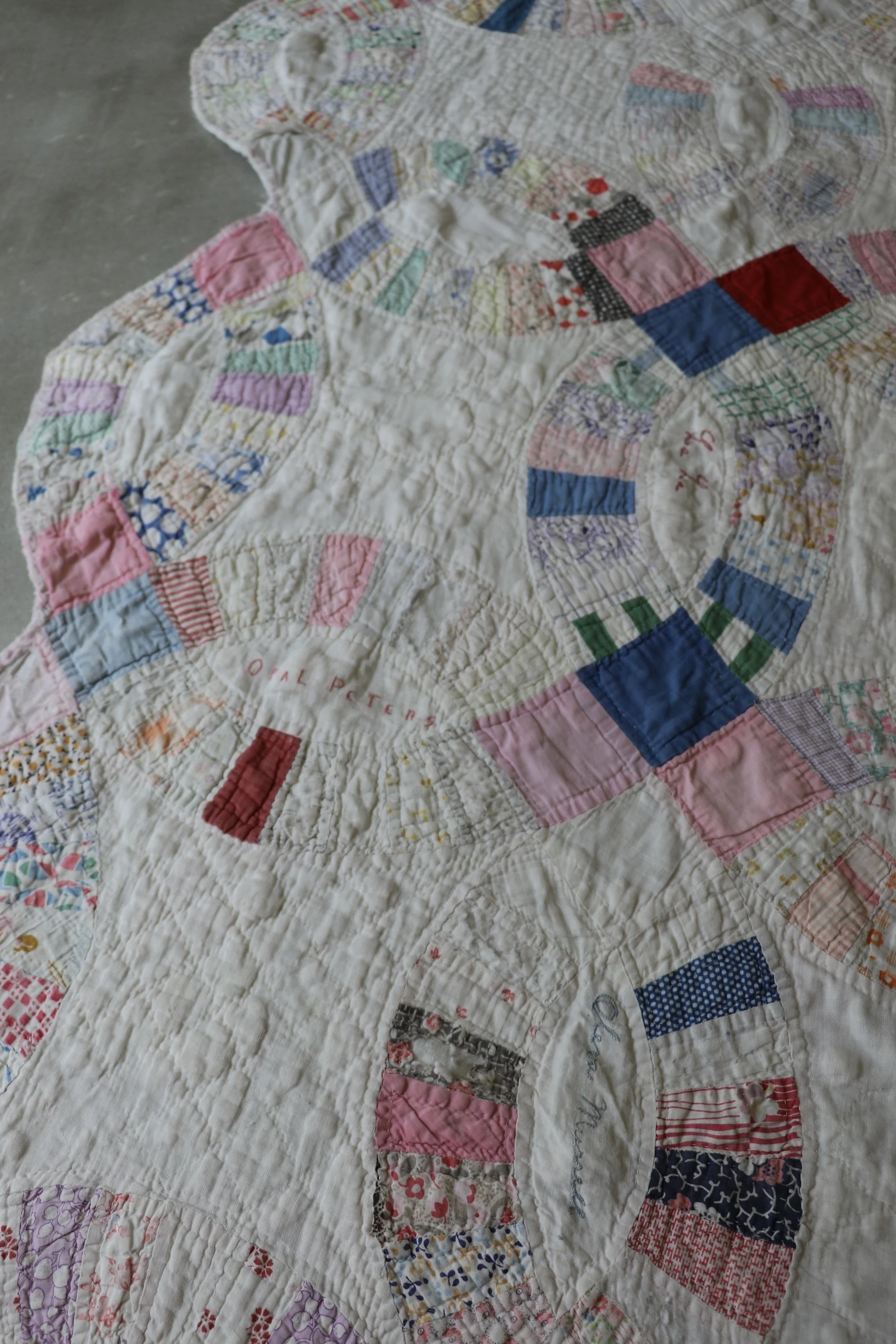
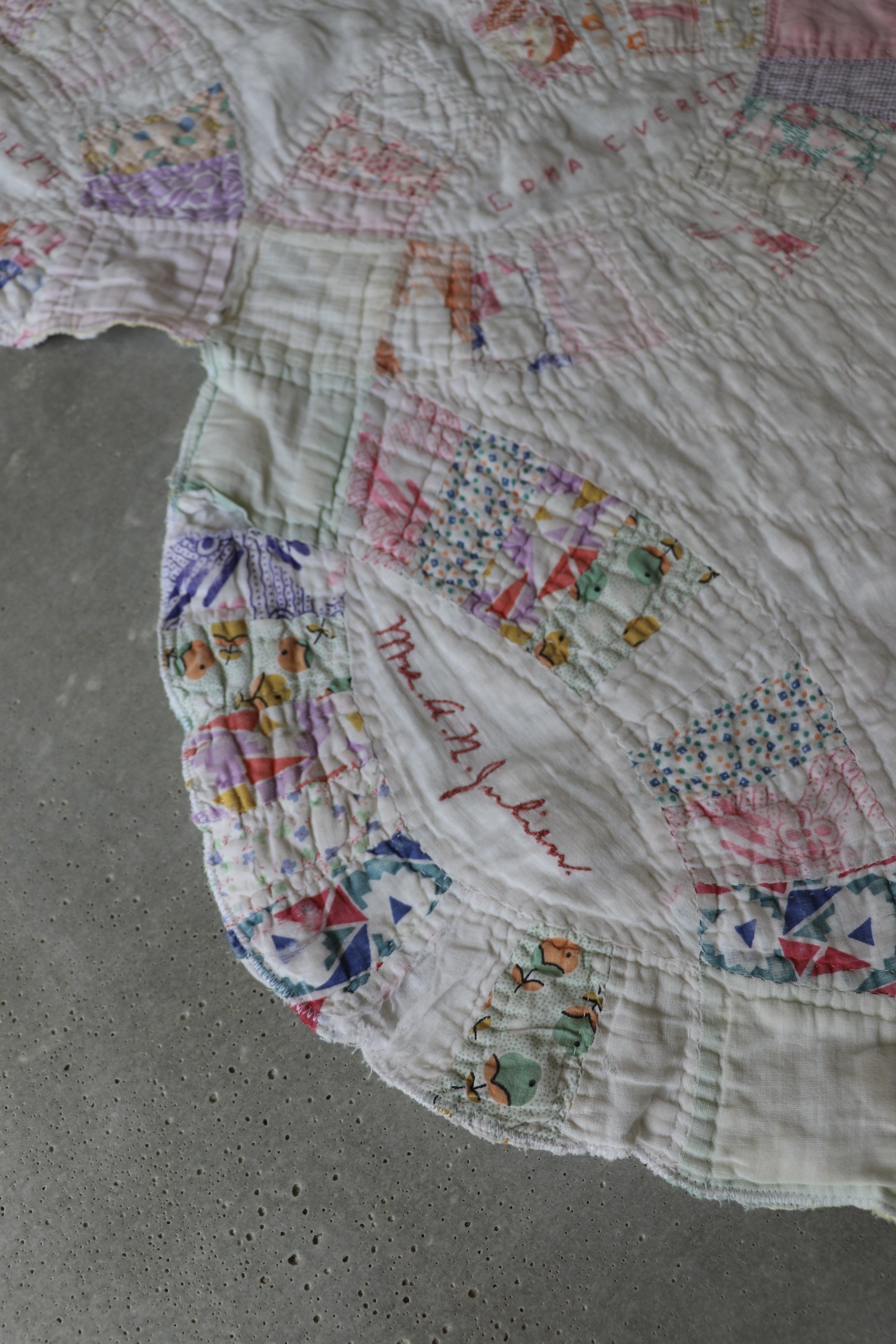
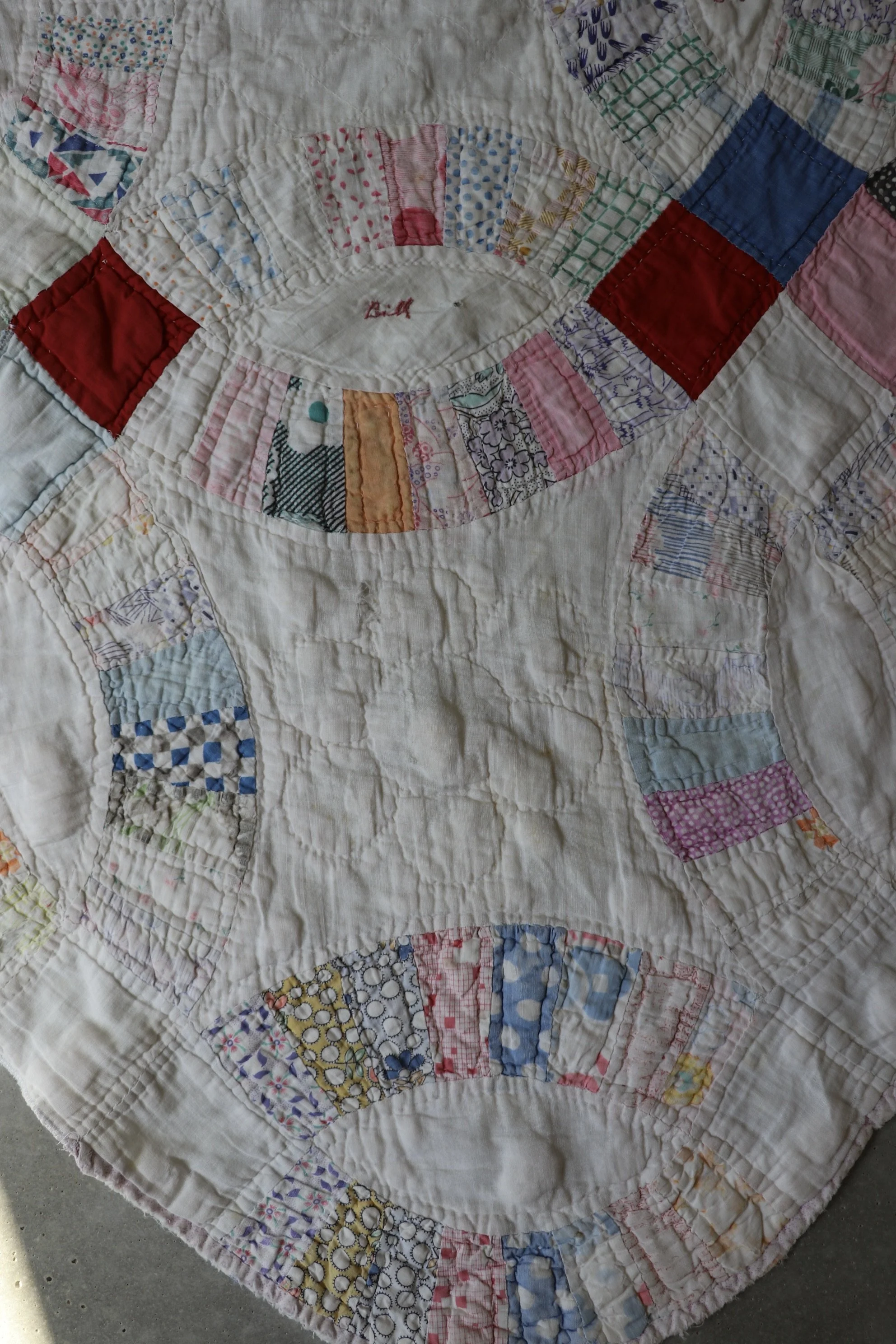
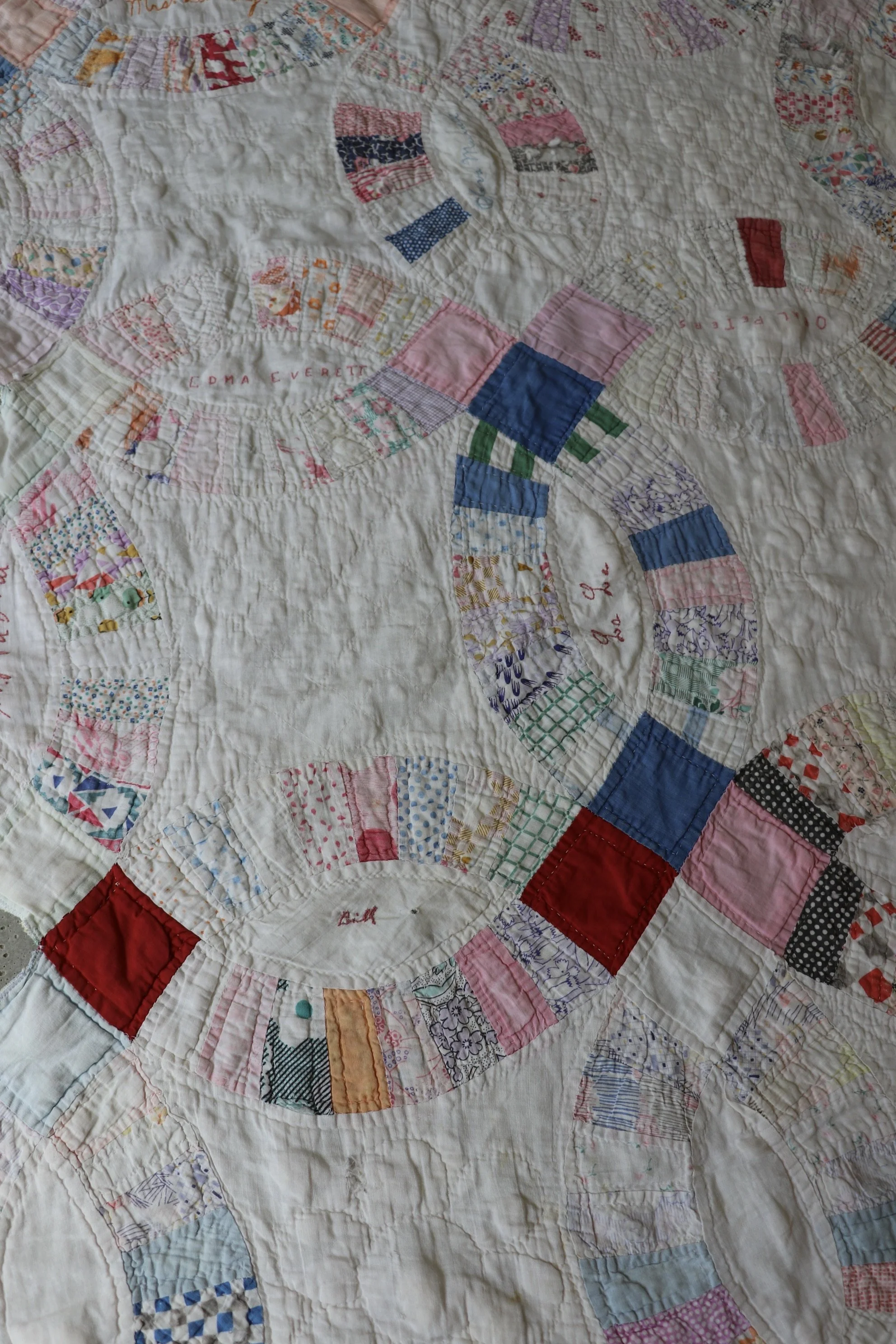
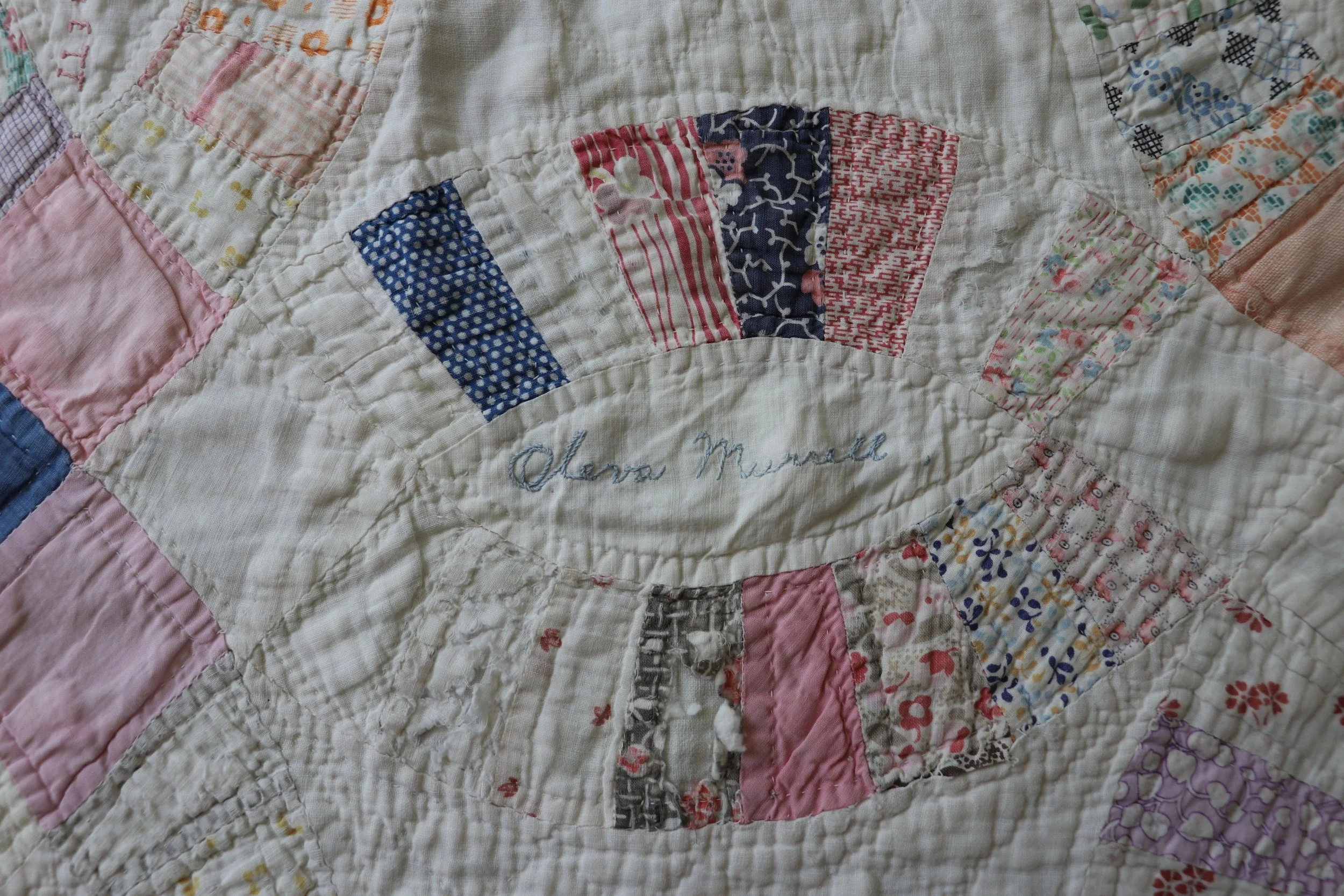
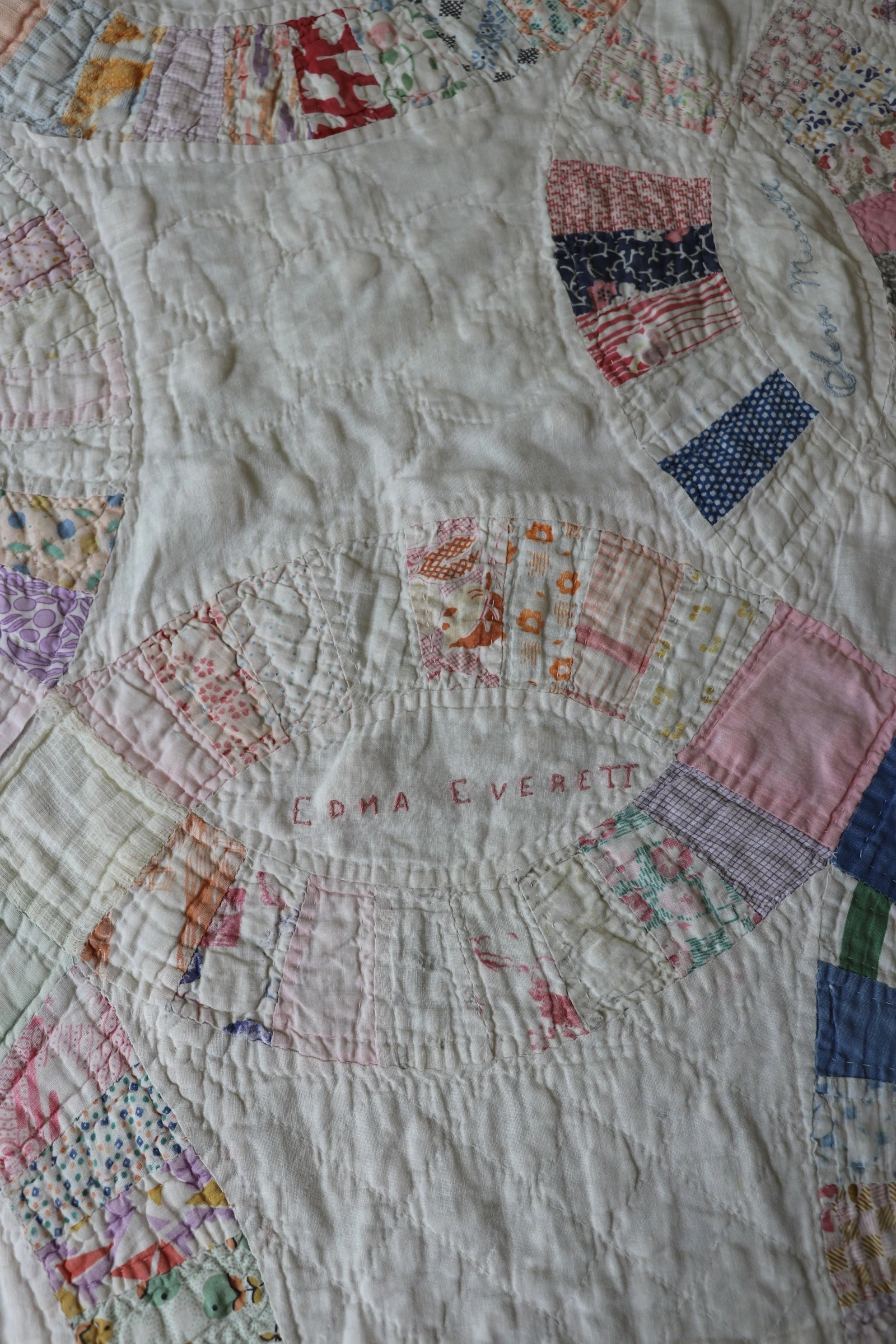
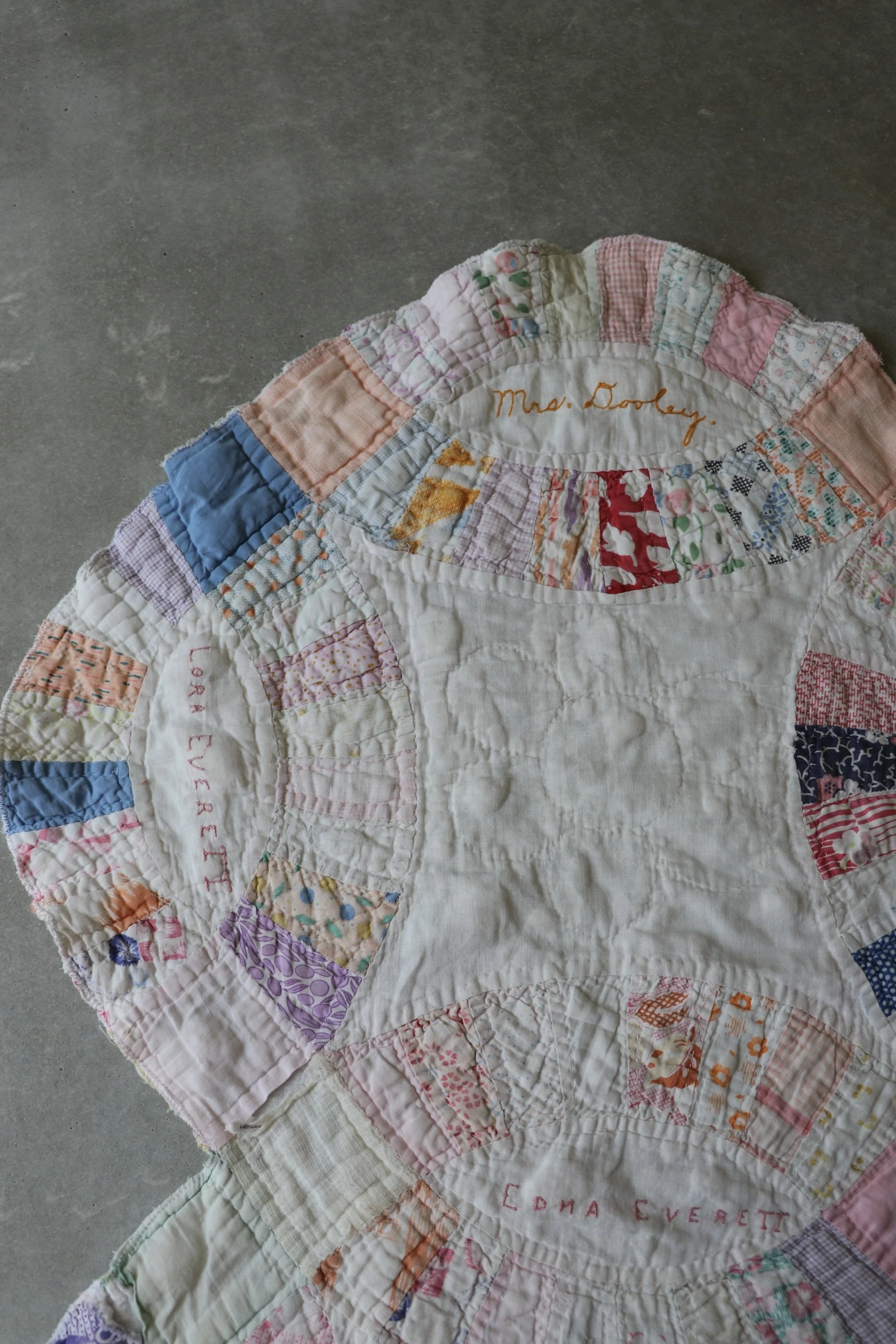
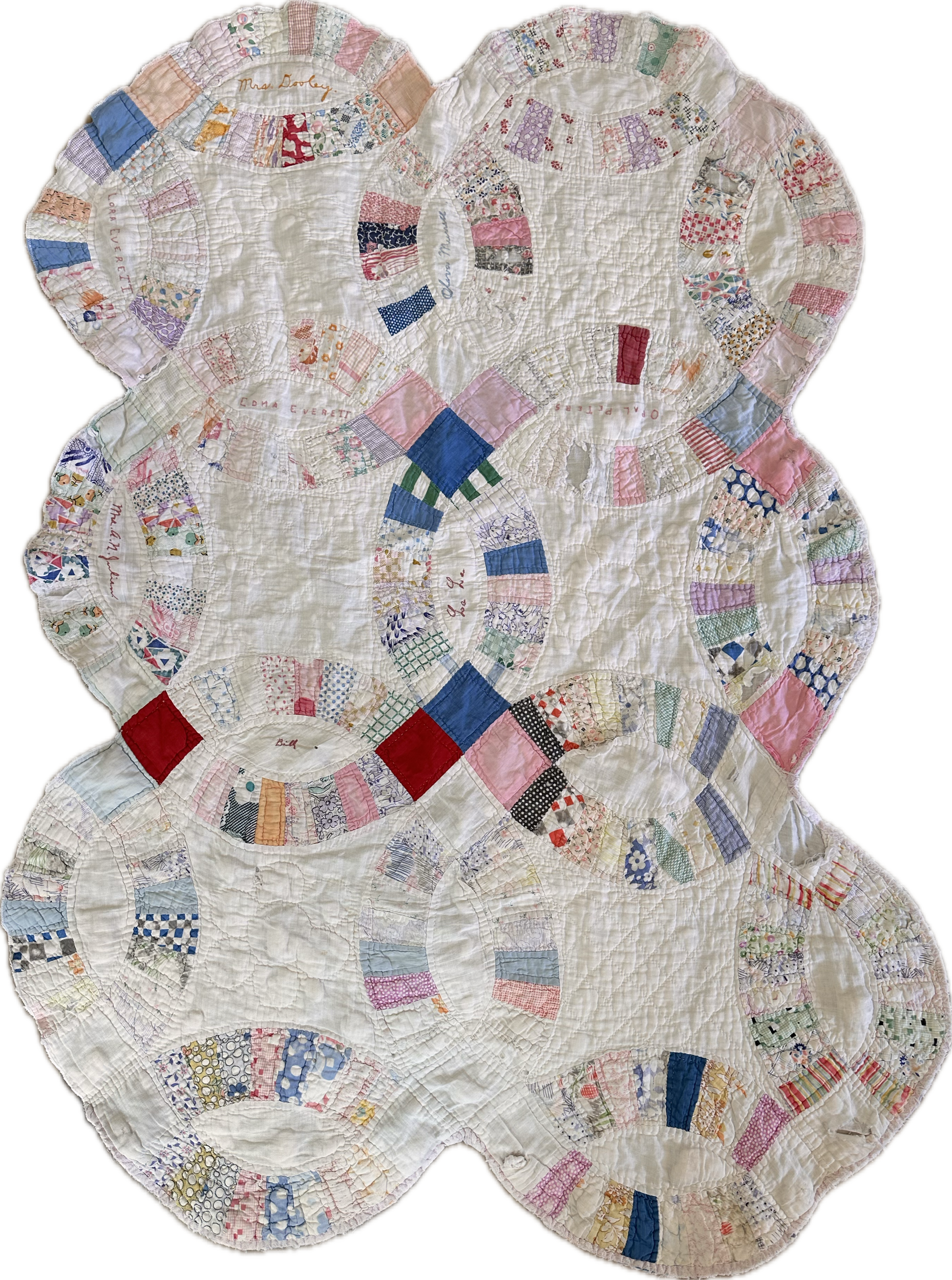
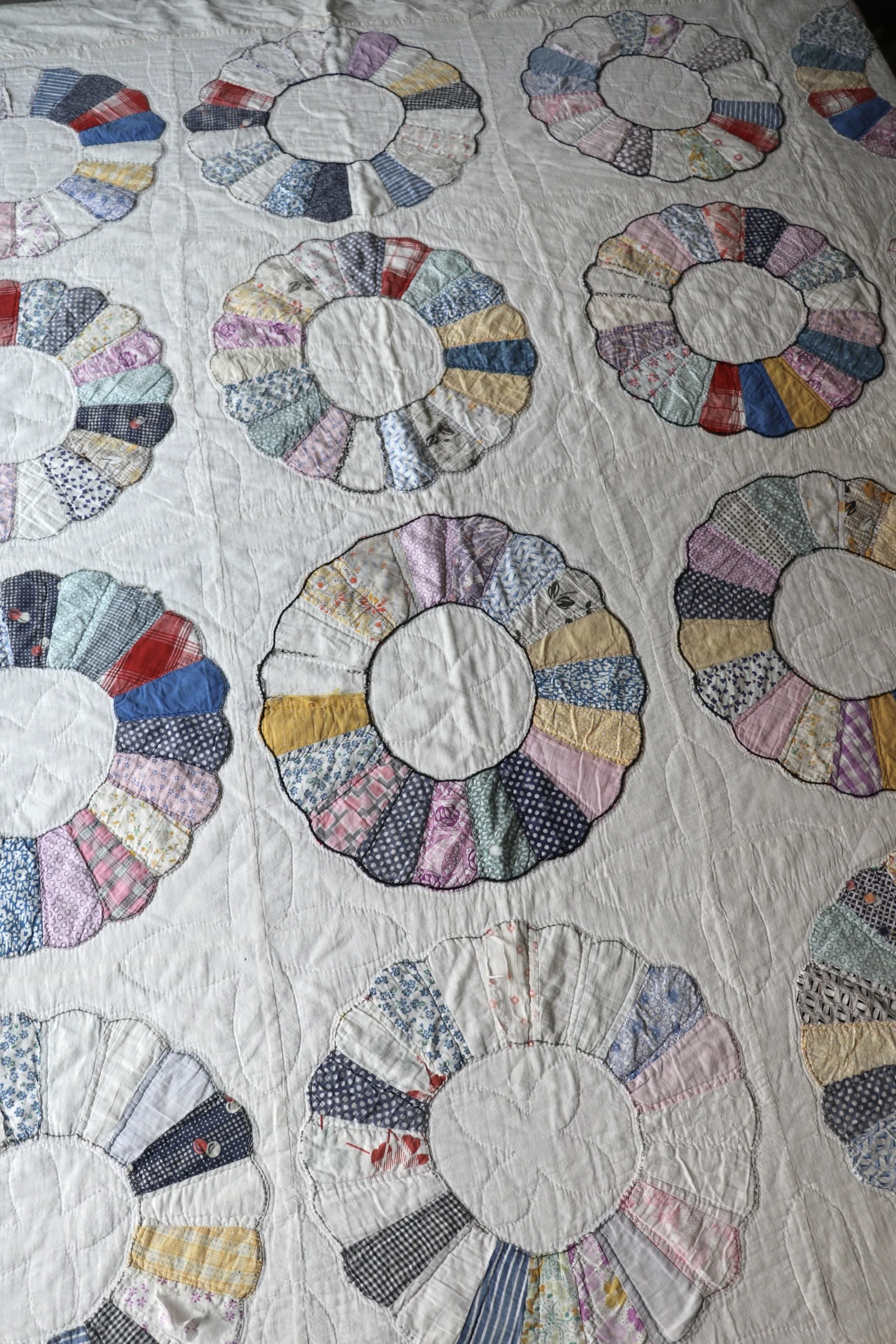
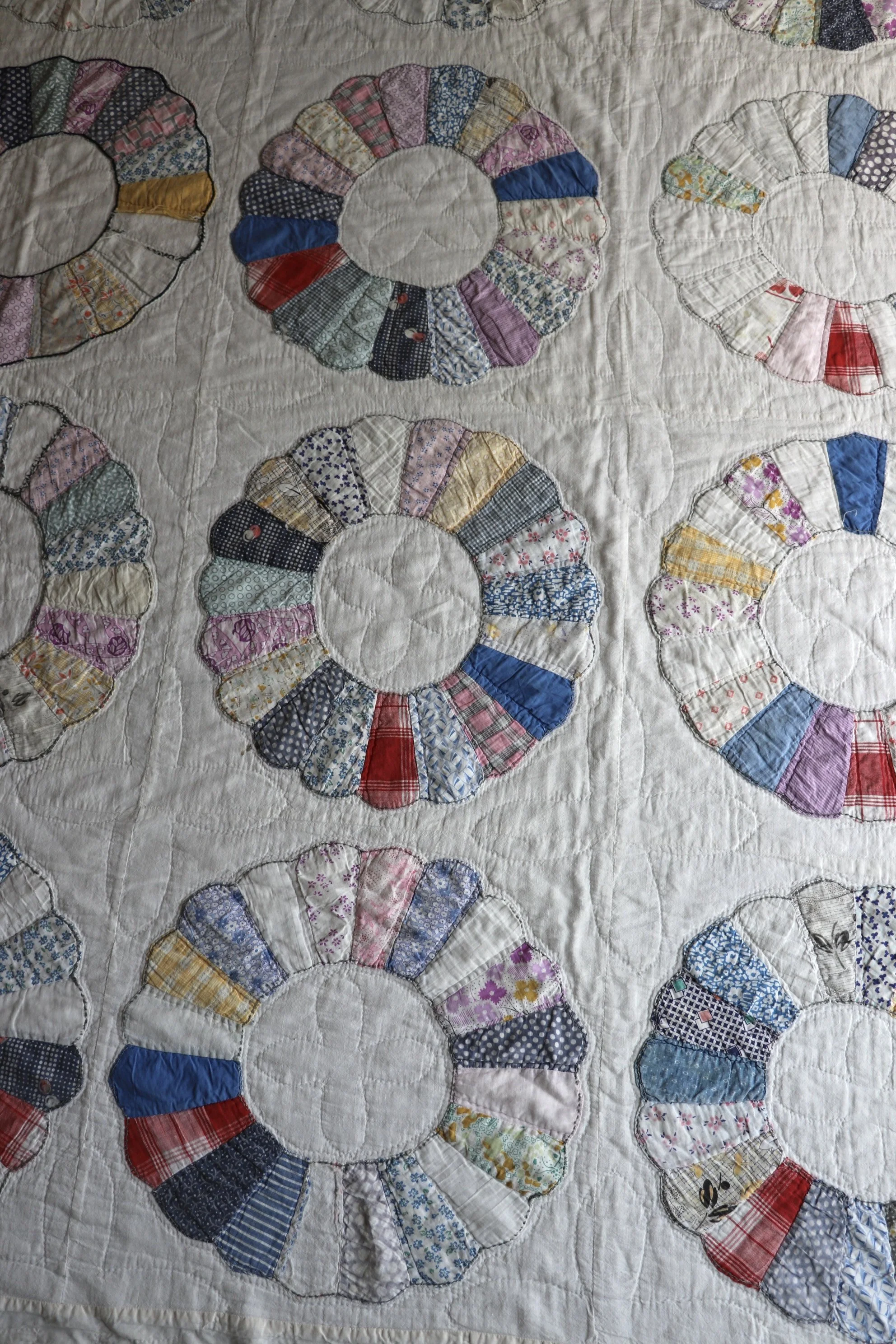
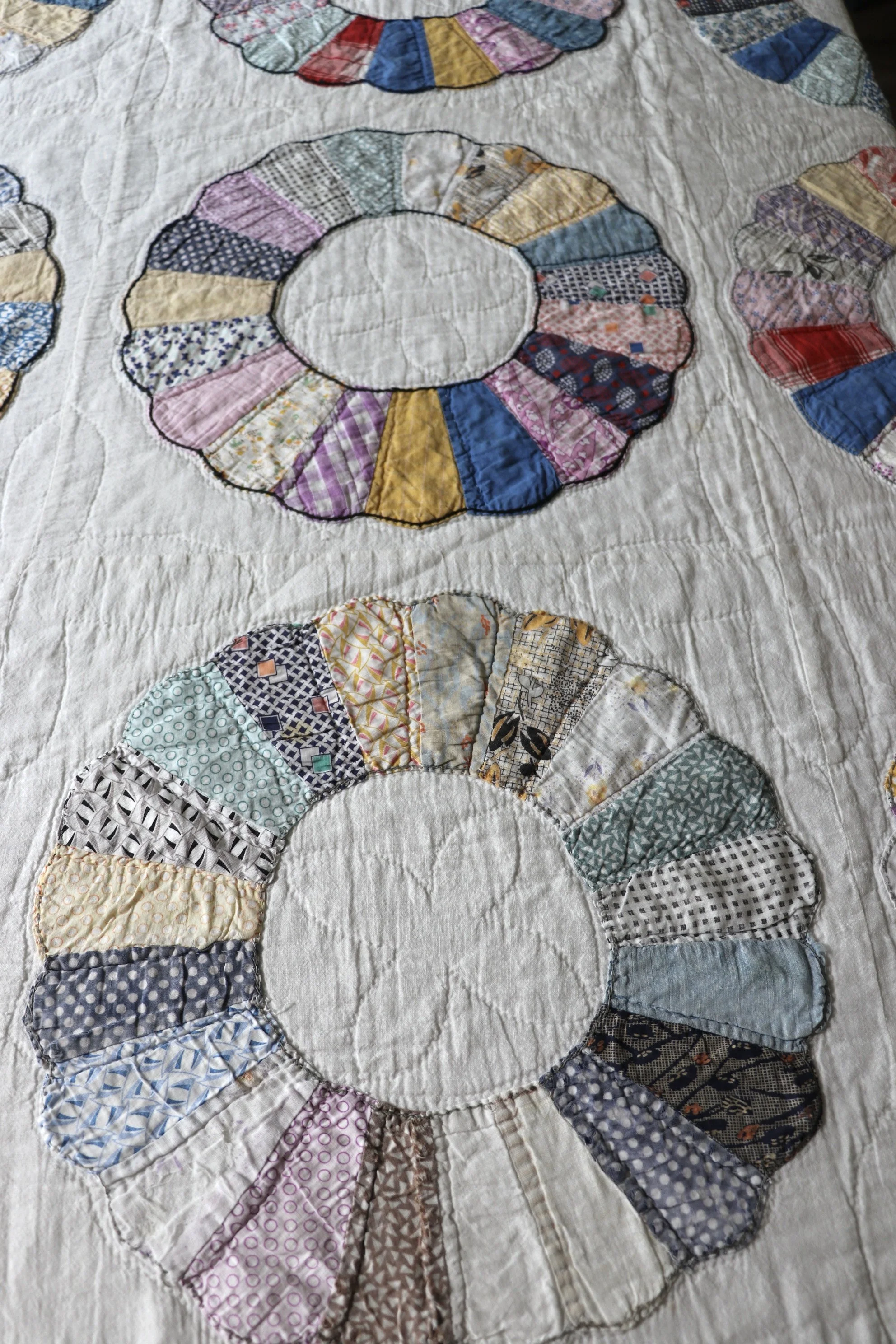
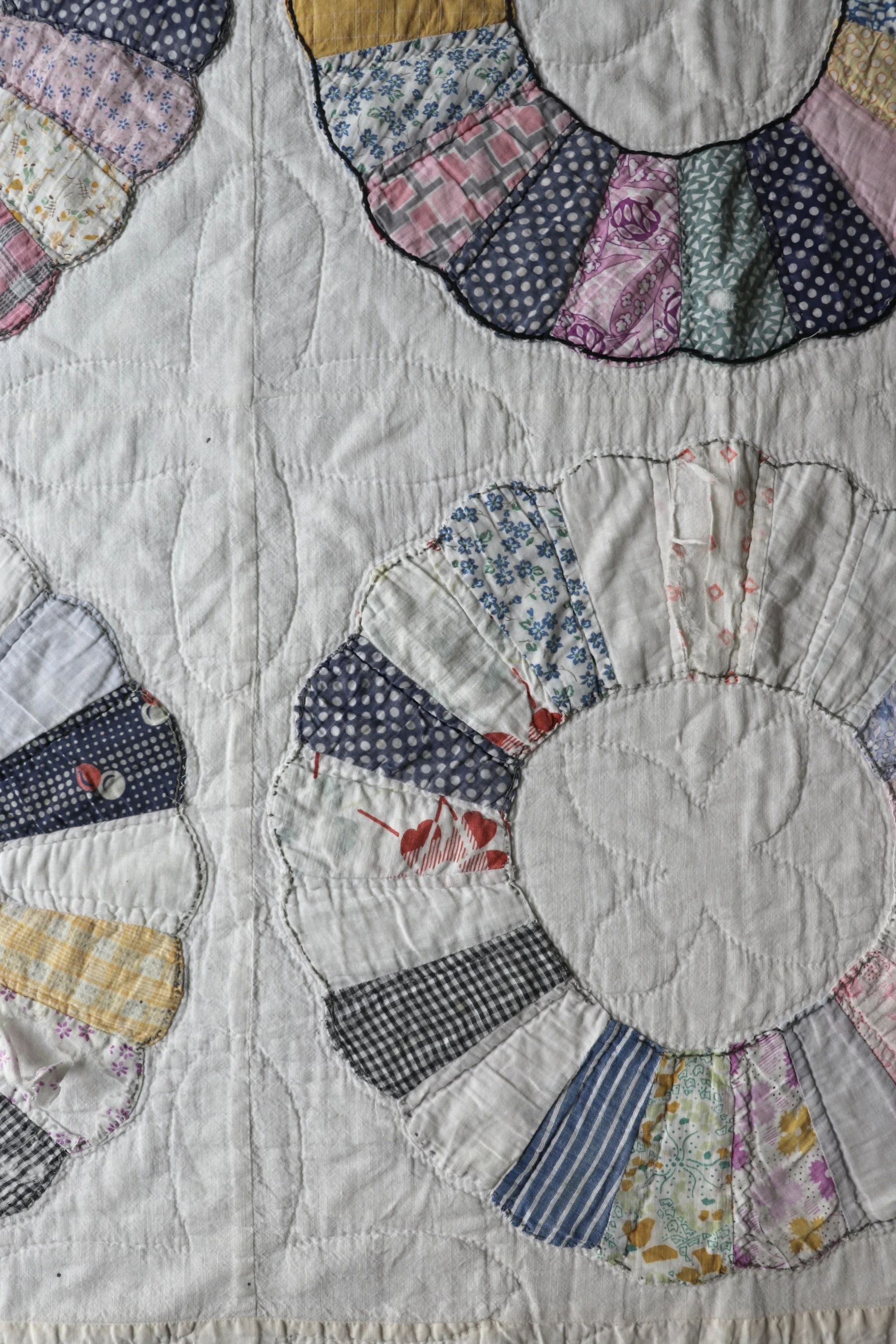
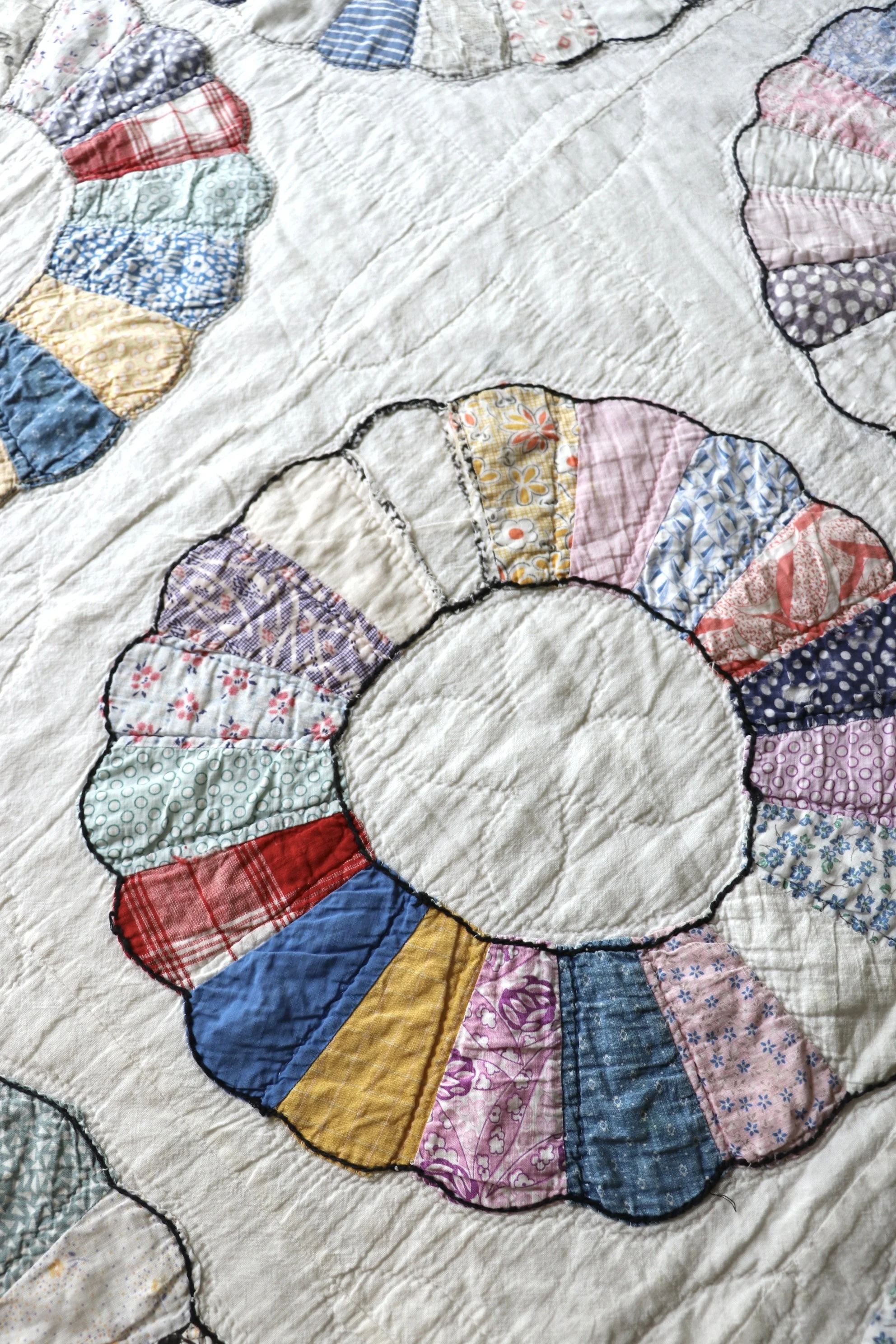
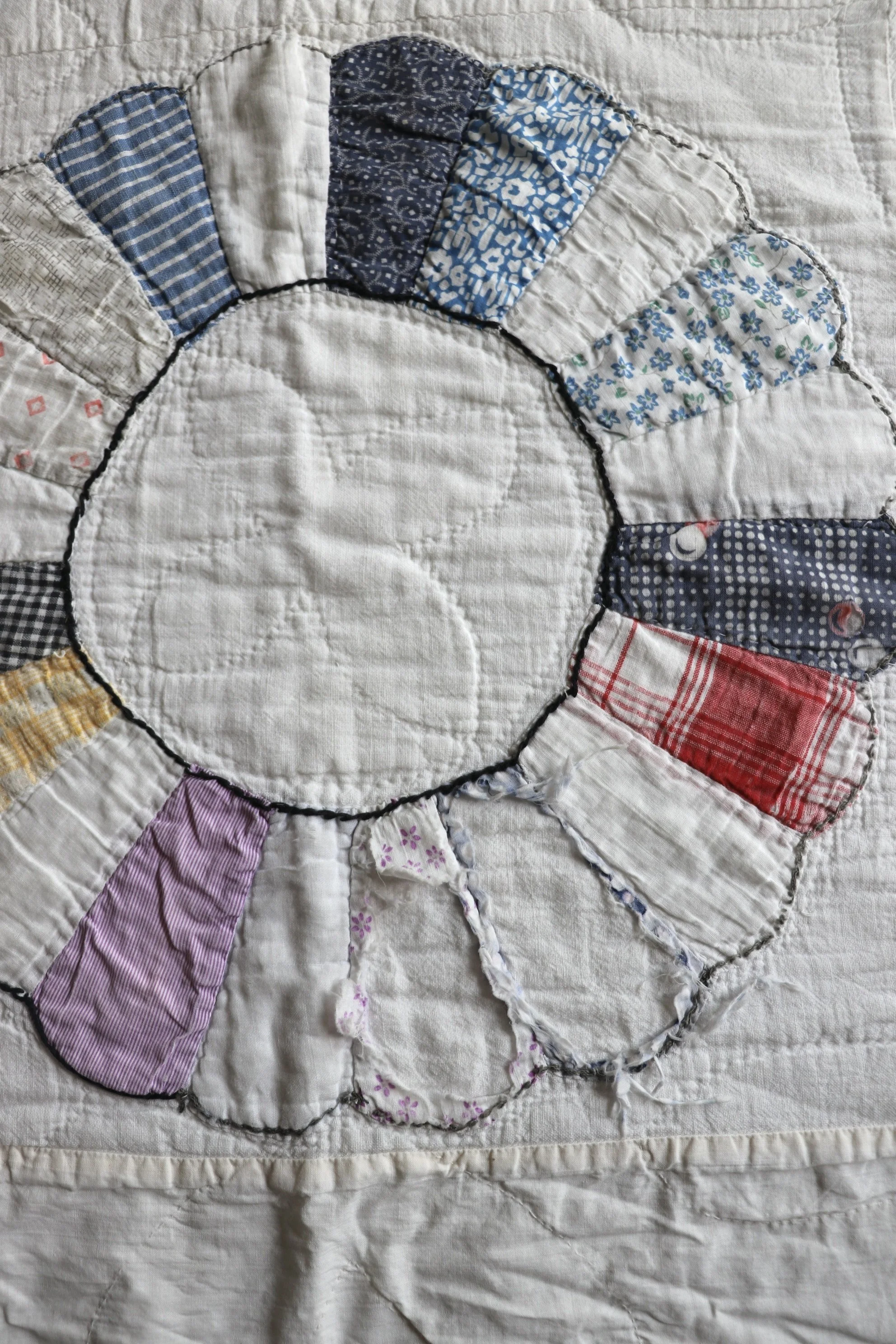
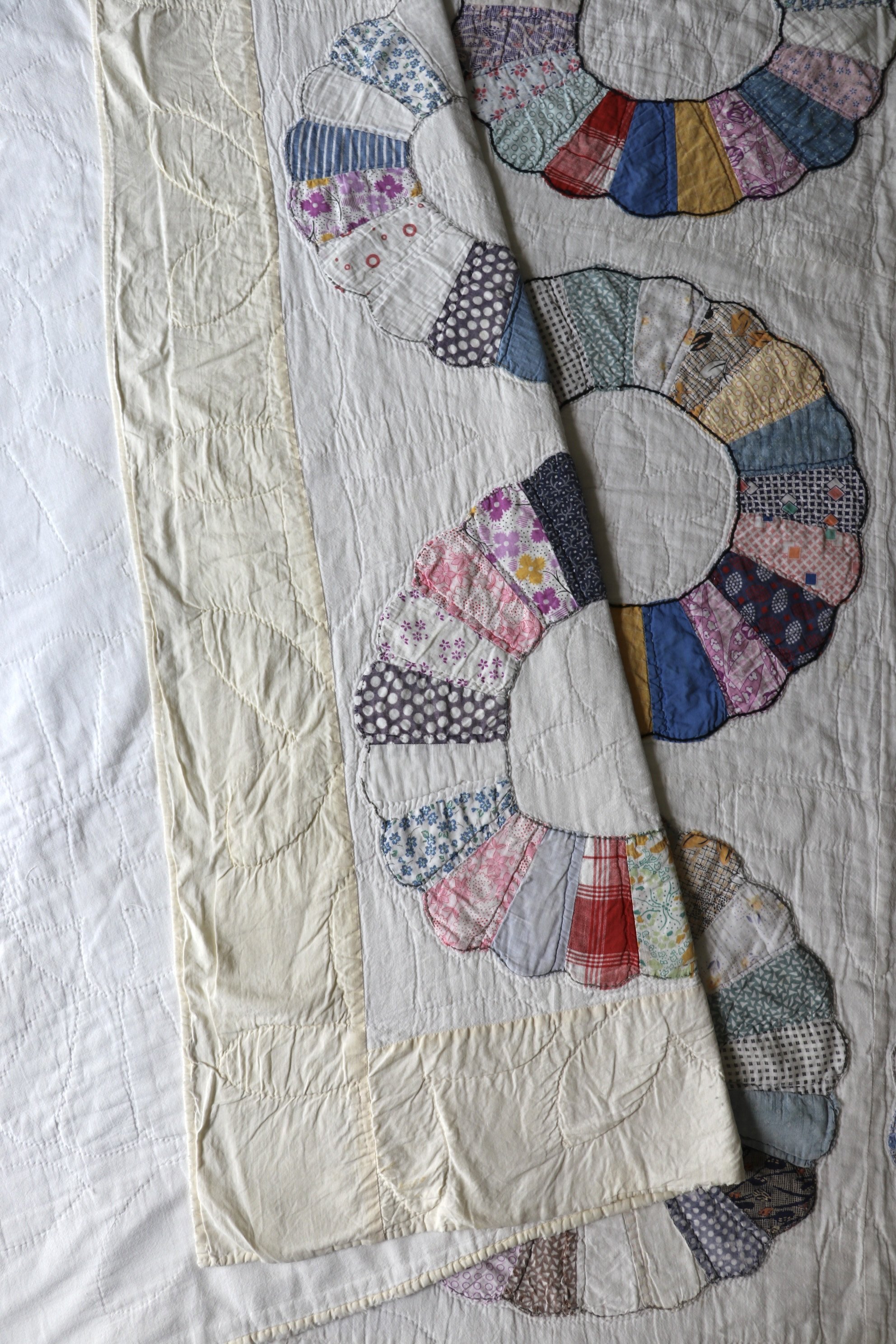
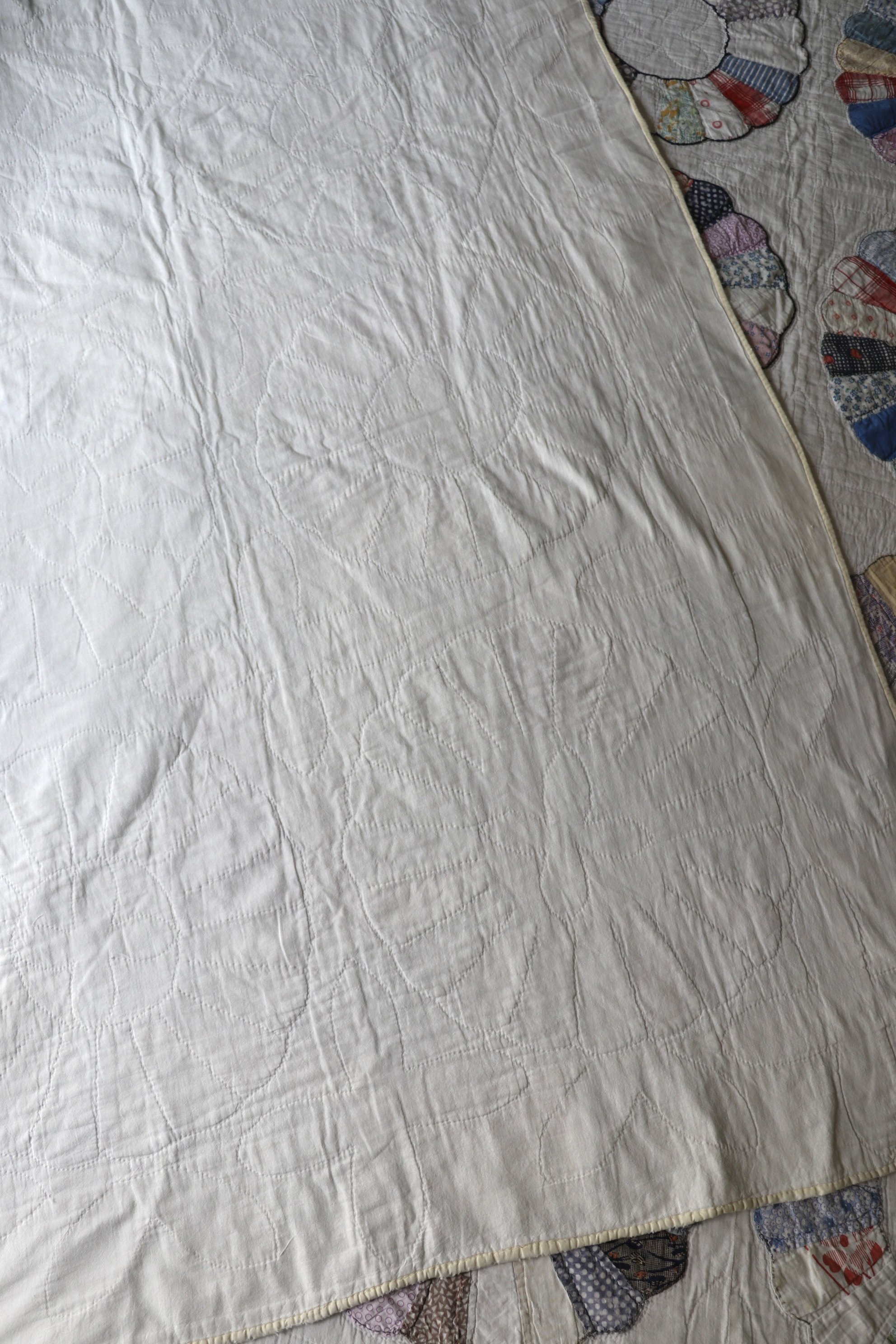
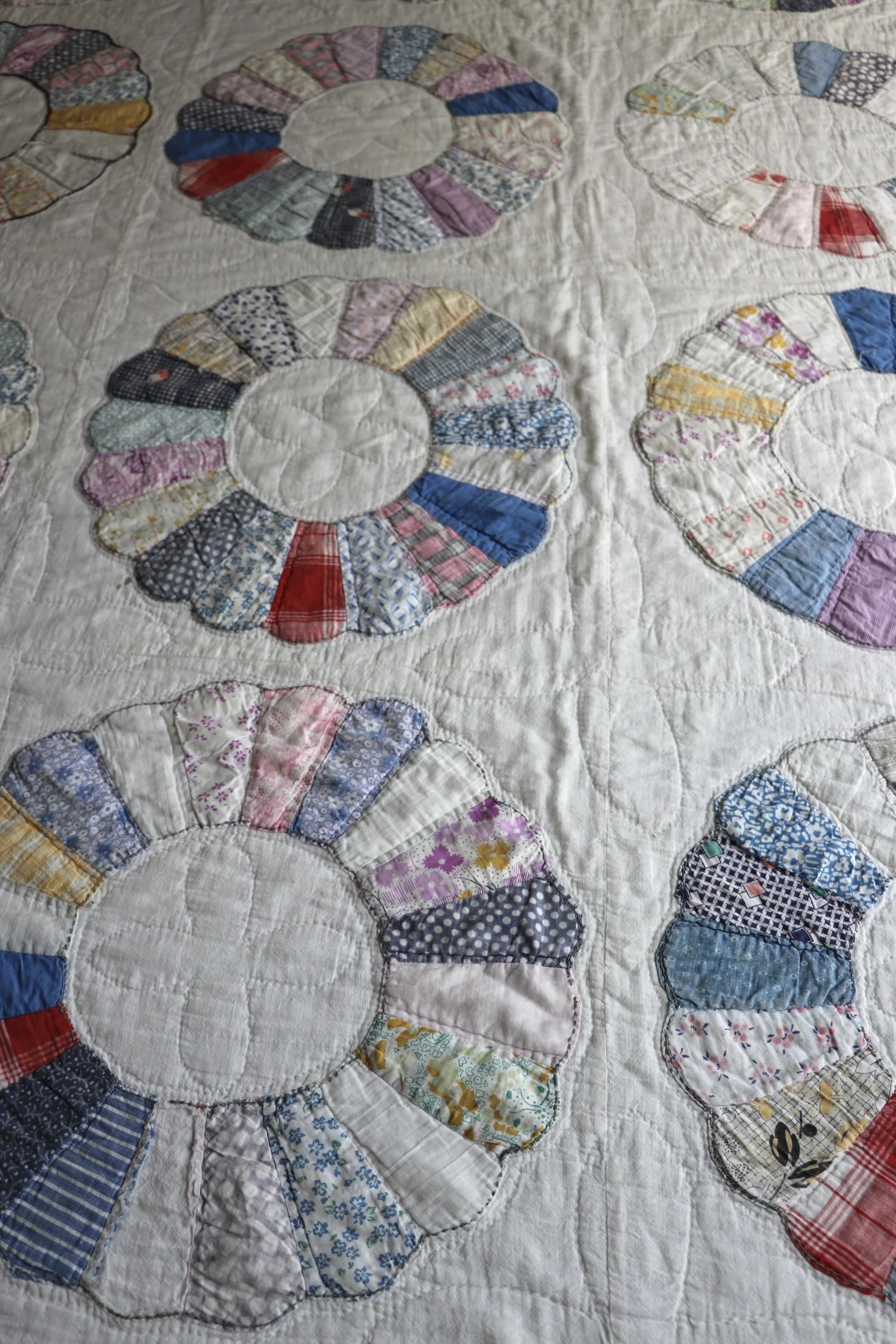
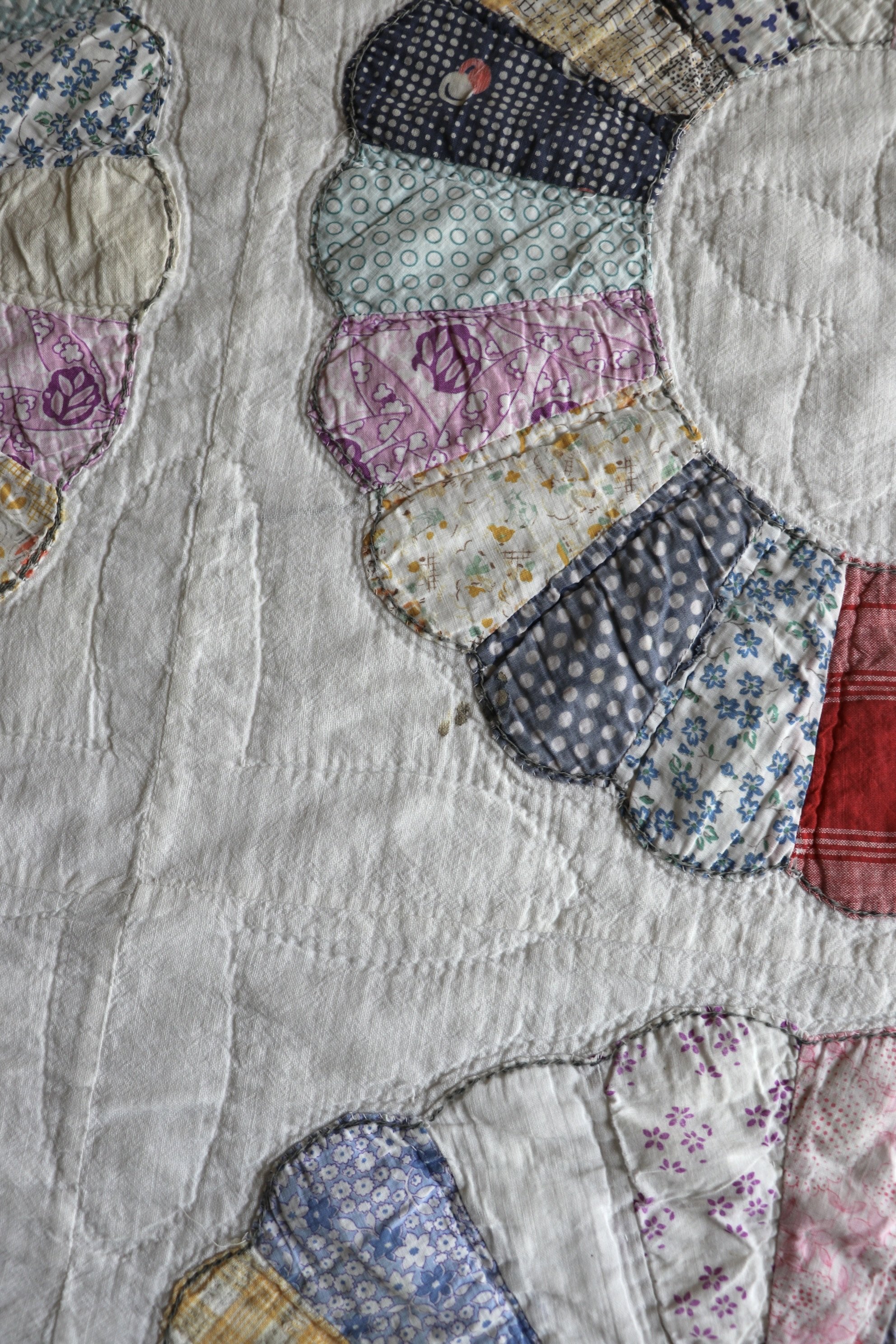
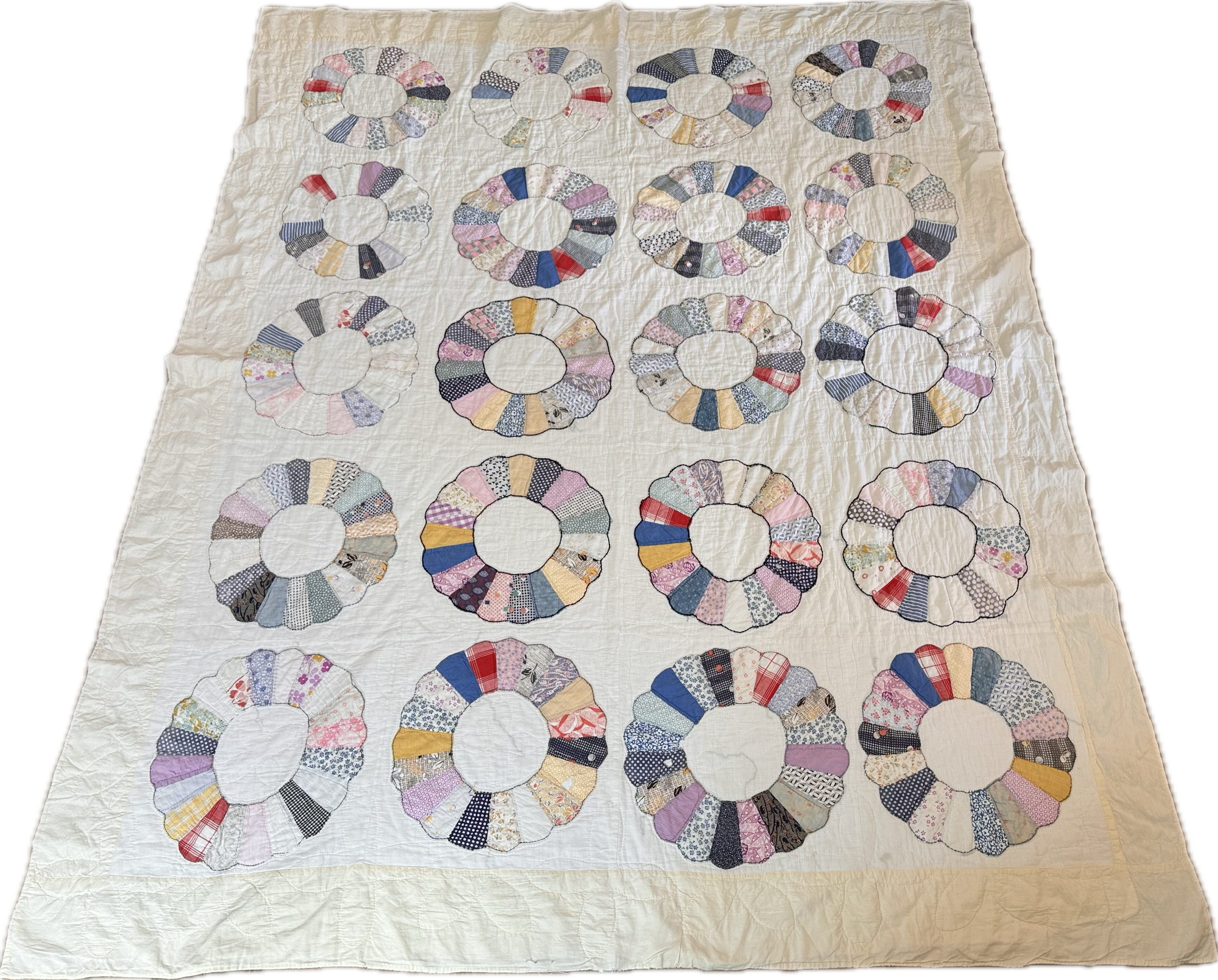
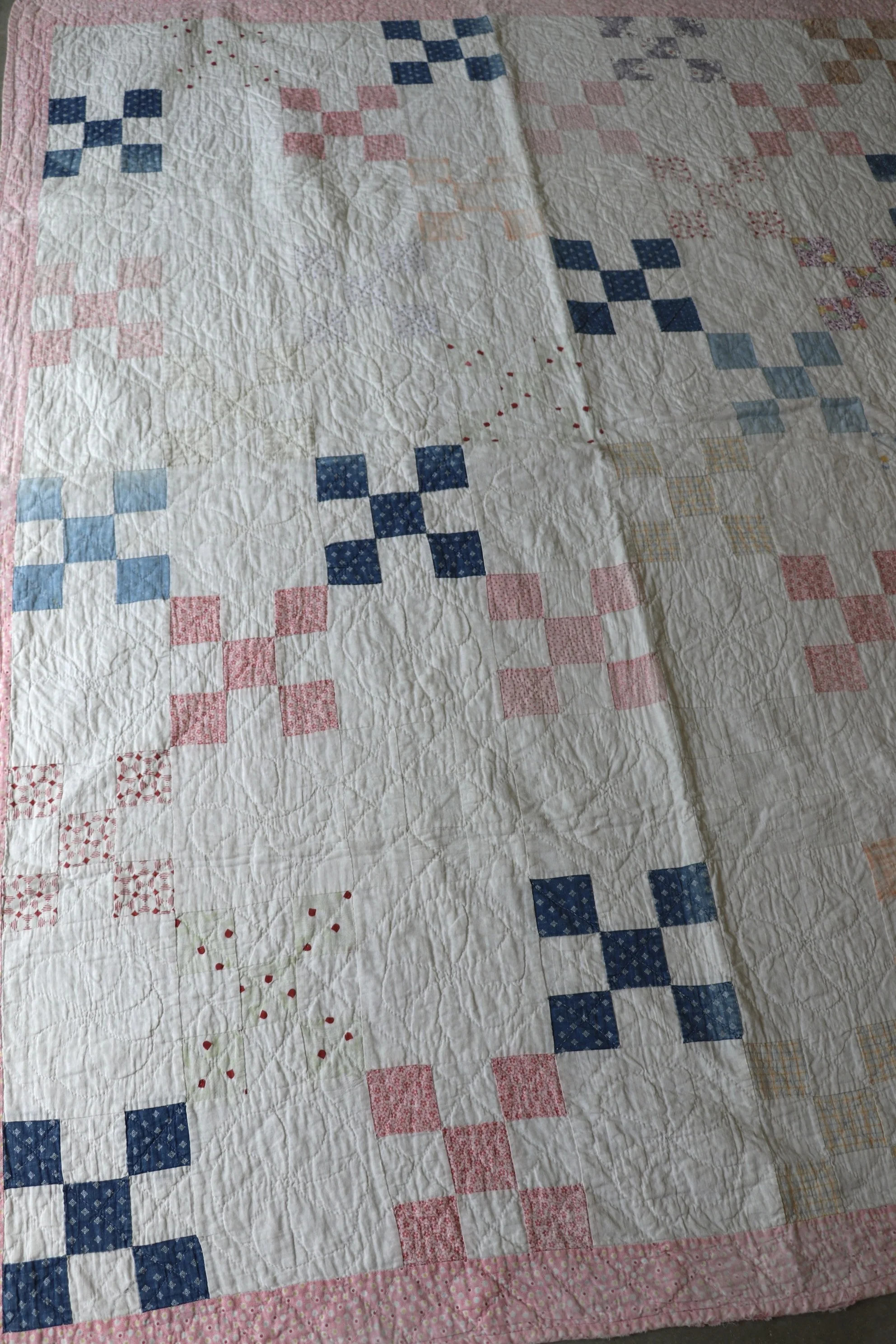
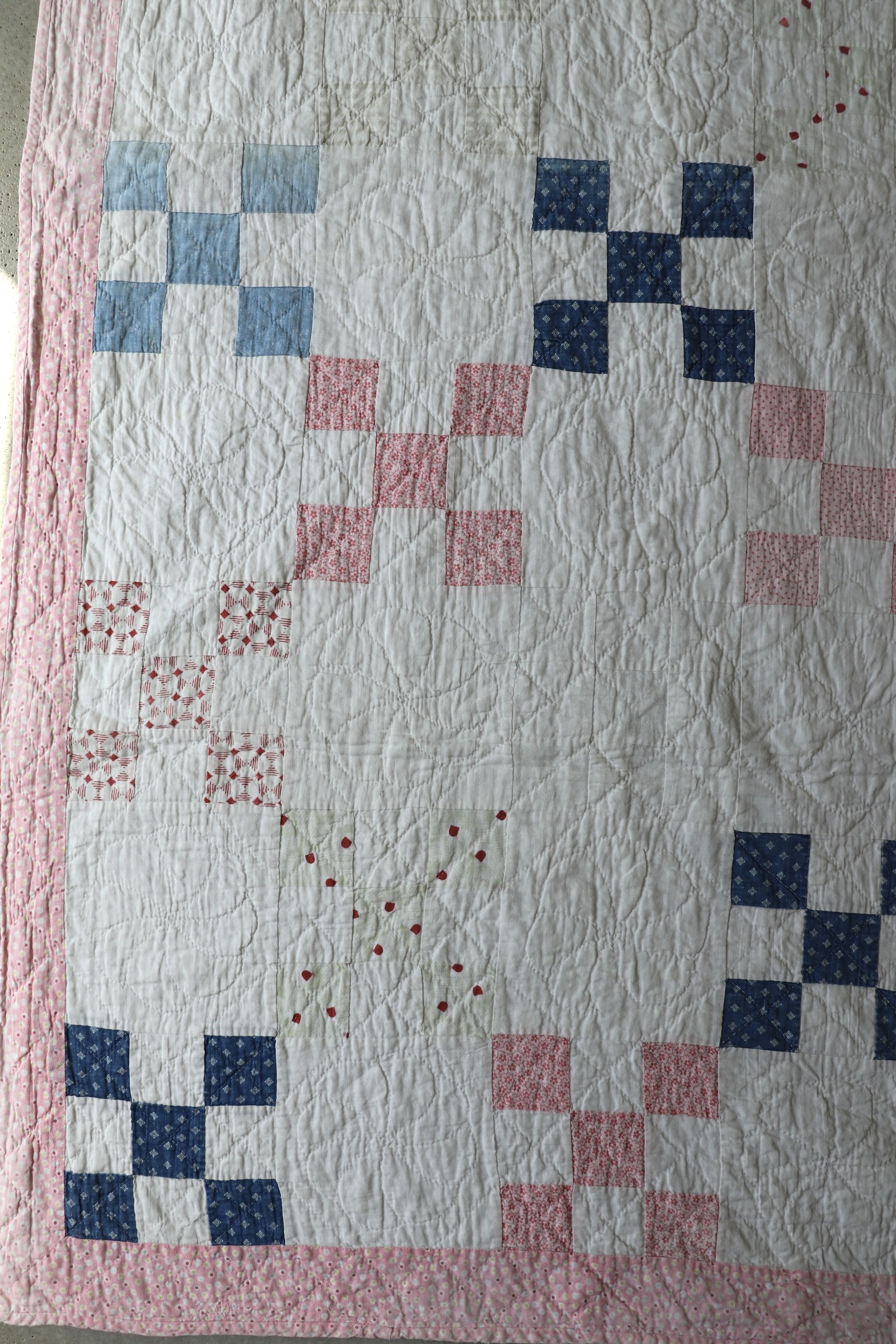
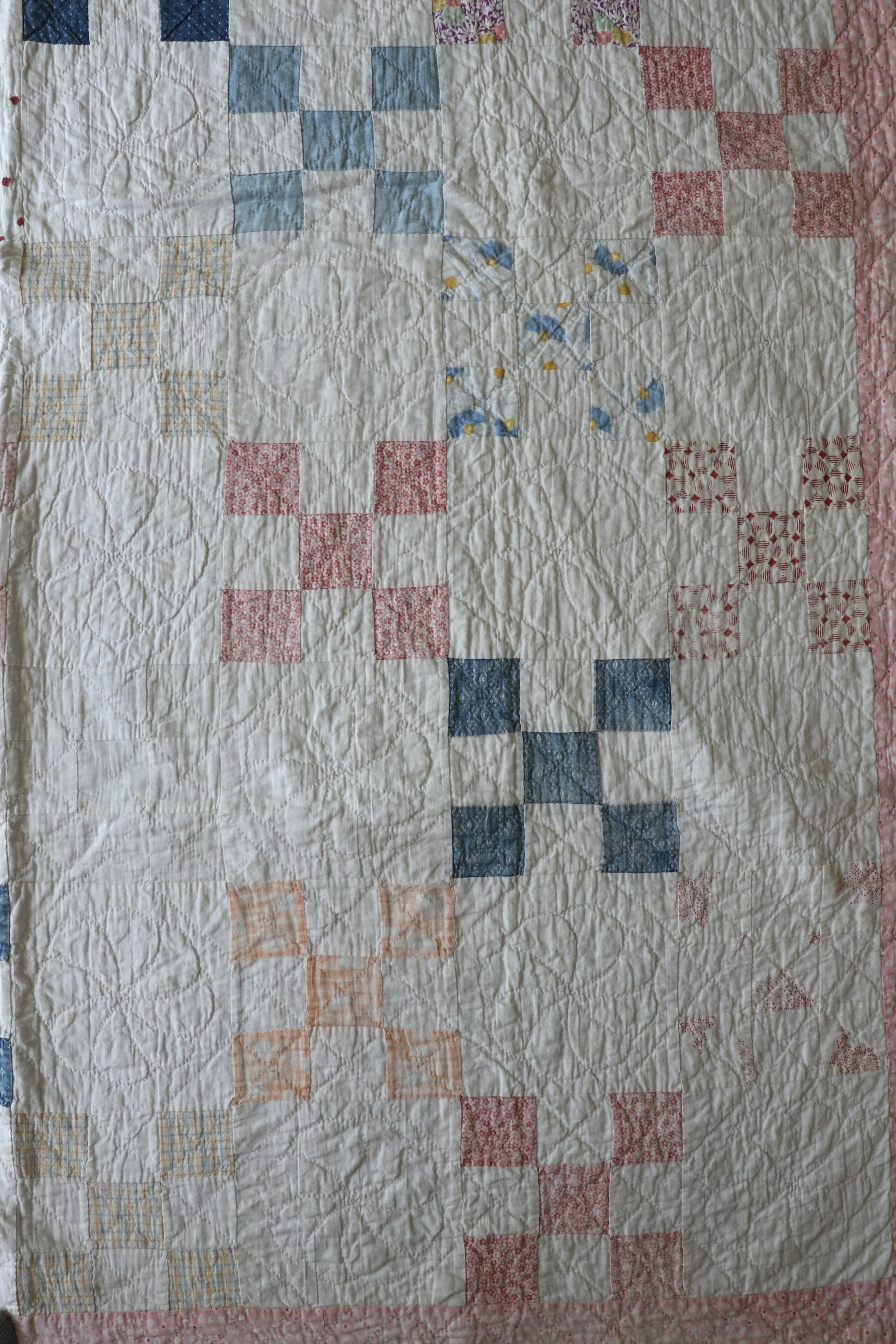
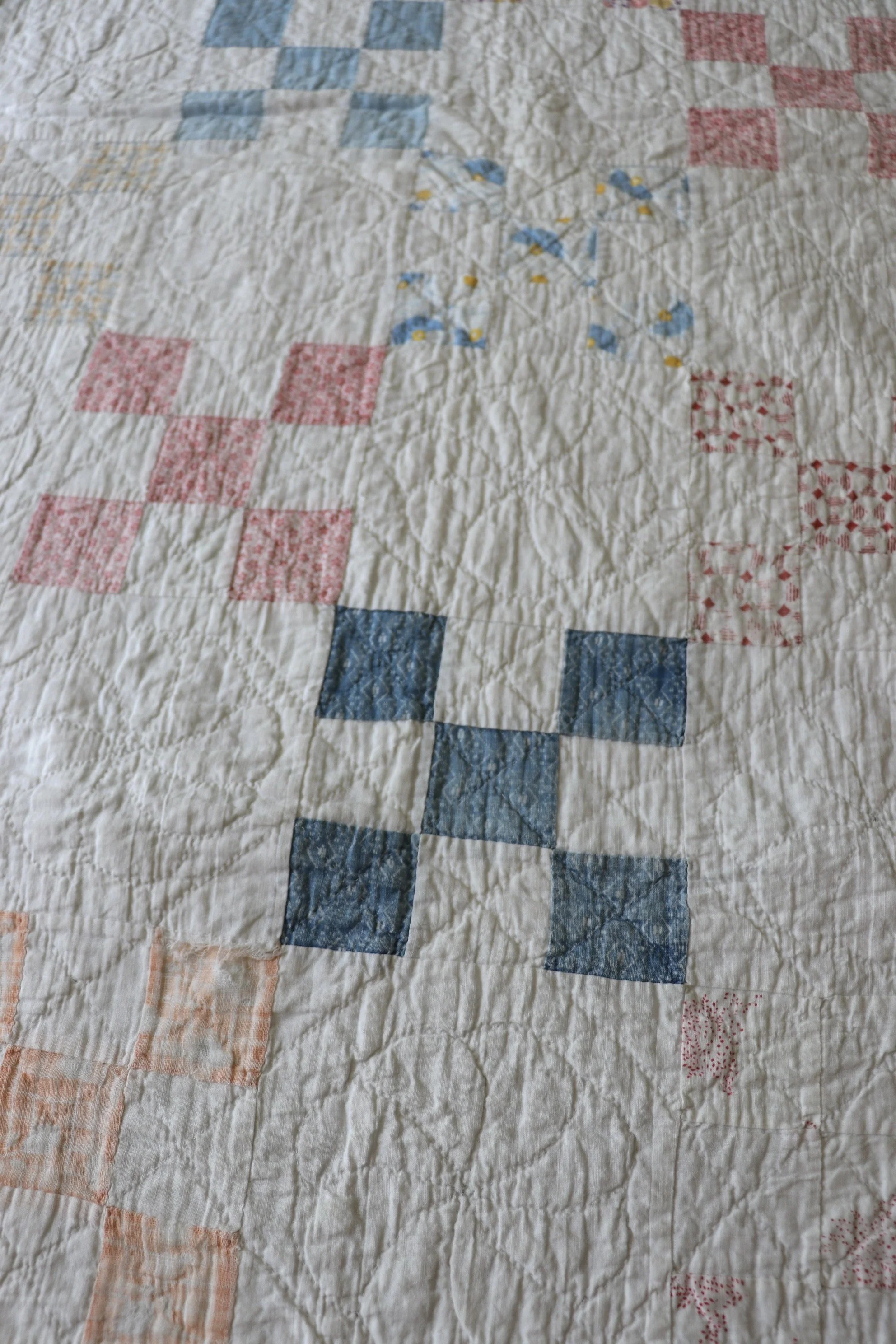
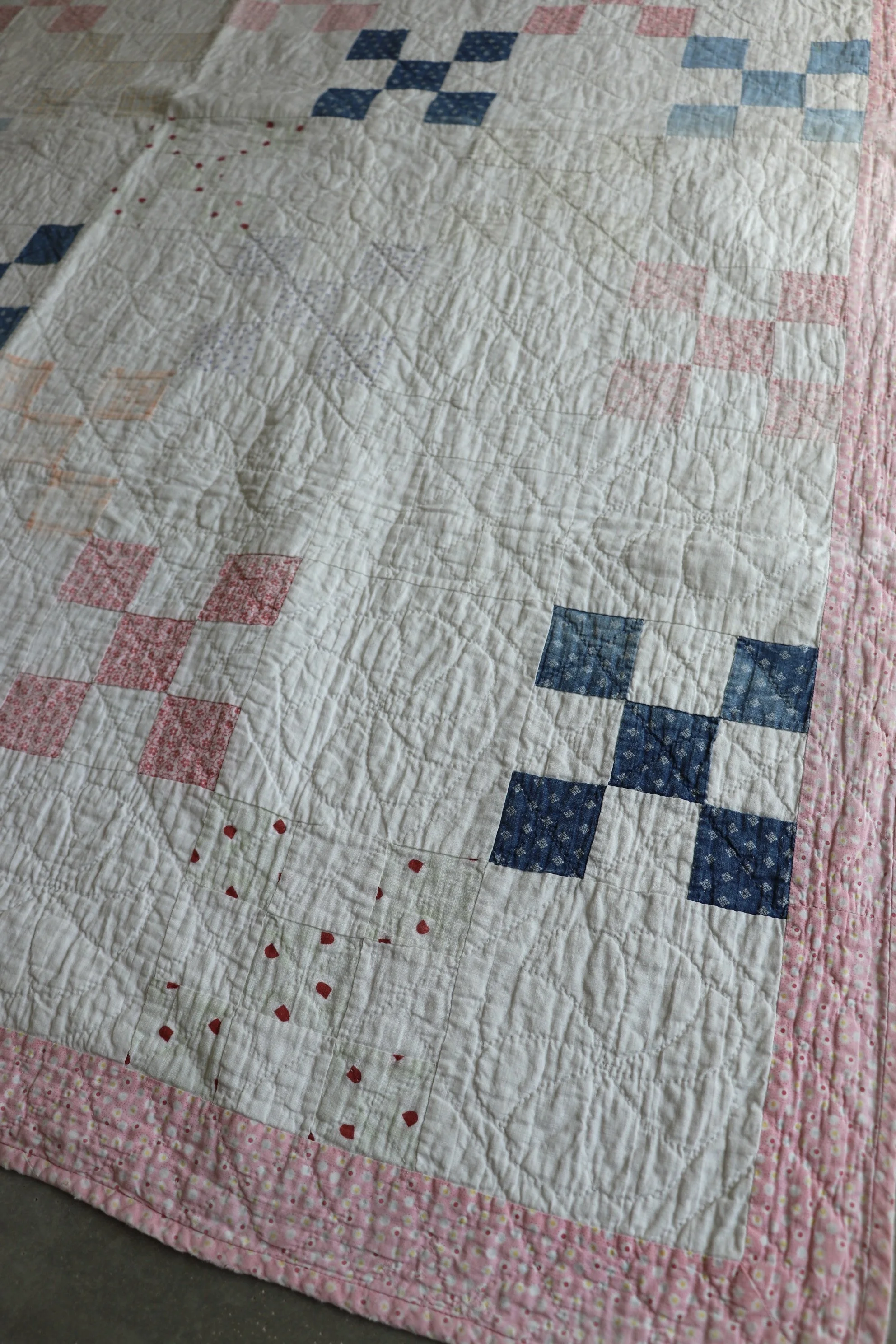
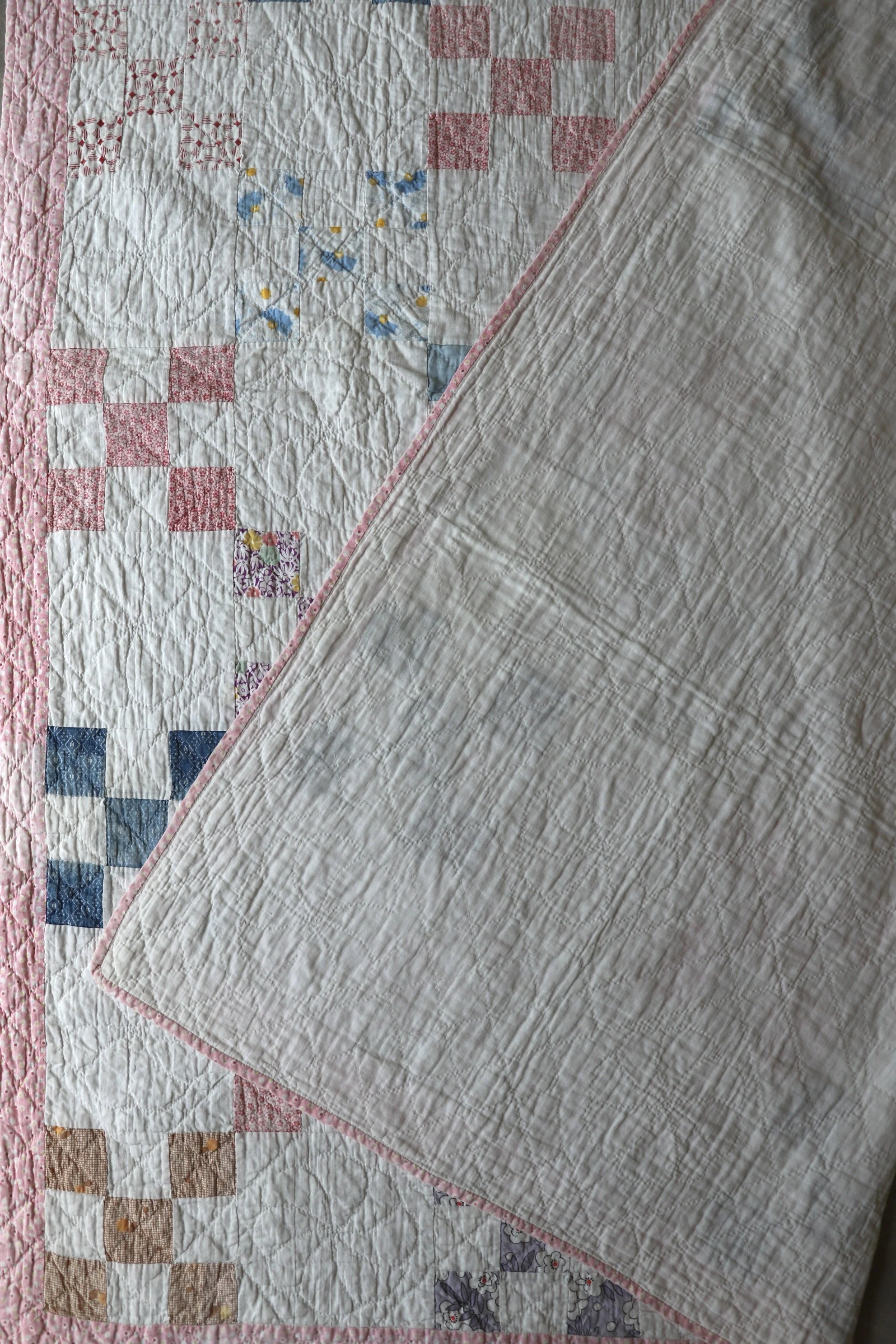
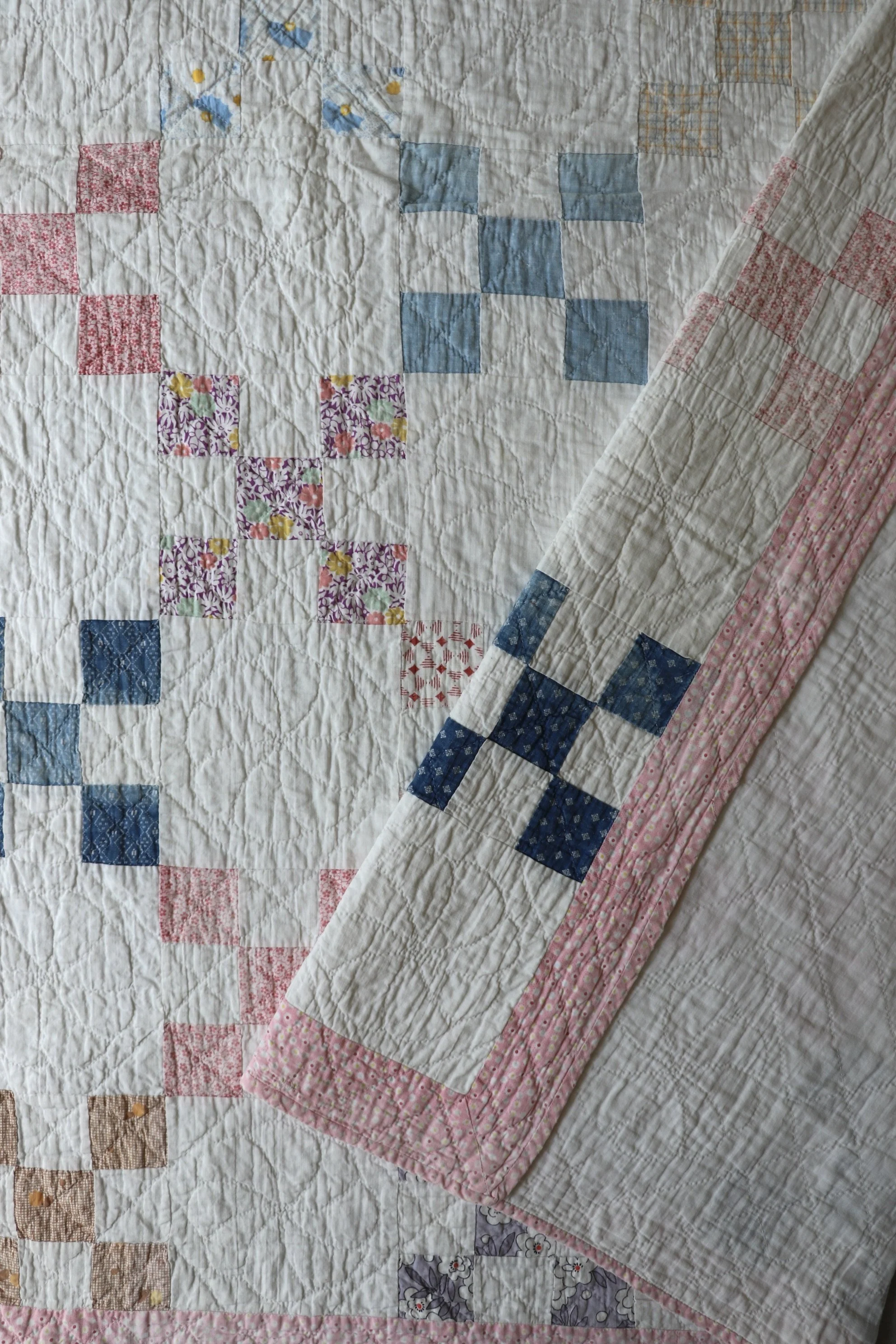
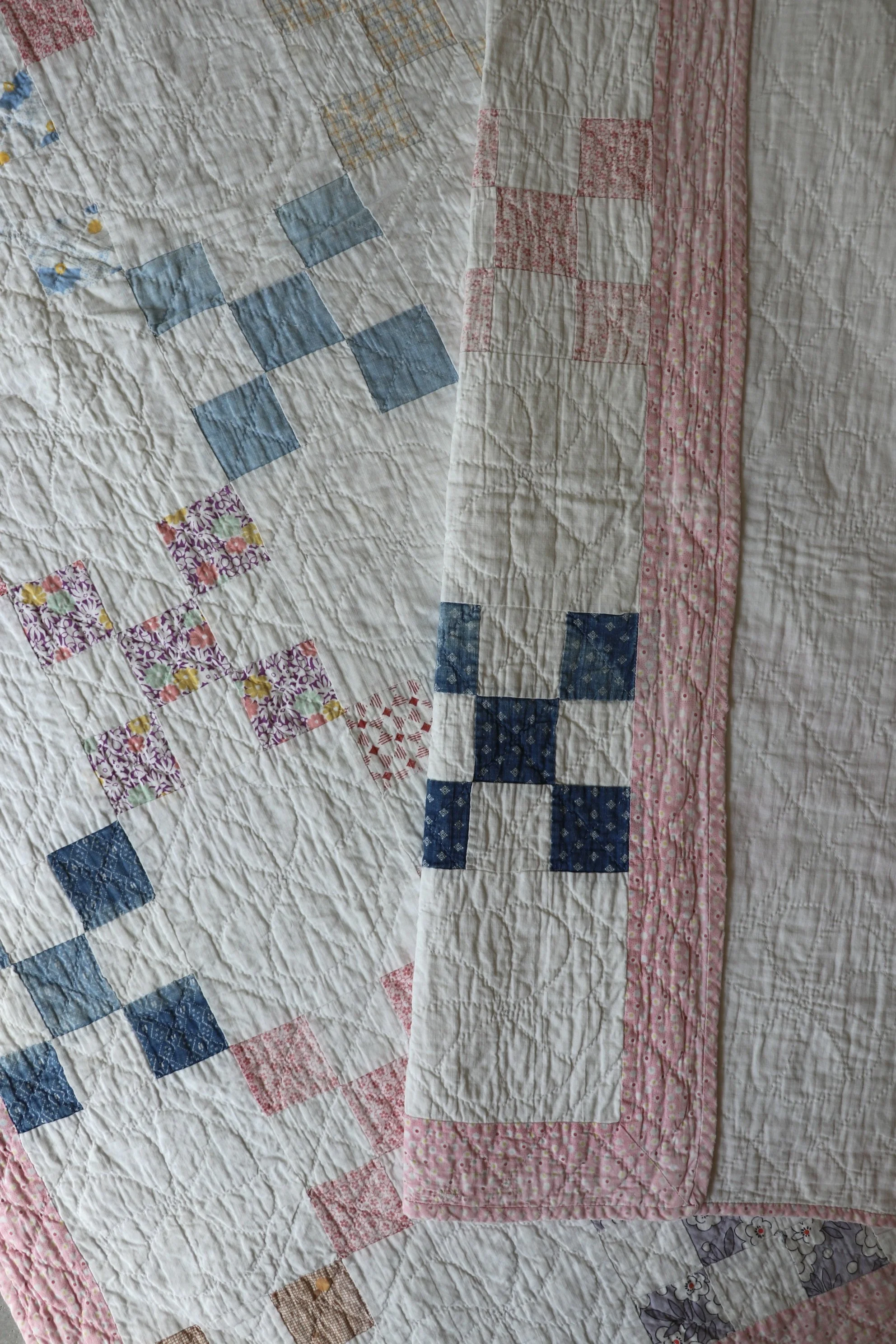
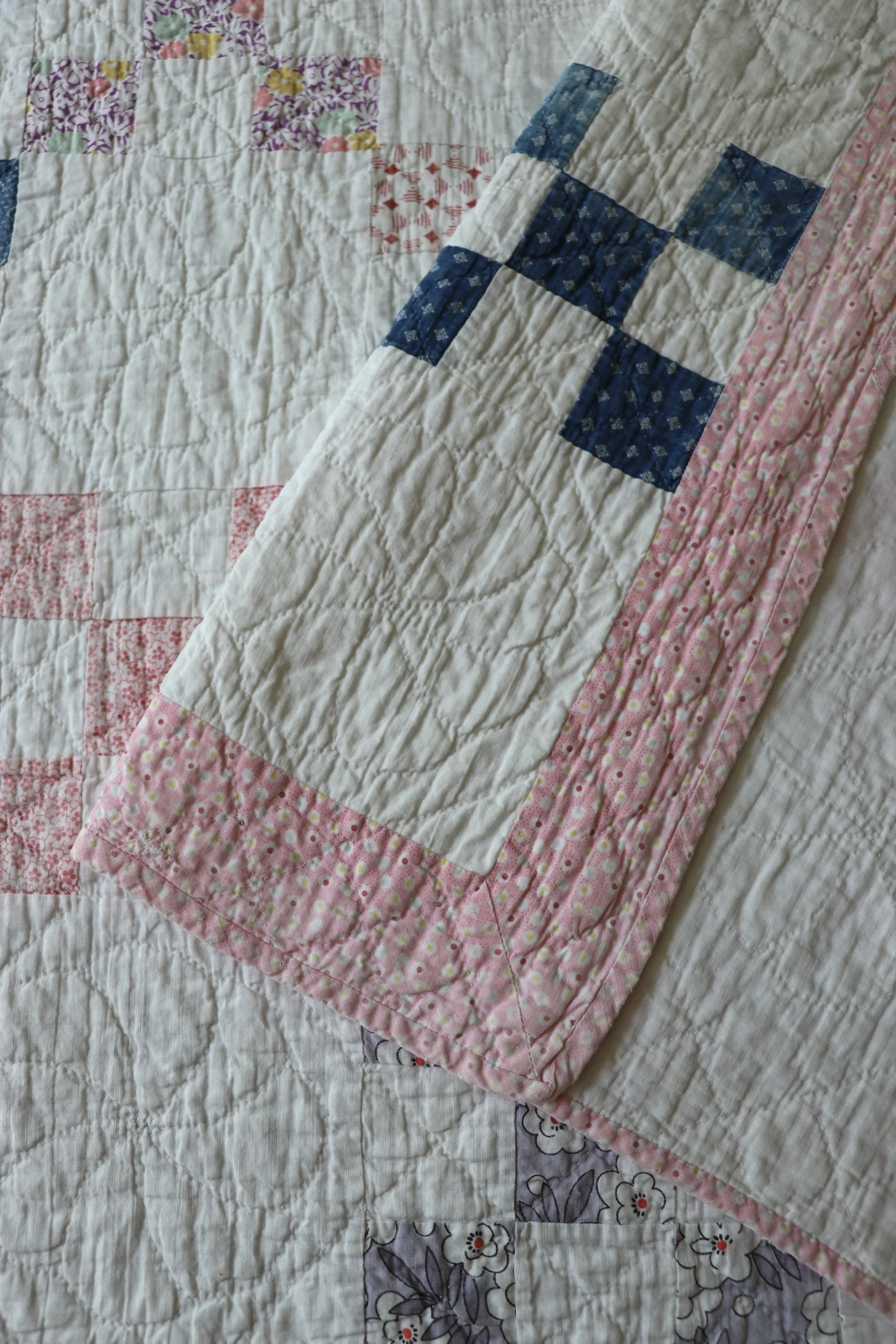
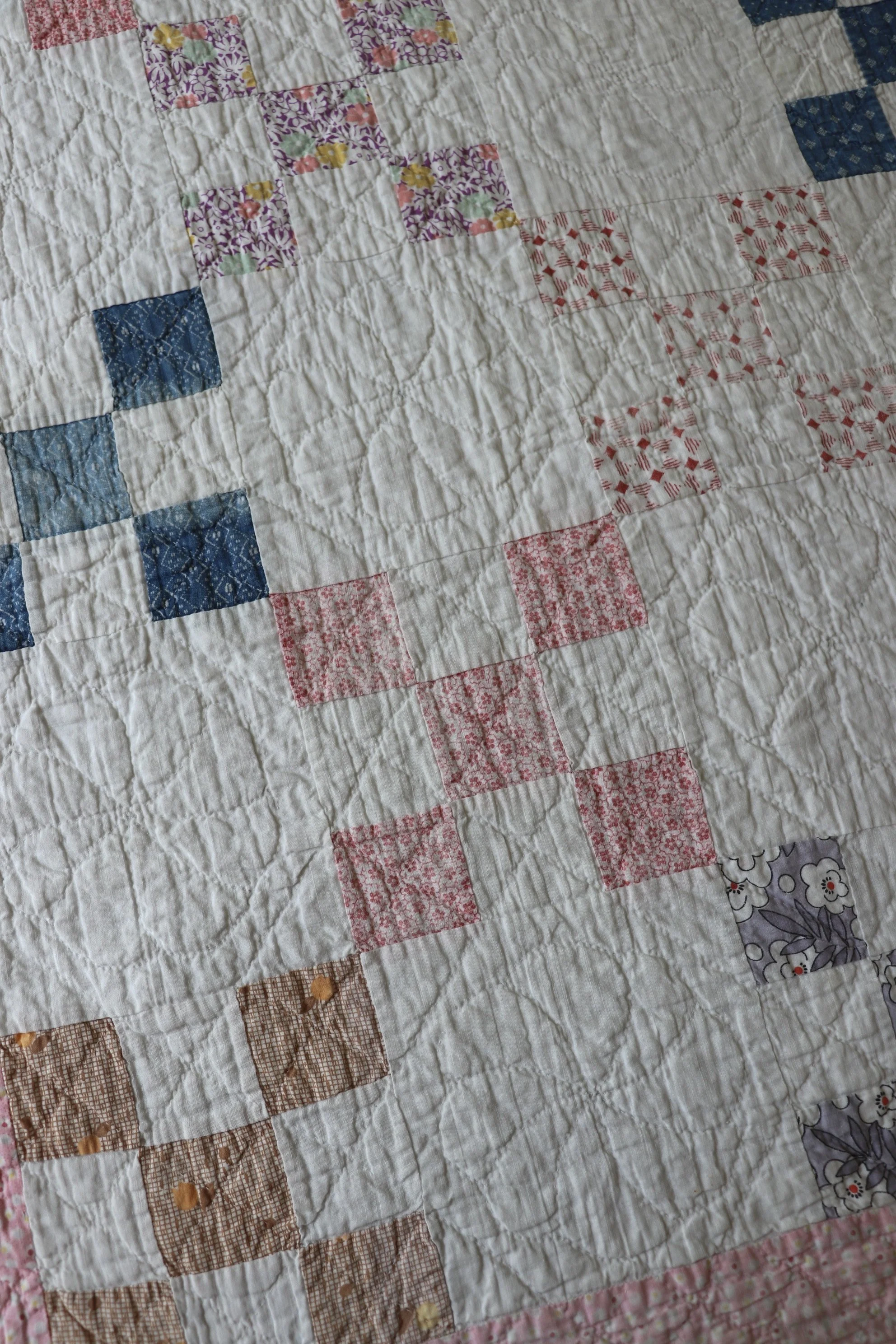
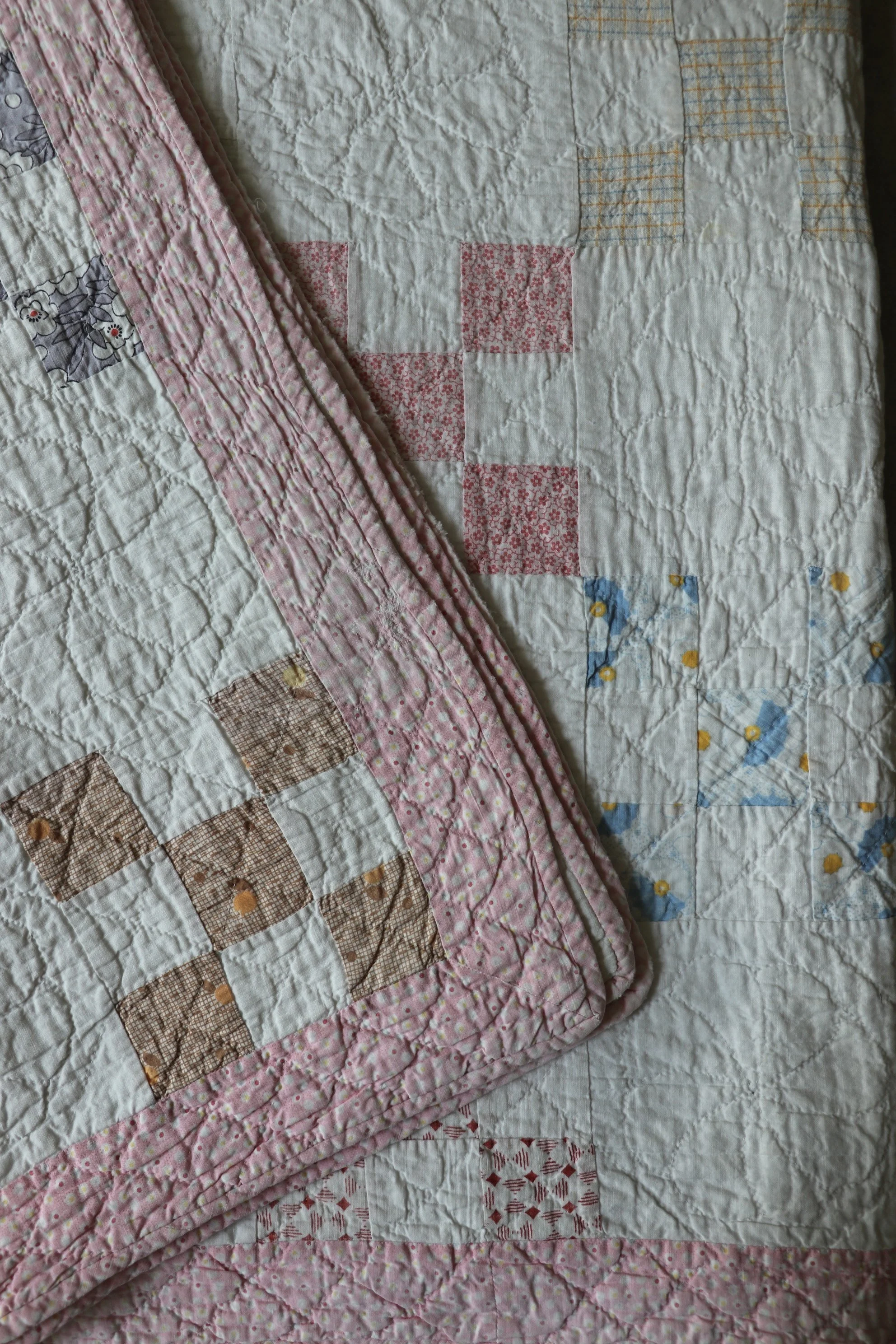
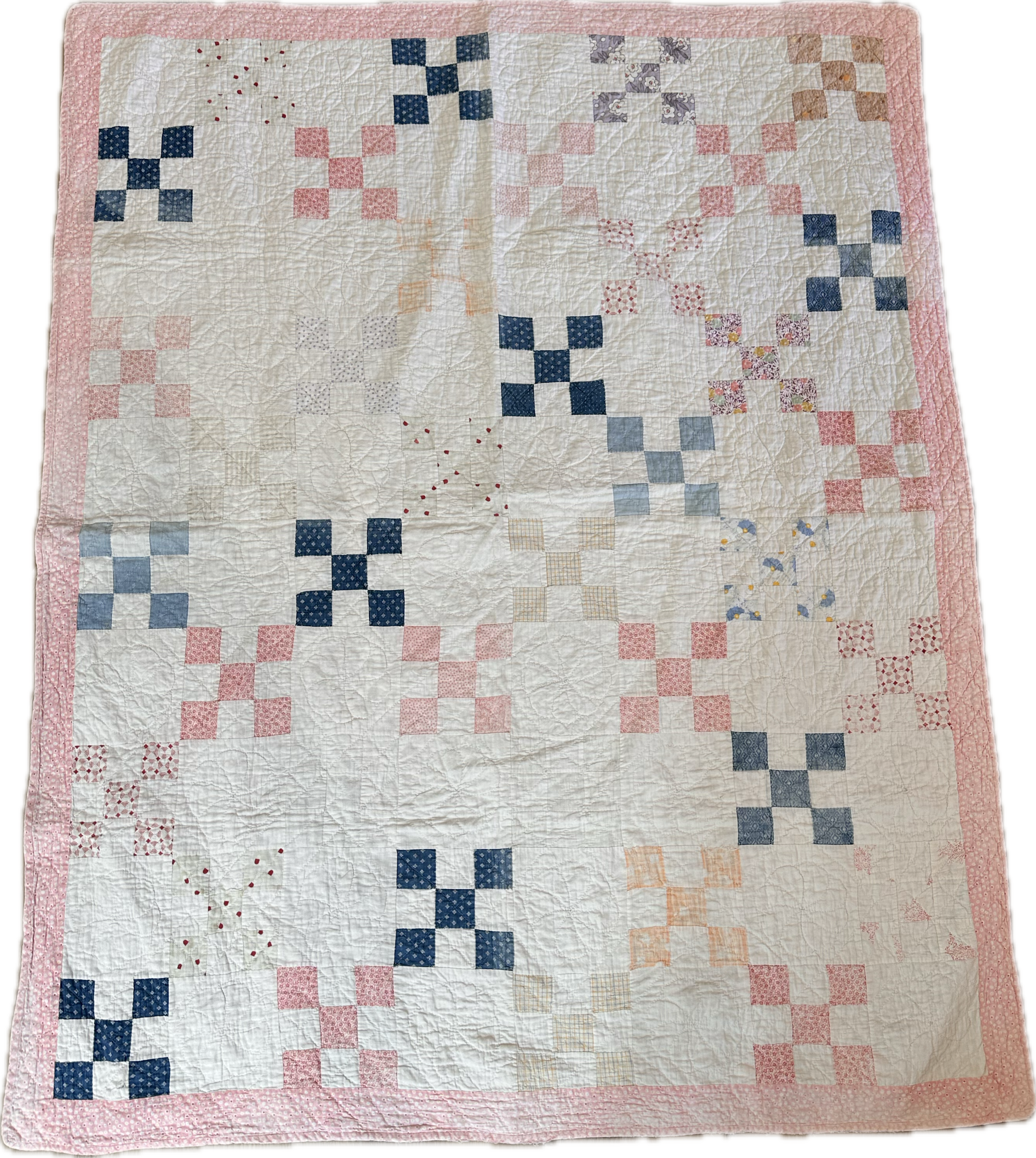
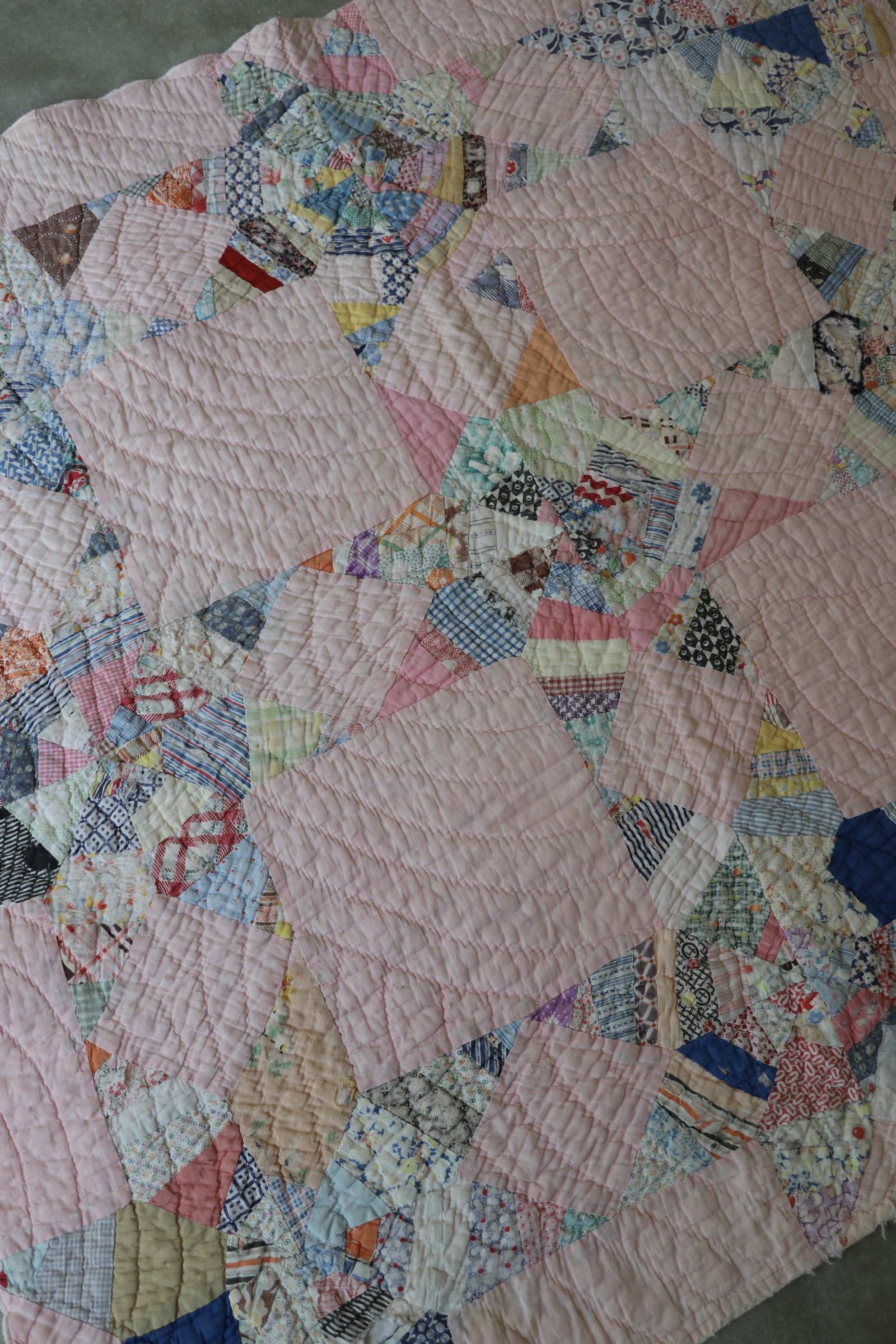
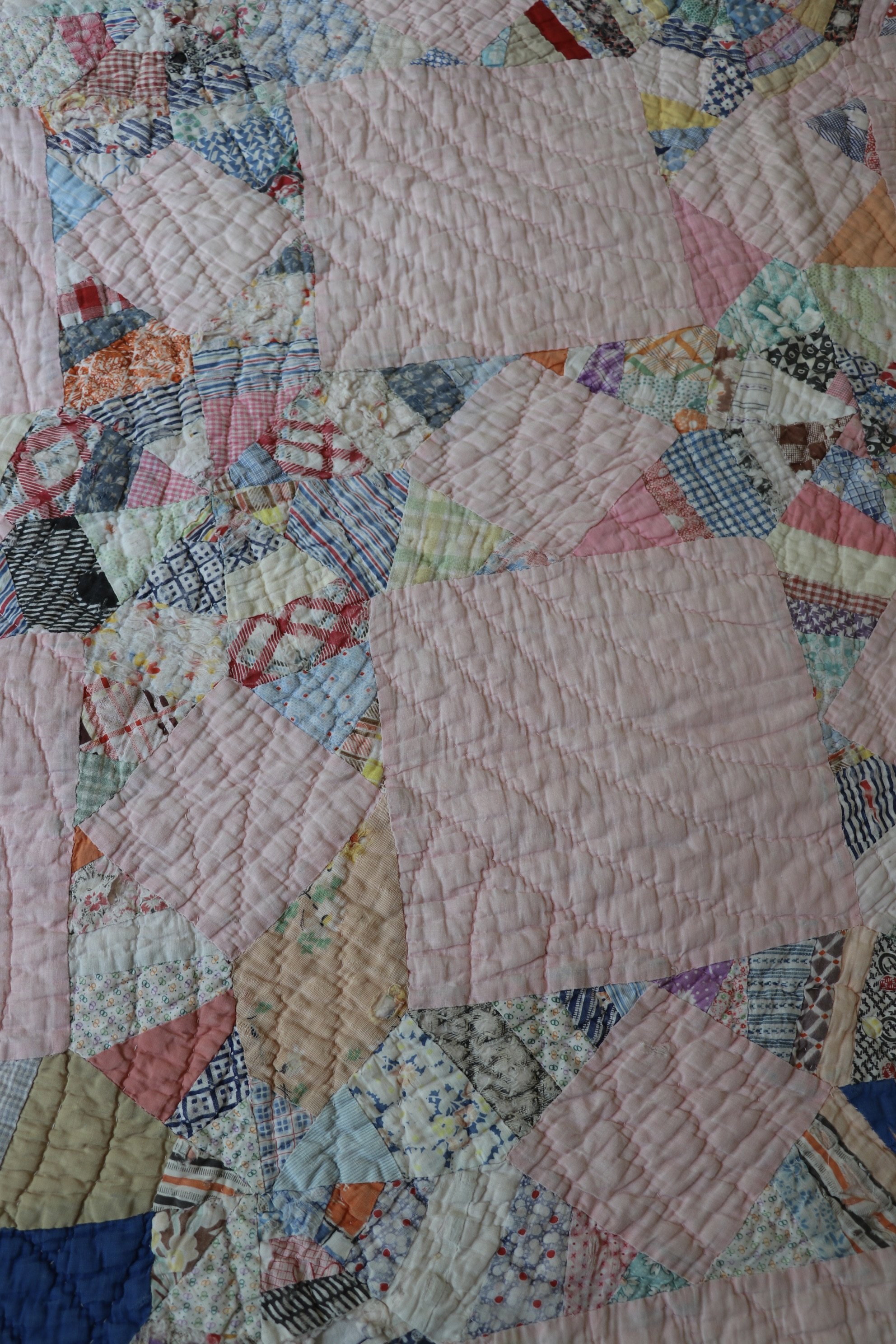
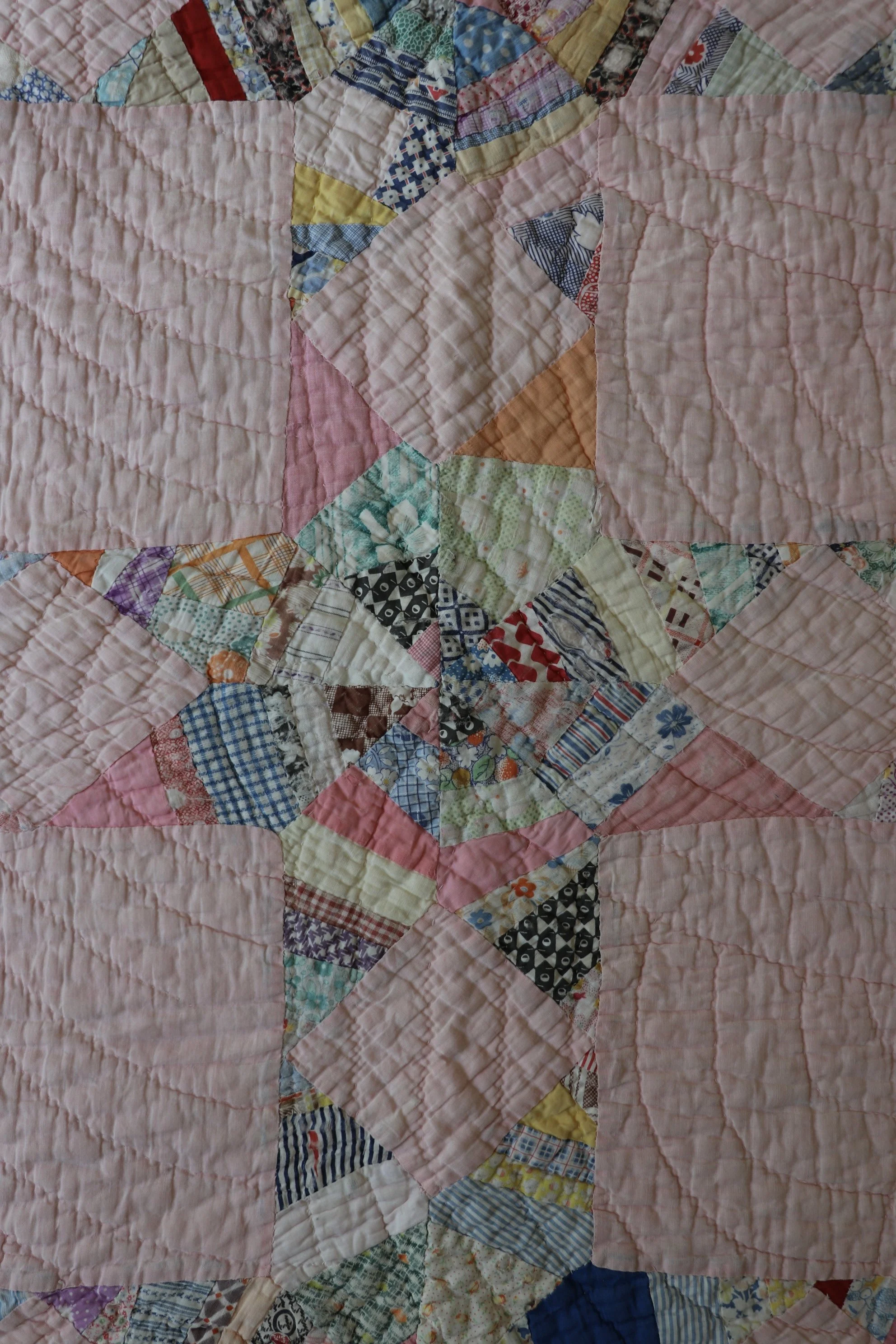
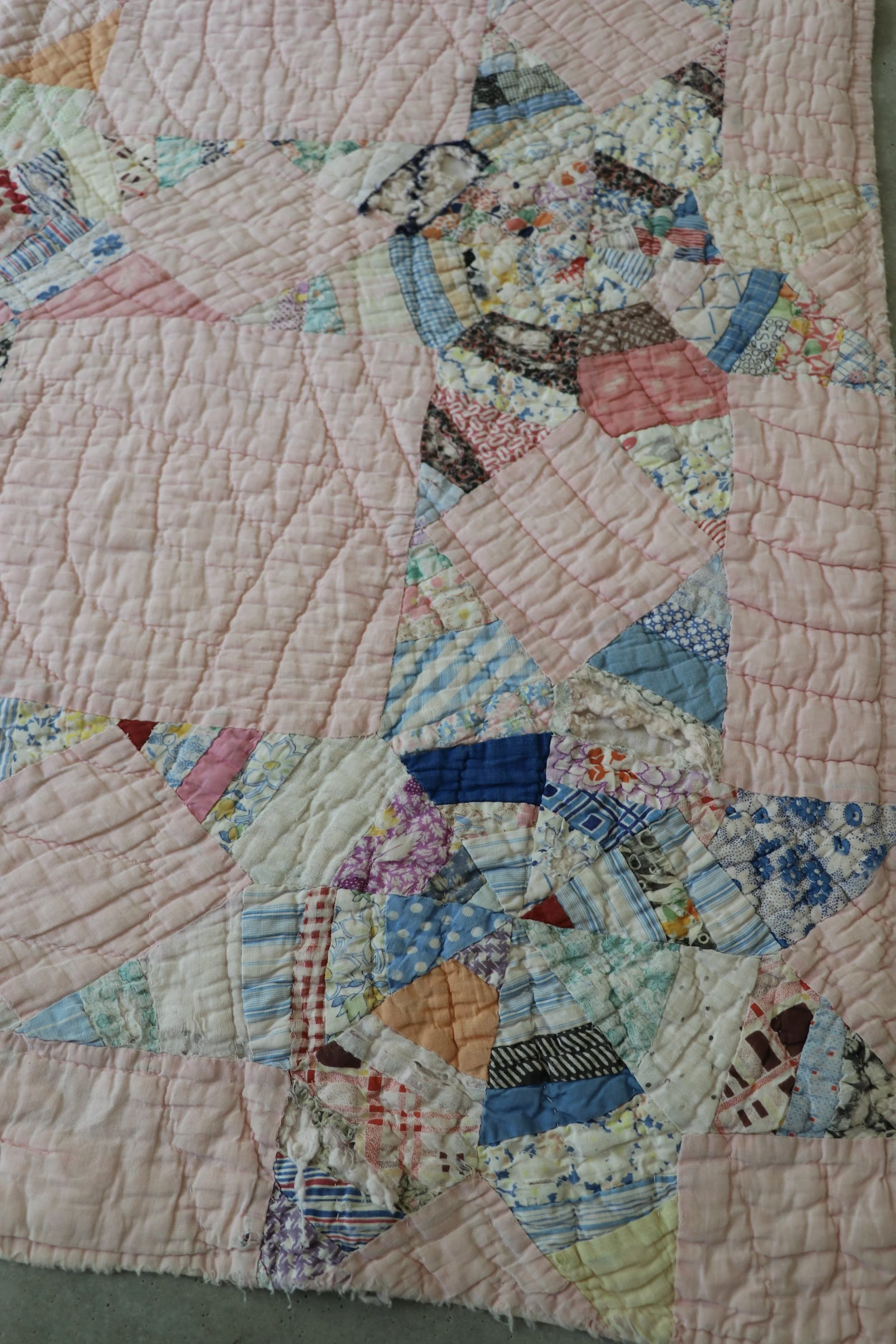
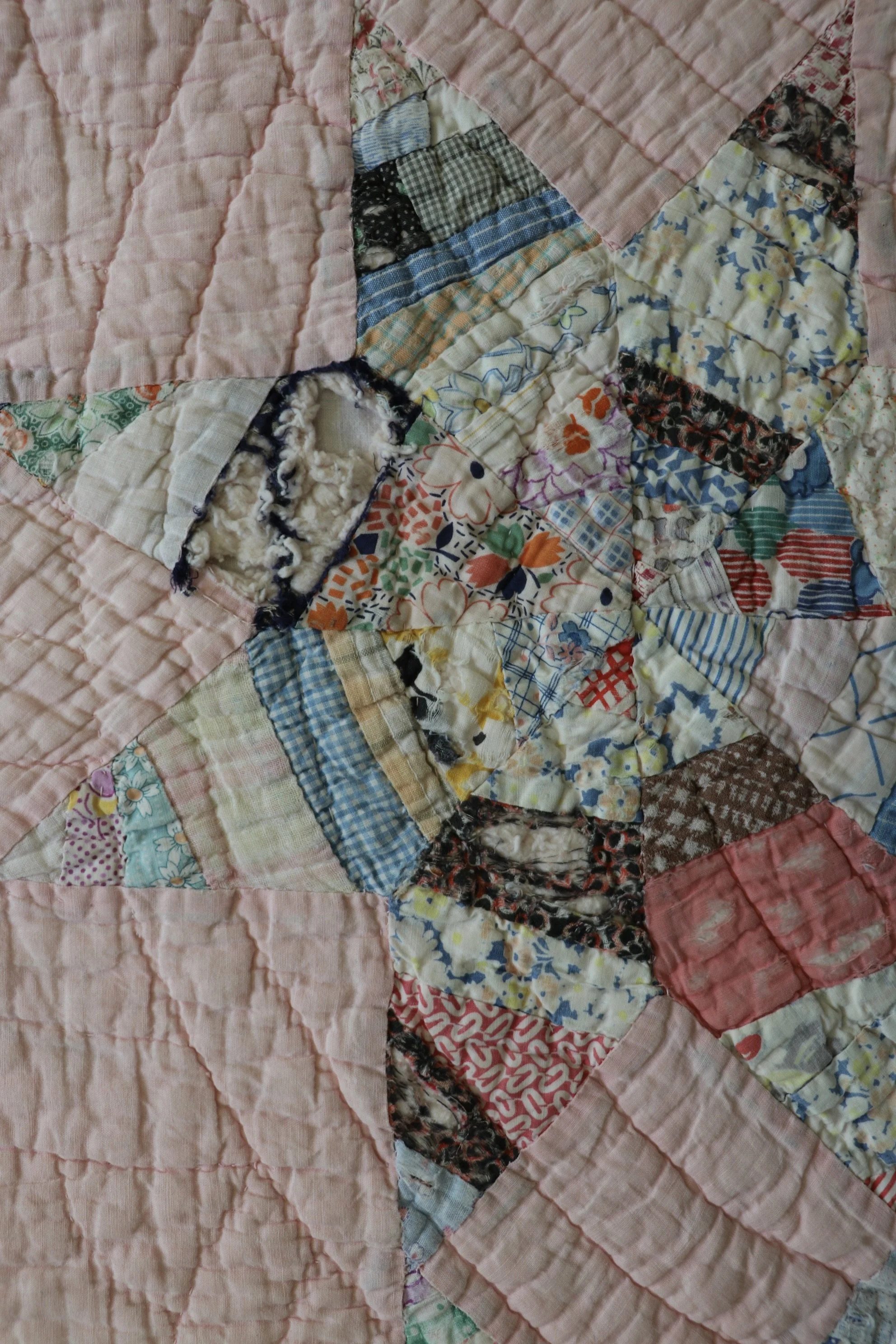
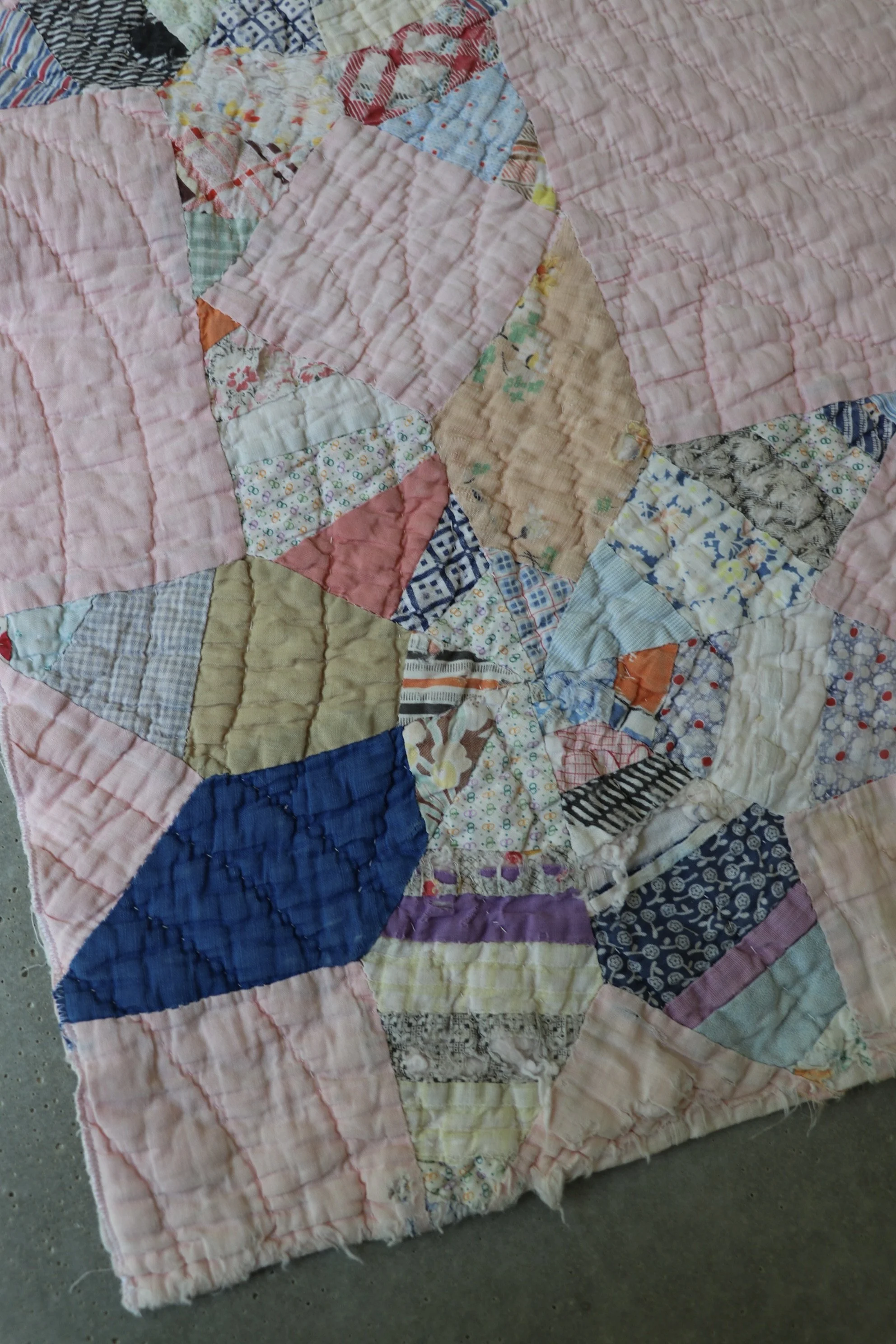
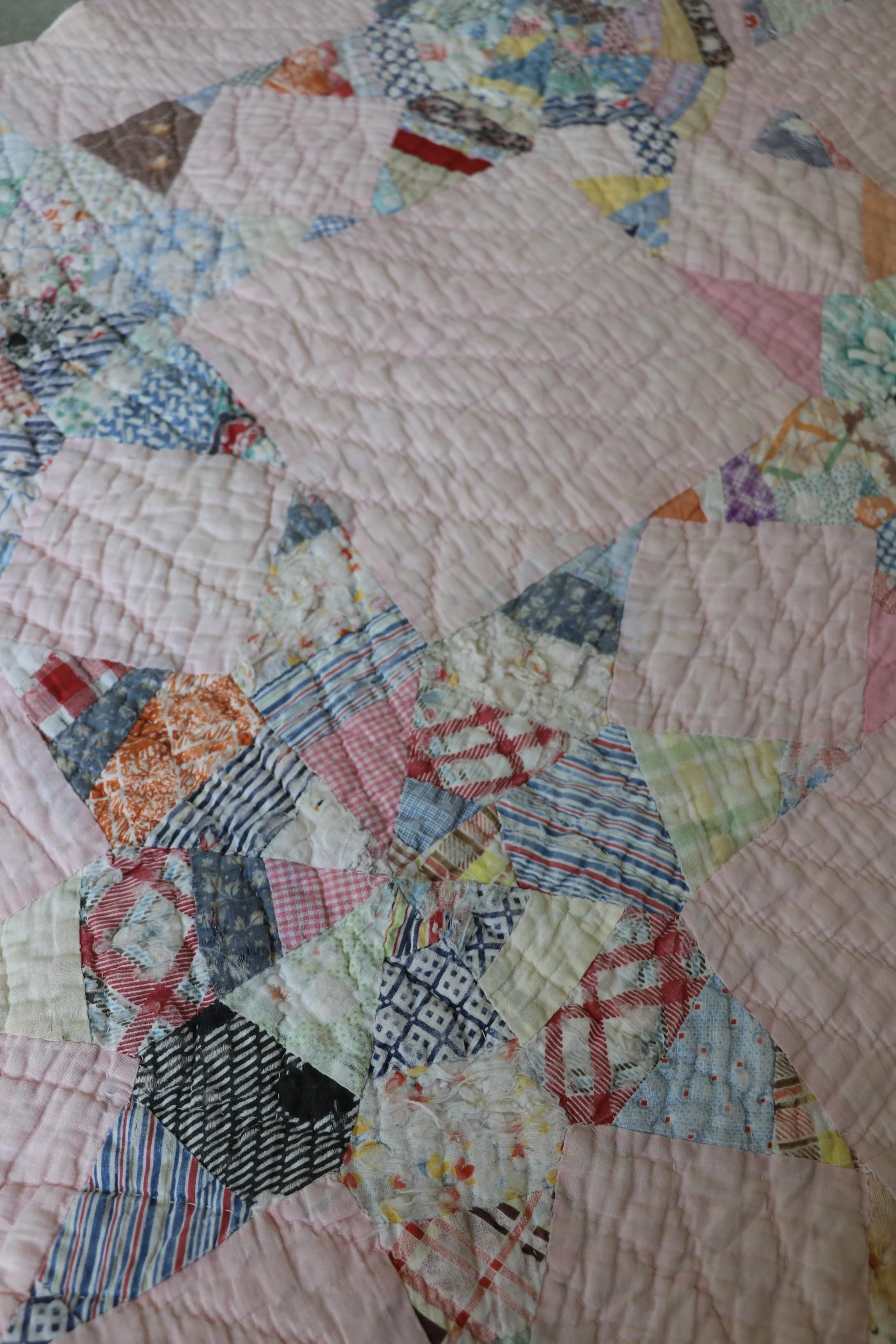
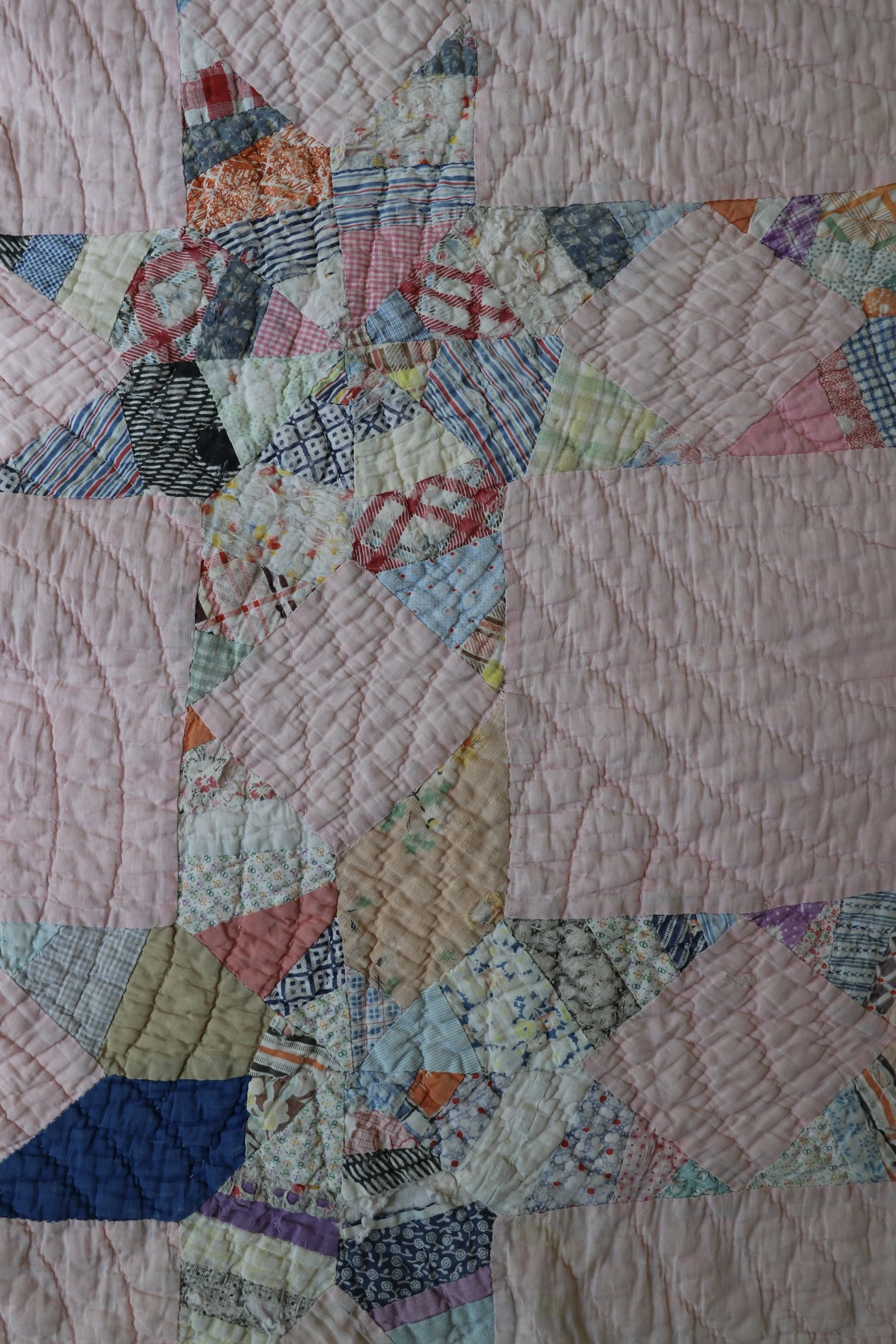
Hand pieced and beautifully hand quilted, this Double Irish Chain quilt pairs hundreds of colorful scrap squares with generous expanses of soft white cotton. Tiny florals, polka dots, plaids, stripes and geometric prints travel across the surface in interlocking chains of turquoise, green, red, yellow, blue and pink. Dense hand quilting gives the white ground wonderful texture, while the varied scraps preserve a charming record of everyday fabrics from the era. Both orderly and wonderfully scrappy, it is a beautiful example of resourceful American quiltmaking.
Historical Period
Depression Era & WWII America | c. 1930–1945
The fabric assortment strongly reflects the resourceful quiltmaking of the 1930s and early 1940s, when even the smallest remnants from dressmaking, household sewing and printed feedsacks were carefully saved. The Double Irish Chain was especially suited to scrap quilting, allowing tiny pieces of treasured fabric to be transformed into an intricate and useful household textile.
About the Pattern
The Double Irish Chain is a classic American quilt pattern distinguished by two interlocking pathways of small squares traveling diagonally across the quilt. Large areas of plain fabric between the chains provide beautiful open spaces for hand quilting. Here, the maker used dozens of different scraps rather than a limited color palette, softening the formal geometry and giving the quilt its wonderfully spontaneous, collected-over-time appearance.
Condition
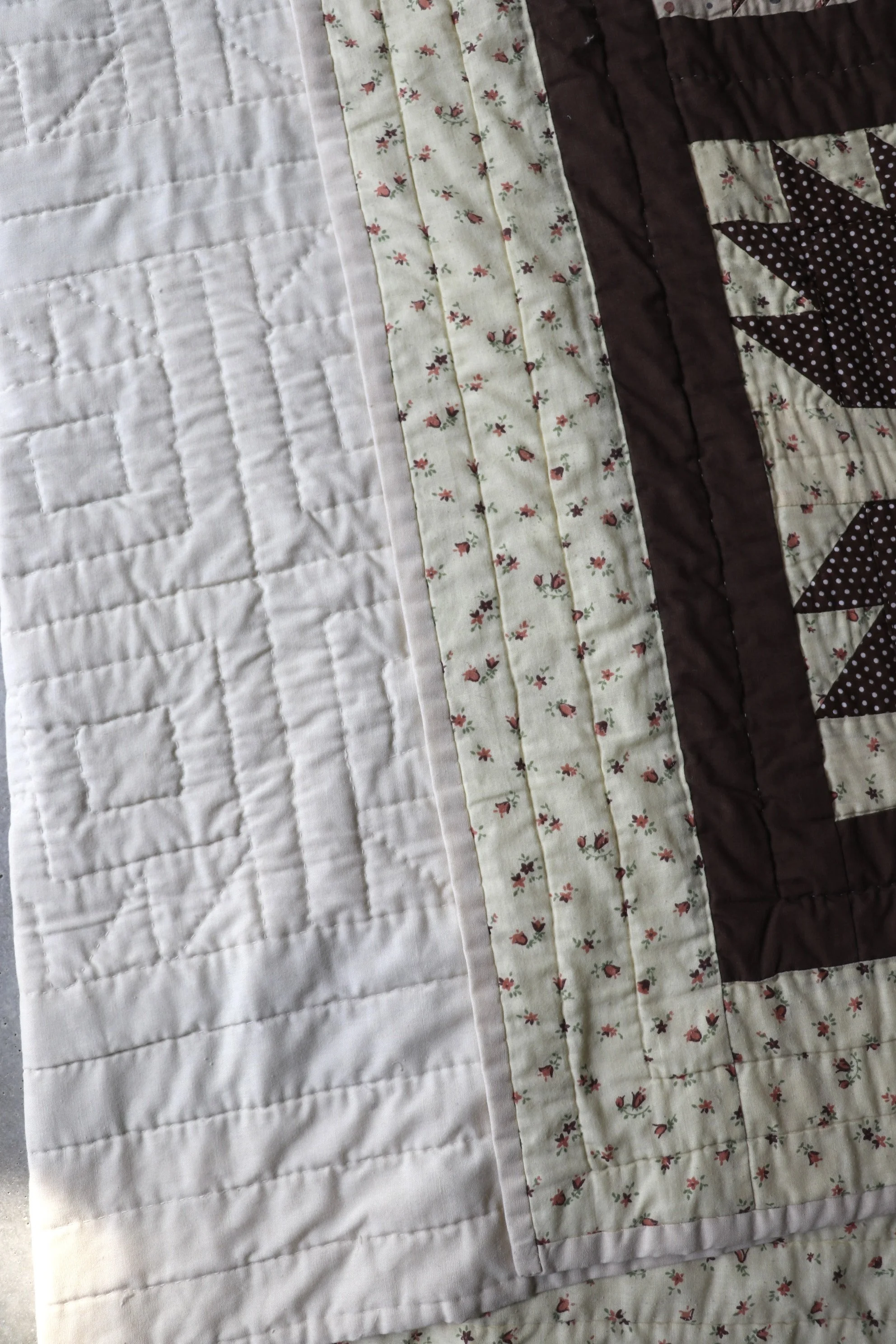
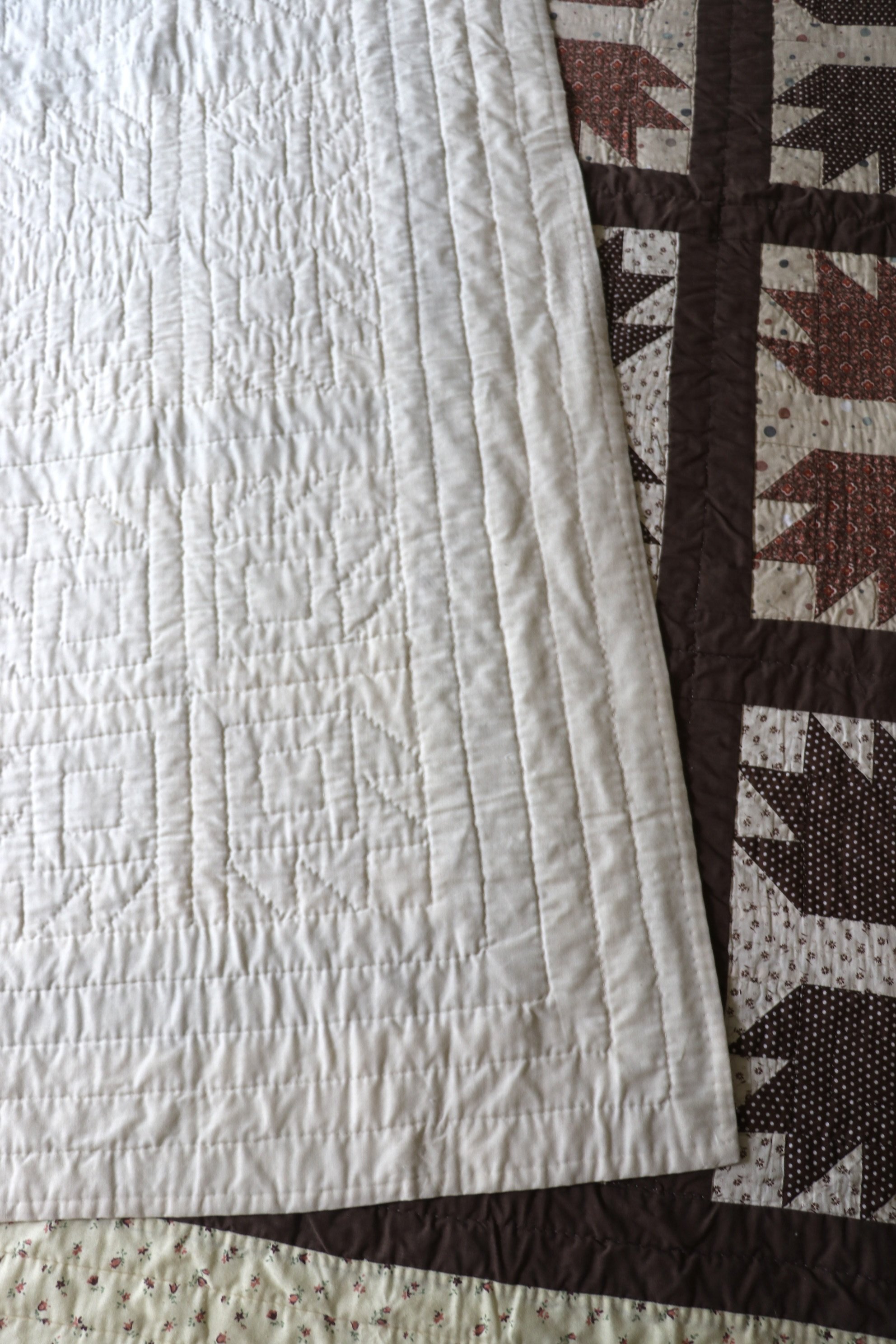
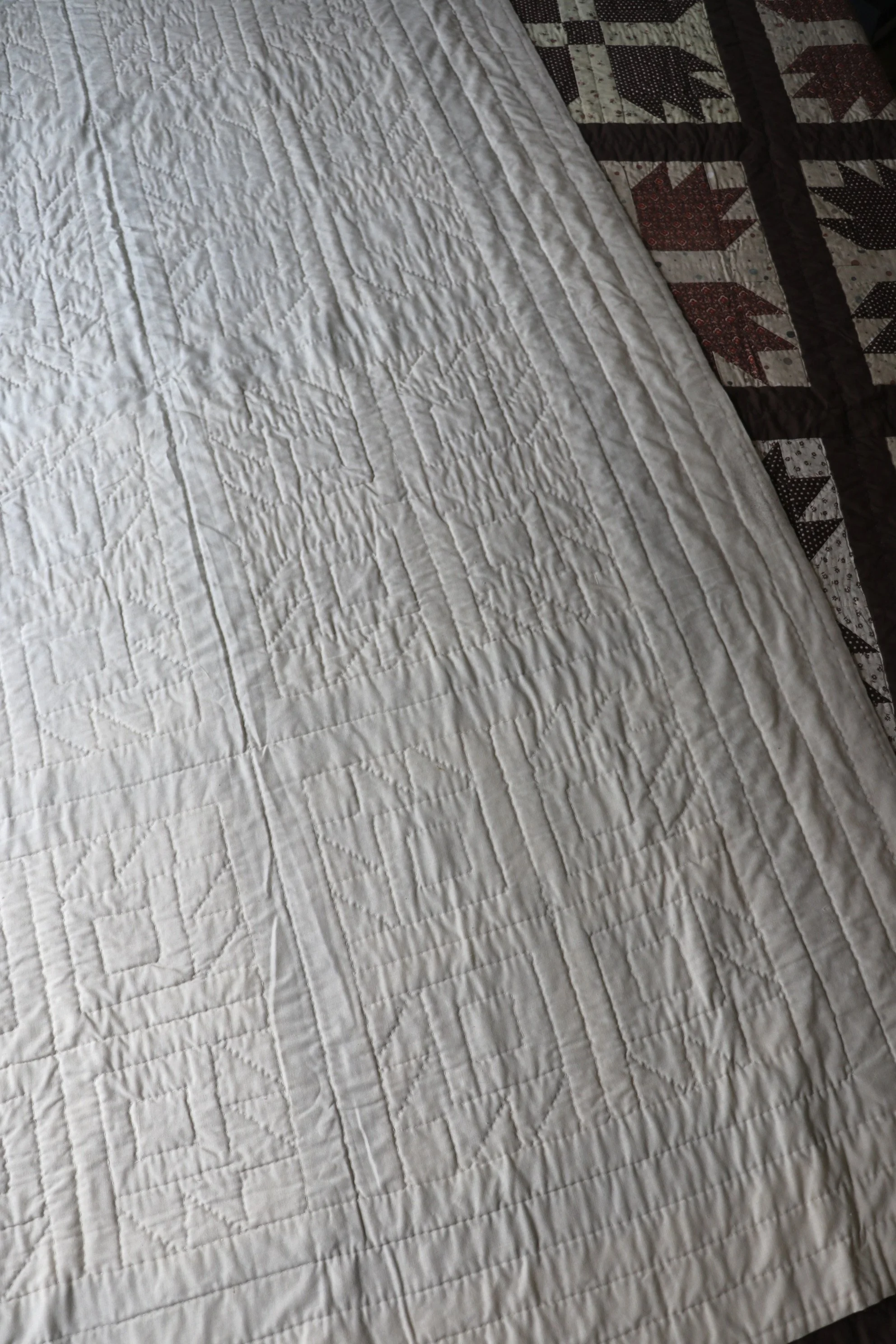
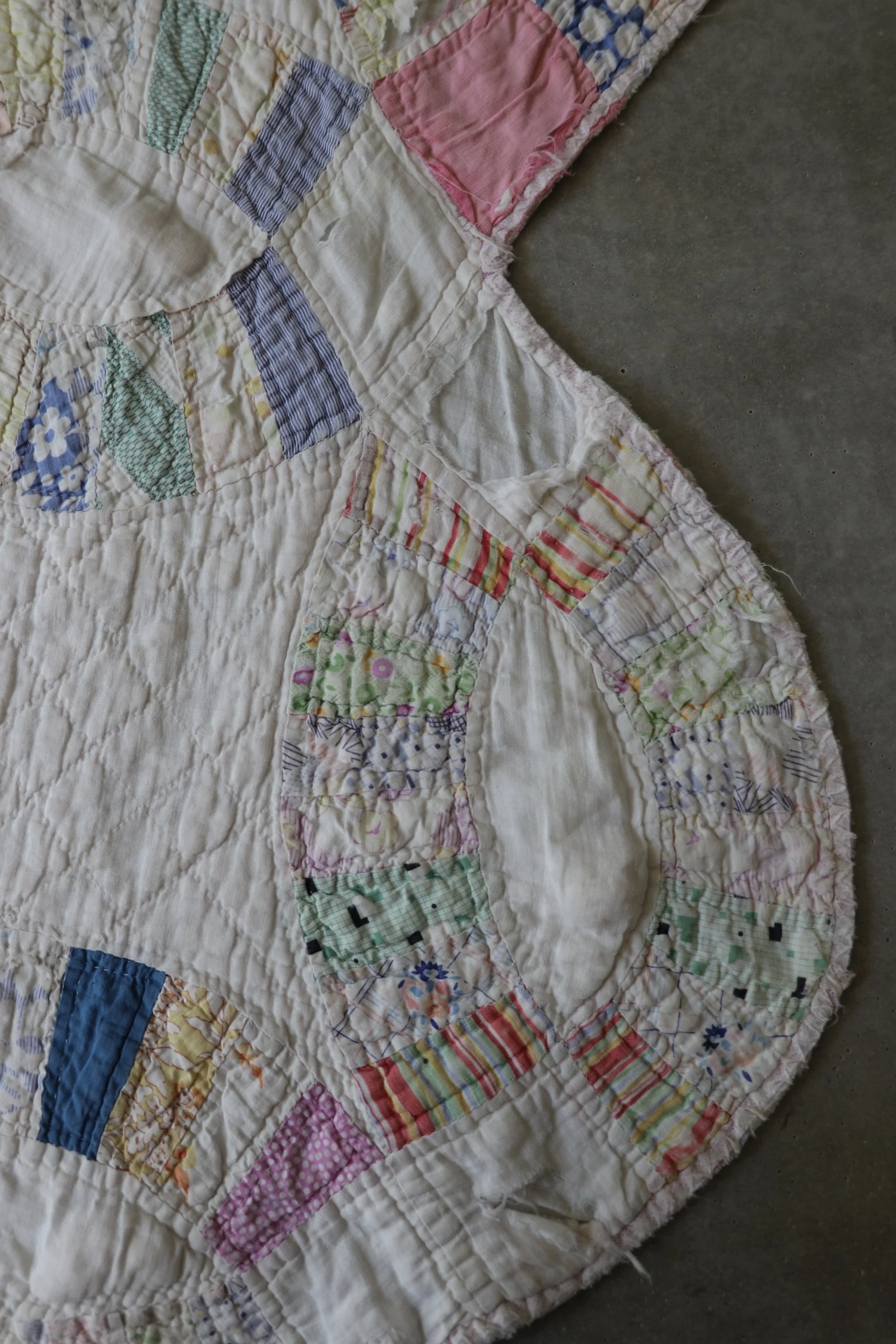
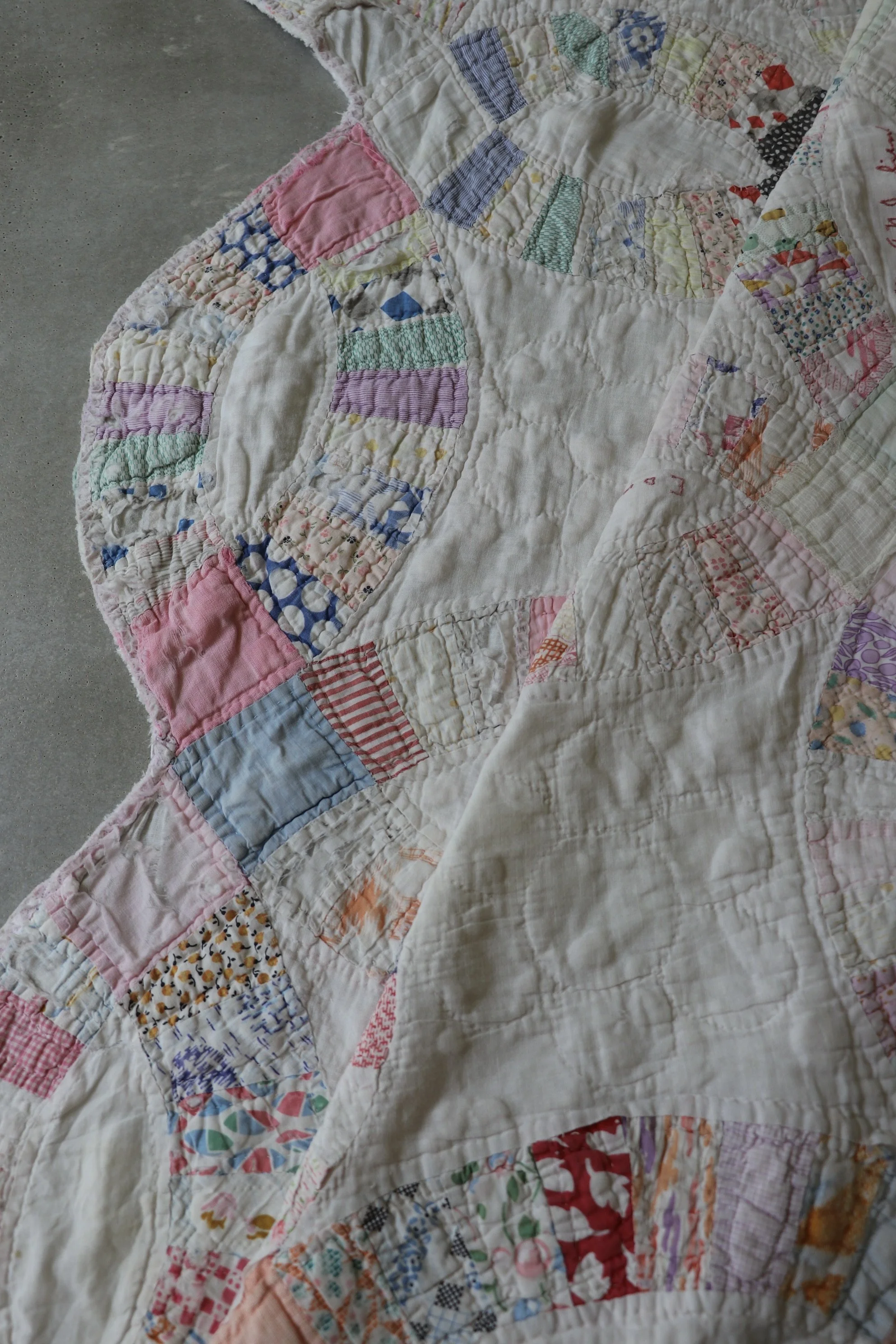
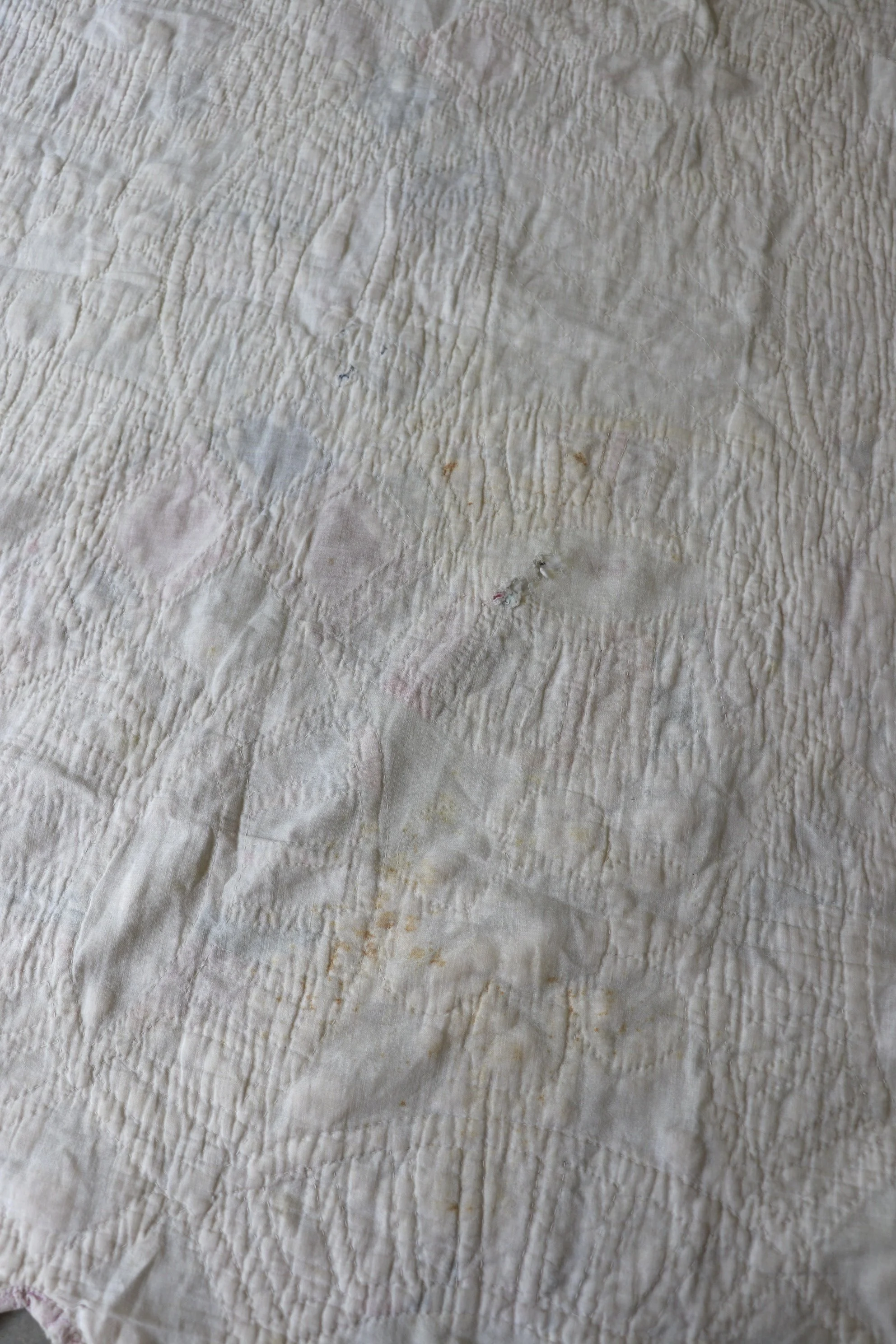
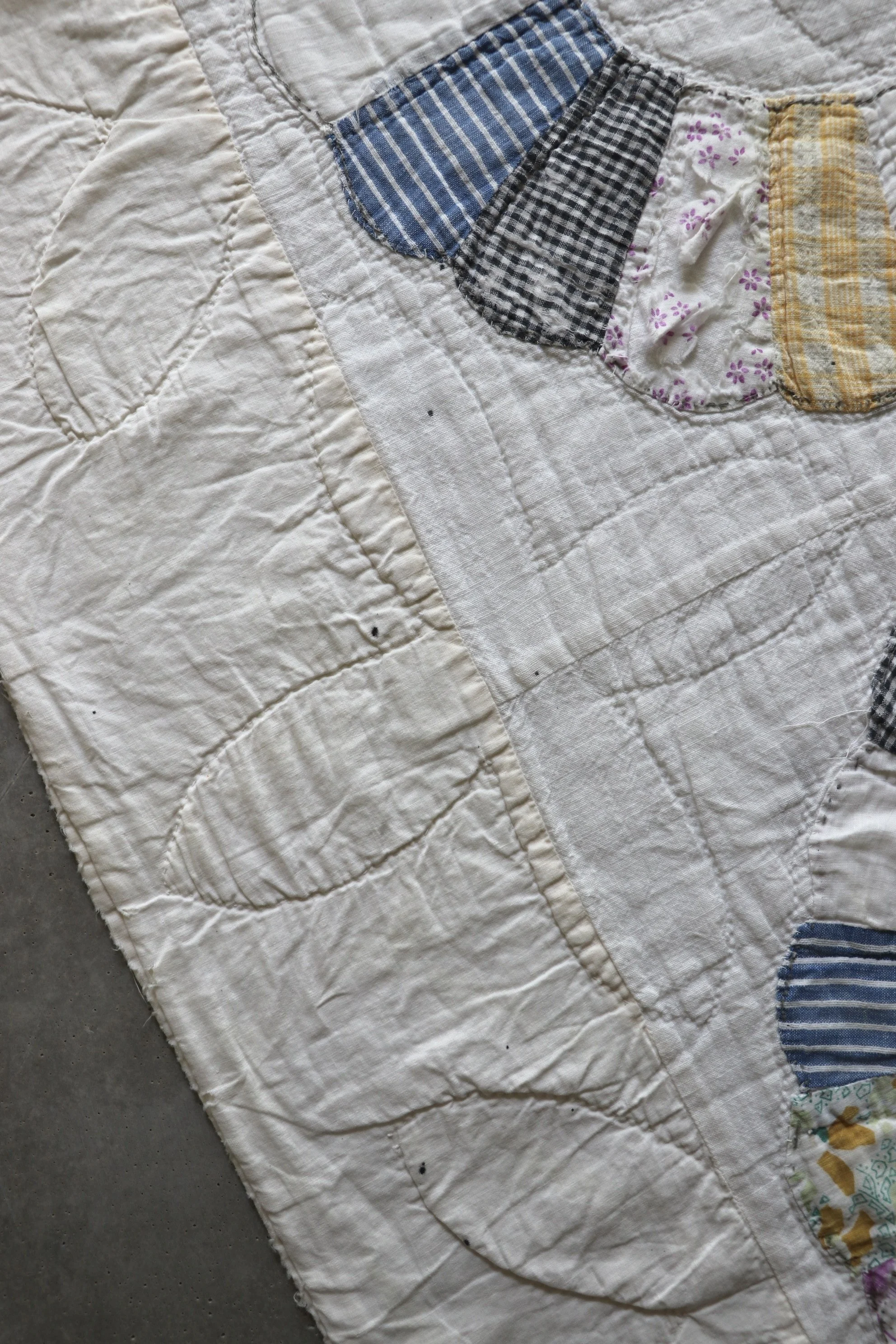
Good vintage condition with age-related wear. The quilt shows expected softening, fading and areas of discoloration consistent with its age and use. Some individual fabrics have faded more considerably, while the white ground has developed a gentle timeworn patina. The hand quilting remains beautifully visible throughout, and the red-and-white printed binding adds a charming finishing detail.
Circa: 1930s–1940s
Size: 87”x69”
Light Weight
Pattern: Double Irish Chain
Construction: Hand pieced & hand quilted
Fabrics: Cotton feedsacks, dress prints, shirtings, plaids & stripes
Description
Hand pieced and beautifully hand quilted, this Double Irish Chain quilt pairs hundreds of colorful scrap squares with generous expanses of soft white cotton. Tiny florals, polka dots, plaids, stripes and geometric prints travel across the surface in interlocking chains of turquoise, green, red, yellow, blue and pink. Dense hand quilting gives the white ground wonderful texture, while the varied scraps preserve a charming record of everyday fabrics from the era. Both orderly and wonderfully scrappy, it is a beautiful example of resourceful American quiltmaking.
Historical Period
Depression Era & WWII America | c. 1930–1945
The fabric assortment strongly reflects the resourceful quiltmaking of the 1930s and early 1940s, when even the smallest remnants from dressmaking, household sewing and printed feedsacks were carefully saved. The Double Irish Chain was especially suited to scrap quilting, allowing tiny pieces of treasured fabric to be transformed into an intricate and useful household textile.
About the Pattern
The Double Irish Chain is a classic American quilt pattern distinguished by two interlocking pathways of small squares traveling diagonally across the quilt. Large areas of plain fabric between the chains provide beautiful open spaces for hand quilting. Here, the maker used dozens of different scraps rather than a limited color palette, softening the formal geometry and giving the quilt its wonderfully spontaneous, collected-over-time appearance.
Condition
Good vintage condition with age-related wear. The quilt shows expected softening, fading and areas of discoloration consistent with its age and use. Some individual fabrics have faded more considerably, while the white ground has developed a gentle timeworn patina. The hand quilting remains beautifully visible throughout, and the red-and-white printed binding adds a charming finishing detail.

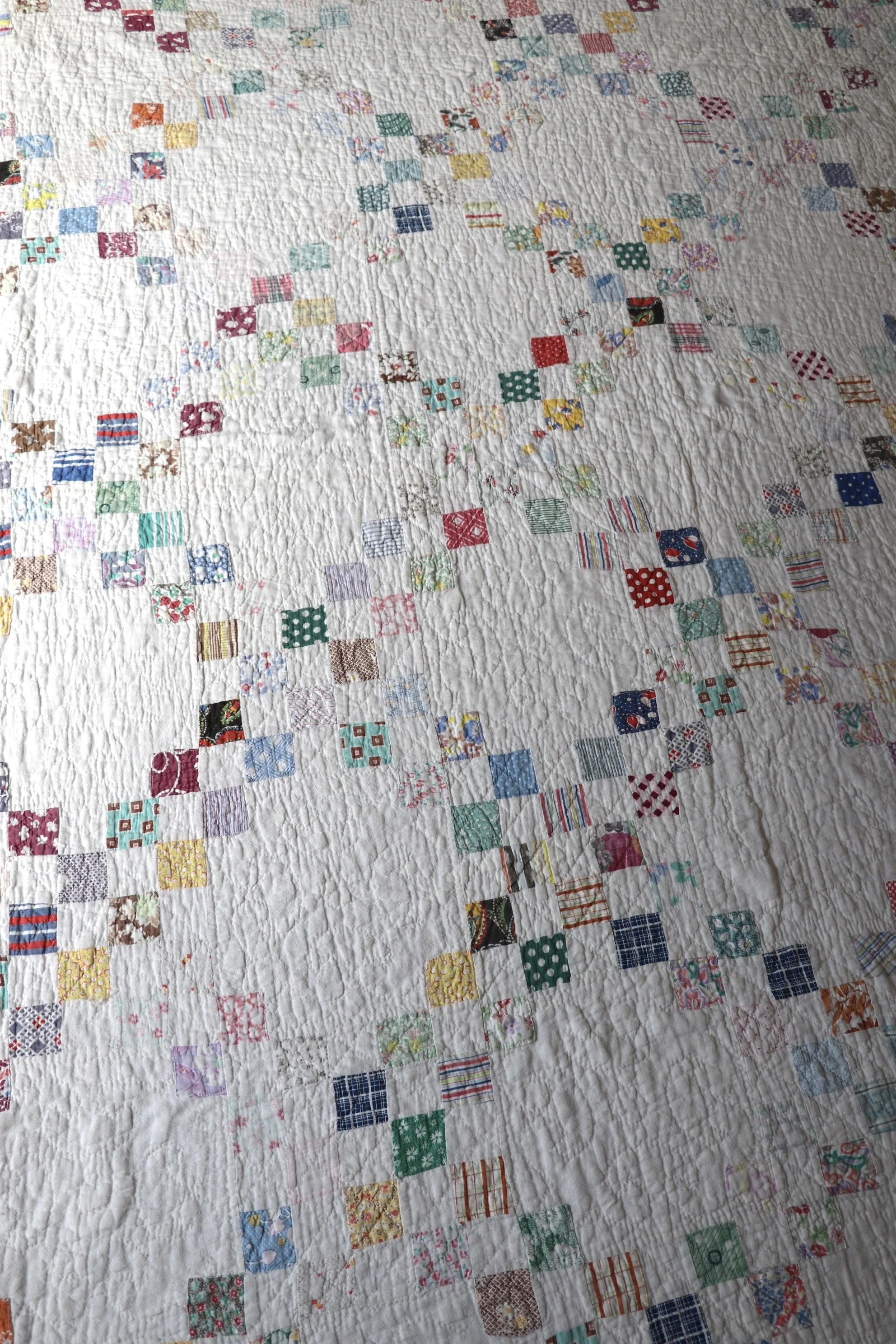 Image 1 of 17
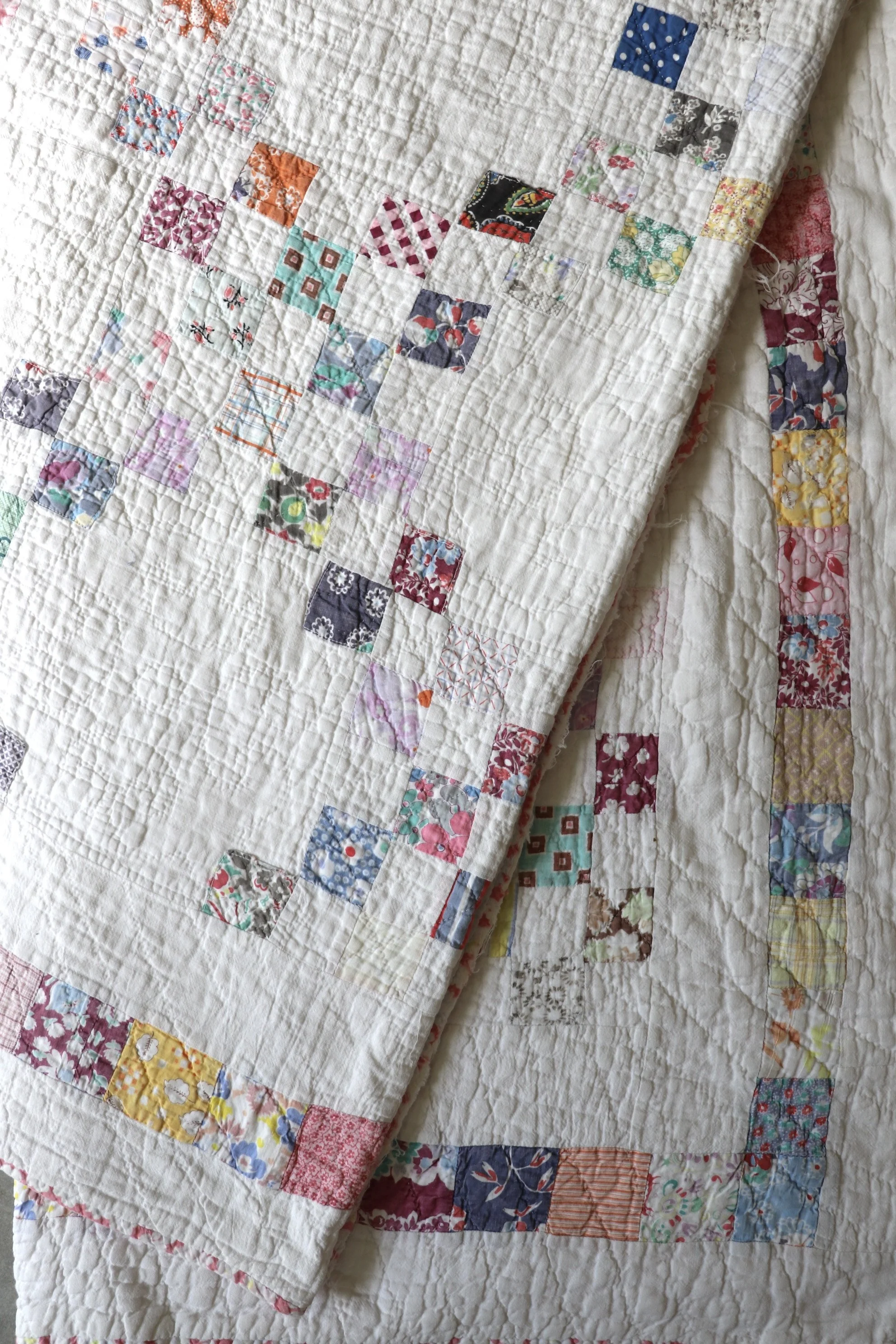 Image 2 of 17
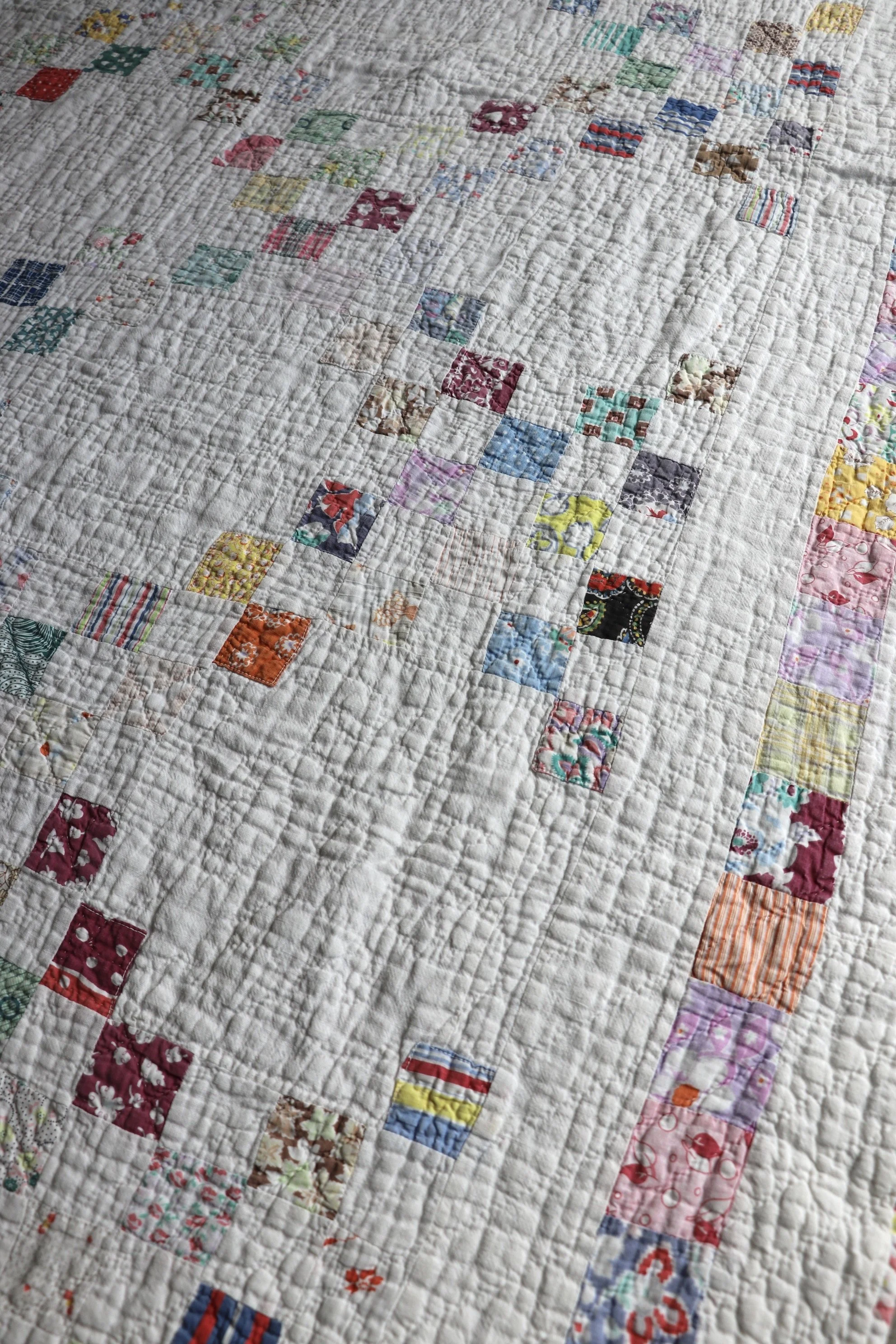 Image 3 of 17
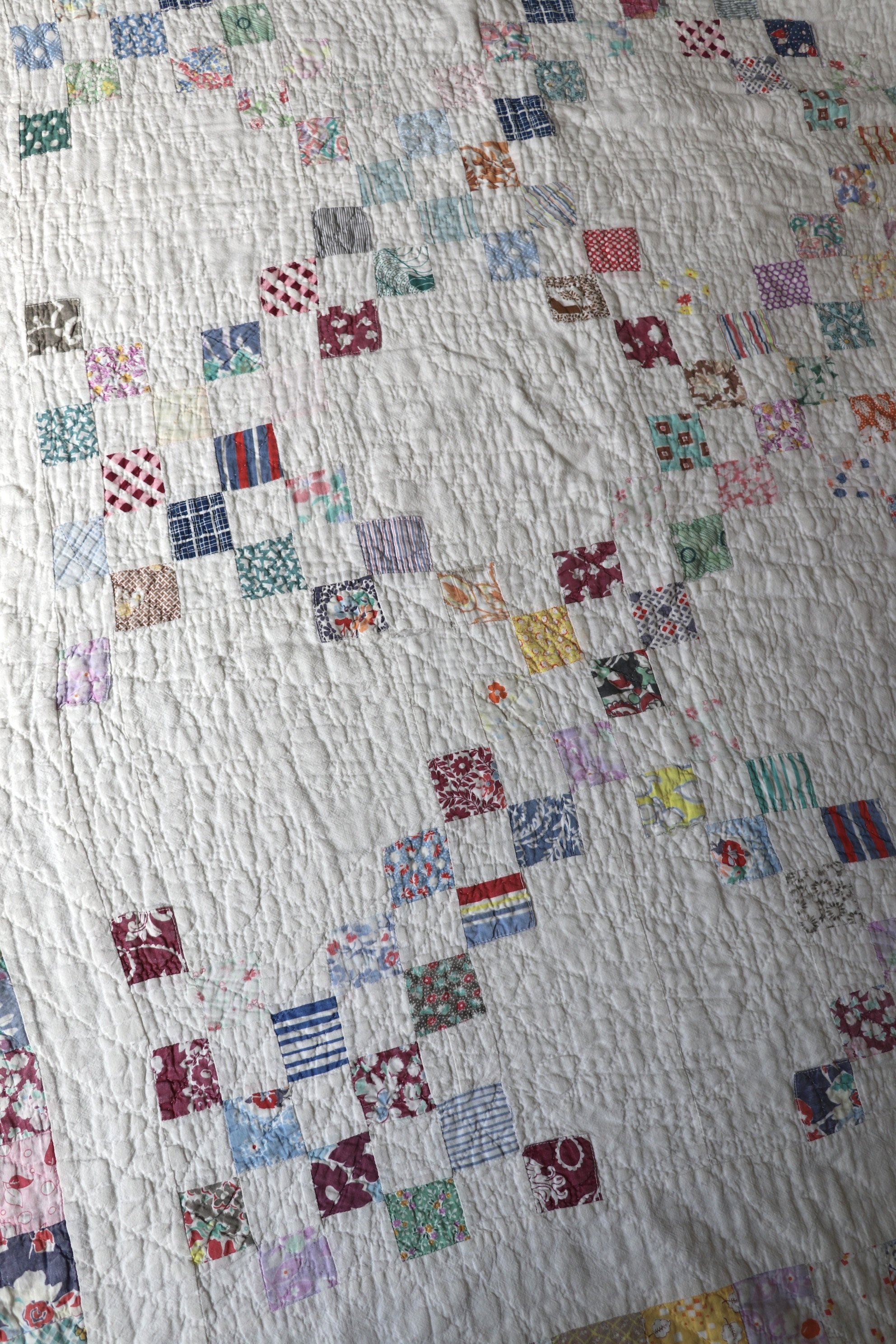 Image 4 of 17
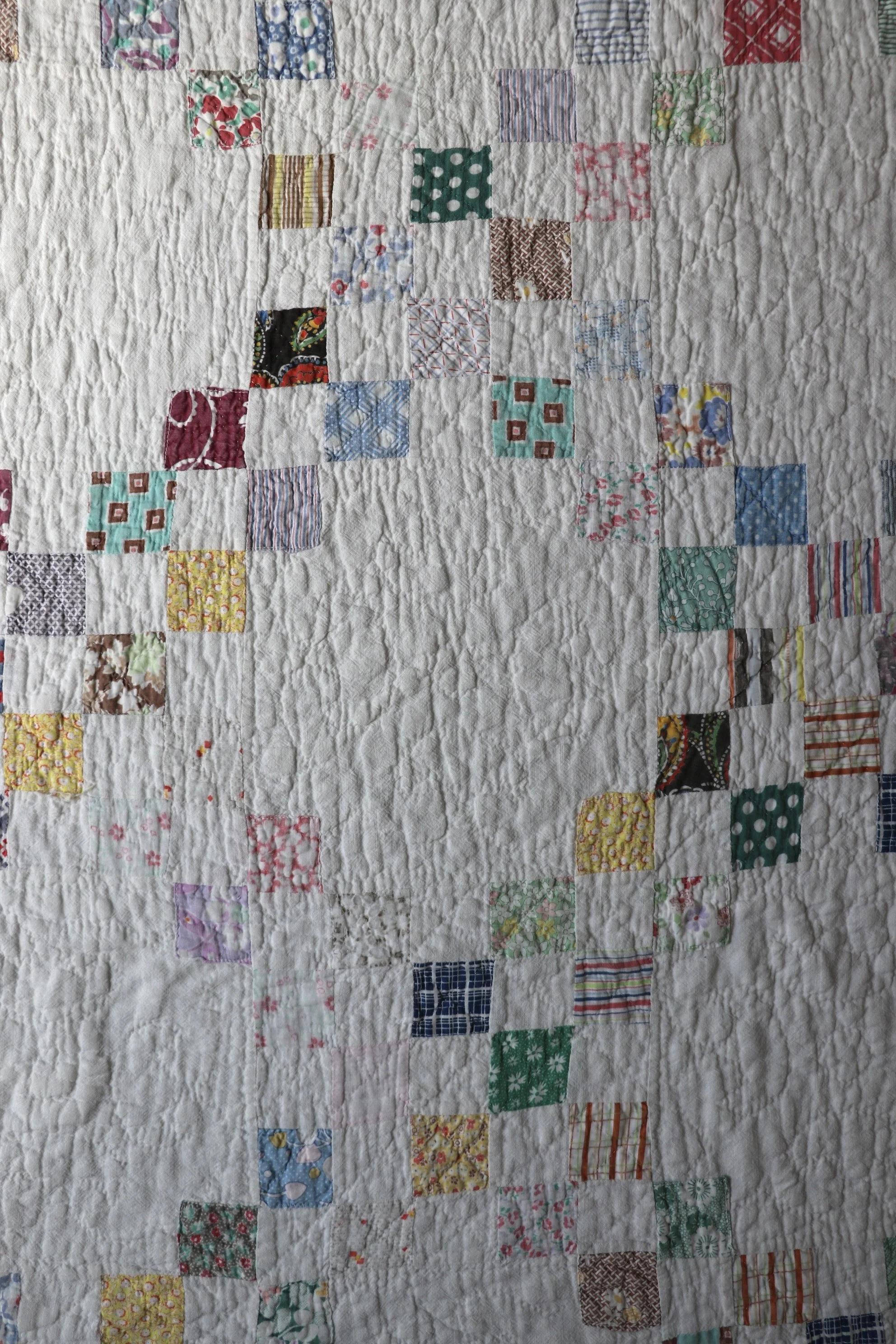 Image 5 of 17
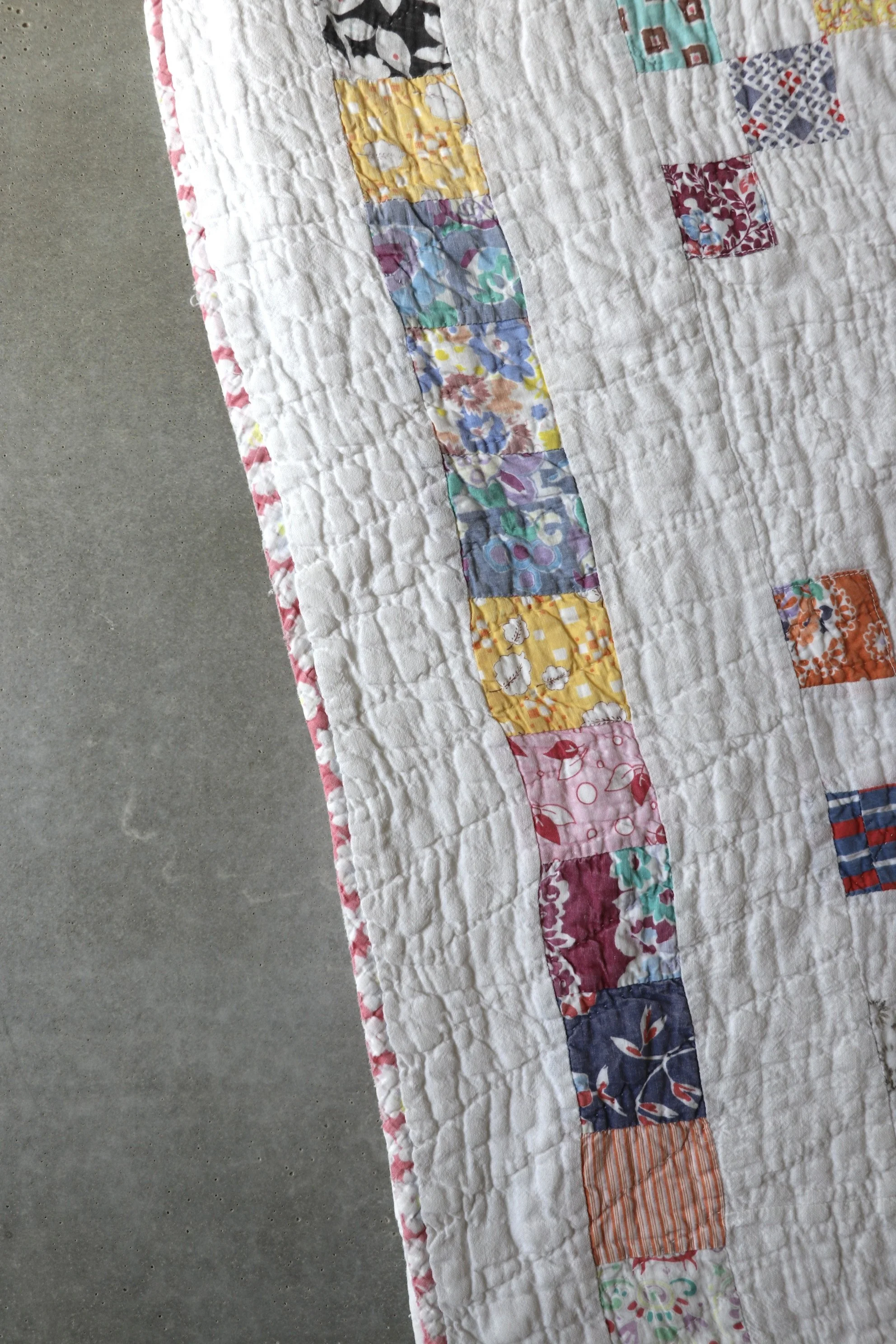 Image 6 of 17
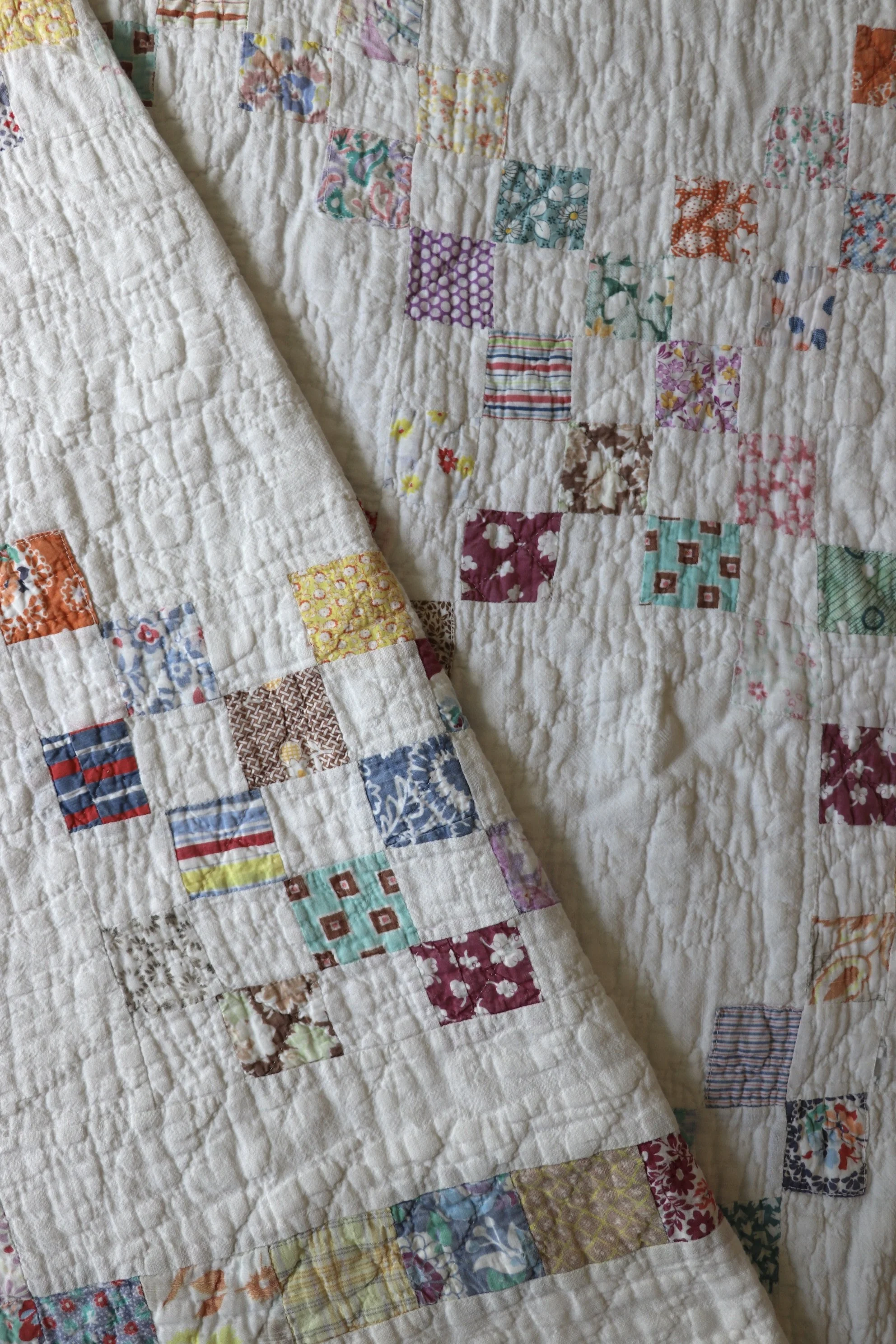 Image 7 of 17
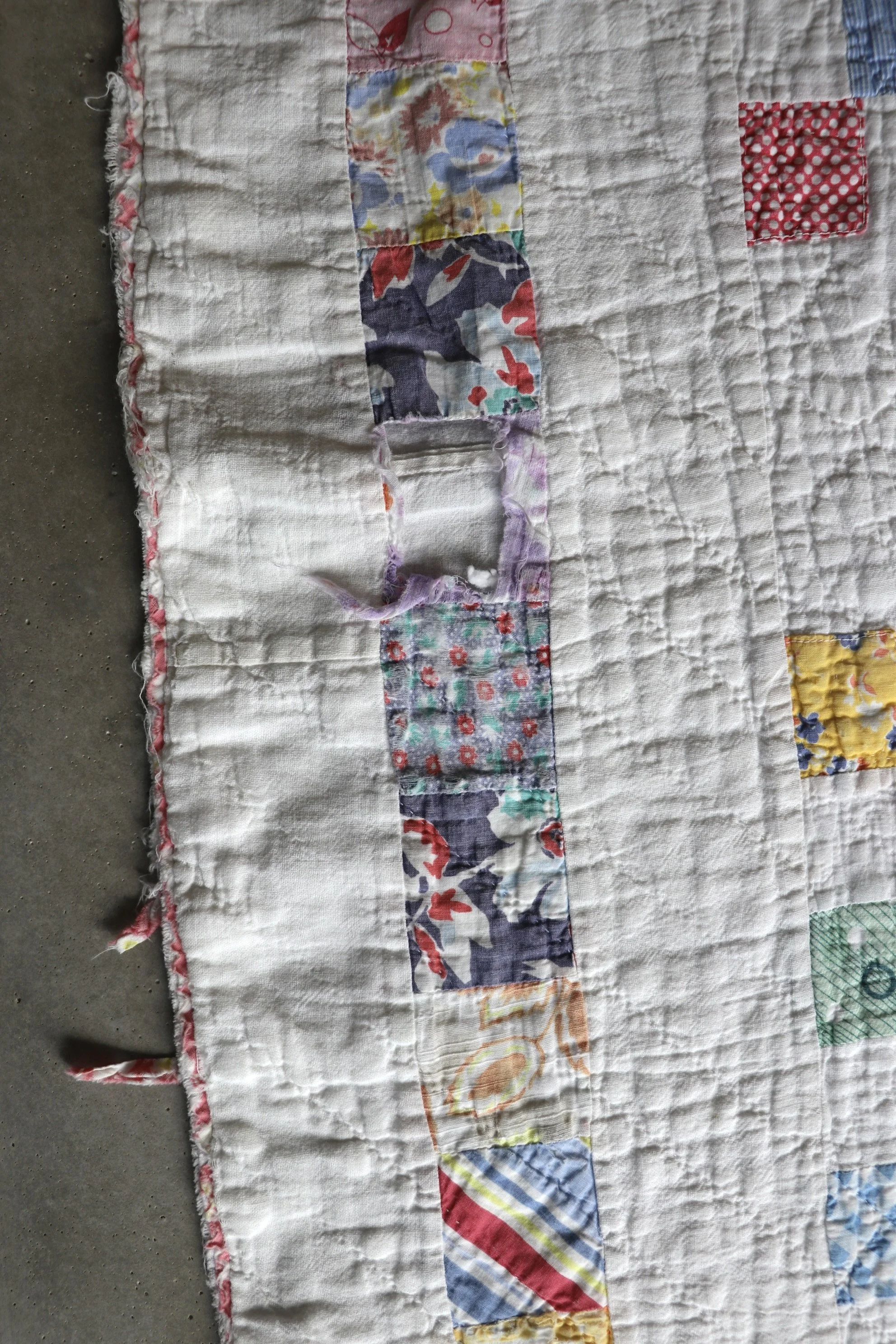 Image 8 of 17
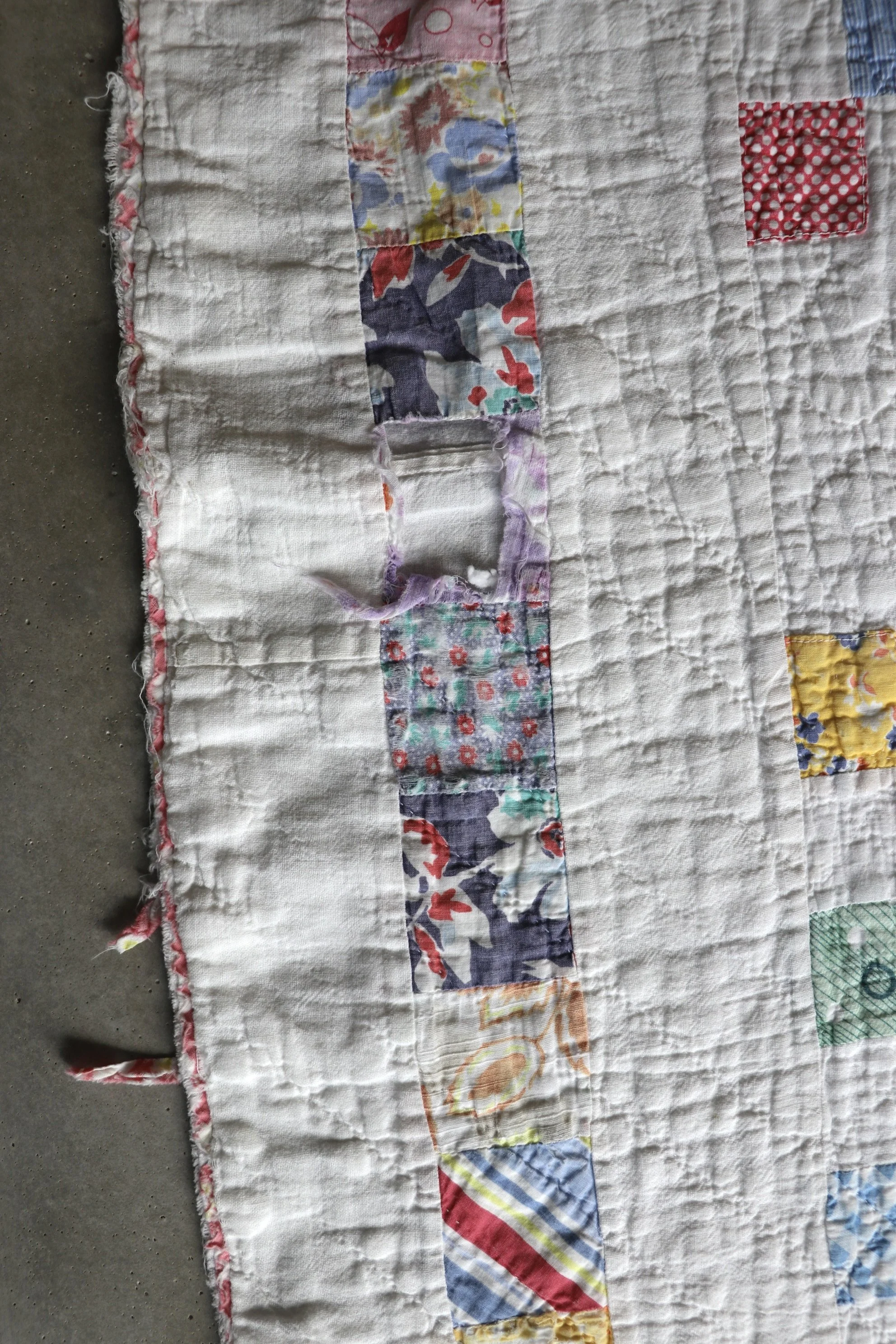 Image 9 of 17
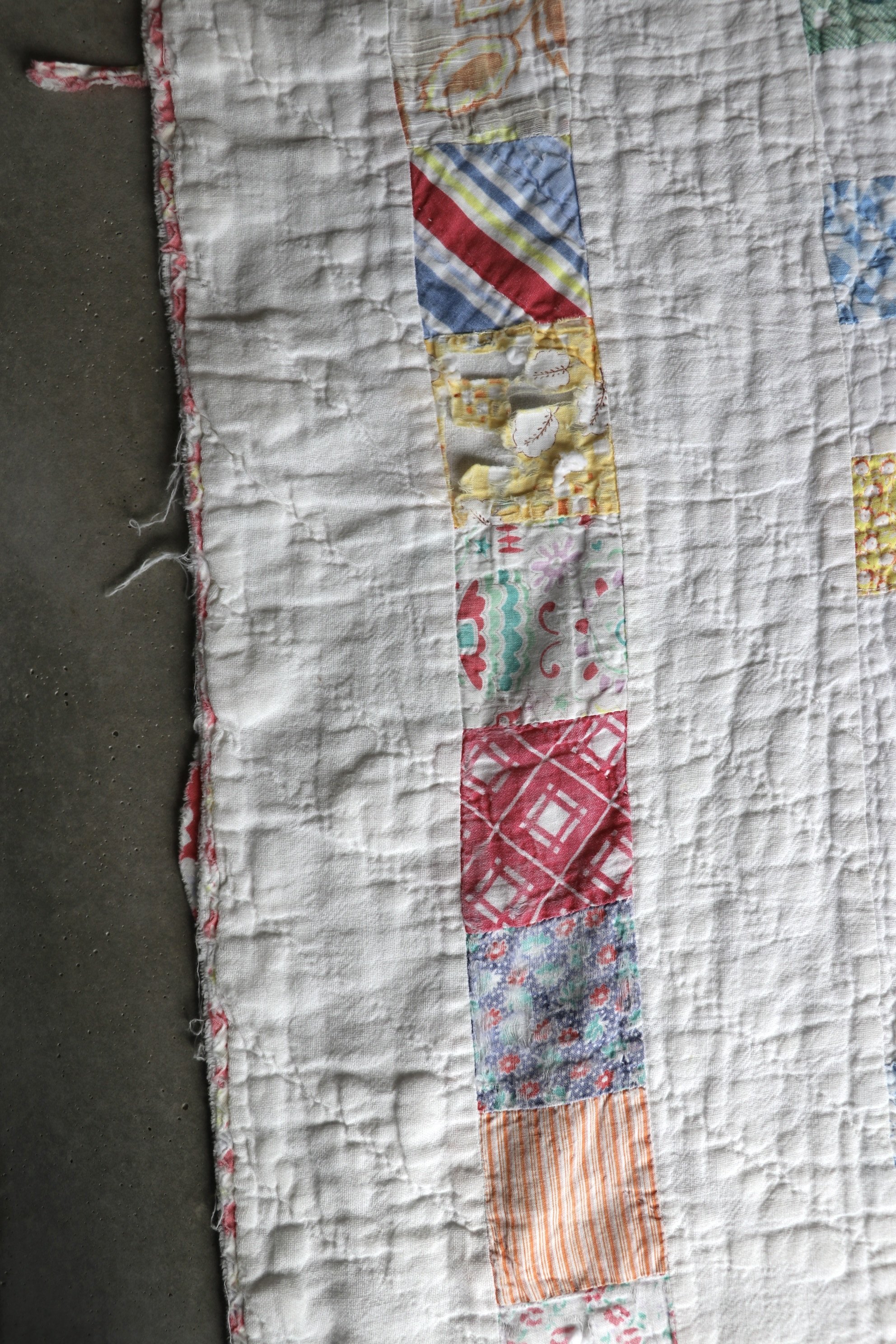 Image 10 of 17
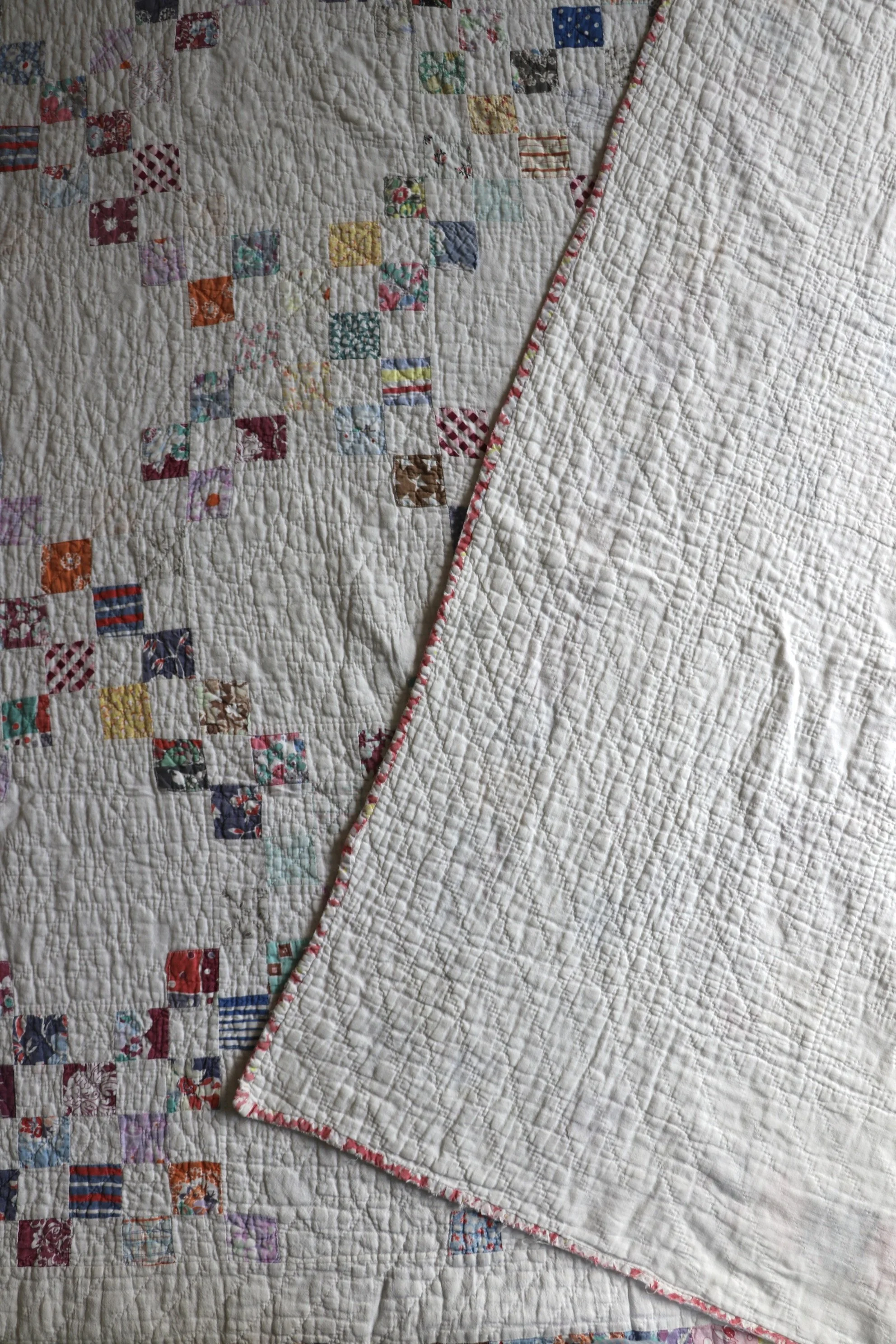 Image 11 of 17
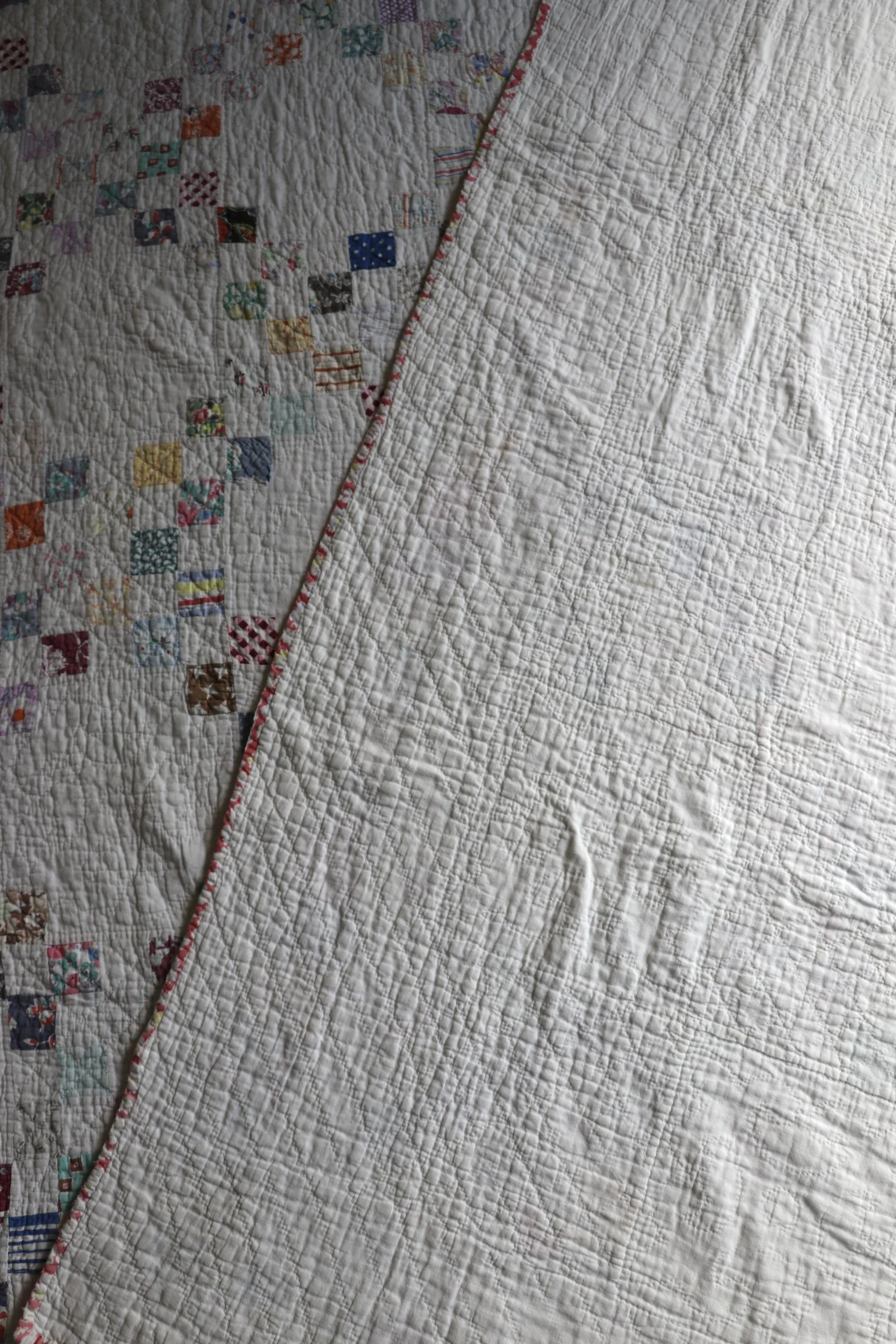 Image 12 of 17
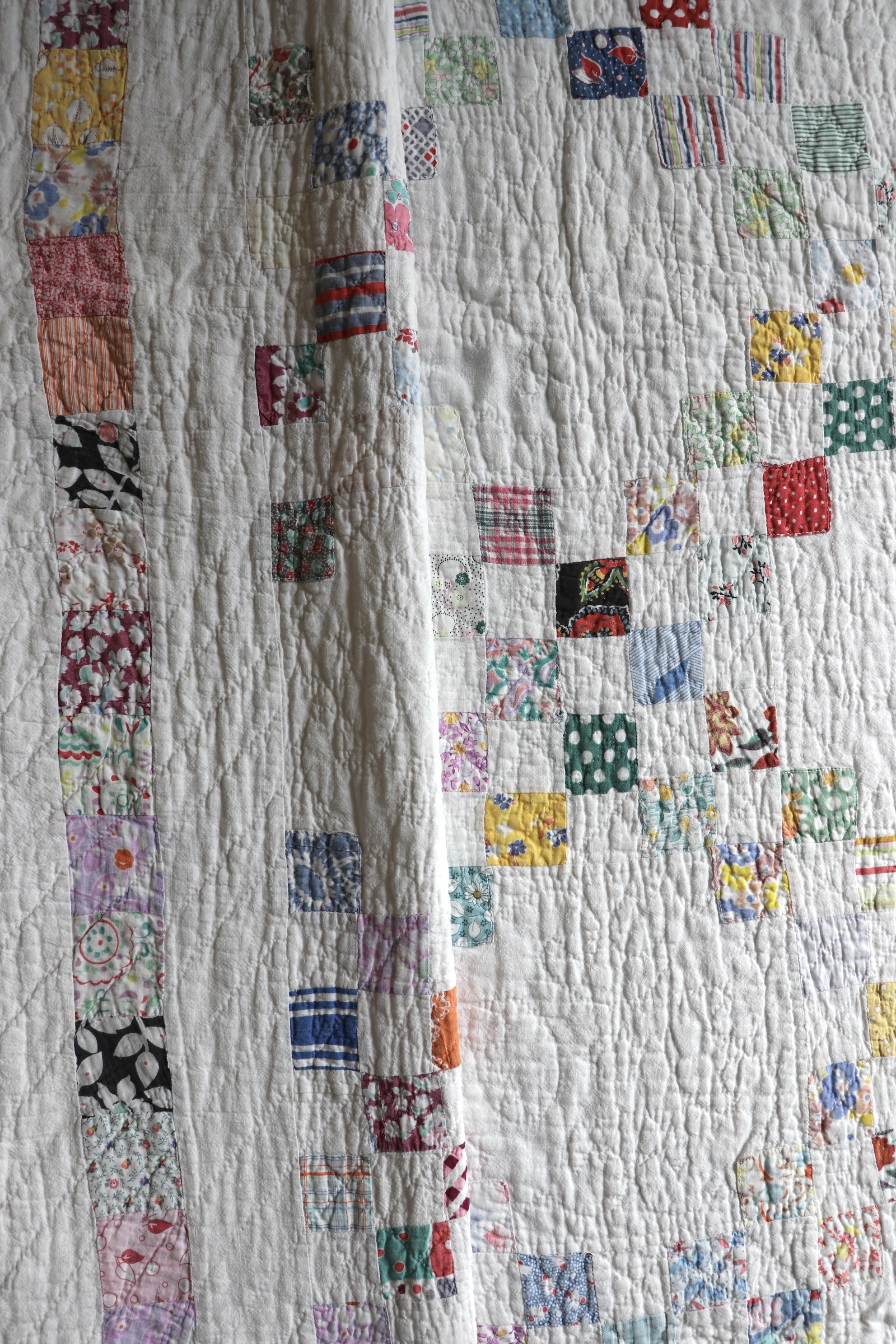 Image 13 of 17
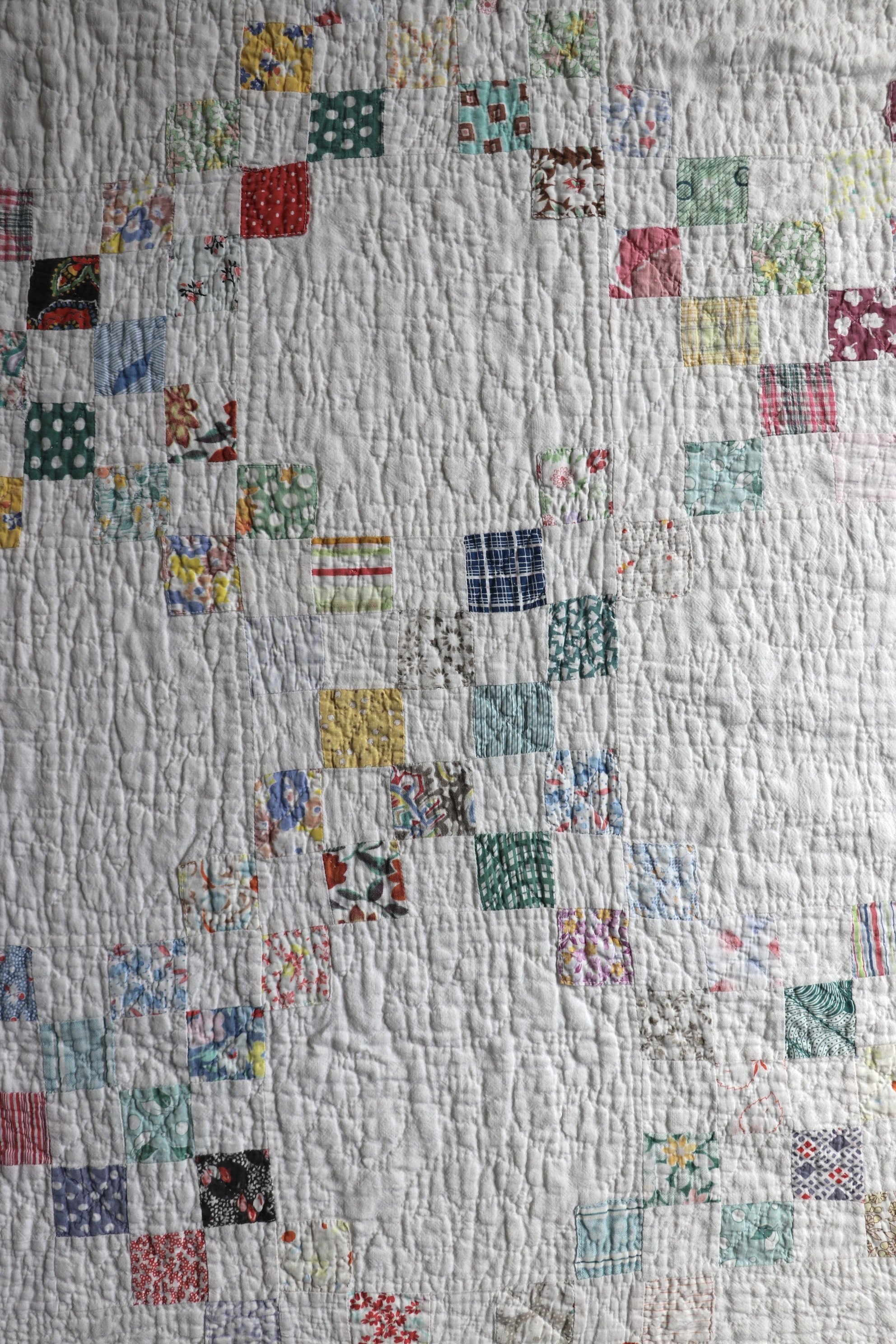 Image 14 of 17
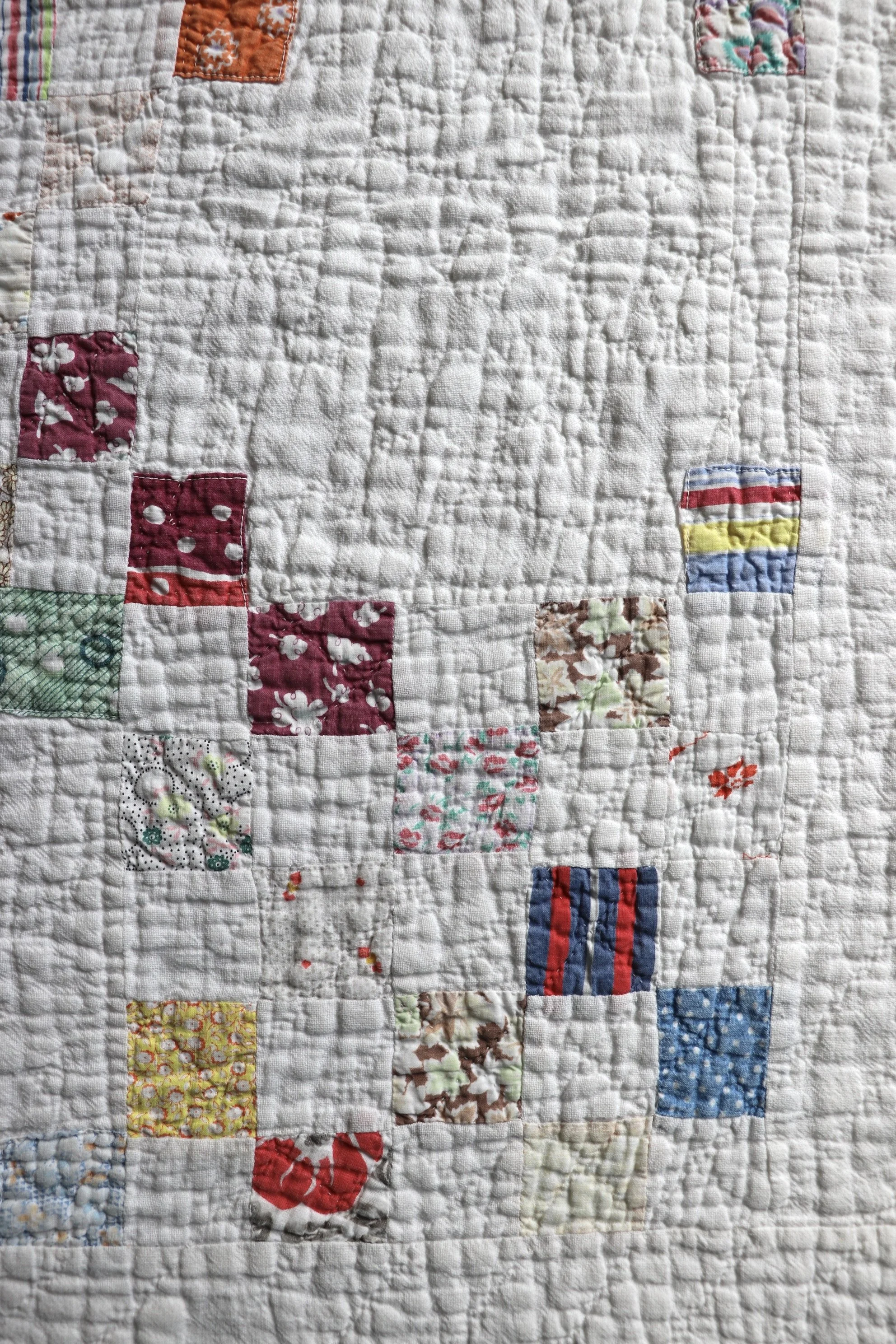 Image 15 of 17
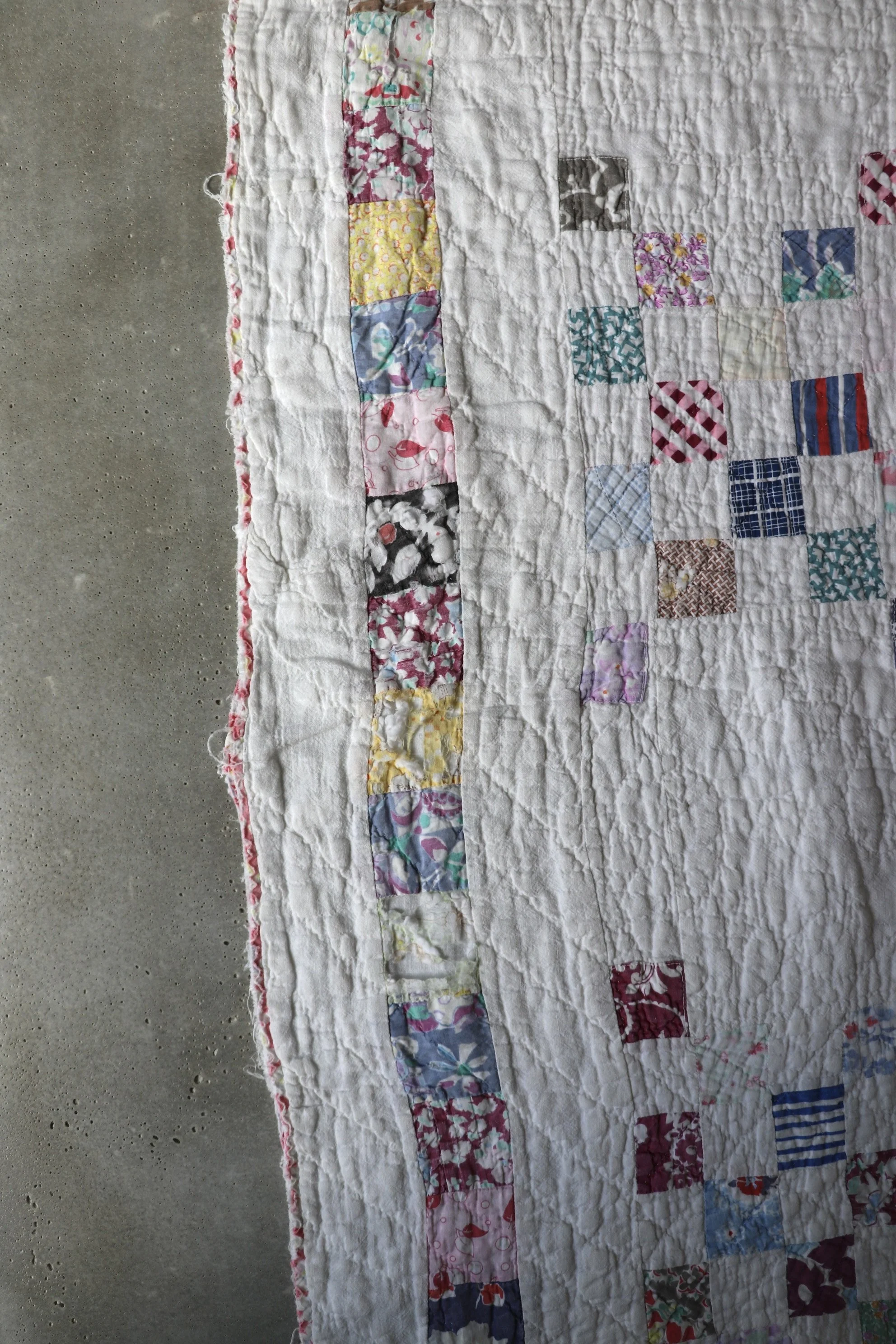 Image 16 of 17
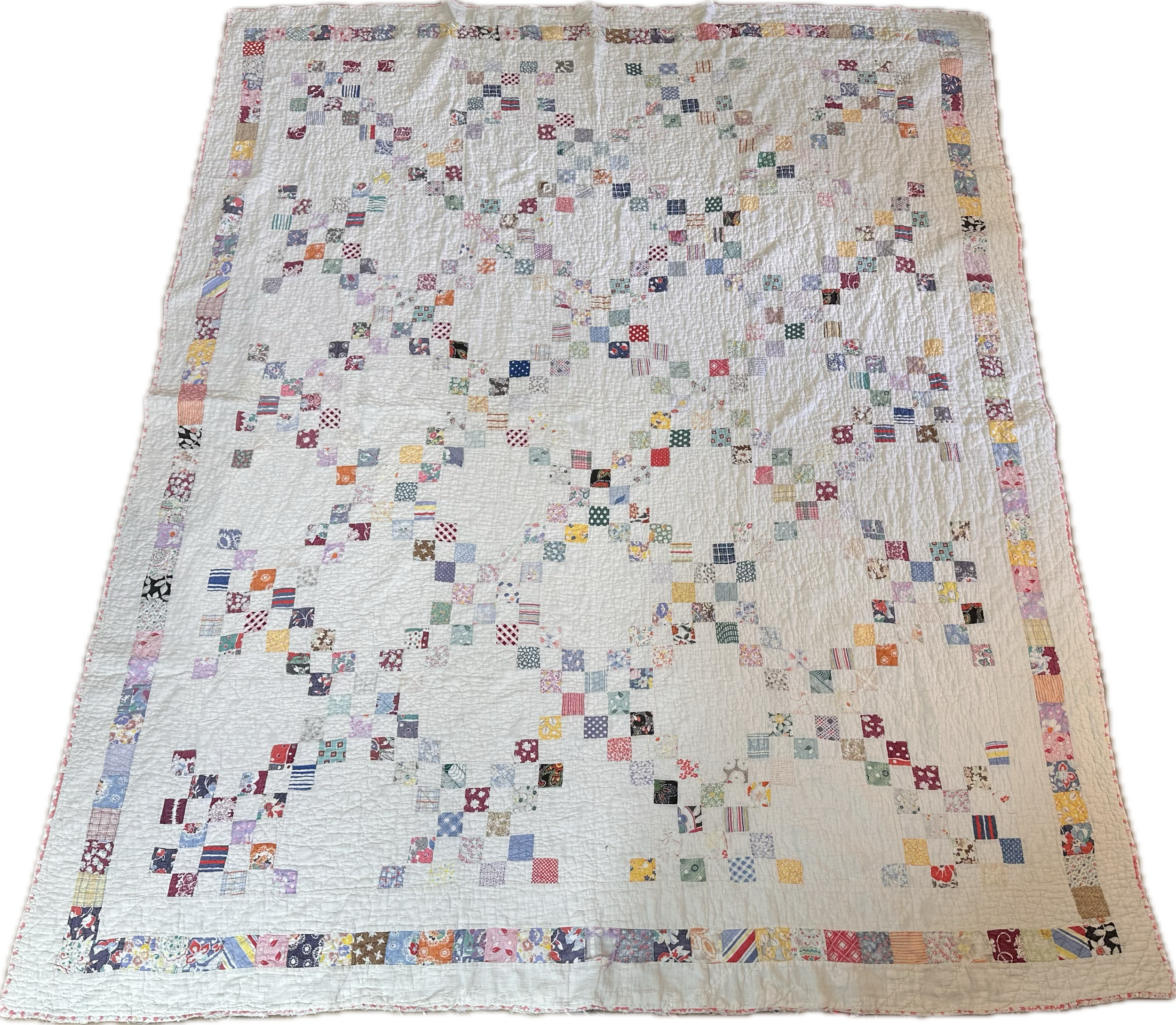 Image 17 of 17