Sale Price:
$65.00
Original Price:
$75.00
Circa: 1930s–1940s
Size:
Light Weight
Pattern: String-Pieced Basket / Basket Variation
Construction: Hand pieced & hand quilted
Fabrics: Cotton dress prints, shirtings, plaids, stripes, solids & feedsack-era prints
Description
Hand pieced and hand quilted, this wonderfully scrappy quilt is a true celebration of make-do quiltmaking. Each basket-like block is assembled from an extraordinary assortment of cotton scraps—powder blues, faded pinks, soft greens, burgundy, ticking stripes, plaids and lively florals—creating a surface that feels almost like a textile scrapbook. Rather than carefully matching fabrics from block to block, the maker appears to have worked freely from the scraps available to her, combining narrow strips, triangles and larger remnants into individually composed blocks. Dense hand quilting travels across the piecing, giving the quilt its beautifully rumpled texture. Years of wear, fading, staining and loss now reveal portions of the batting and construction beneath, adding another visible chapter to a quilt that was clearly made for use rather than display.
Historical Period
Depression Era & WWII America | c. 1930–1945
This quilt belongs to a period when thrift and resourcefulness were deeply embedded in everyday American quiltmaking. During the Depression and into the war years, usable cotton was rarely wasted; worn garments, dressmaking remnants, household textiles and inexpensive printed cottons could all find their way into the scrap bag. The remarkable variety seen here reflects that tradition beautifully. Its irregular fabric combinations and economical piecing give the quilt the unmistakable character of a utilitarian household textile—one made from what was on hand and intended to serve a family for years.
About the Pattern
The design appears to be a scrap or string-pieced Basket variation, built from angular sections of narrow strips and triangles that create loose basket-like forms when the blocks are joined. Basket patterns have a long history in American quiltmaking and were interpreted in countless regional and individual variations. This example is especially folk-like: the maker seems less concerned with rigid repetition than with using available scraps to establish the overall geometry. That freedom gives the quilt its wonderful movement, with diagonal bands seeming to weave across the surface while no two sections are exactly alike.
Condition
Heavily worn antique condition. Significant fabric deterioration is present throughout, including holes, tears, thinning, staining, fading, missing fabric, exposed batting and substantial edge and binding loss. Several areas show advanced deterioration and should be handled gently. Despite its condition, the extensive wear contributes greatly to its visual character and provides clear evidence of a quilt that saw generations of practical use. Best suited as a collectible textile, study piece, cutter quilt, restoration project or decorative display rather than functional bedding.
Circa: 1930s–1940s
Size:
Light Weight
Pattern: String-Pieced Basket / Basket Variation
Construction: Hand pieced & hand quilted
Fabrics: Cotton dress prints, shirtings, plaids, stripes, solids & feedsack-era prints
Description
Hand pieced and hand quilted, this wonderfully scrappy quilt is a true celebration of make-do quiltmaking. Each basket-like block is assembled from an extraordinary assortment of cotton scraps—powder blues, faded pinks, soft greens, burgundy, ticking stripes, plaids and lively florals—creating a surface that feels almost like a textile scrapbook. Rather than carefully matching fabrics from block to block, the maker appears to have worked freely from the scraps available to her, combining narrow strips, triangles and larger remnants into individually composed blocks. Dense hand quilting travels across the piecing, giving the quilt its beautifully rumpled texture. Years of wear, fading, staining and loss now reveal portions of the batting and construction beneath, adding another visible chapter to a quilt that was clearly made for use rather than display.
Historical Period
Depression Era & WWII America | c. 1930–1945
This quilt belongs to a period when thrift and resourcefulness were deeply embedded in everyday American quiltmaking. During the Depression and into the war years, usable cotton was rarely wasted; worn garments, dressmaking remnants, household textiles and inexpensive printed cottons could all find their way into the scrap bag. The remarkable variety seen here reflects that tradition beautifully. Its irregular fabric combinations and economical piecing give the quilt the unmistakable character of a utilitarian household textile—one made from what was on hand and intended to serve a family for years.
About the Pattern
The design appears to be a scrap or string-pieced Basket variation, built from angular sections of narrow strips and triangles that create loose basket-like forms when the blocks are joined. Basket patterns have a long history in American quiltmaking and were interpreted in countless regional and individual variations. This example is especially folk-like: the maker seems less concerned with rigid repetition than with using available scraps to establish the overall geometry. That freedom gives the quilt its wonderful movement, with diagonal bands seeming to weave across the surface while no two sections are exactly alike.
Condition
Heavily worn antique condition. Significant fabric deterioration is present throughout, including holes, tears, thinning, staining, fading, missing fabric, exposed batting and substantial edge and binding loss. Several areas show advanced deterioration and should be handled gently. Despite its condition, the extensive wear contributes greatly to its visual character and provides clear evidence of a quilt that saw generations of practical use. Best suited as a collectible textile, study piece, cutter quilt, restoration project or decorative display rather than functional bedding.

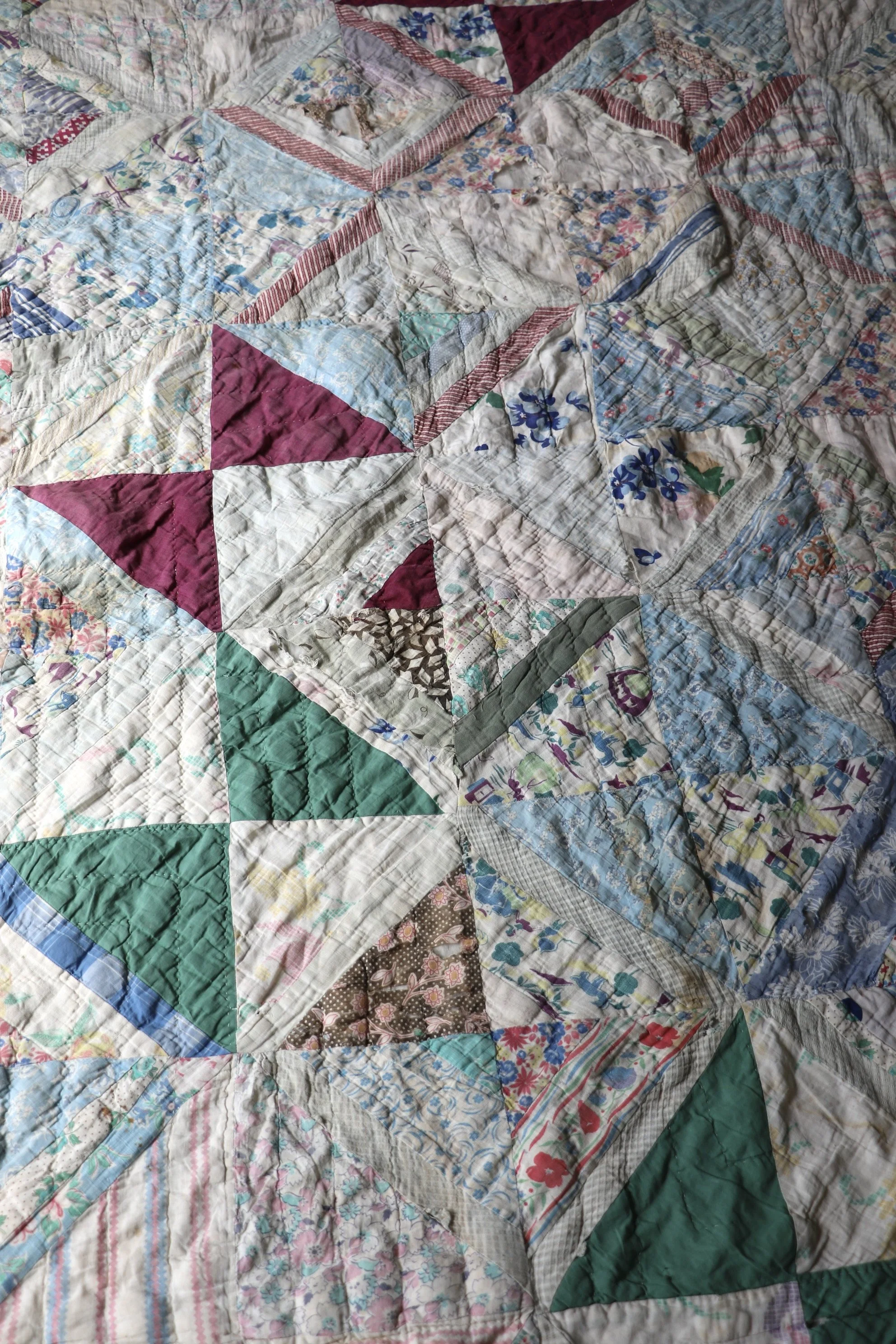 Image 1 of 11
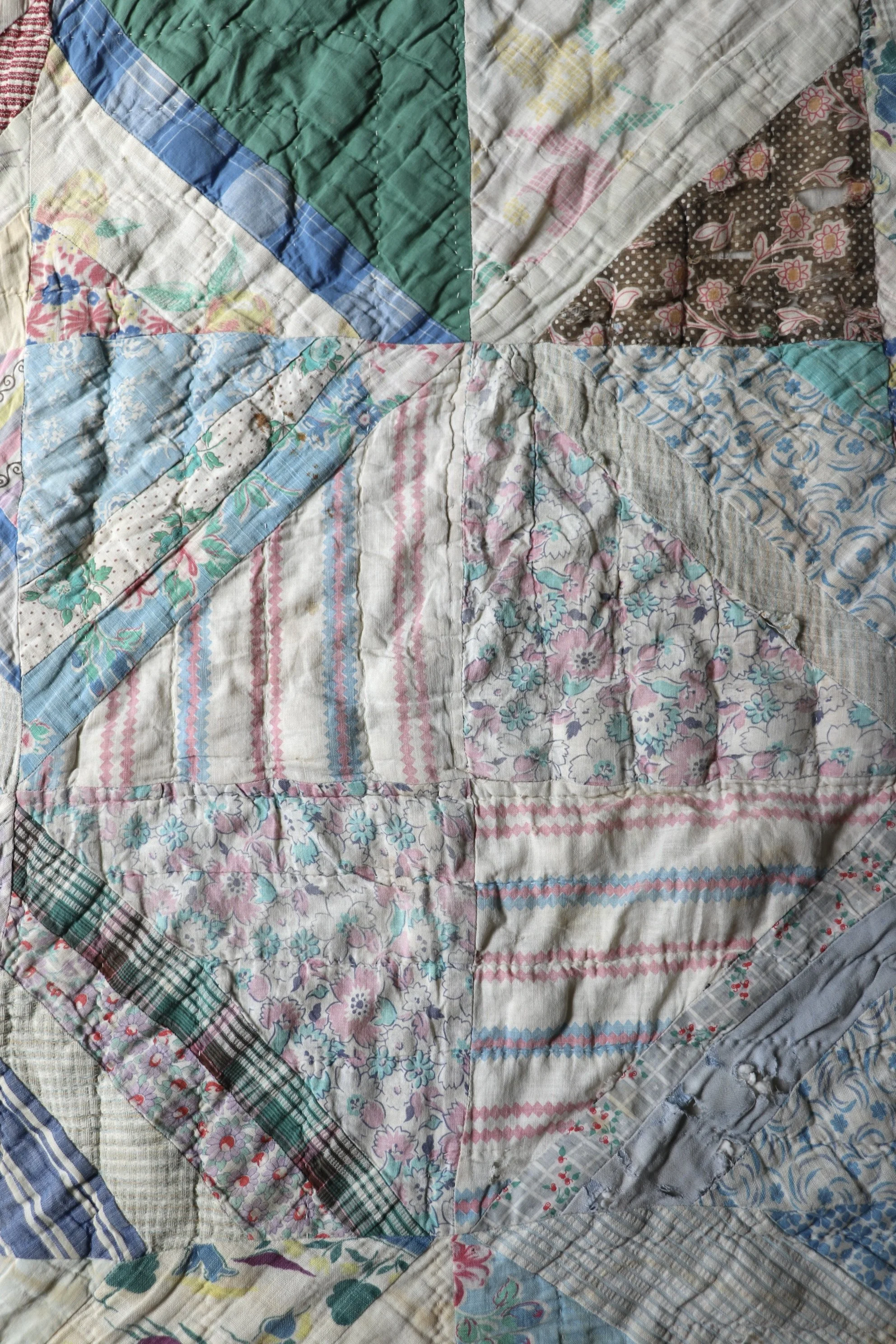 Image 2 of 11
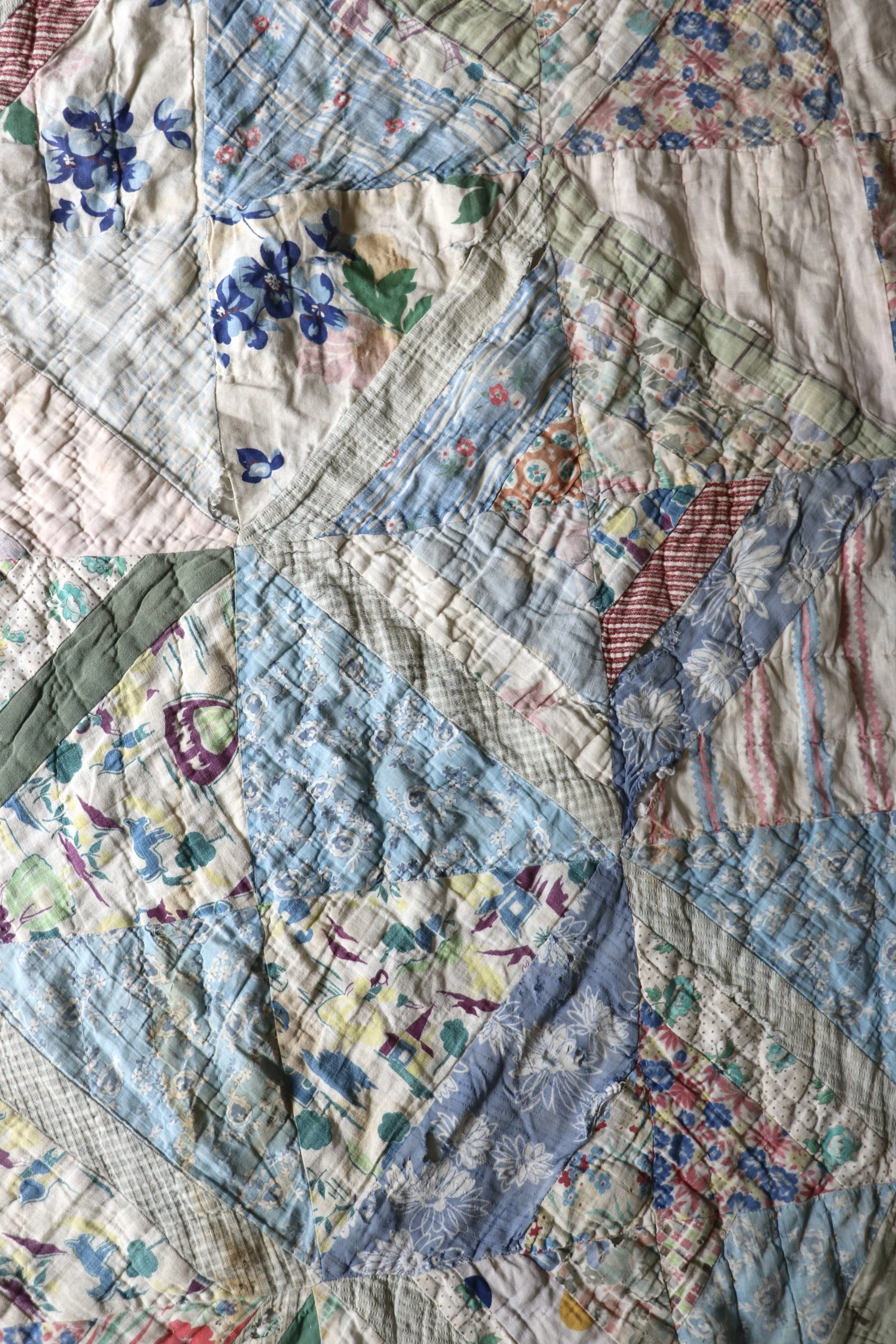 Image 3 of 11
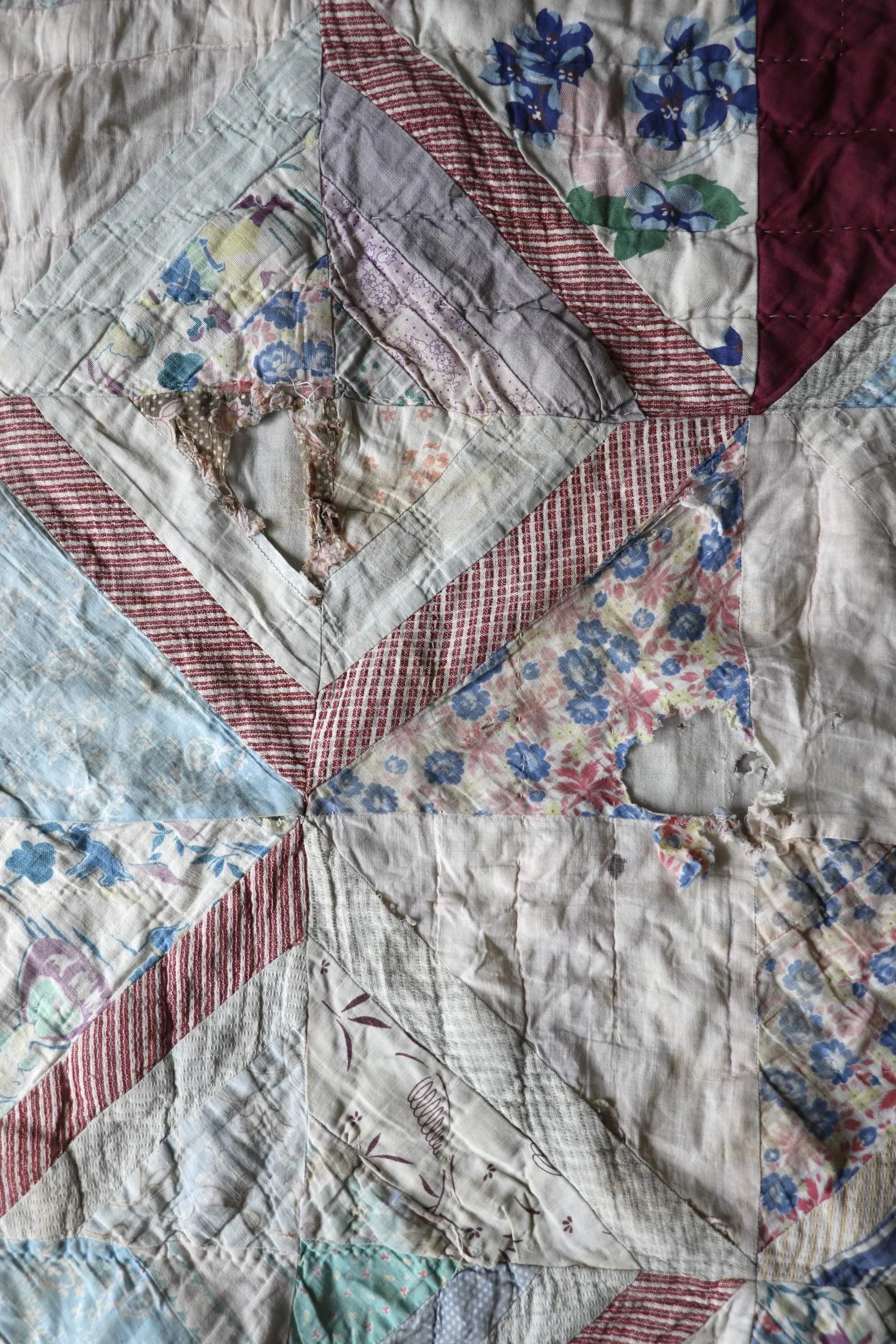 Image 4 of 11
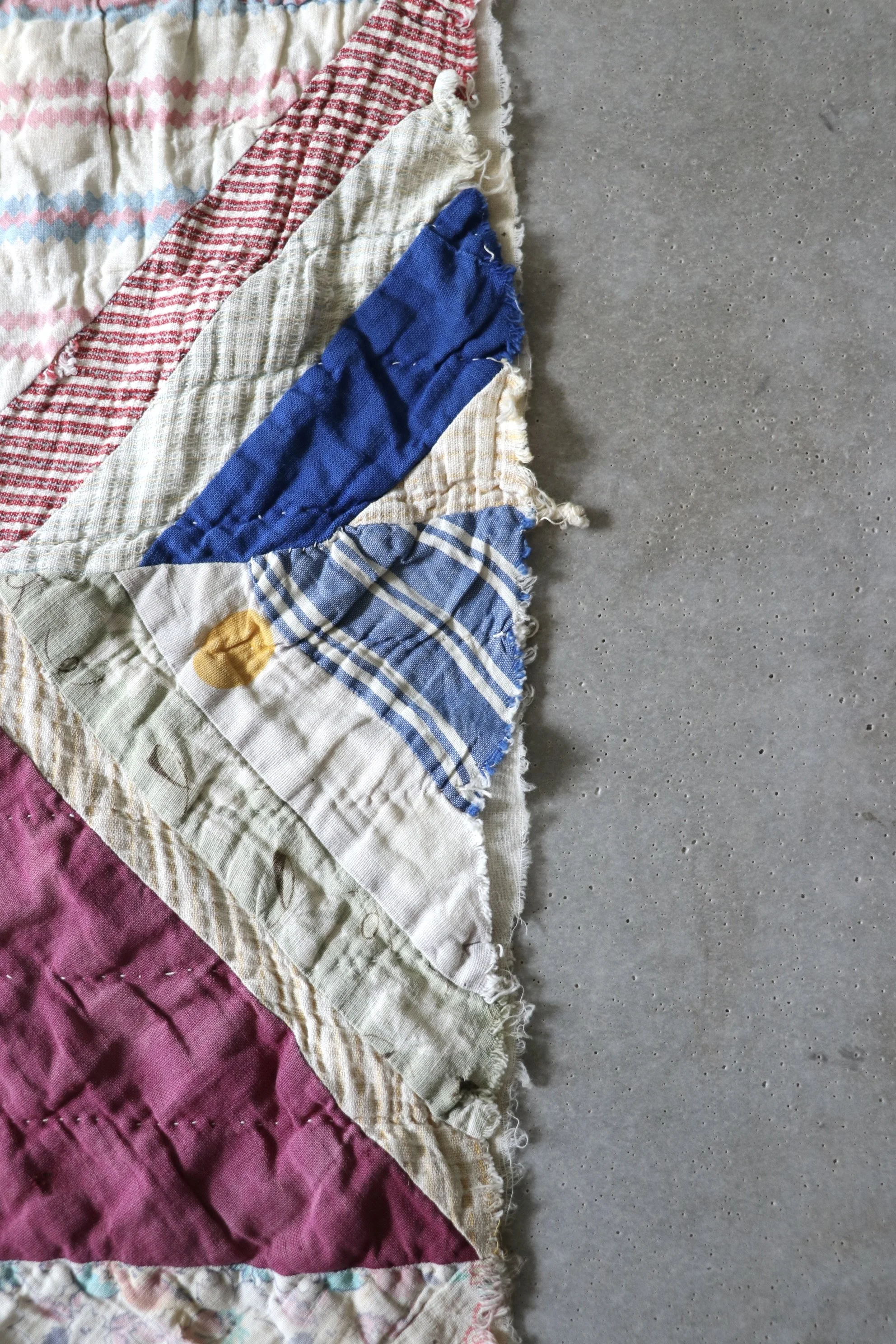 Image 5 of 11
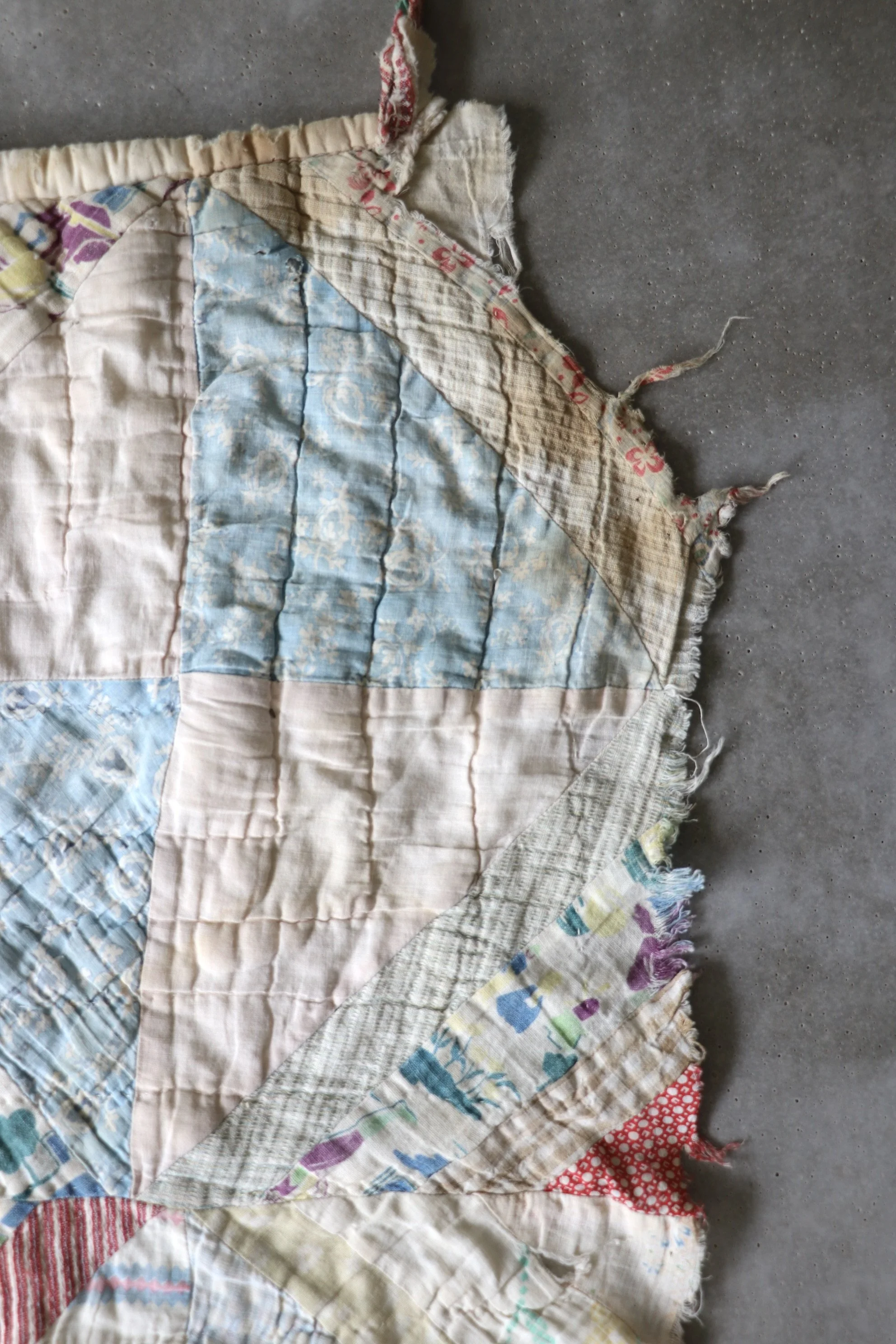 Image 6 of 11
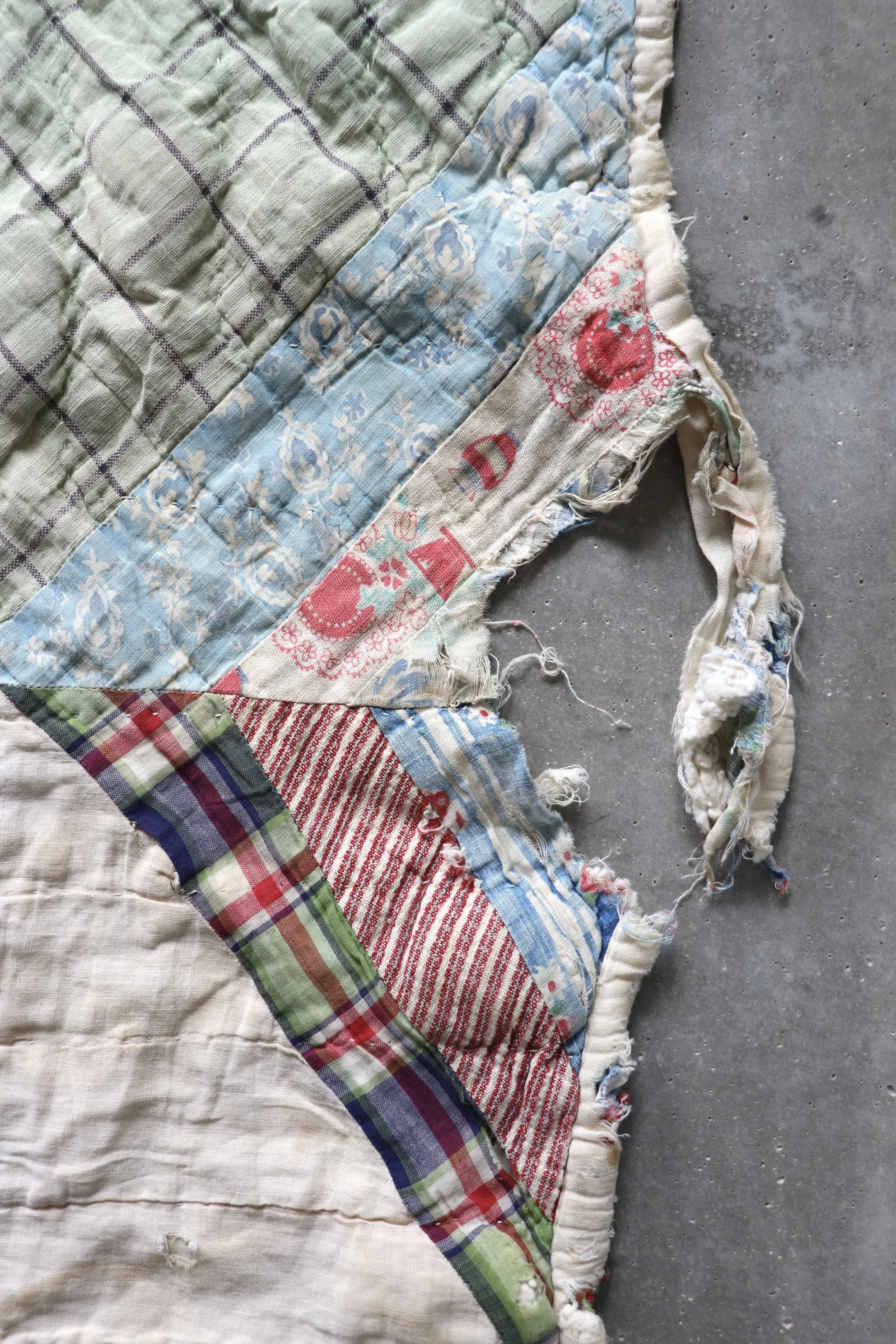 Image 7 of 11
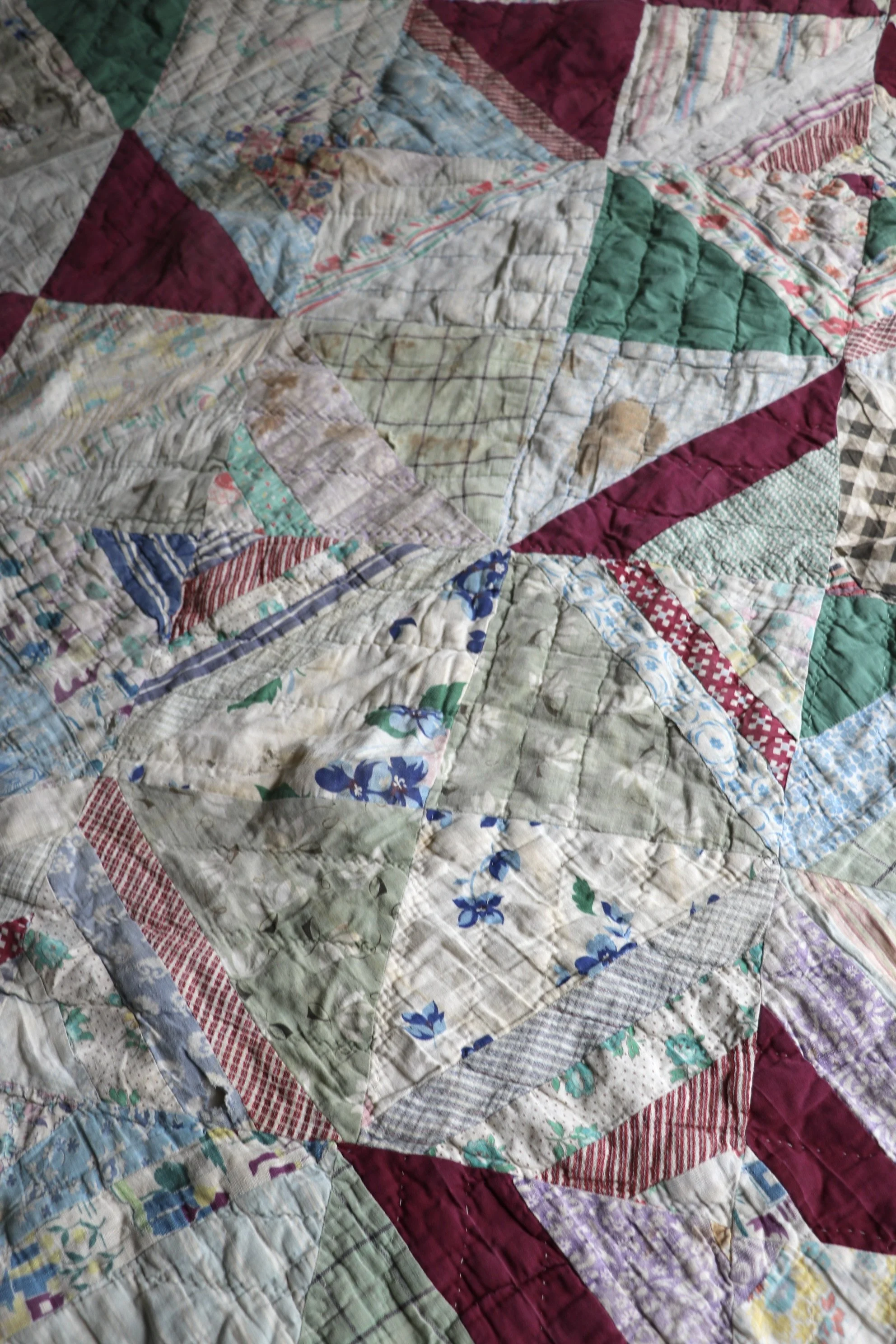 Image 8 of 11
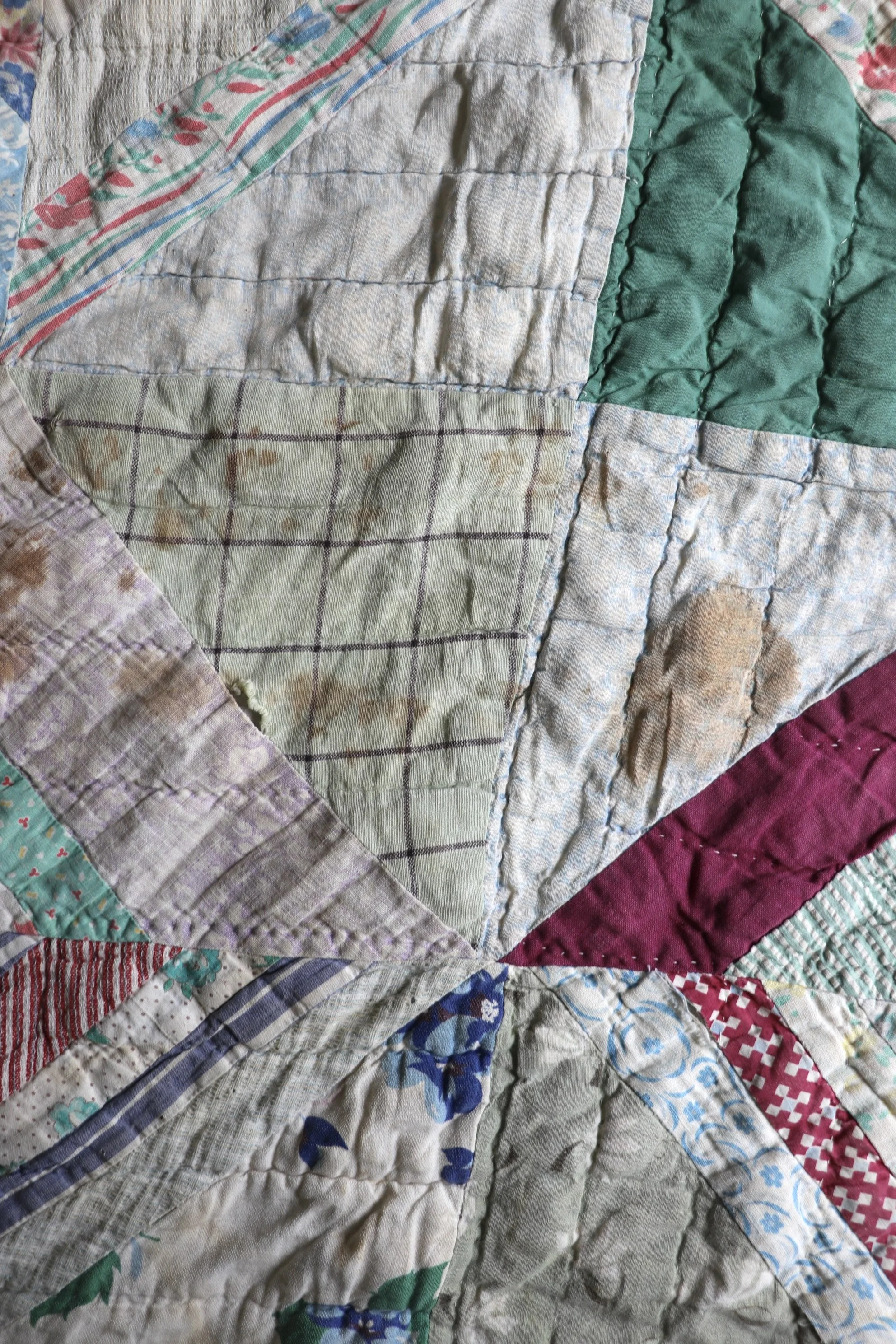 Image 9 of 11
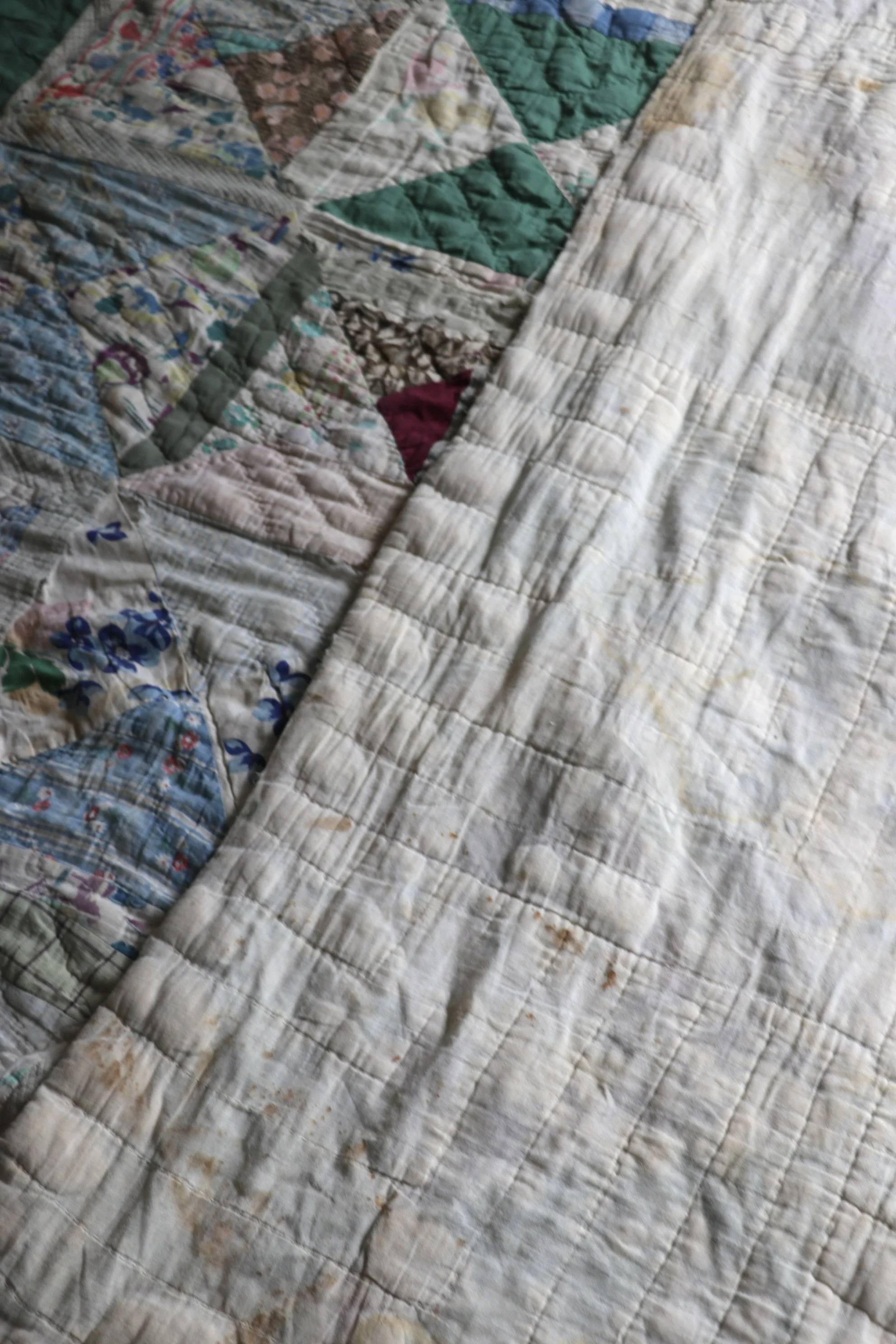 Image 10 of 11
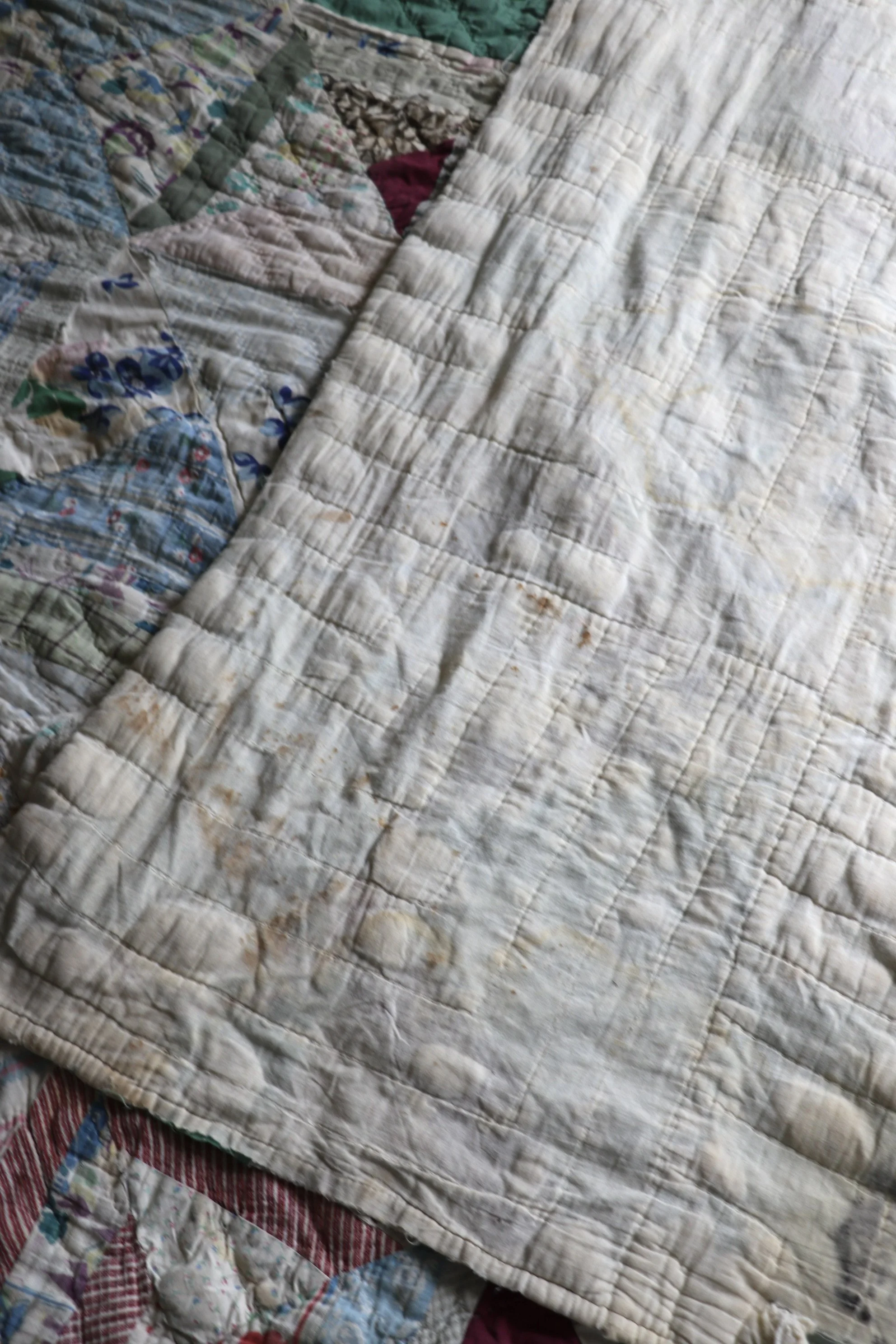 Image 11 of 11