Circa 1930-1940
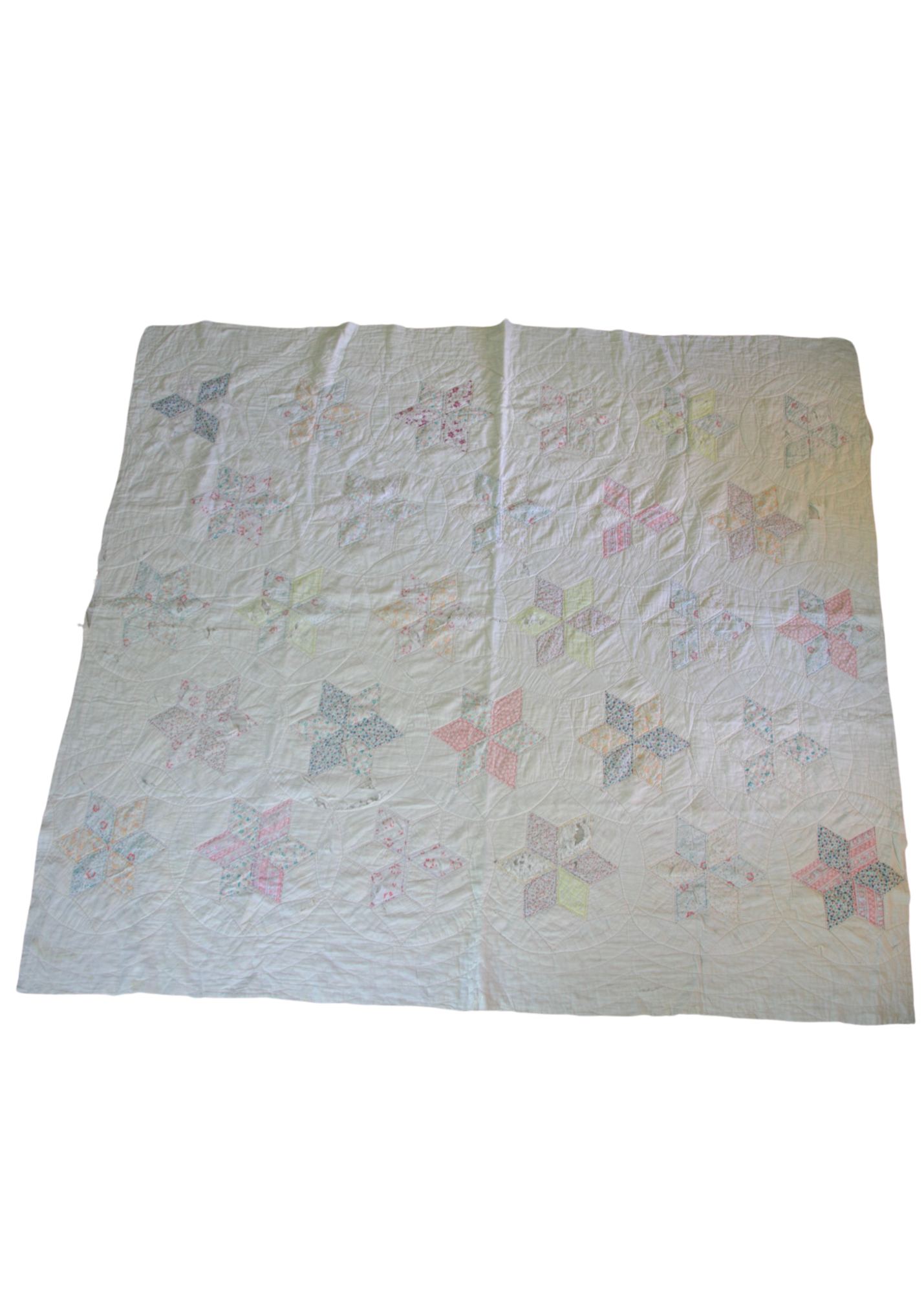
Size: 77”x57”
Heavy Weight
Pattern: Pieced Tulip
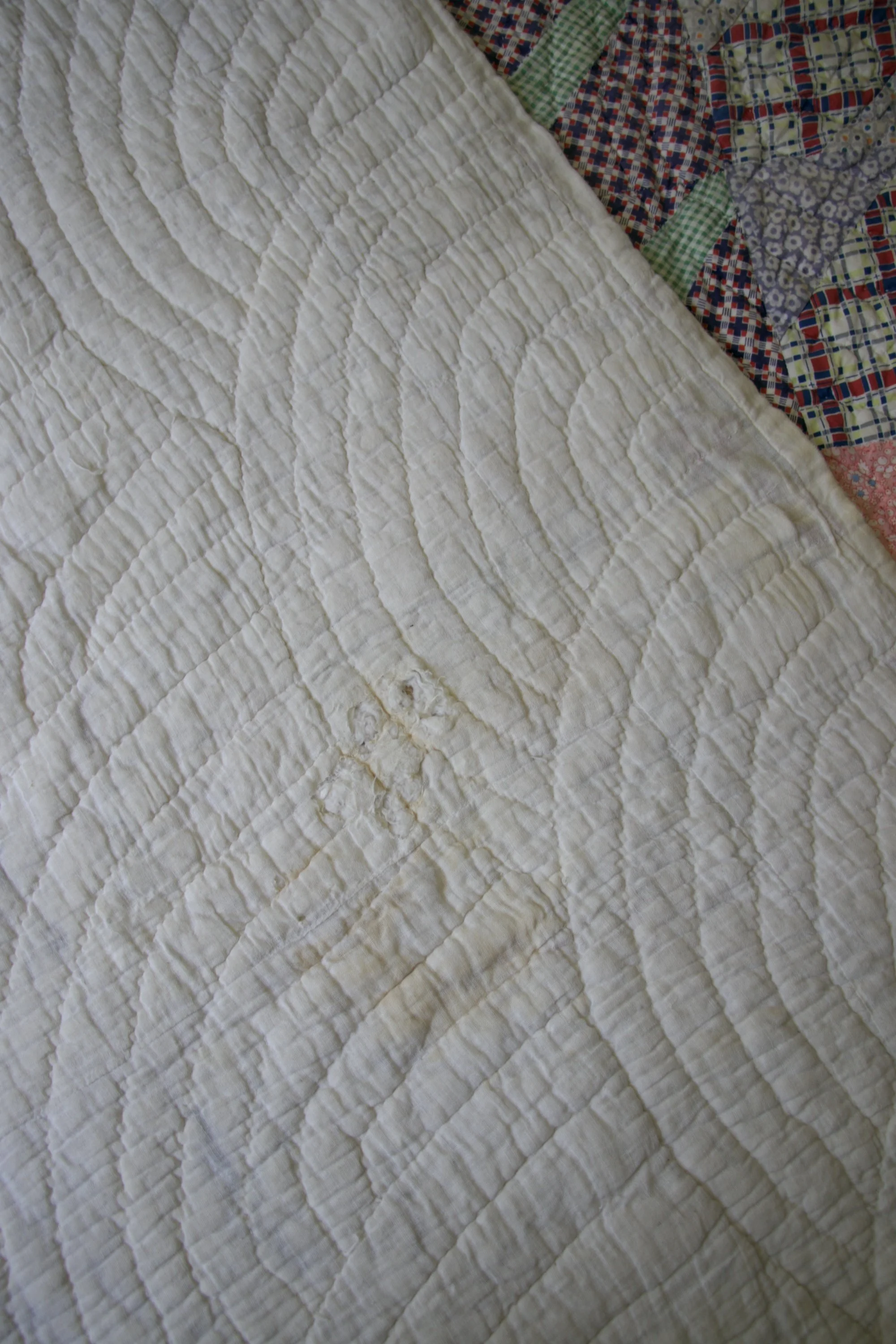
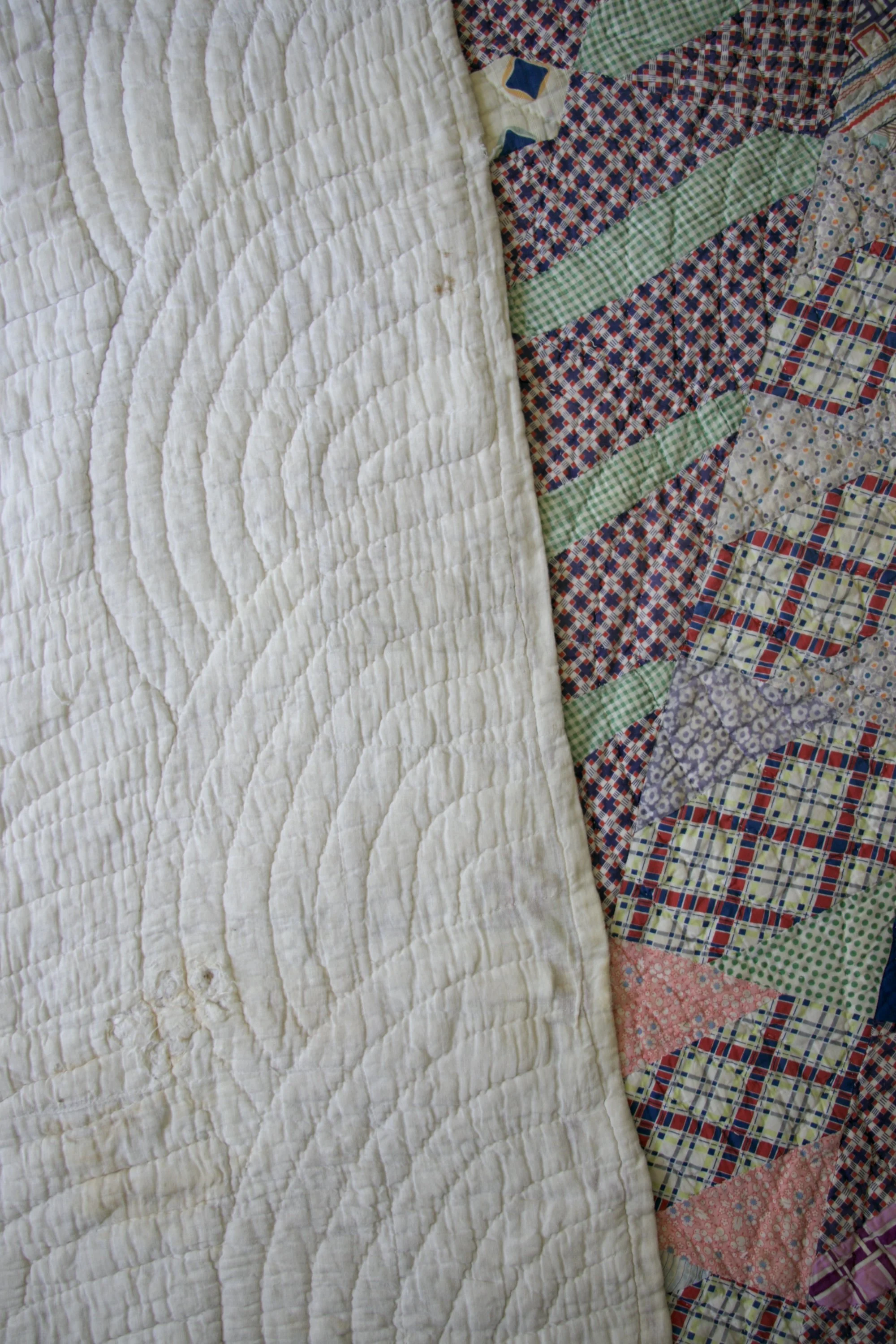
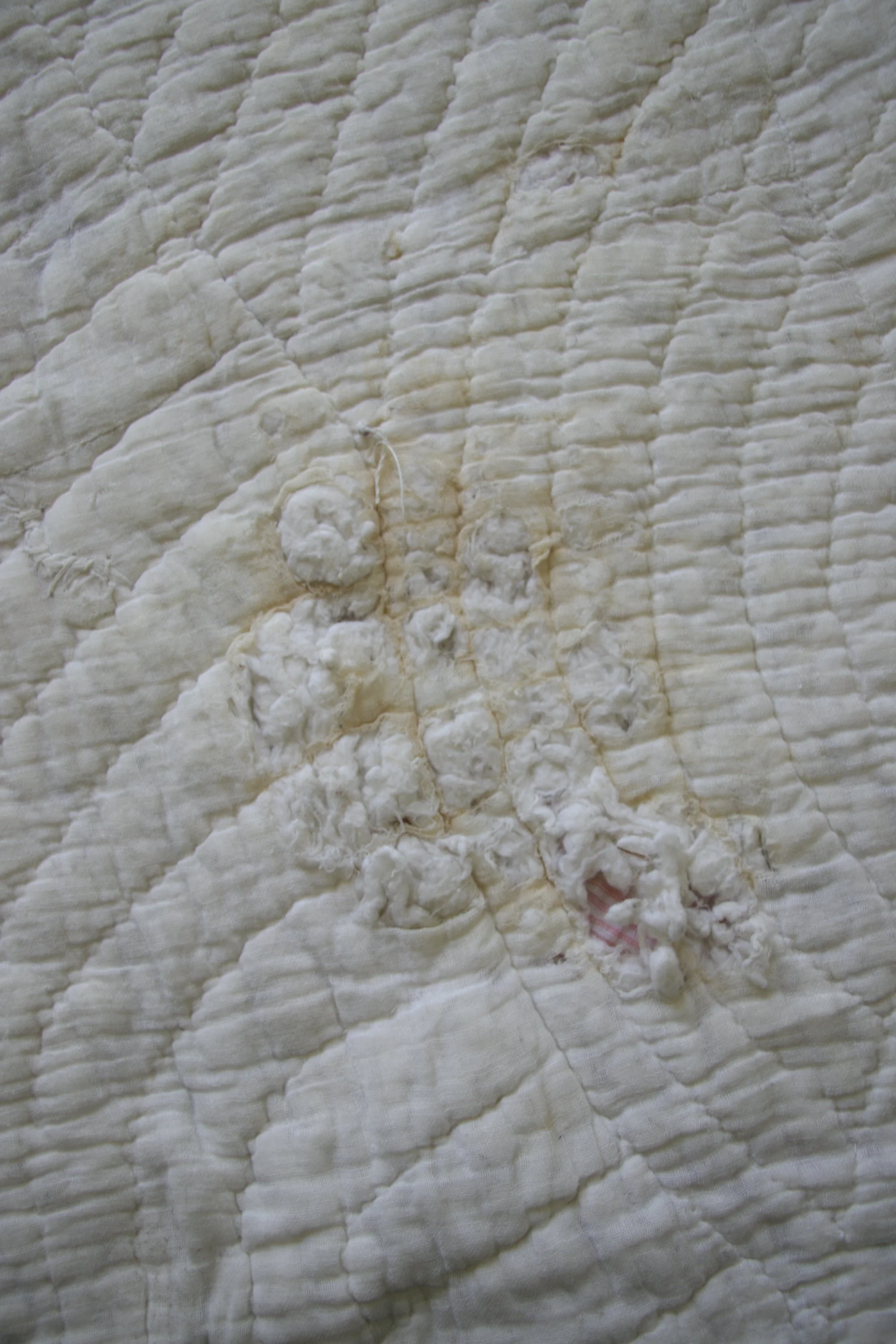
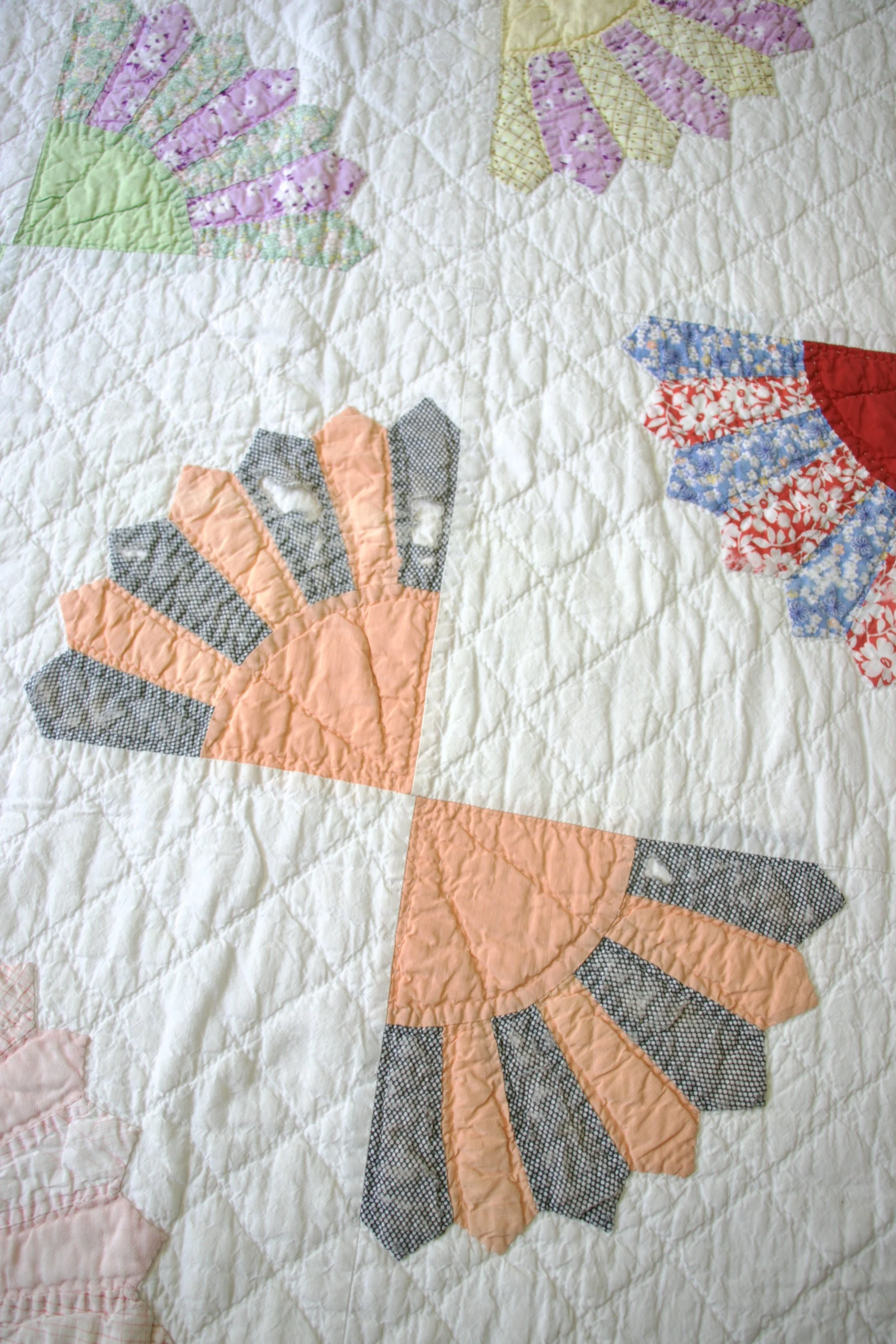
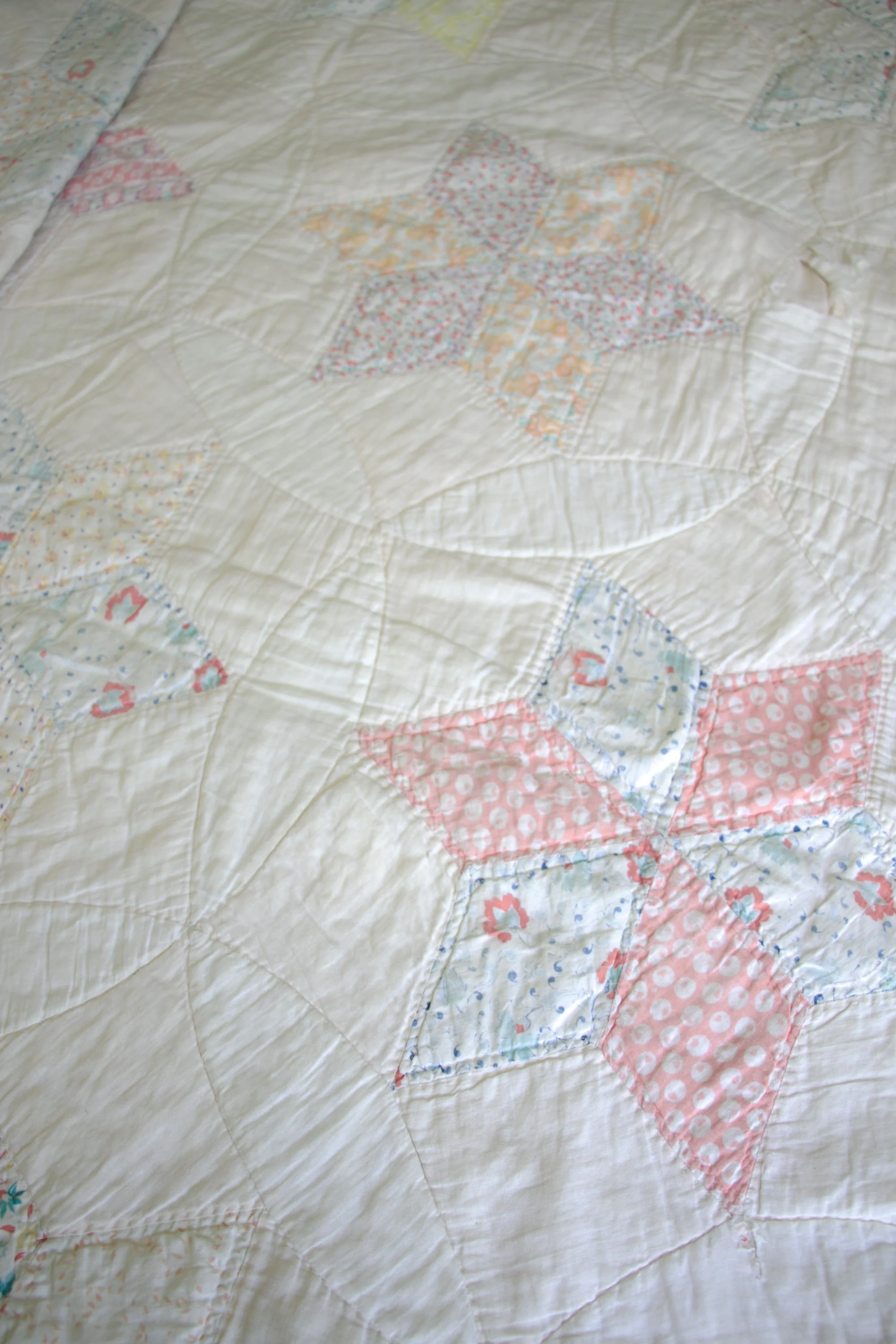
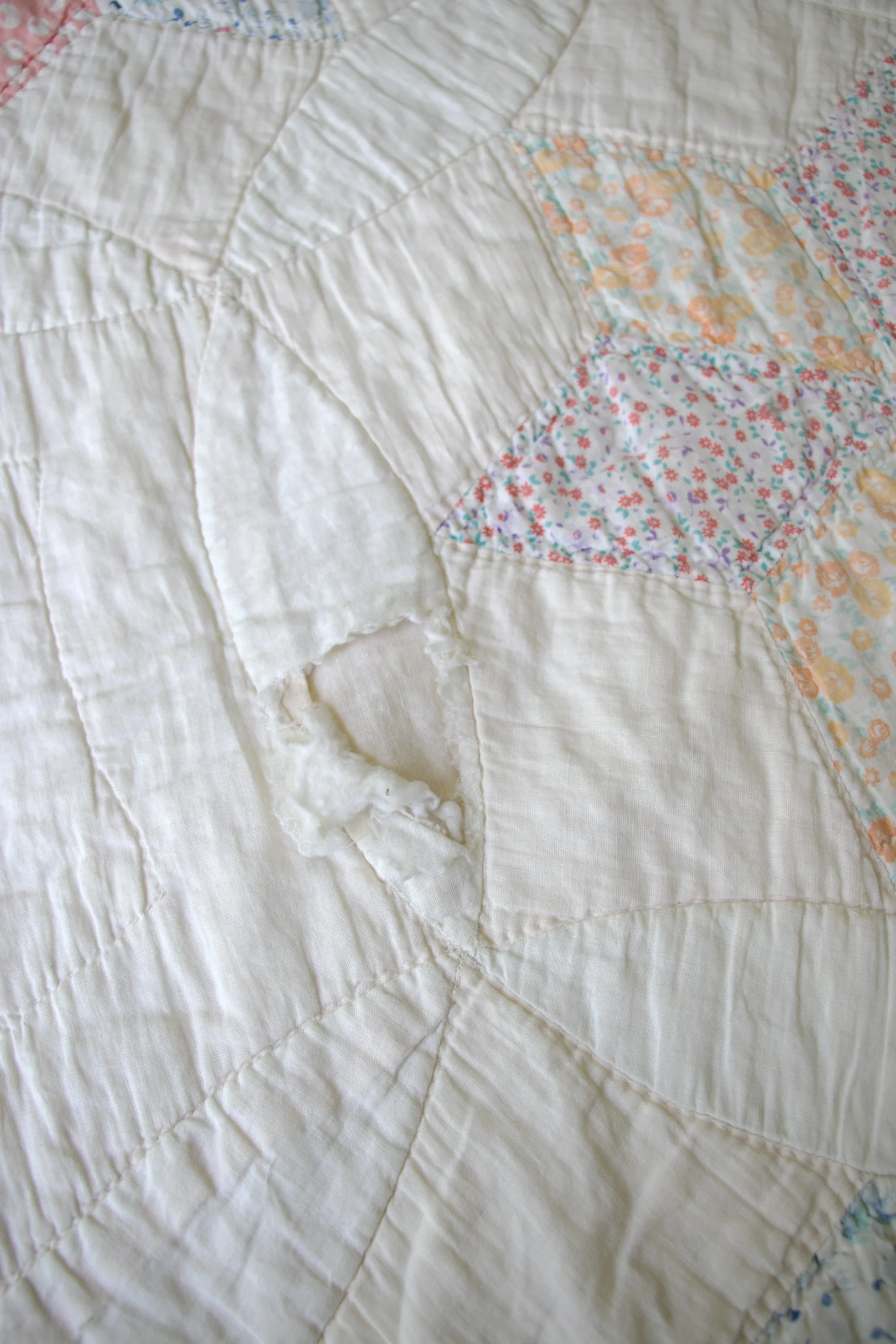
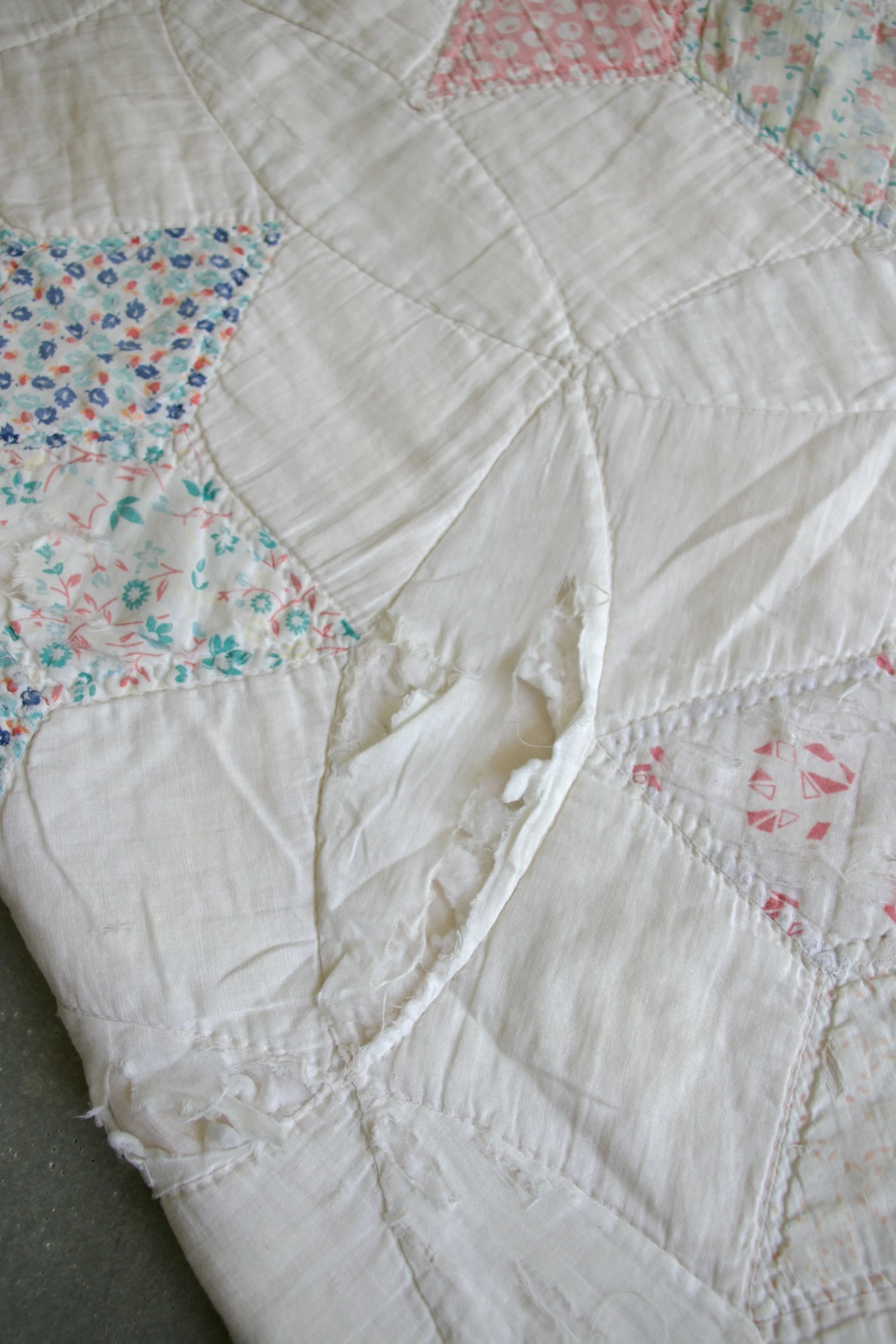
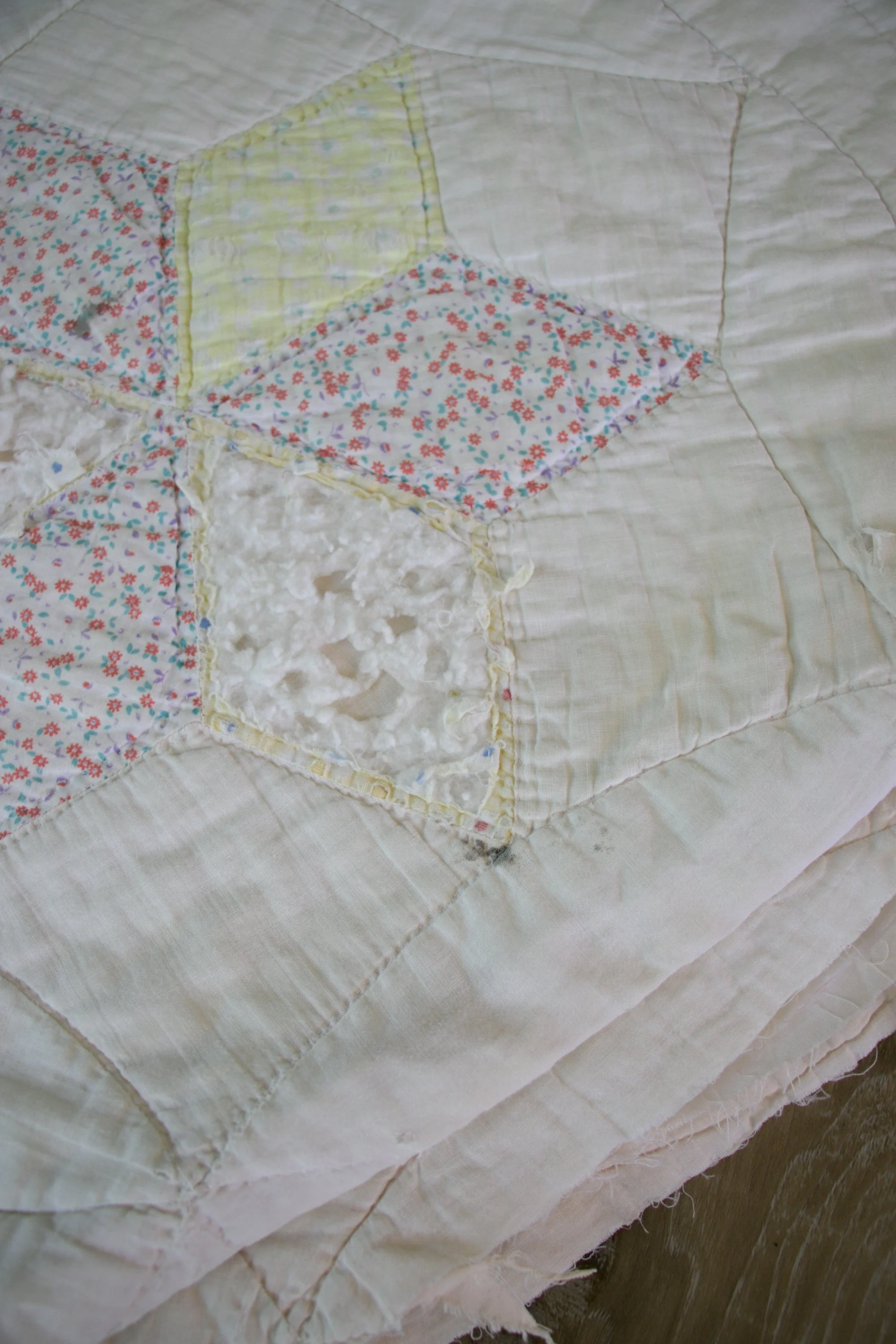
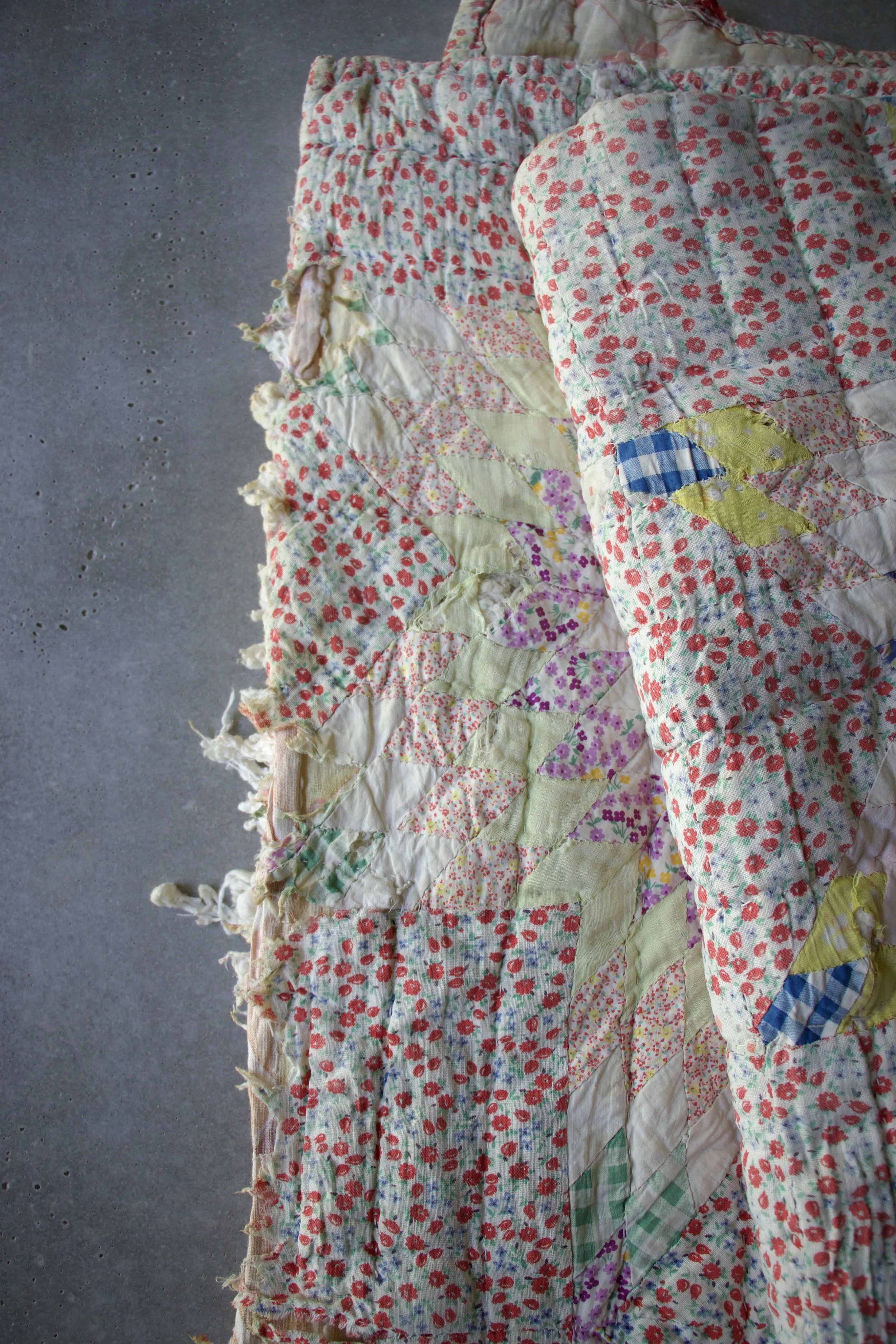
Condition: Good. Scattered areas of thinning, small holes, seam stress, and fabric loss
Handwashed and line dried
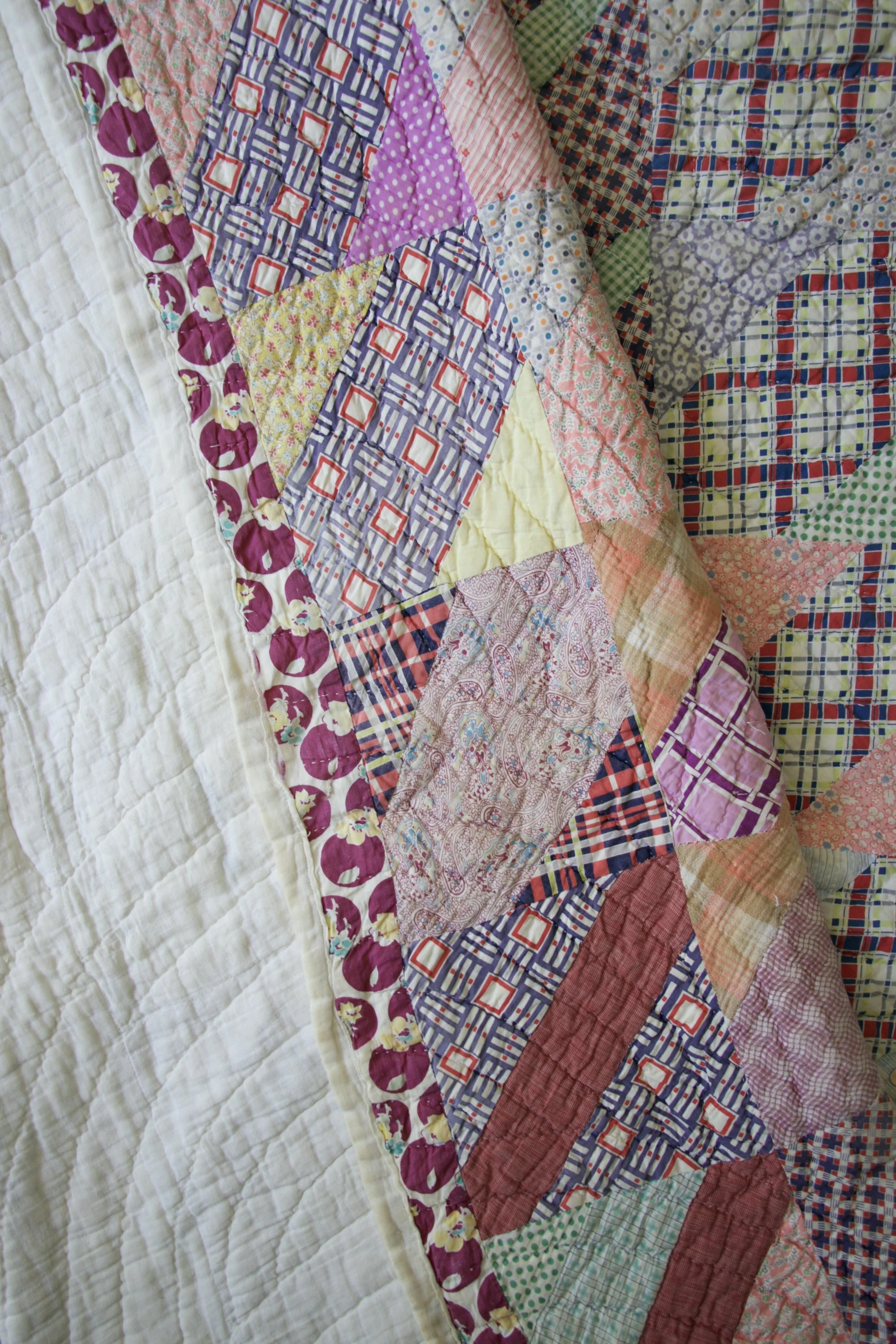
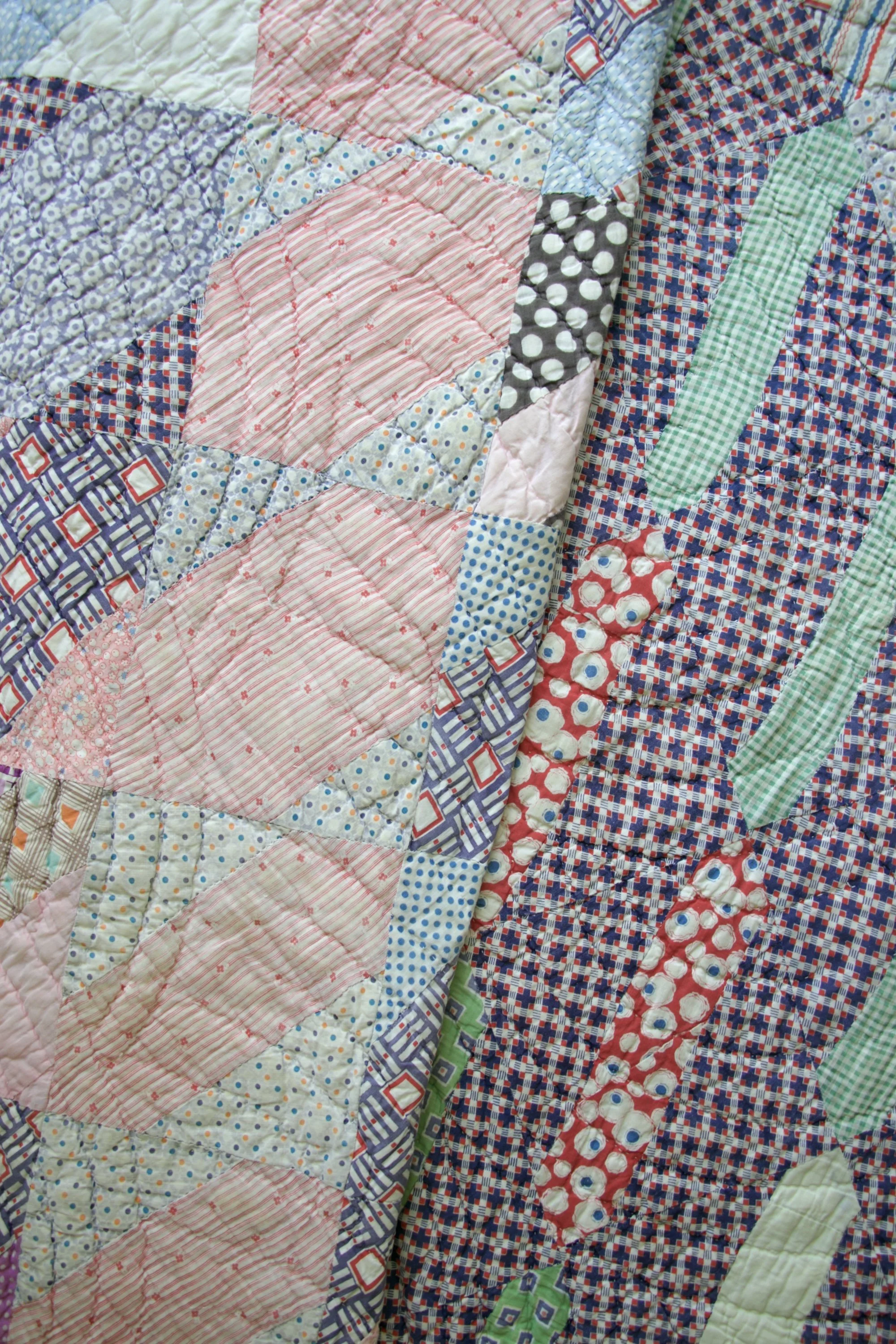
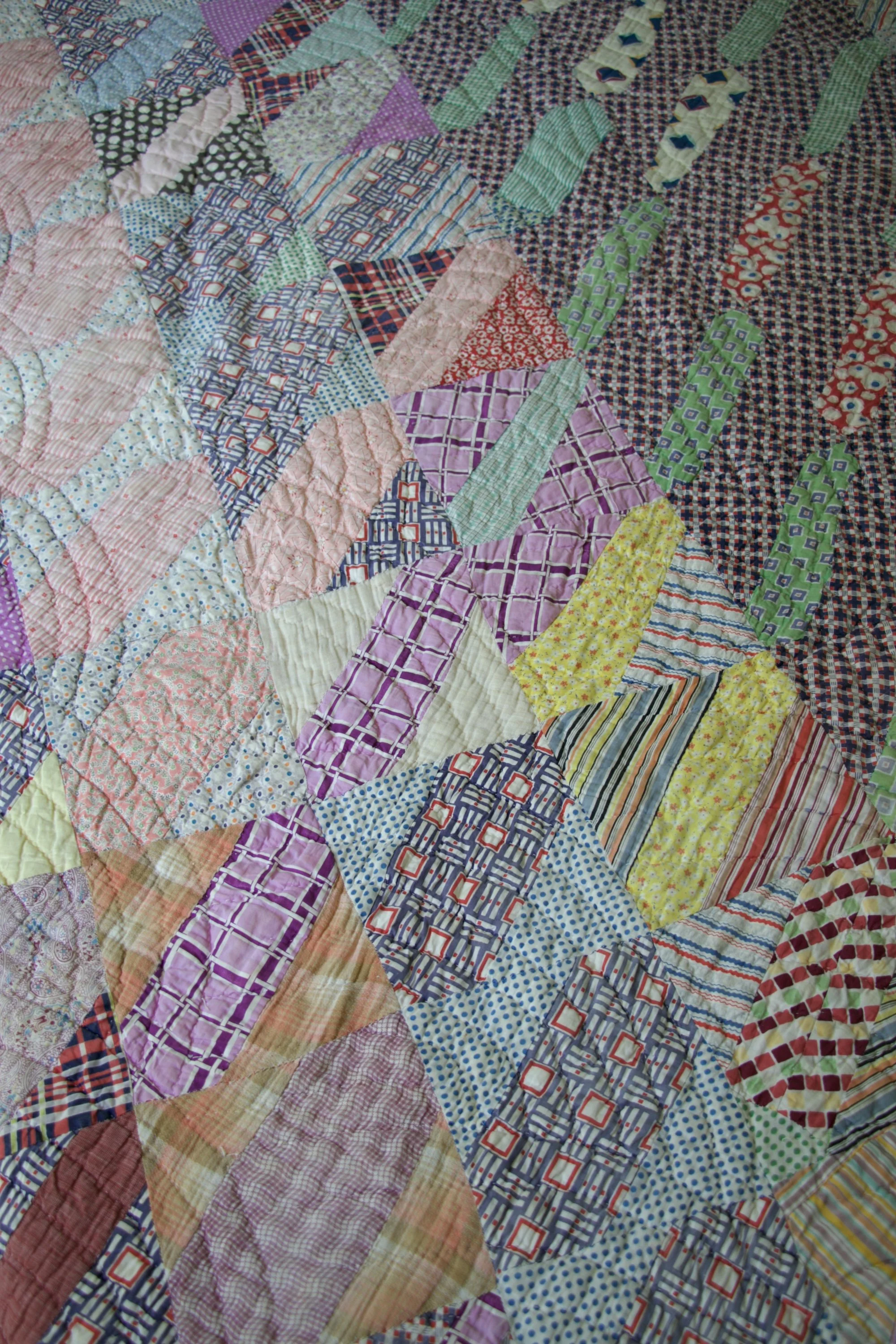
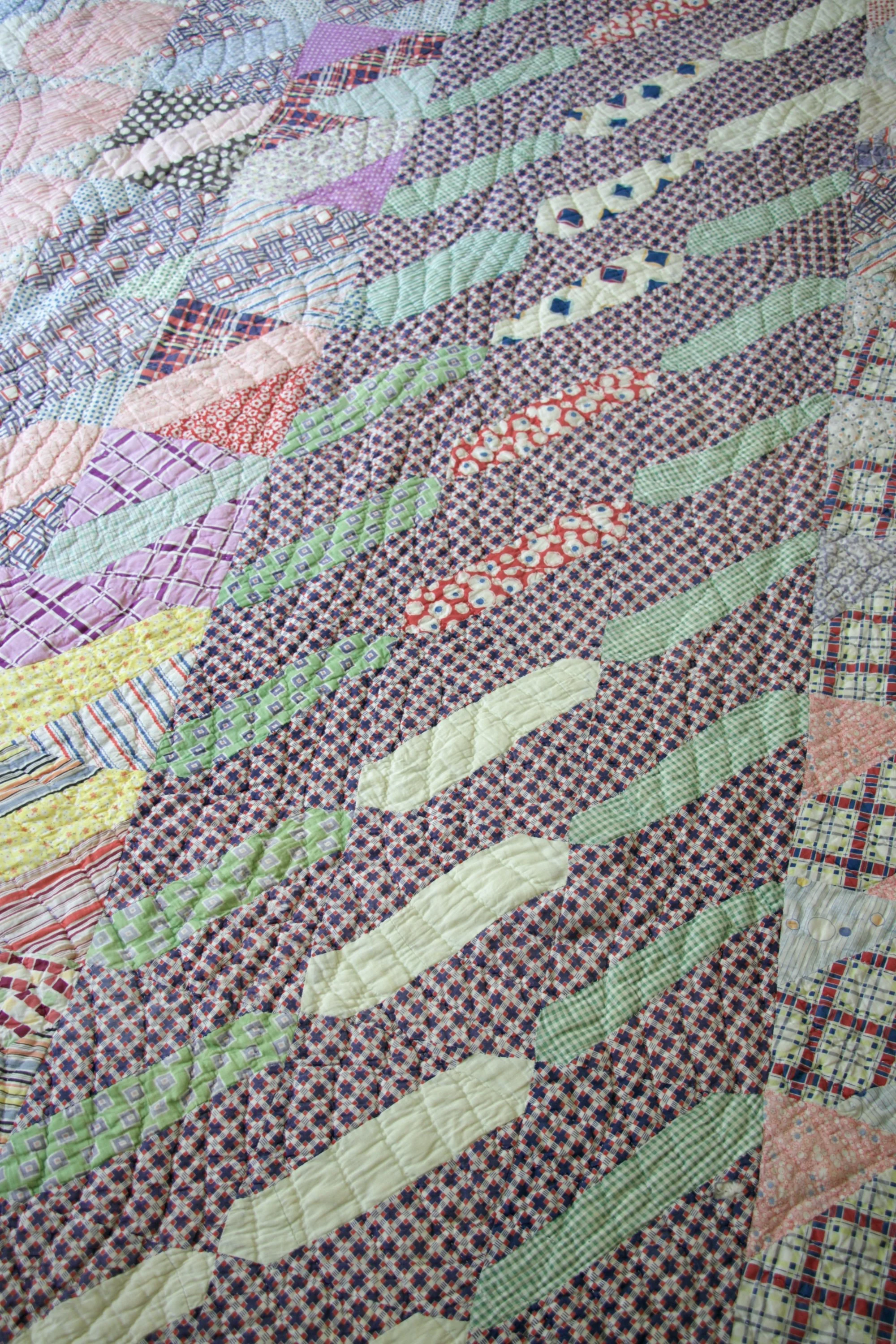
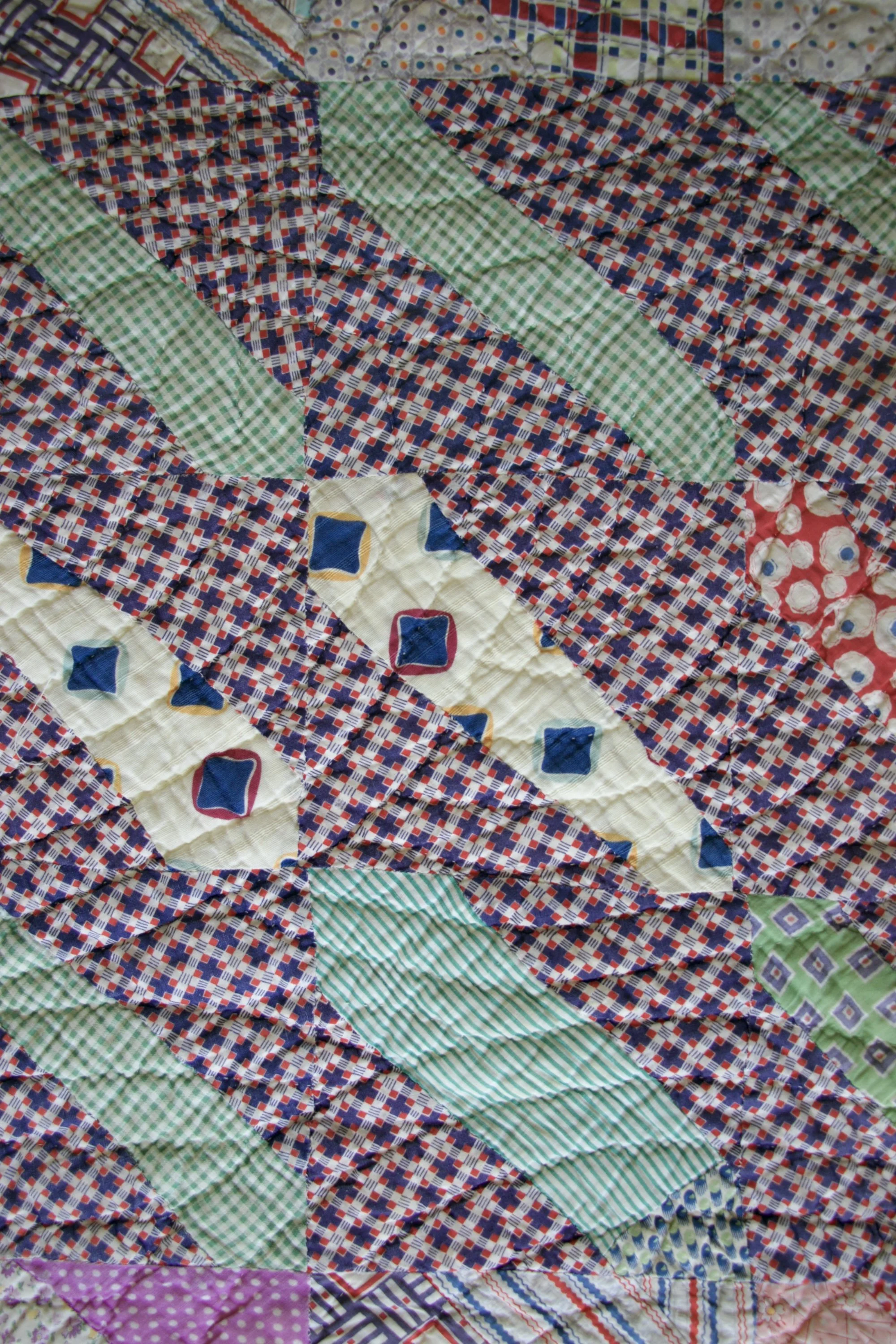
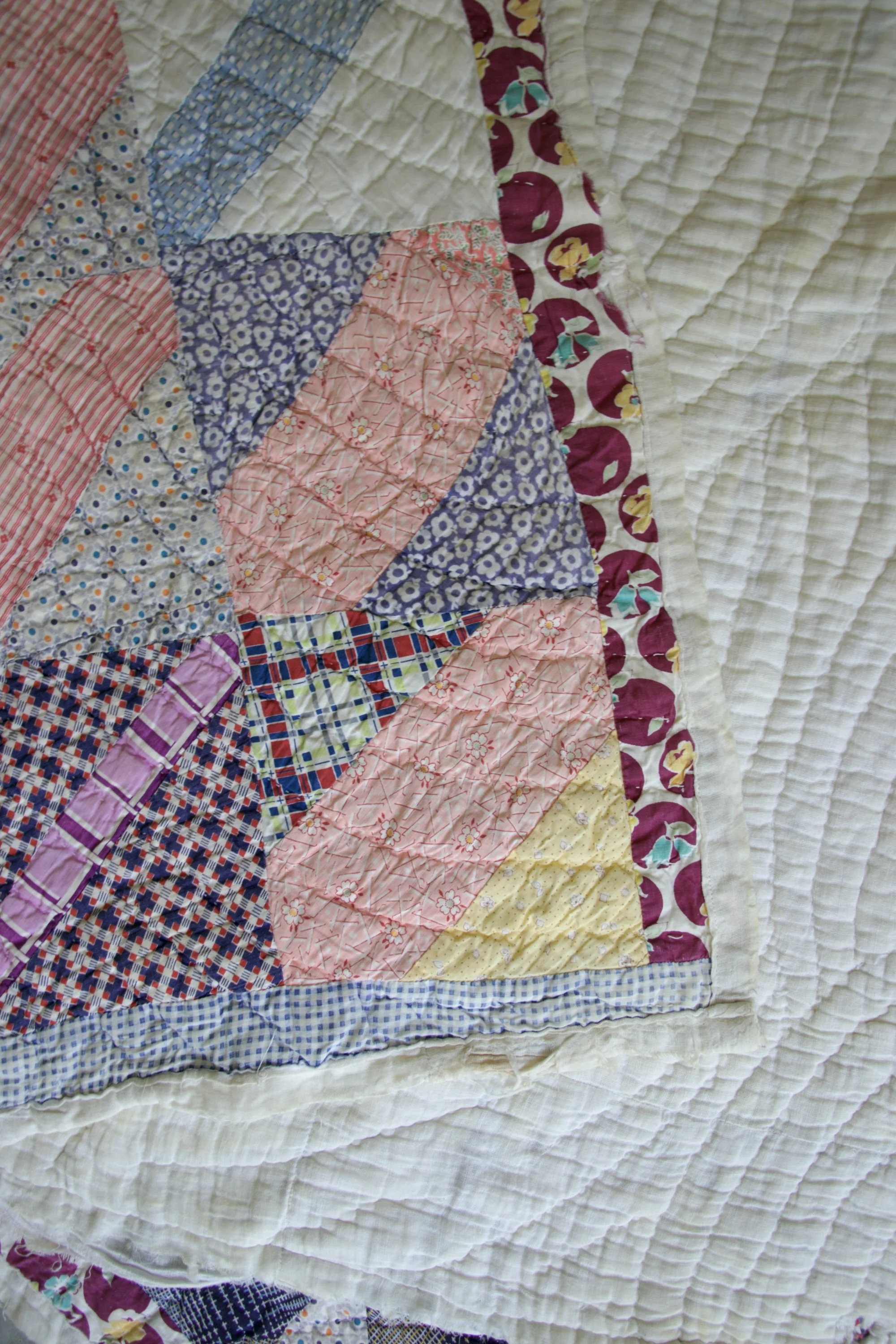
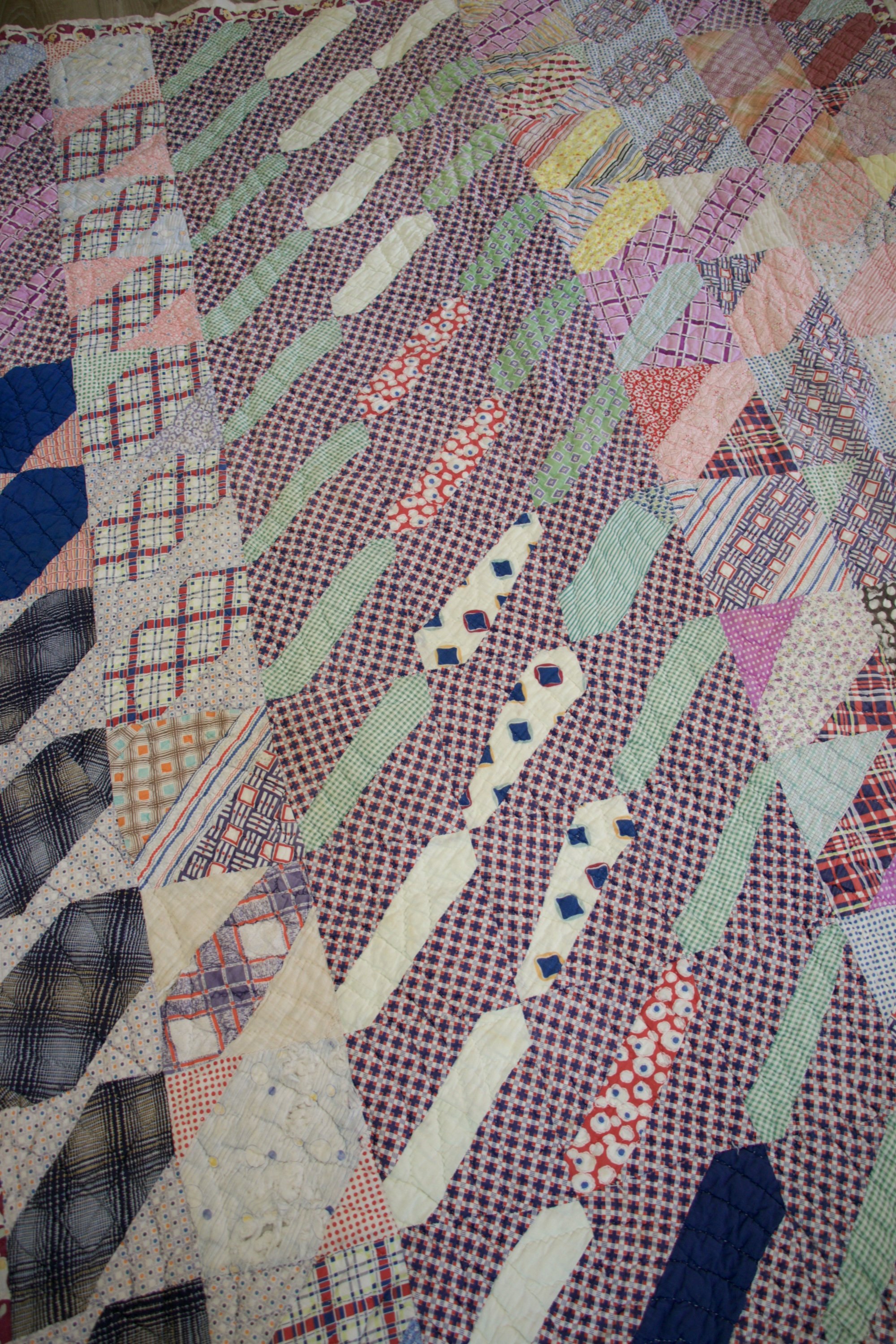
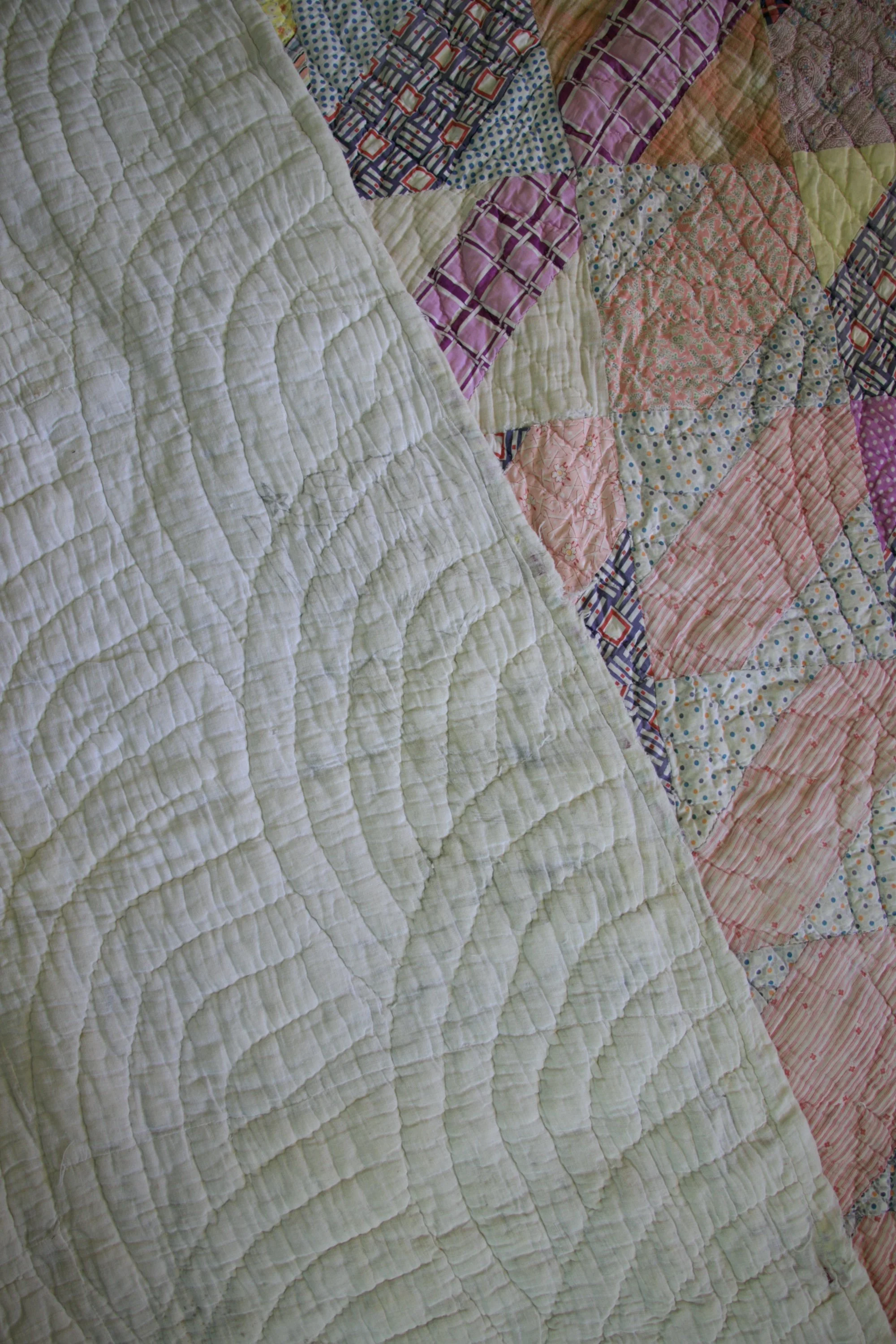
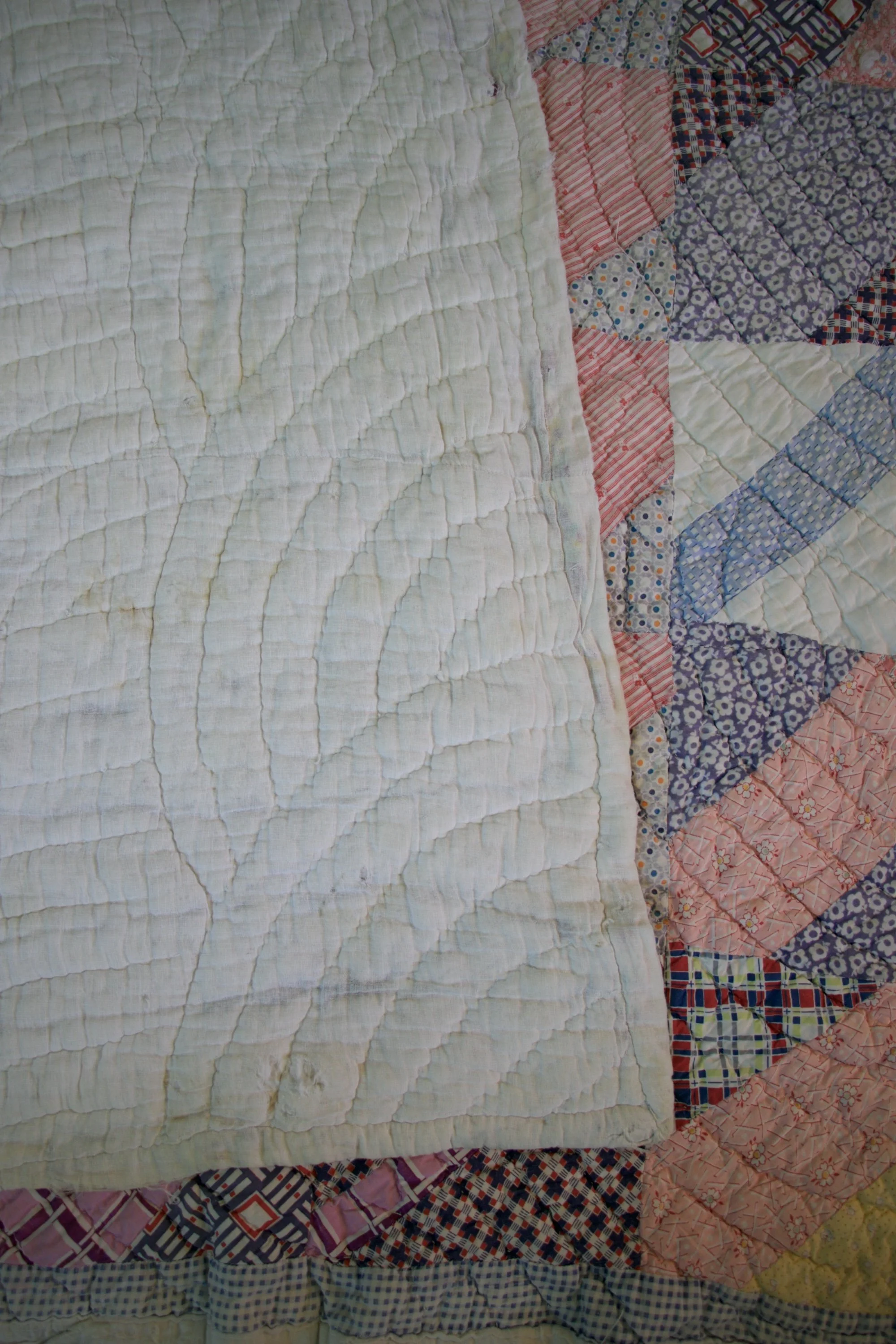
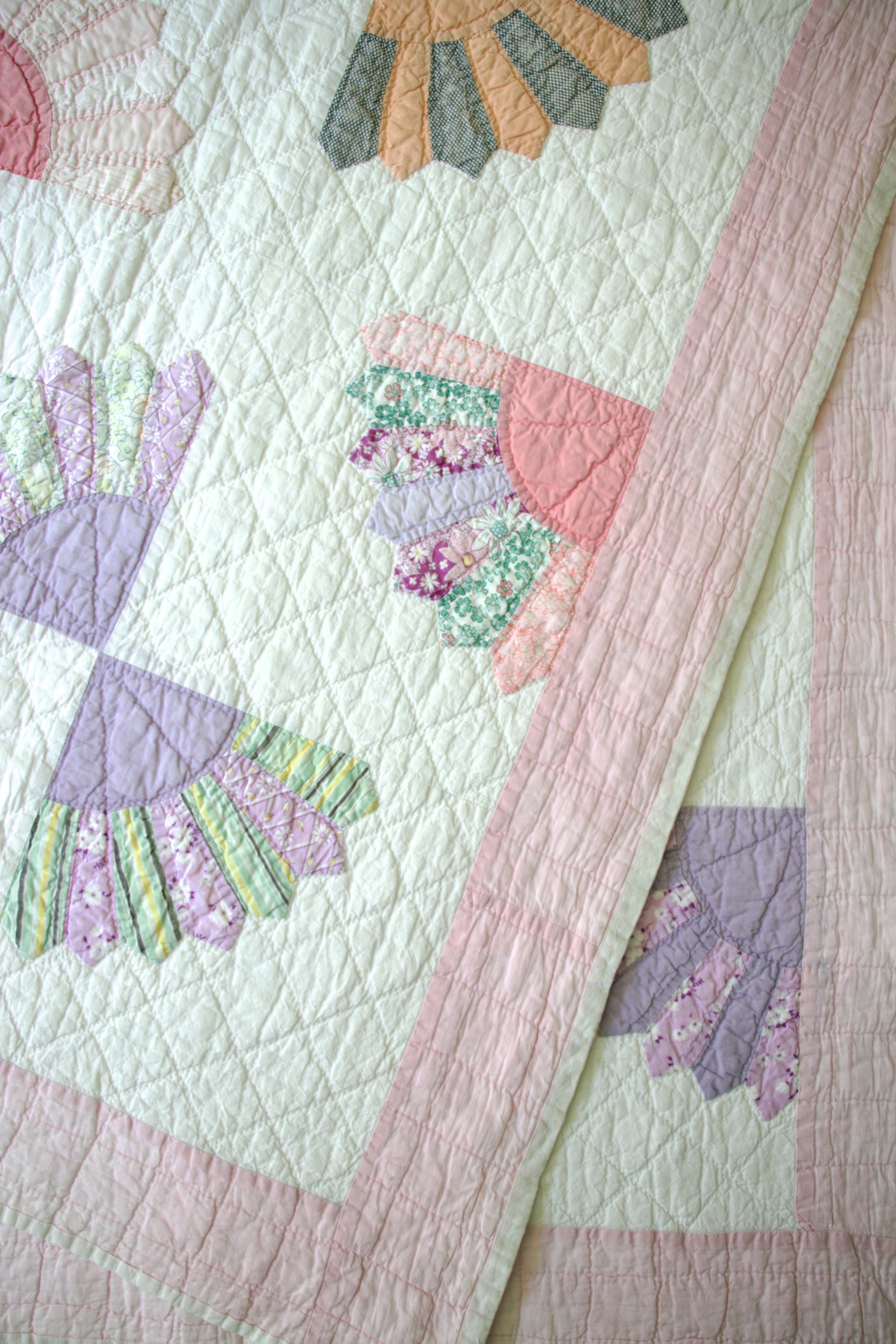
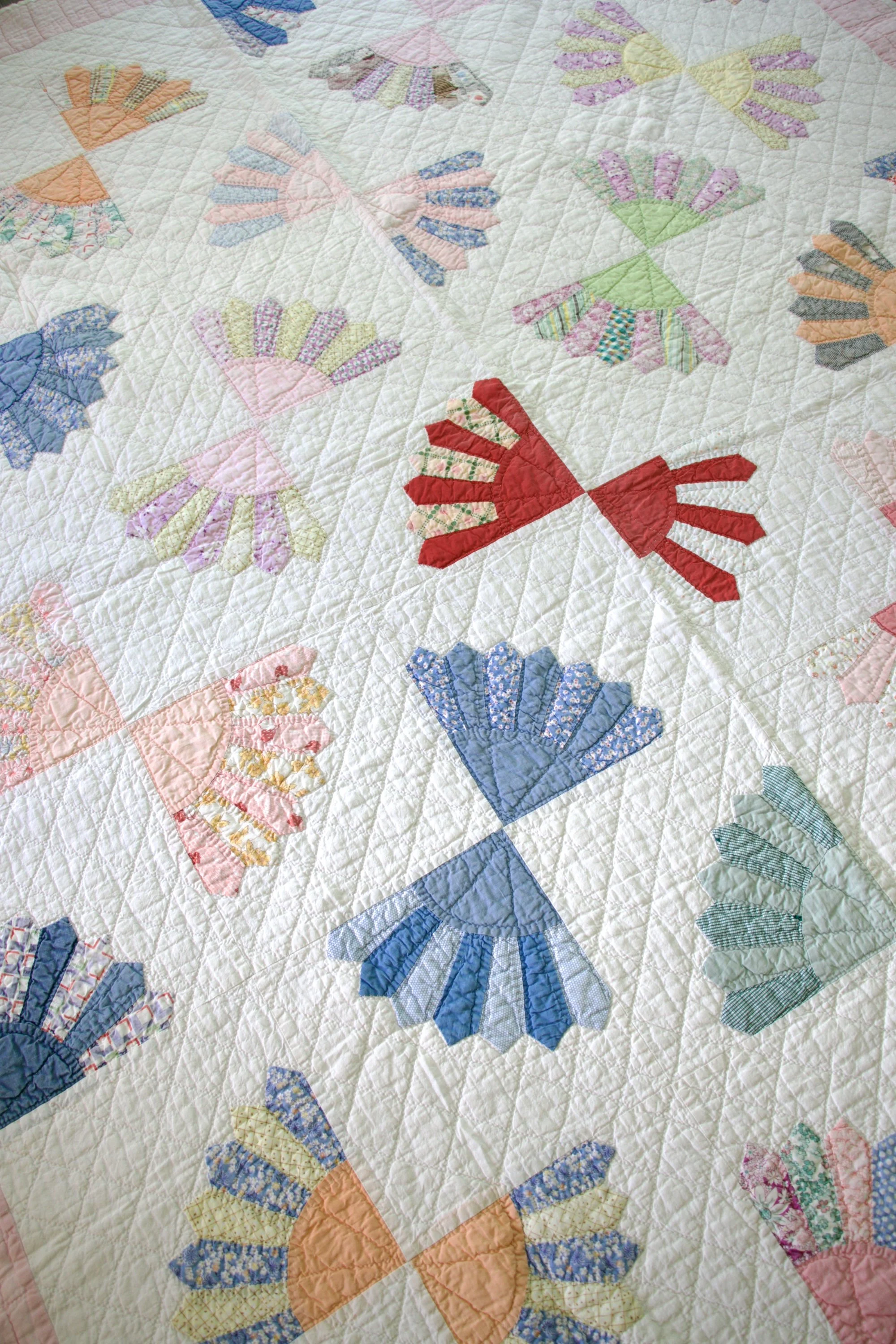
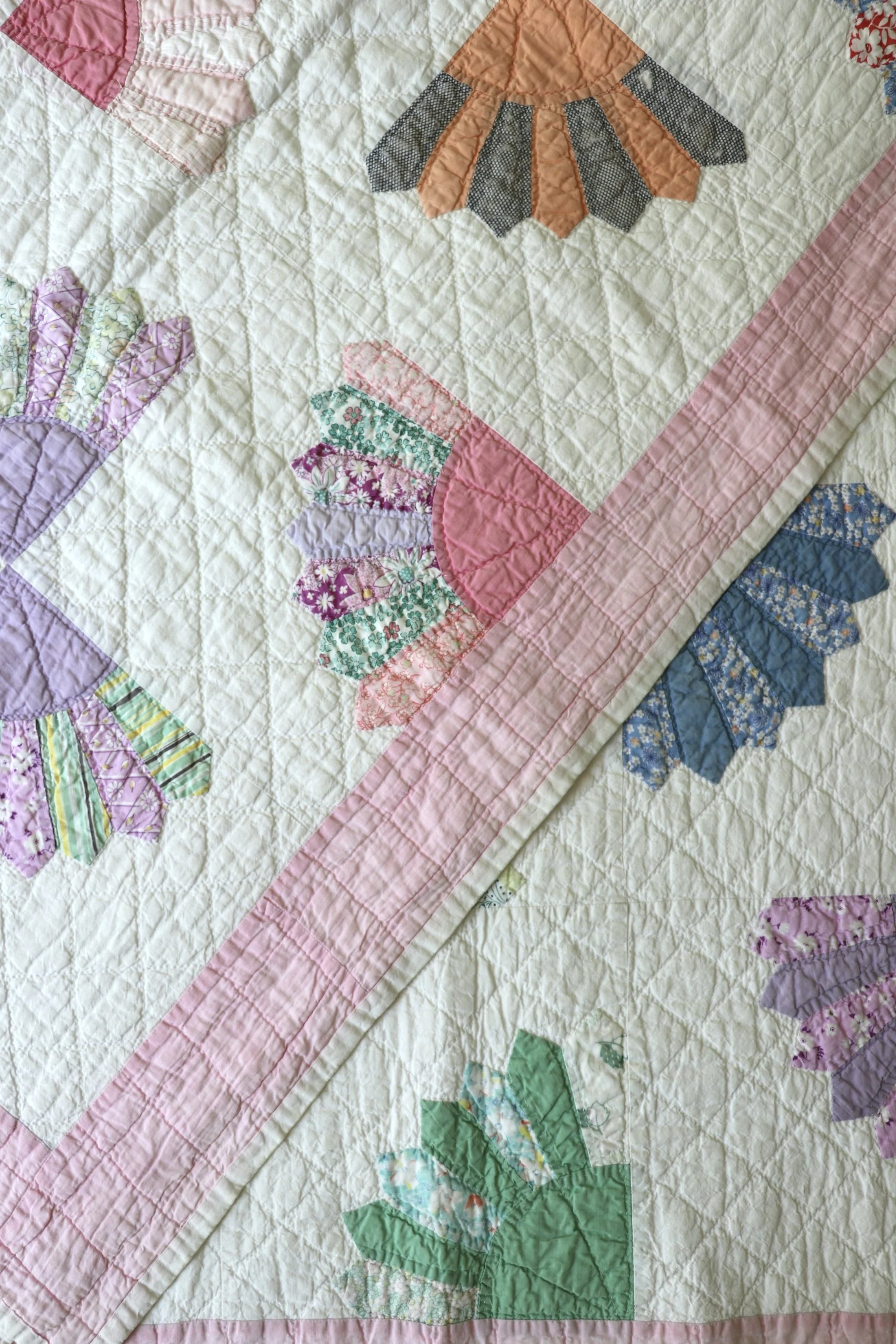
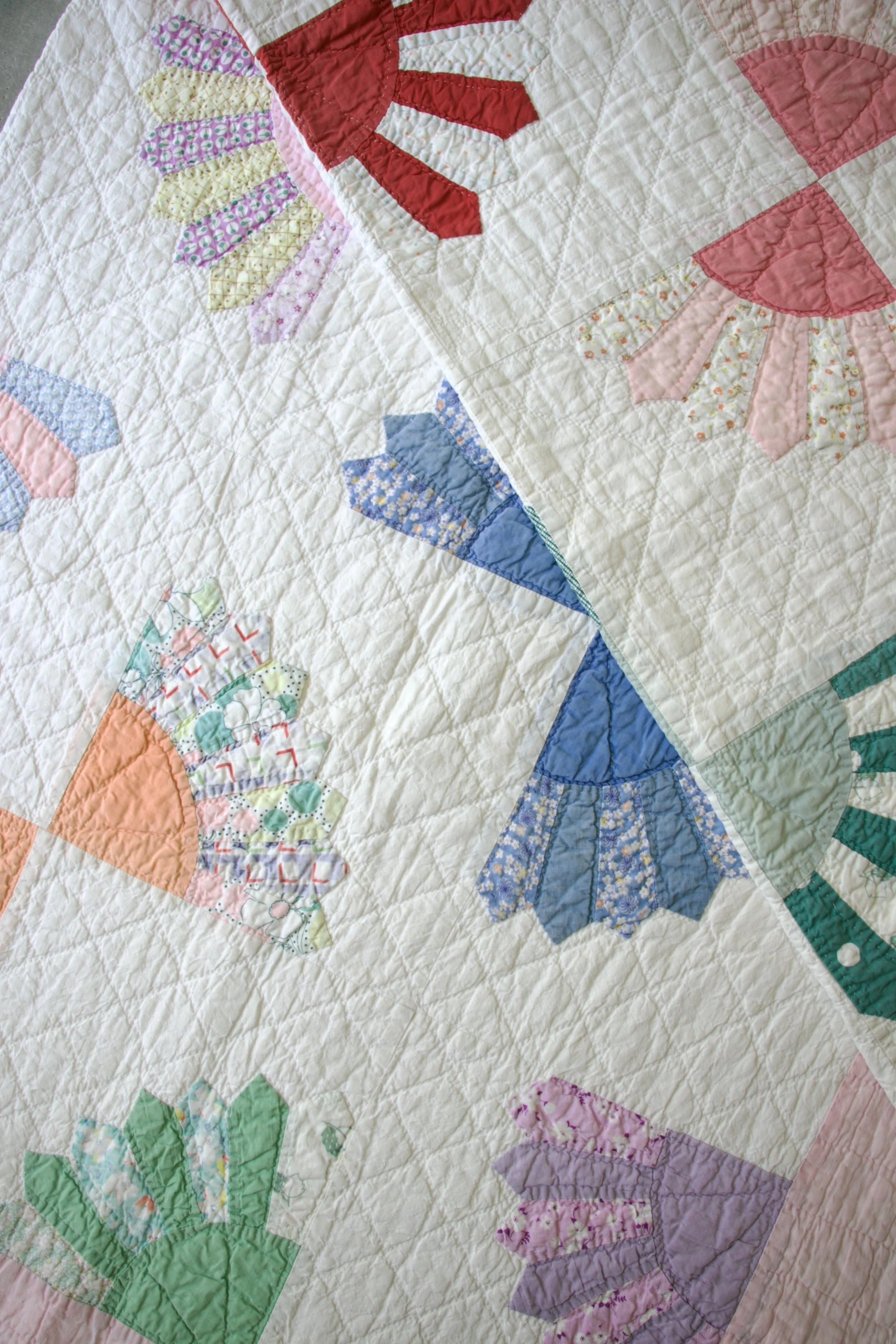
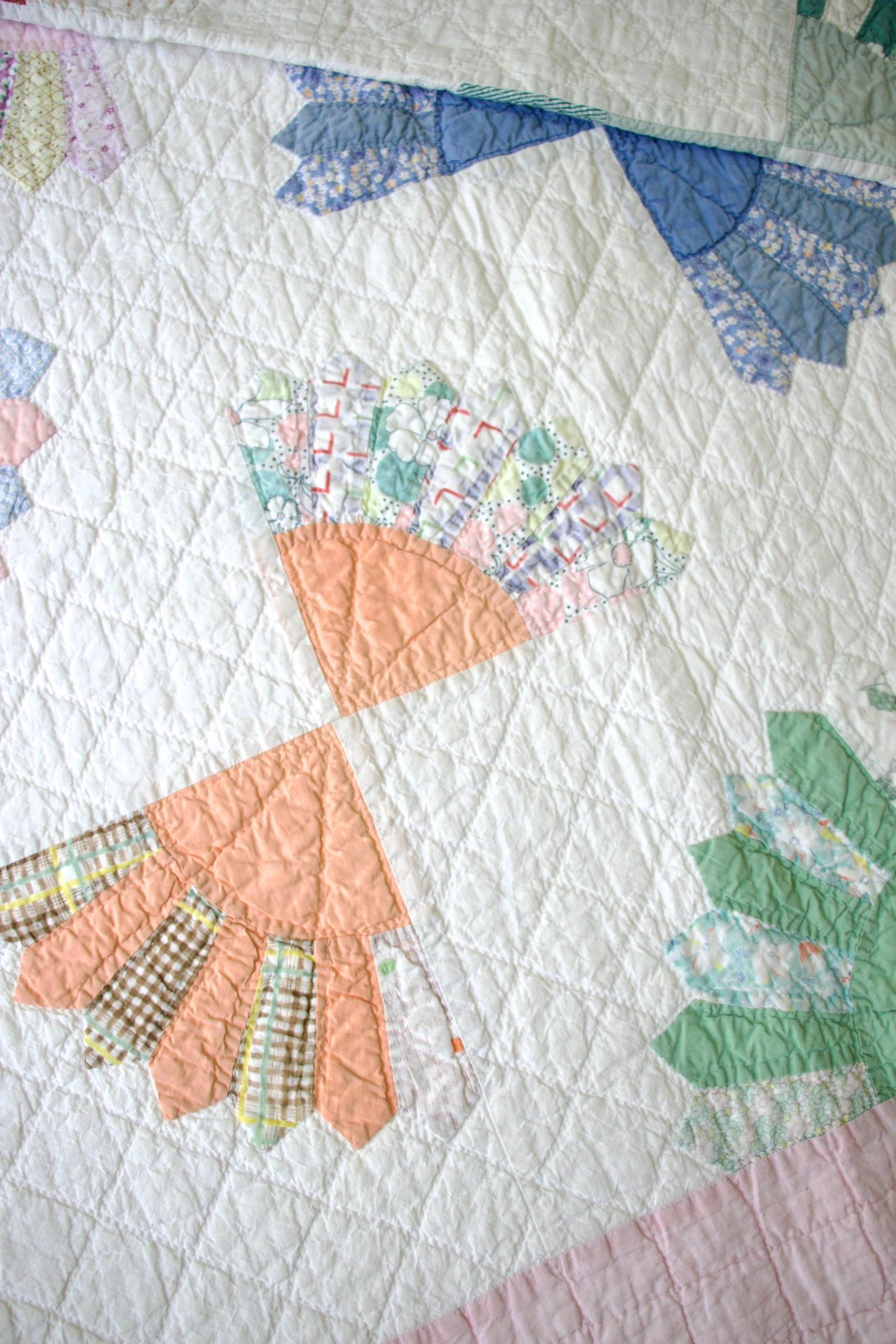
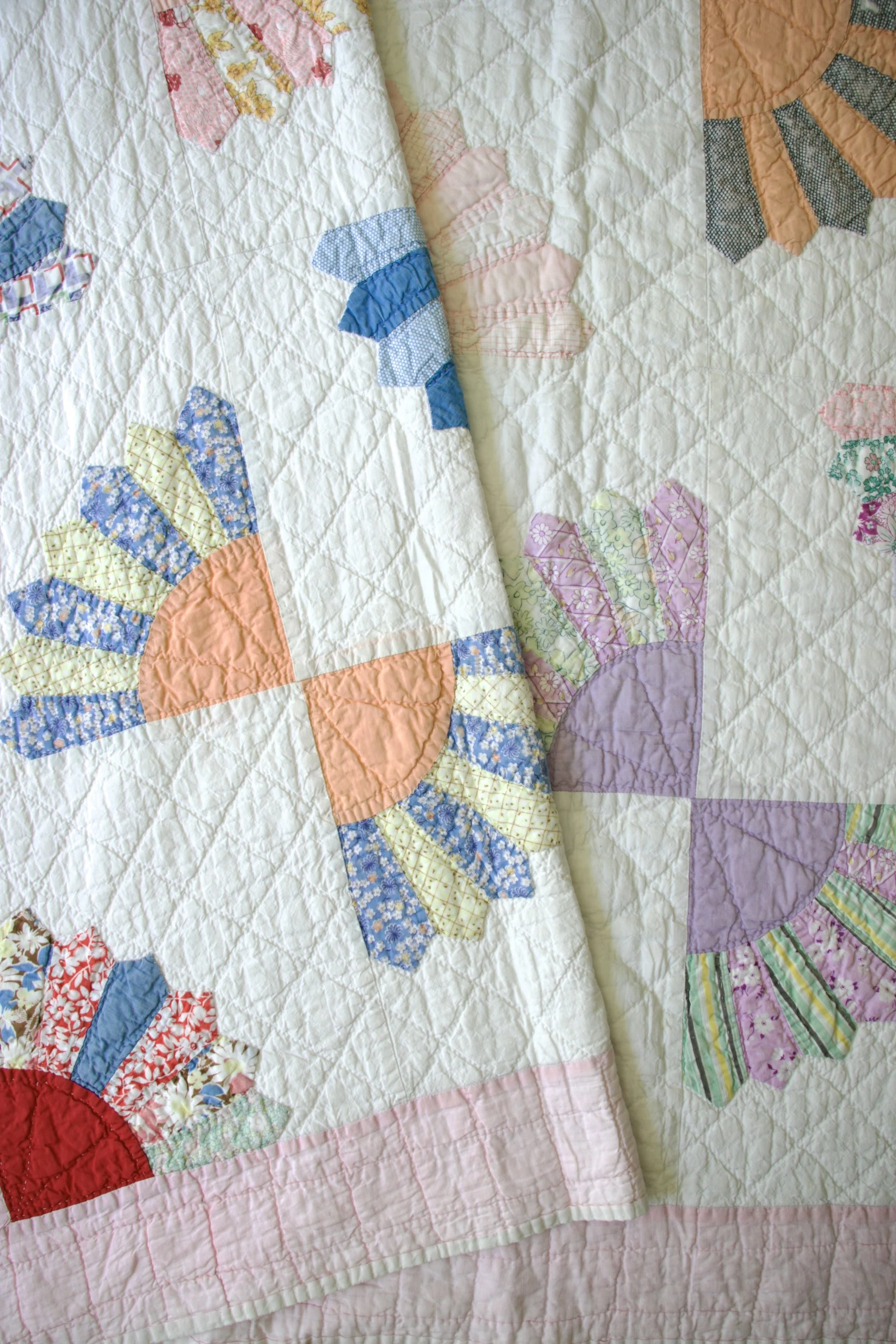
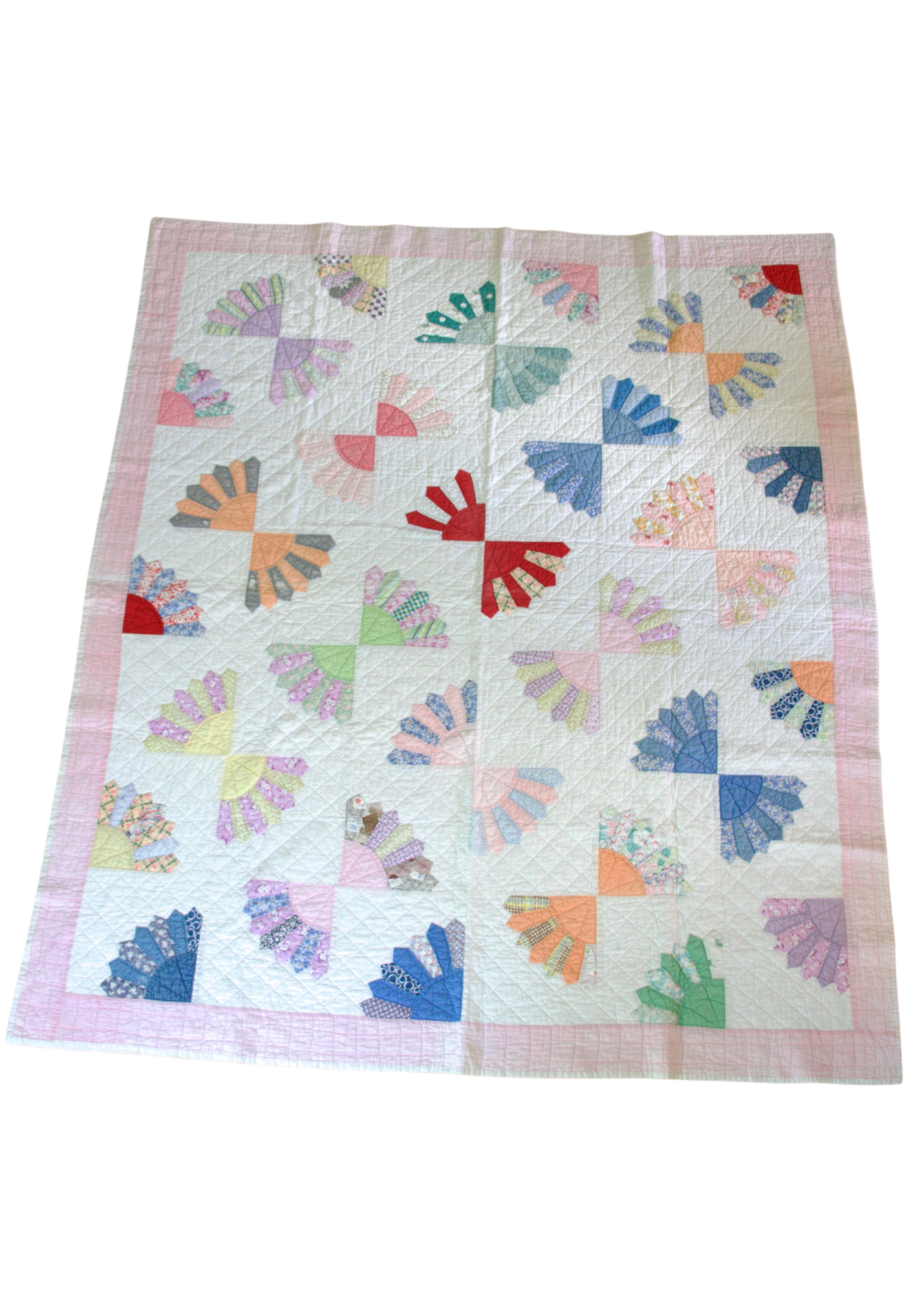
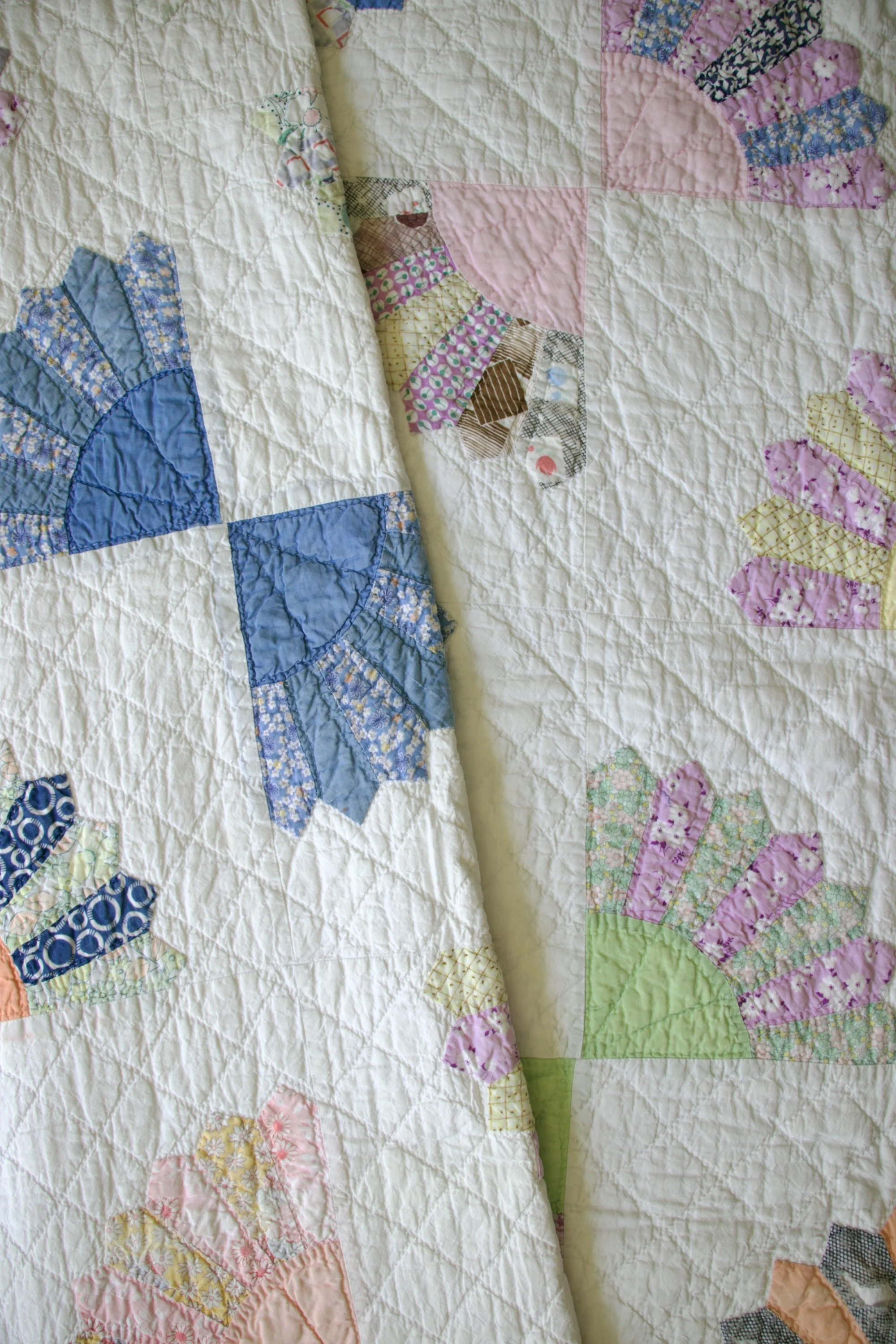
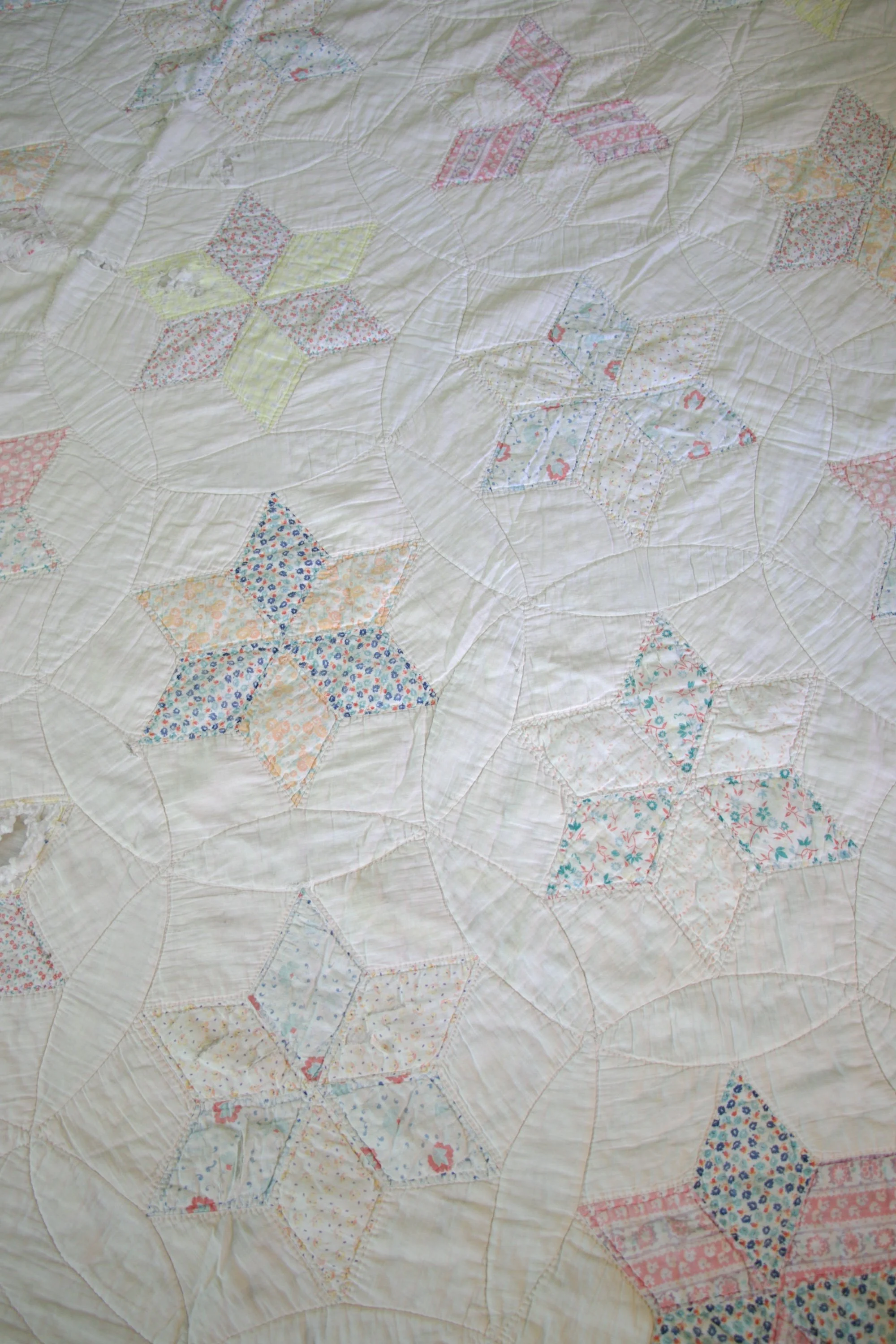
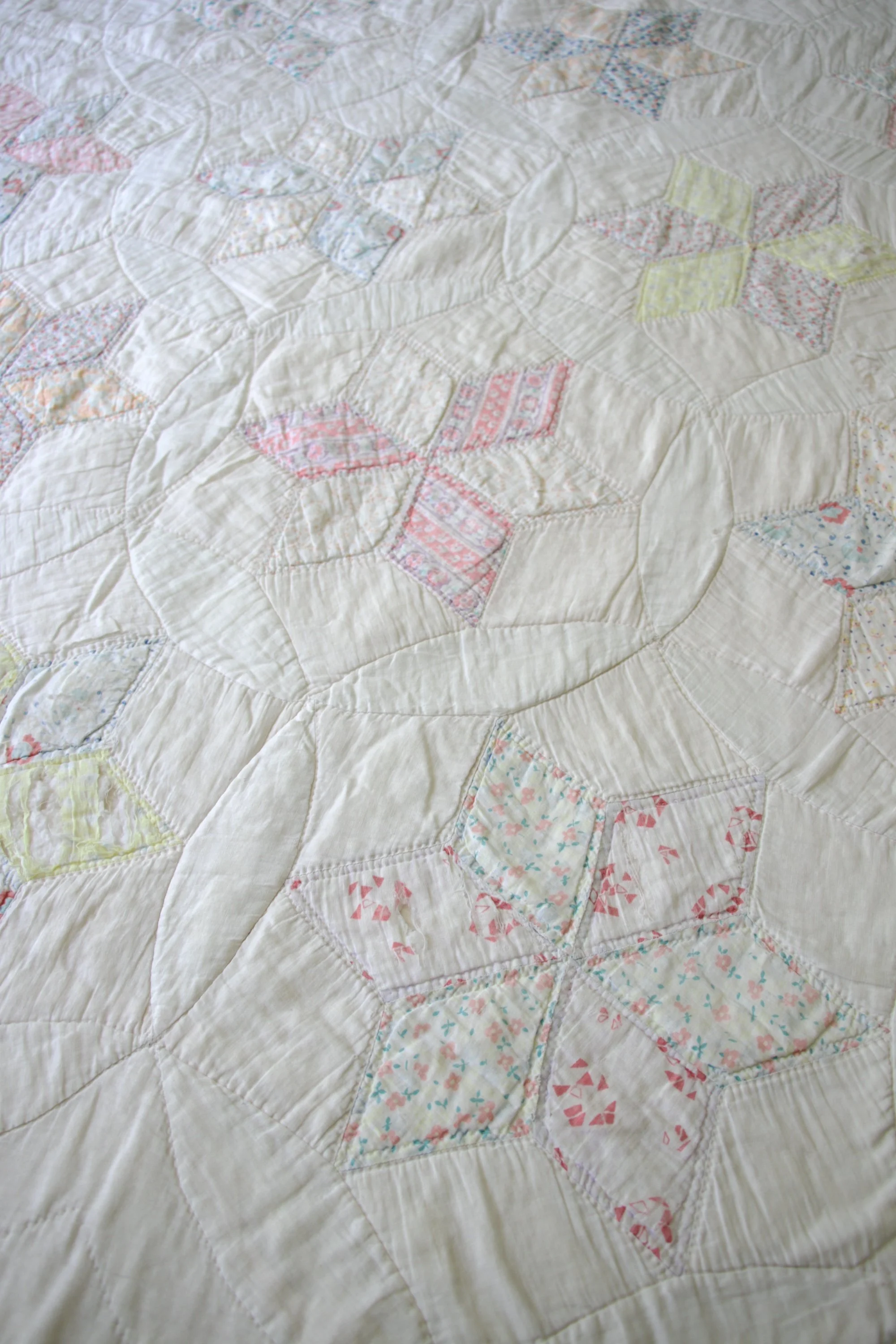
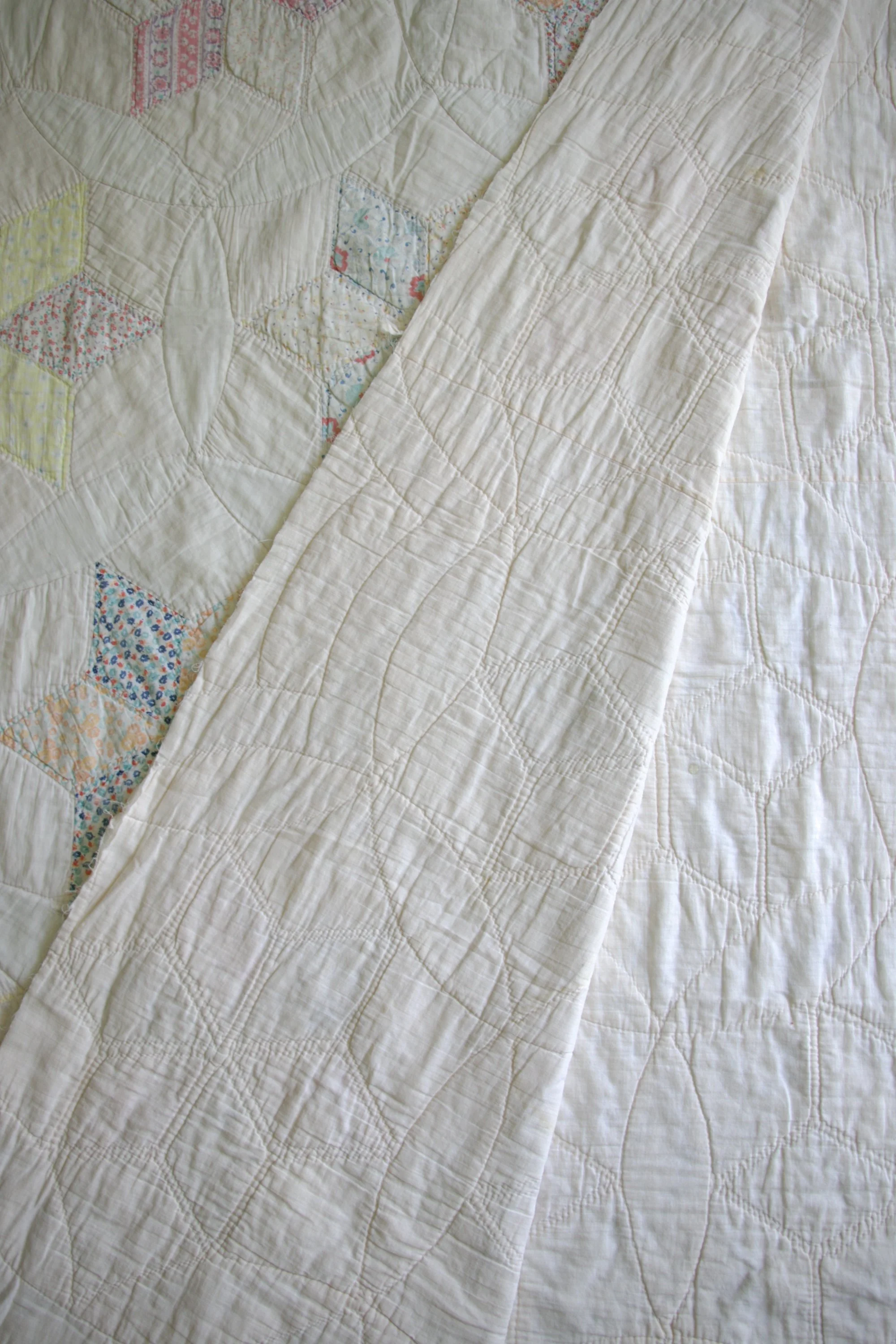
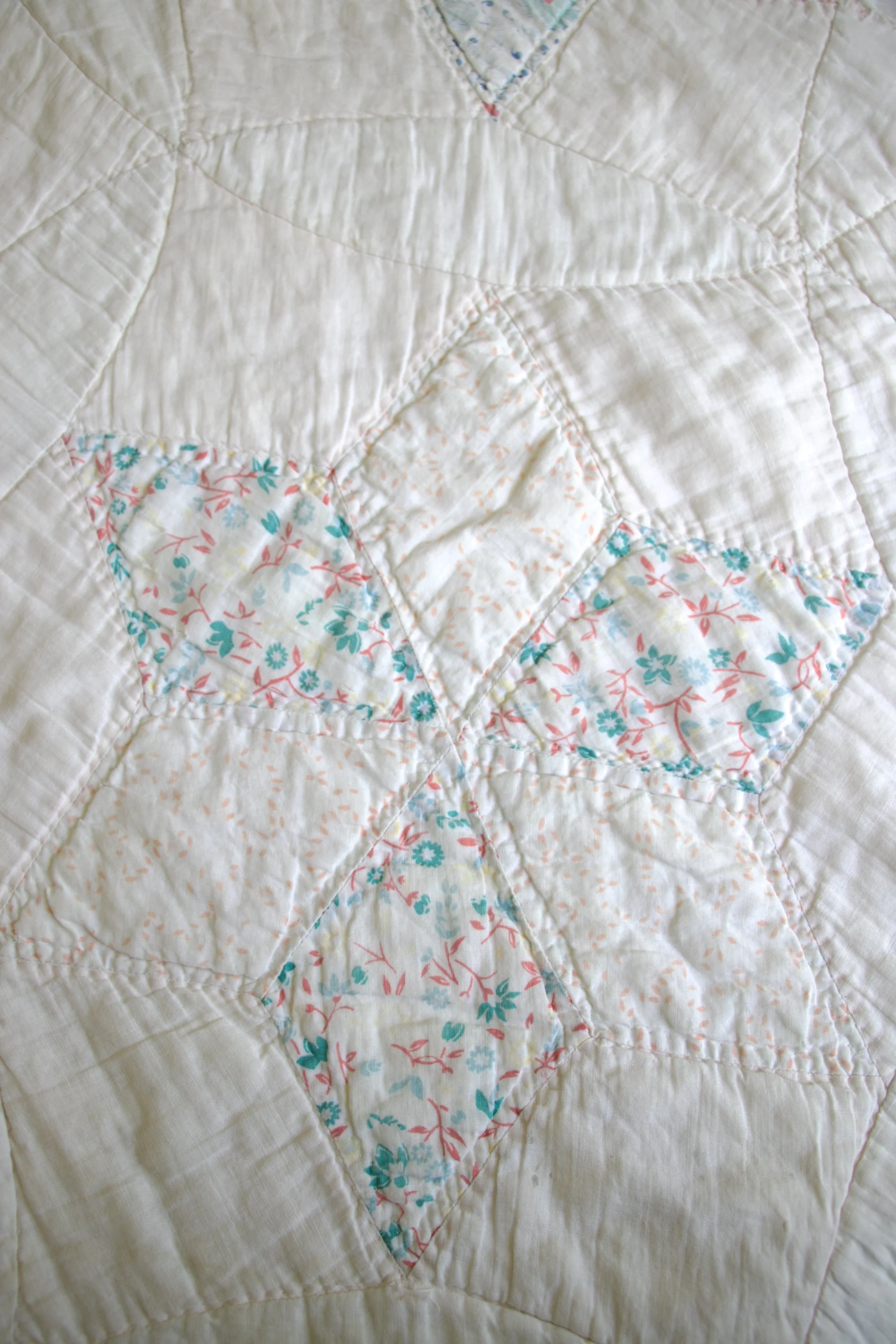
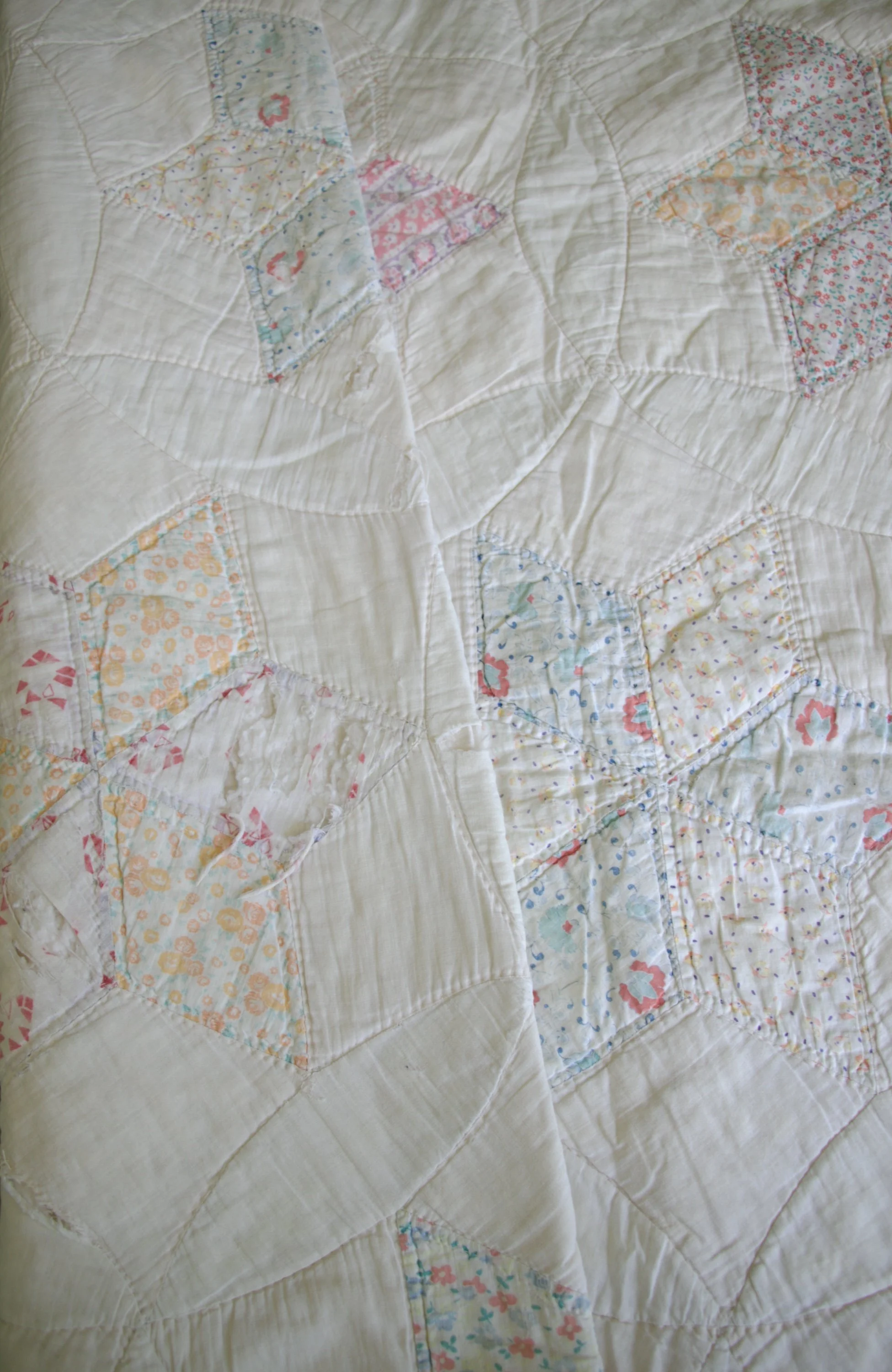
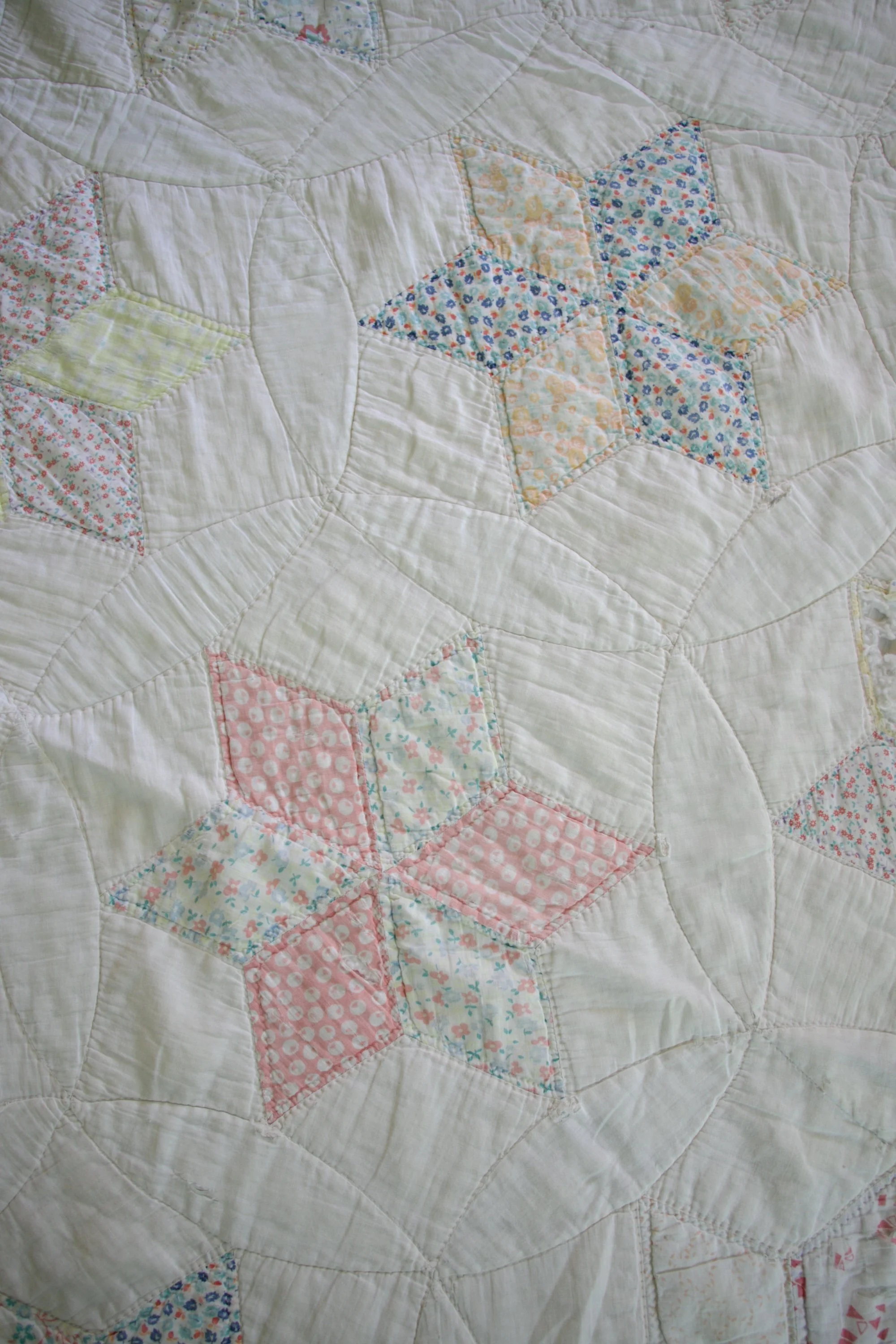
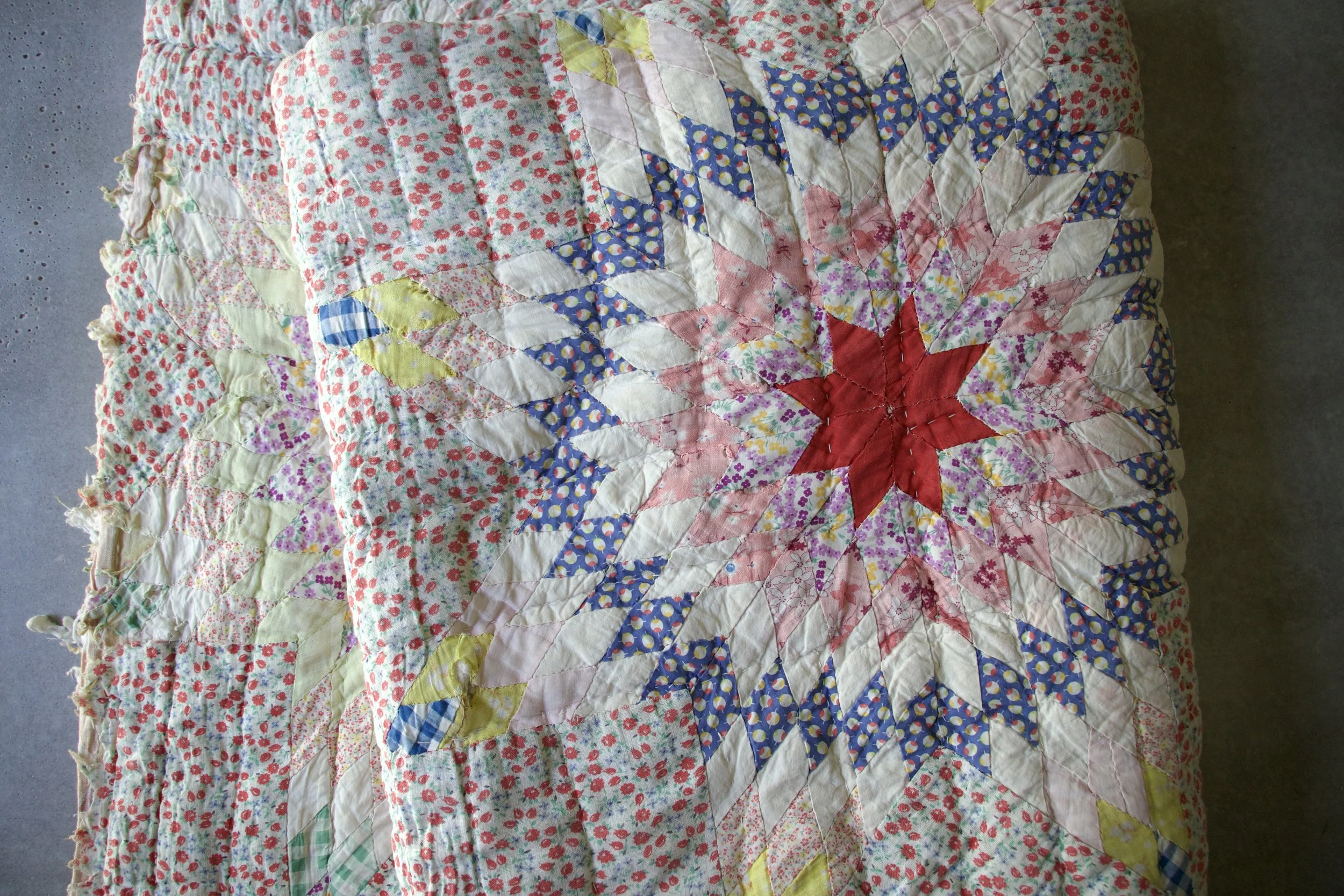
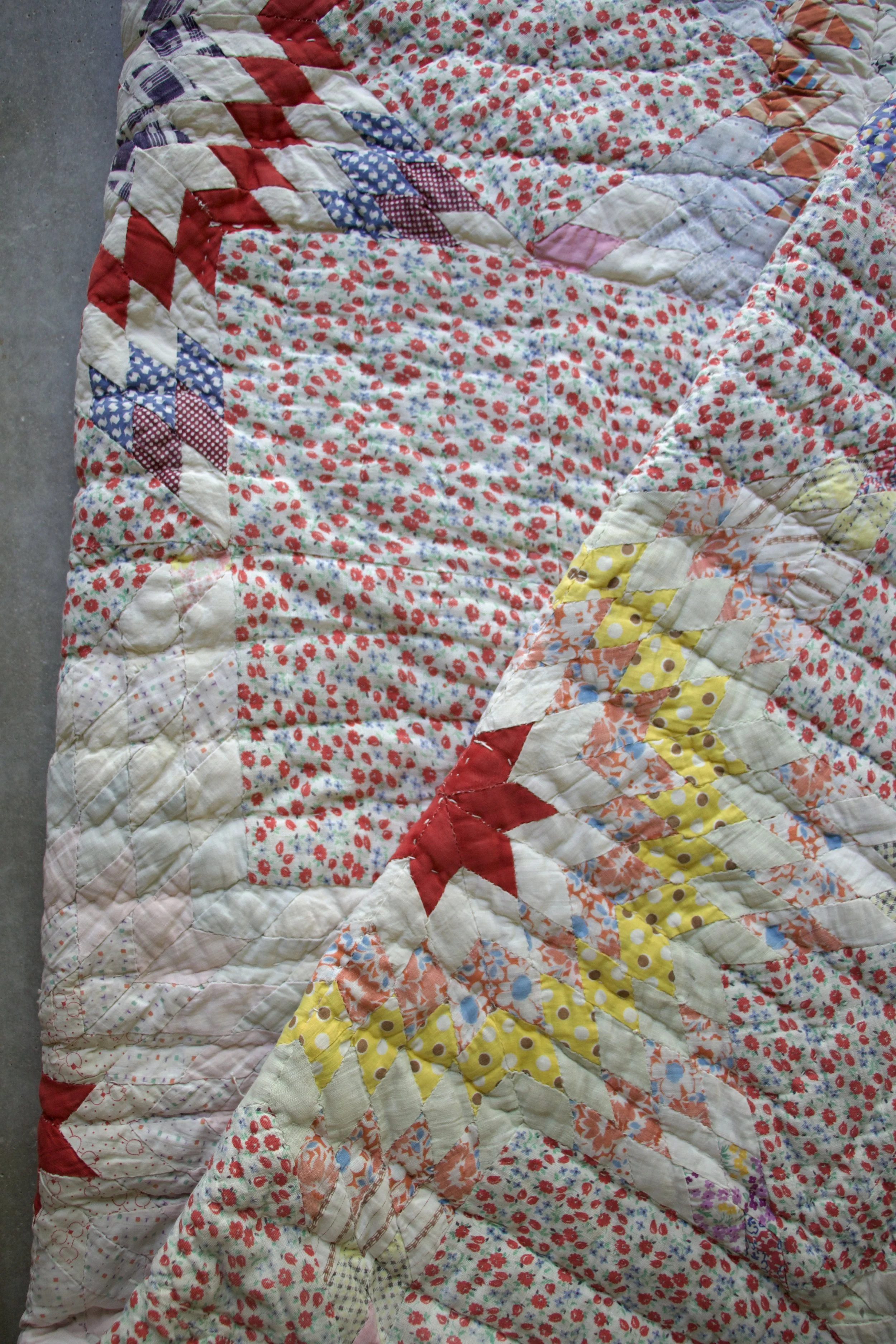
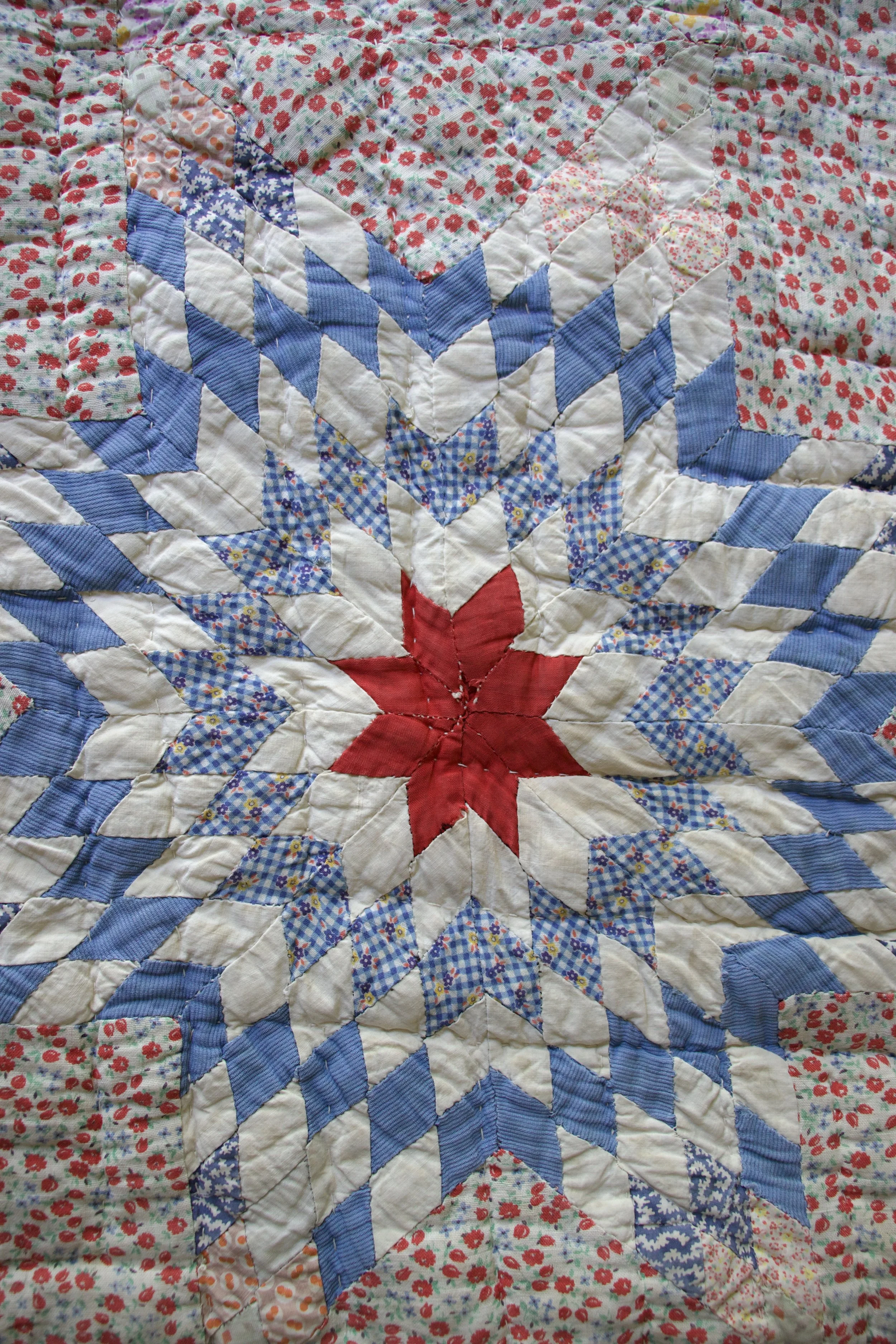
Hand pieced and hand quilted, this charming Tulip quilt features nine large floral blocks arranged in a three-by-three layout across a white ground. Each stylized tulip is formed from softly curved petals in cheerful printed cottons—red florals, lavender sprays, pale pinks, buttery yellows, and light blues—set against pale green stems and centers. The open white background gives the quilt an airy, spacious quality, while the varied prints lend the composition a lively, garden-like warmth. Fine hand quilting in an overall scrolling and clamshell-like design adds texture and movement across the surface, softening the geometry of the blocks with gentle relief.
Period
Depression era to early mid-century, likely 1930s–1940s.
Pattern
This quilt is worked in a Tulip variation, a floral block pattern built from repeated stylized blossoms set in a regular grid. Tulip quilts were popular in the first half of the twentieth century, especially in forms that combined strong floral imagery with soft pastel grounds and bright printed fabrics. The oversized blossoms and simplified stems in this example give it a distinctly cheerful, decorative presence.
Fabric
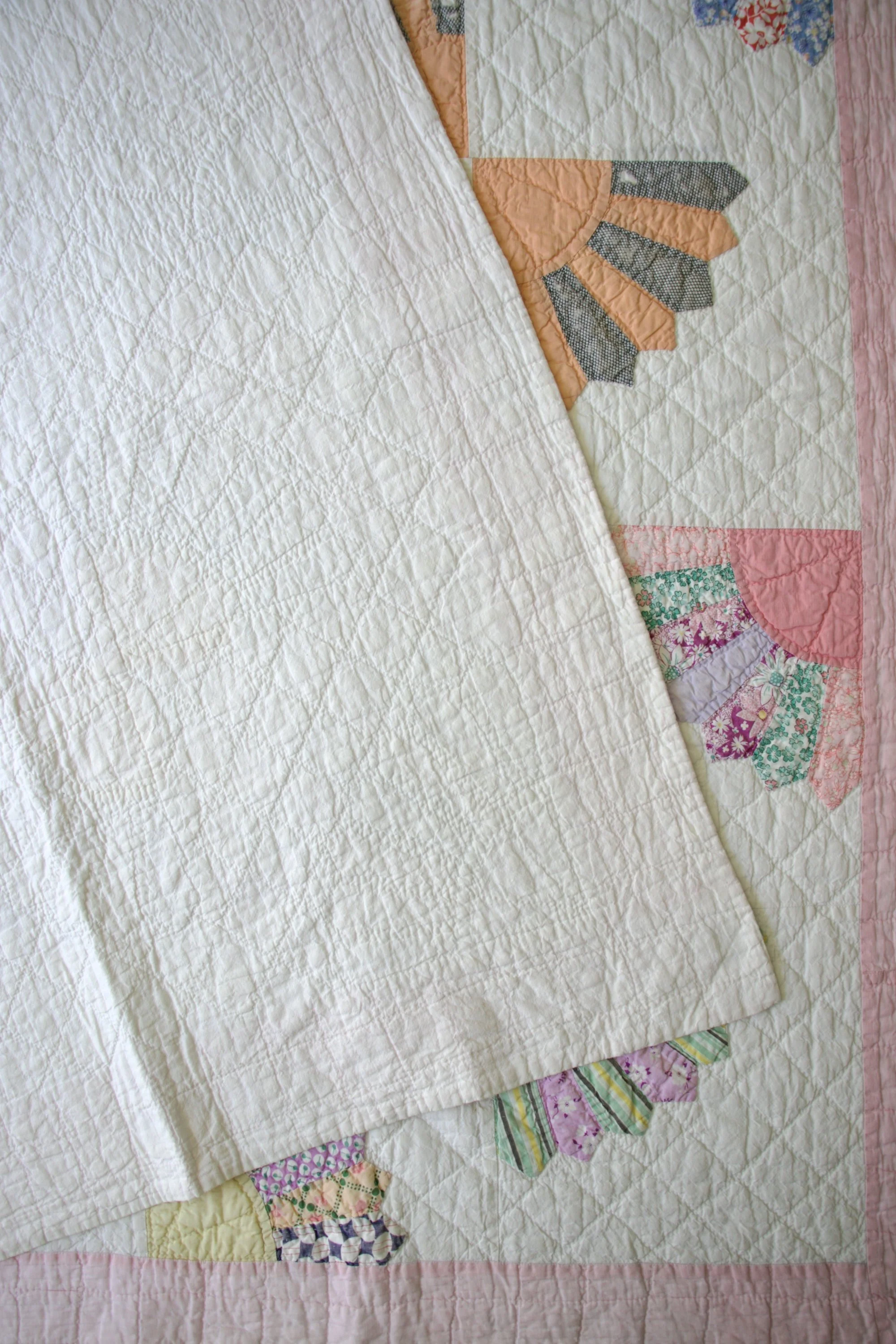
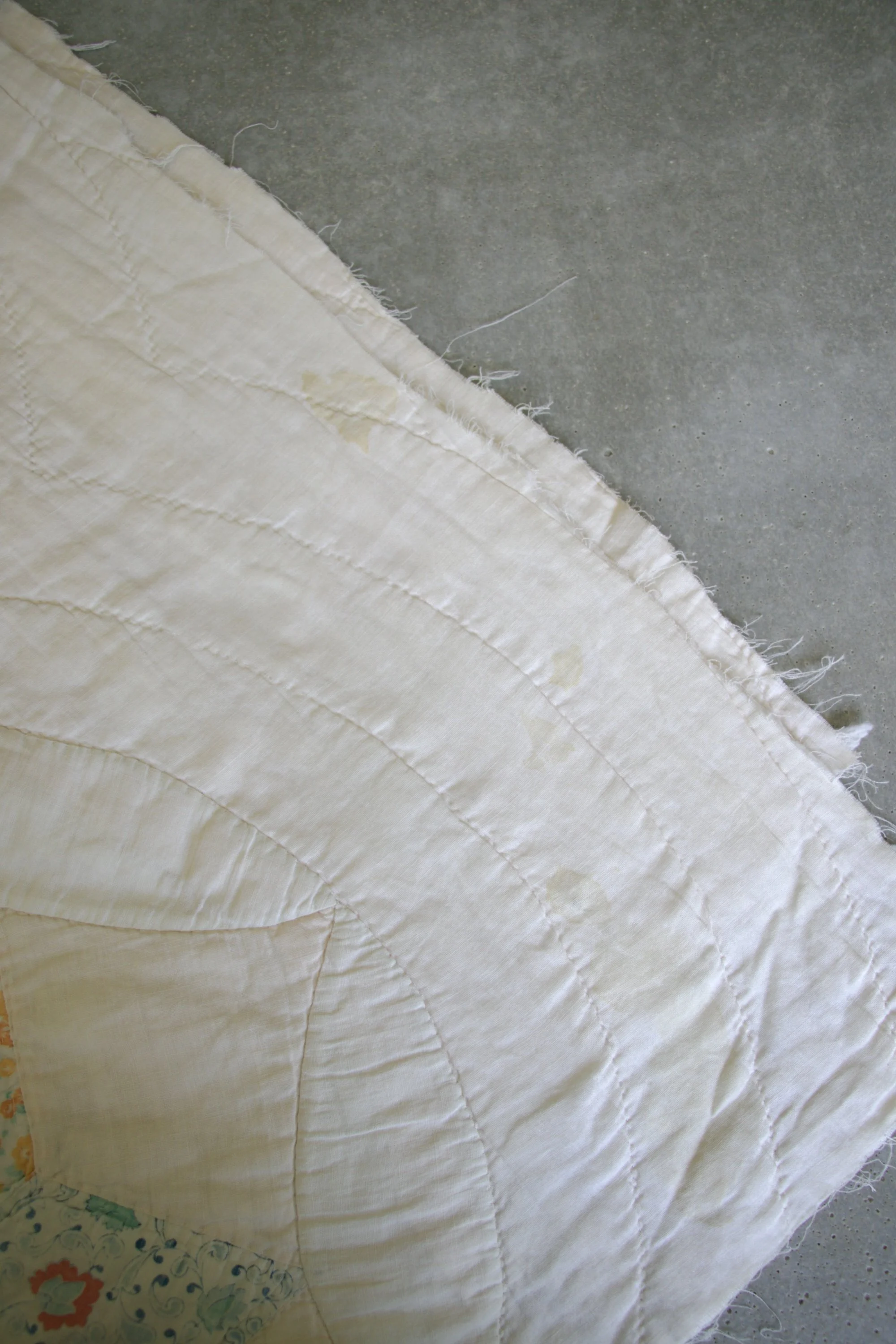
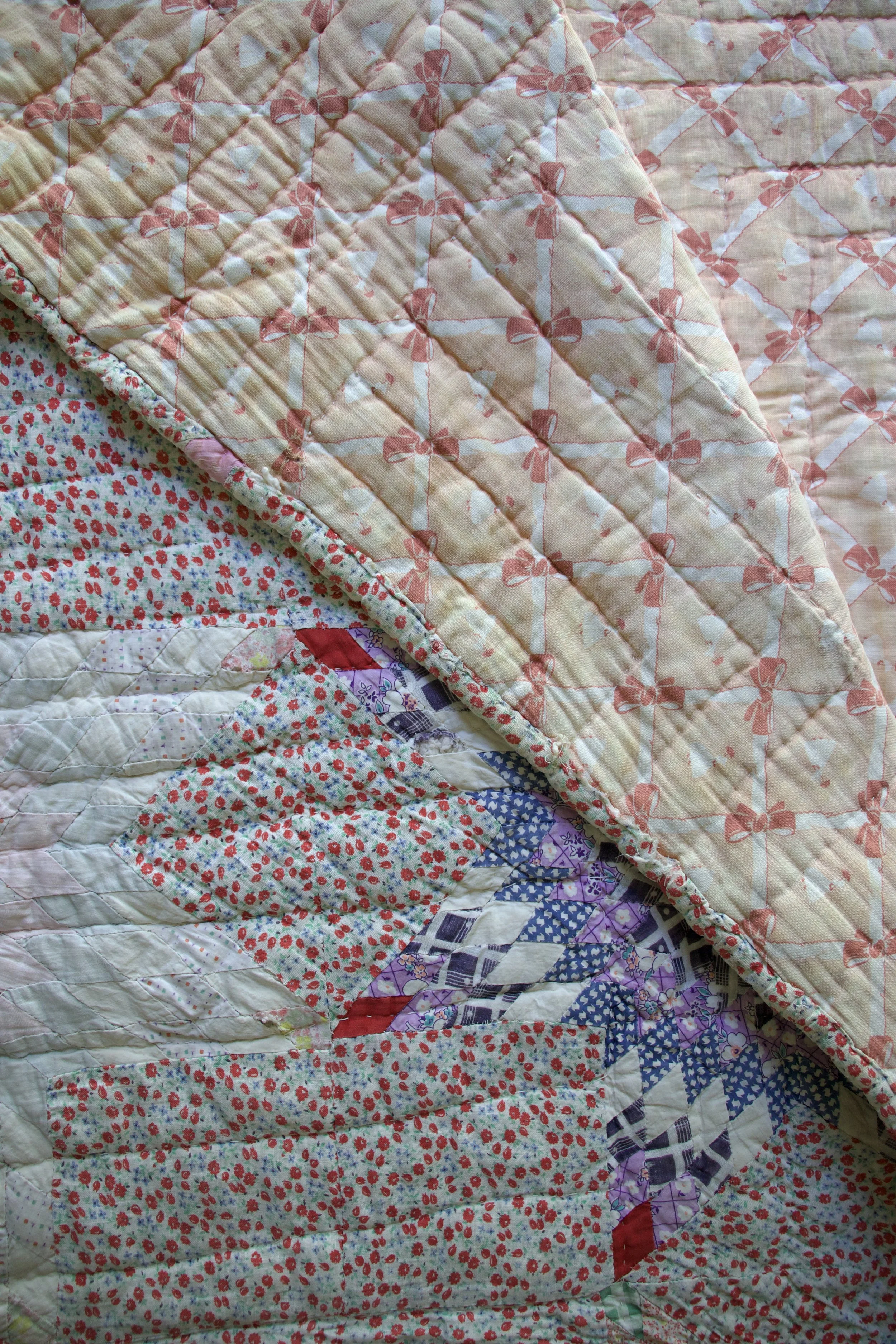
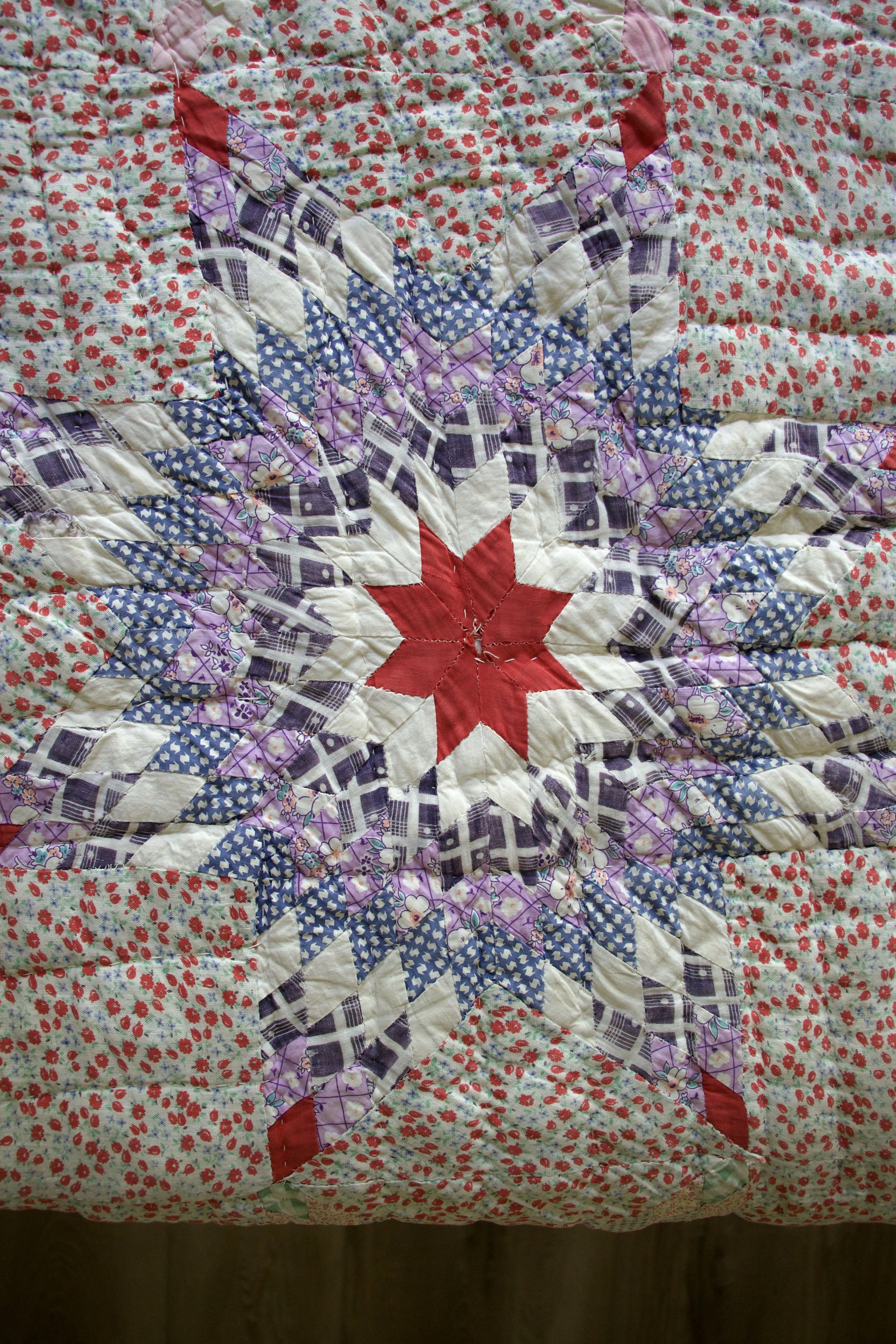
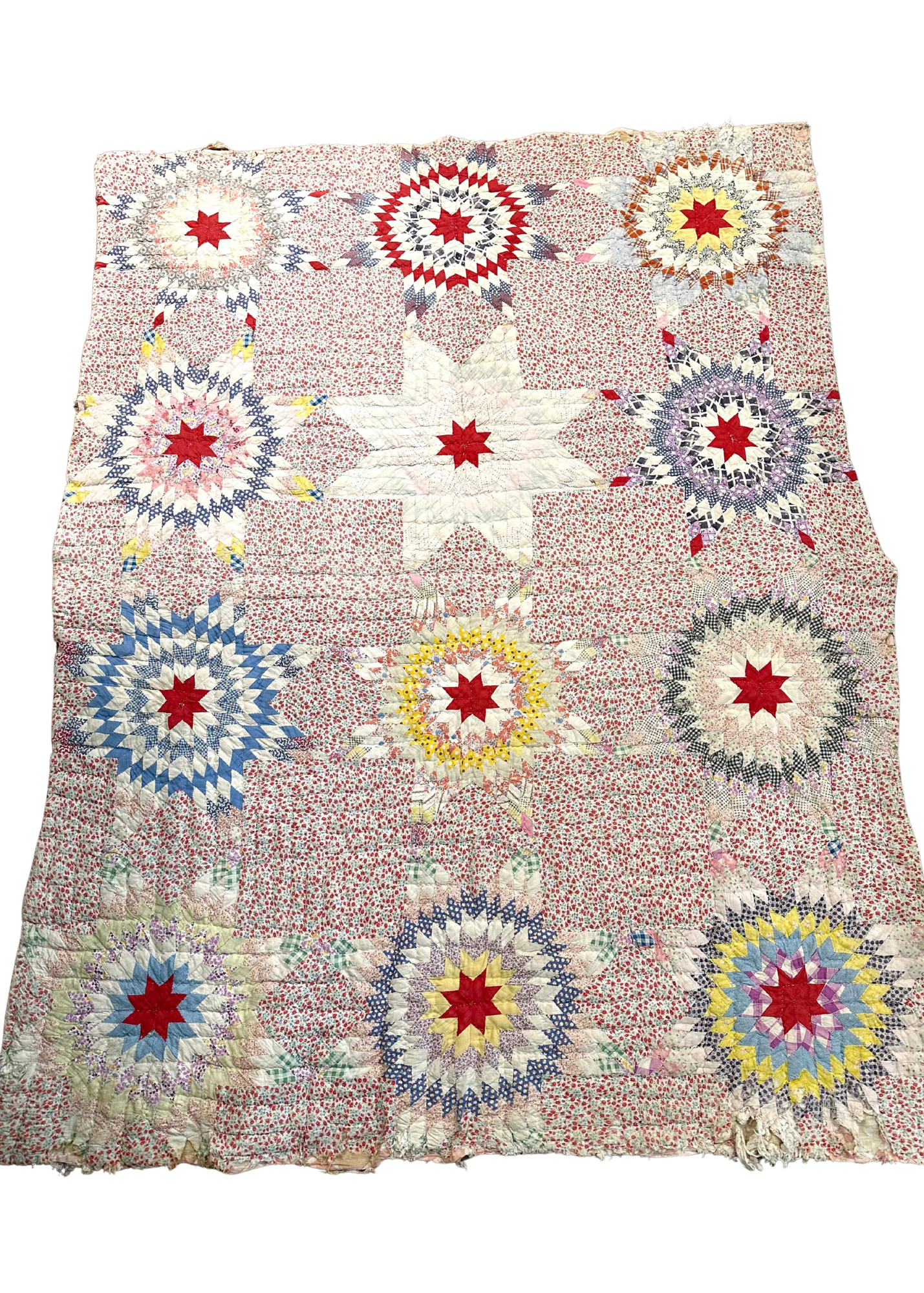
The quilt is made from a pleasing assortment of printed cottons, including floral dress prints, novelty motifs, plaids, and pastel solids typical of Depression-era and 1940s quilting. The white ground and backing provide a clean contrast to the colorful tulip petals, while the pale green stems unify the design. The mix of prints suggests the use of saved household fabrics and feed sack or dress goods, chosen as much for visual delight as for practicality.
Condition
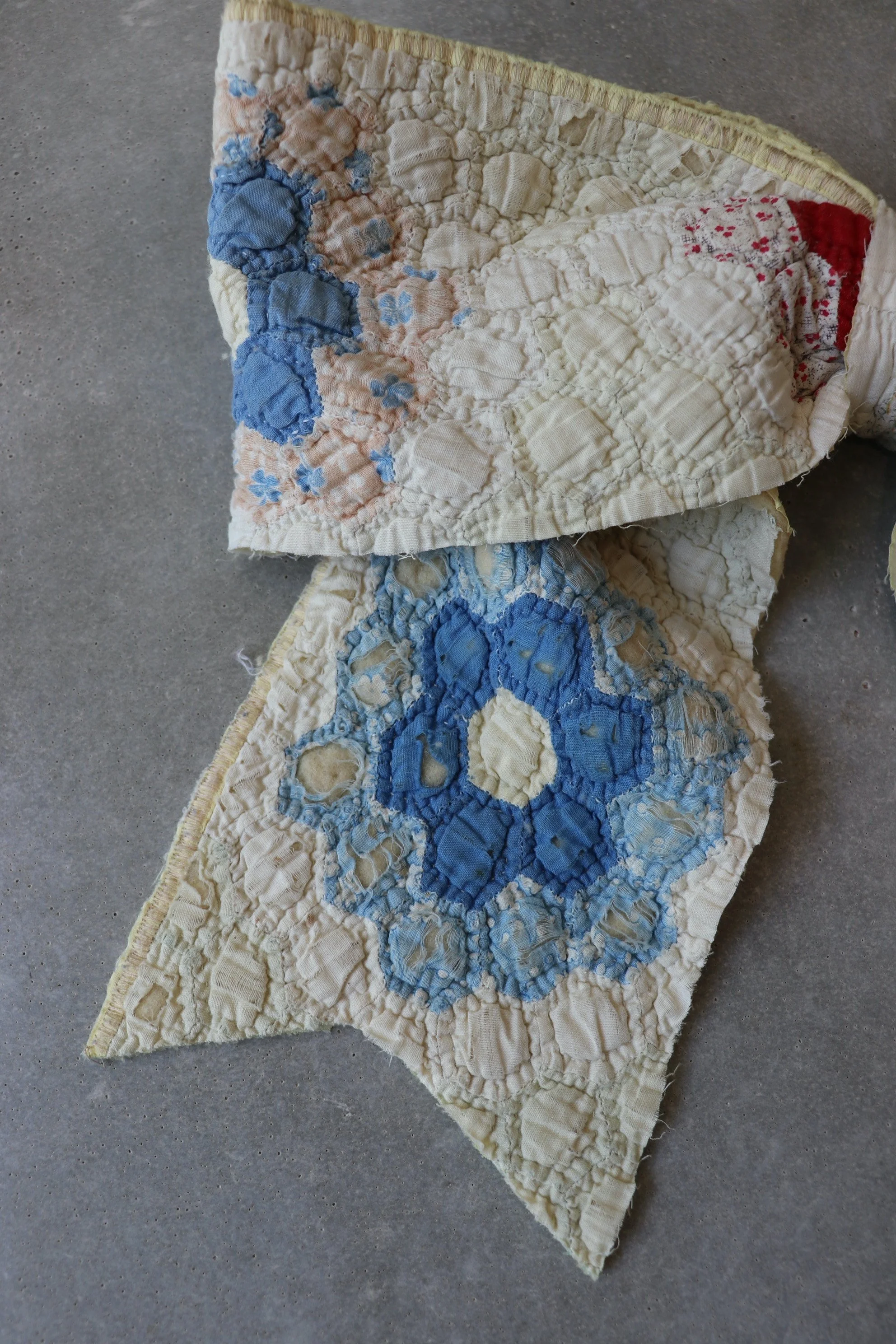
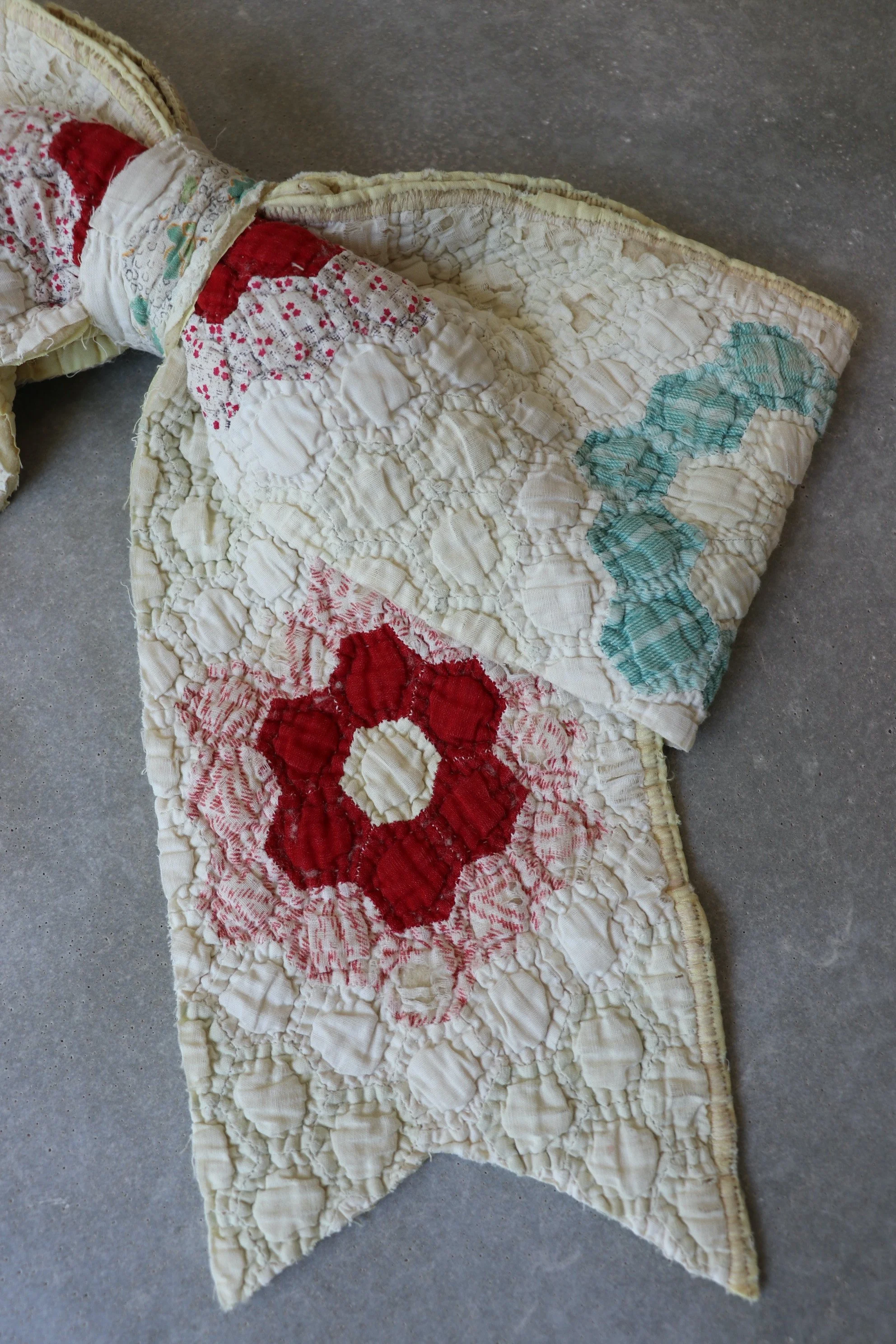
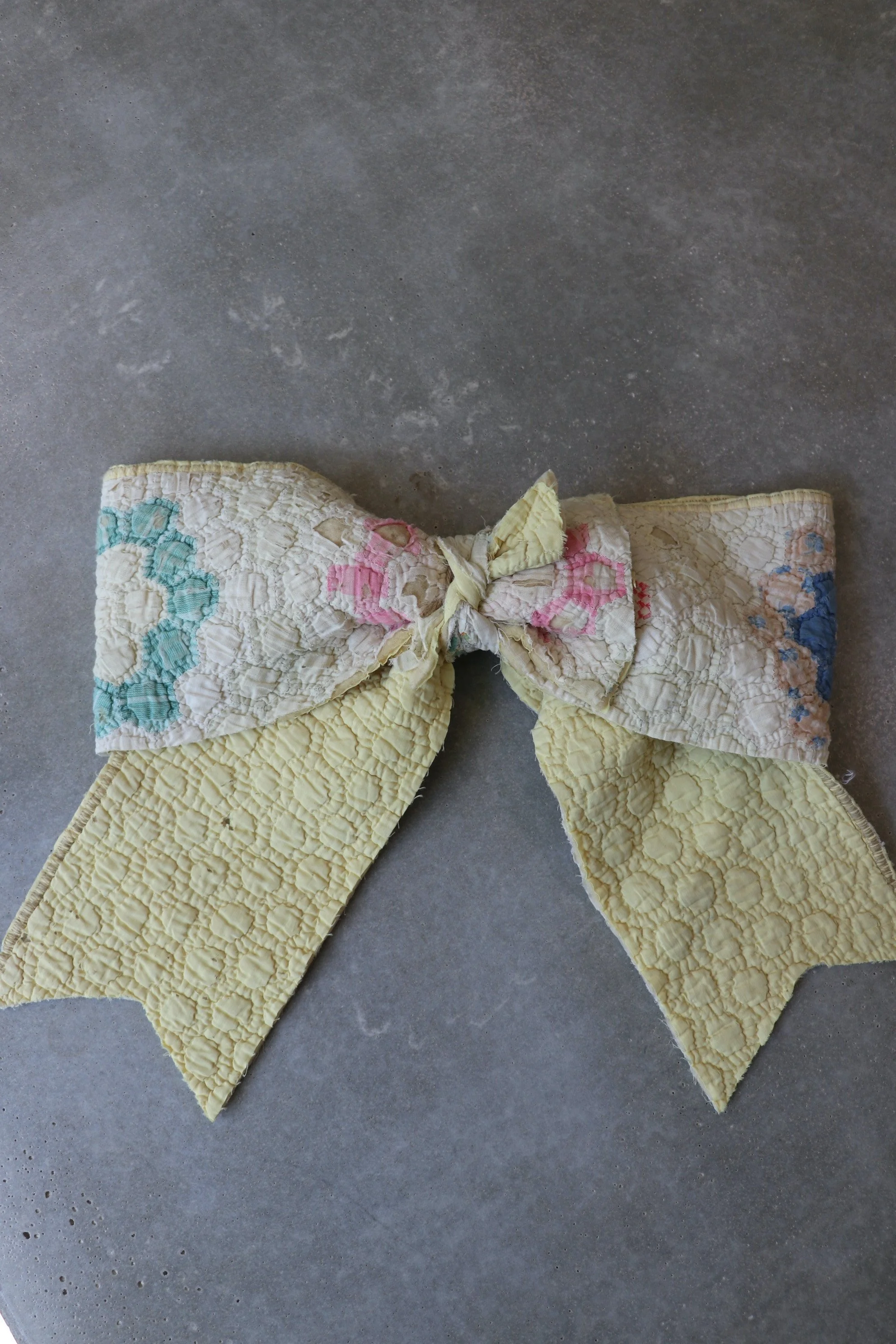
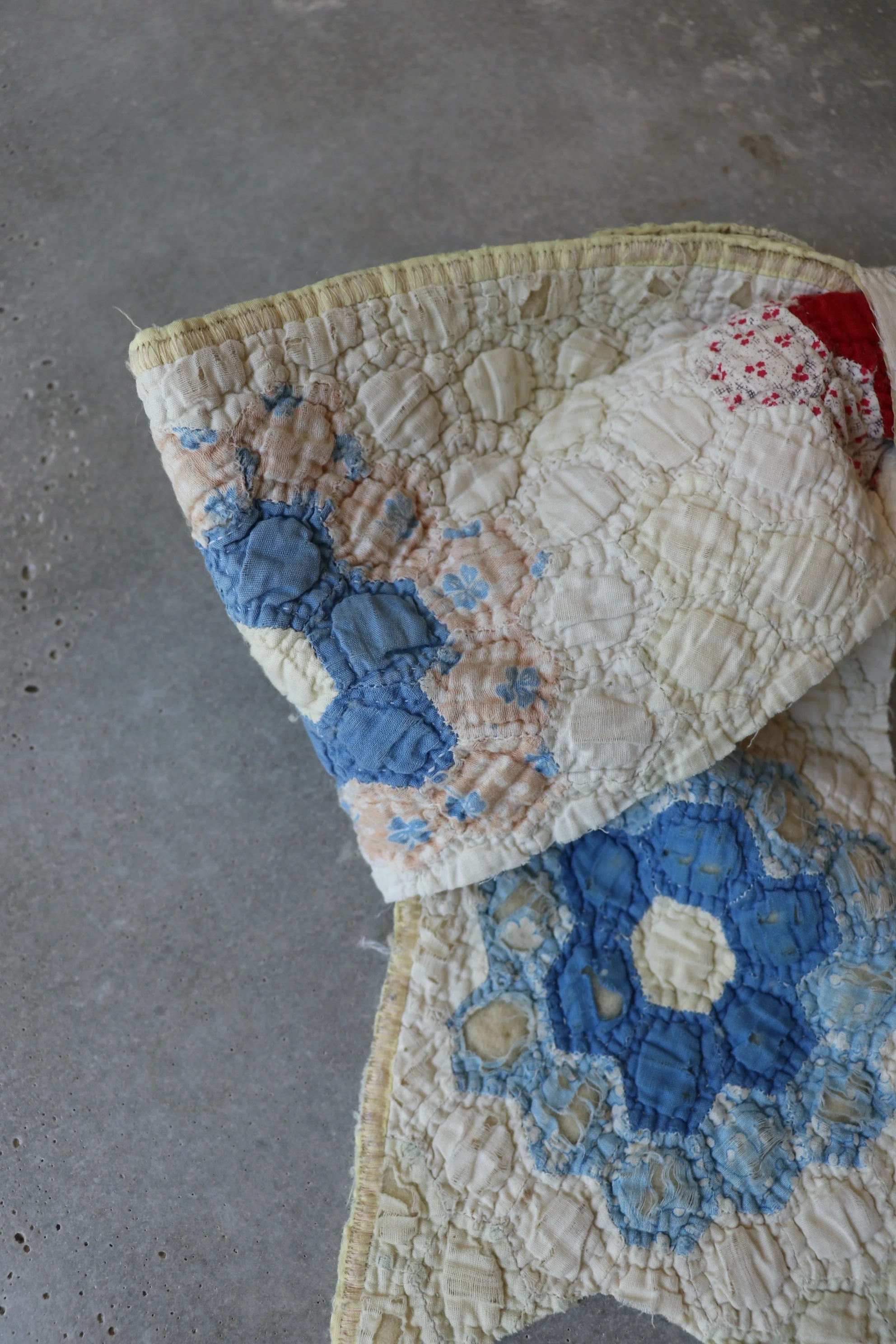
The quilt remains a visually striking and well-preserved example of domestic quiltmaking, with age-related wear consistent with use. Several tulip sections appear to have been reinforced or reworked with later machine stitching, likely as an early repair to preserve the quilt for continued use. These areas are part of the quilt’s lived history and speak to its long life as a treasured household textile.
—————————————————————————————————-
*Disclaimer: Please remember that you’re purchasing a quilt that is decades—sometimes well over a century—old. Signs of age are part of their story. I do my best to photograph and describe any condition issues honestly.
You may find:
• Fading or discoloration
• Small stains or age spots
• Light wear, thinning, or fabric repairs
• Minor imperfections consistent with age and use
Each of these are little piece of American history—stitched by hand from cotton, feed sacks, flour sacks, clothing, and treasured scraps by women who made beauty from what they had. Every quilt carries a story, and it’s been an honor to help preserve these heirlooms for the next generation.
ALL QUILT SALES ARE FINAL - NO REFUNDS OR RETURNS, QUILTS ARE SOLD AS IS.
Circa 1930-1940
Size: 77”x57”
Heavy Weight
Pattern: Pieced Tulip
Condition: Good. Scattered areas of thinning, small holes, seam stress, and fabric loss
Handwashed and line dried
Hand pieced and hand quilted, this charming Tulip quilt features nine large floral blocks arranged in a three-by-three layout across a white ground. Each stylized tulip is formed from softly curved petals in cheerful printed cottons—red florals, lavender sprays, pale pinks, buttery yellows, and light blues—set against pale green stems and centers. The open white background gives the quilt an airy, spacious quality, while the varied prints lend the composition a lively, garden-like warmth. Fine hand quilting in an overall scrolling and clamshell-like design adds texture and movement across the surface, softening the geometry of the blocks with gentle relief.
Period
Depression era to early mid-century, likely 1930s–1940s.
Pattern
This quilt is worked in a Tulip variation, a floral block pattern built from repeated stylized blossoms set in a regular grid. Tulip quilts were popular in the first half of the twentieth century, especially in forms that combined strong floral imagery with soft pastel grounds and bright printed fabrics. The oversized blossoms and simplified stems in this example give it a distinctly cheerful, decorative presence.
Fabric
The quilt is made from a pleasing assortment of printed cottons, including floral dress prints, novelty motifs, plaids, and pastel solids typical of Depression-era and 1940s quilting. The white ground and backing provide a clean contrast to the colorful tulip petals, while the pale green stems unify the design. The mix of prints suggests the use of saved household fabrics and feed sack or dress goods, chosen as much for visual delight as for practicality.
Condition
The quilt remains a visually striking and well-preserved example of domestic quiltmaking, with age-related wear consistent with use. Several tulip sections appear to have been reinforced or reworked with later machine stitching, likely as an early repair to preserve the quilt for continued use. These areas are part of the quilt’s lived history and speak to its long life as a treasured household textile.
—————————————————————————————————-
*Disclaimer: Please remember that you’re purchasing a quilt that is decades—sometimes well over a century—old. Signs of age are part of their story. I do my best to photograph and describe any condition issues honestly.
You may find:
• Fading or discoloration
• Small stains or age spots
• Light wear, thinning, or fabric repairs
• Minor imperfections consistent with age and use
Each of these are little piece of American history—stitched by hand from cotton, feed sacks, flour sacks, clothing, and treasured scraps by women who made beauty from what they had. Every quilt carries a story, and it’s been an honor to help preserve these heirlooms for the next generation.
ALL QUILT SALES ARE FINAL - NO REFUNDS OR RETURNS, QUILTS ARE SOLD AS IS.

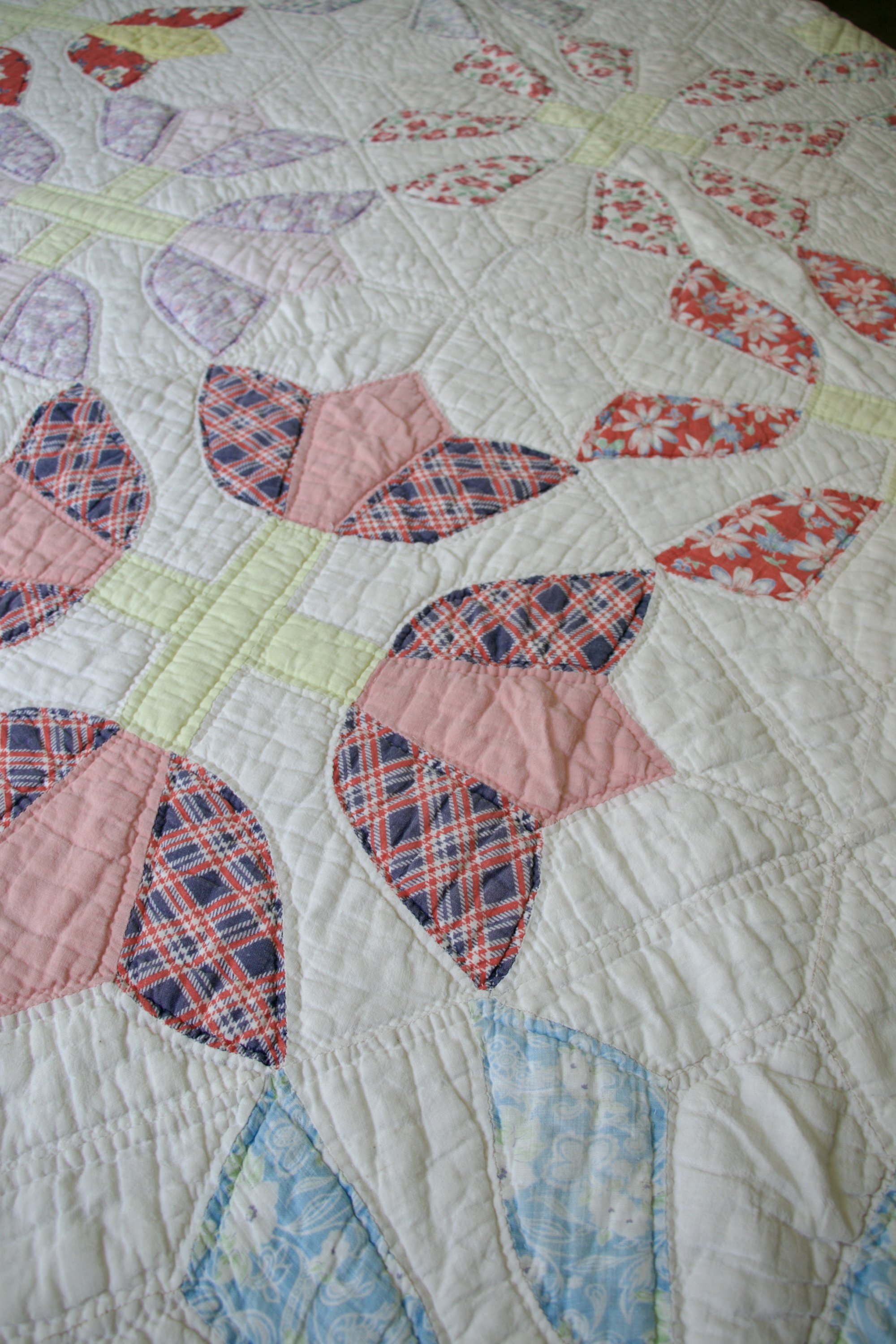 Image 1 of 15
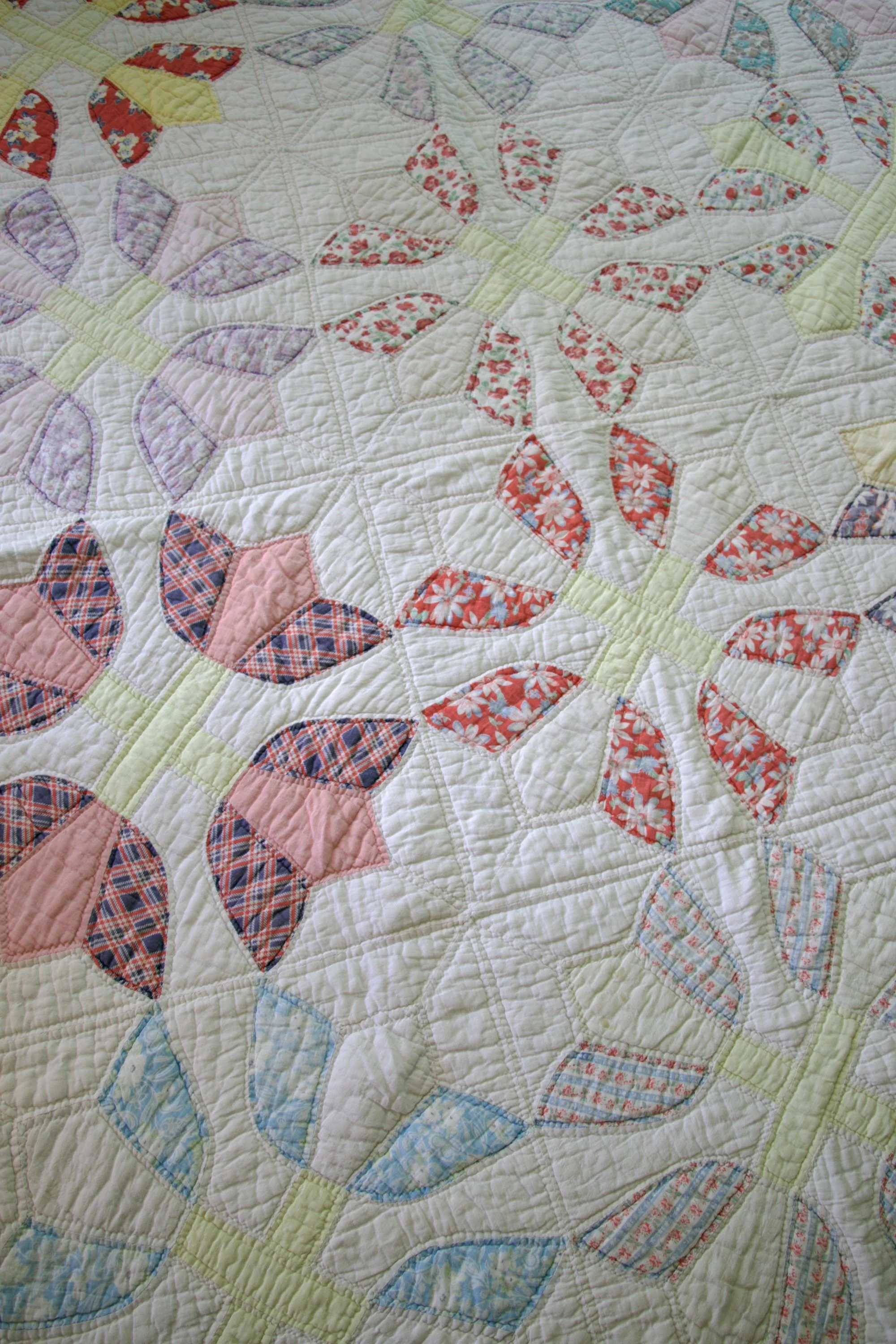 Image 2 of 15
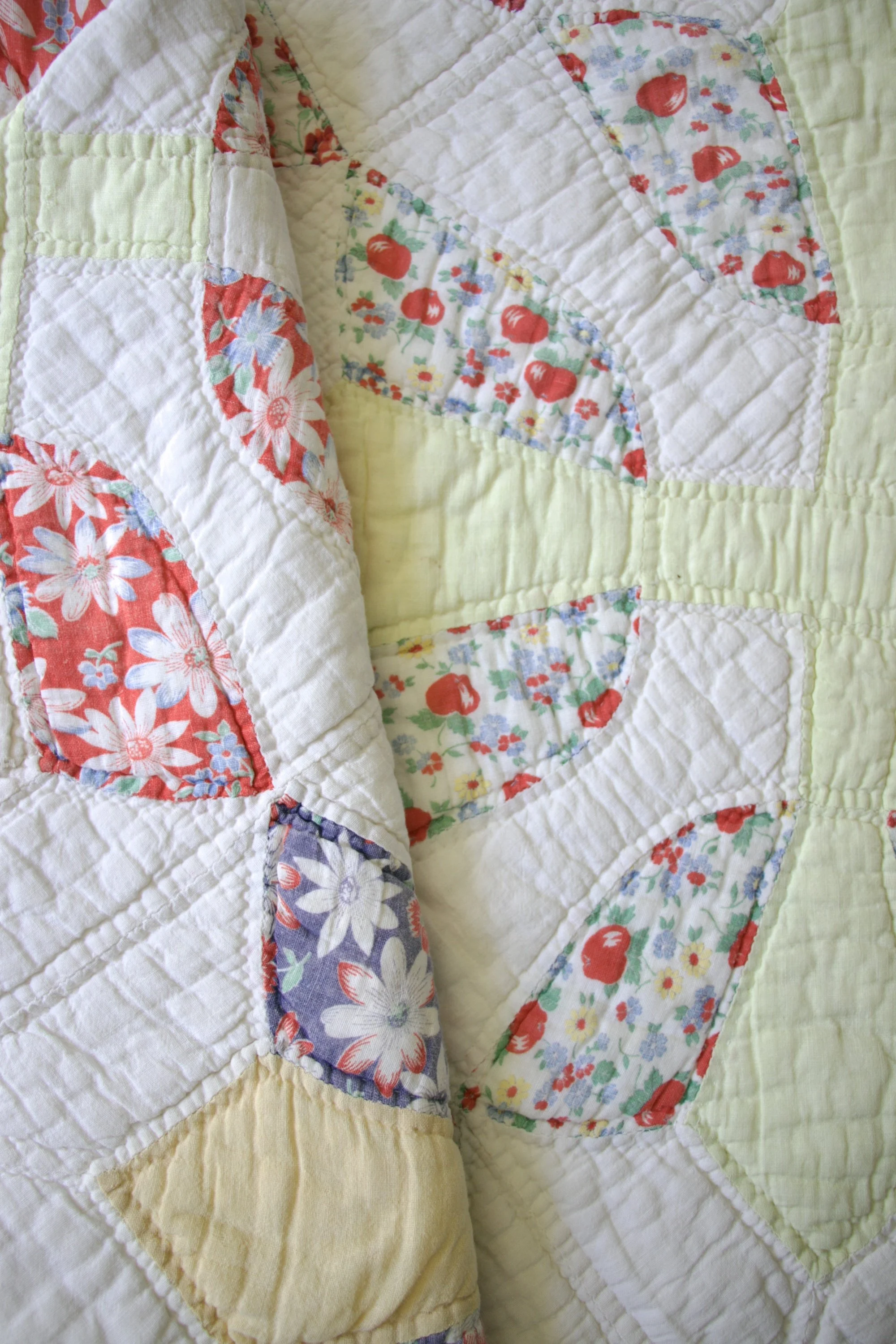 Image 3 of 15
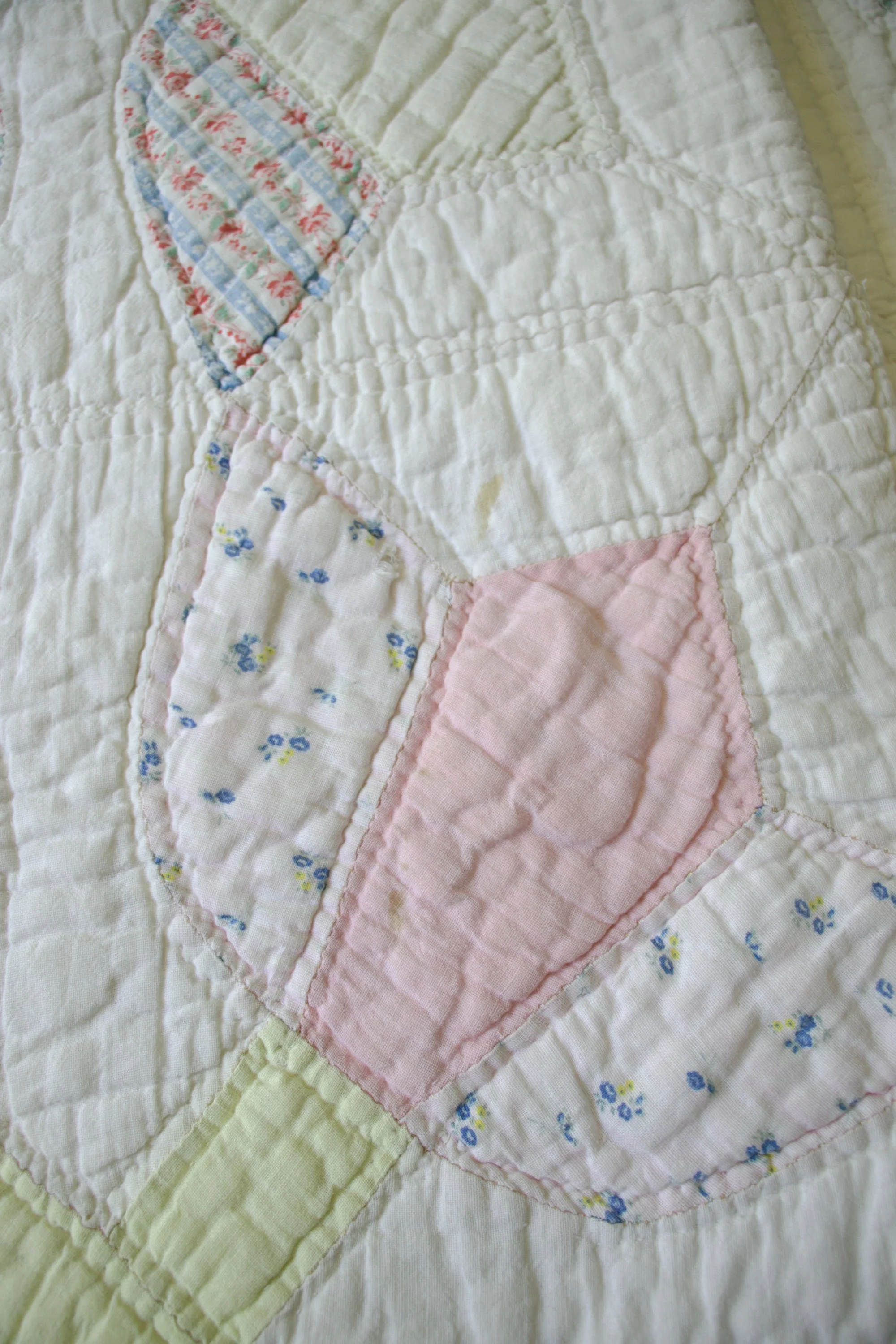 Image 4 of 15
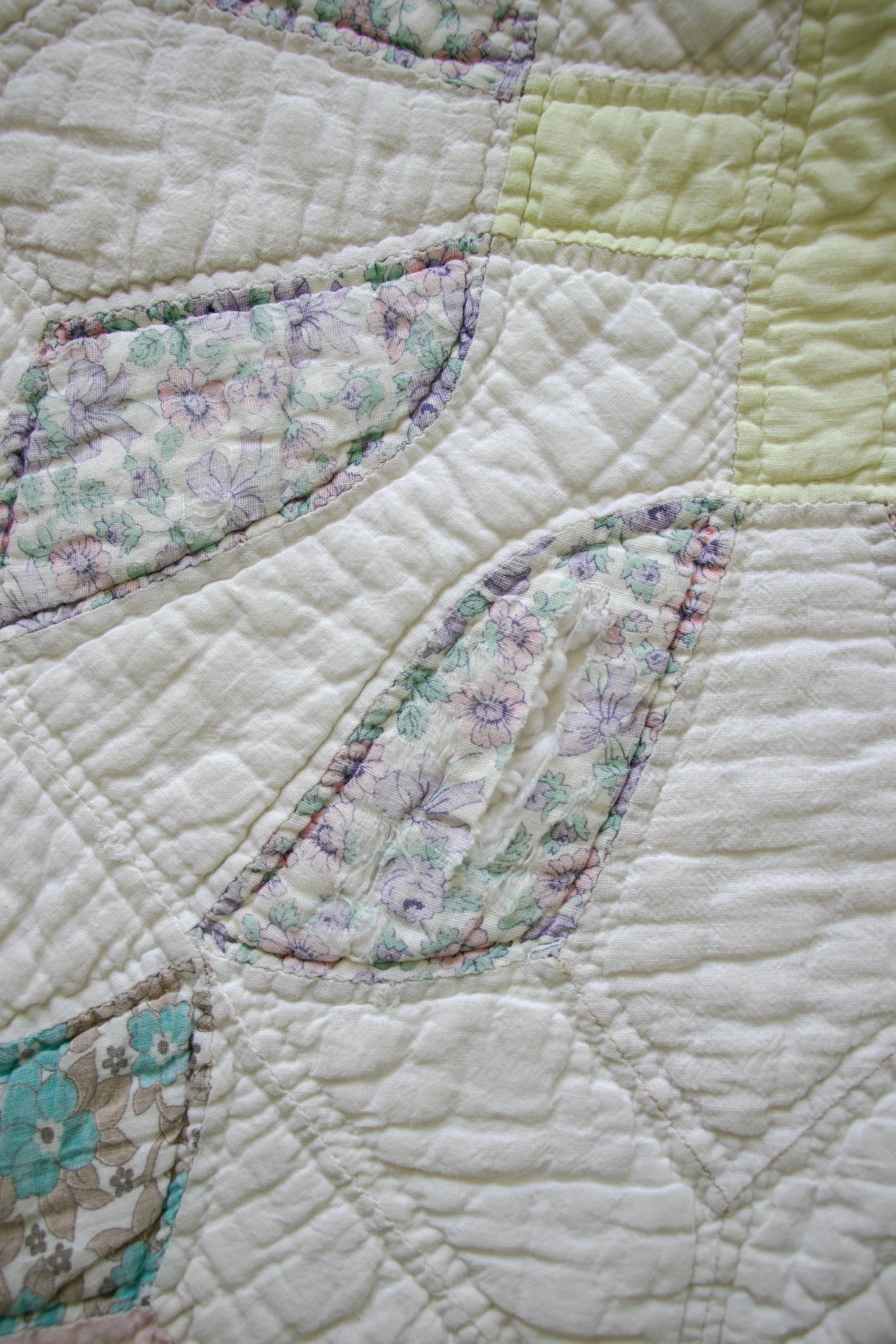 Image 5 of 15
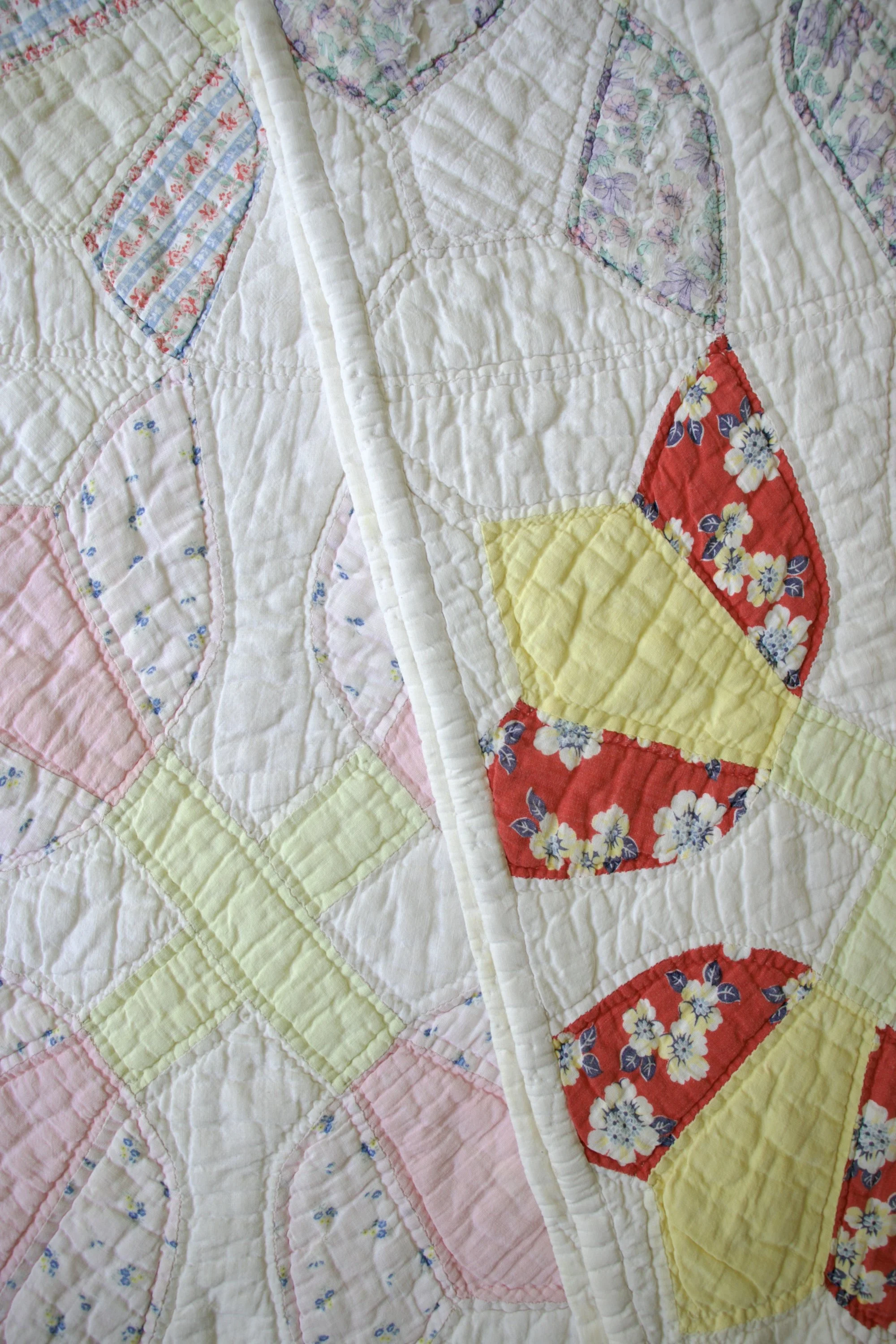 Image 6 of 15
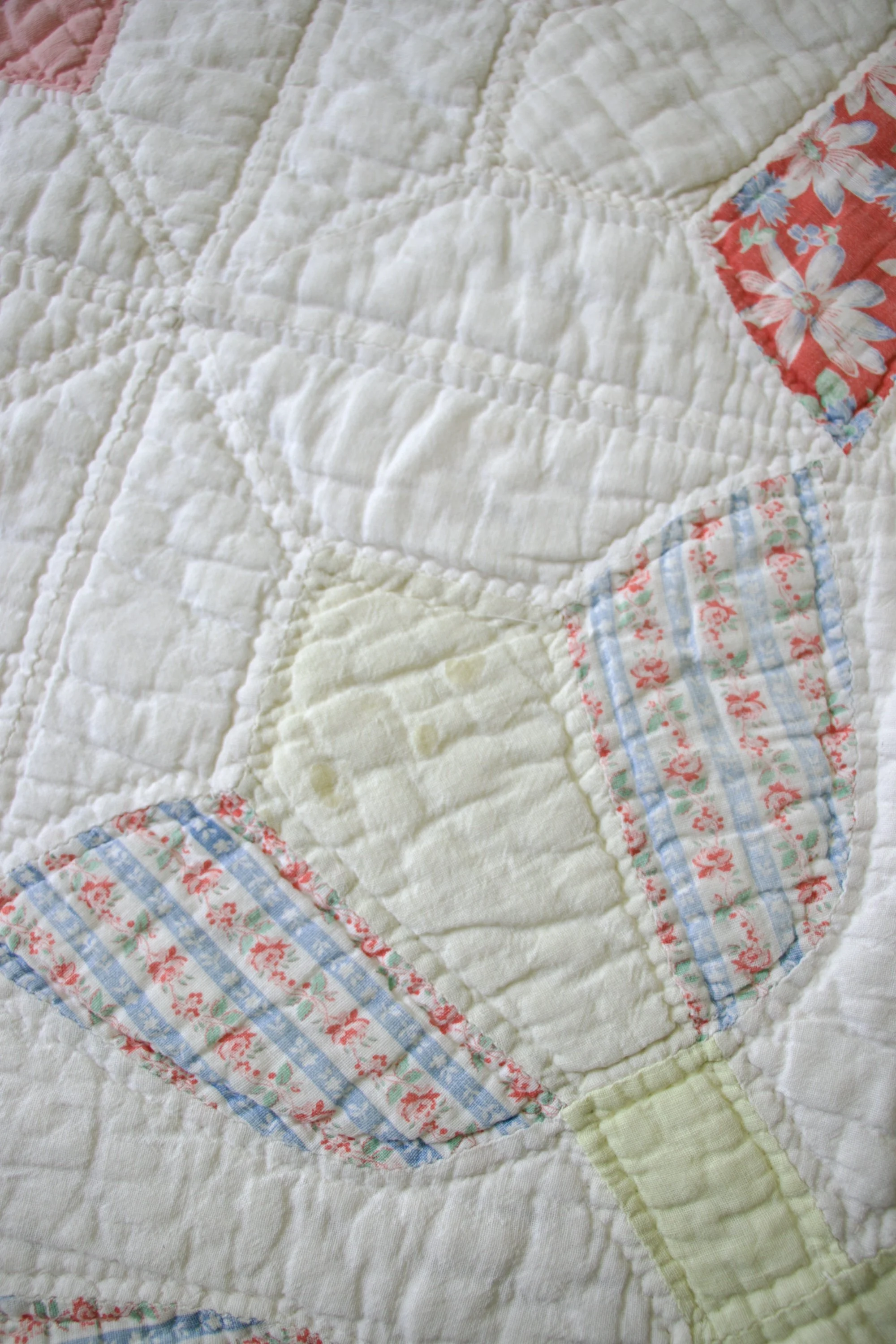 Image 7 of 15
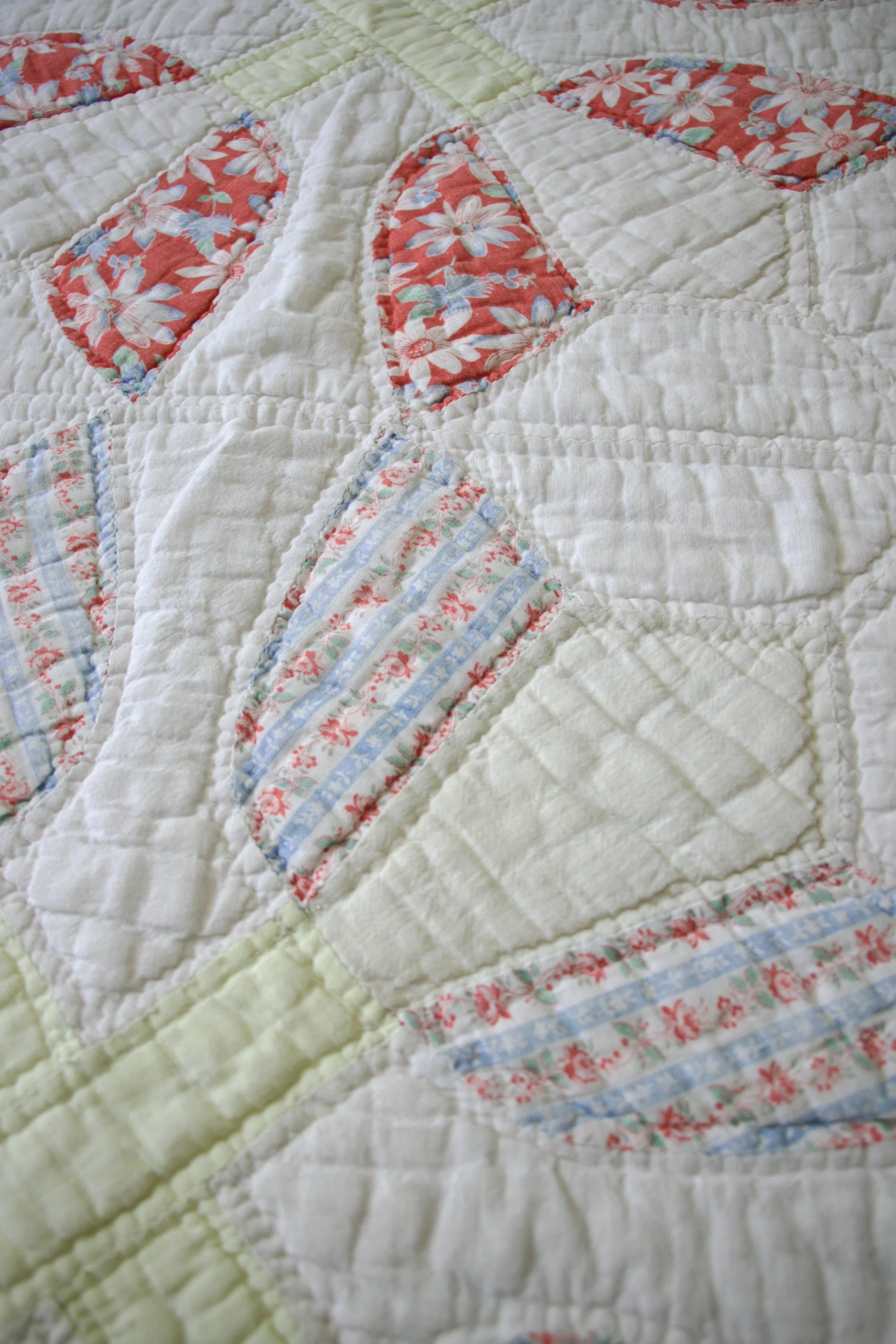 Image 8 of 15
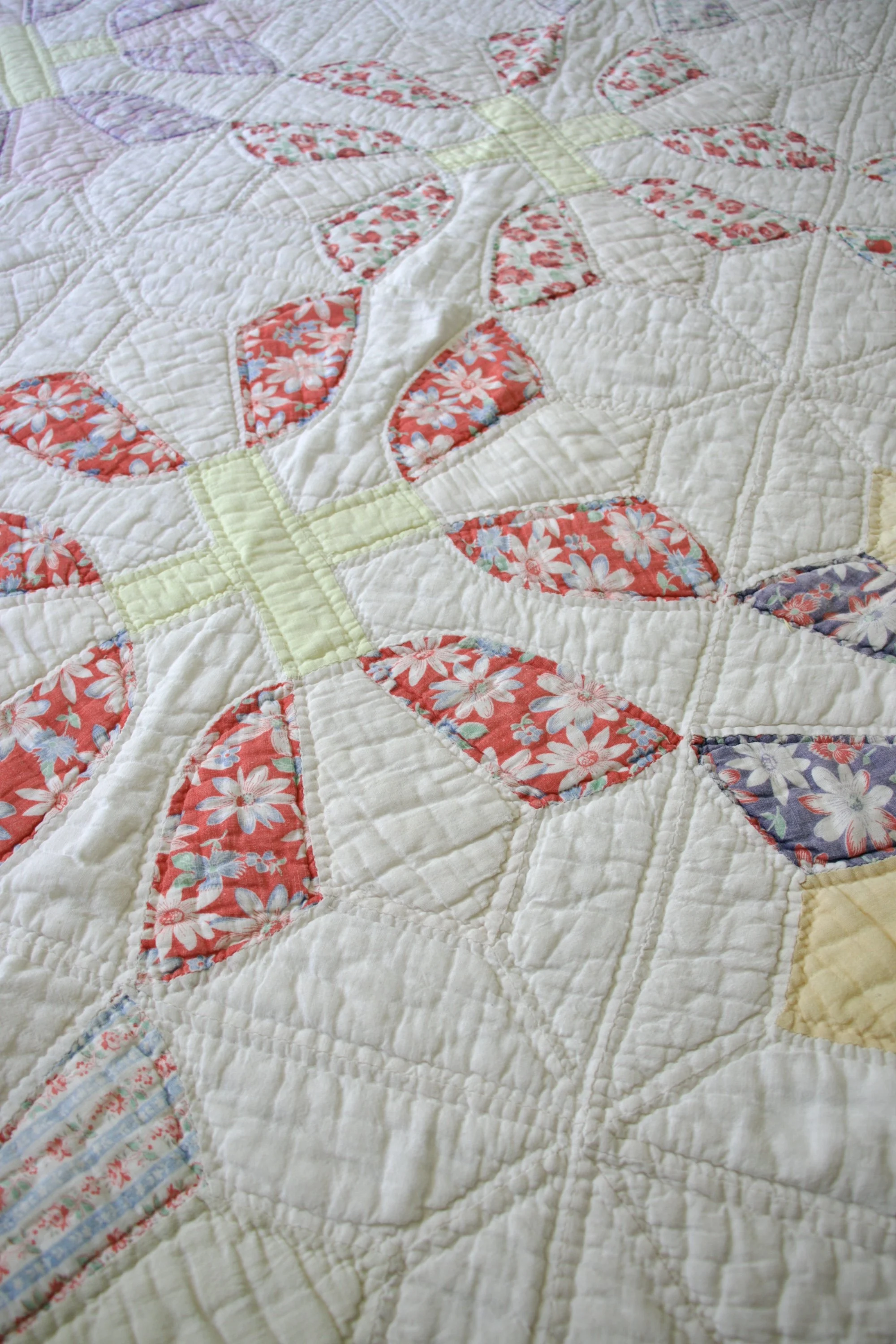 Image 9 of 15
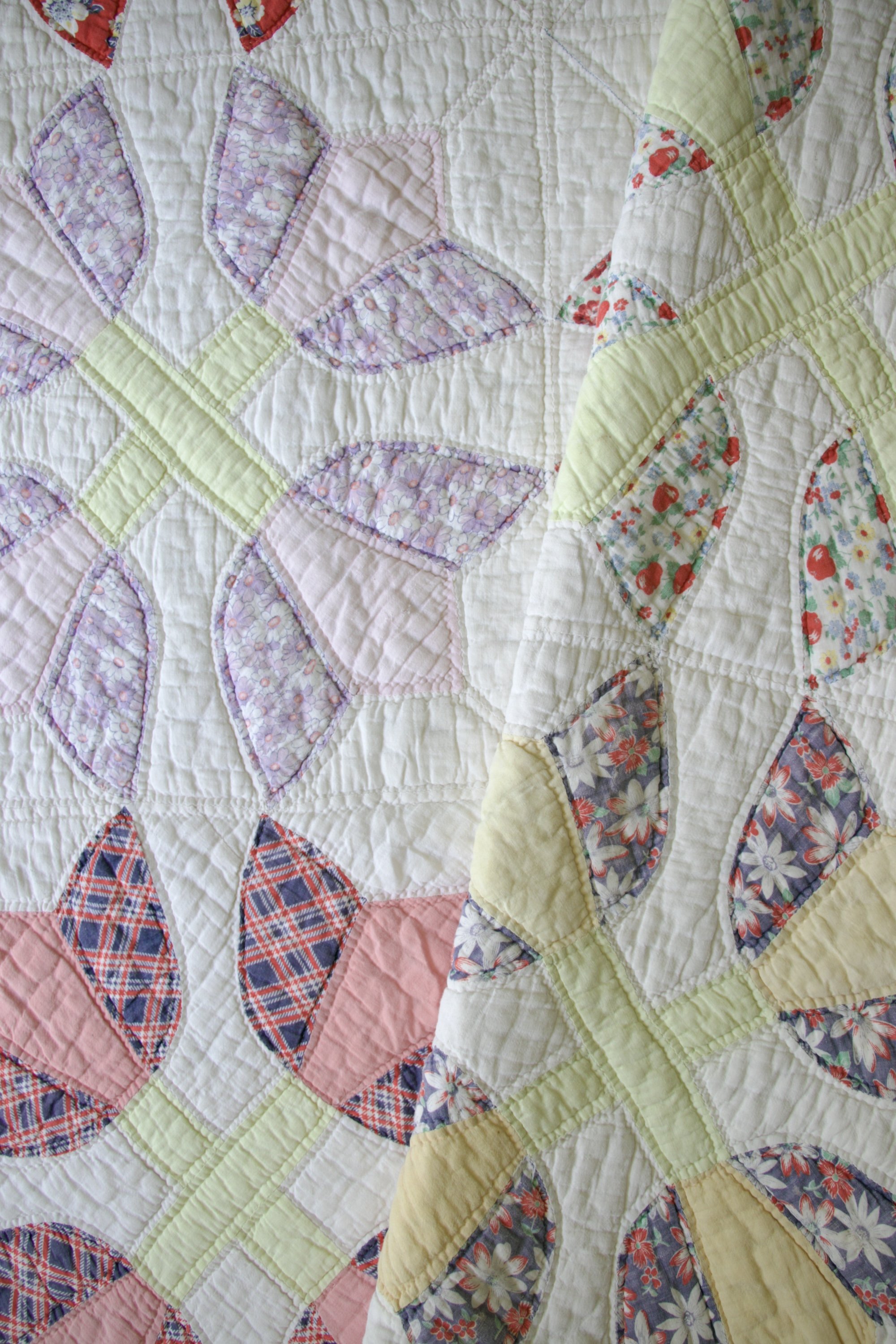 Image 10 of 15
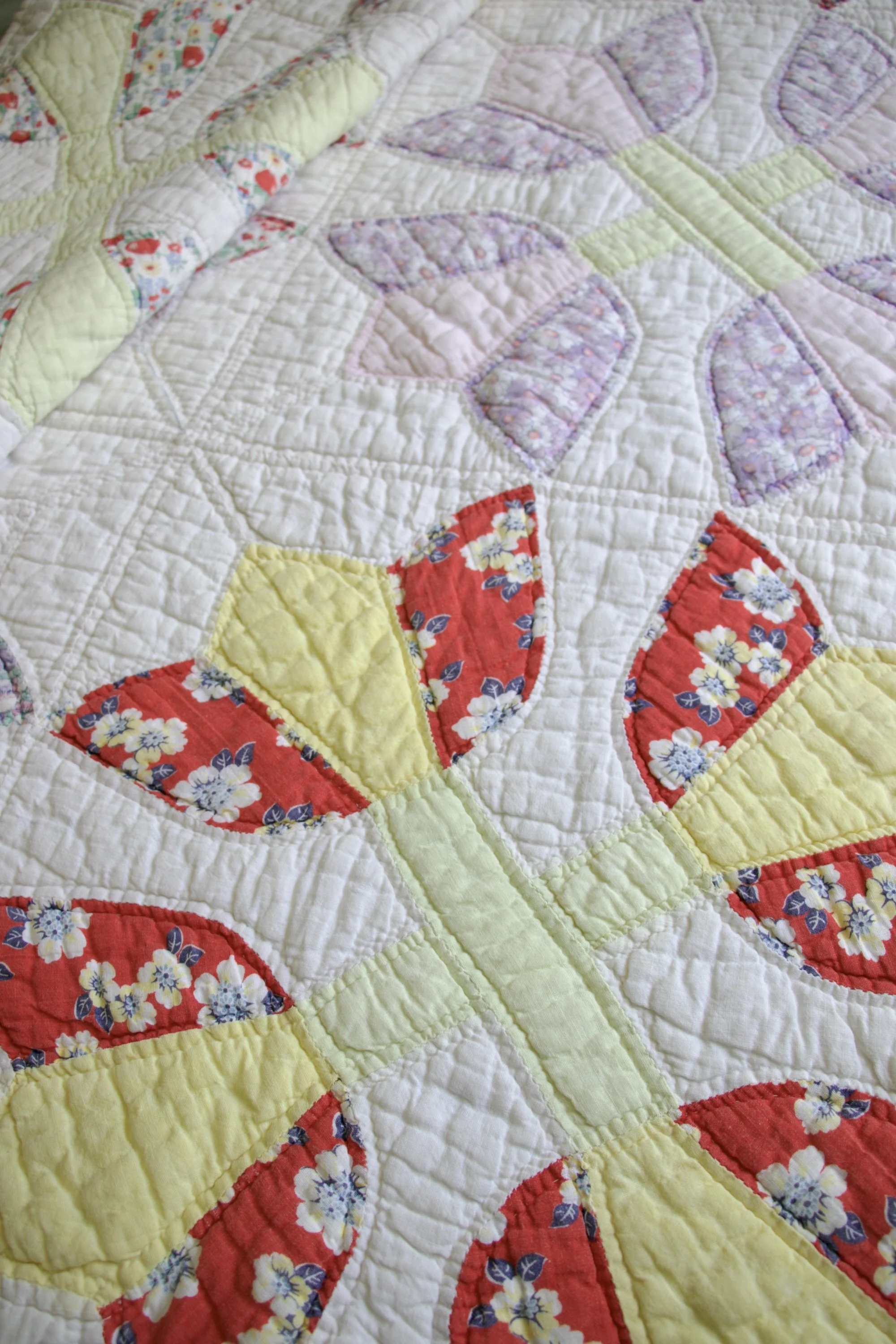 Image 11 of 15
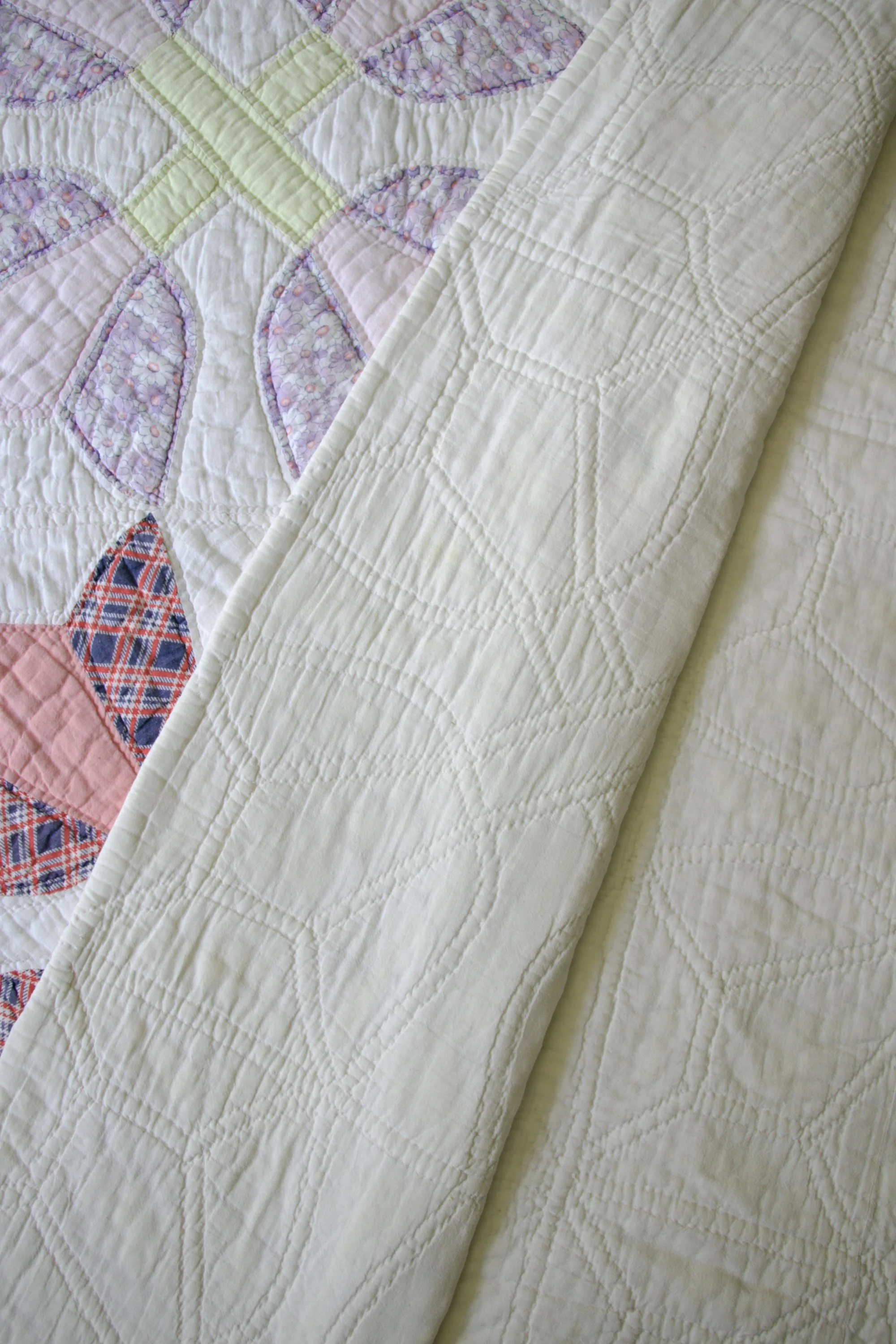 Image 12 of 15
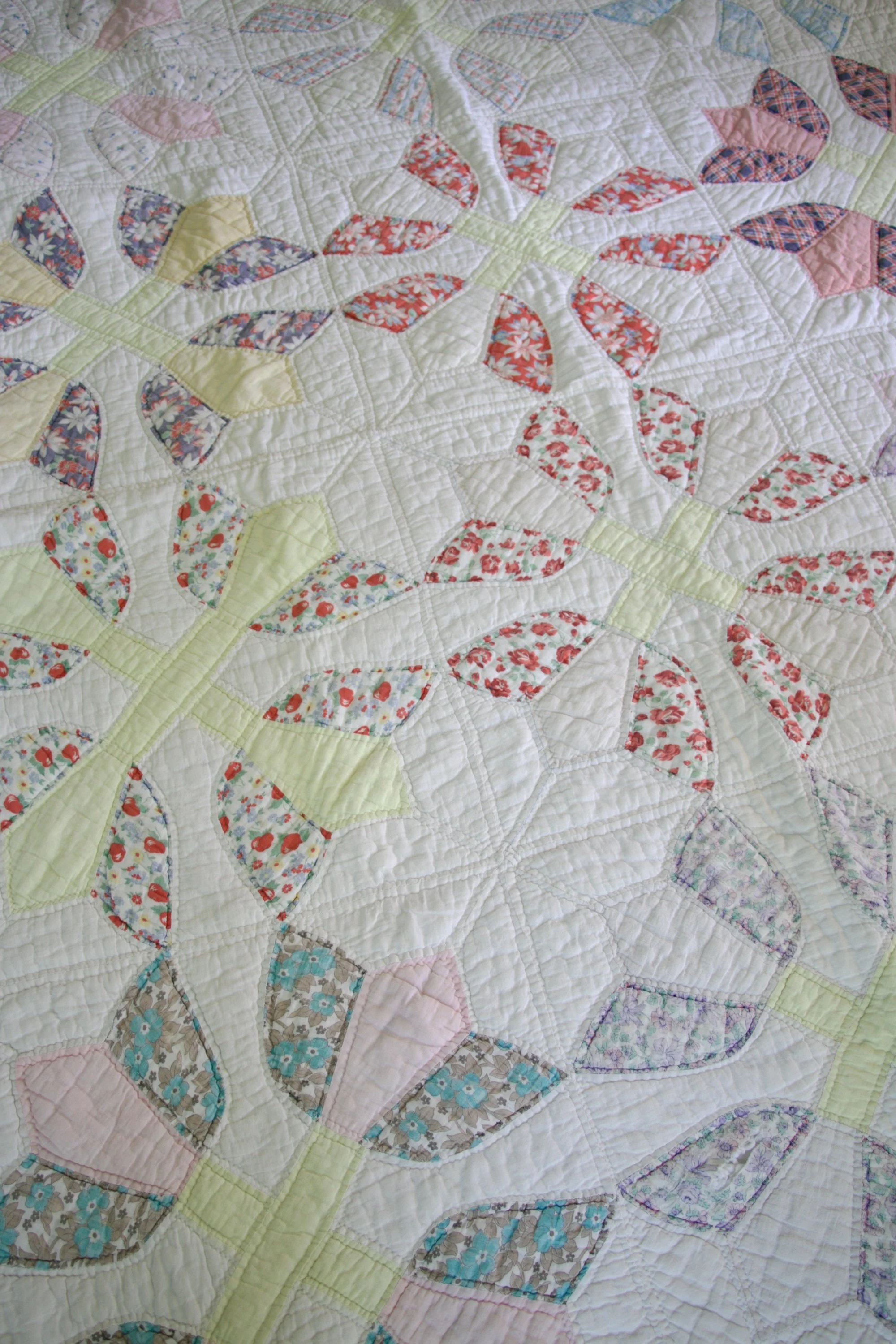 Image 13 of 15
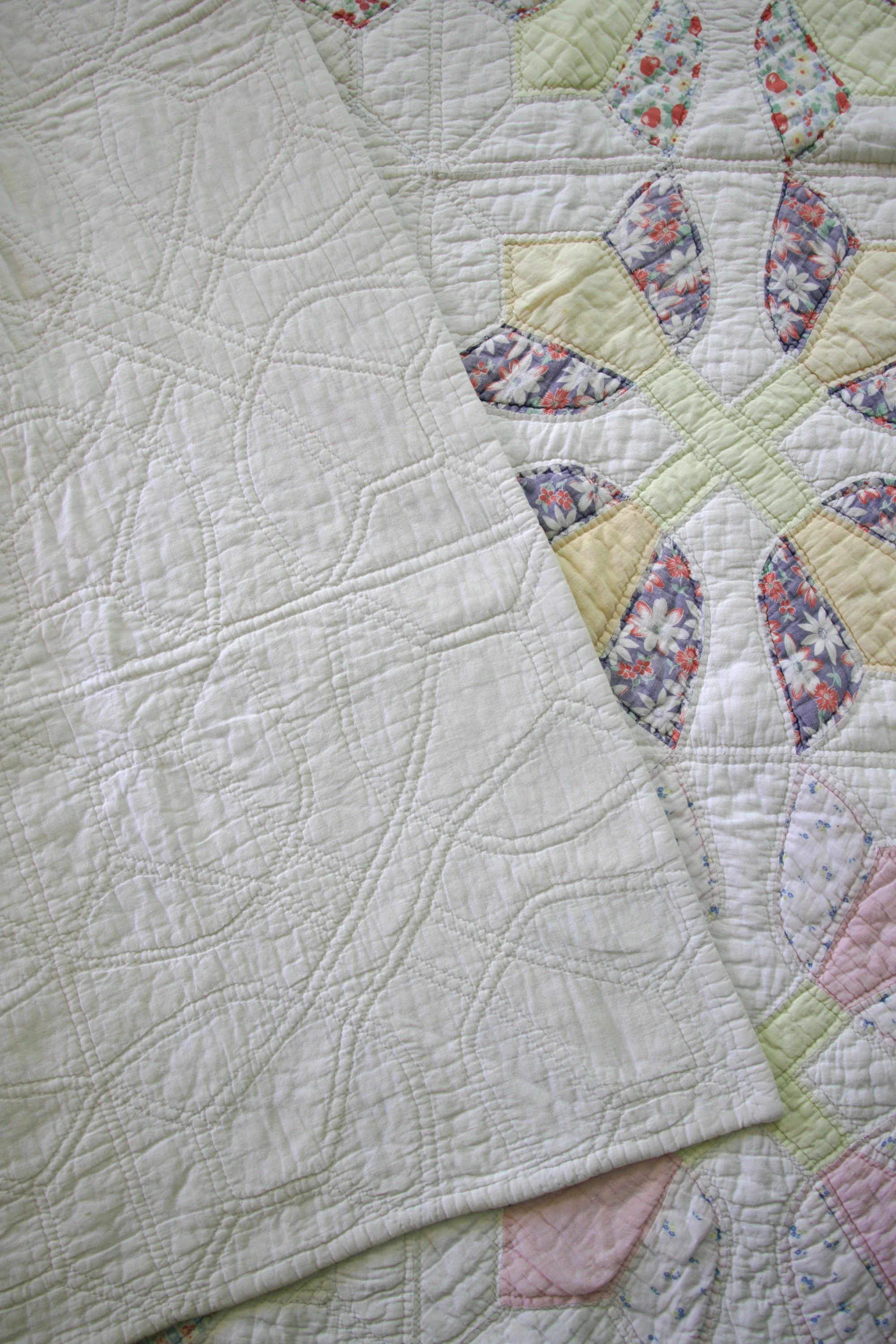 Image 14 of 15
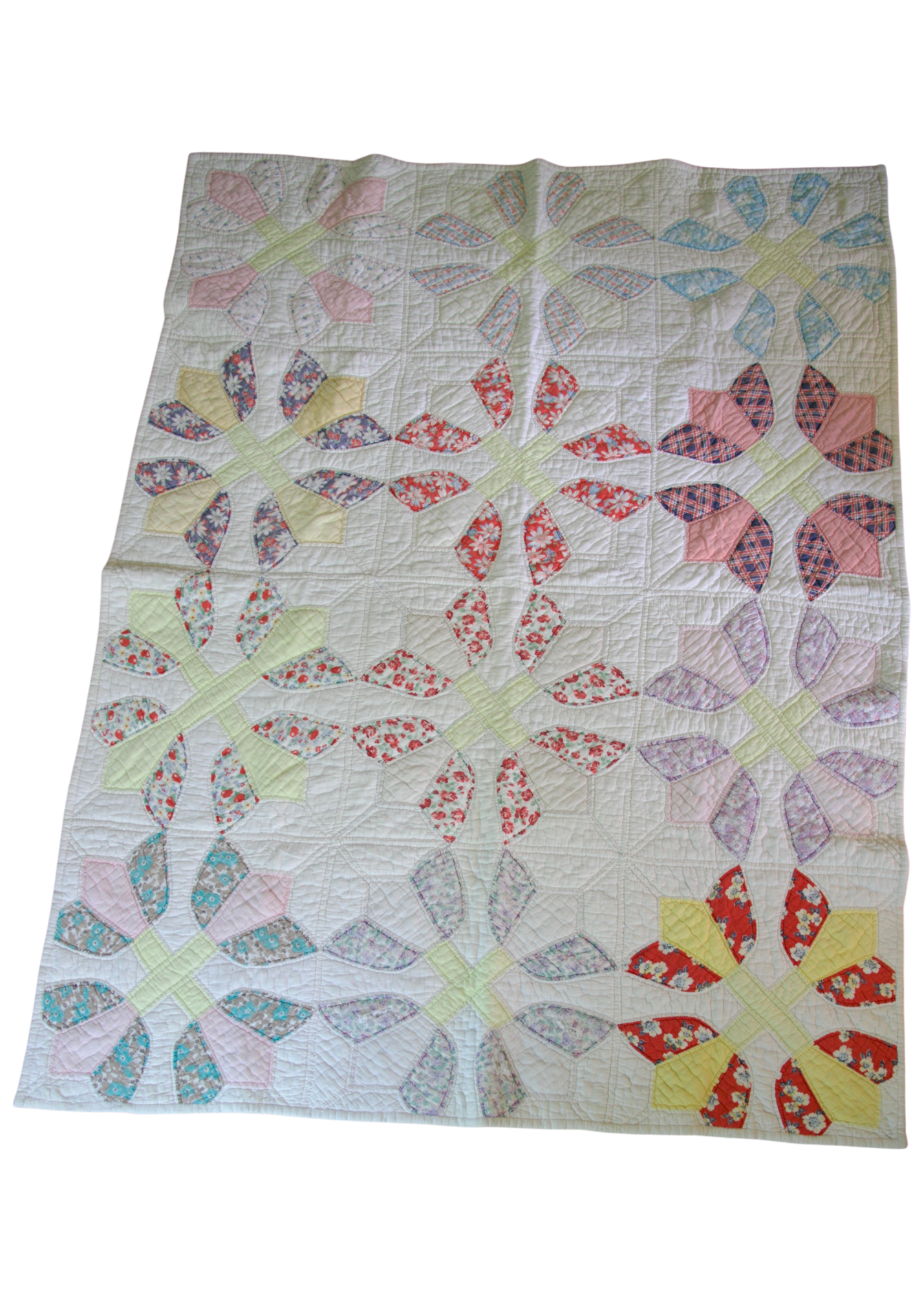 Image 15 of 15