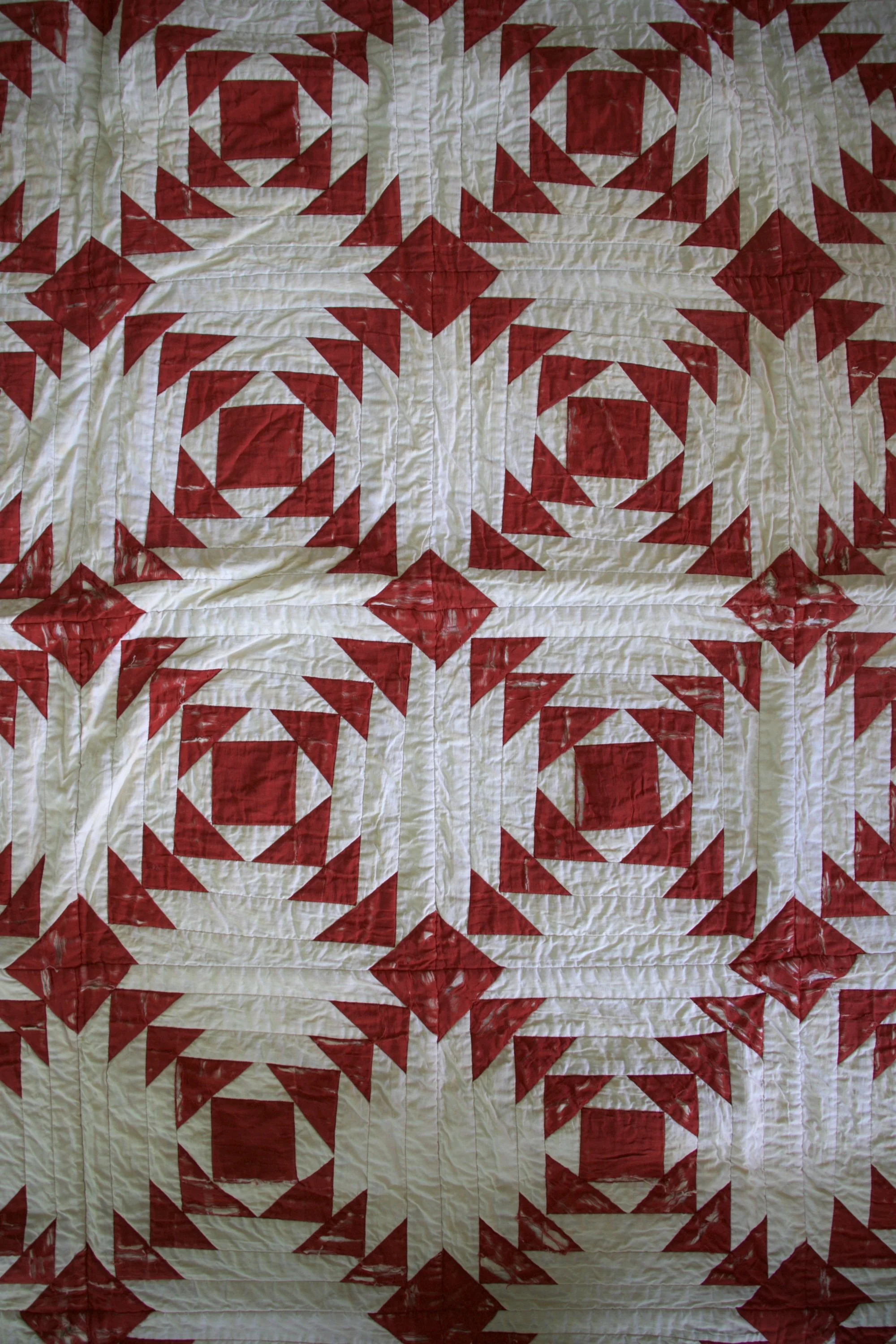
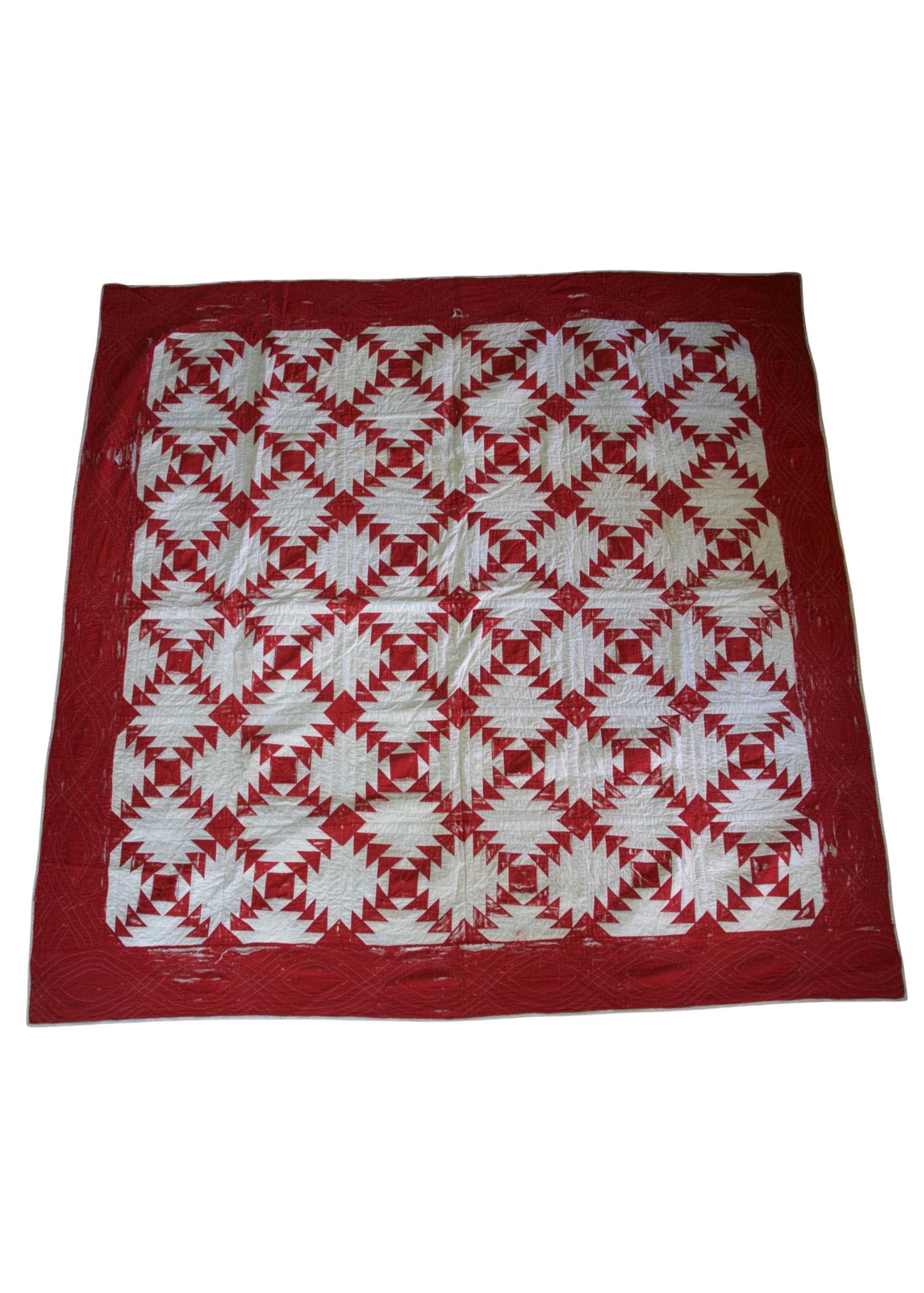
Circa 1930-1940
Heavy Weight
Pattern: Lonestar Variation
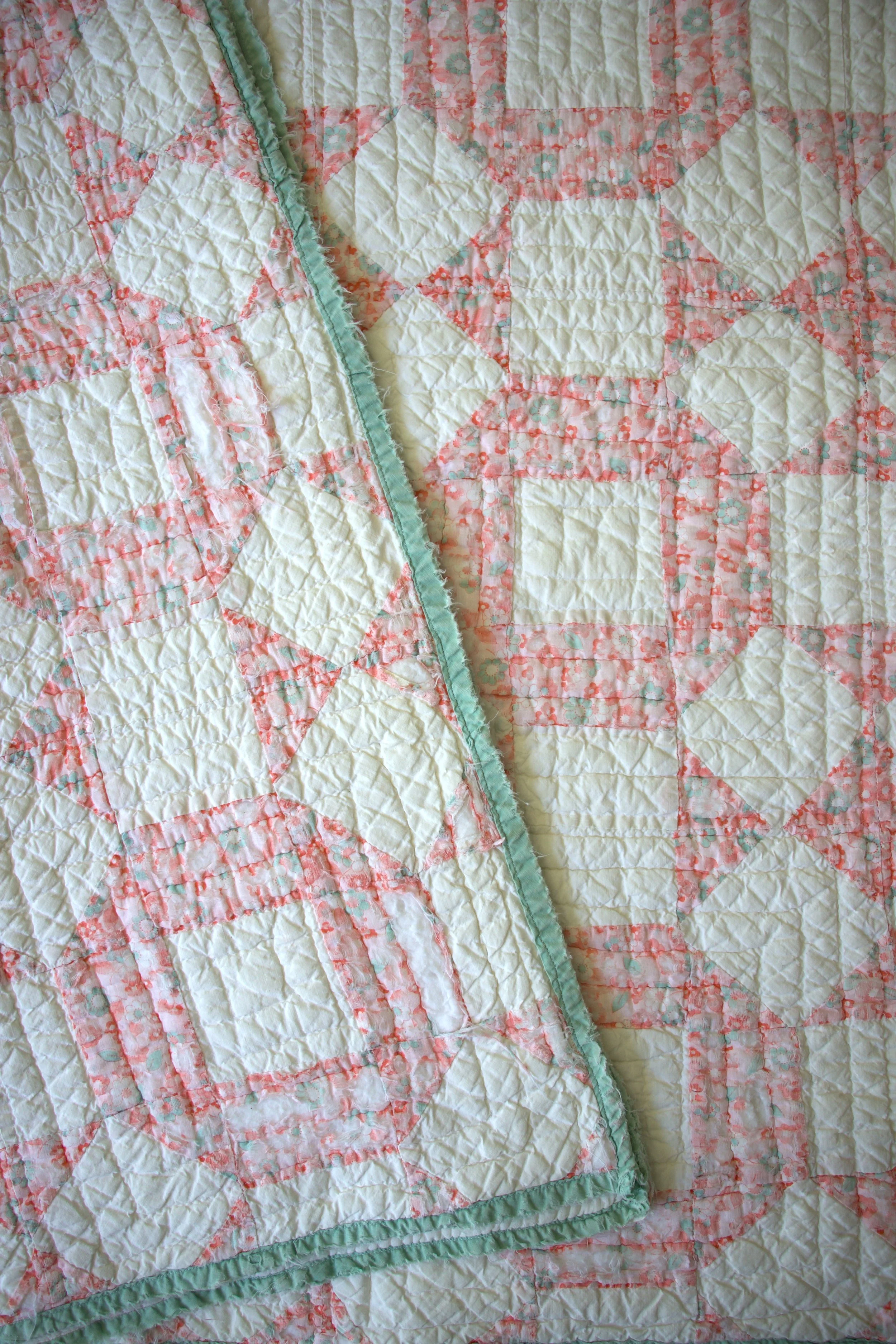
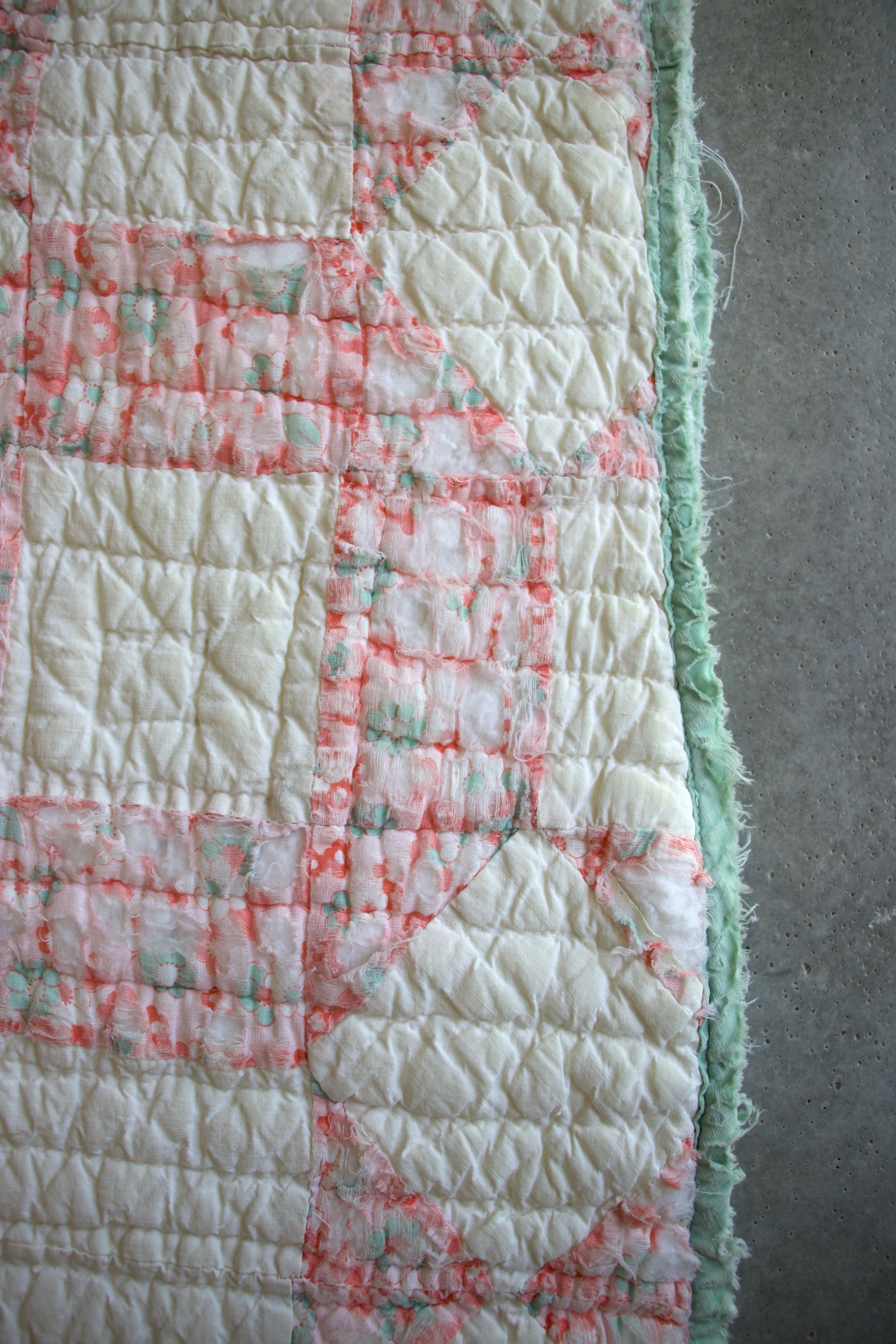
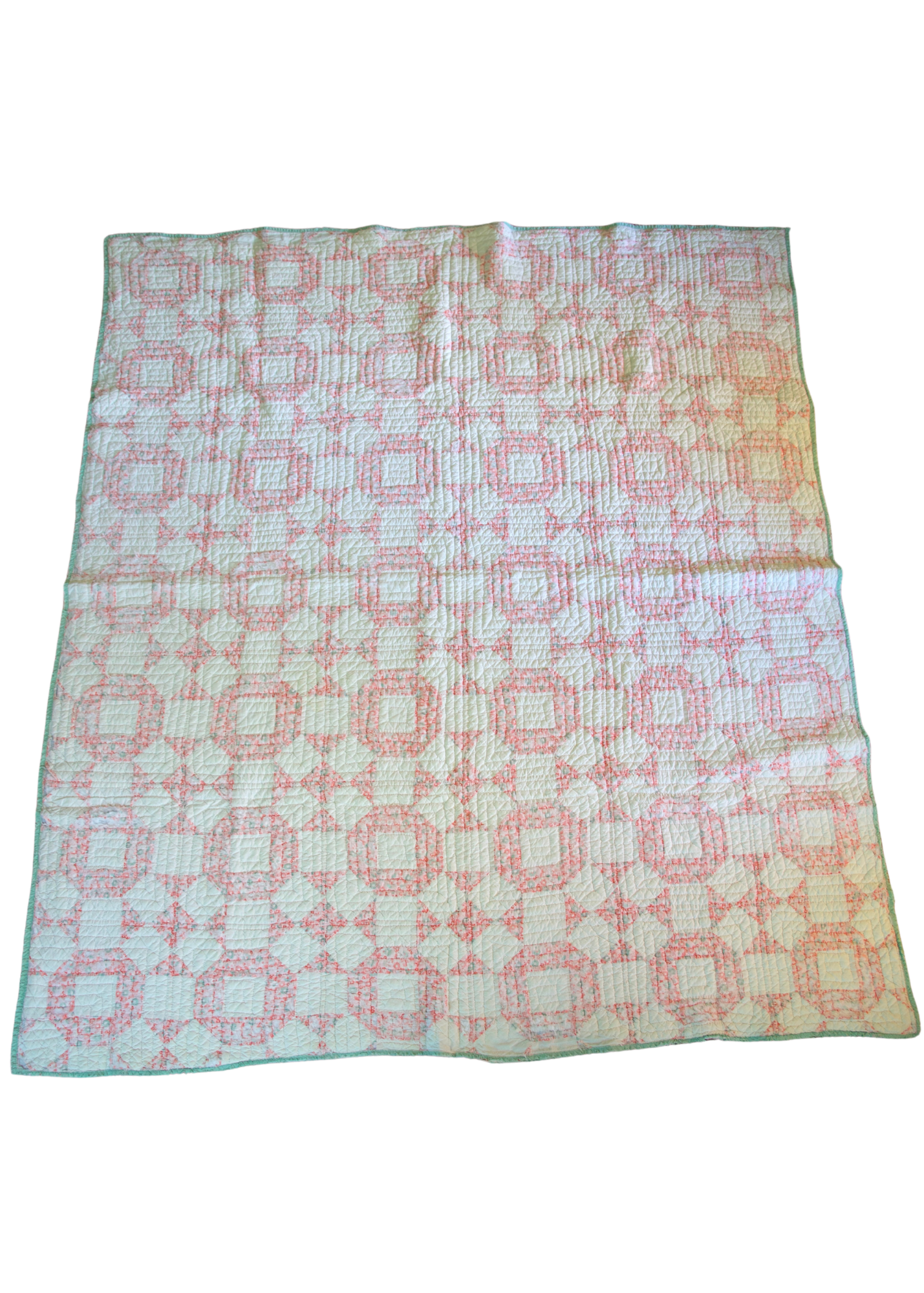
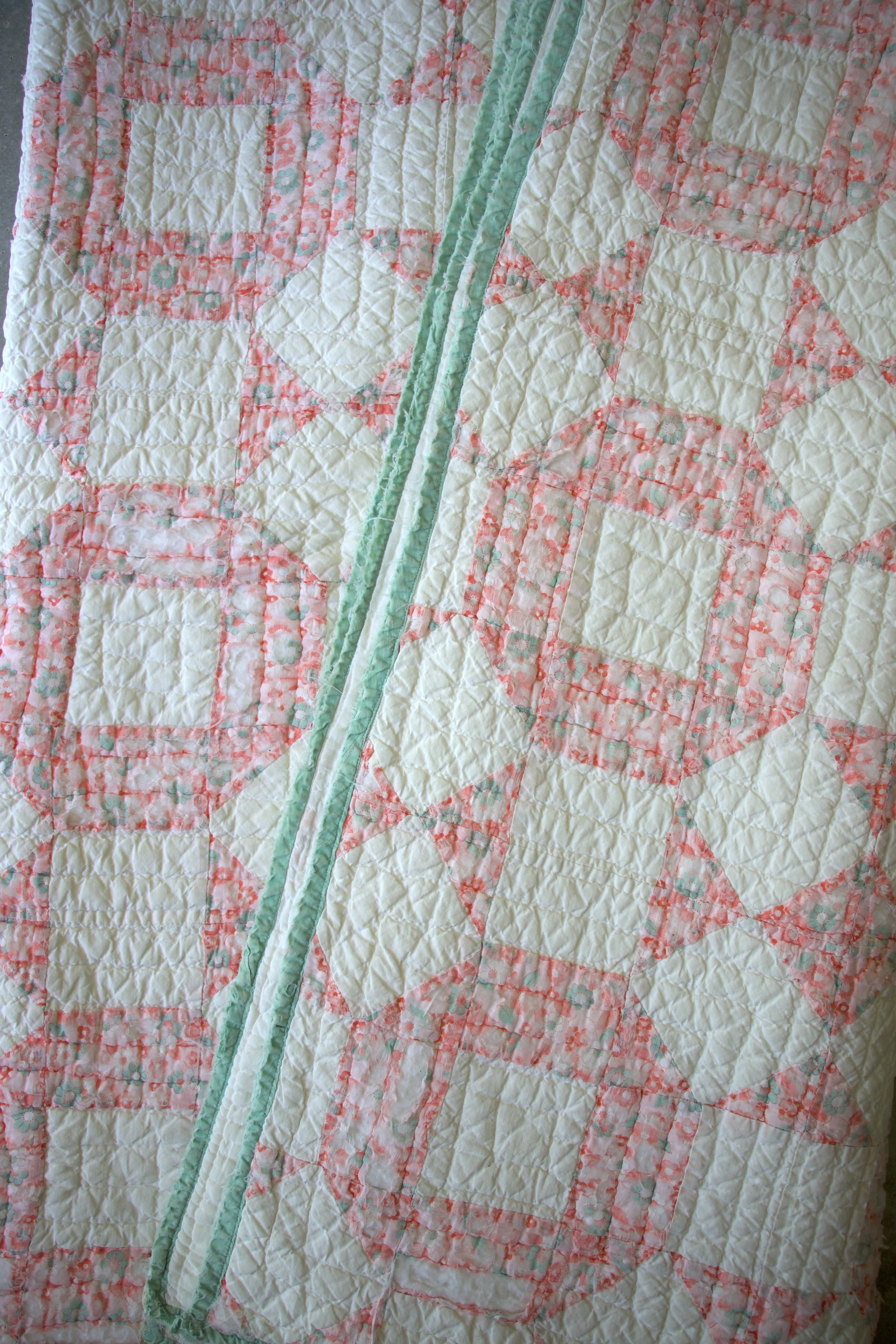
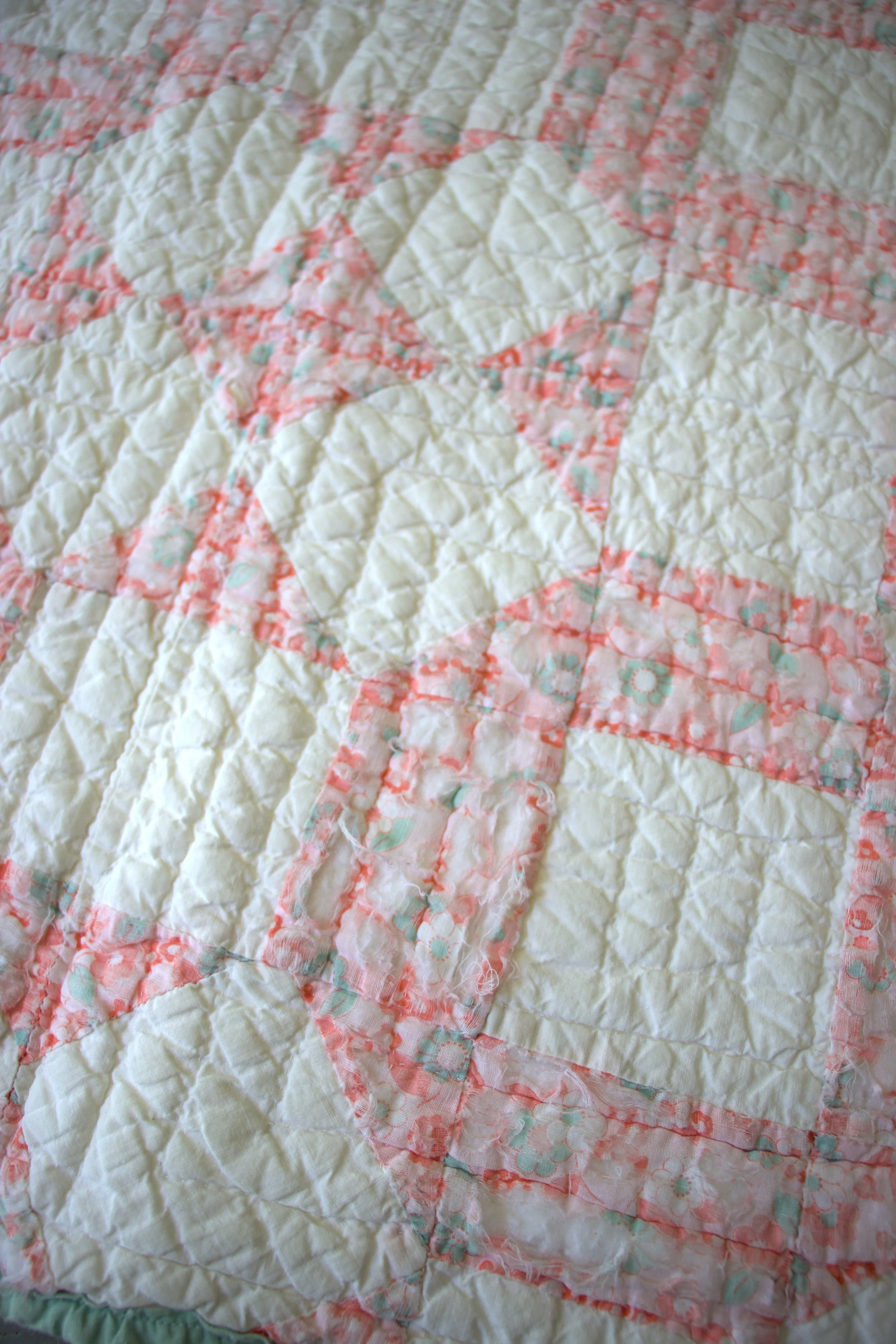
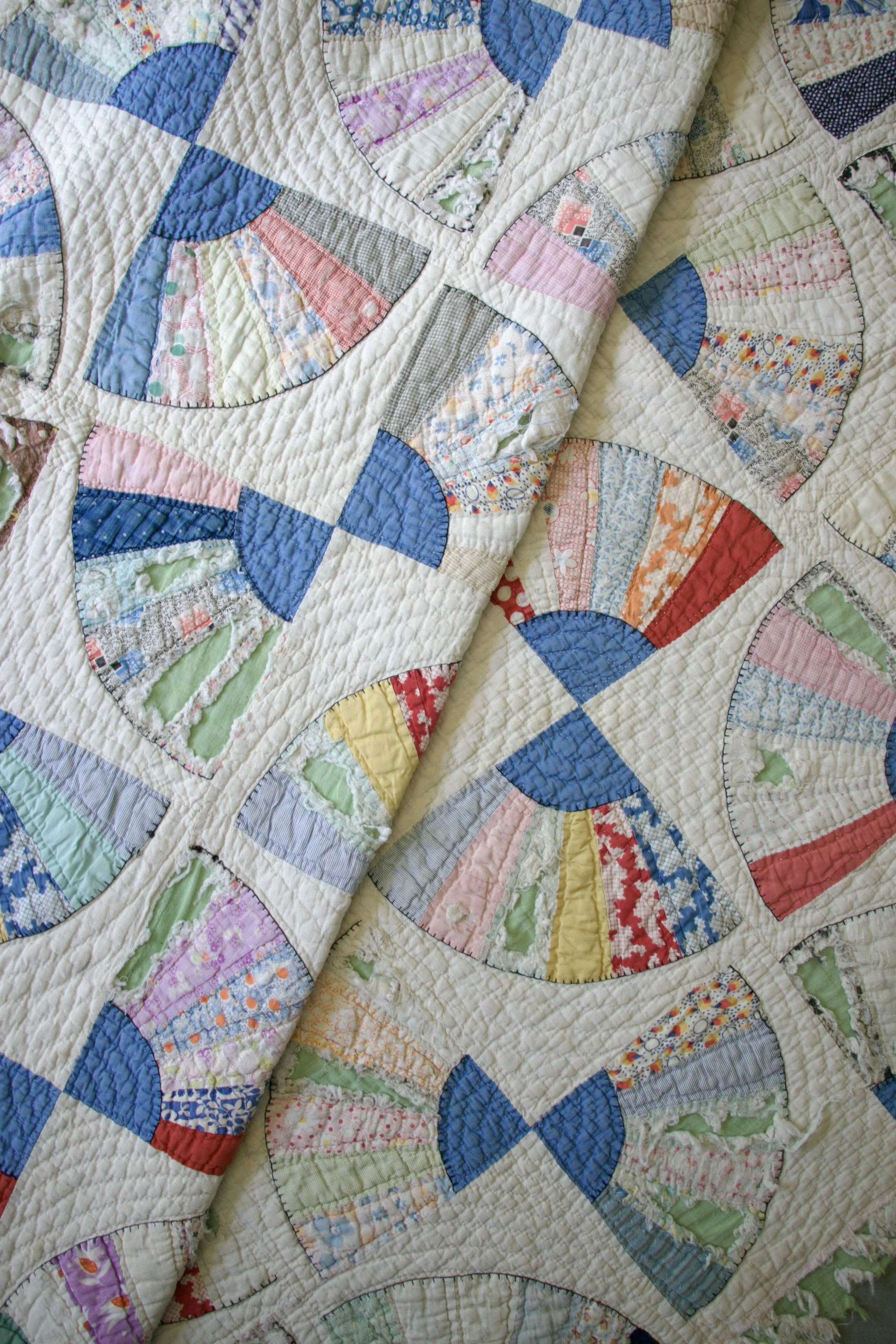
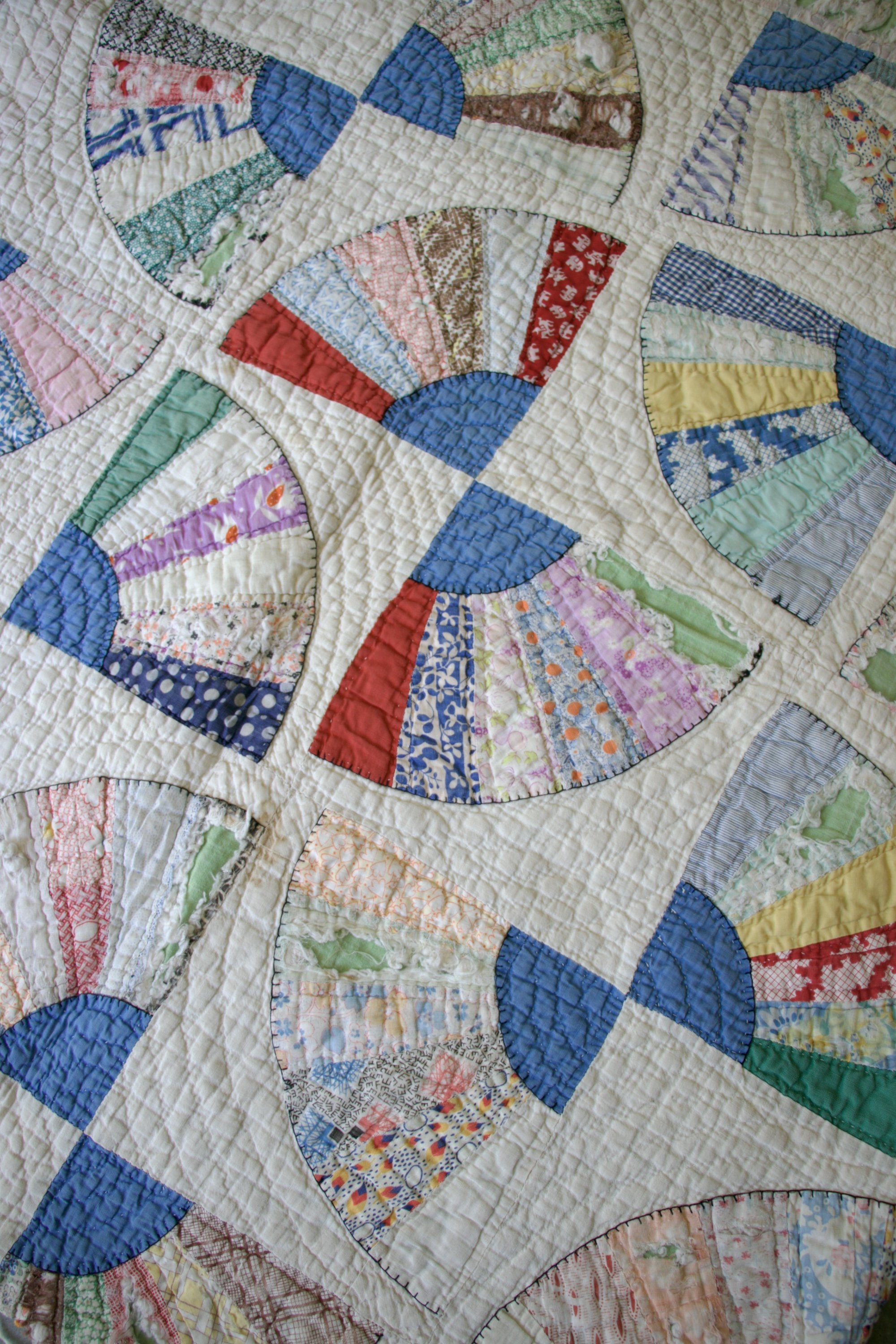
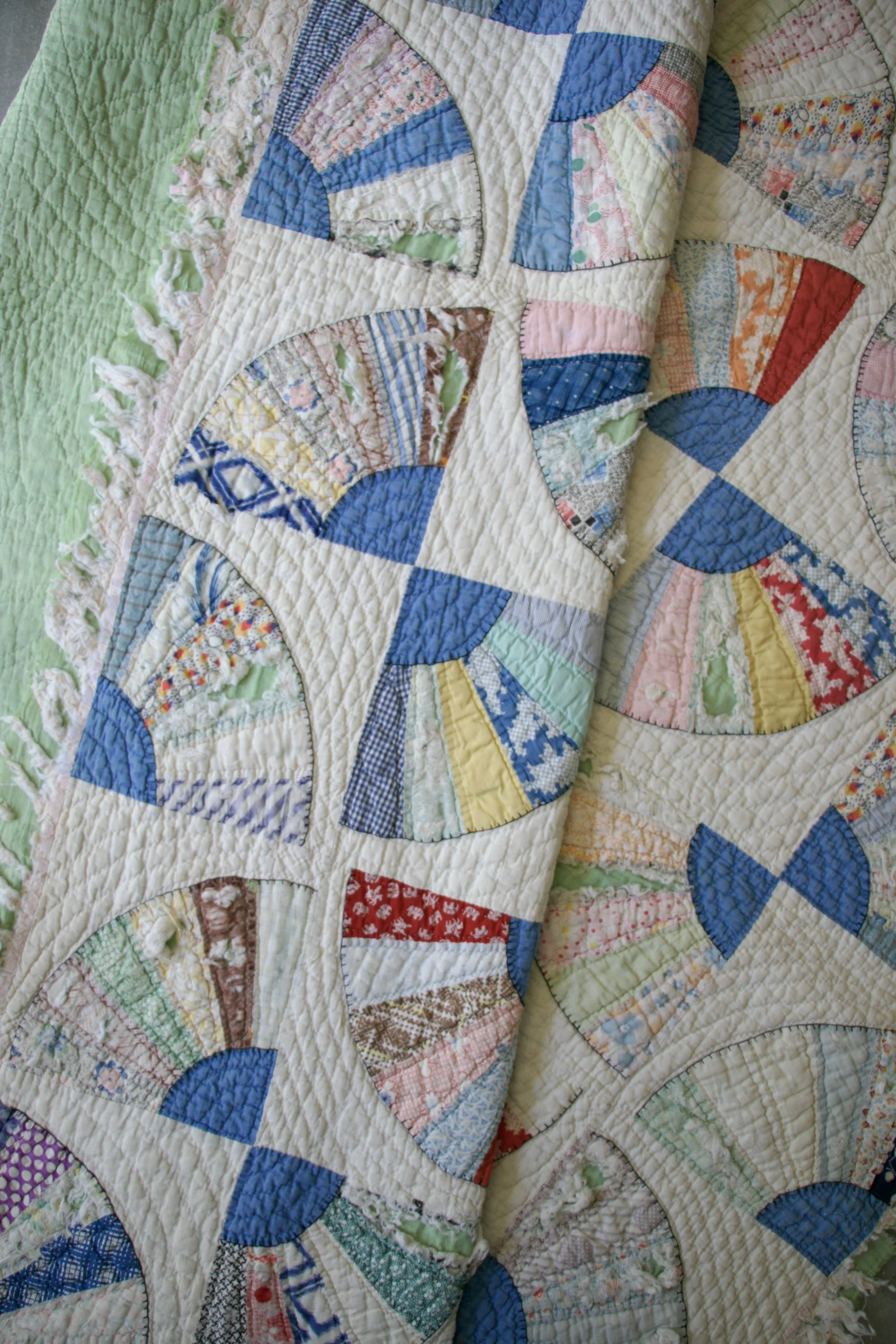
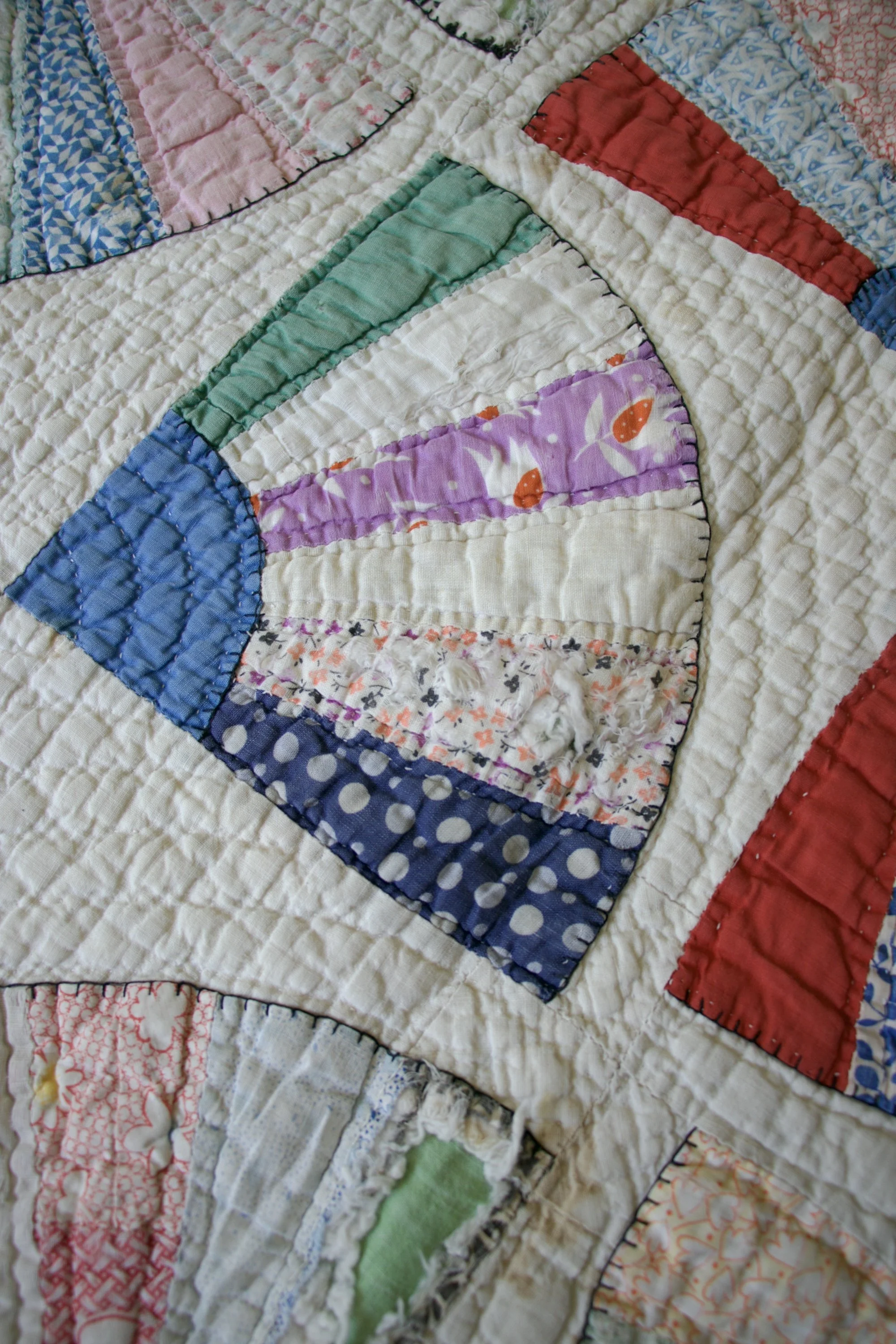
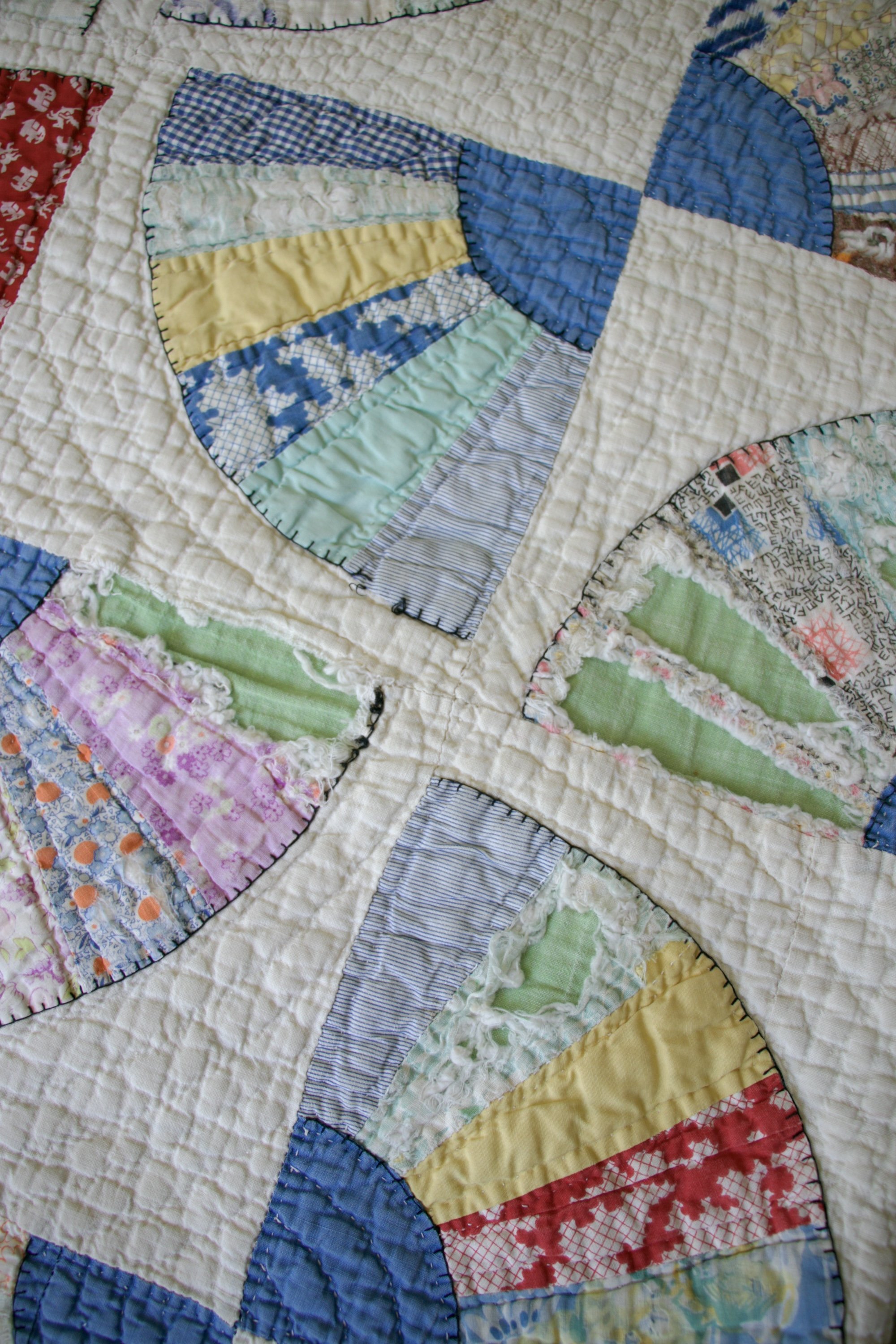
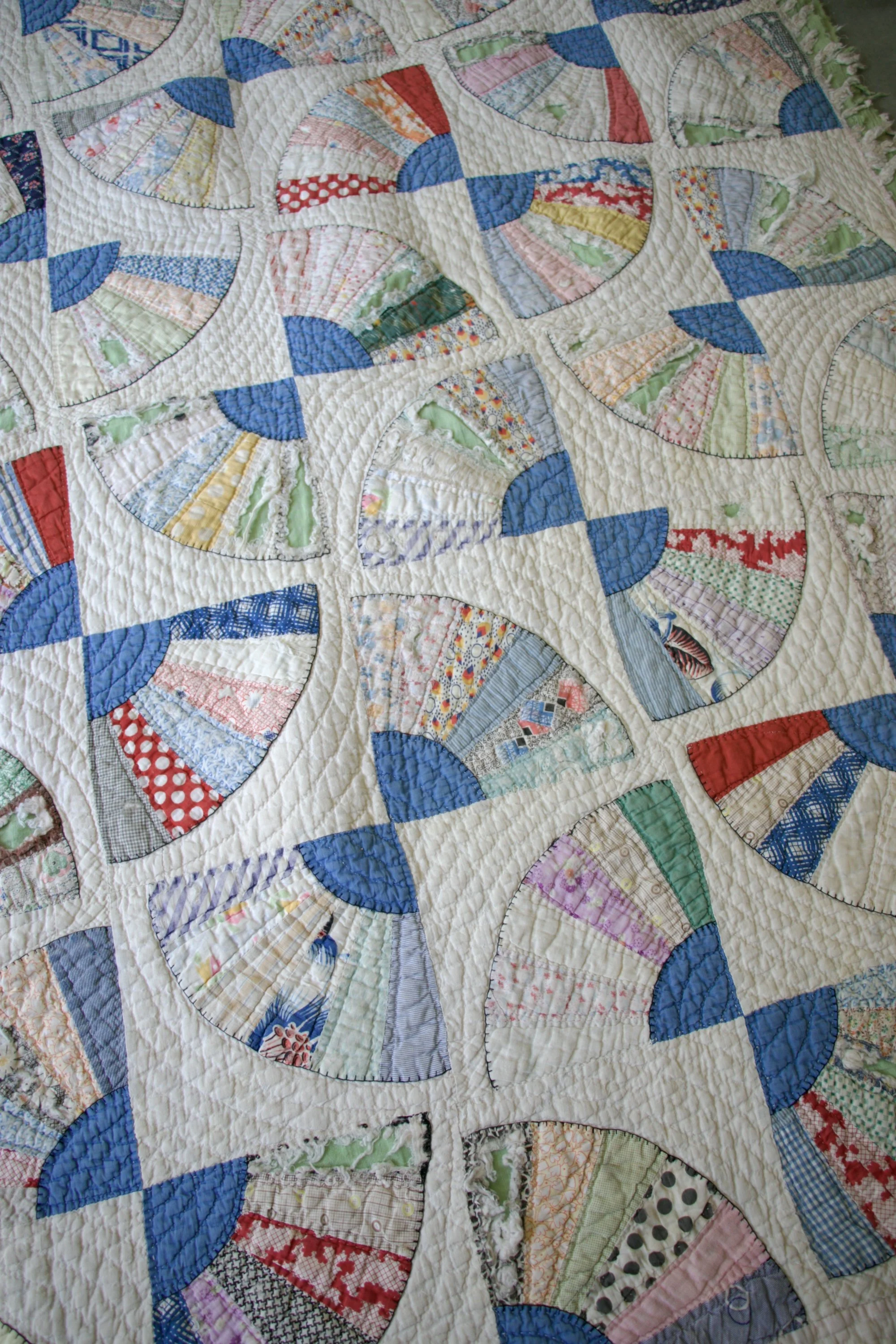
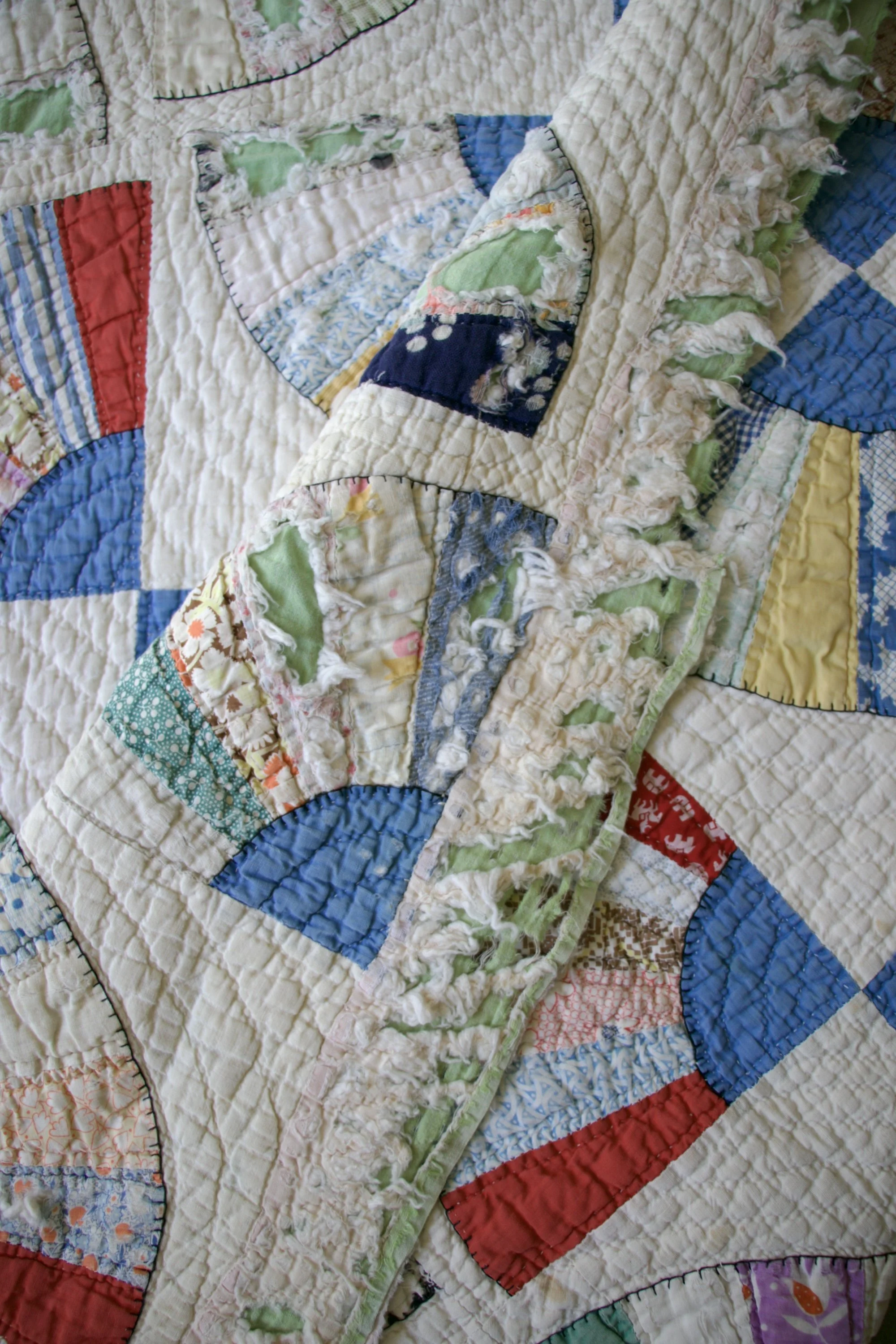
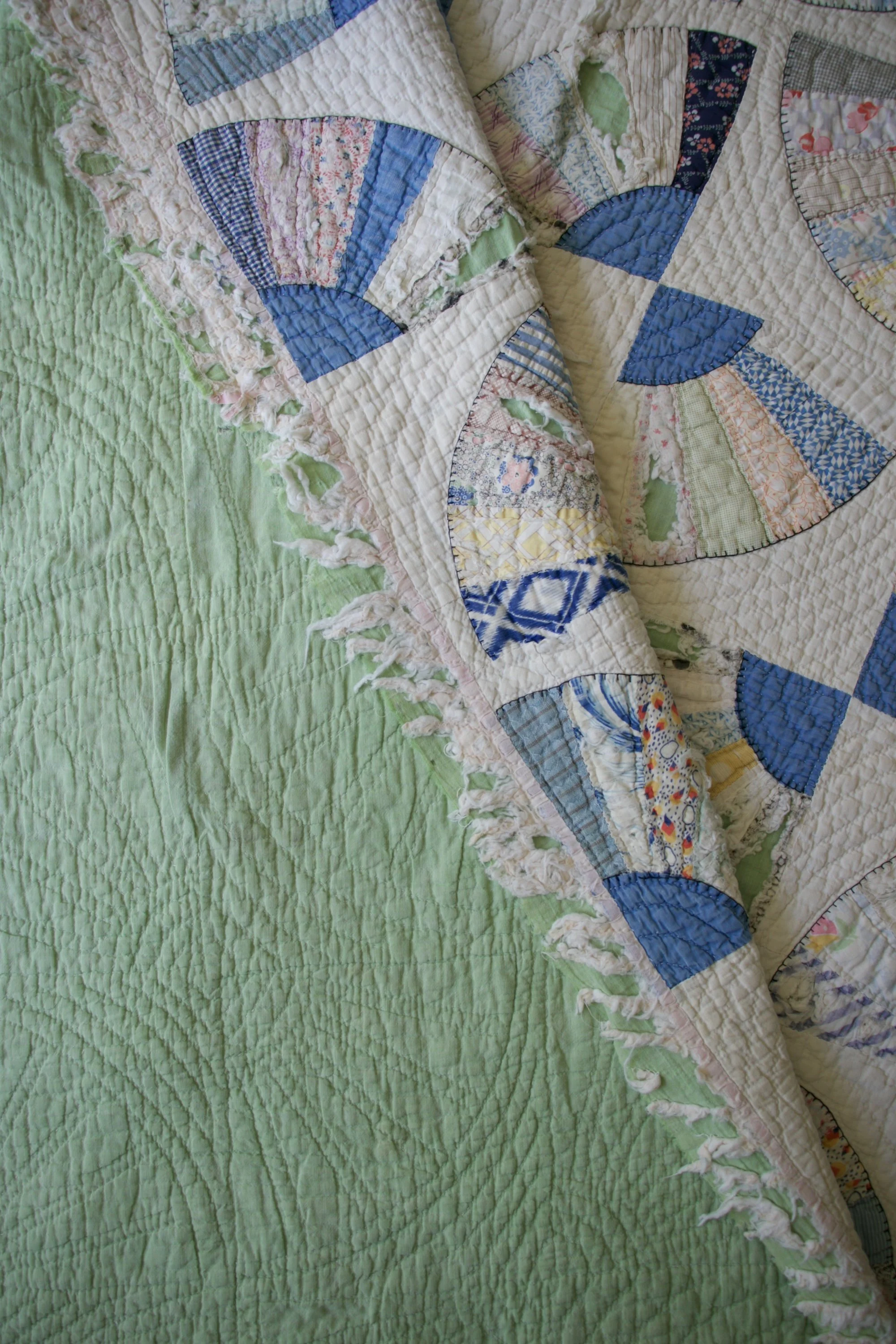
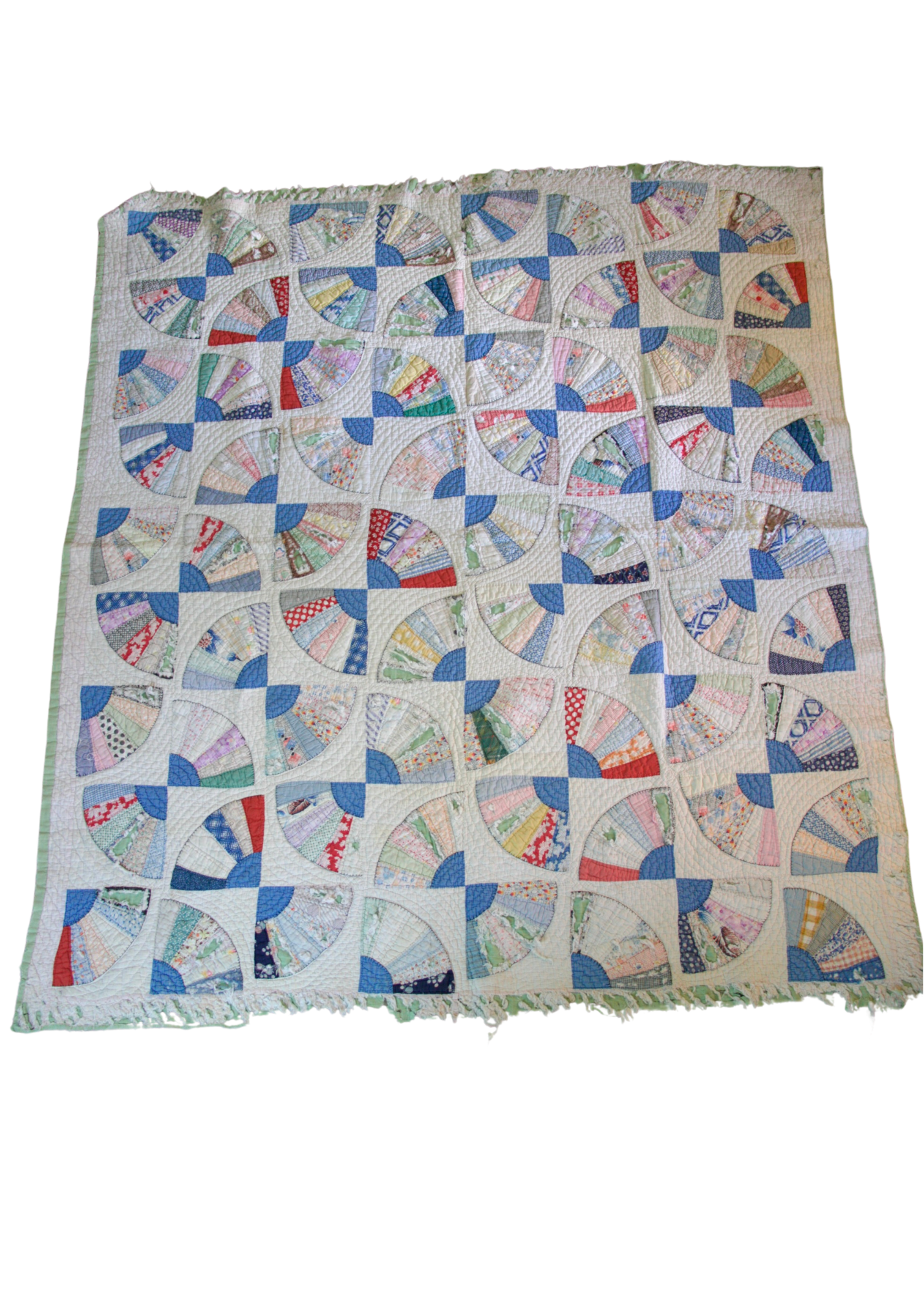
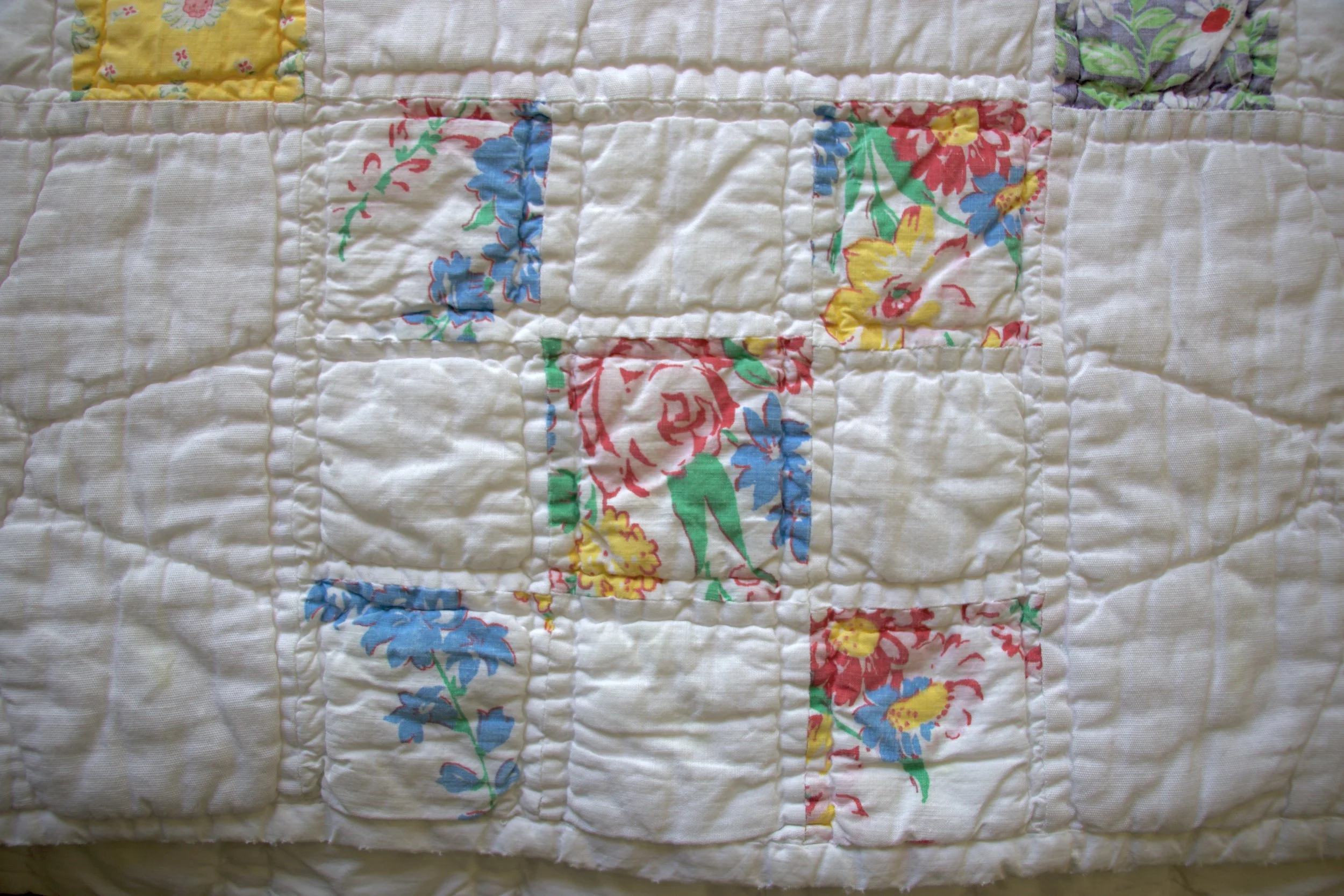
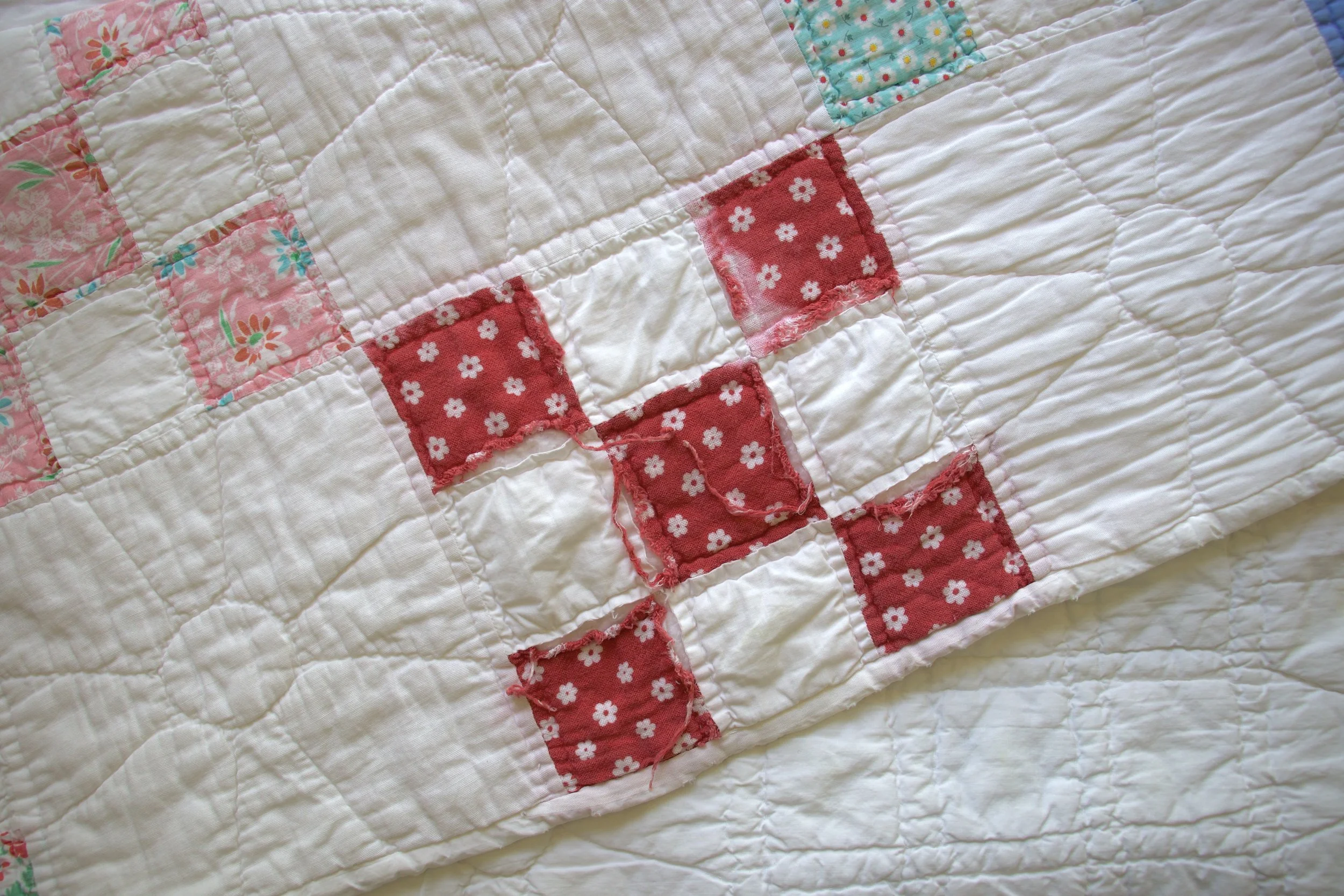
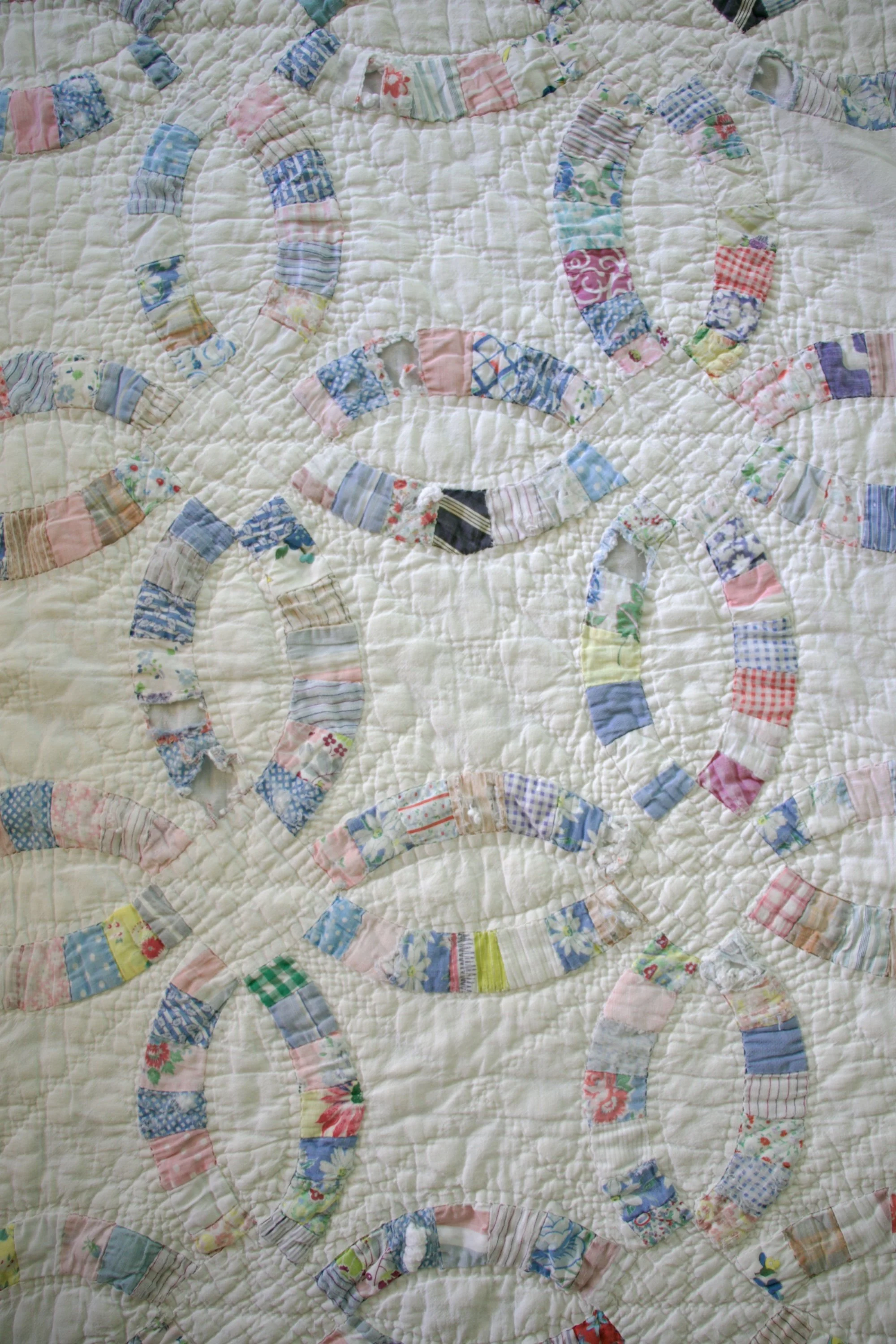
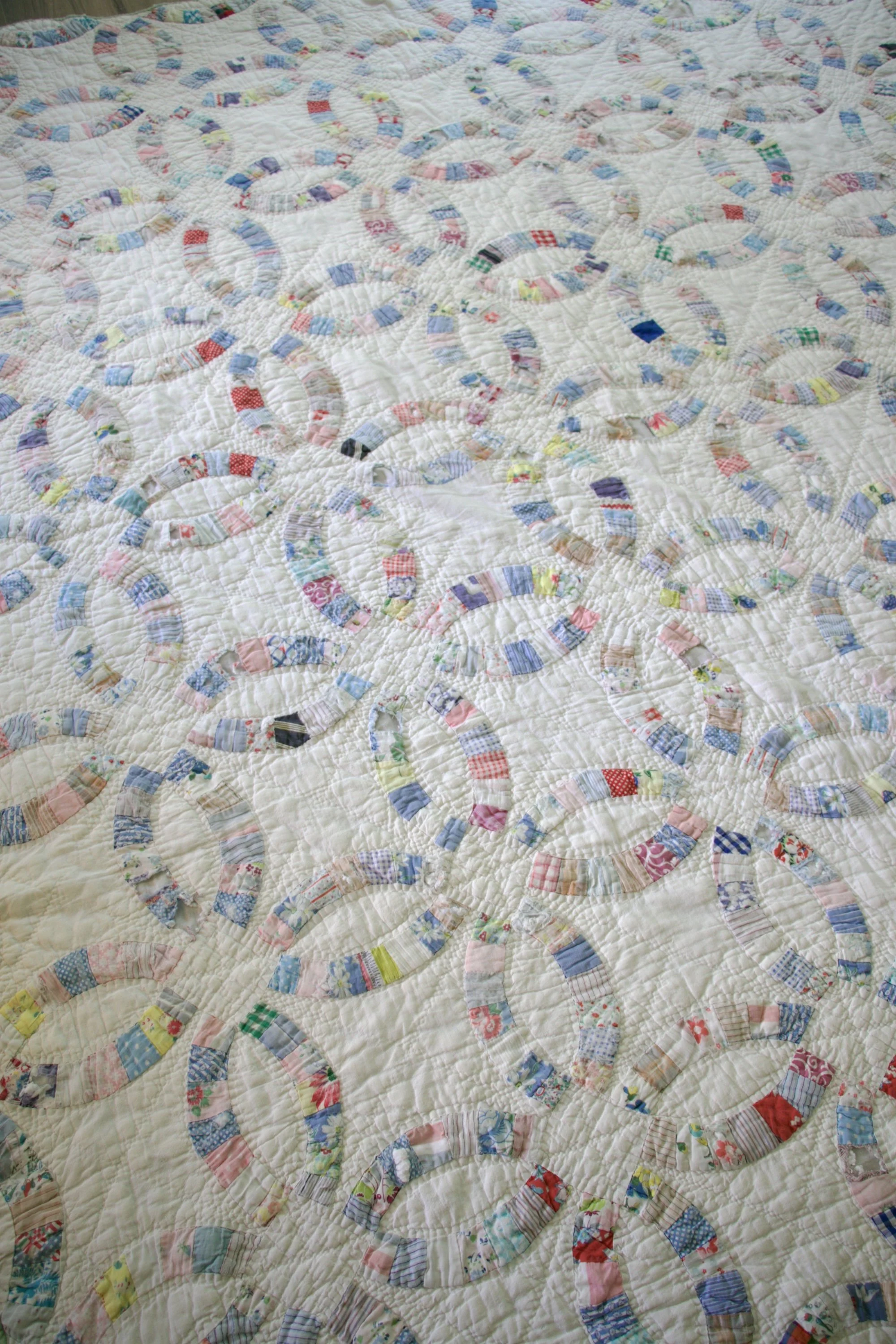
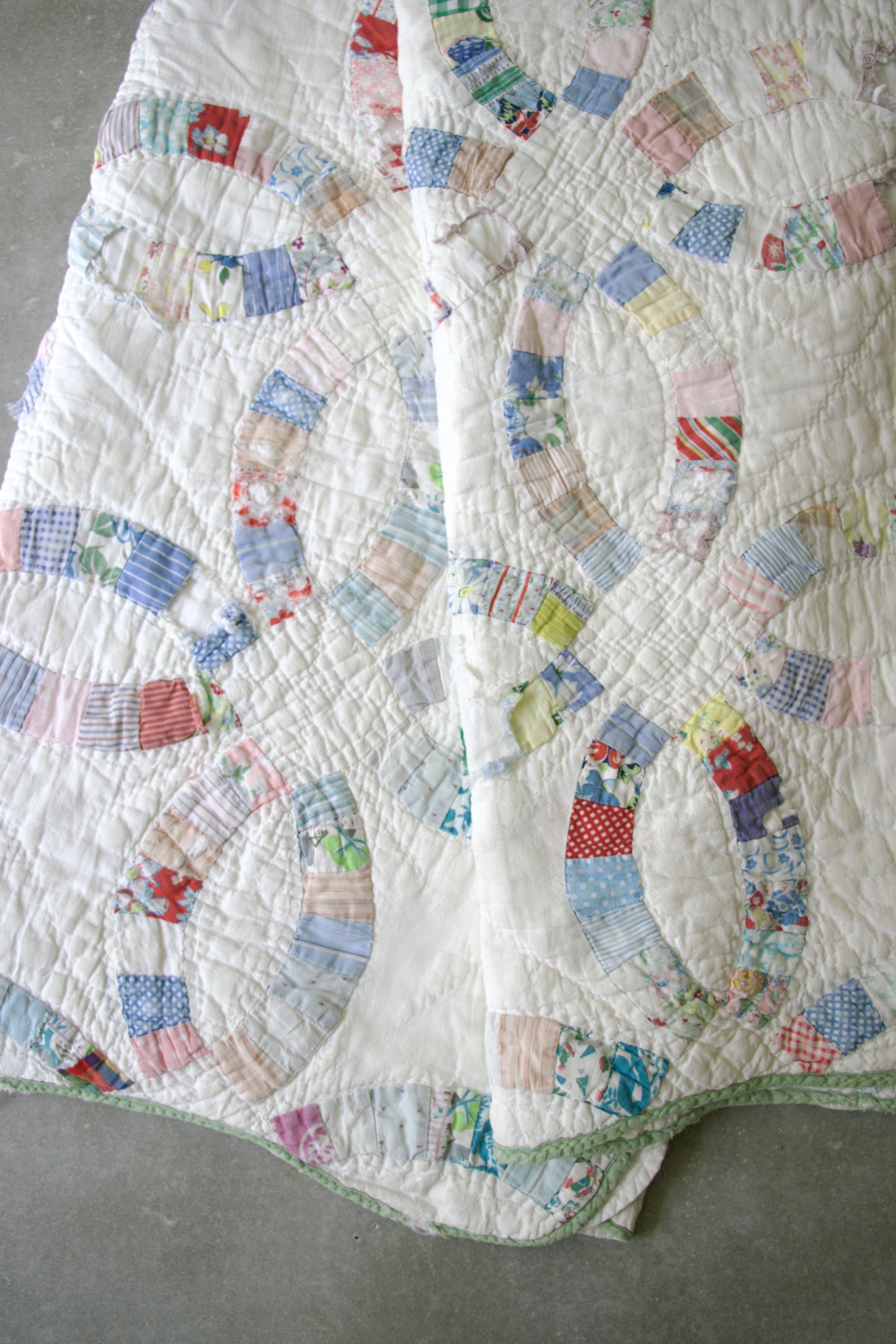
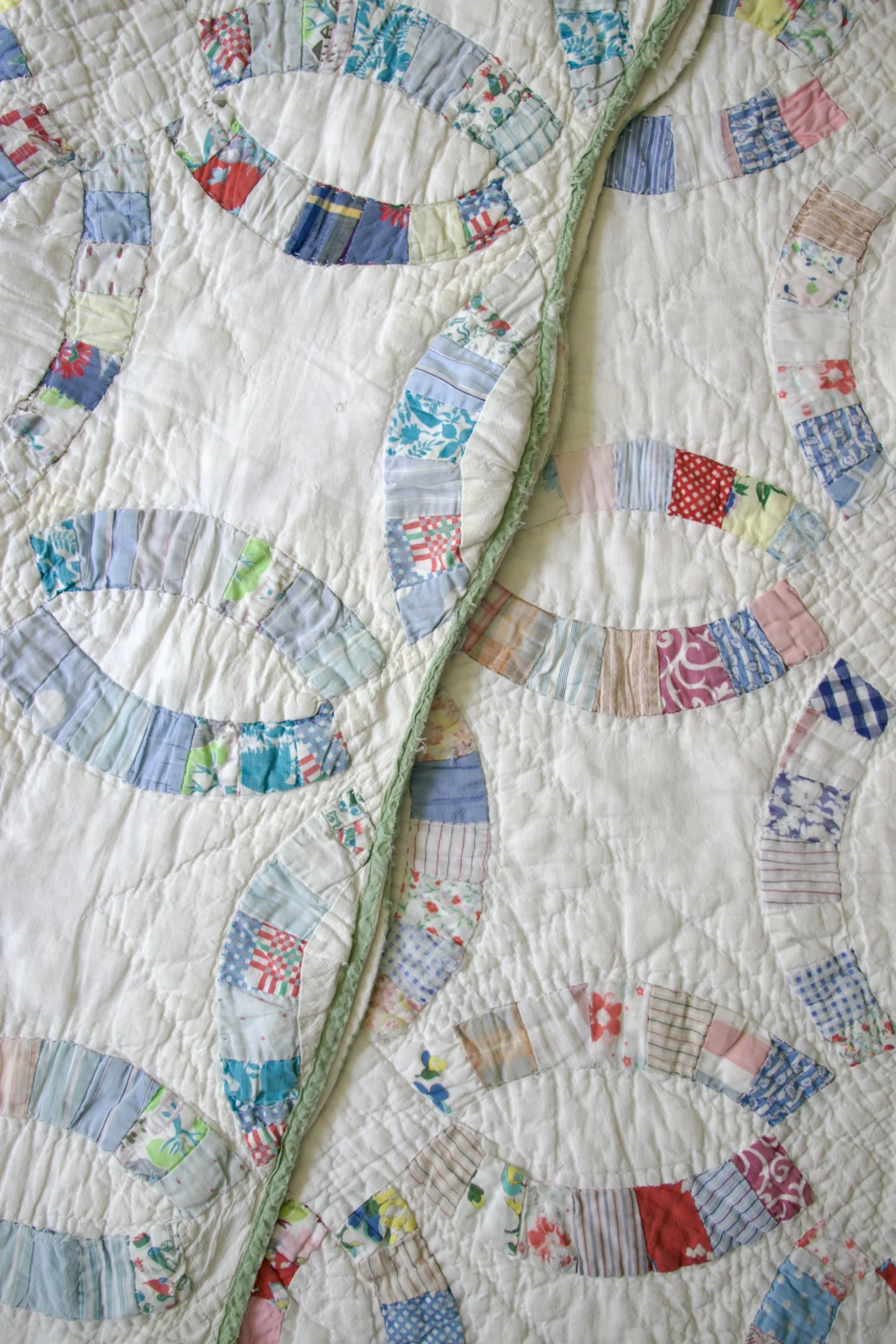
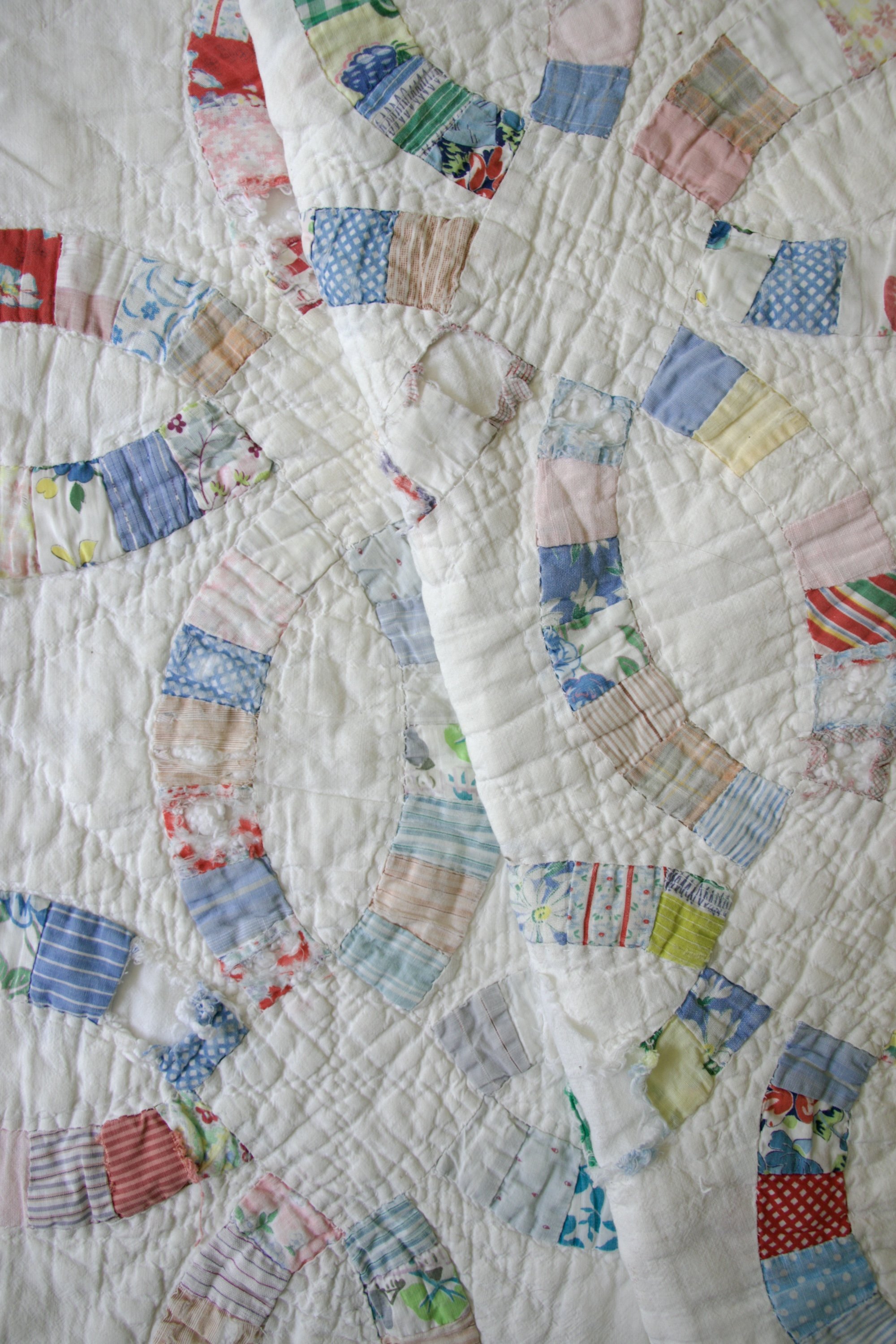
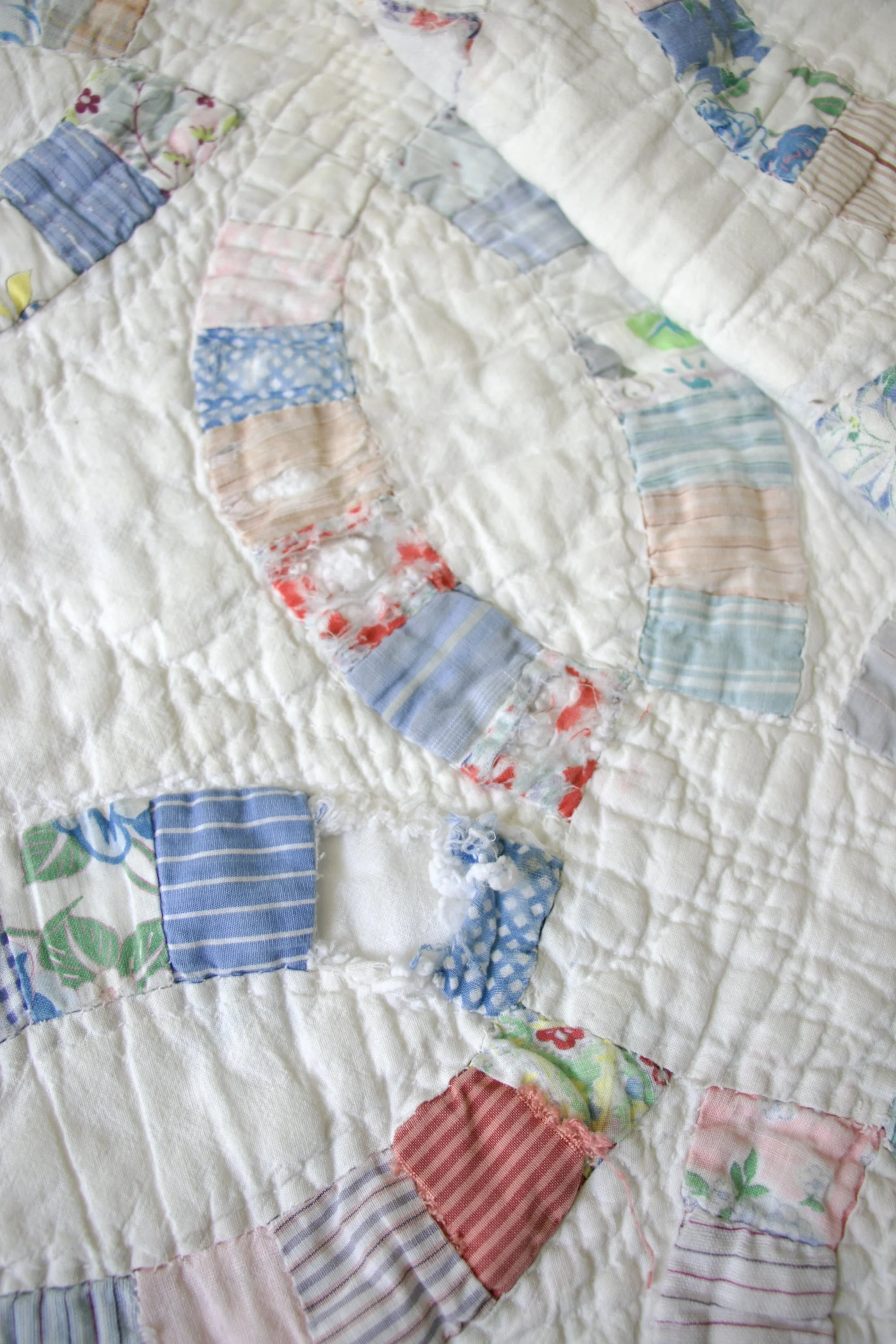
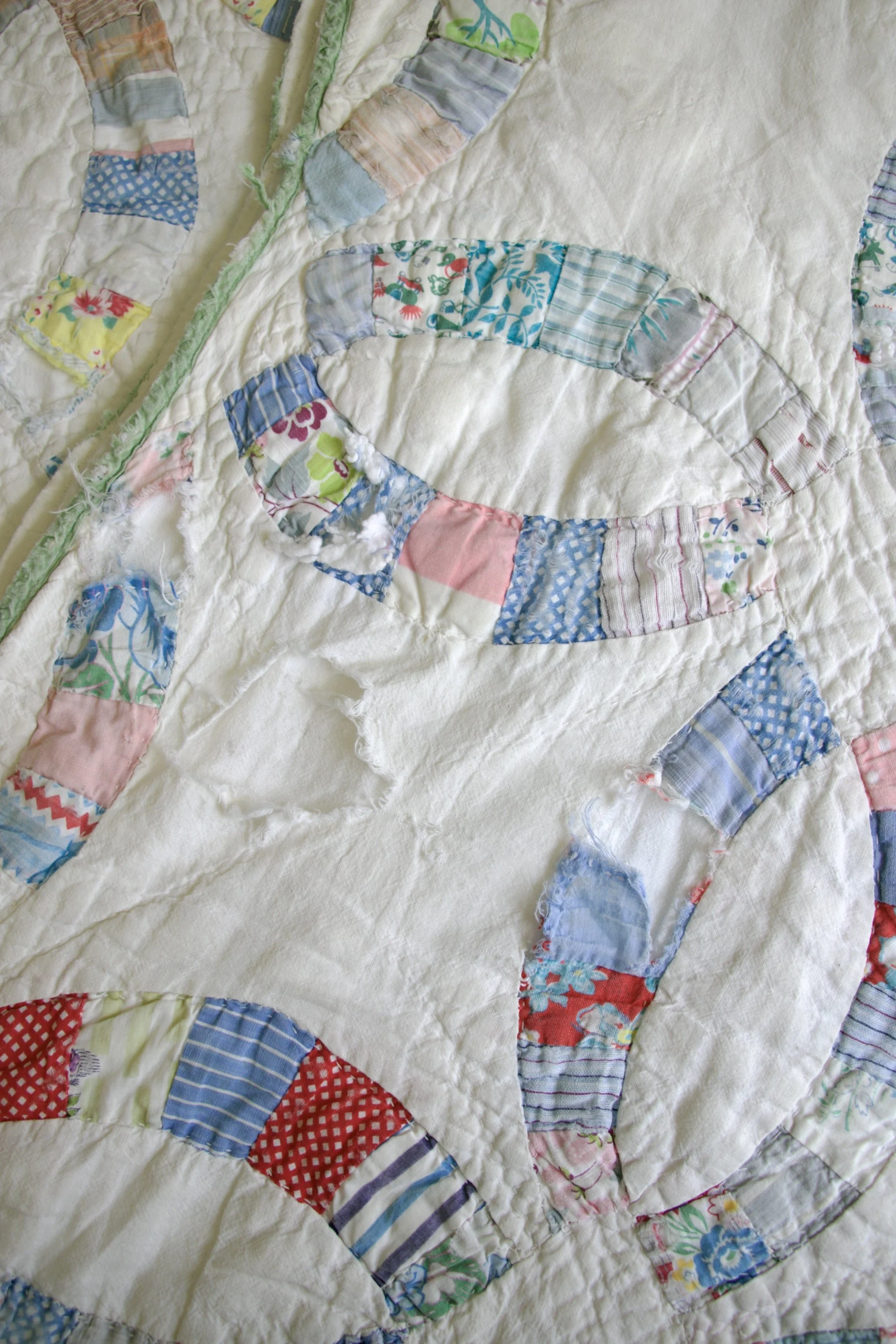
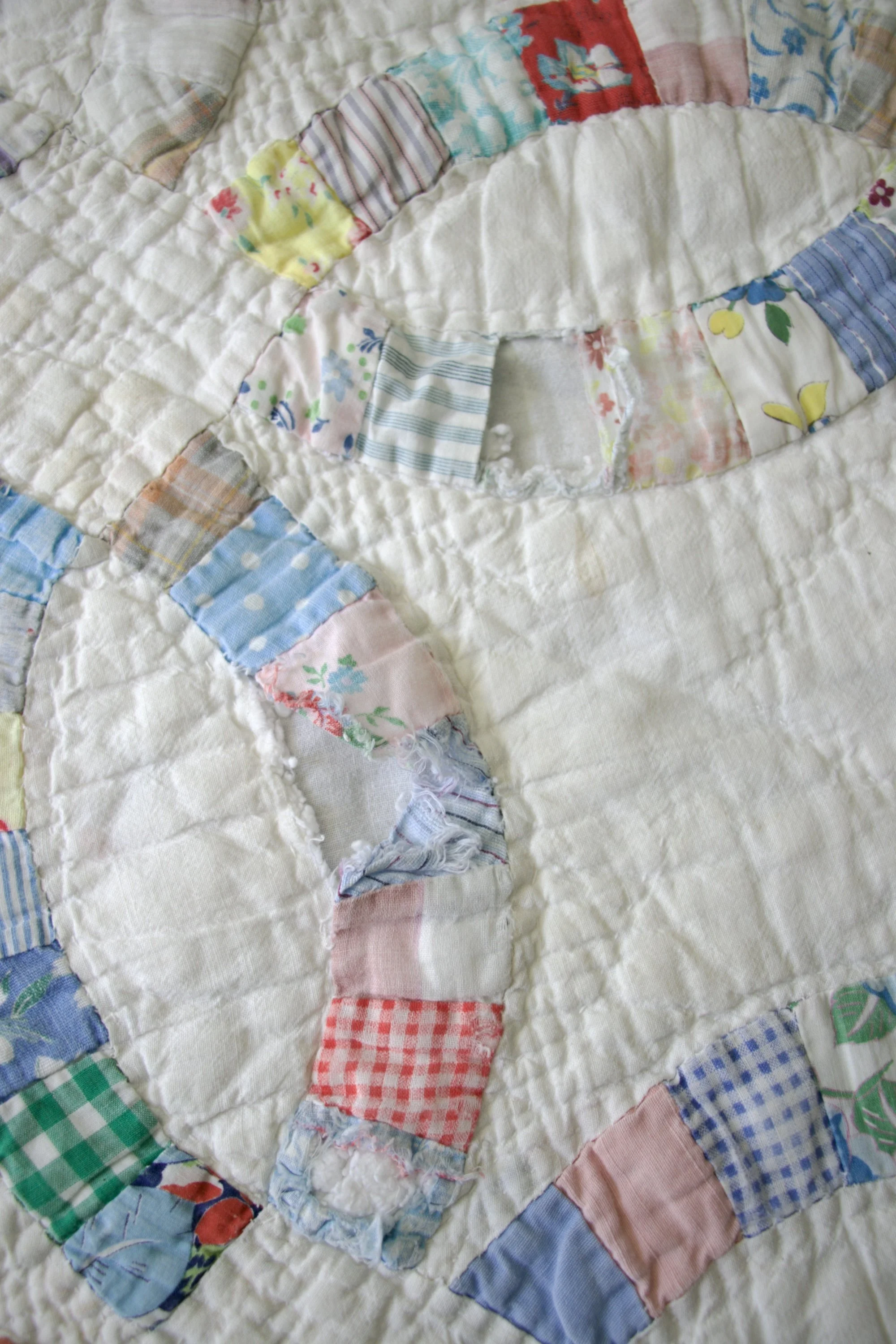
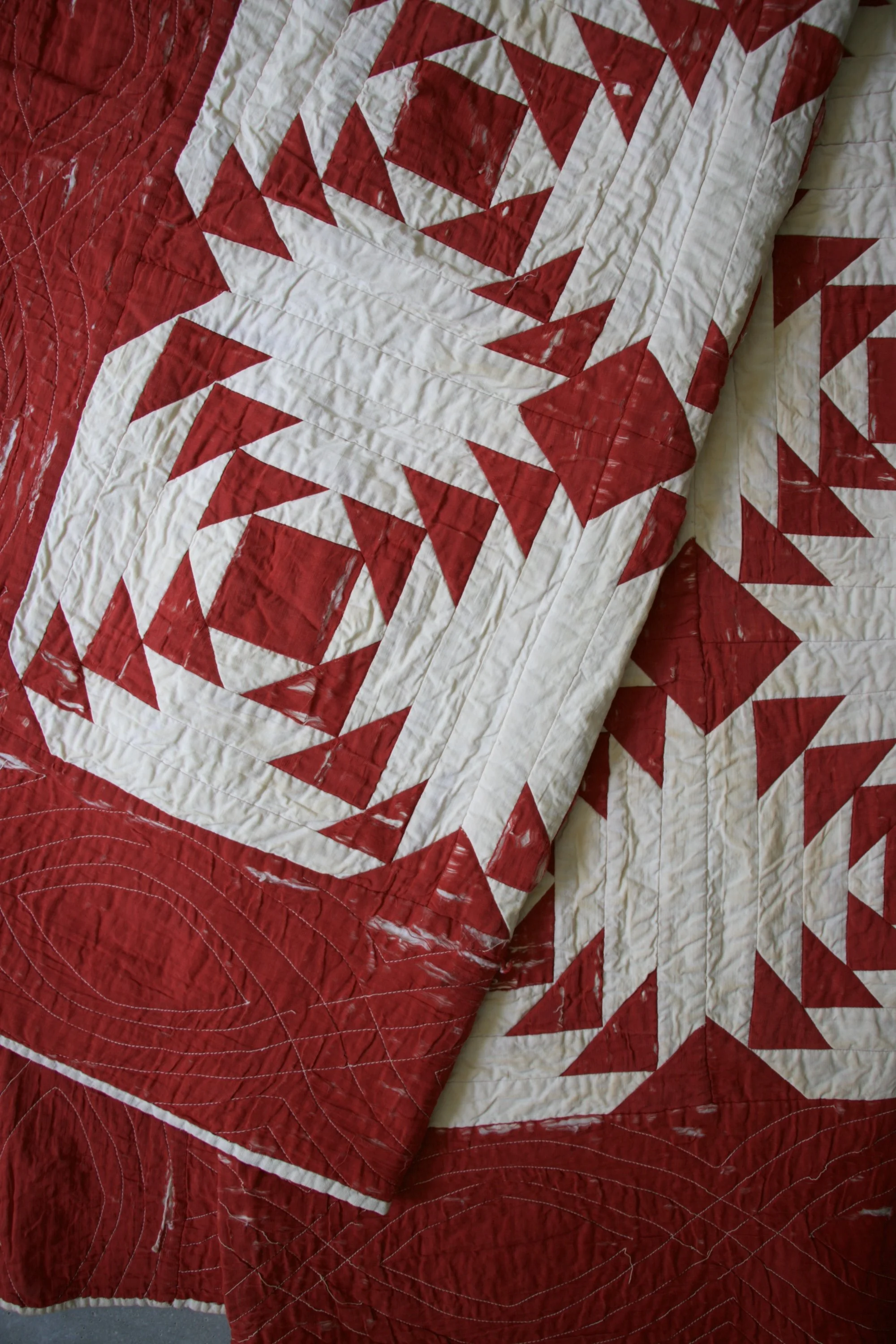
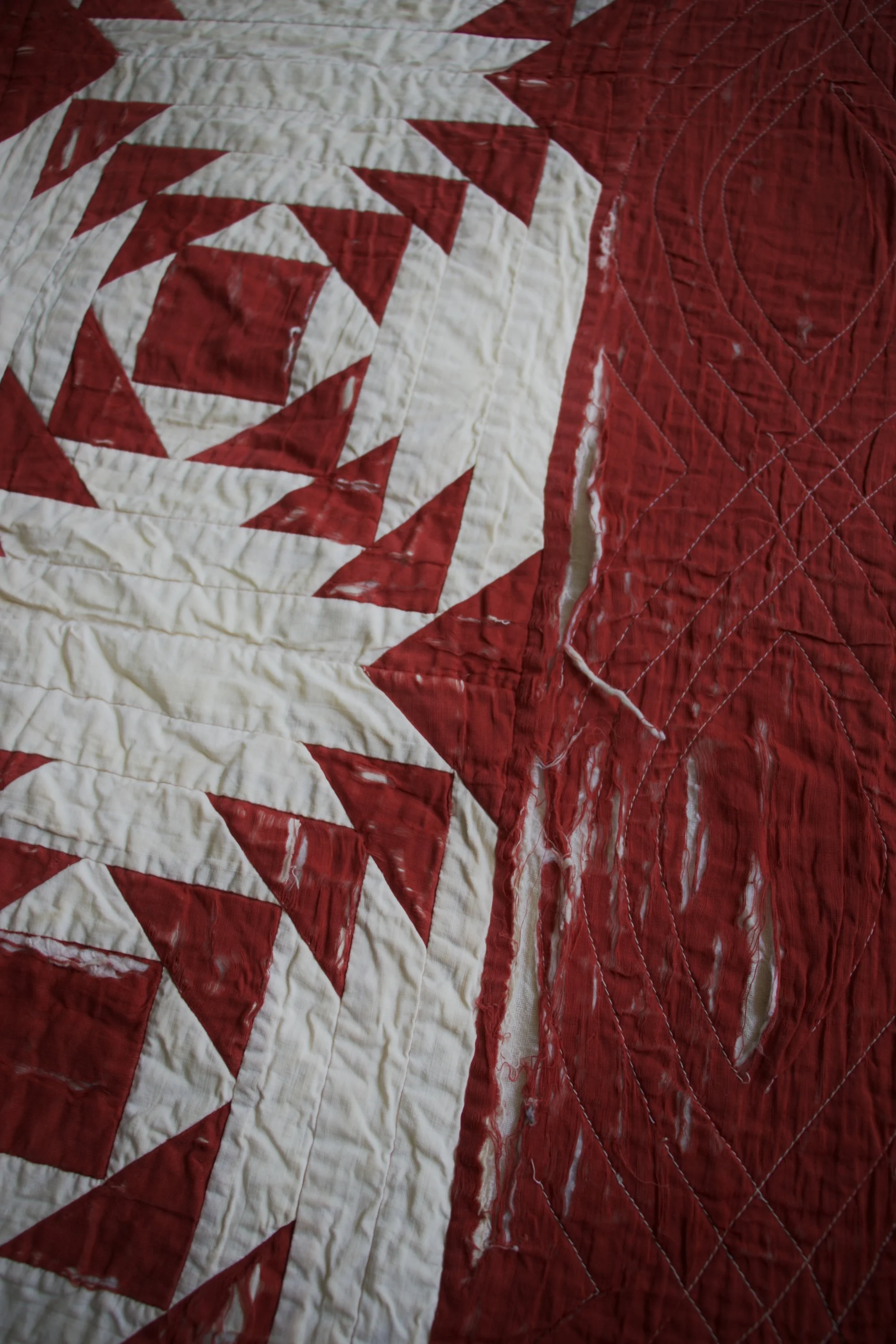
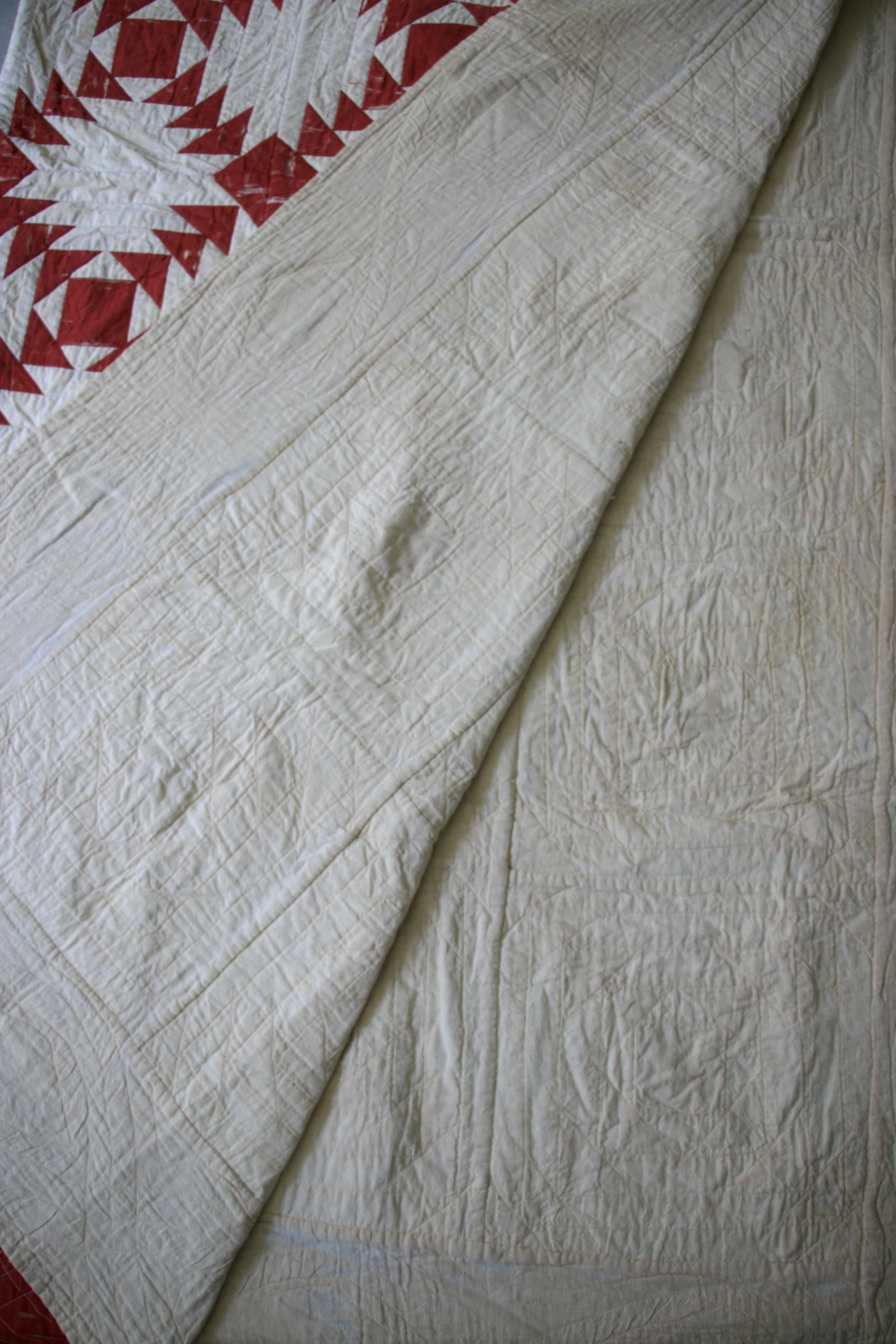
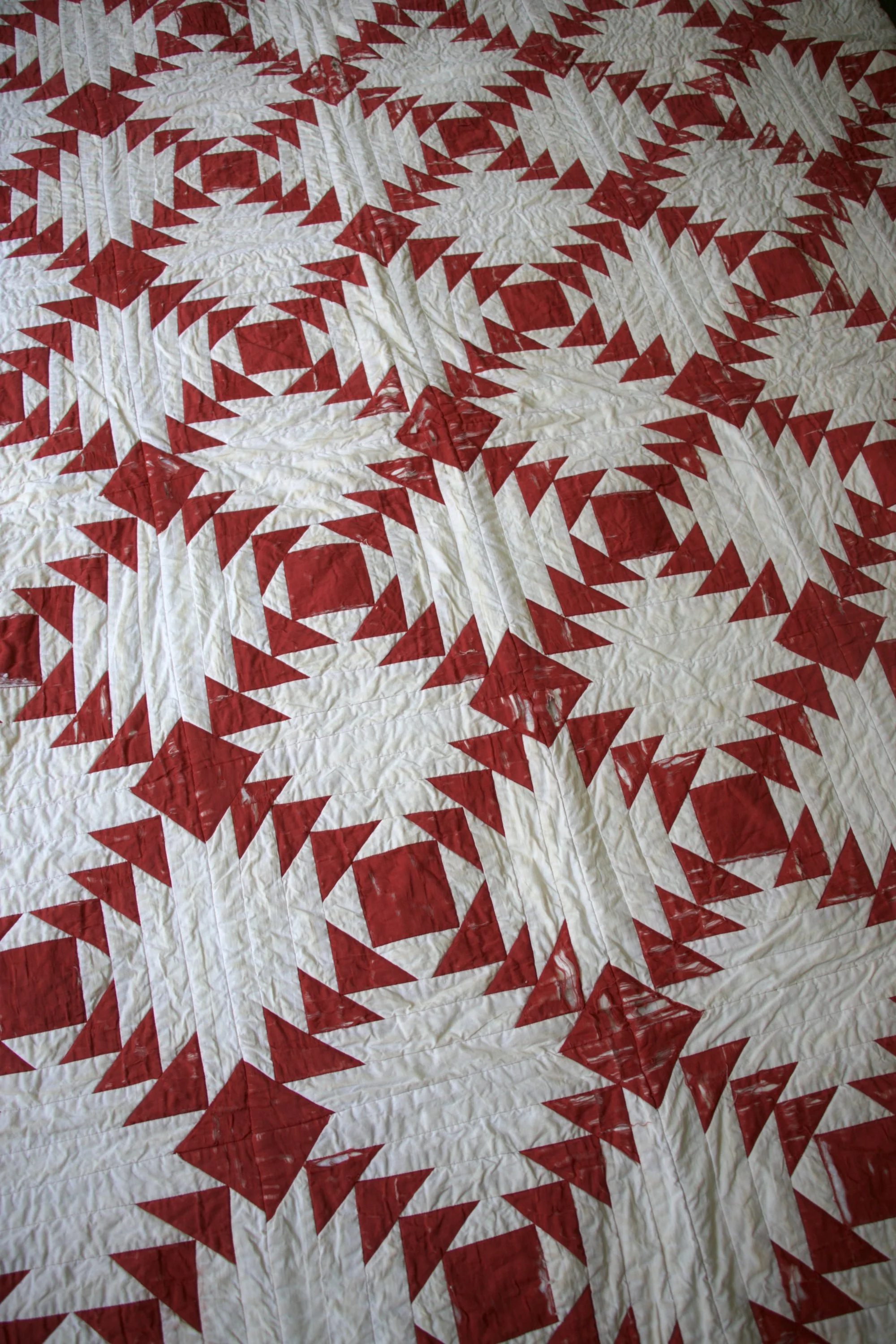
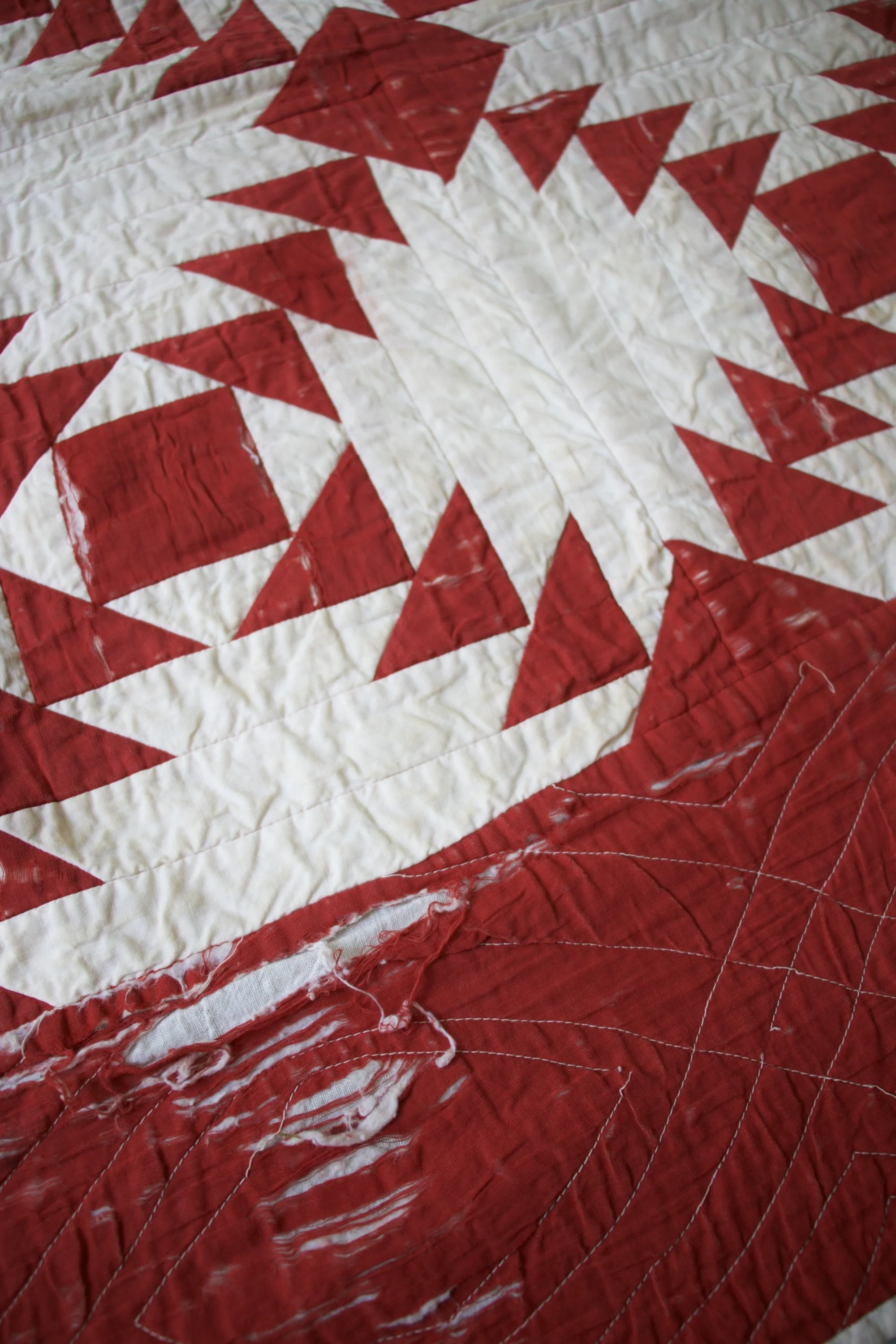
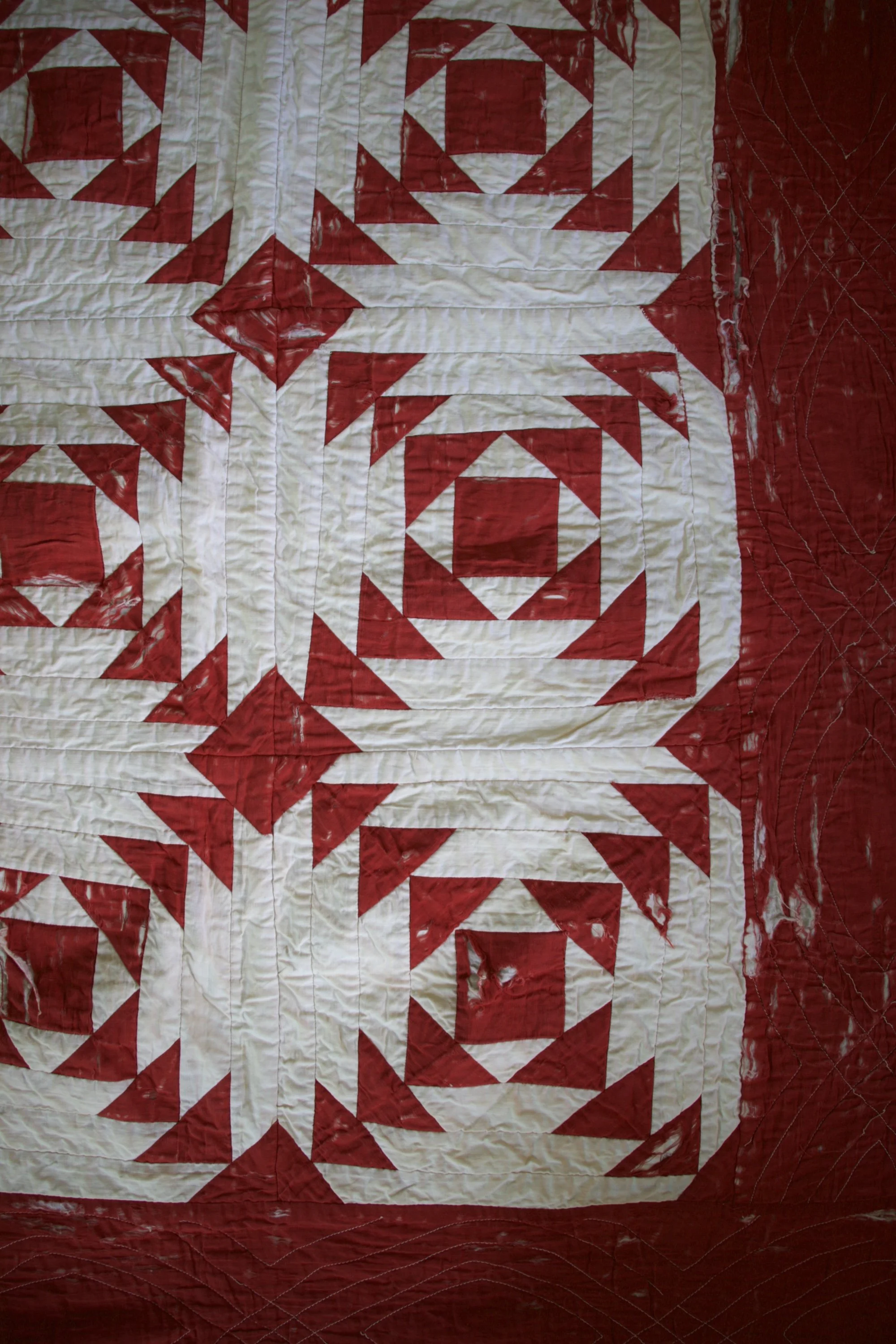
Condition: Well-loved. Shows significant age-related wear, including fraying, losses, and fabric breakdown along the edges and binding, with general softening and thinning throughout from long use.
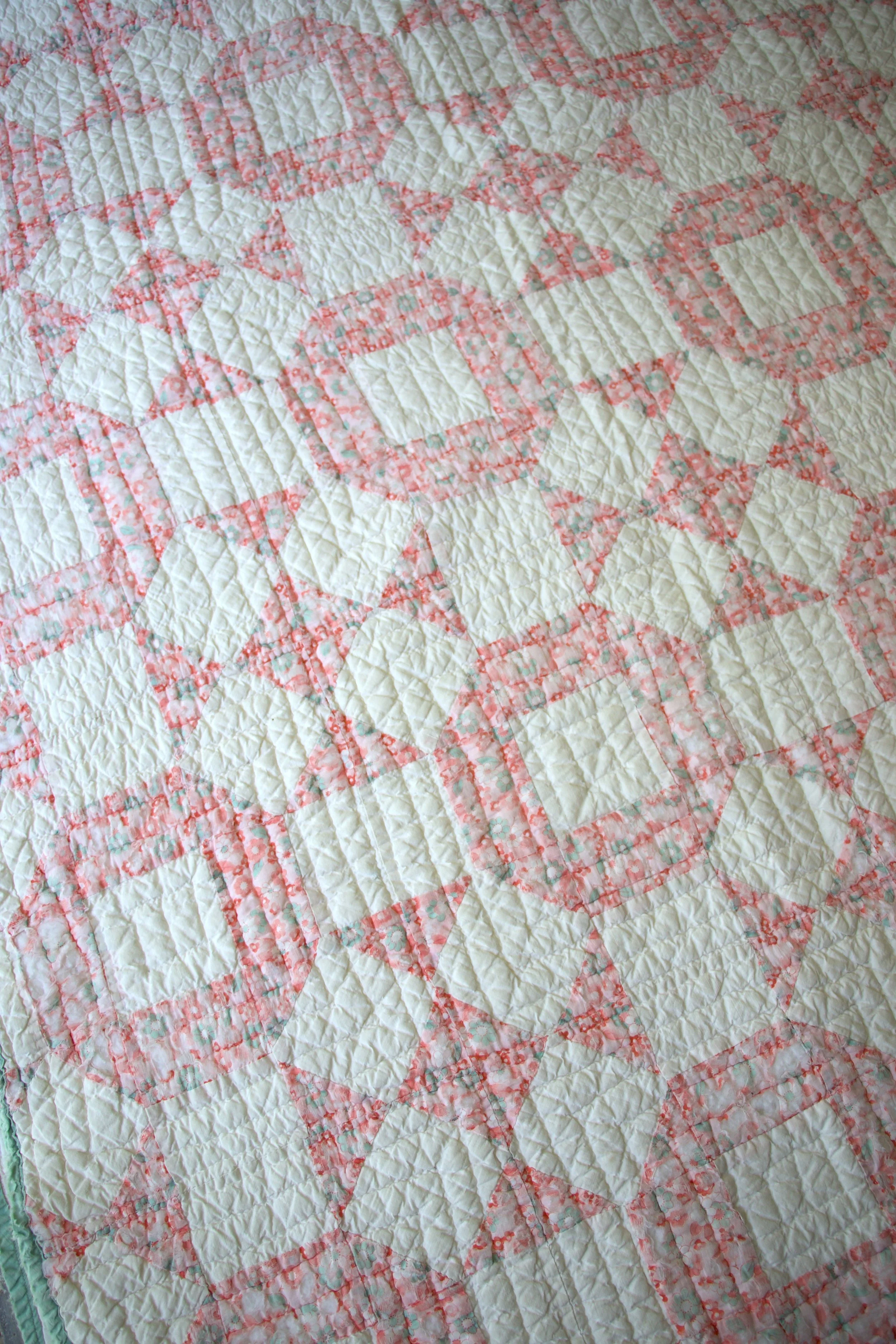
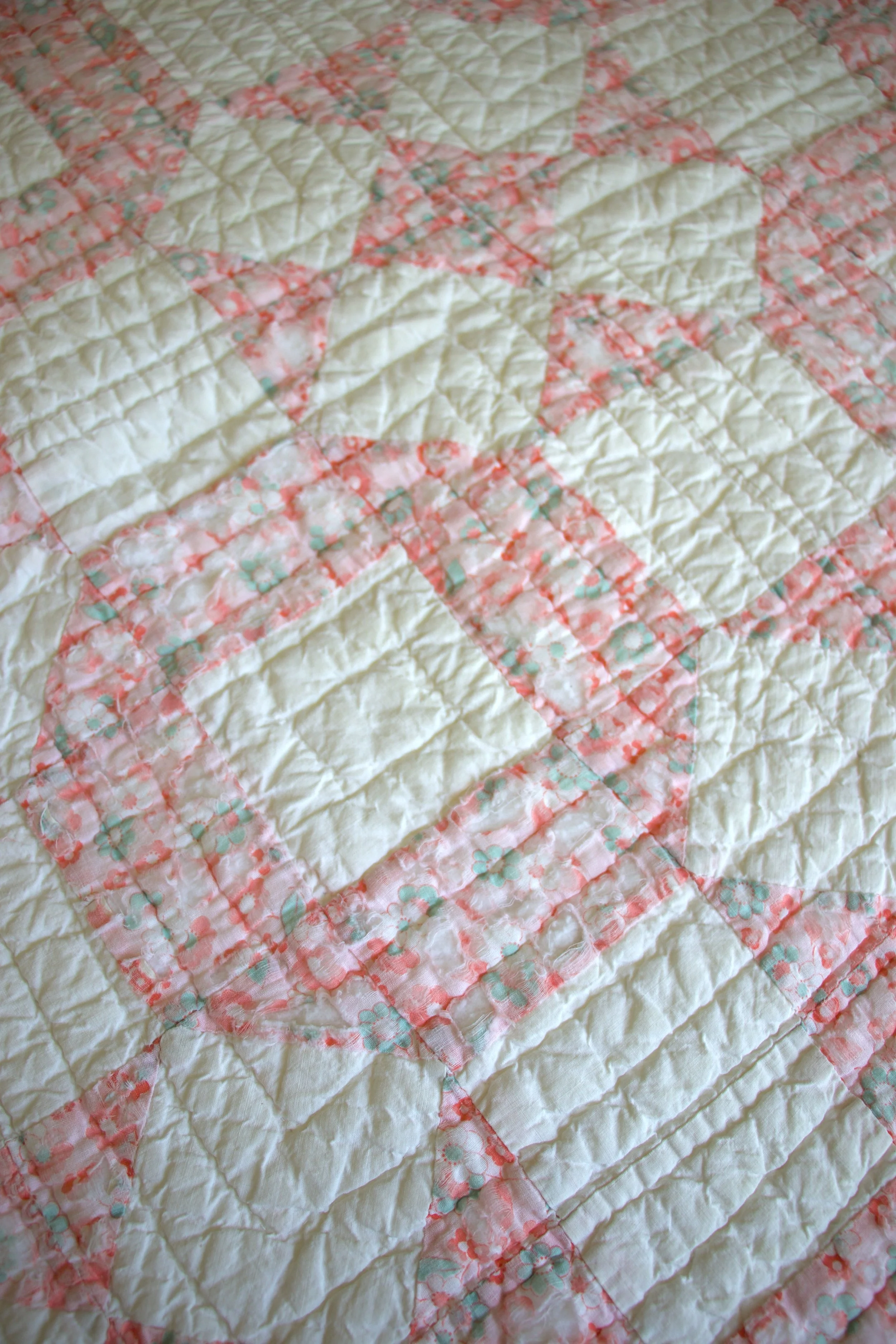
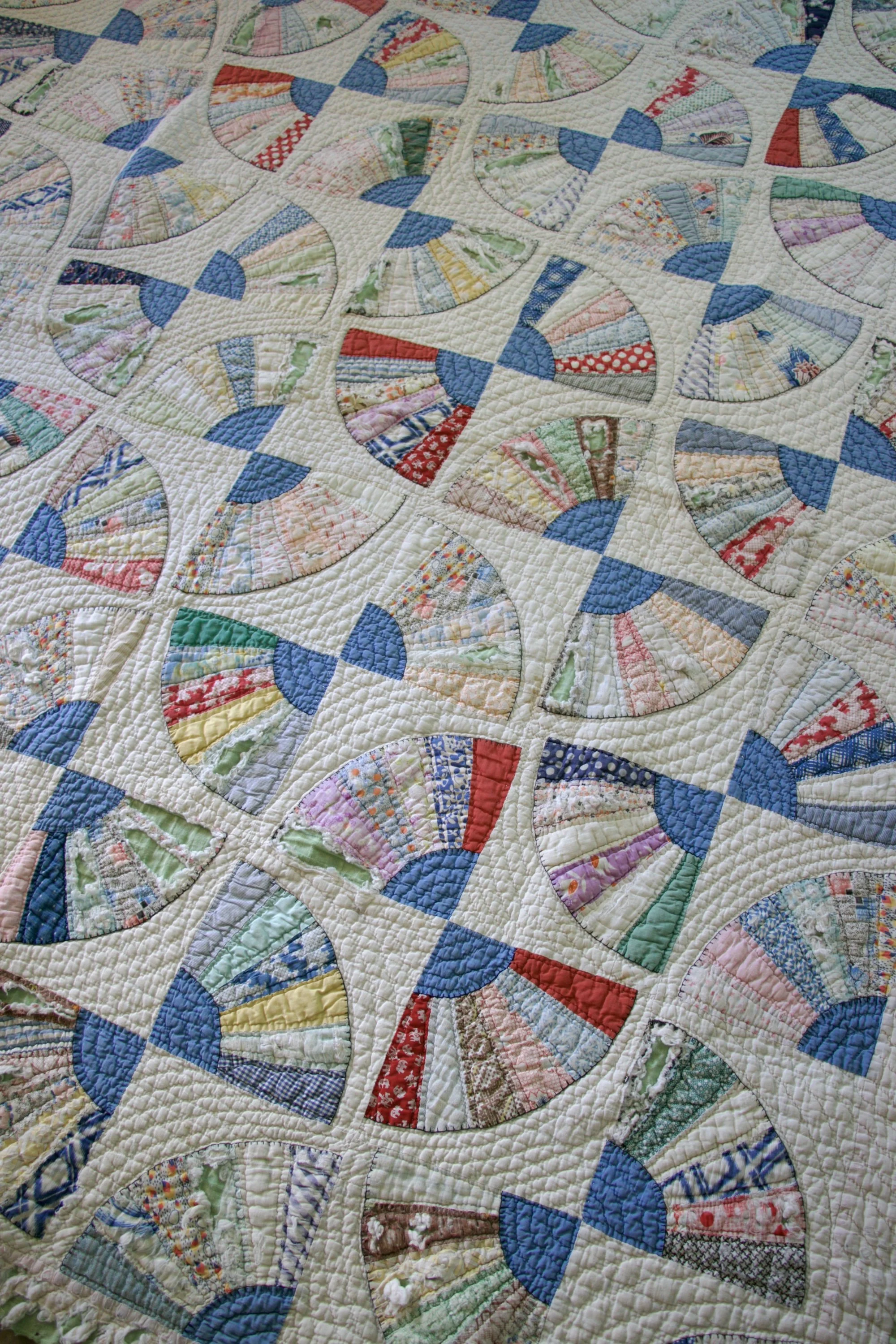
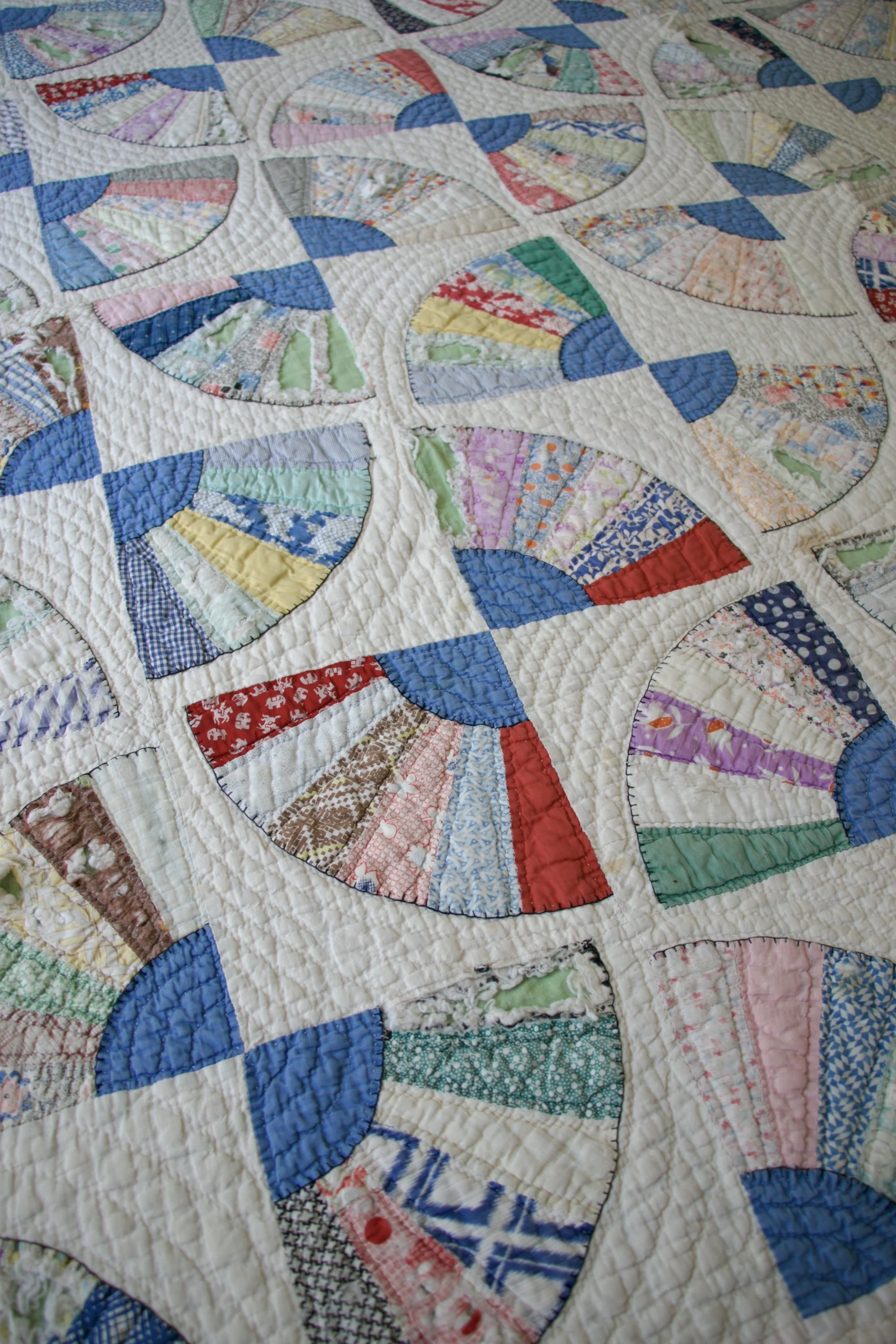
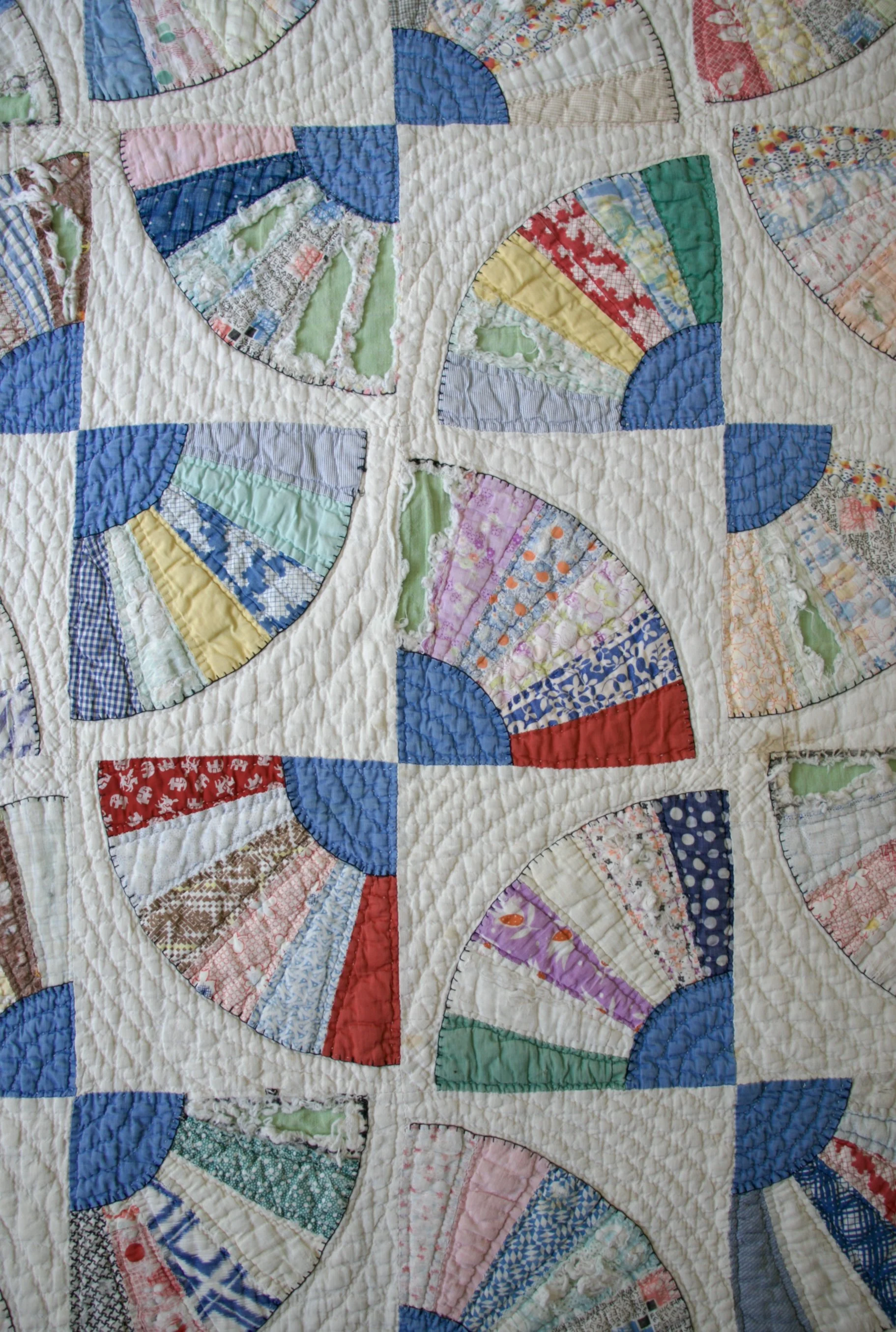
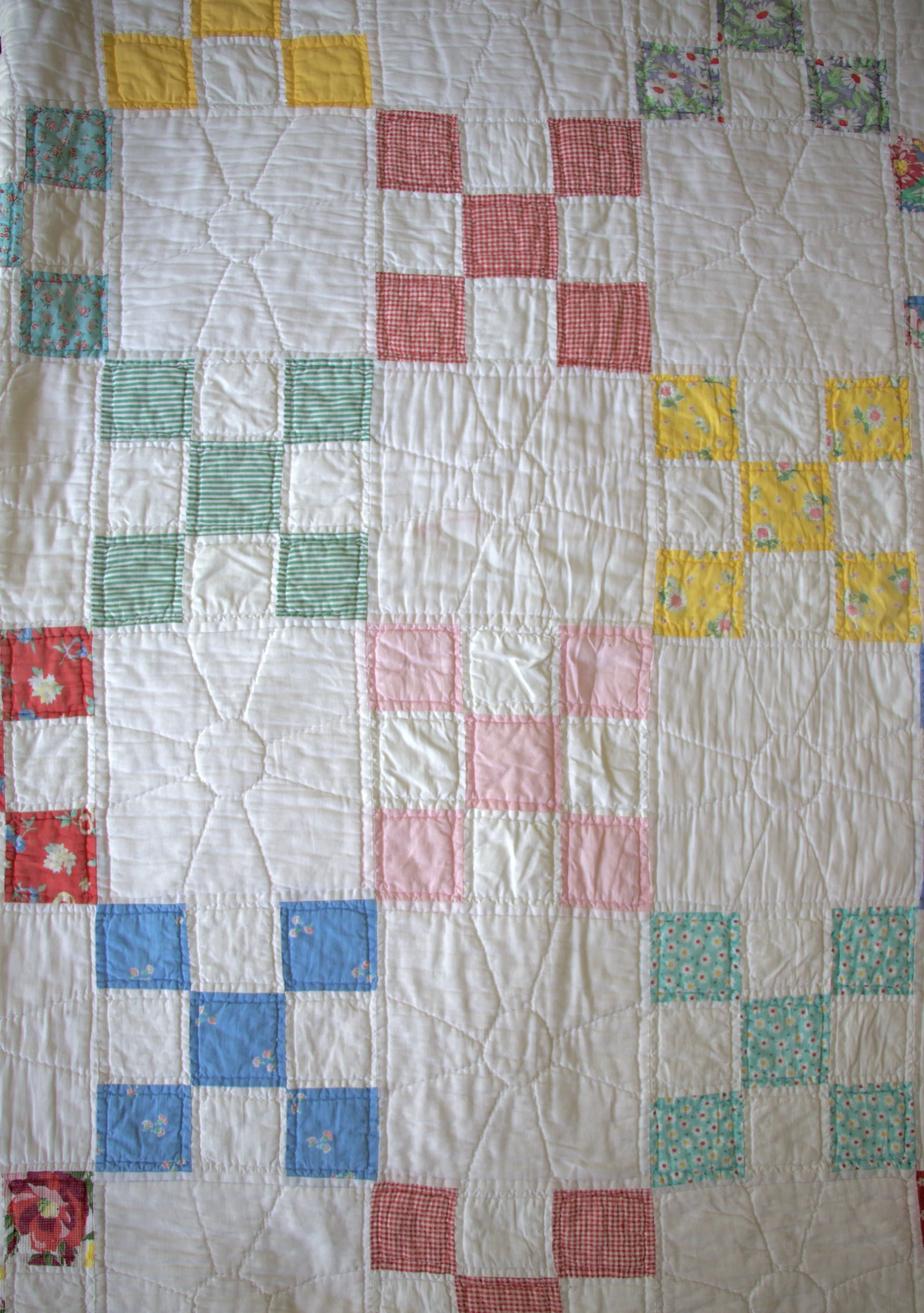
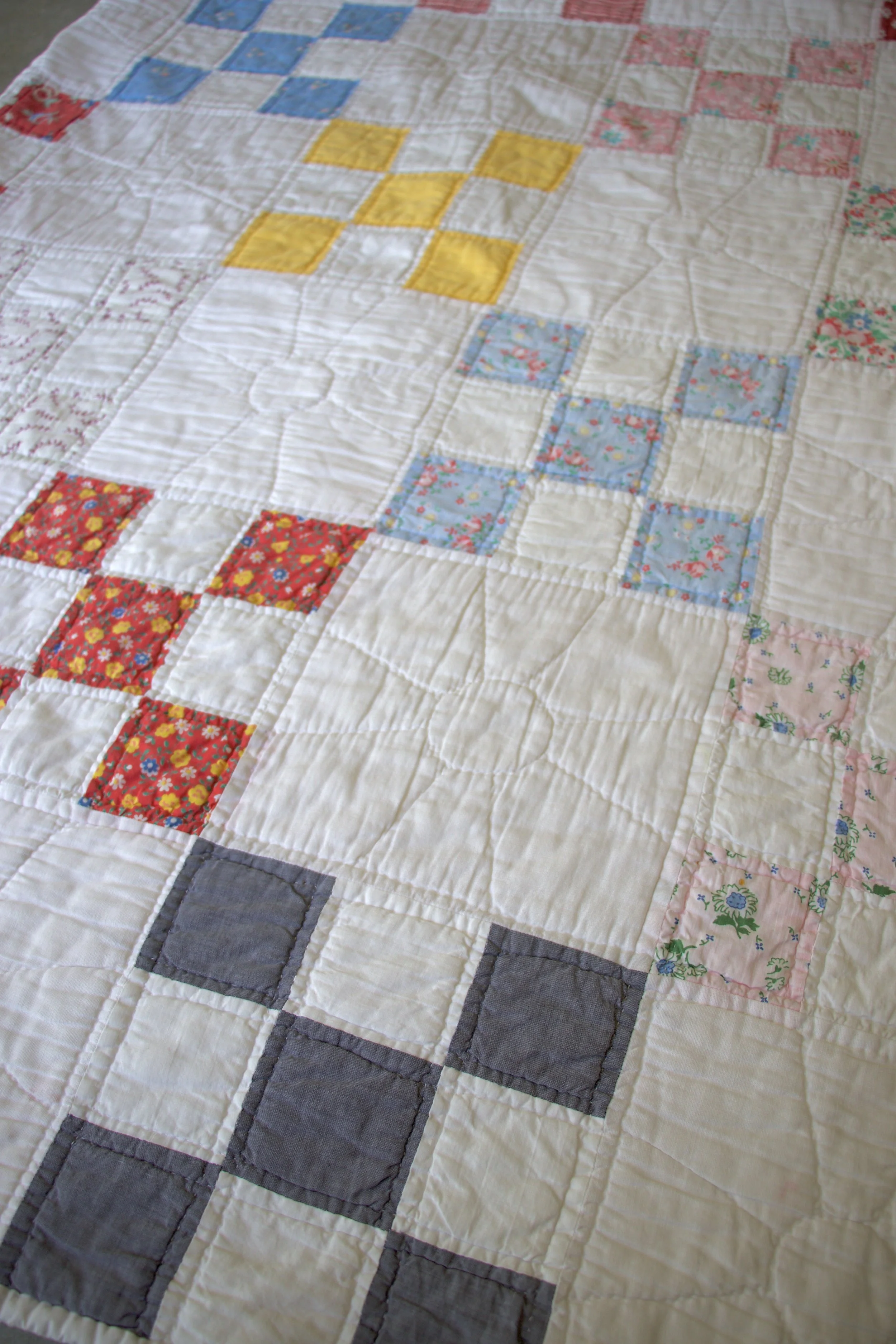
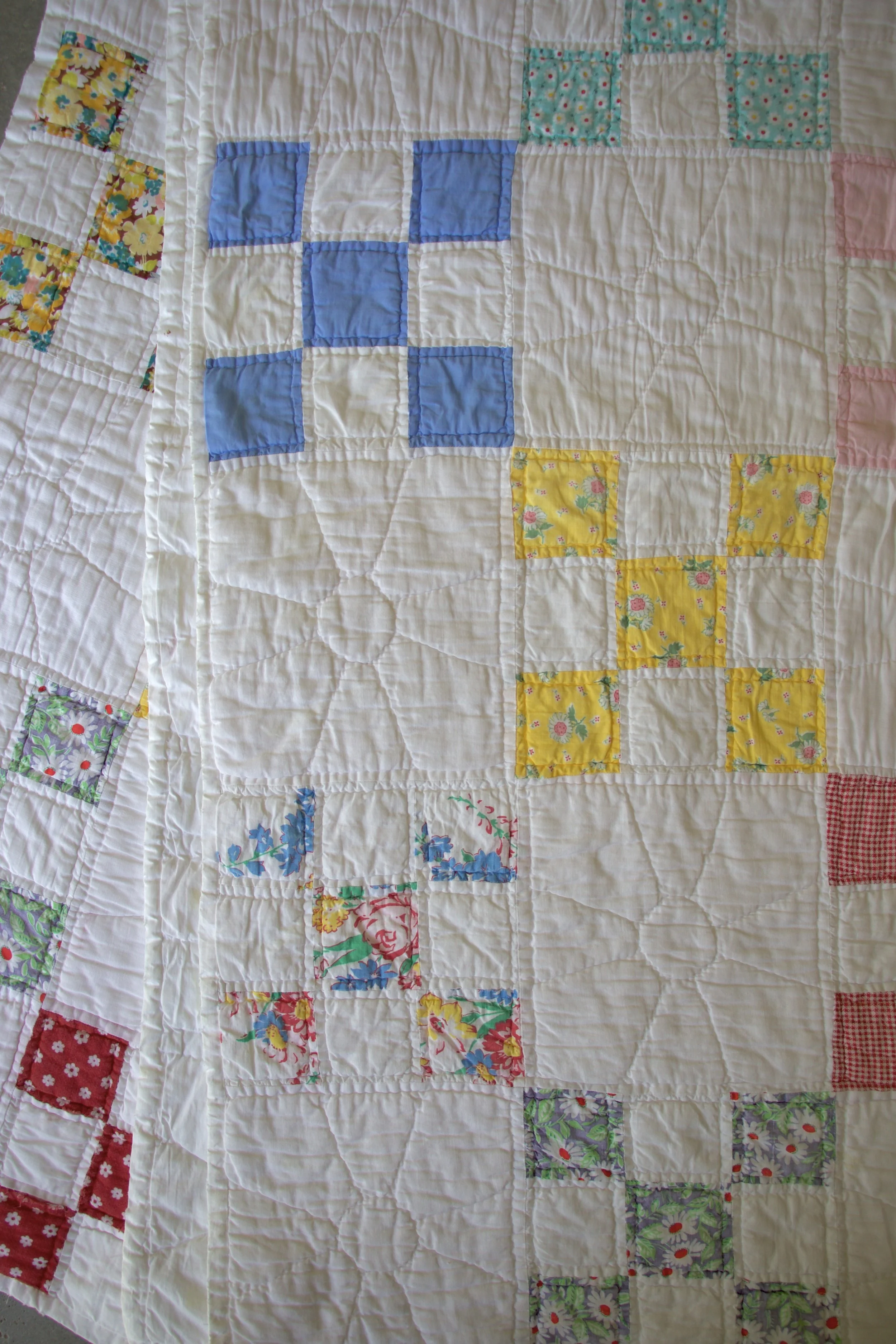
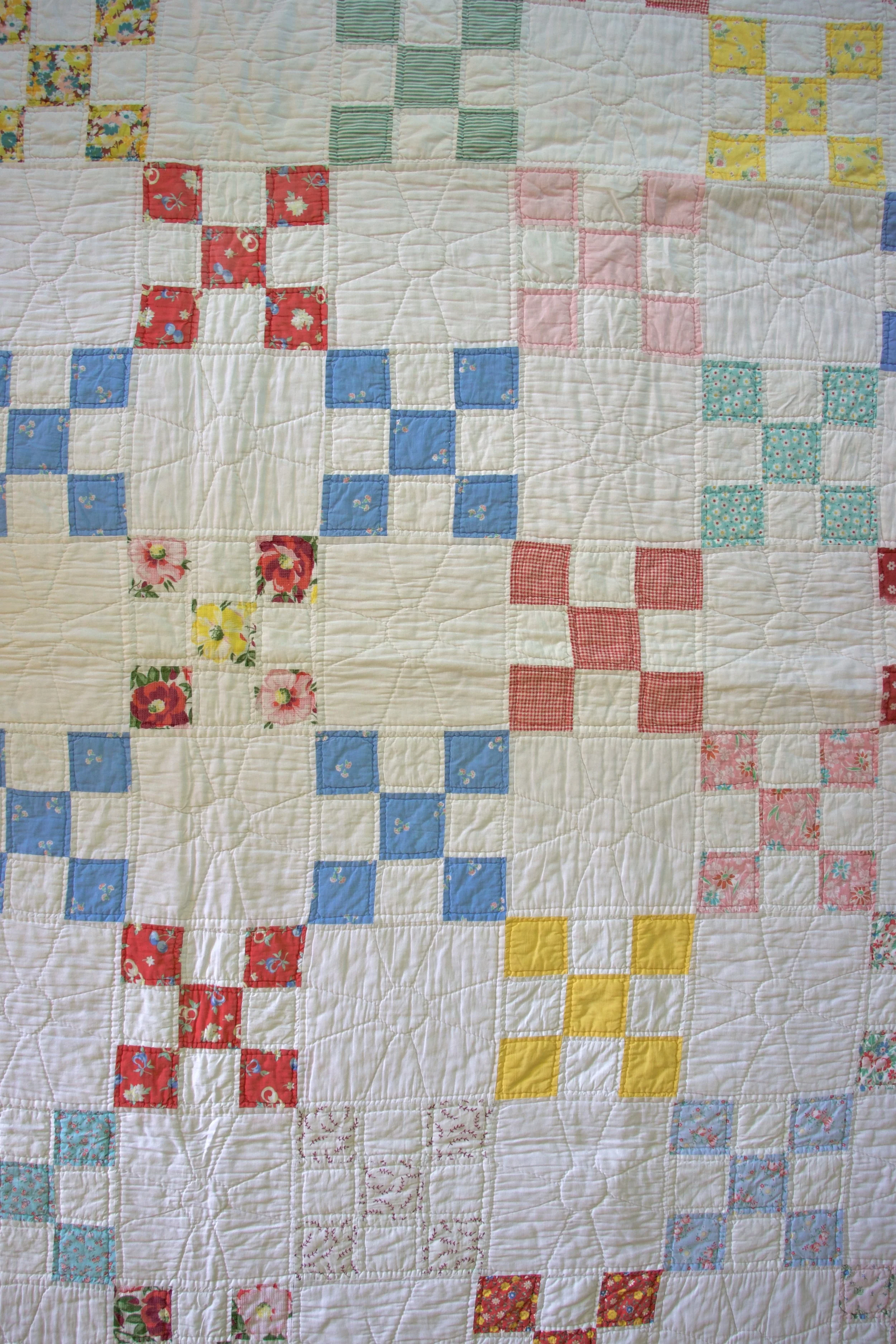
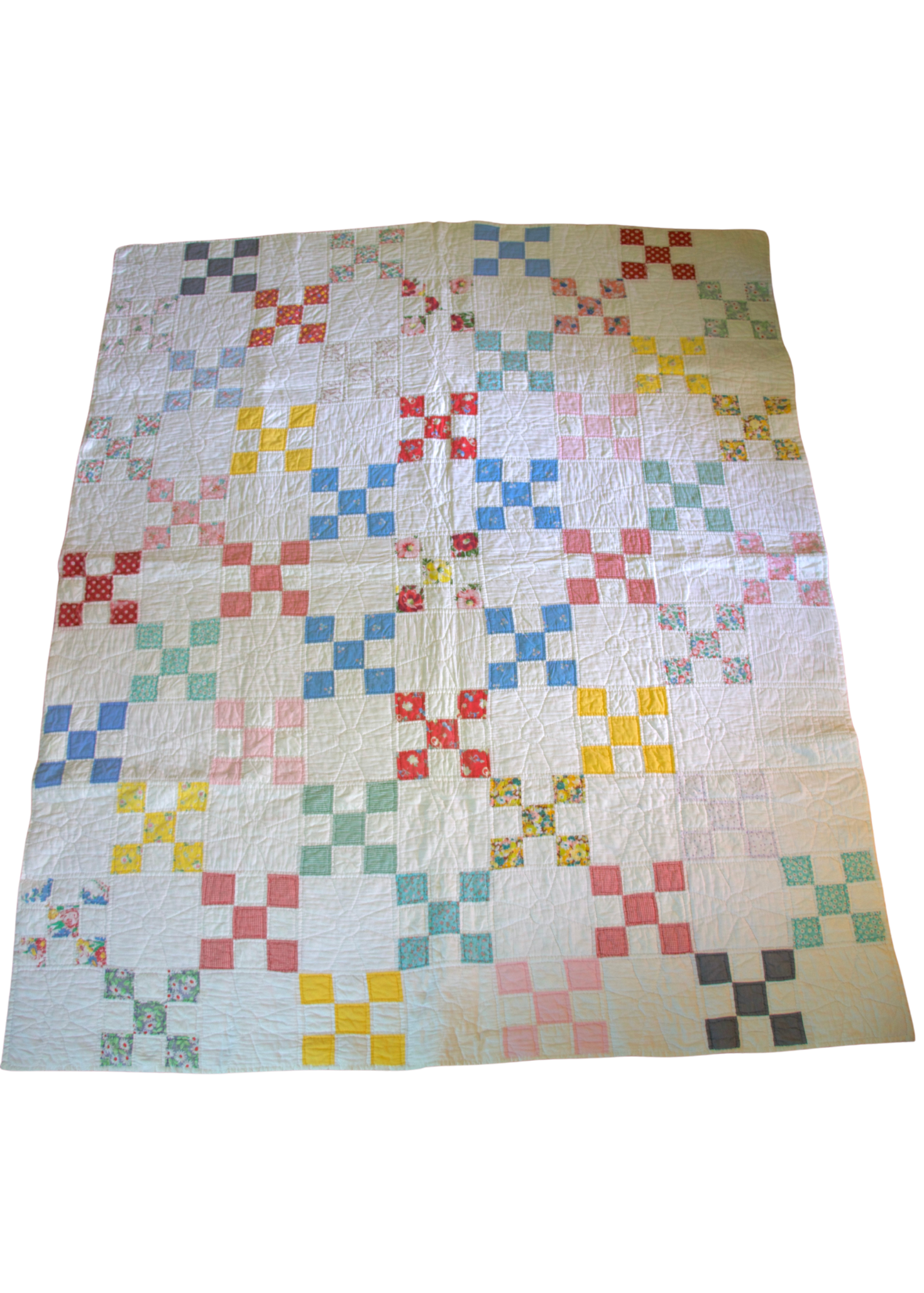
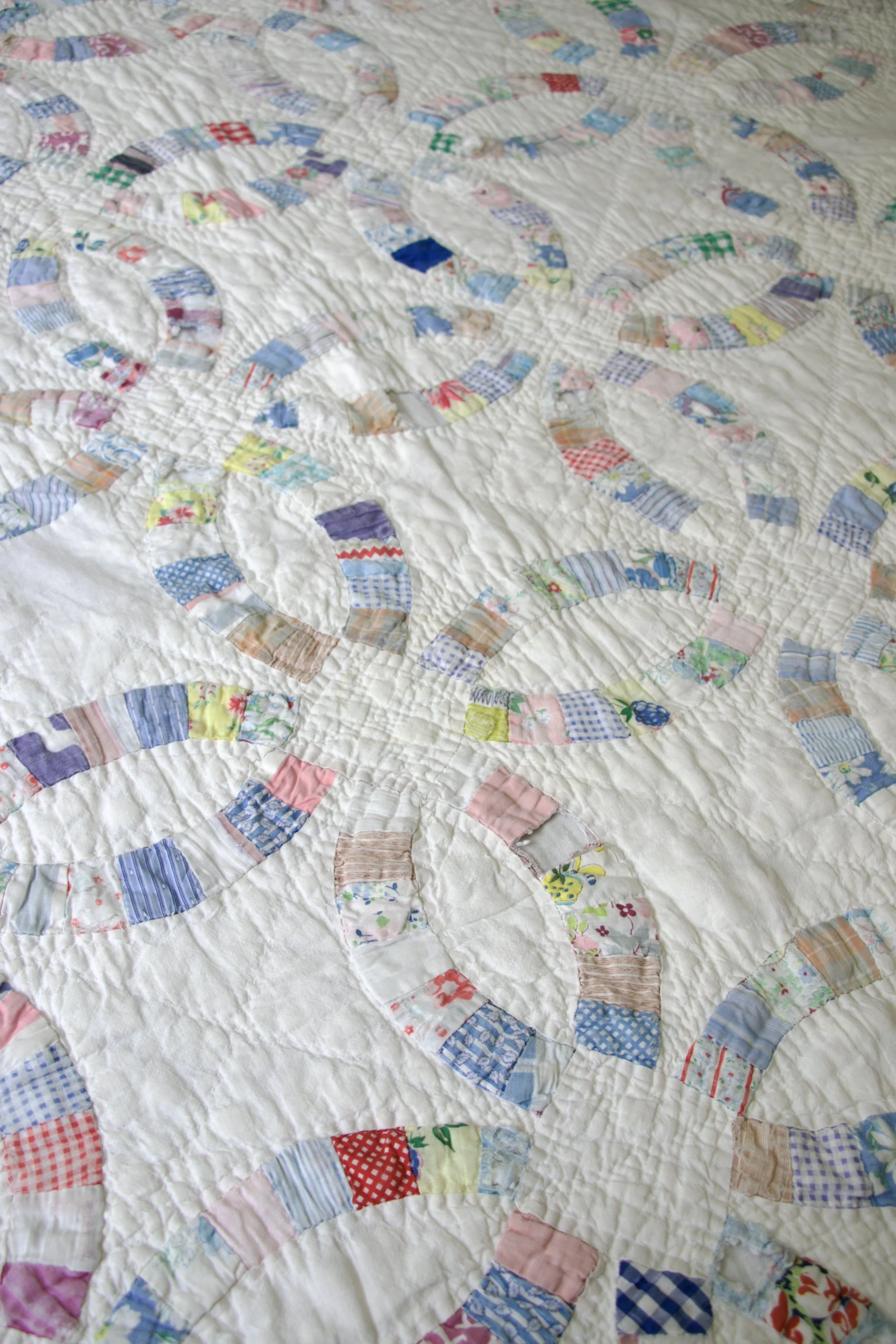
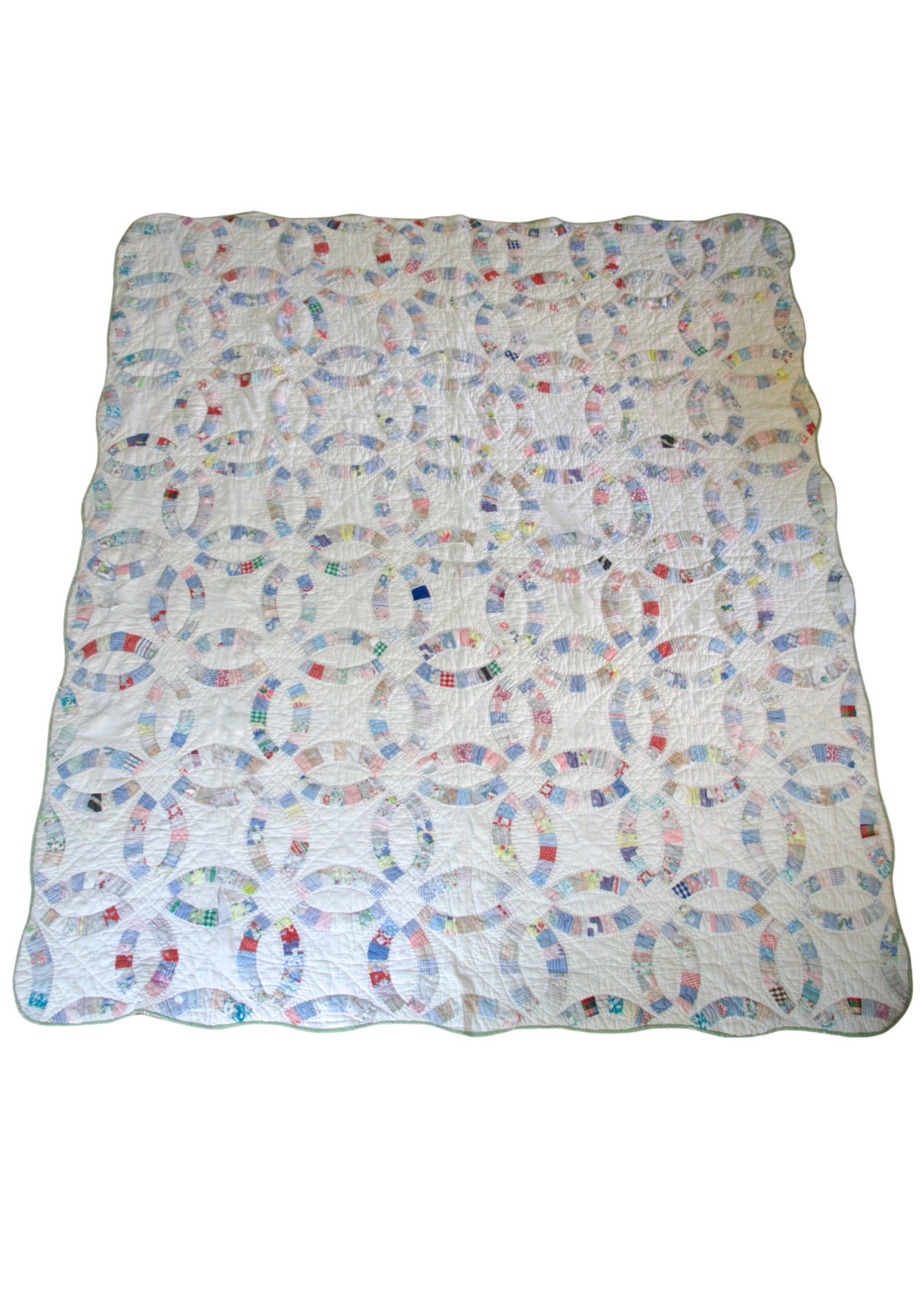
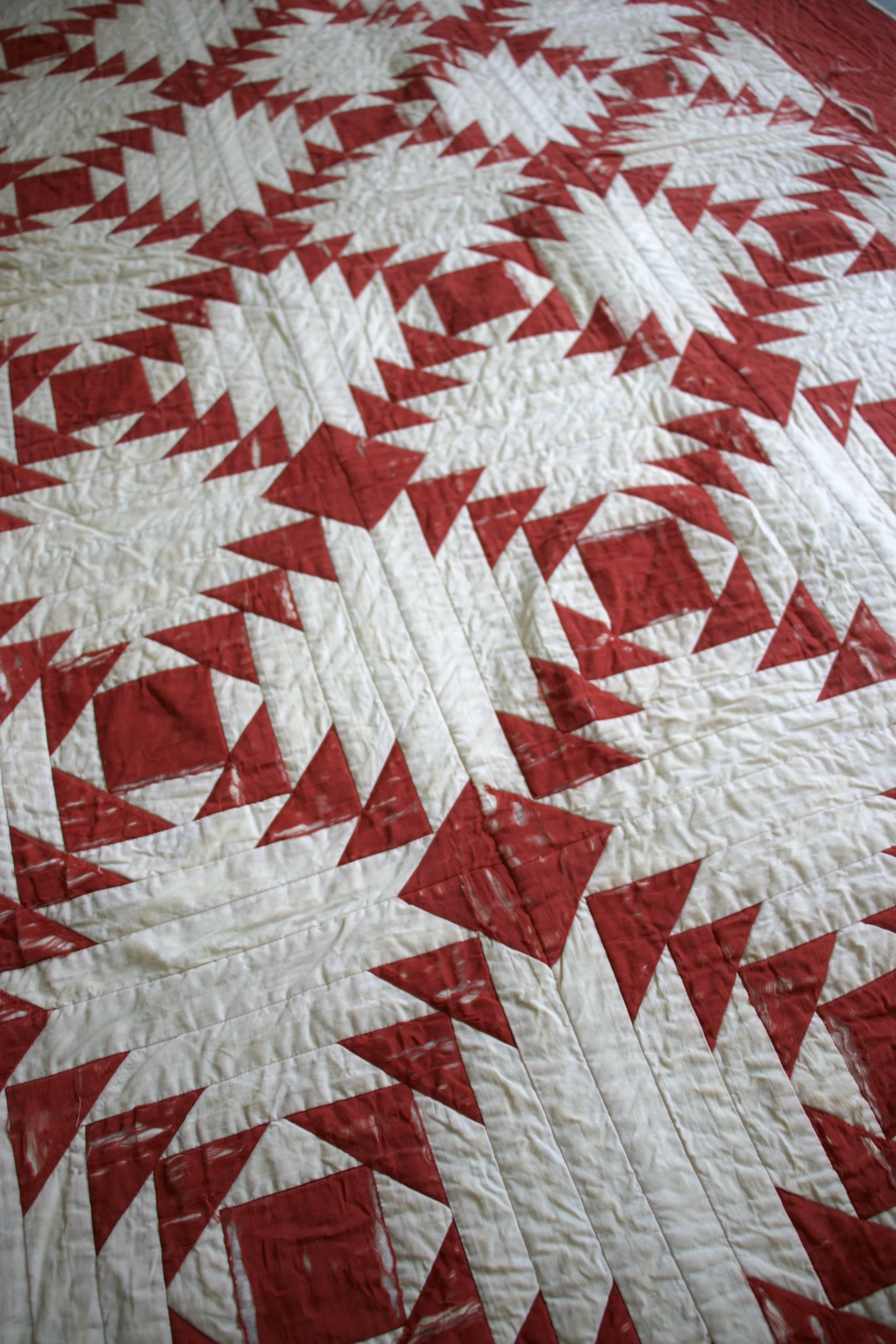
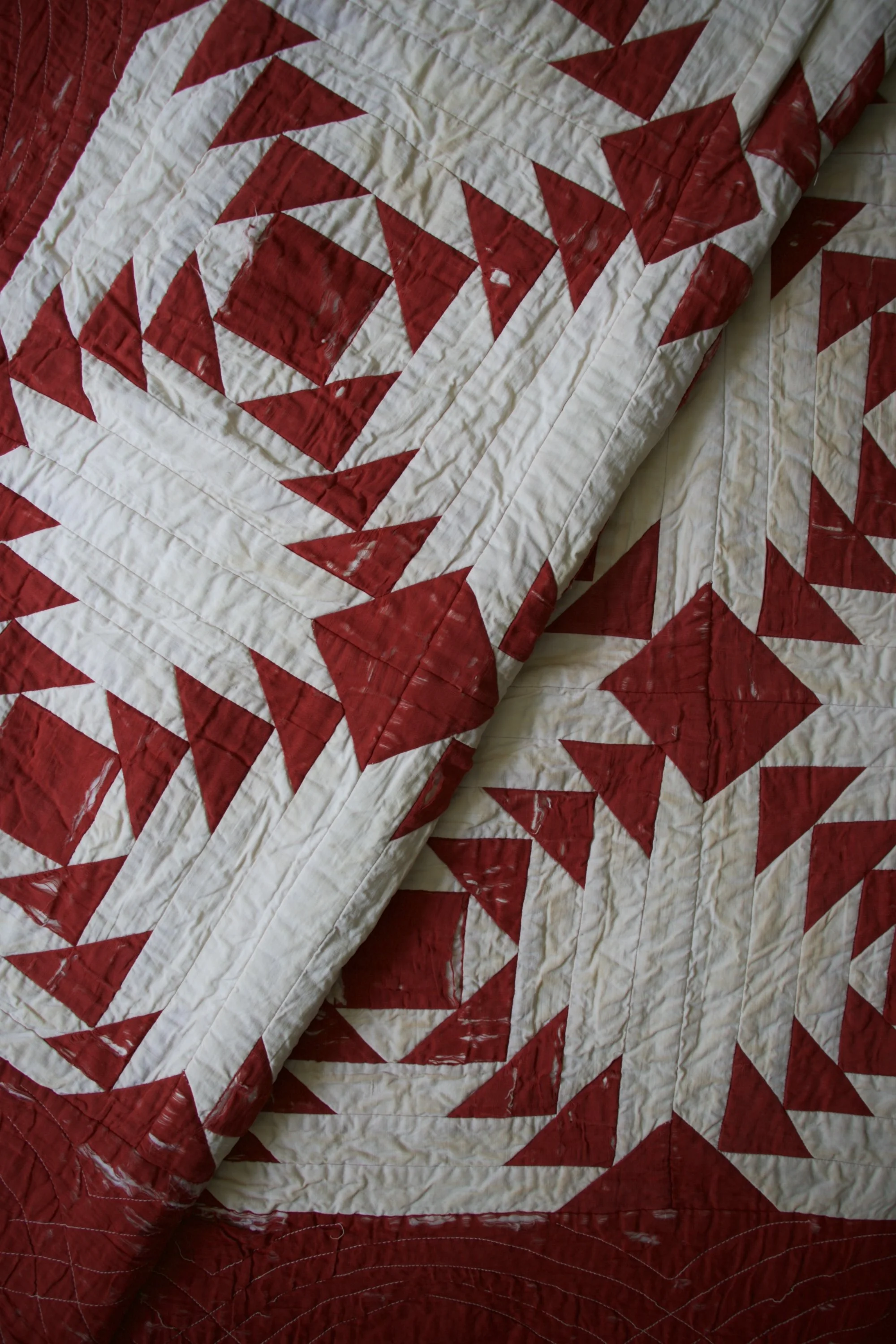
Hand pieced and hand quilted, this striking Lone Star variation quilt is composed of twelve dazzling star medallions set against a lively red floral ground. Each star radiates outward from a bold red center, built from dozens of tiny diamonds in a joyful mix of feedsack florals, plaids, stripes, and novelty prints in lavender, sky blue, butter yellow, cherry red, peach, and soft green. The maker gave each star its own distinct personality, creating a wonderfully scrappy composition while maintaining harmony through the repeated red centers and consistent floral setting fabric. Fine hand quilting adds soft texture throughout, while the worn edges and softened cotton speak to a life of genuine use. Both graphic and tender, it is a quilt full of movement, color, and the warmth of everyday American making.
Historical Period
Depression era / early mid-20th century American quiltmaking, circa 1930s–1940s
About the Pattern
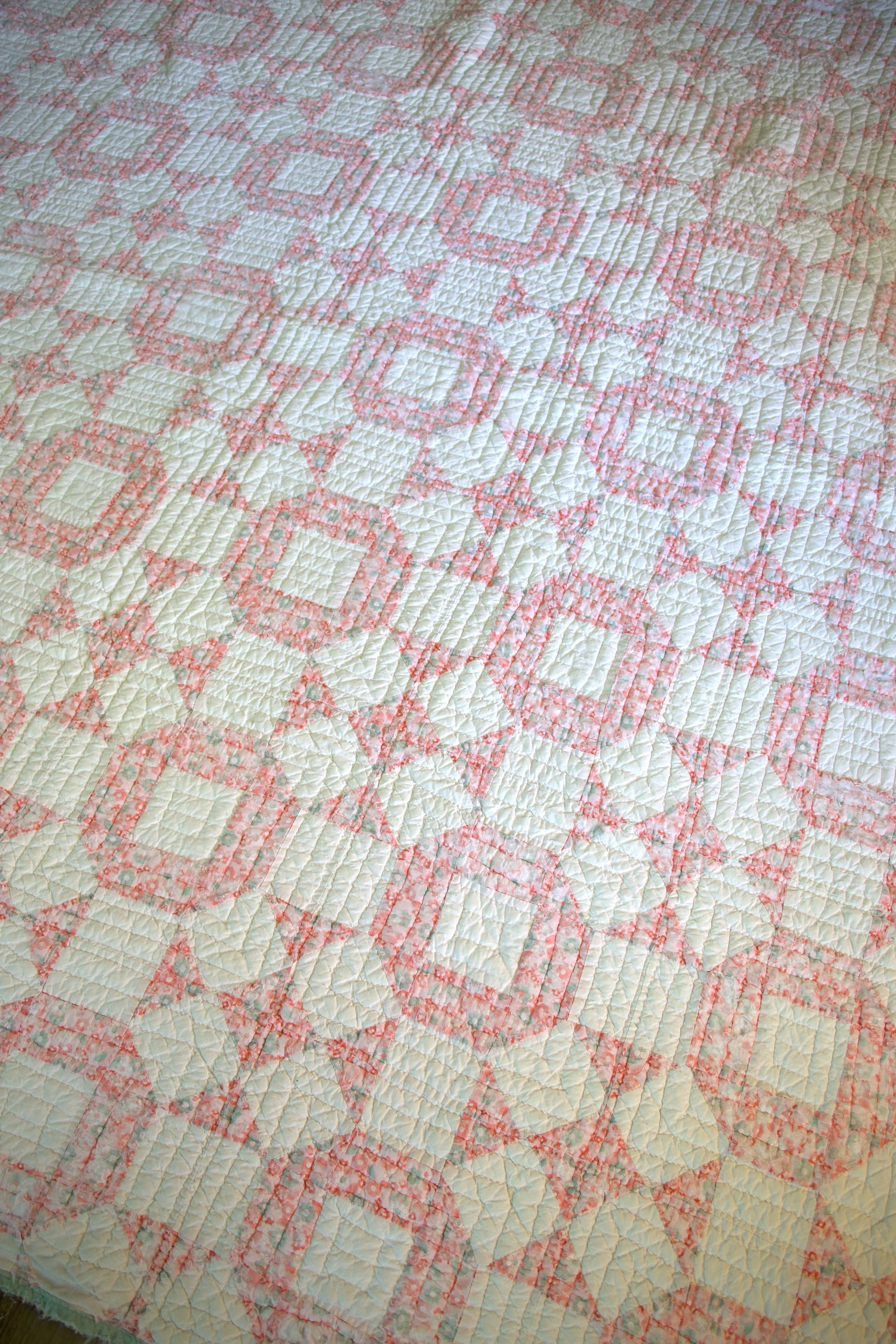
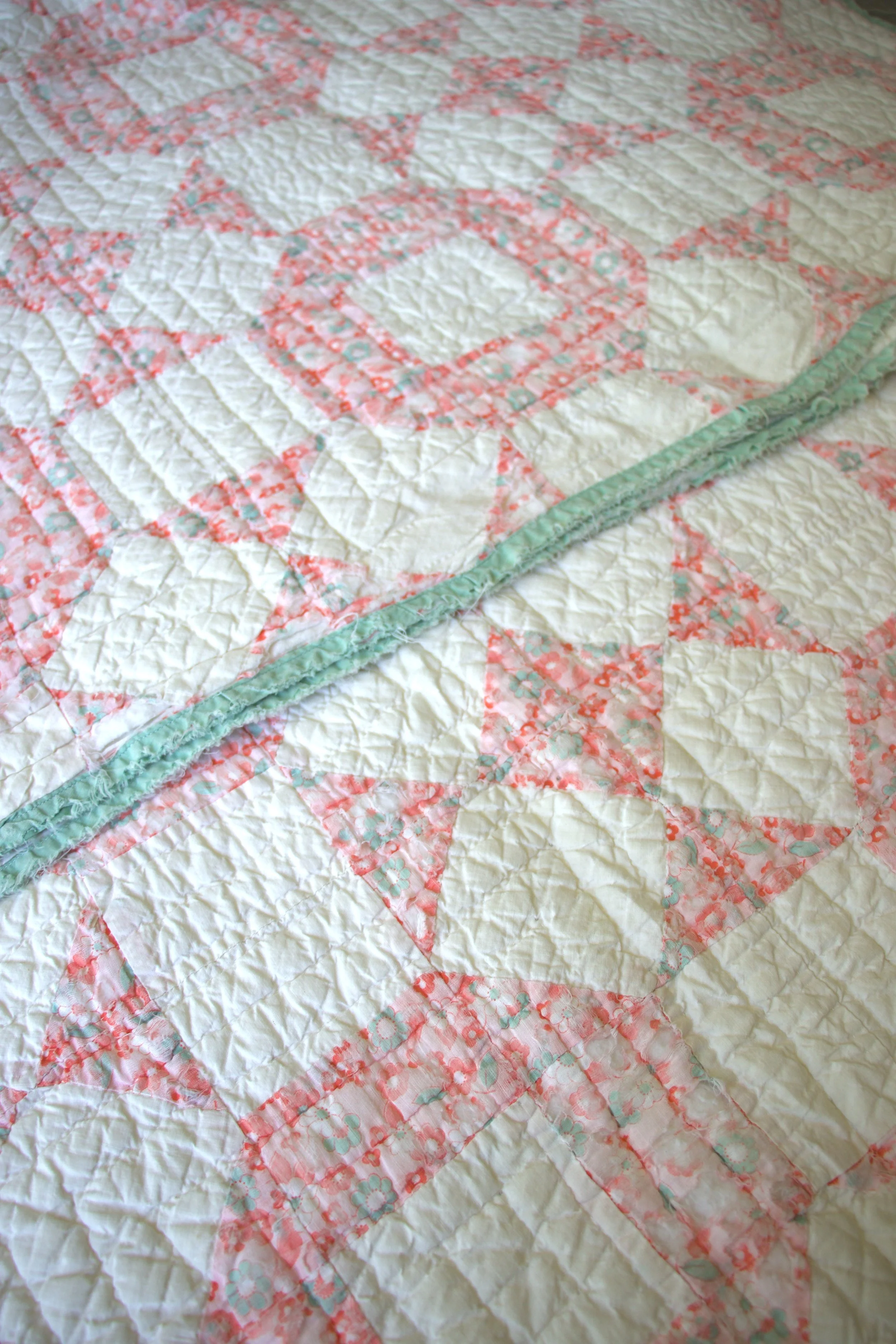
This quilt is best described as a Lone Star variation or Star of Bethlehem variation arranged in an allover field of individual medallion stars. Traditional Lone Star quilts are typically centered around one large star made from diamond-shaped pieces, but in this example the maker repeated the star motif across the entire quilt top, creating a dramatic constellation of twelve separate stars.
Each medallion is constructed from many small diamonds radiating from an eight-point center star, producing the layered, kaleidoscopic effect associated with the Lone Star family of patterns. The stars are joined by plain floral blocks that allow each medallion to stand out while also giving the quilt a playful, almost floating rhythm across the surface. The result is both highly geometric and deeply personal — a pattern rooted in tradition but interpreted with a scrappy, improvisational hand.
Fabric
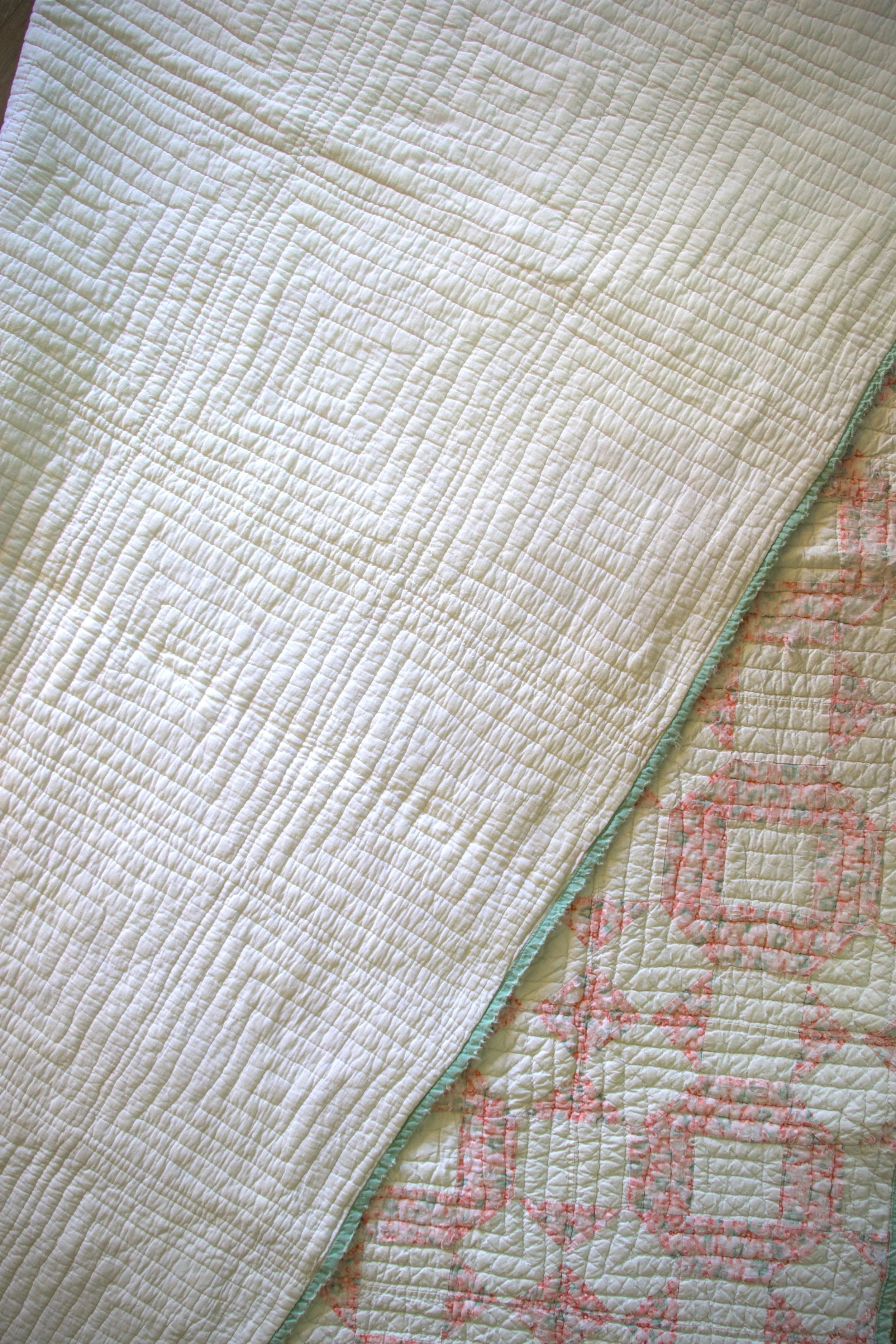
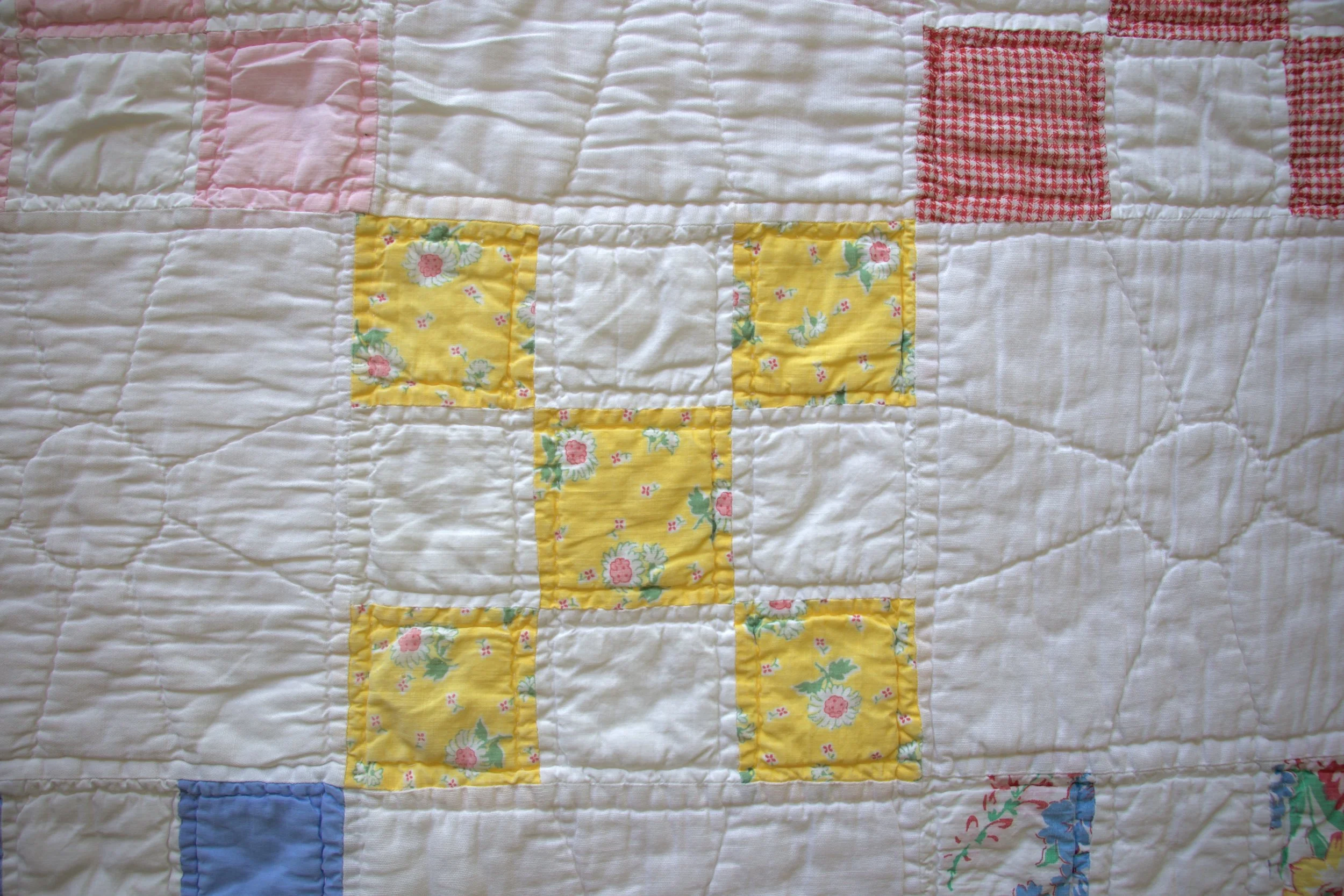
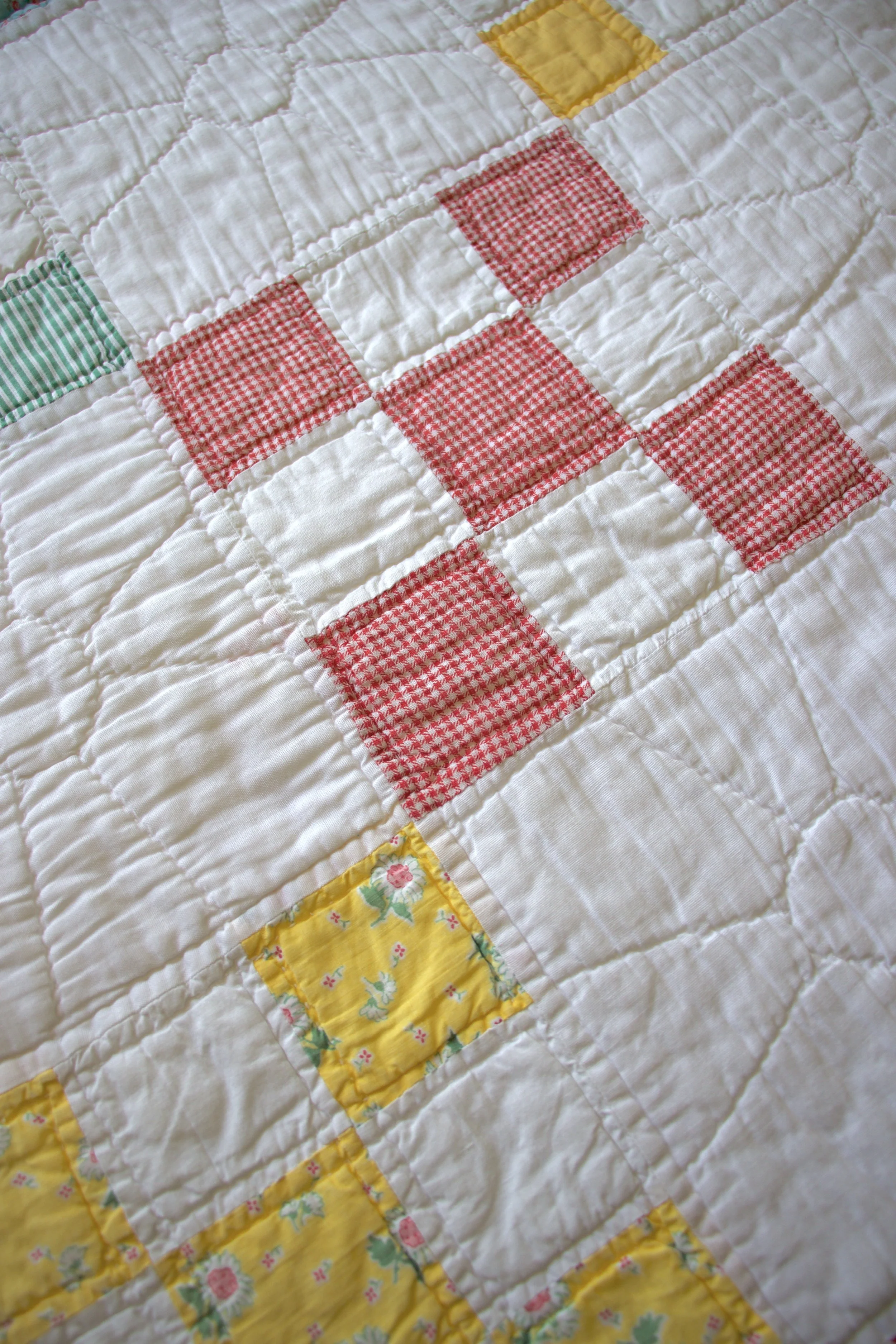
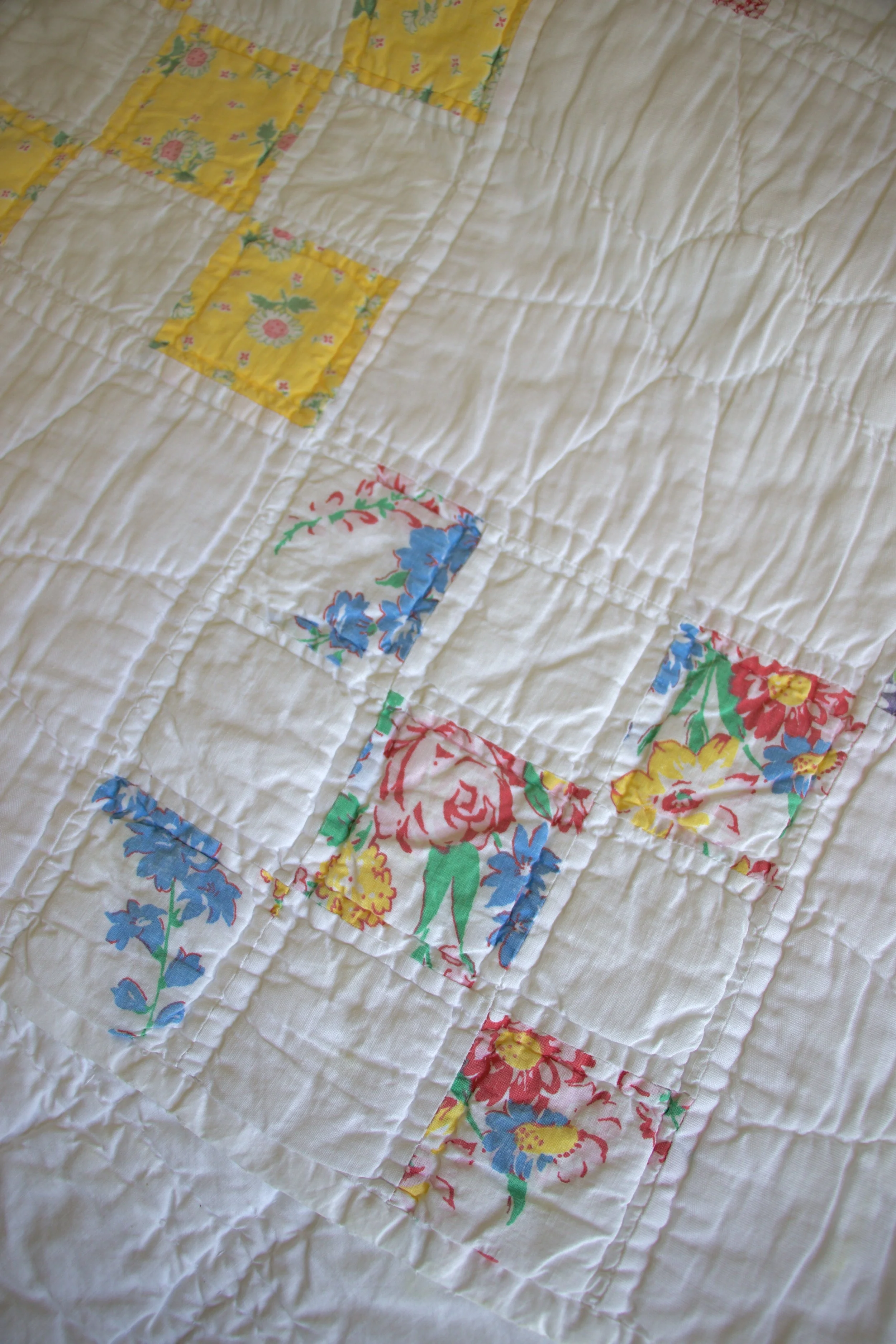
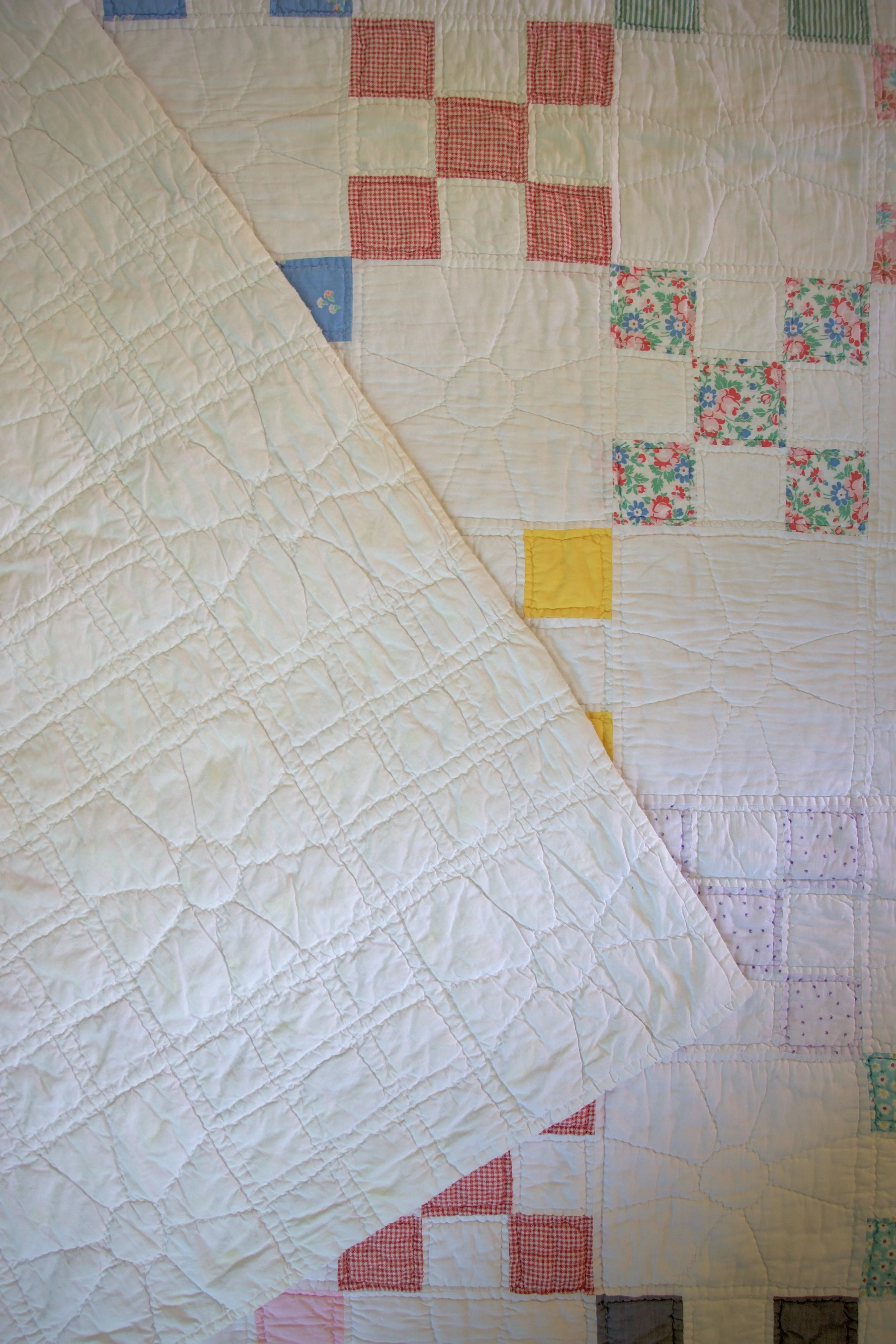
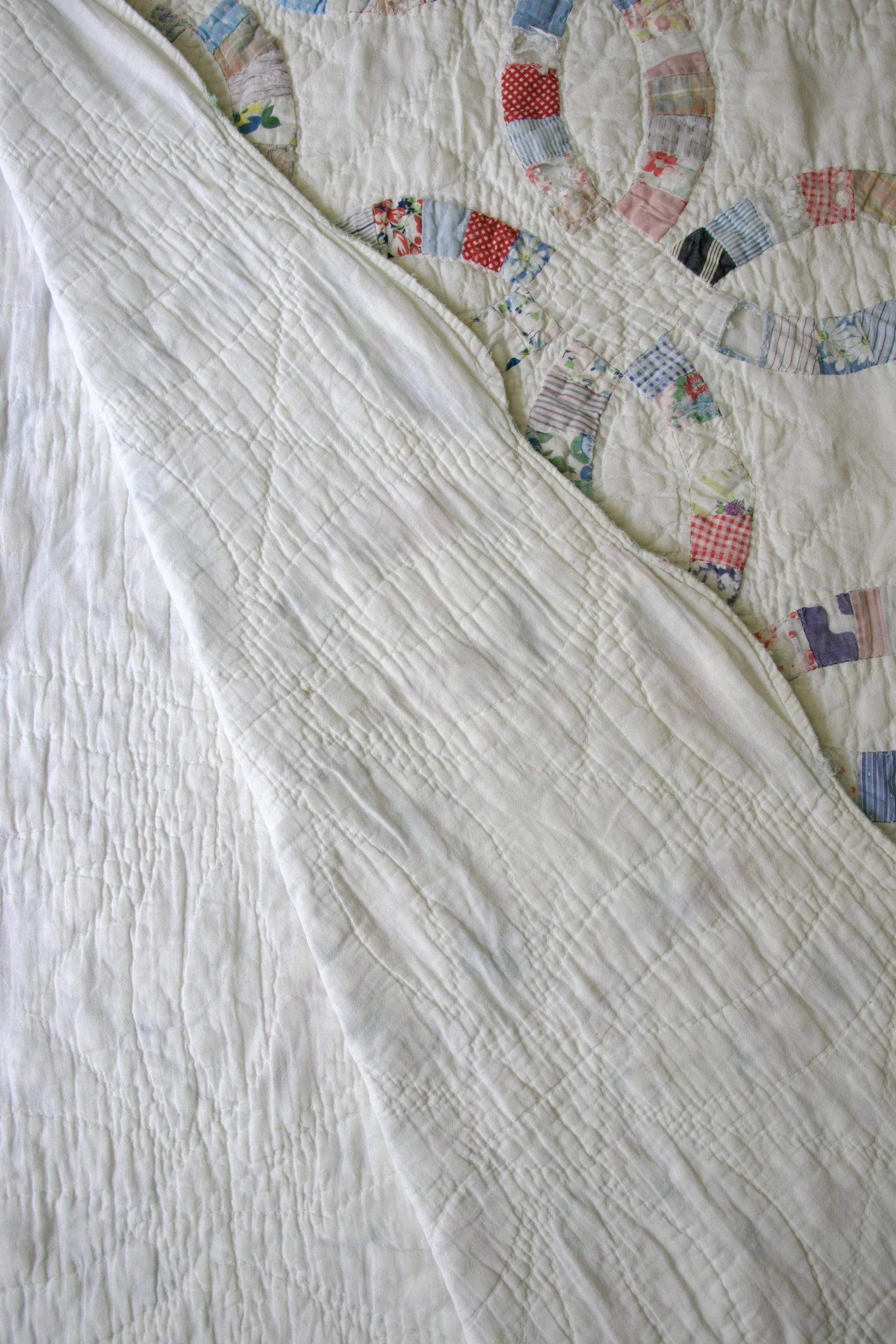
The fabrics strongly suggest a Depression-era to 1940s dating, with a rich assortment of small-scale florals, checks, stripes, novelty prints, and pastel cottons typical of feedsack and printed domestic fabrics of the period. The quilt’s palette — bright red centers paired with powder blue, lavender, pink, yellow, and soft green — is especially evocative of 1930s American quilting. The red floral setting fabric and the sweet pink bow-print backing reinforce that cheerful, homey sensibility. Altogether, the textile choices give the quilt its vivid, optimistic character and make it a wonderful study in period scrap use.
Condition
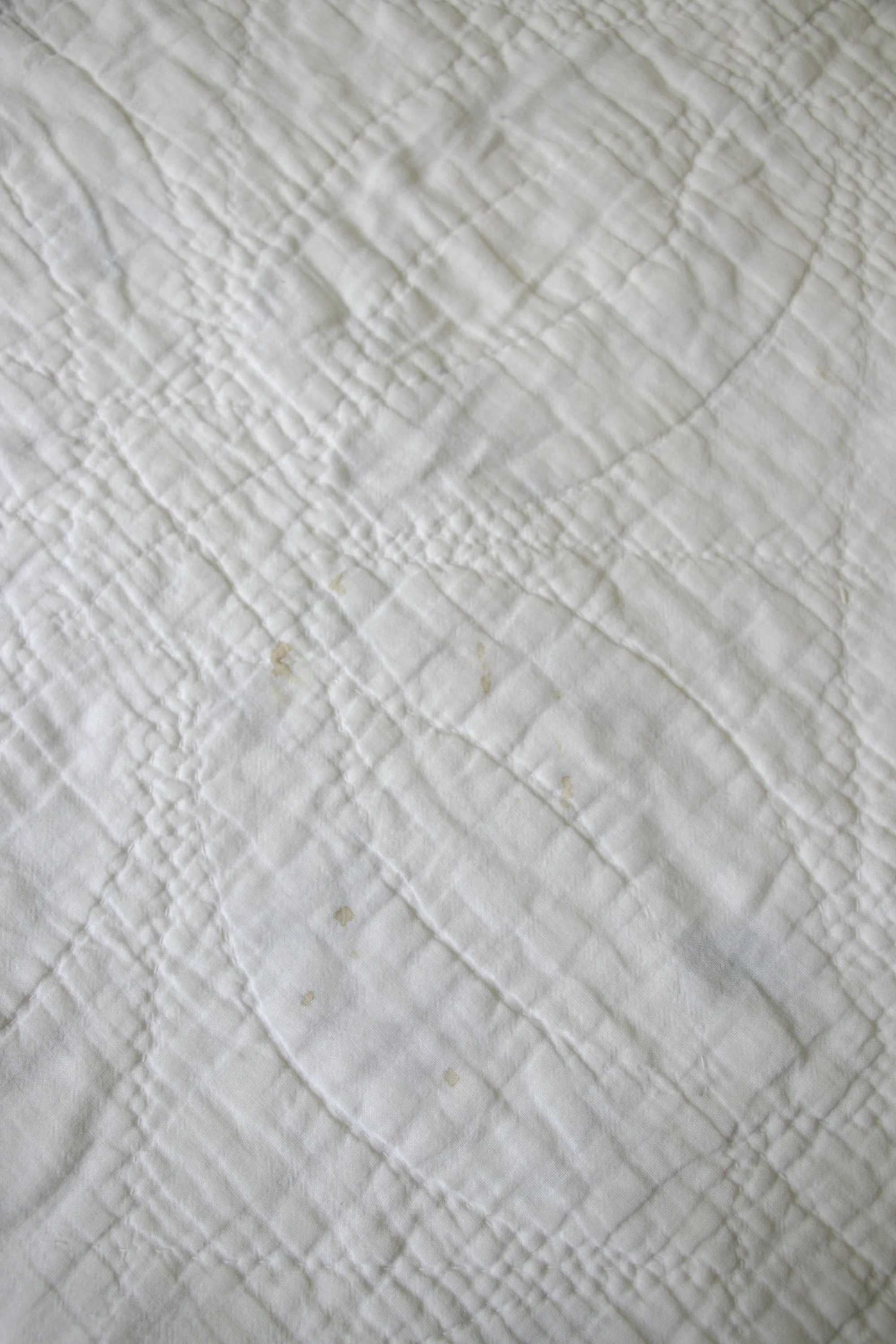
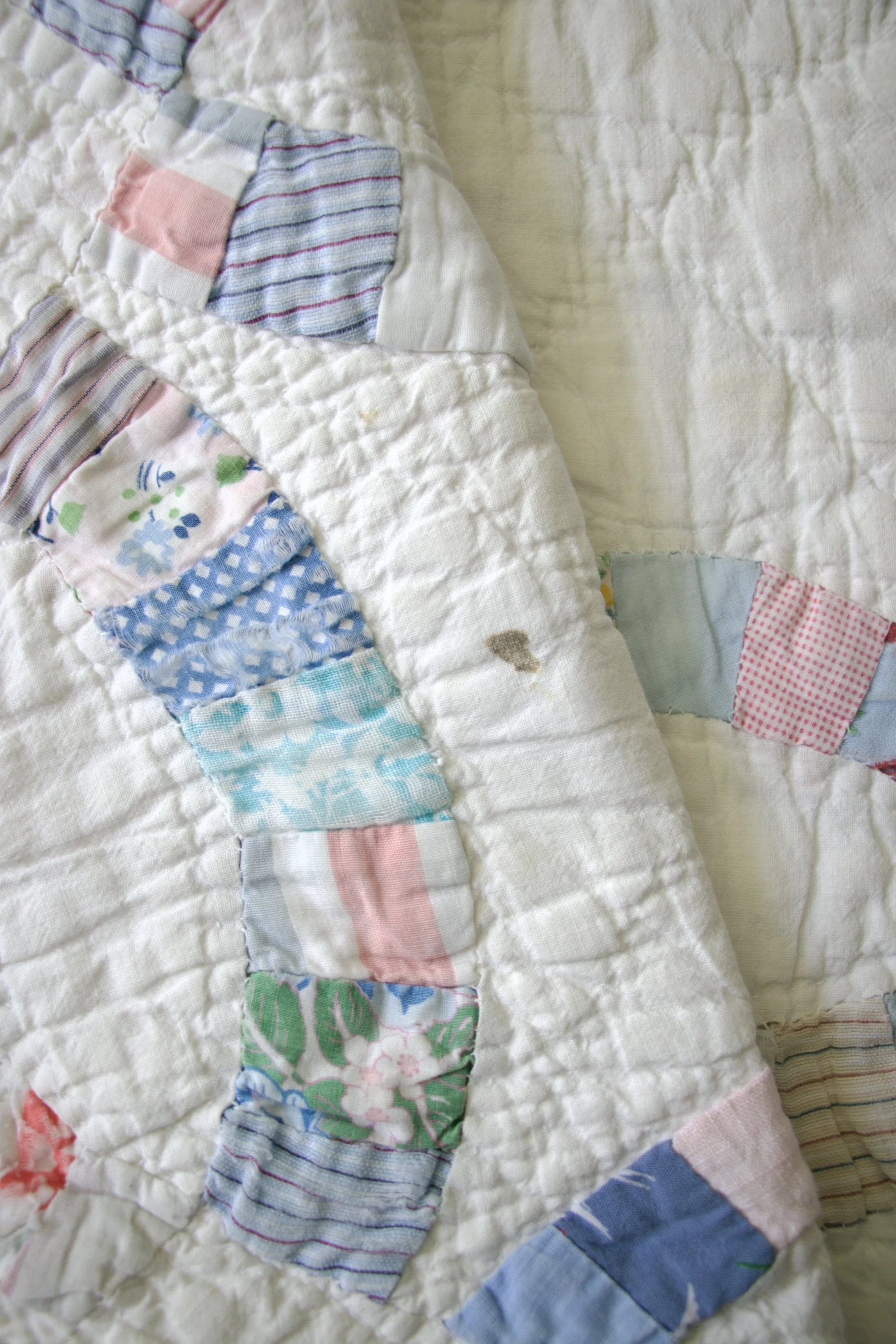
Shows significant age-related wear, including fraying, losses, and fabric breakdown along the edges and binding, with general softening and thinning throughout from long use. A well-loved antique quilt with visible wear that reflects its history as a utilitarian textile.
—————————————————————————————————-
*Disclaimer: Please remember that you’re purchasing a quilt that is decades—sometimes well over a century—old. Signs of age are part of their story. I do my best to photograph and describe any condition issues honestly.
You may find:
• Fading or discoloration
• Small stains or age spots
• Light wear, thinning, or fabric repairs
• Minor imperfections consistent with age and use
Each of these are little piece of American history—stitched by hand from cotton, feed sacks, flour sacks, clothing, and treasured scraps by women who made beauty from what they had. Every quilt carries a story, and it’s been an honor to help preserve these heirlooms for the next generation.
ALL QUILT SALES ARE FINAL - NO REFUNDS OR RETURNS, QUILTS ARE SOLD AS IS.
Circa 1930-1940
Heavy Weight
Pattern: Lonestar Variation
Condition: Well-loved. Shows significant age-related wear, including fraying, losses, and fabric breakdown along the edges and binding, with general softening and thinning throughout from long use.
Hand pieced and hand quilted, this striking Lone Star variation quilt is composed of twelve dazzling star medallions set against a lively red floral ground. Each star radiates outward from a bold red center, built from dozens of tiny diamonds in a joyful mix of feedsack florals, plaids, stripes, and novelty prints in lavender, sky blue, butter yellow, cherry red, peach, and soft green. The maker gave each star its own distinct personality, creating a wonderfully scrappy composition while maintaining harmony through the repeated red centers and consistent floral setting fabric. Fine hand quilting adds soft texture throughout, while the worn edges and softened cotton speak to a life of genuine use. Both graphic and tender, it is a quilt full of movement, color, and the warmth of everyday American making.
Historical Period
Depression era / early mid-20th century American quiltmaking, circa 1930s–1940s
About the Pattern
This quilt is best described as a Lone Star variation or Star of Bethlehem variation arranged in an allover field of individual medallion stars. Traditional Lone Star quilts are typically centered around one large star made from diamond-shaped pieces, but in this example the maker repeated the star motif across the entire quilt top, creating a dramatic constellation of twelve separate stars.
Each medallion is constructed from many small diamonds radiating from an eight-point center star, producing the layered, kaleidoscopic effect associated with the Lone Star family of patterns. The stars are joined by plain floral blocks that allow each medallion to stand out while also giving the quilt a playful, almost floating rhythm across the surface. The result is both highly geometric and deeply personal — a pattern rooted in tradition but interpreted with a scrappy, improvisational hand.
Fabric
The fabrics strongly suggest a Depression-era to 1940s dating, with a rich assortment of small-scale florals, checks, stripes, novelty prints, and pastel cottons typical of feedsack and printed domestic fabrics of the period. The quilt’s palette — bright red centers paired with powder blue, lavender, pink, yellow, and soft green — is especially evocative of 1930s American quilting. The red floral setting fabric and the sweet pink bow-print backing reinforce that cheerful, homey sensibility. Altogether, the textile choices give the quilt its vivid, optimistic character and make it a wonderful study in period scrap use.
Condition
Shows significant age-related wear, including fraying, losses, and fabric breakdown along the edges and binding, with general softening and thinning throughout from long use. A well-loved antique quilt with visible wear that reflects its history as a utilitarian textile.
—————————————————————————————————-
*Disclaimer: Please remember that you’re purchasing a quilt that is decades—sometimes well over a century—old. Signs of age are part of their story. I do my best to photograph and describe any condition issues honestly.
You may find:
• Fading or discoloration
• Small stains or age spots
• Light wear, thinning, or fabric repairs
• Minor imperfections consistent with age and use
Each of these are little piece of American history—stitched by hand from cotton, feed sacks, flour sacks, clothing, and treasured scraps by women who made beauty from what they had. Every quilt carries a story, and it’s been an honor to help preserve these heirlooms for the next generation.
ALL QUILT SALES ARE FINAL - NO REFUNDS OR RETURNS, QUILTS ARE SOLD AS IS.

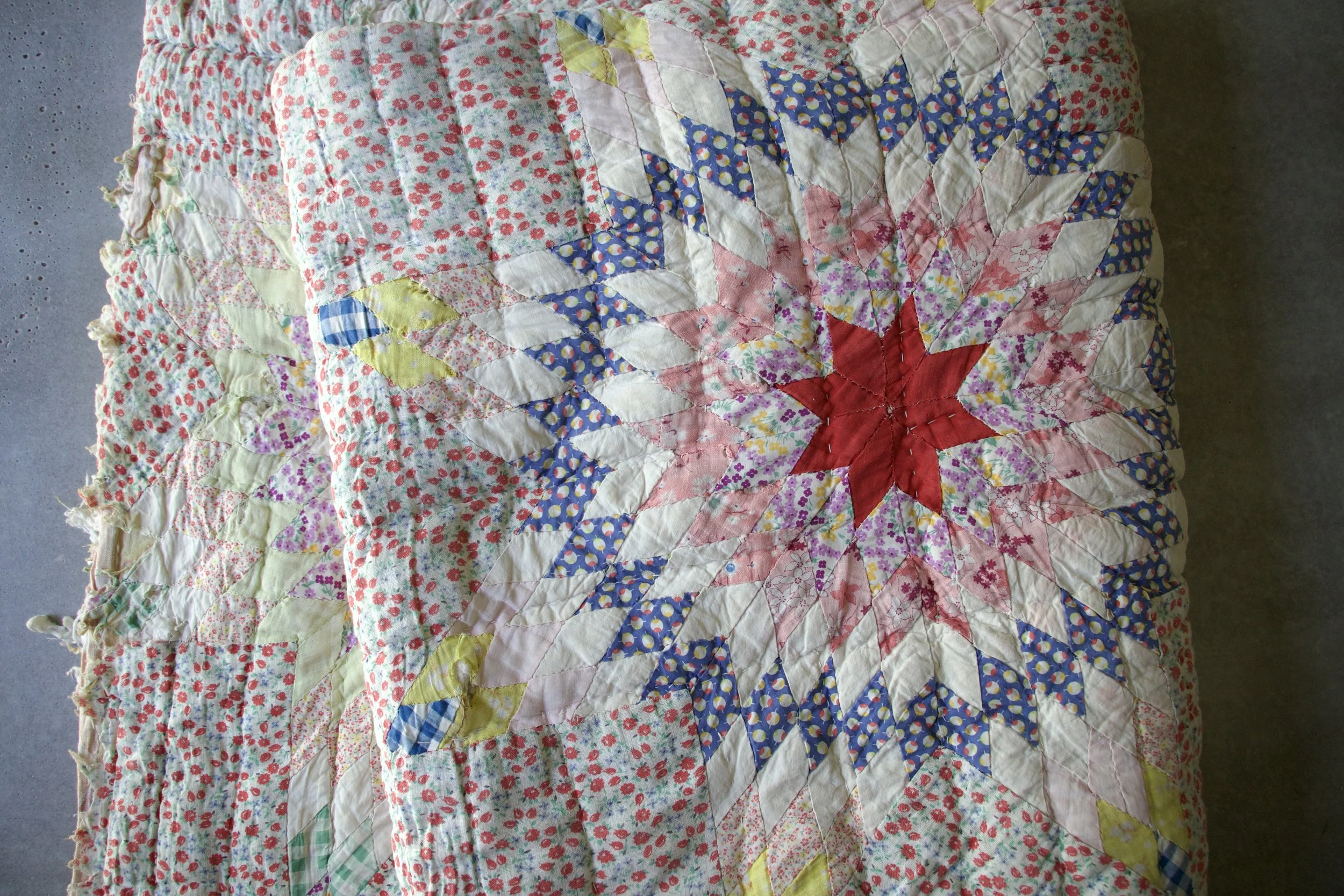 Image 1 of 7
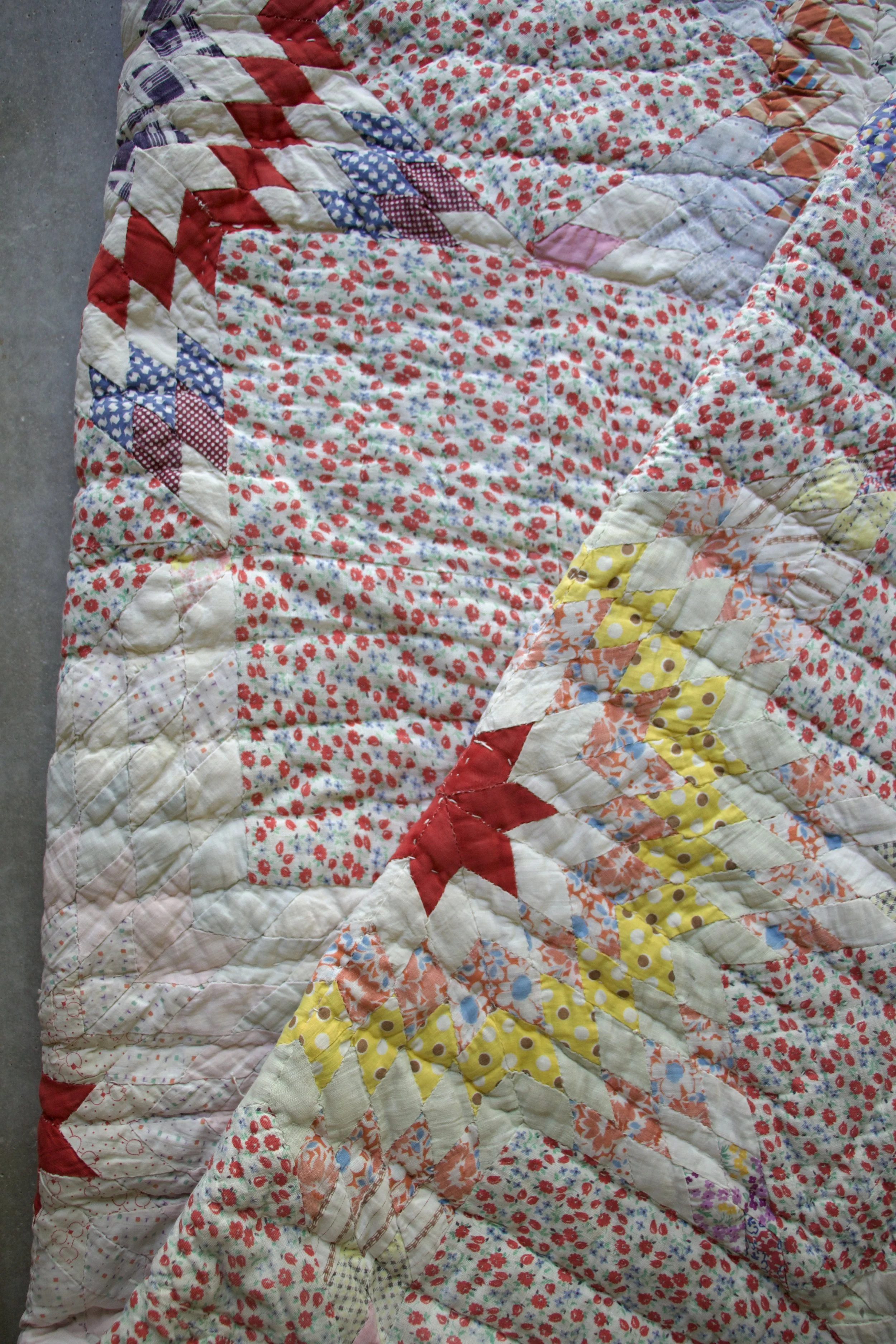 Image 2 of 7
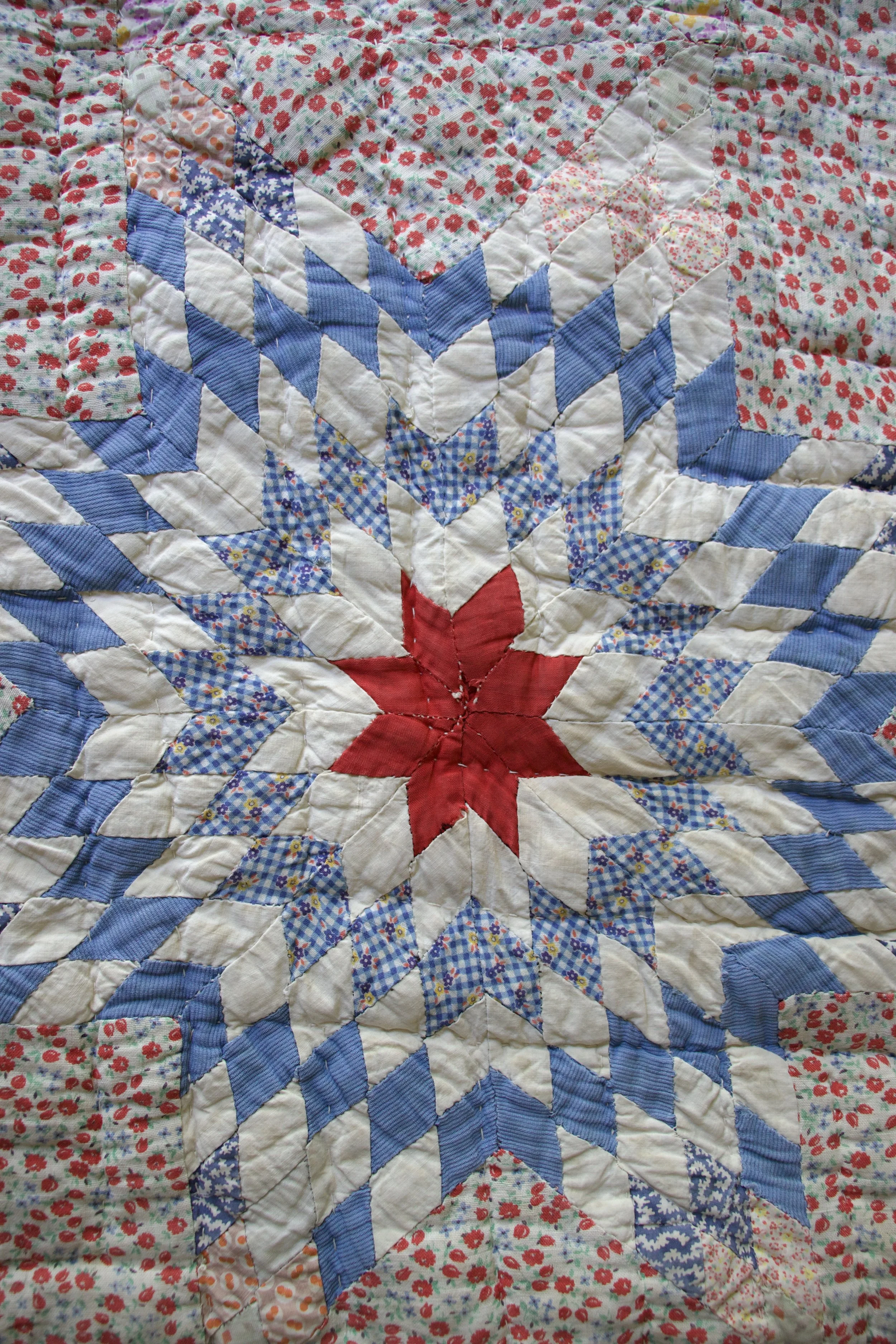 Image 3 of 7
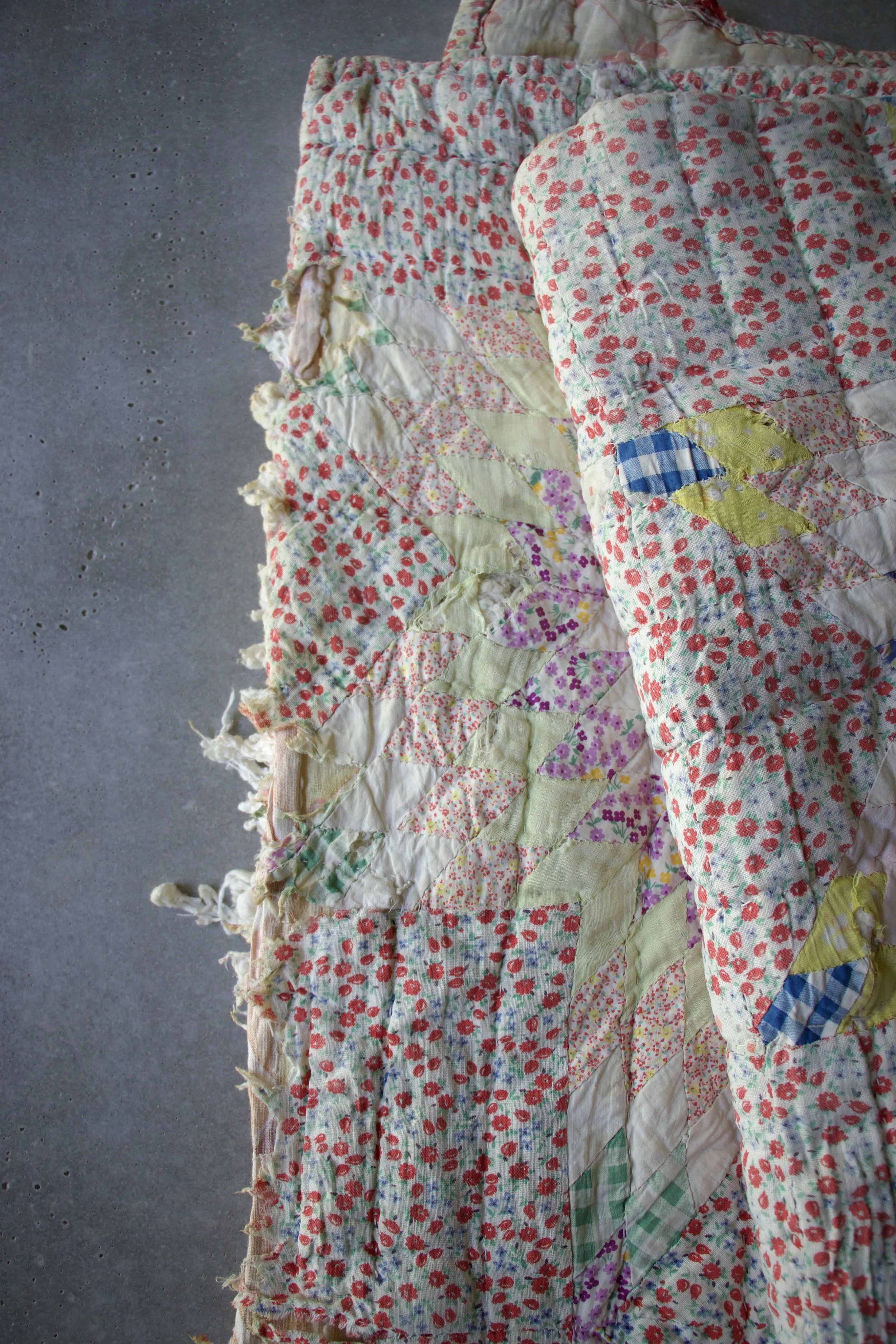 Image 4 of 7
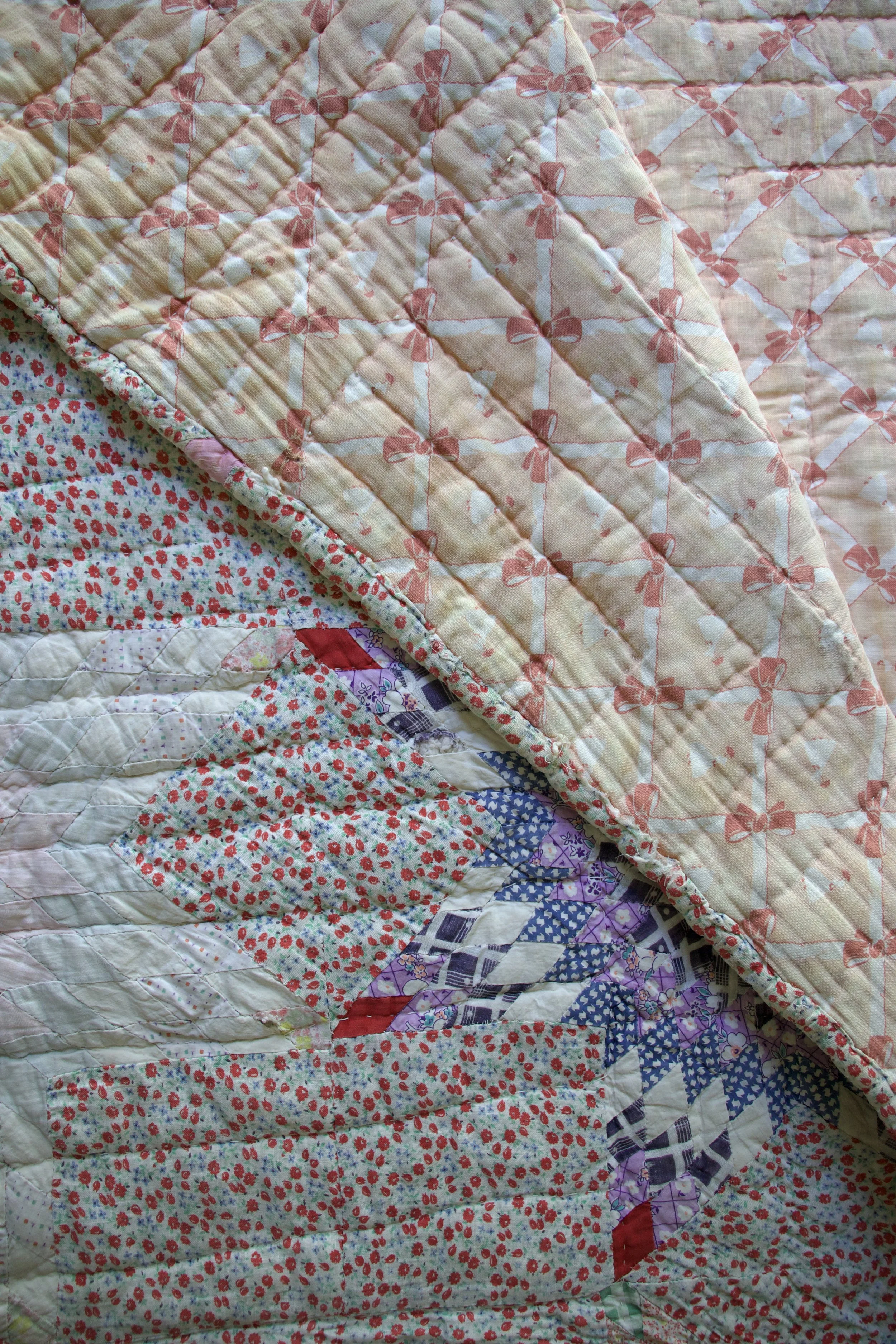 Image 5 of 7
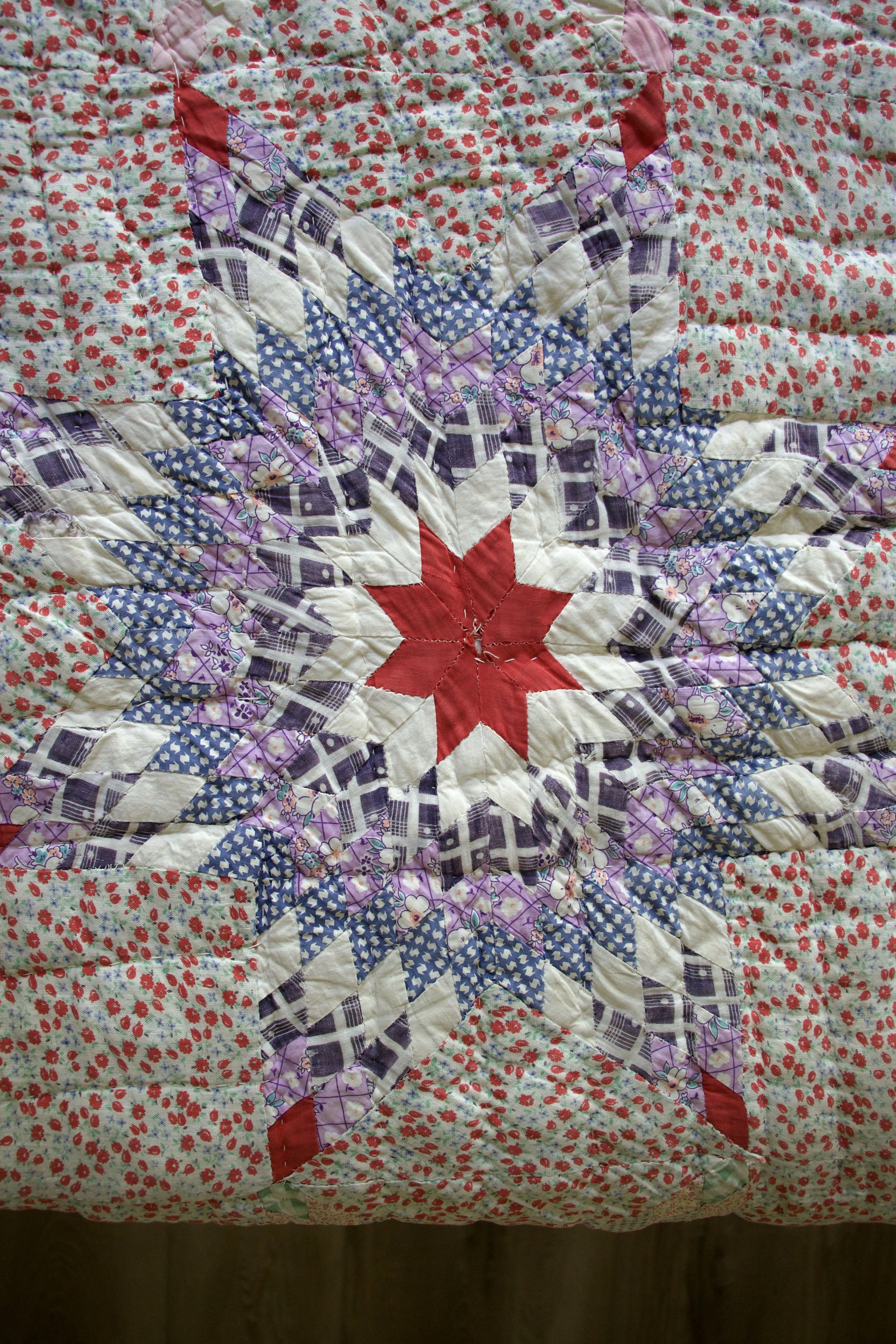 Image 6 of 7
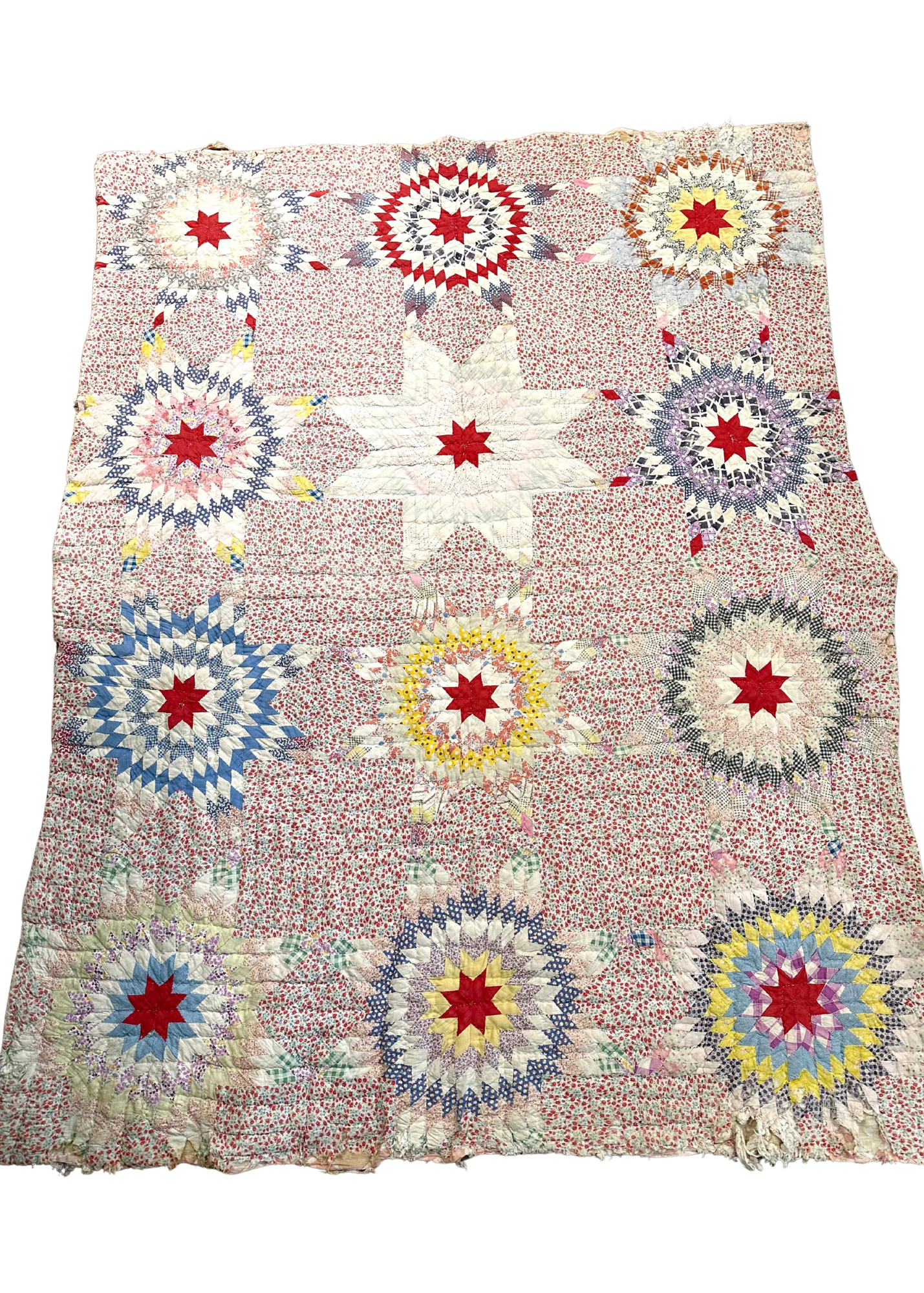 Image 7 of 7