Circa 1890–1910
Medium Weight
Size: 62”x65”
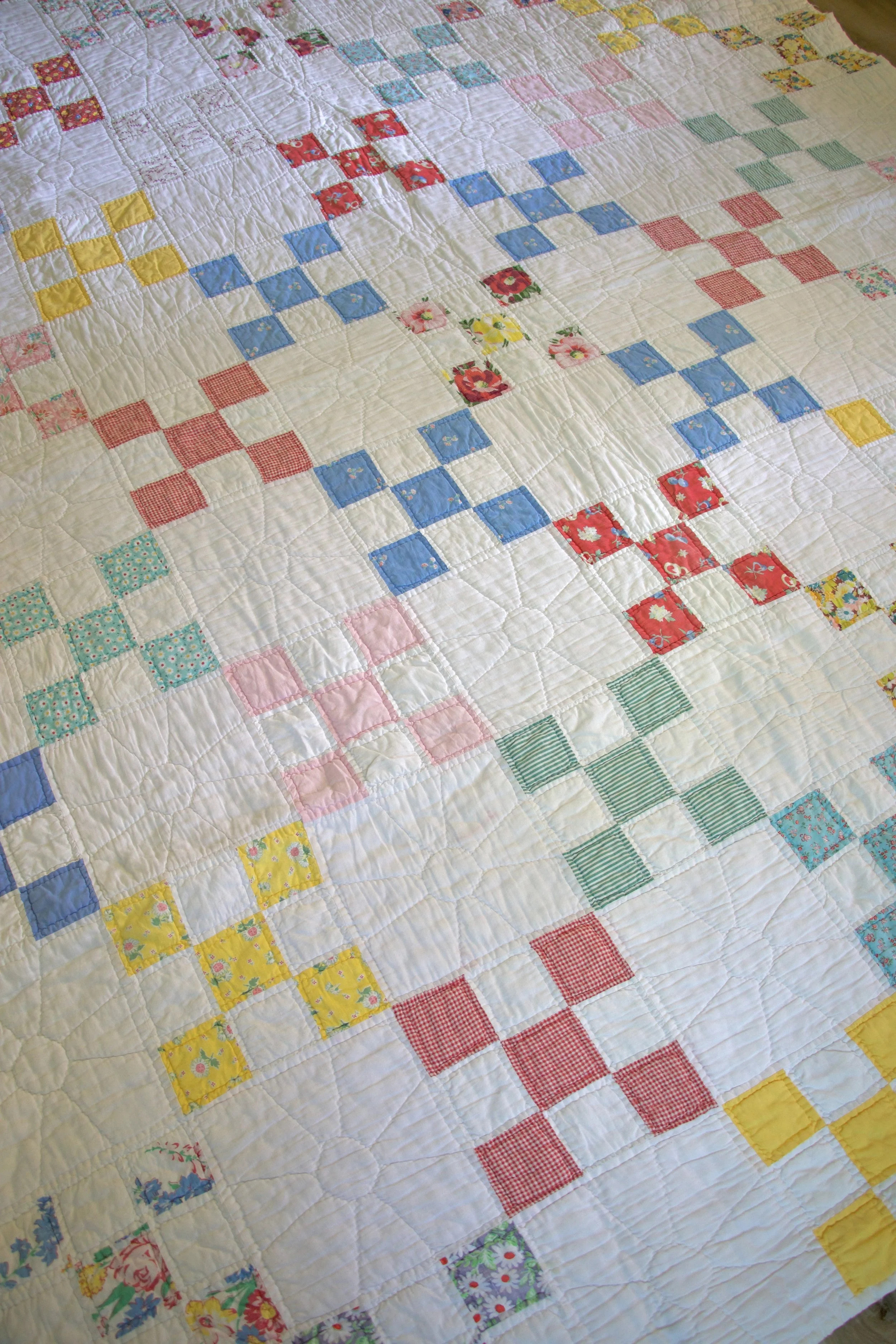
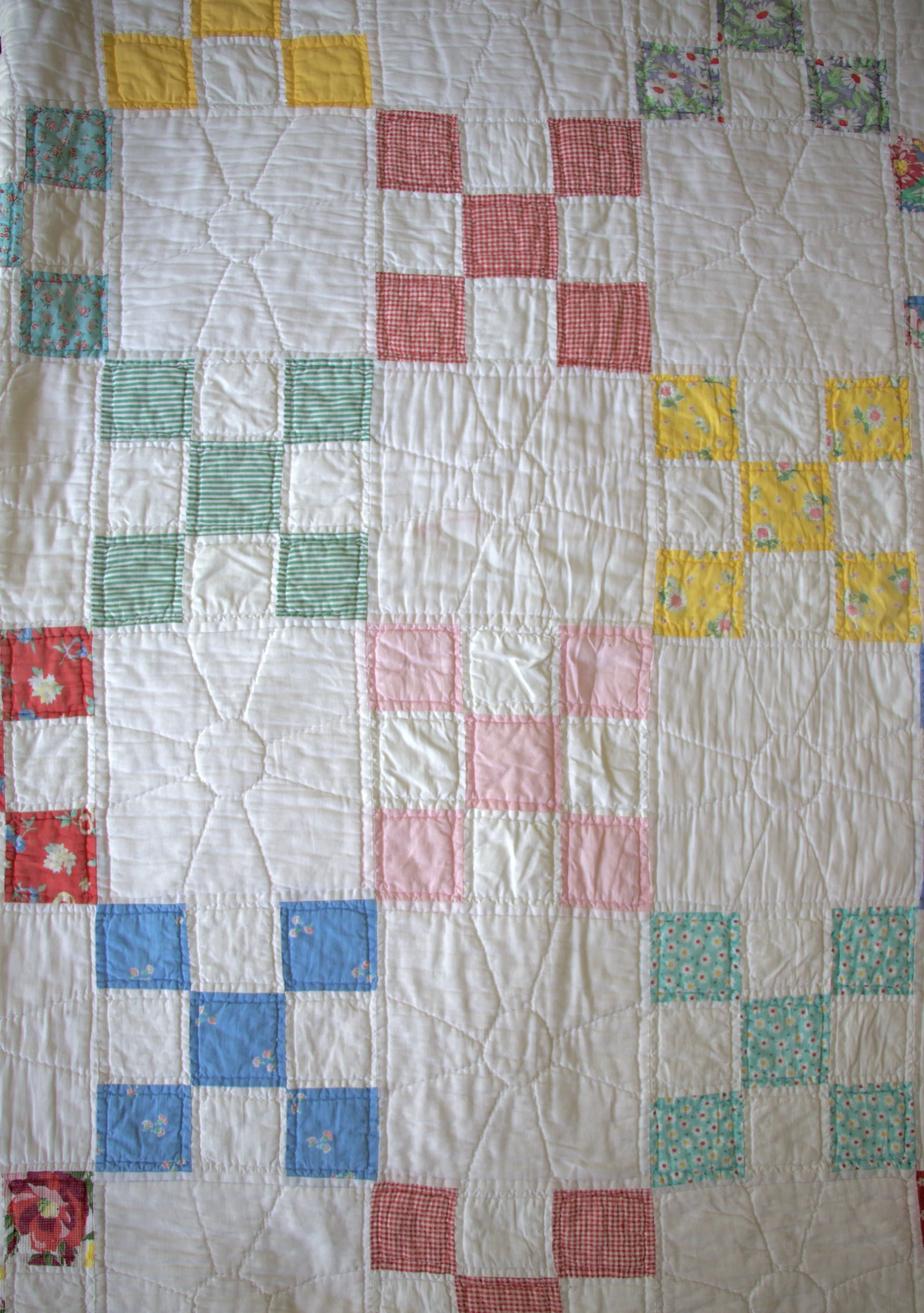
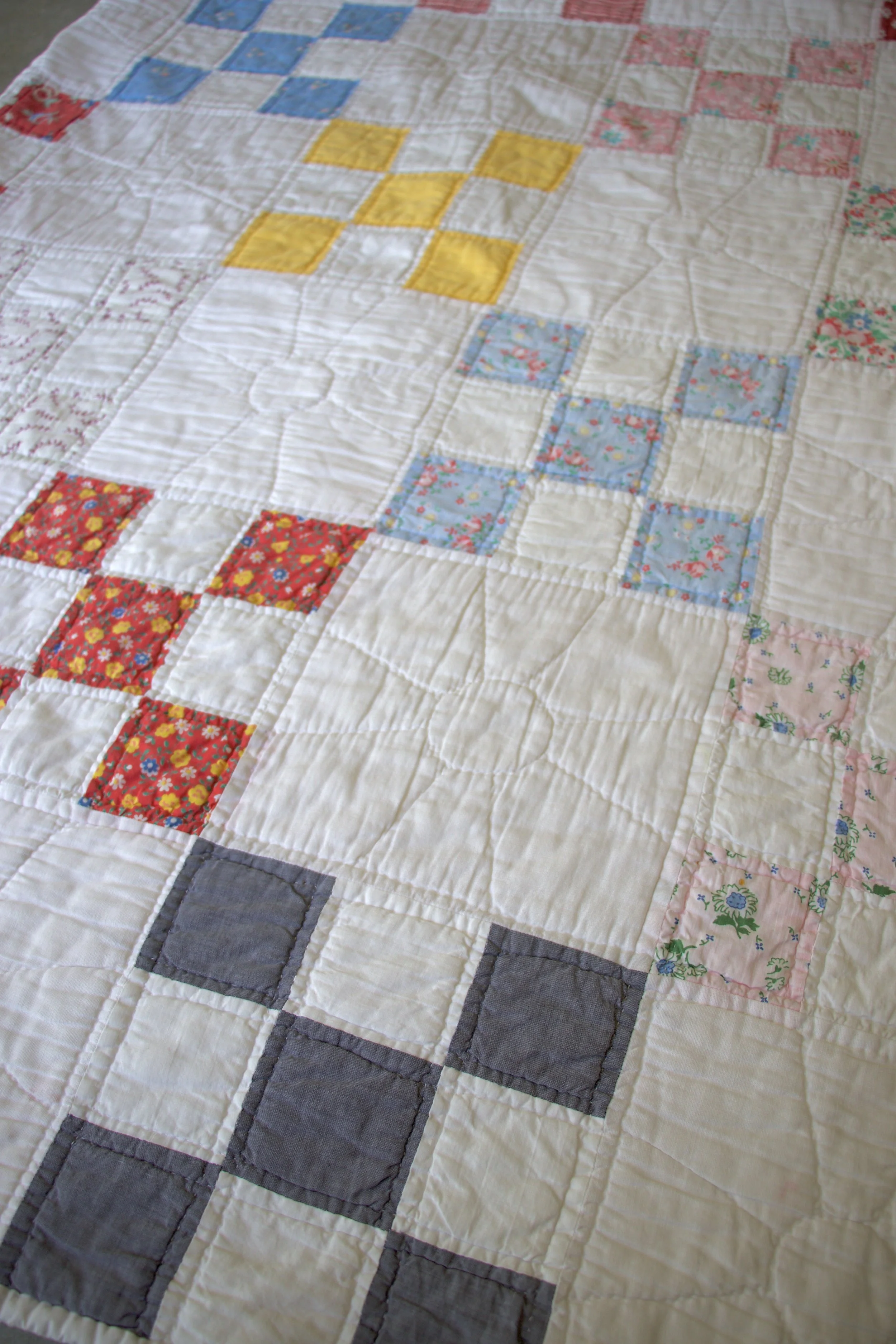
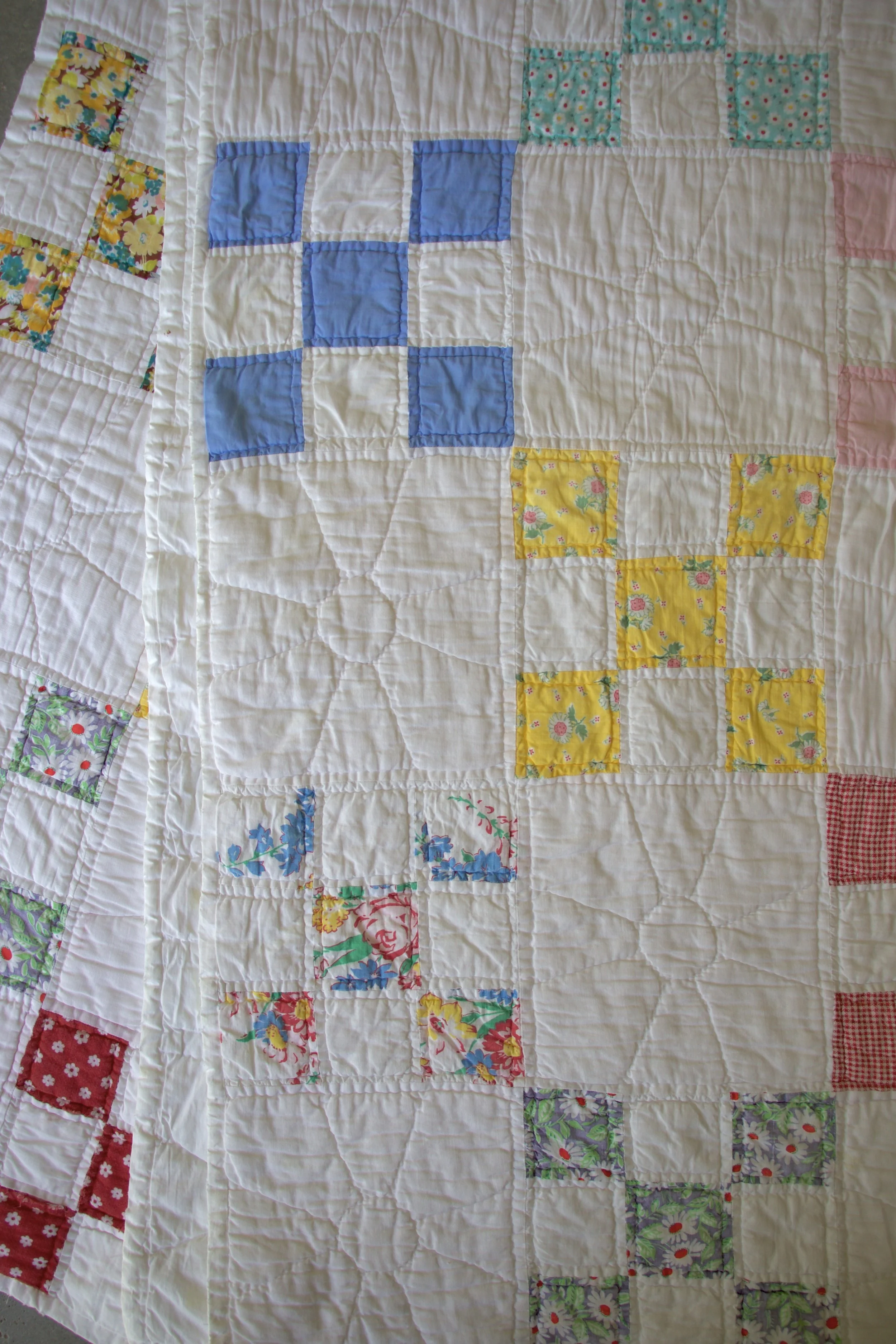
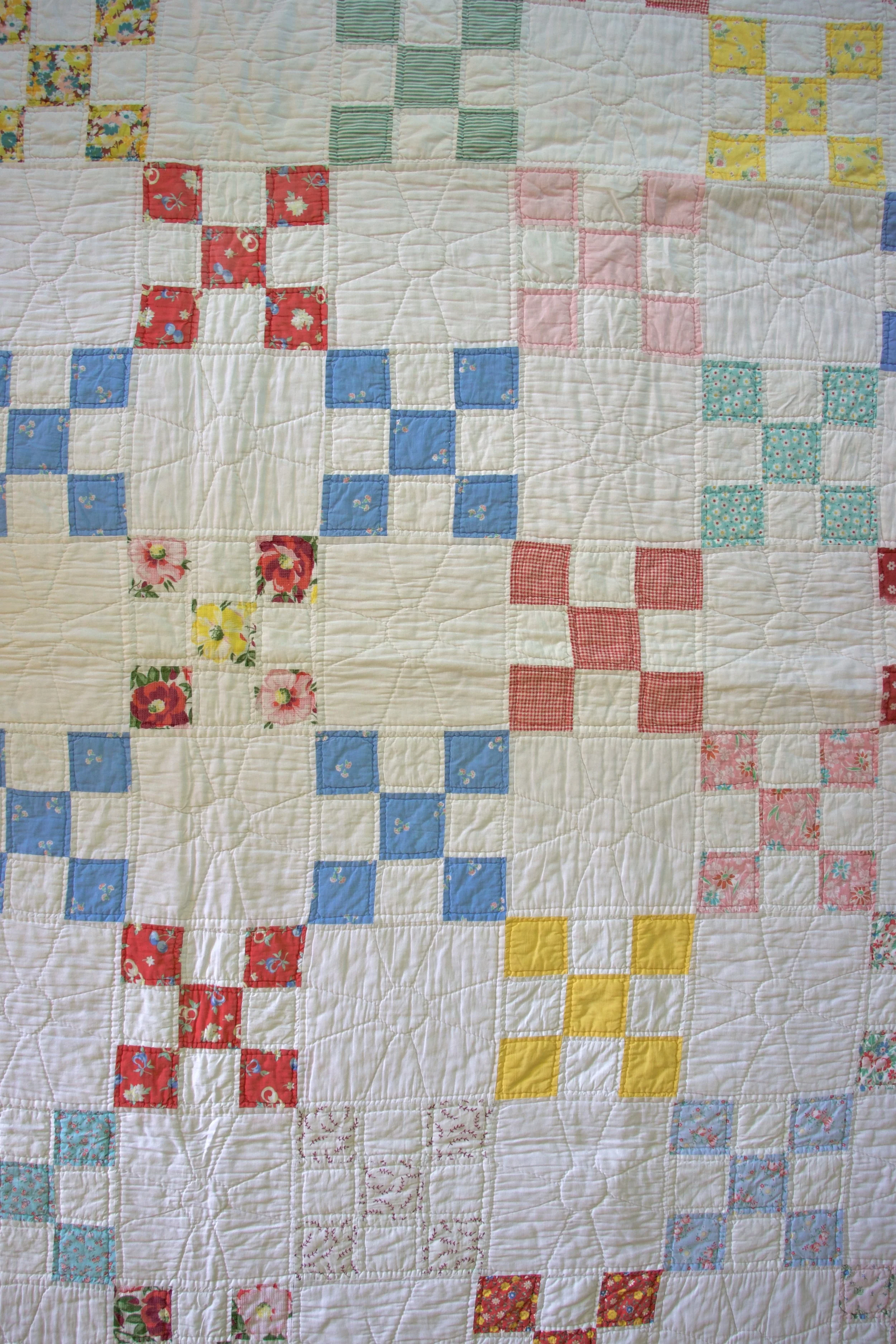
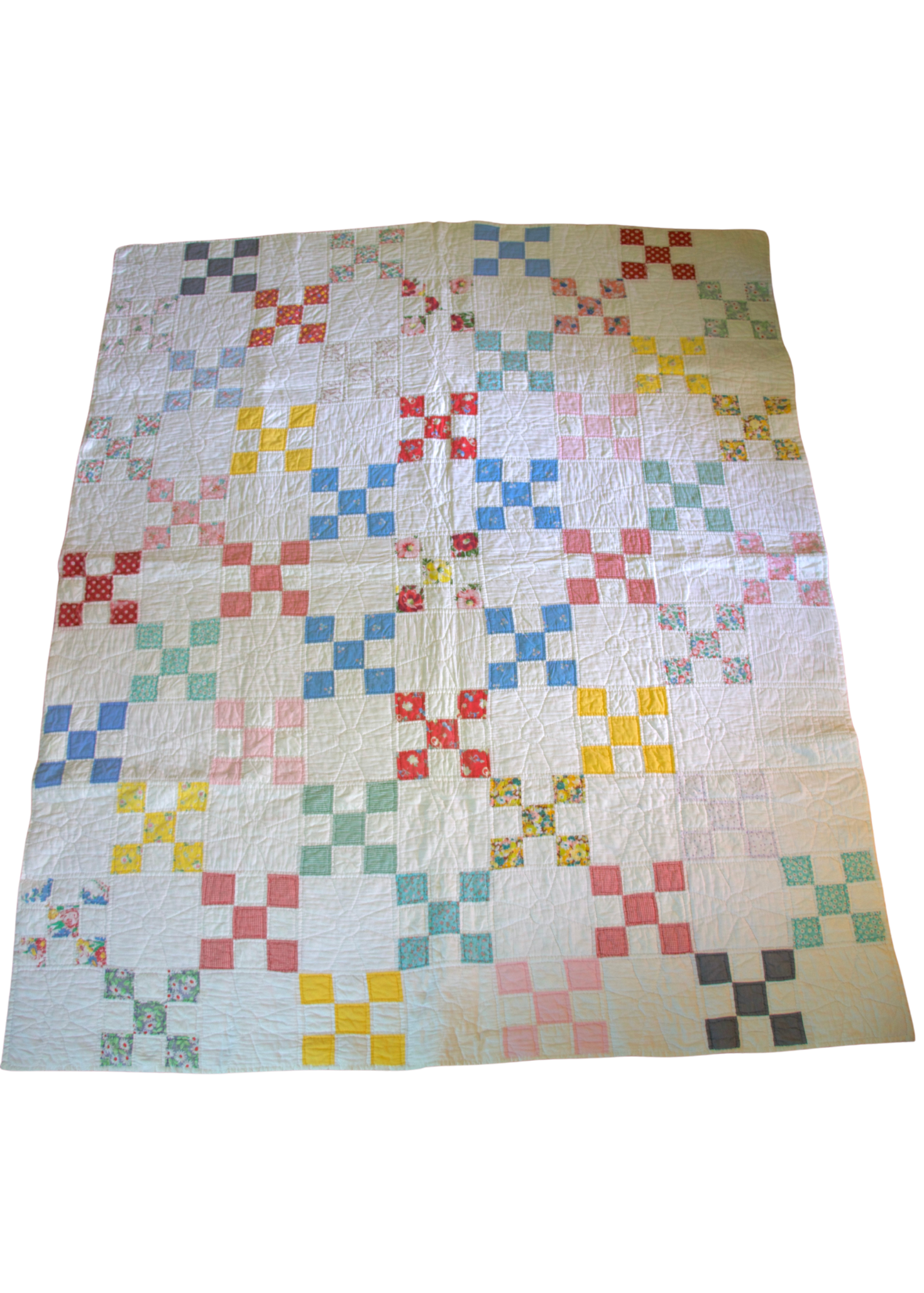
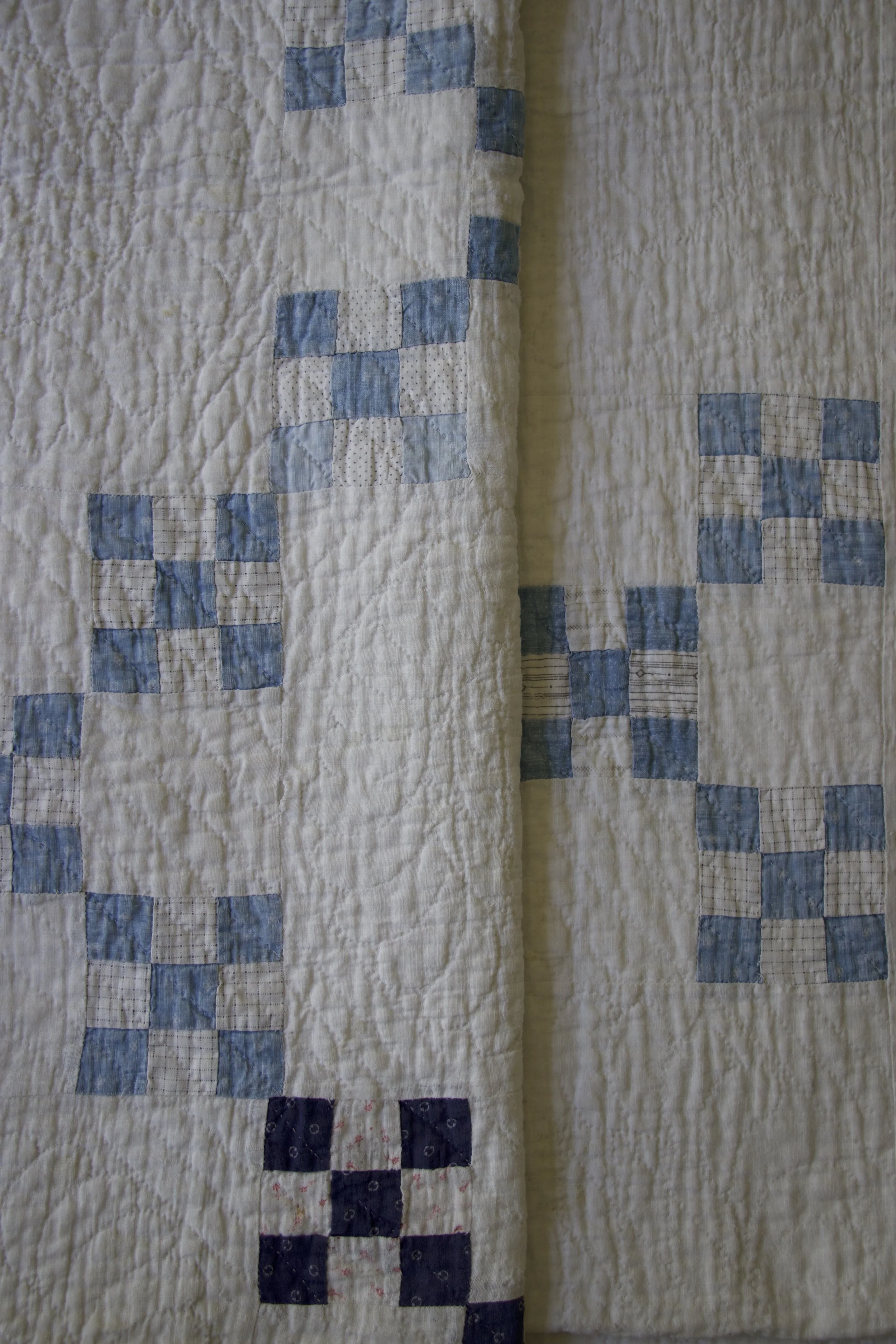
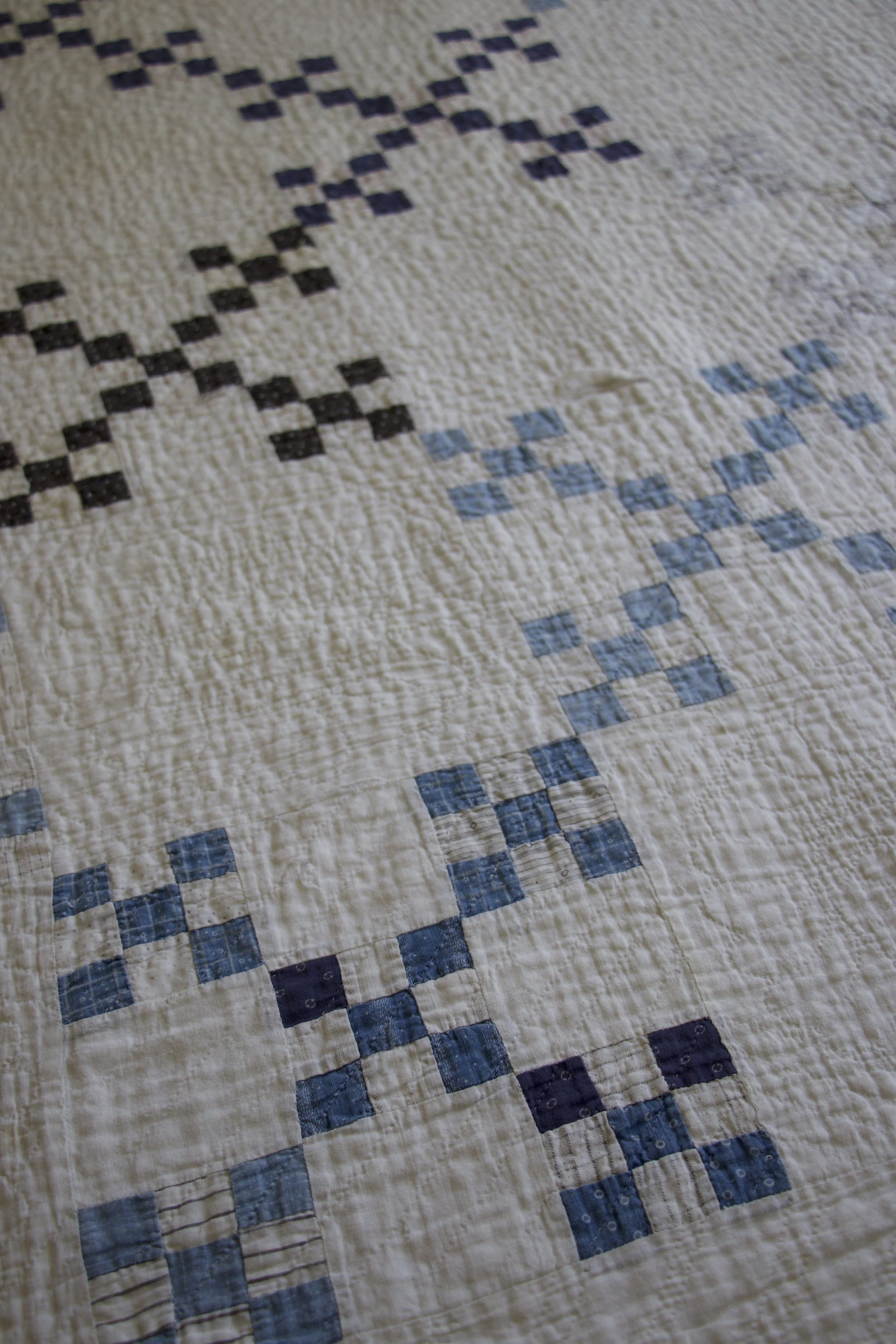
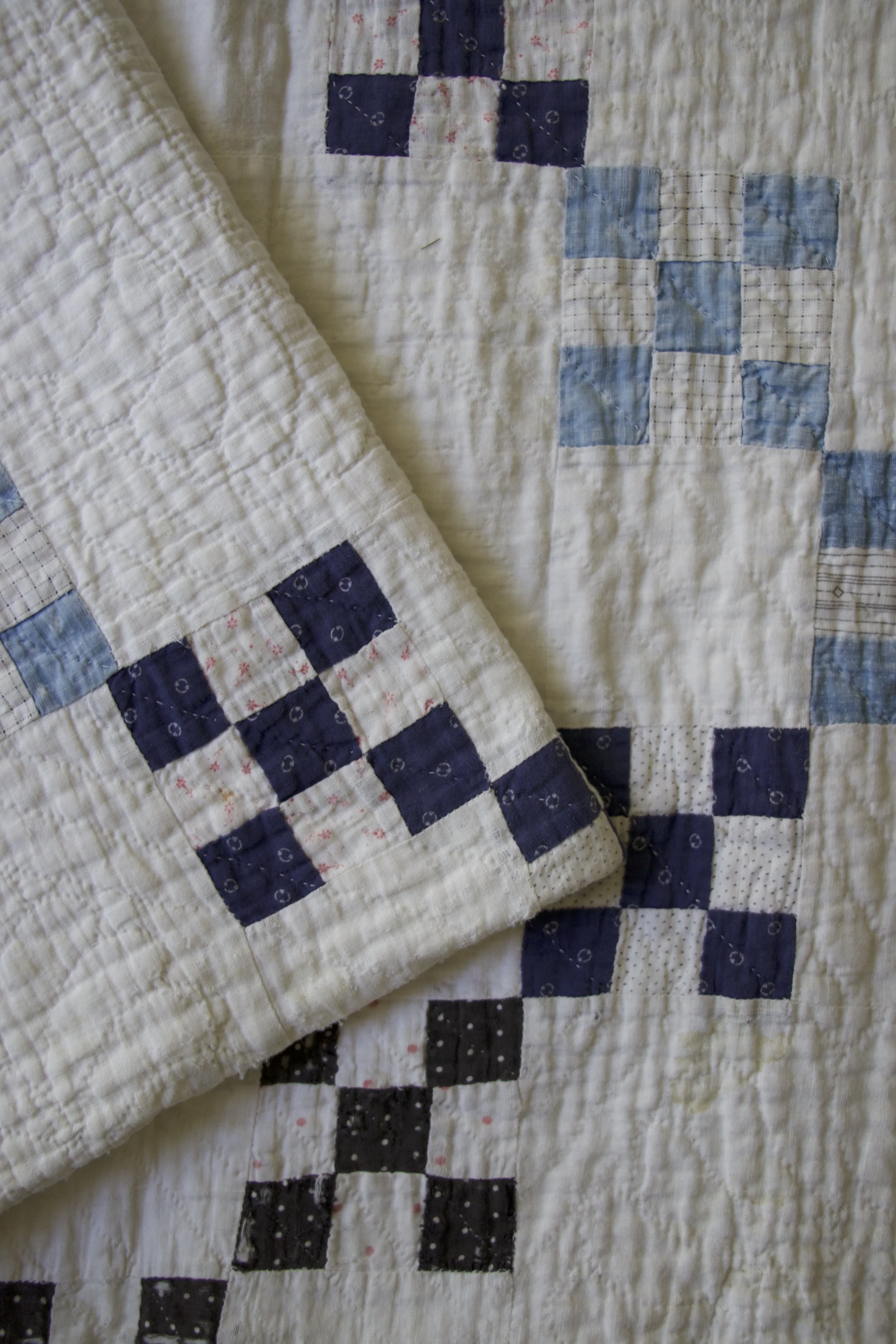
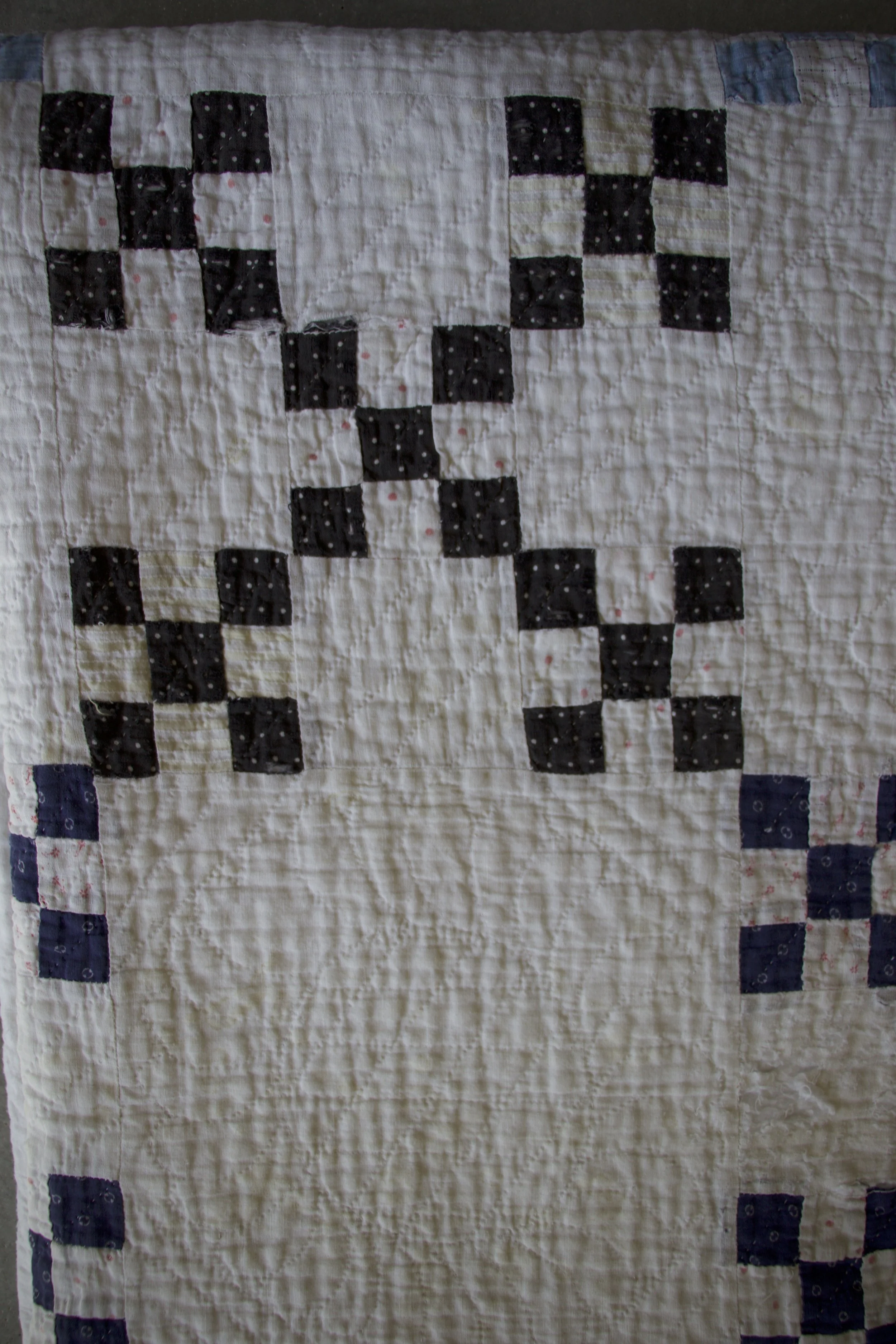
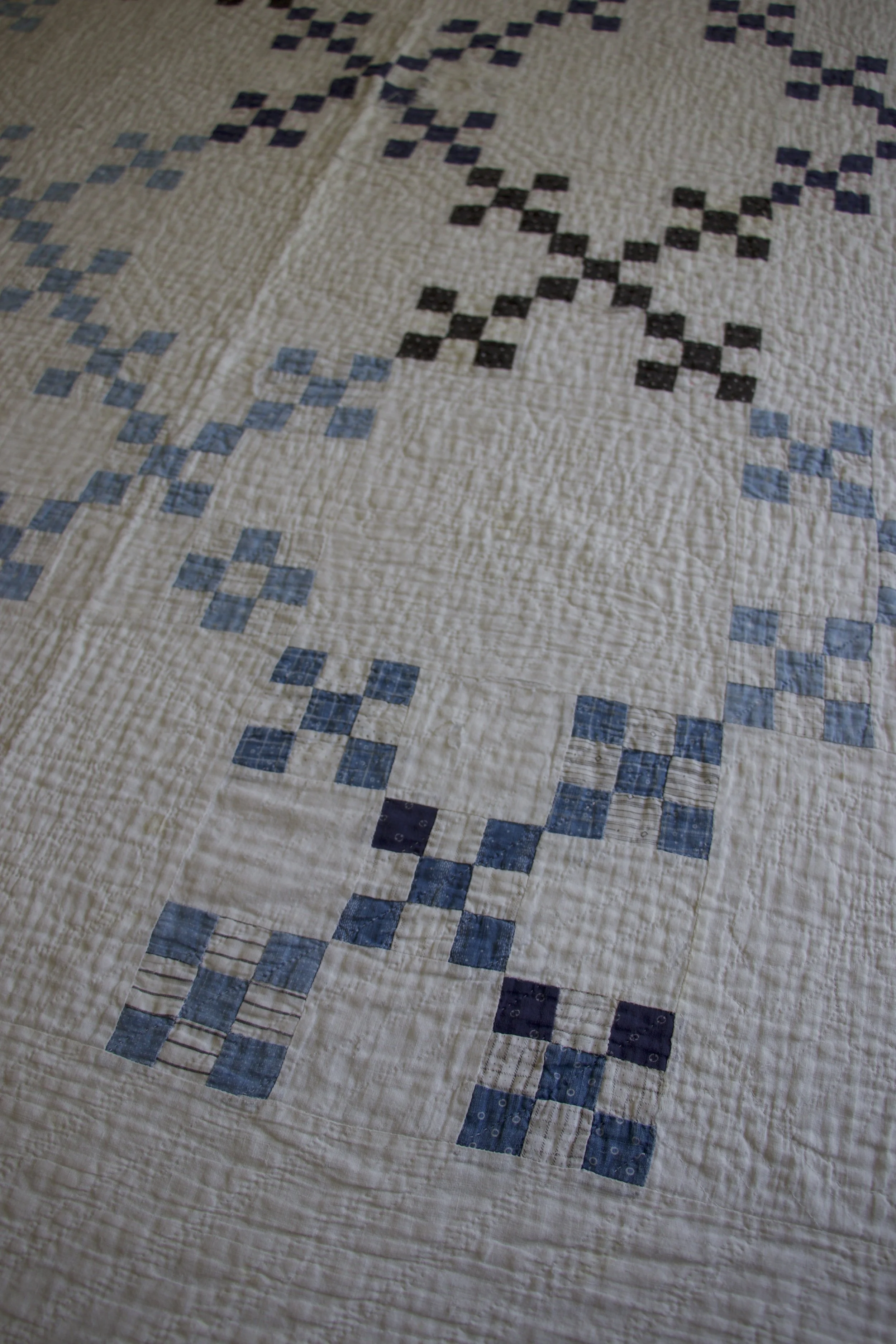
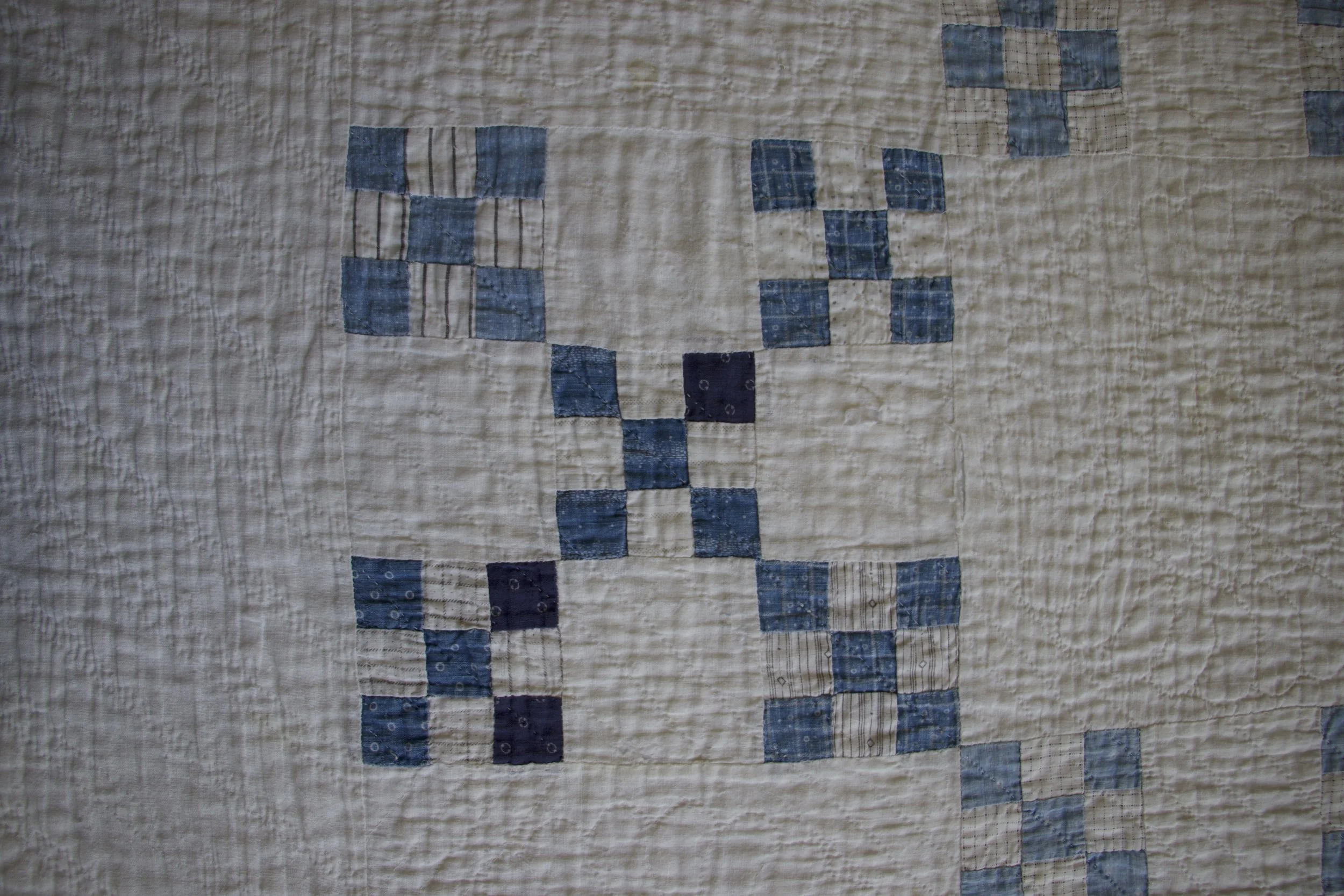
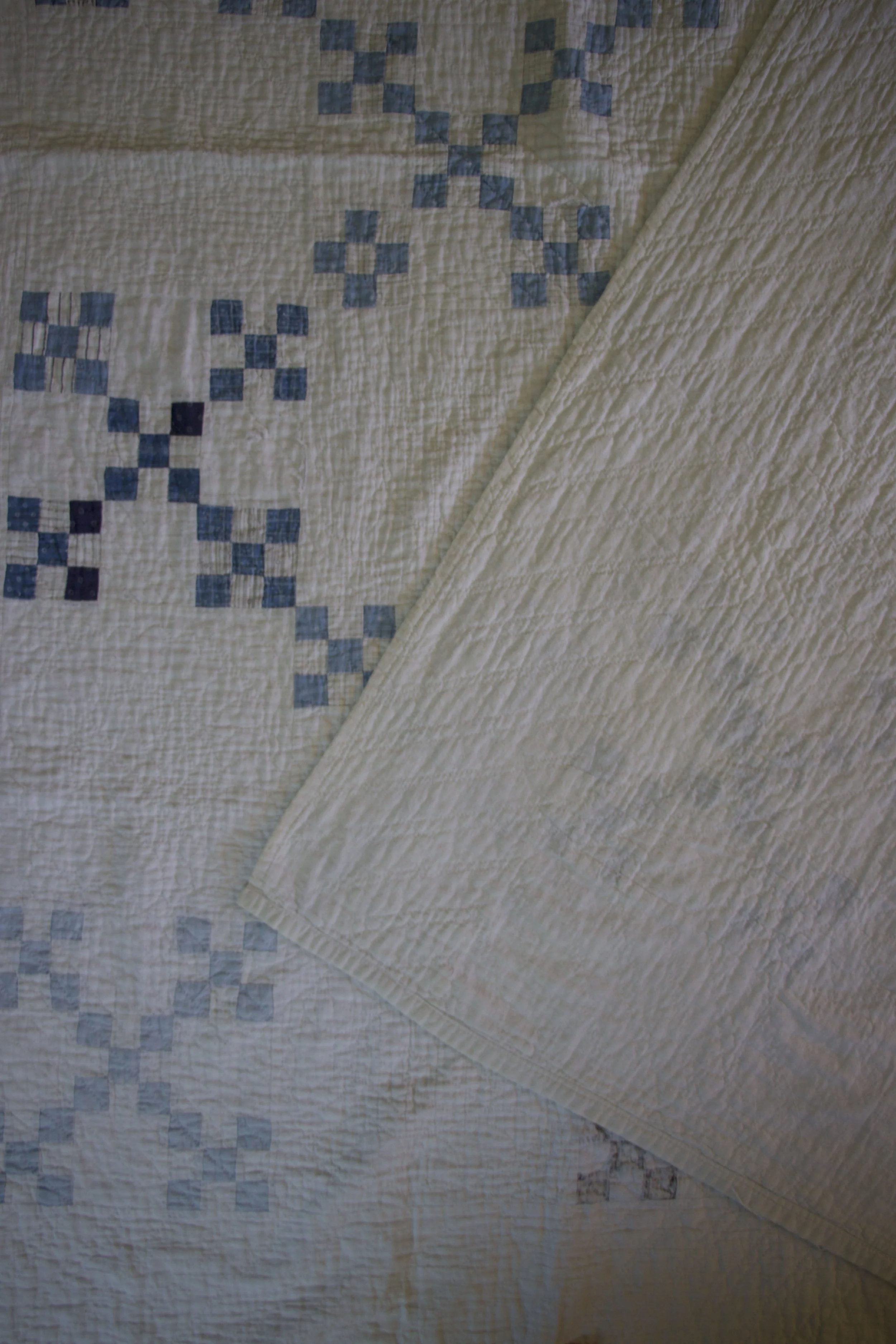
Pattern: Nine Patch
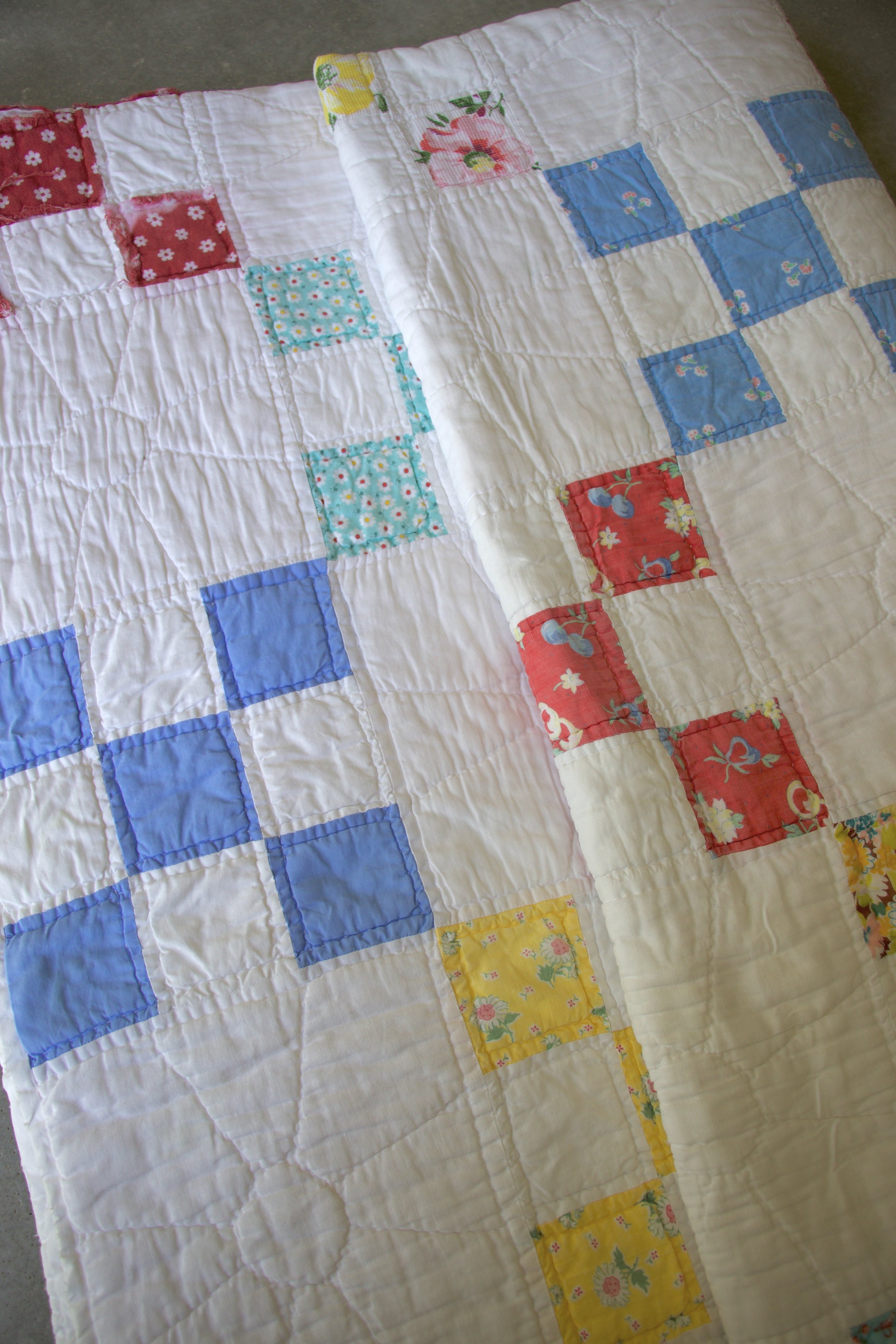
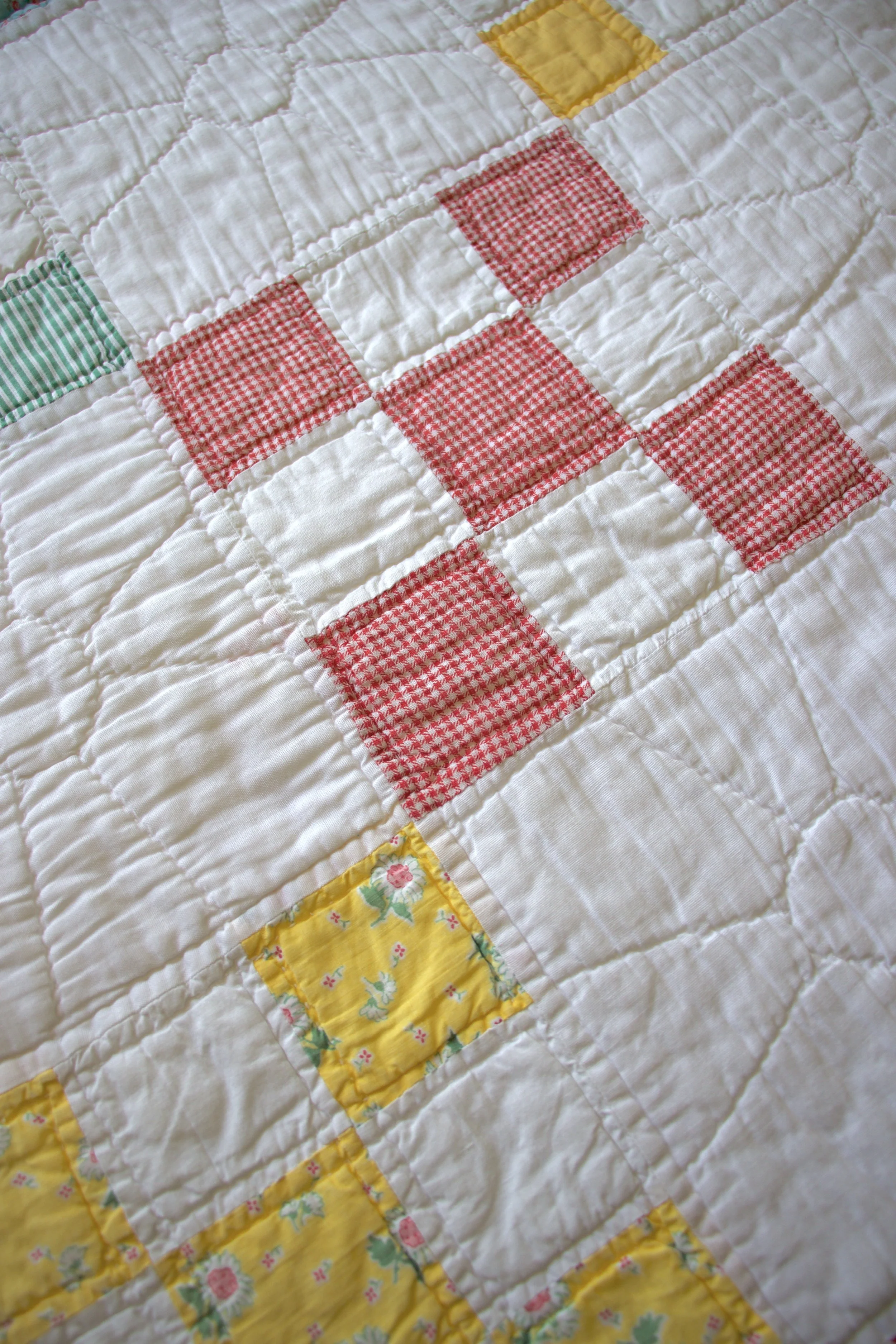
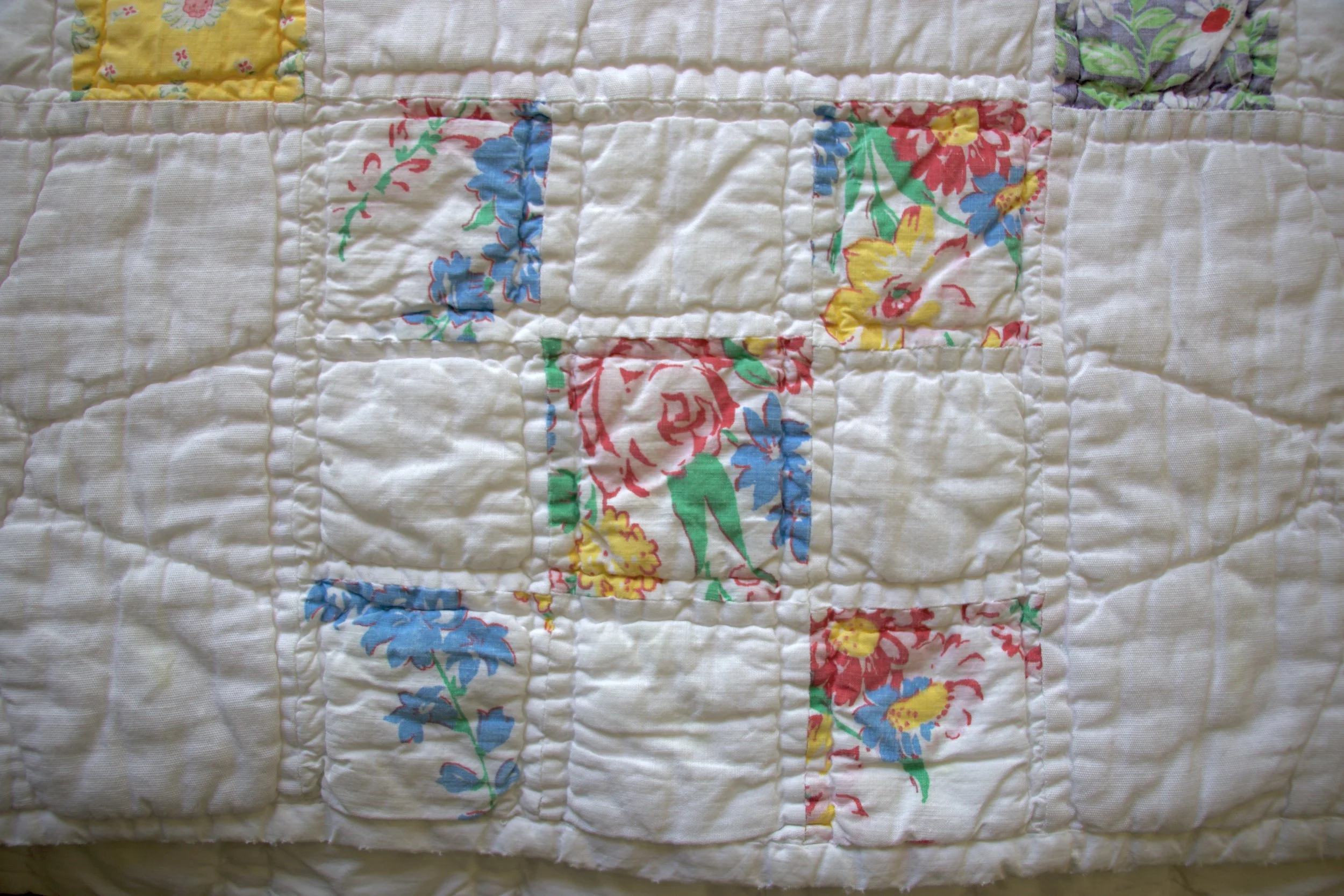
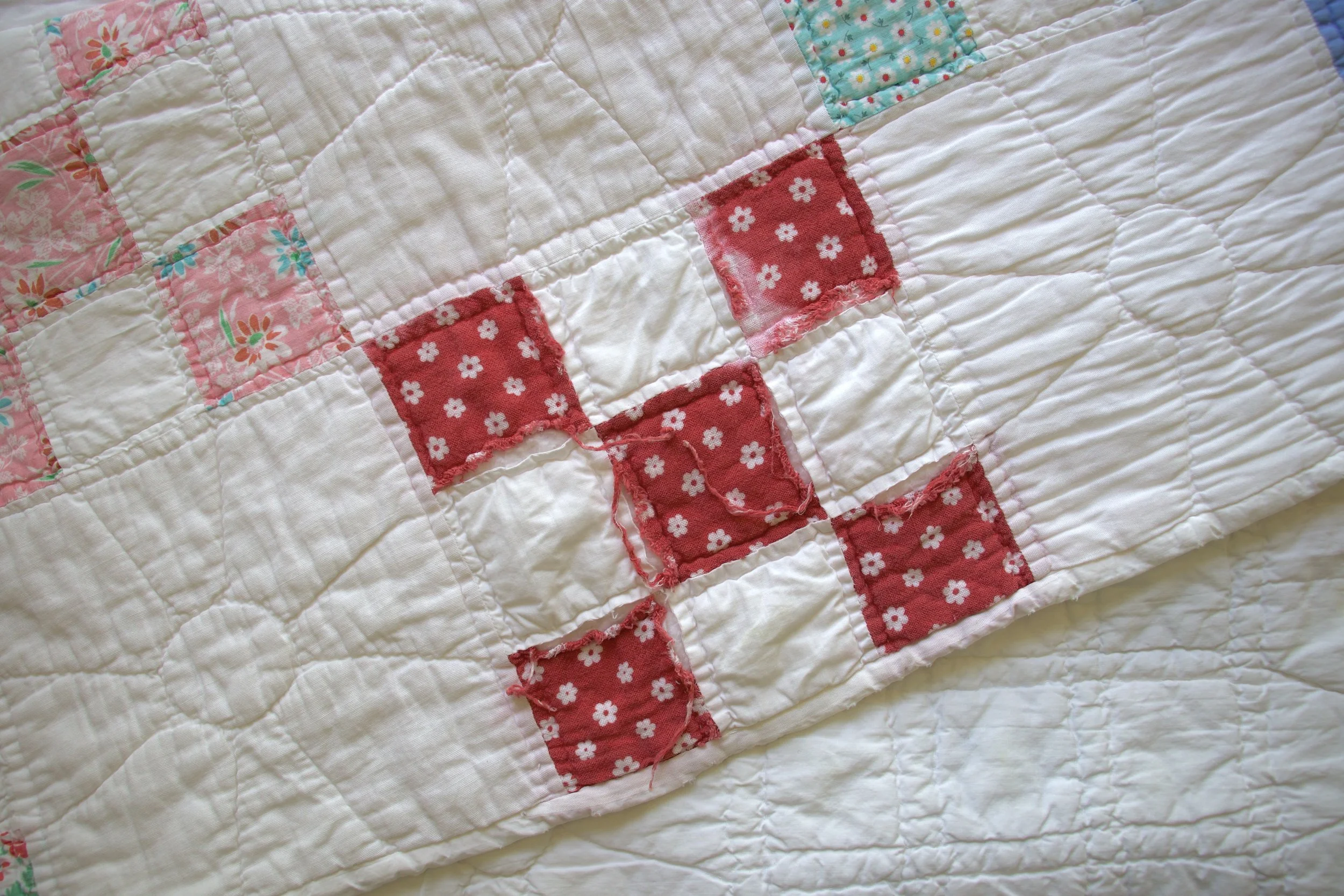
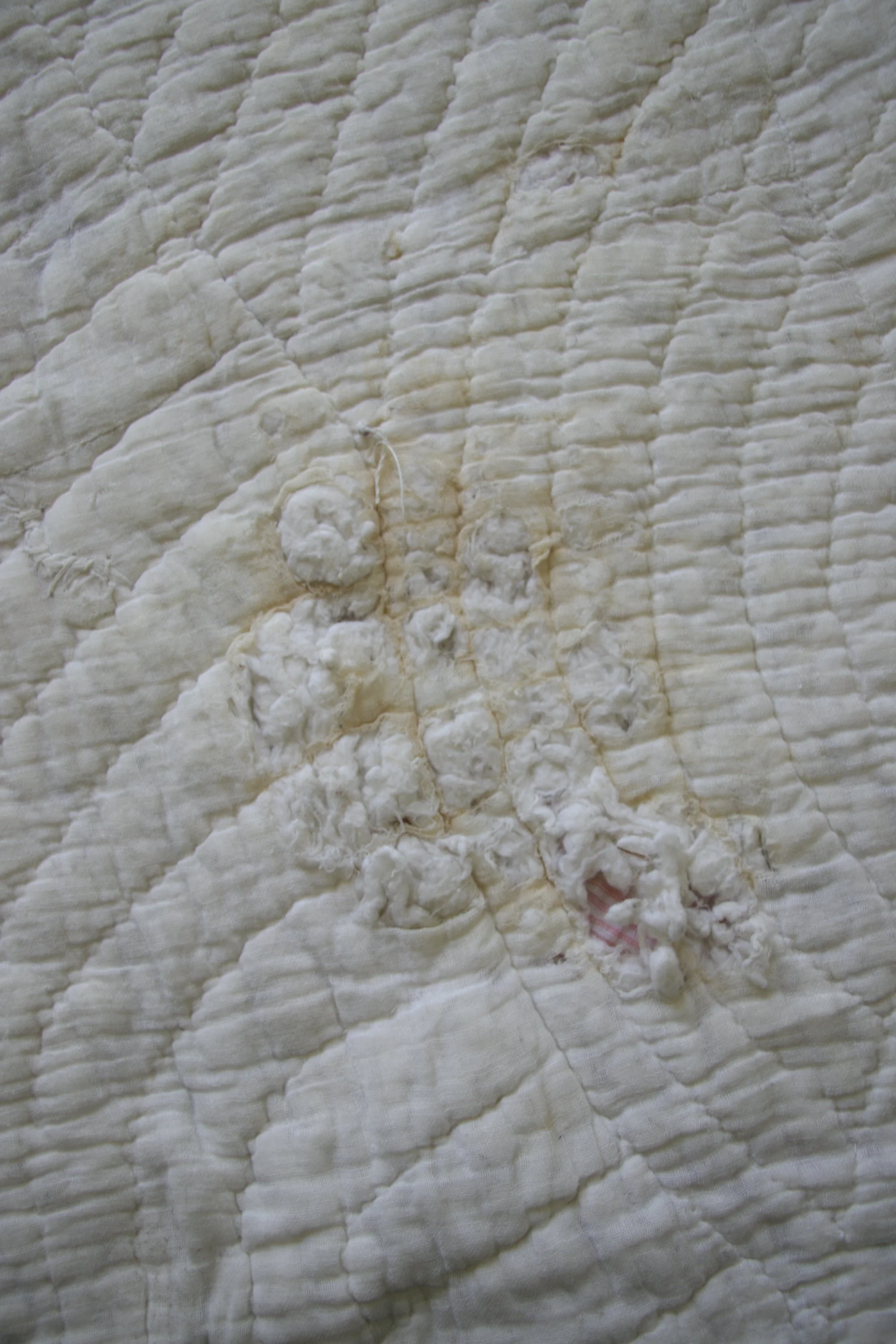
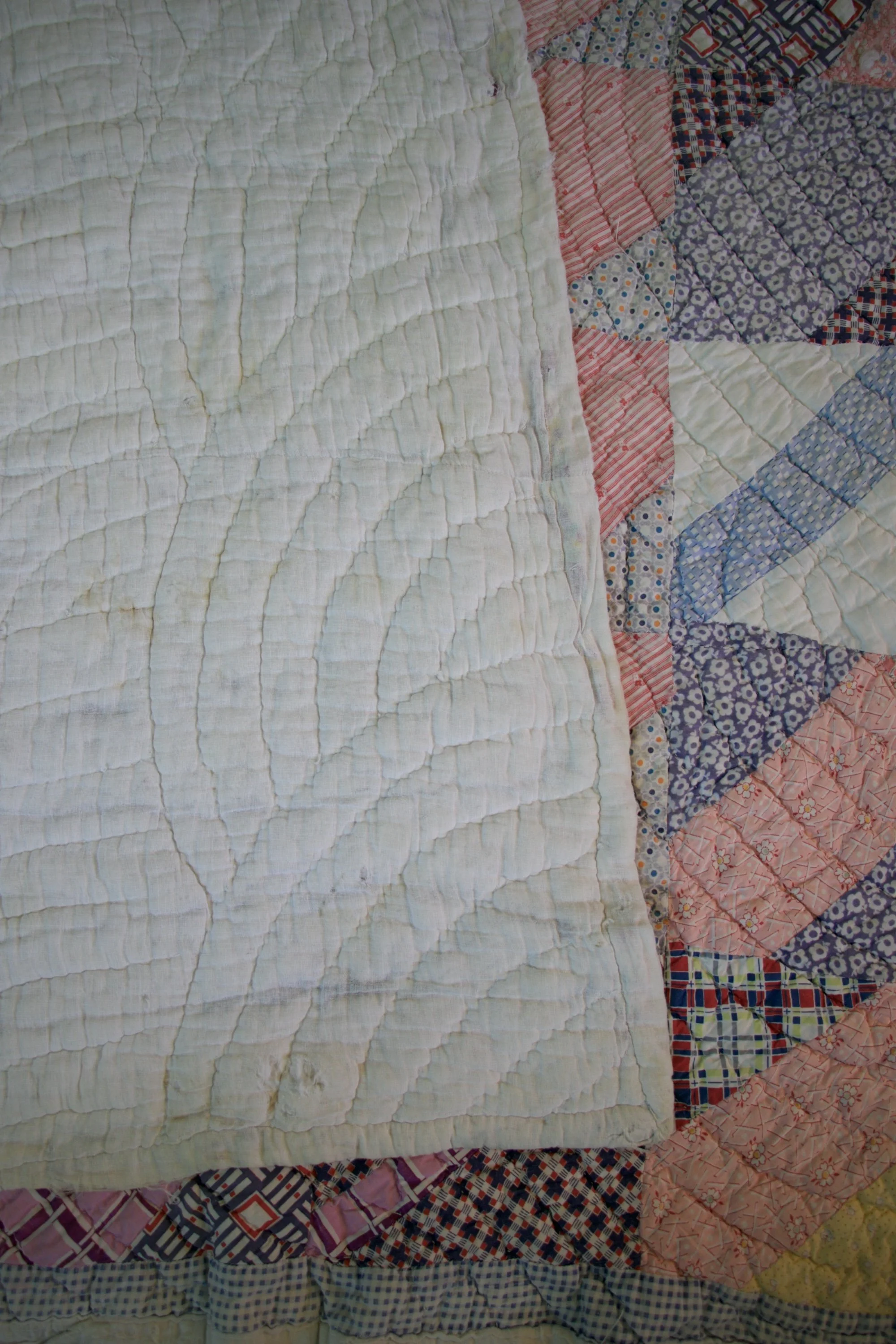
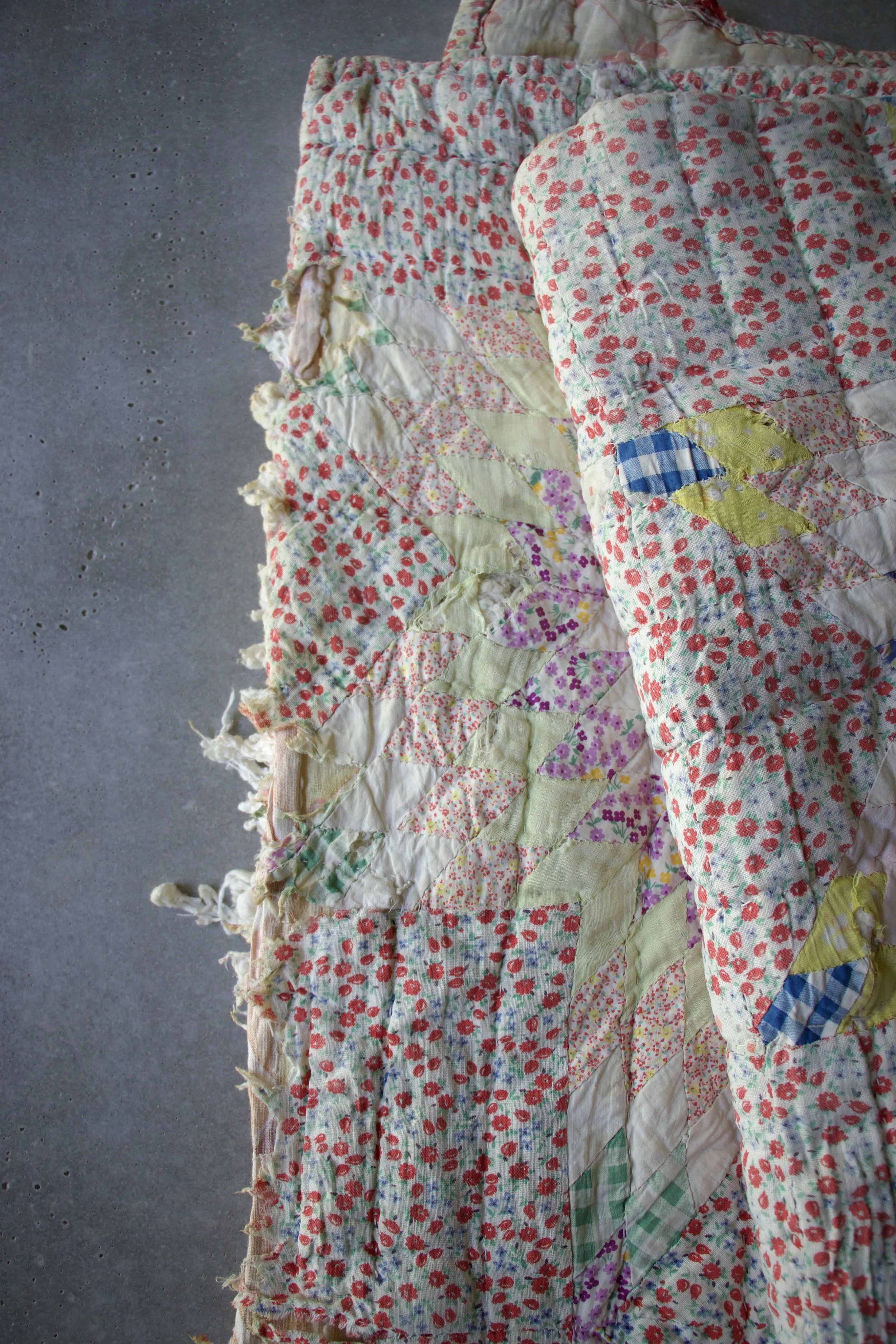
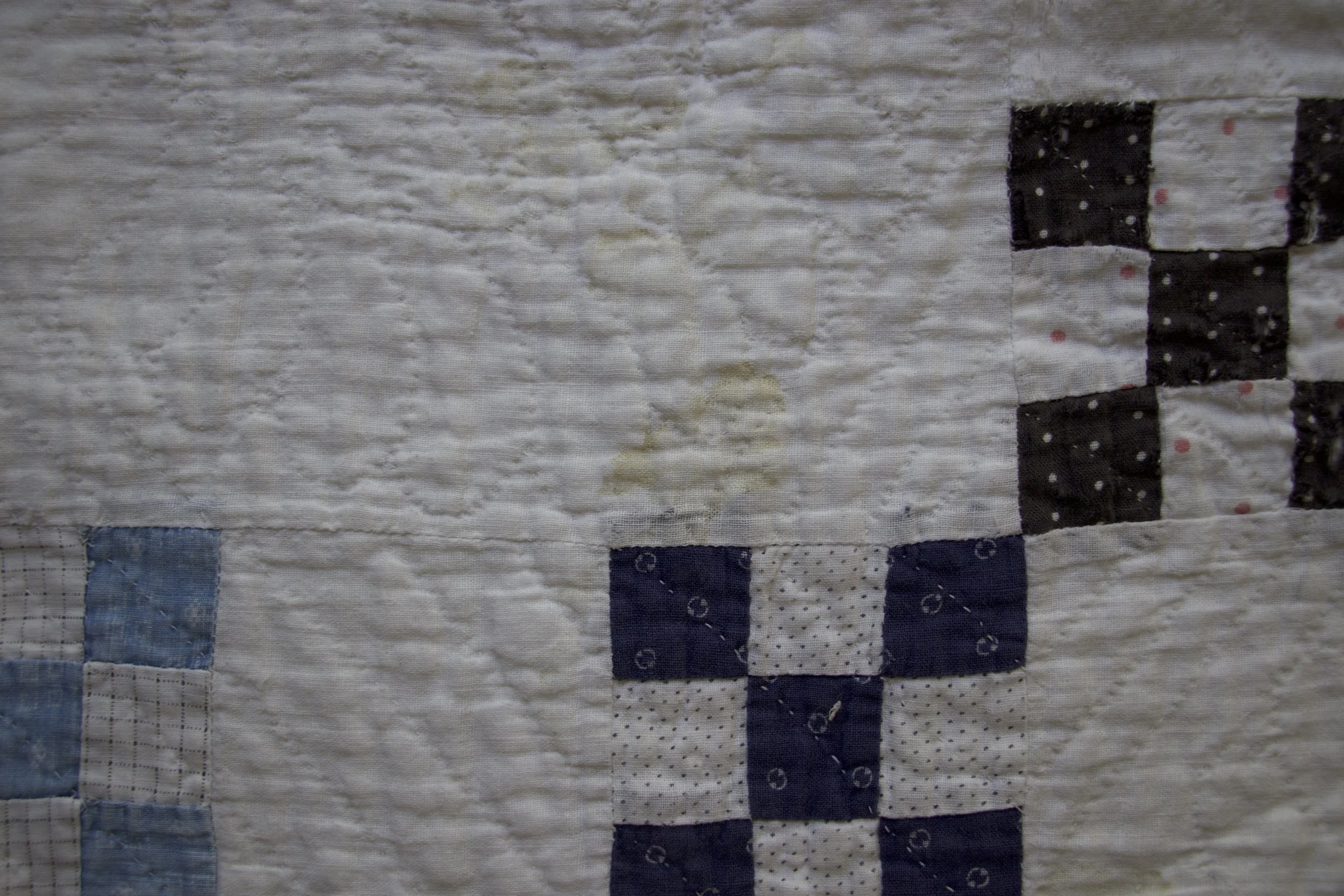
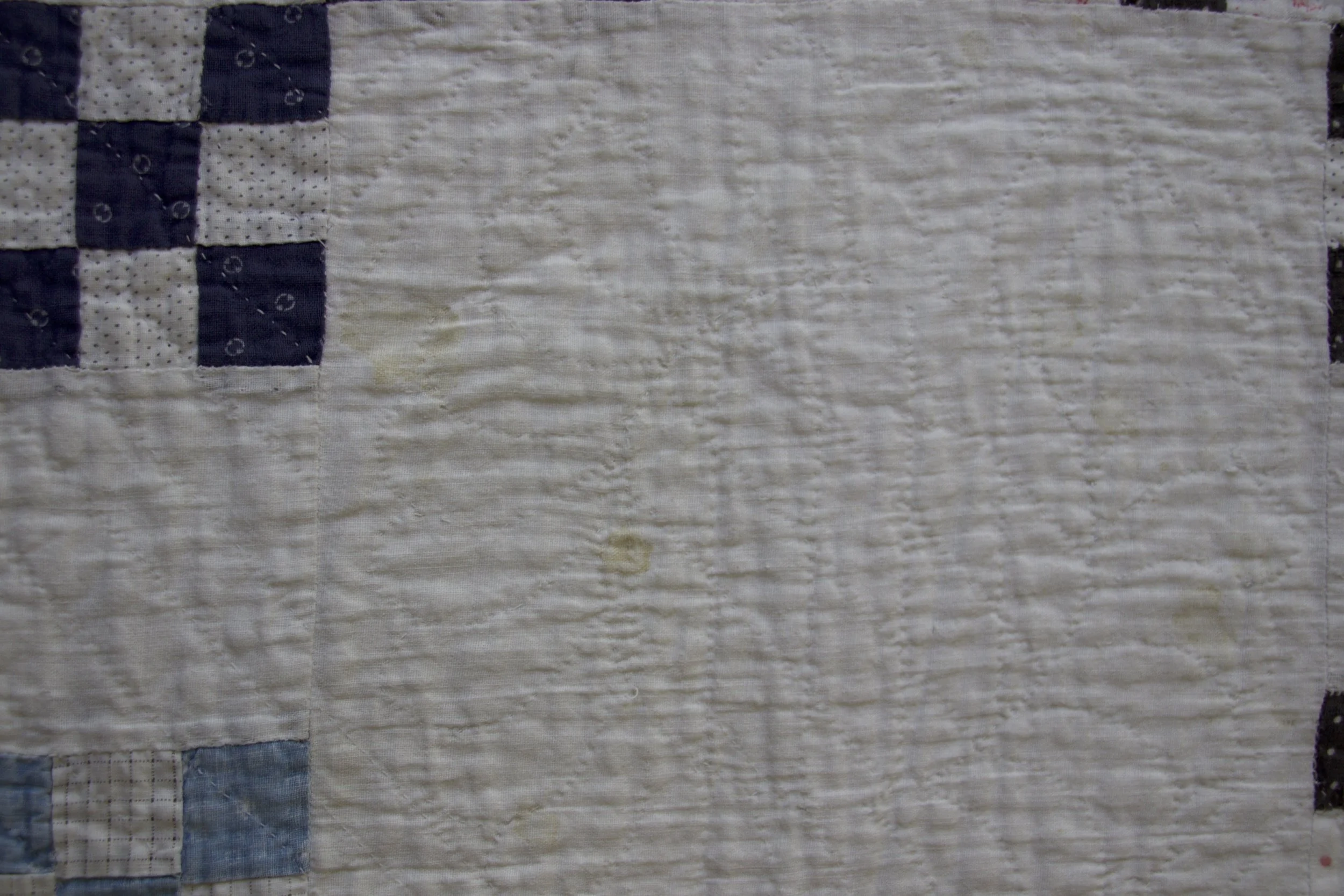
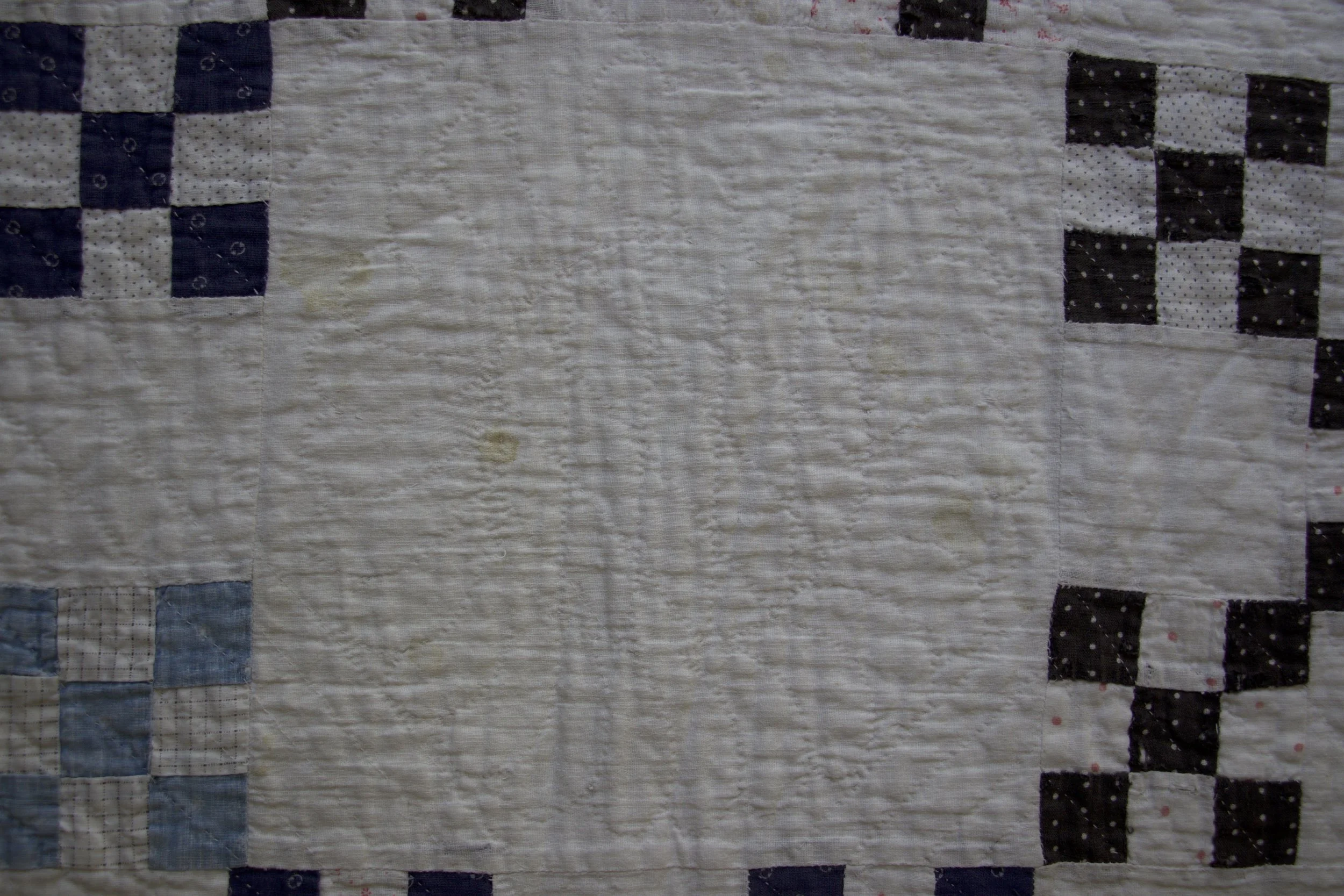
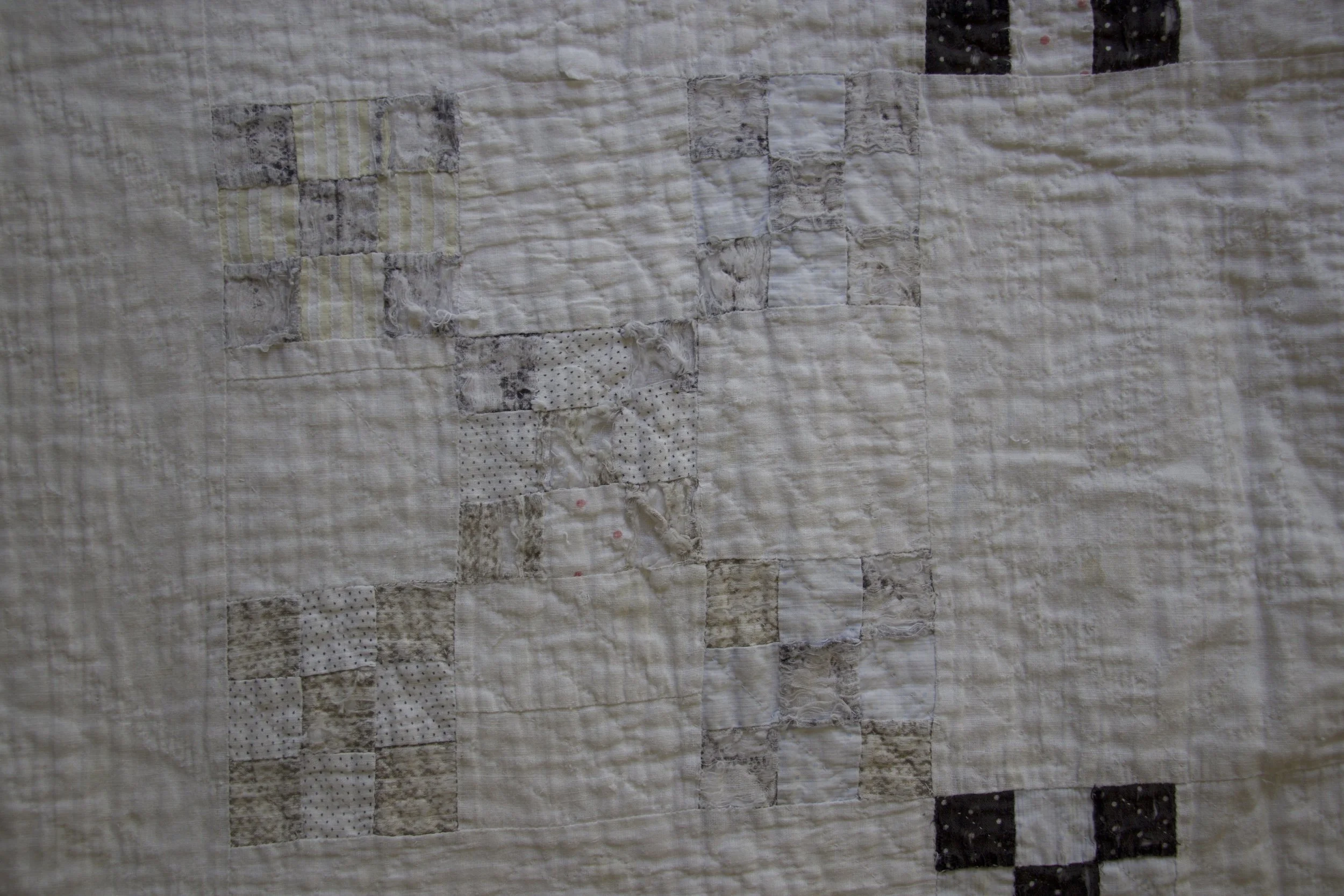
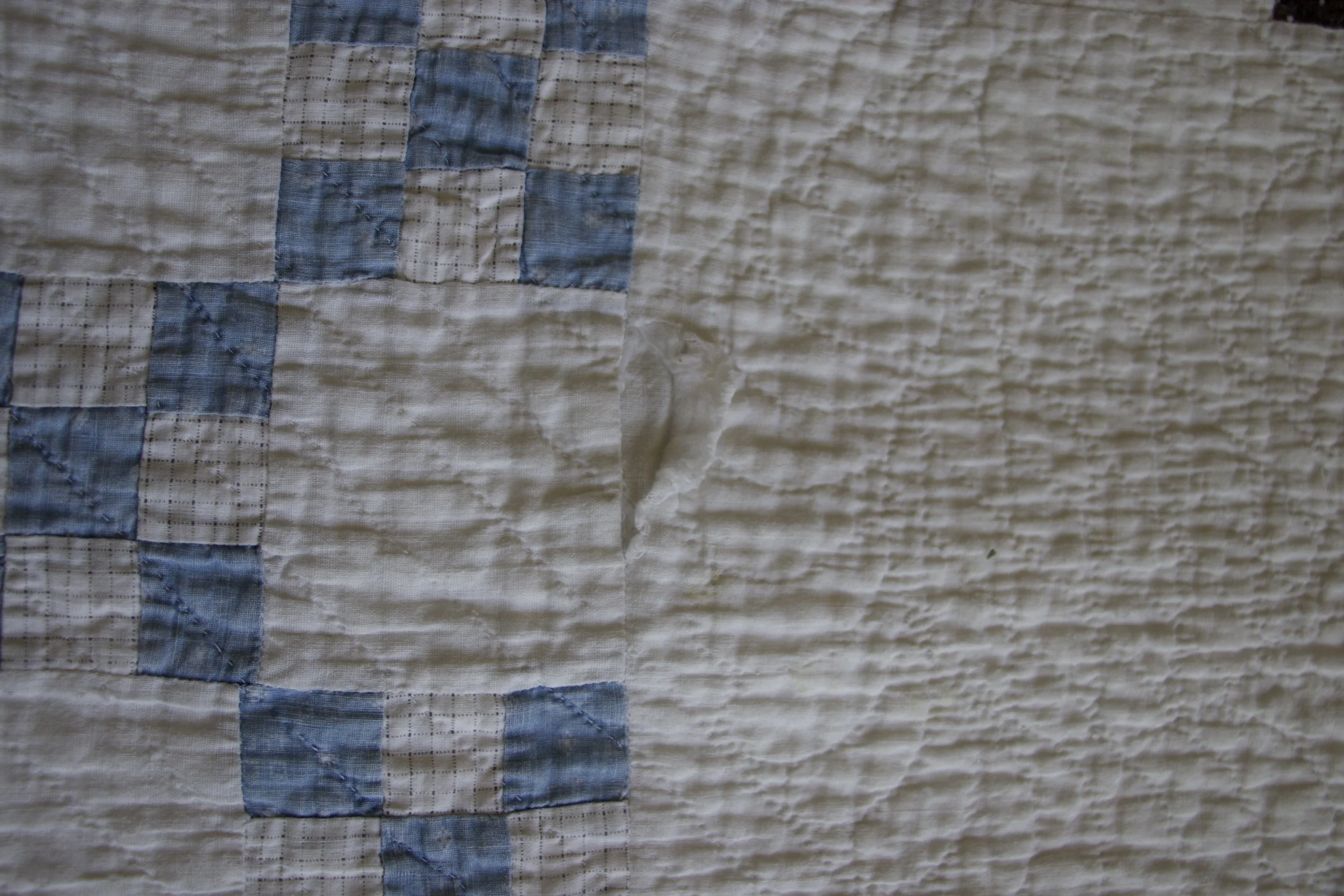
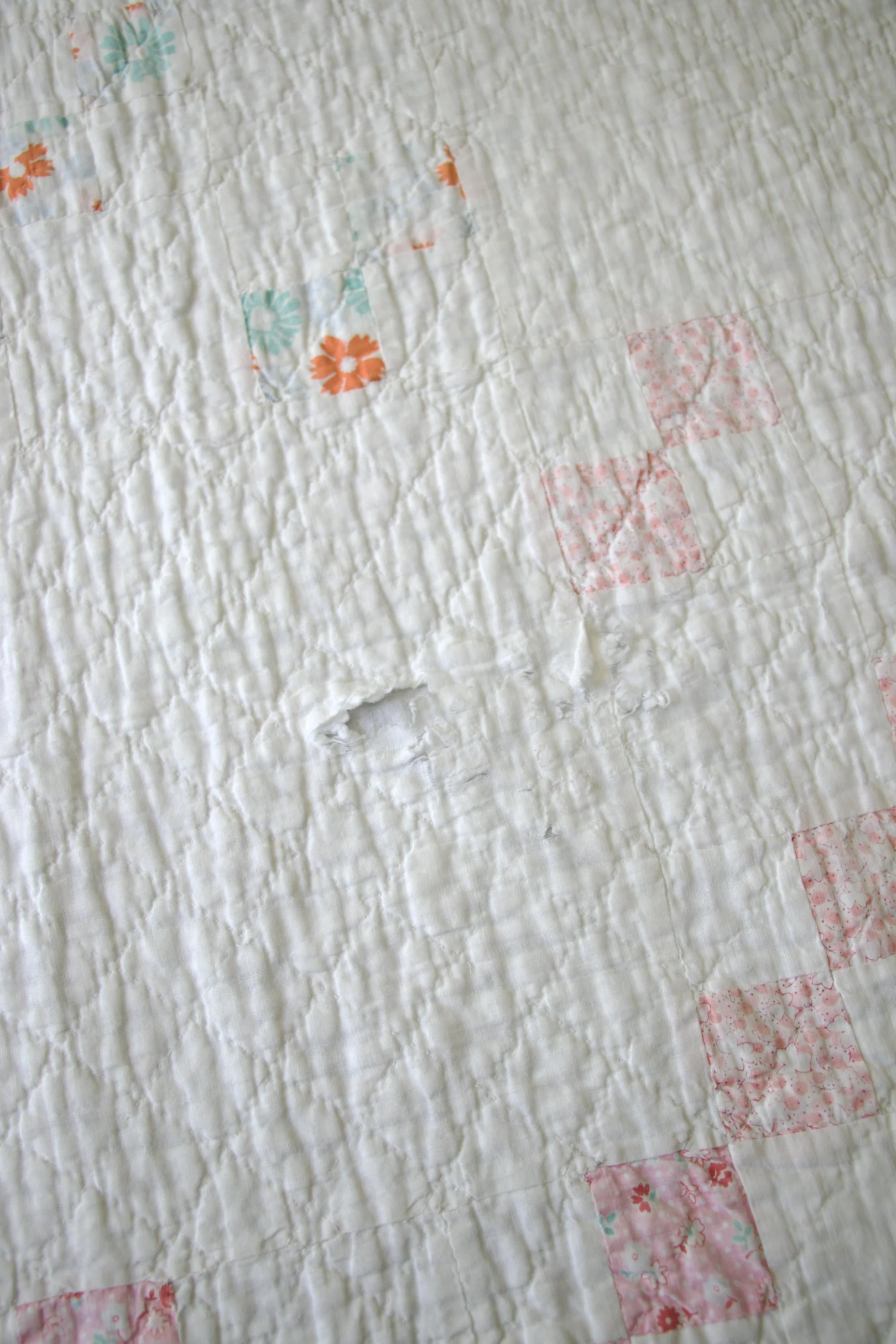
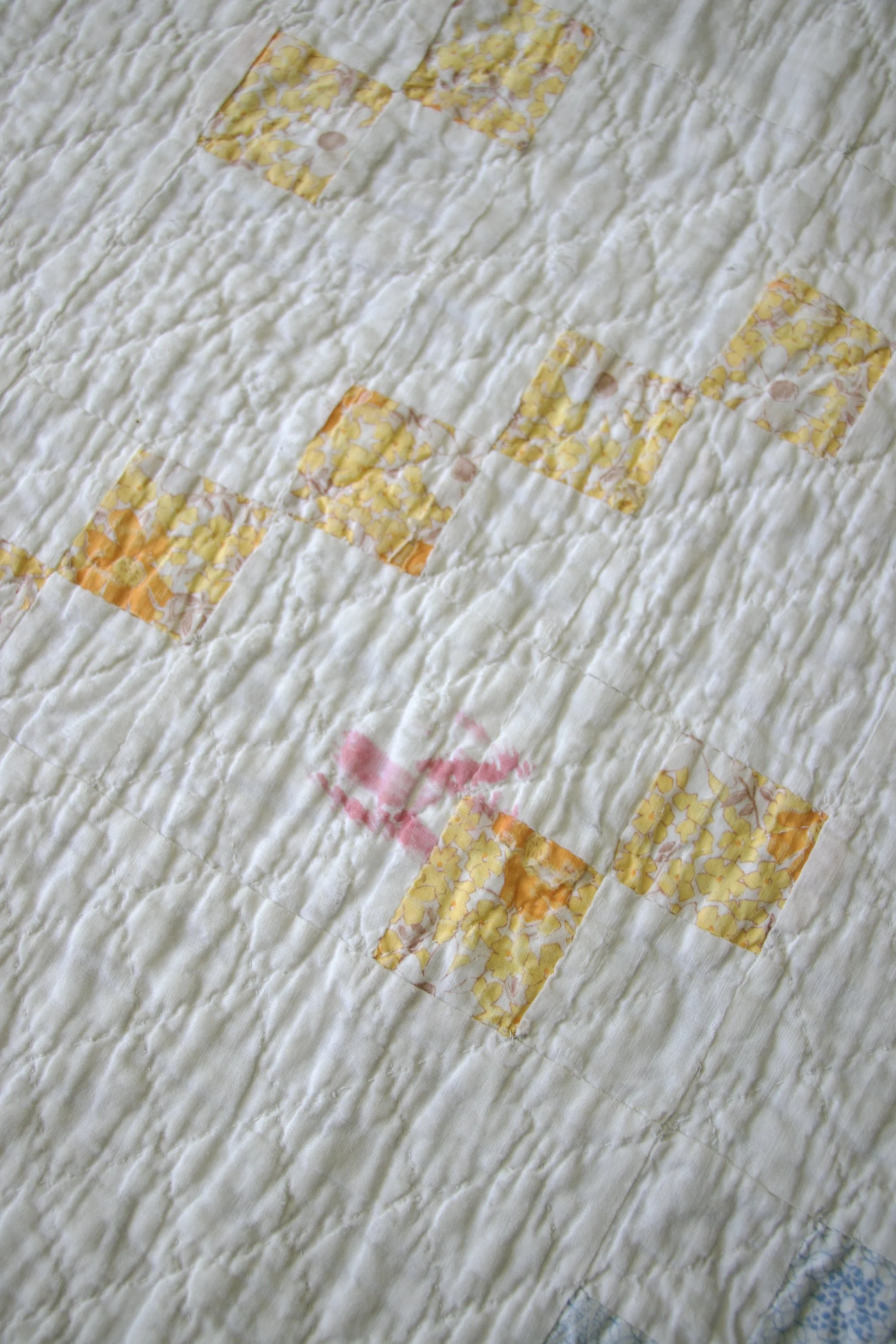
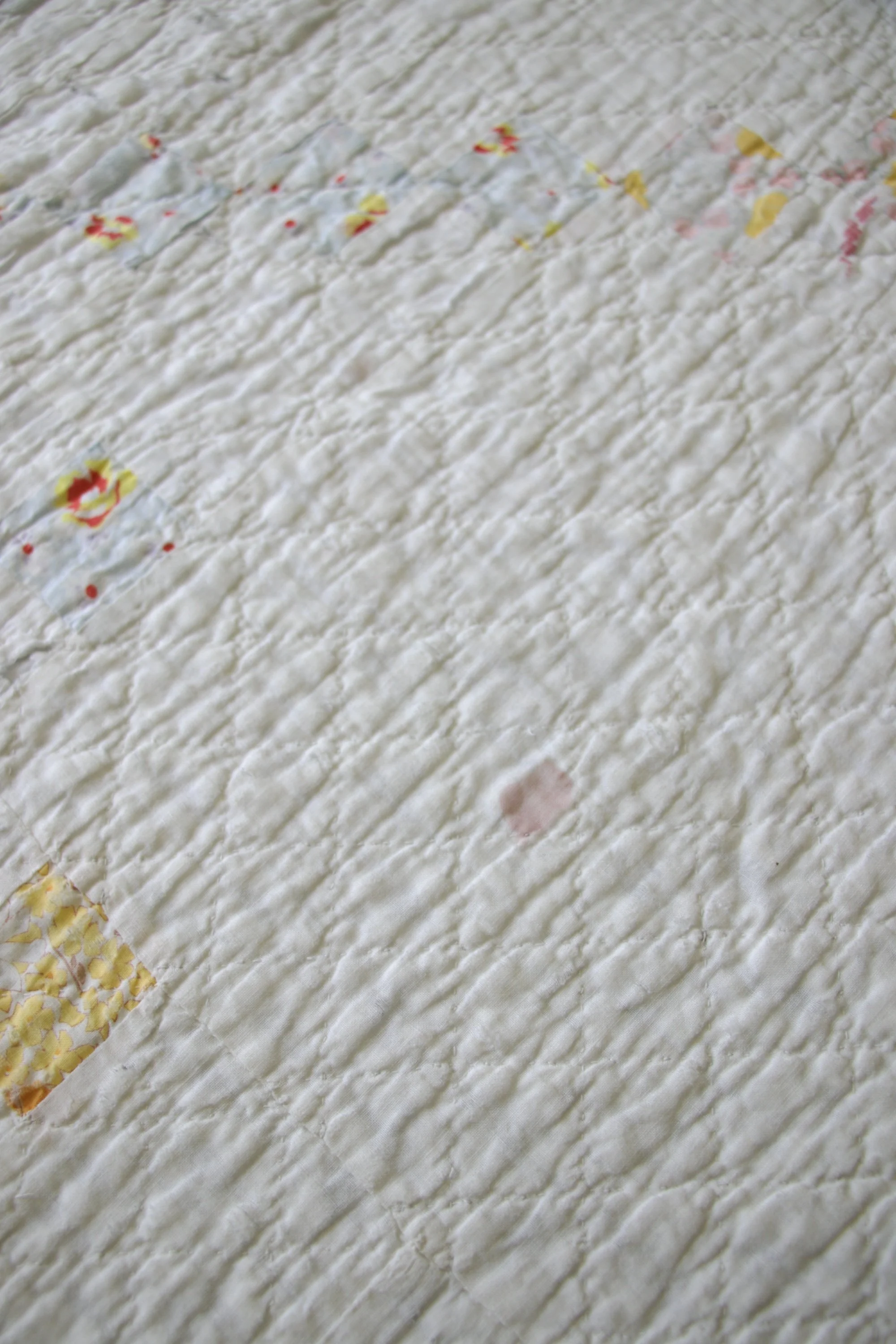
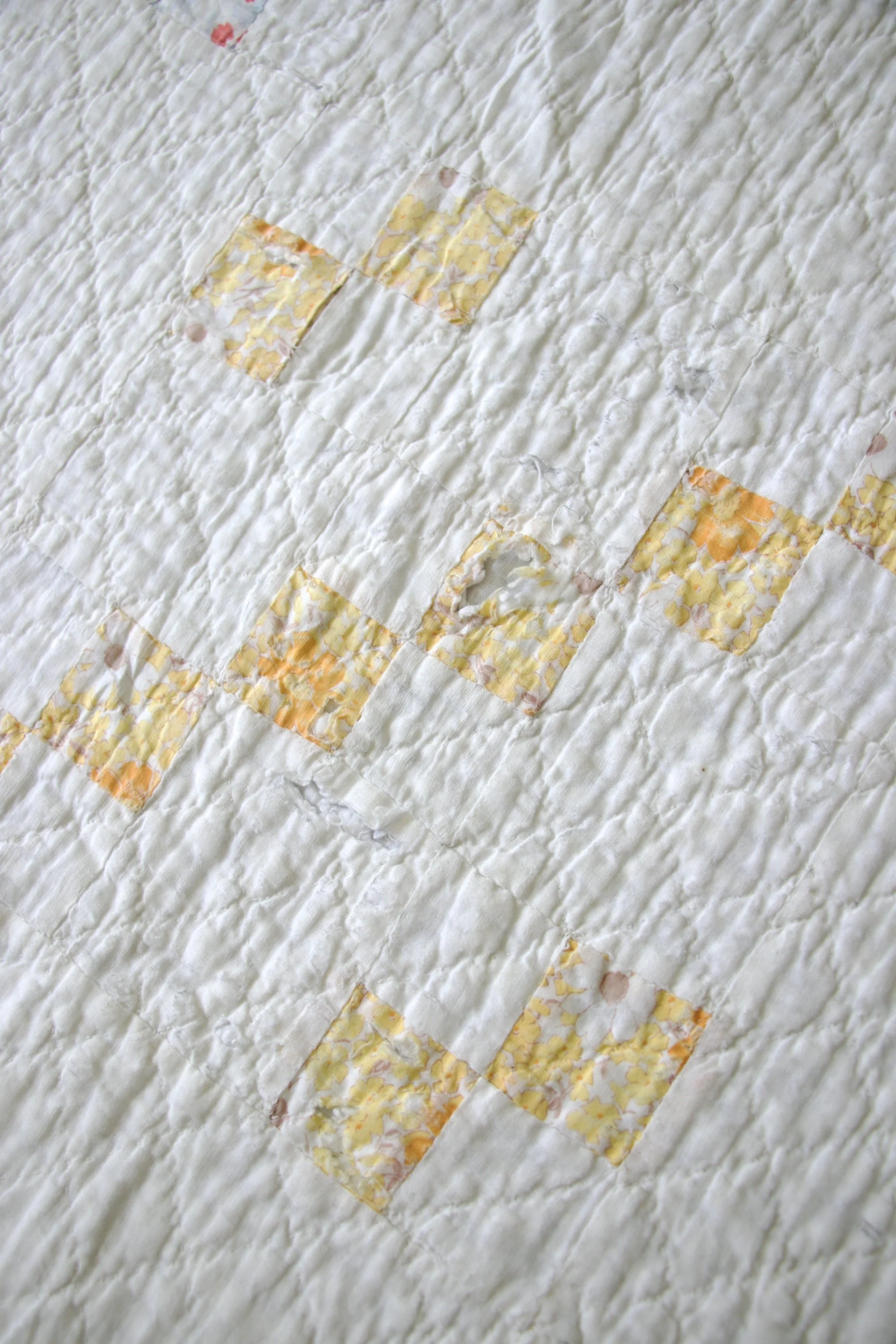
Condition: This quilt is in well-loved antique condition with notable fabric loss, fraying, thinning, and age-related wear throughout. It is best appreciated as a decorative textile, study piece, or collection quilt rather than for heavy everyday use.
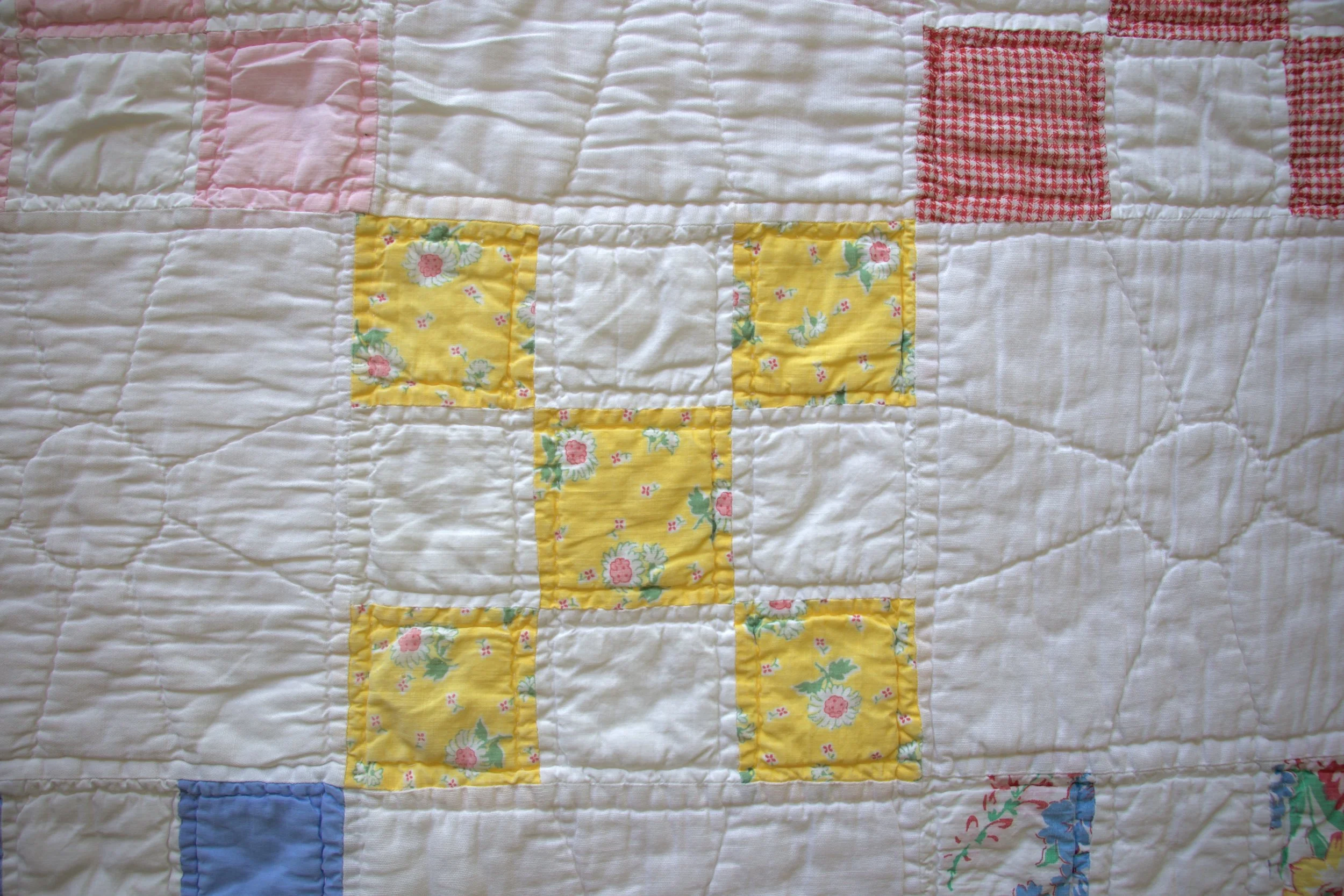
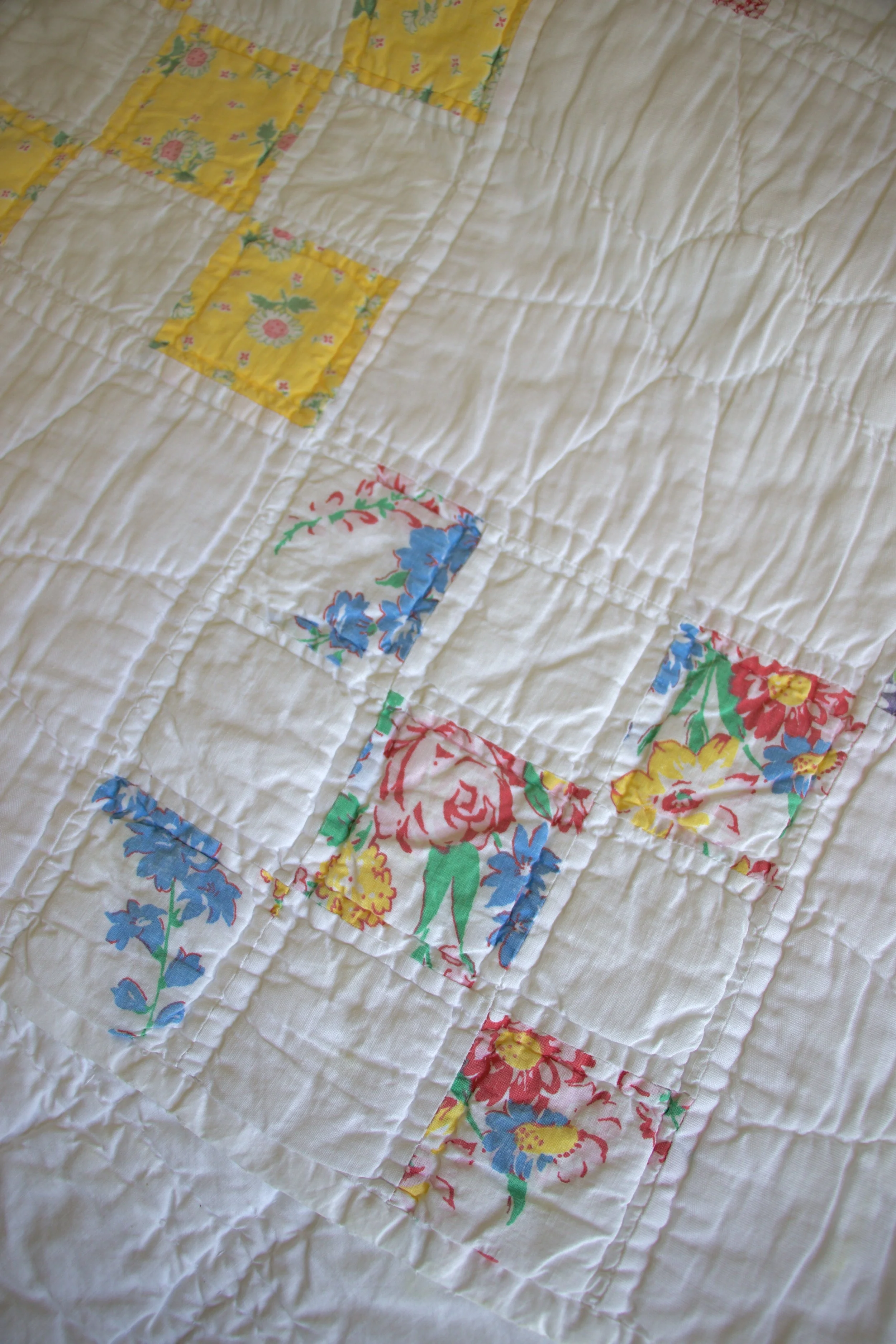
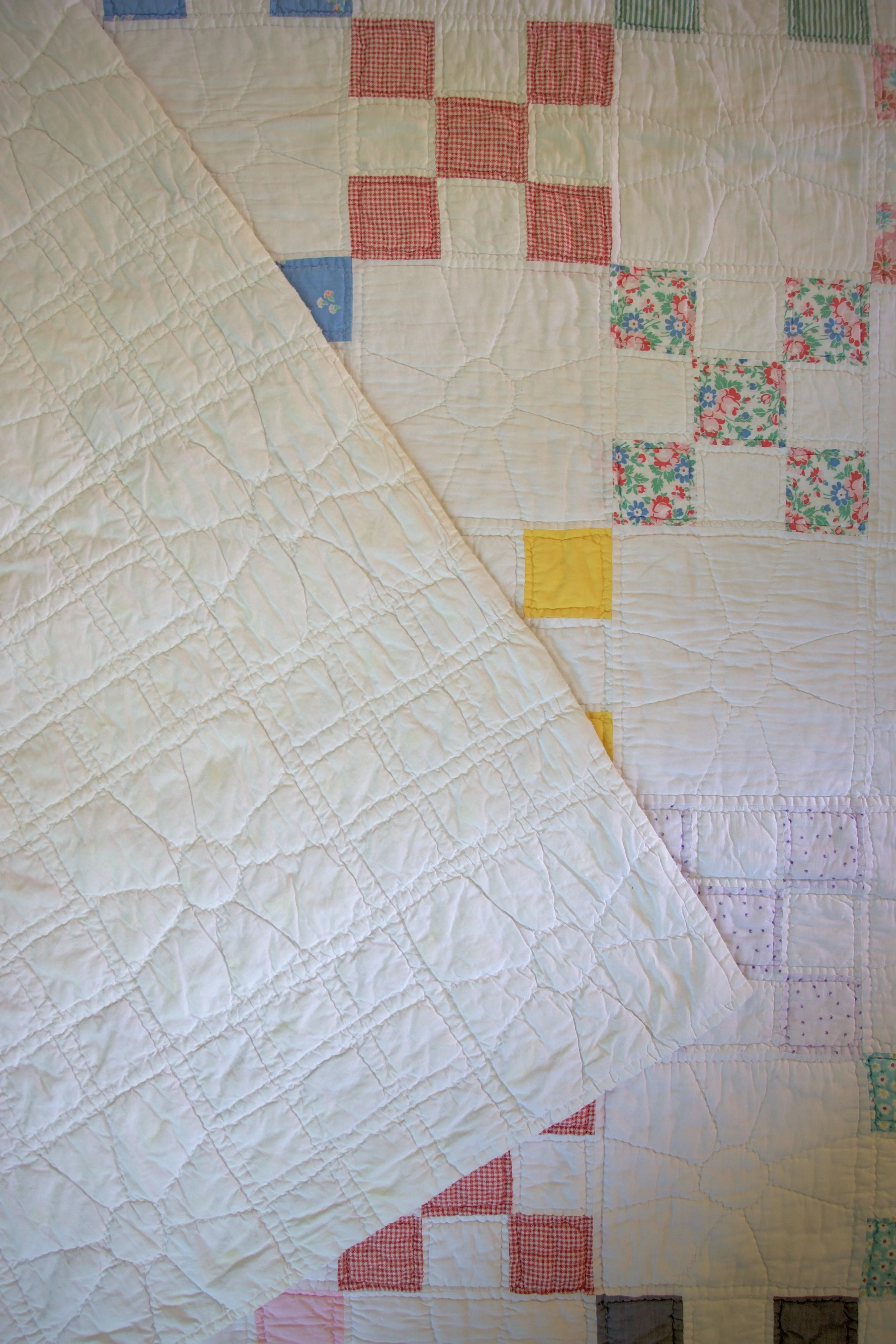
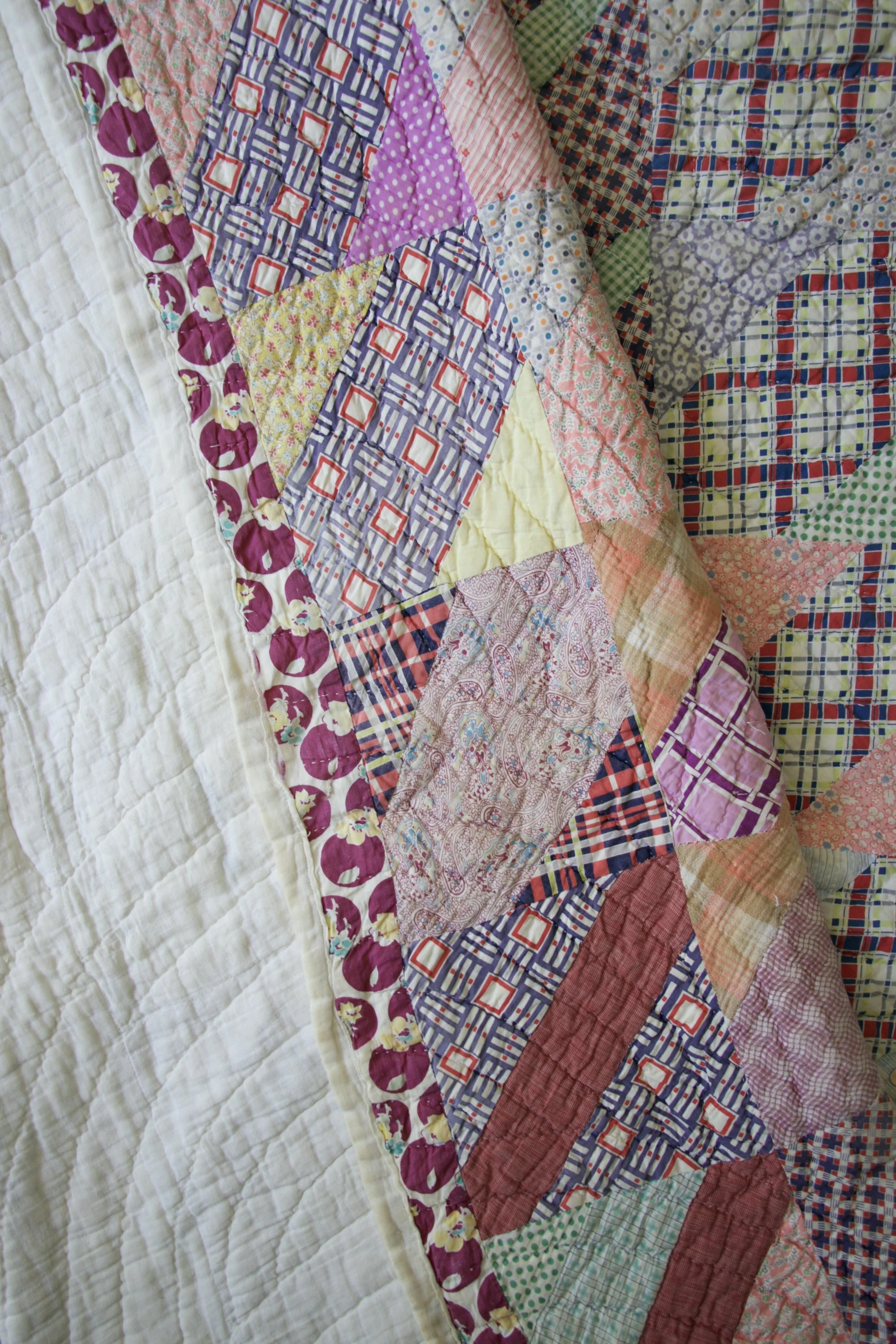
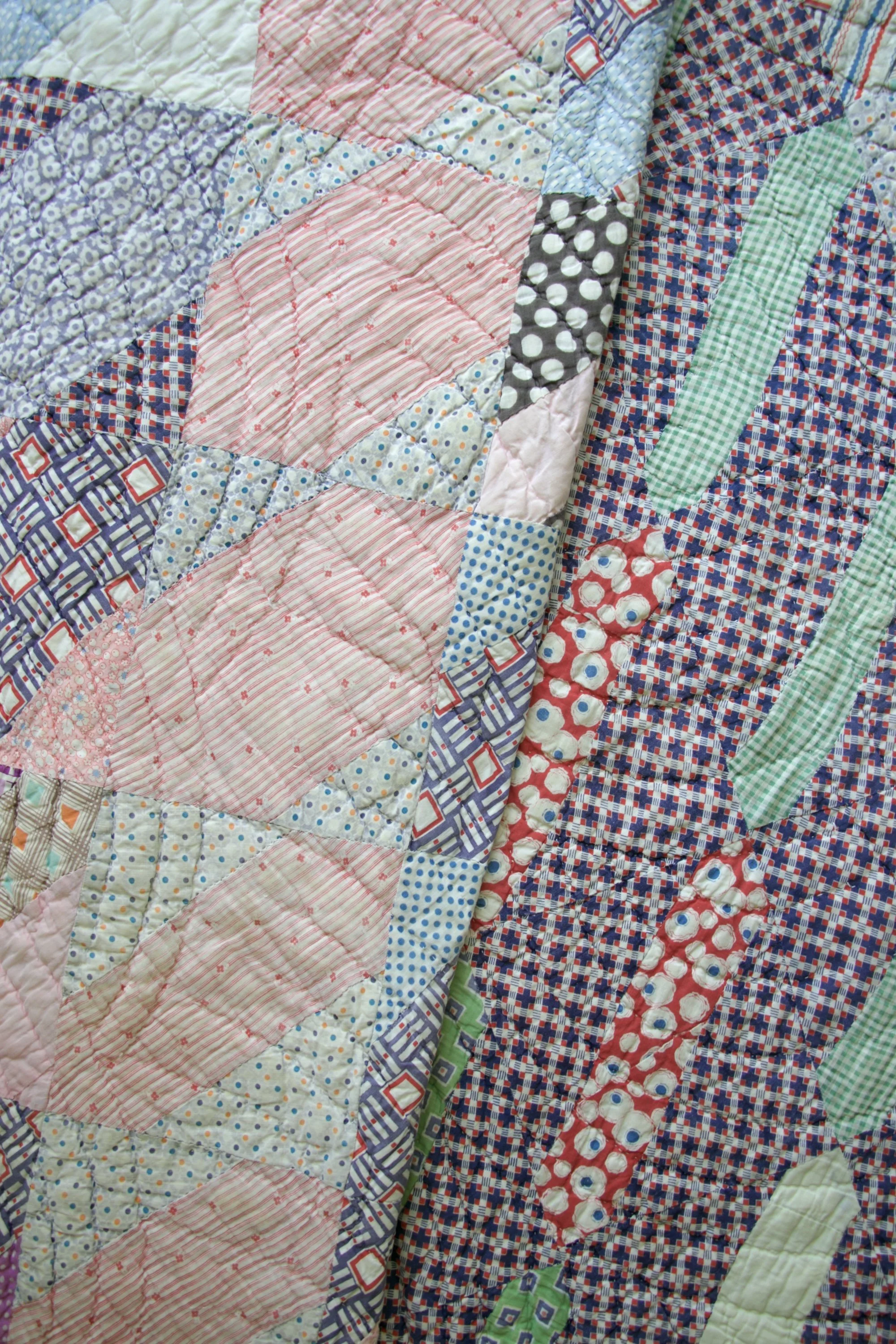
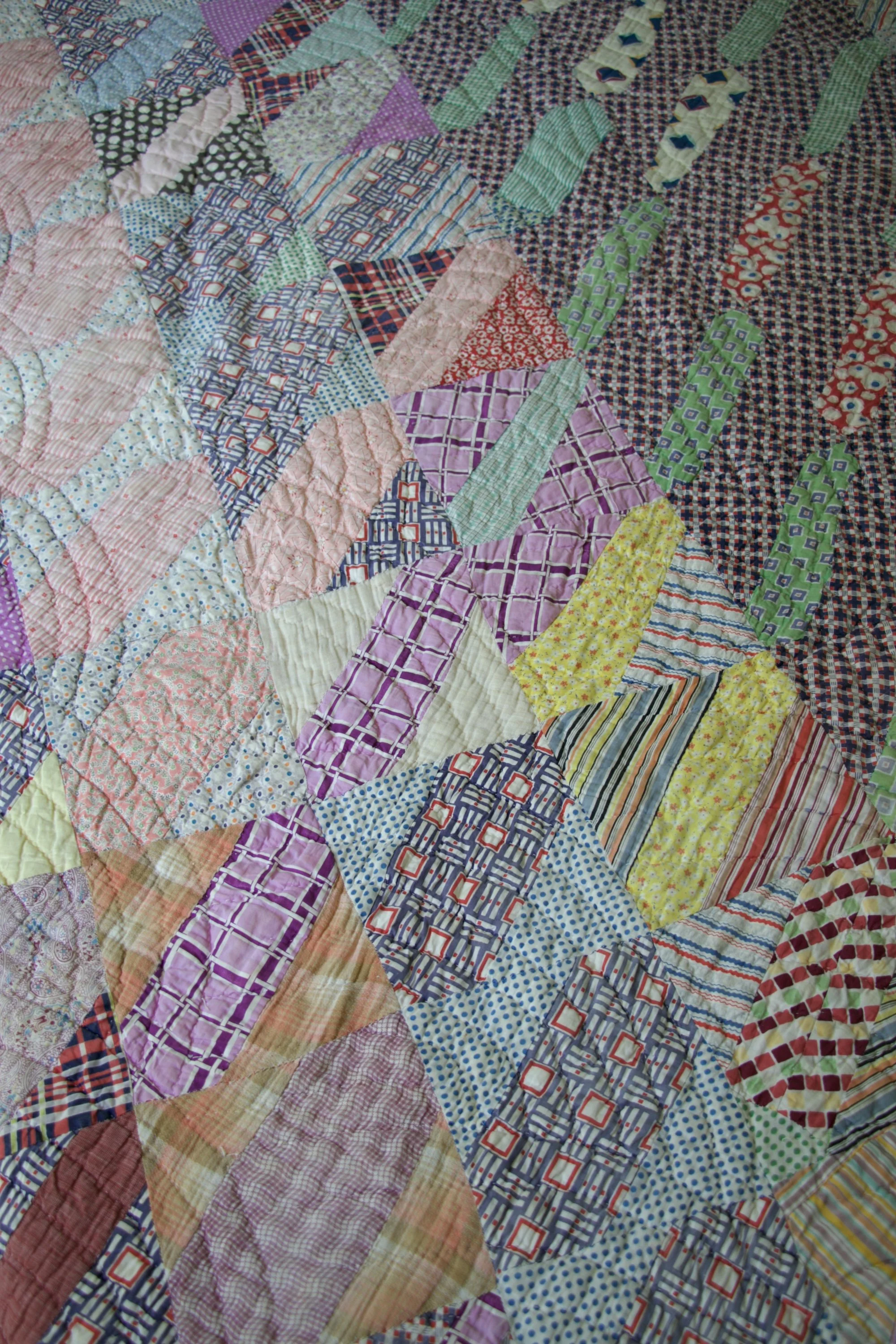
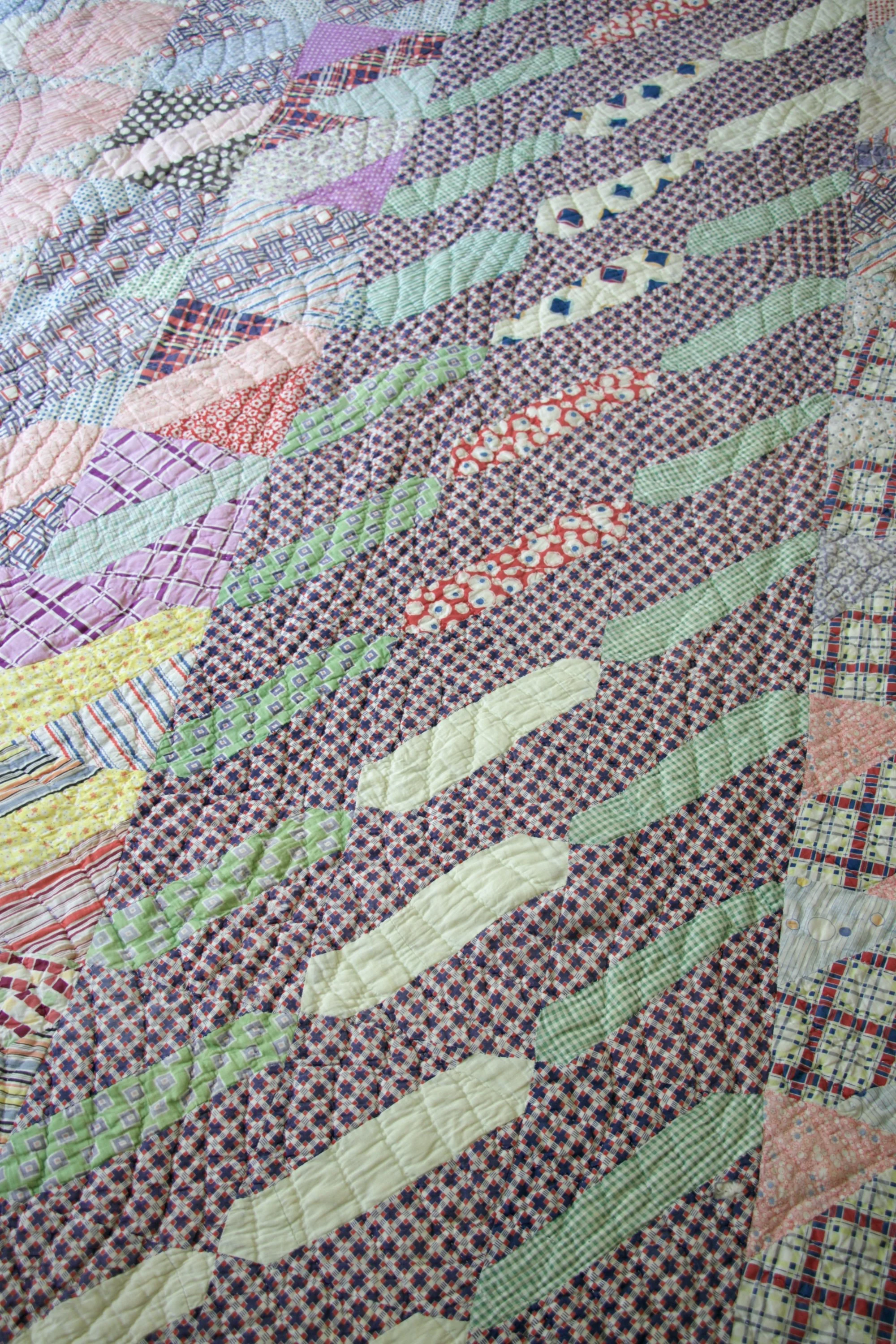
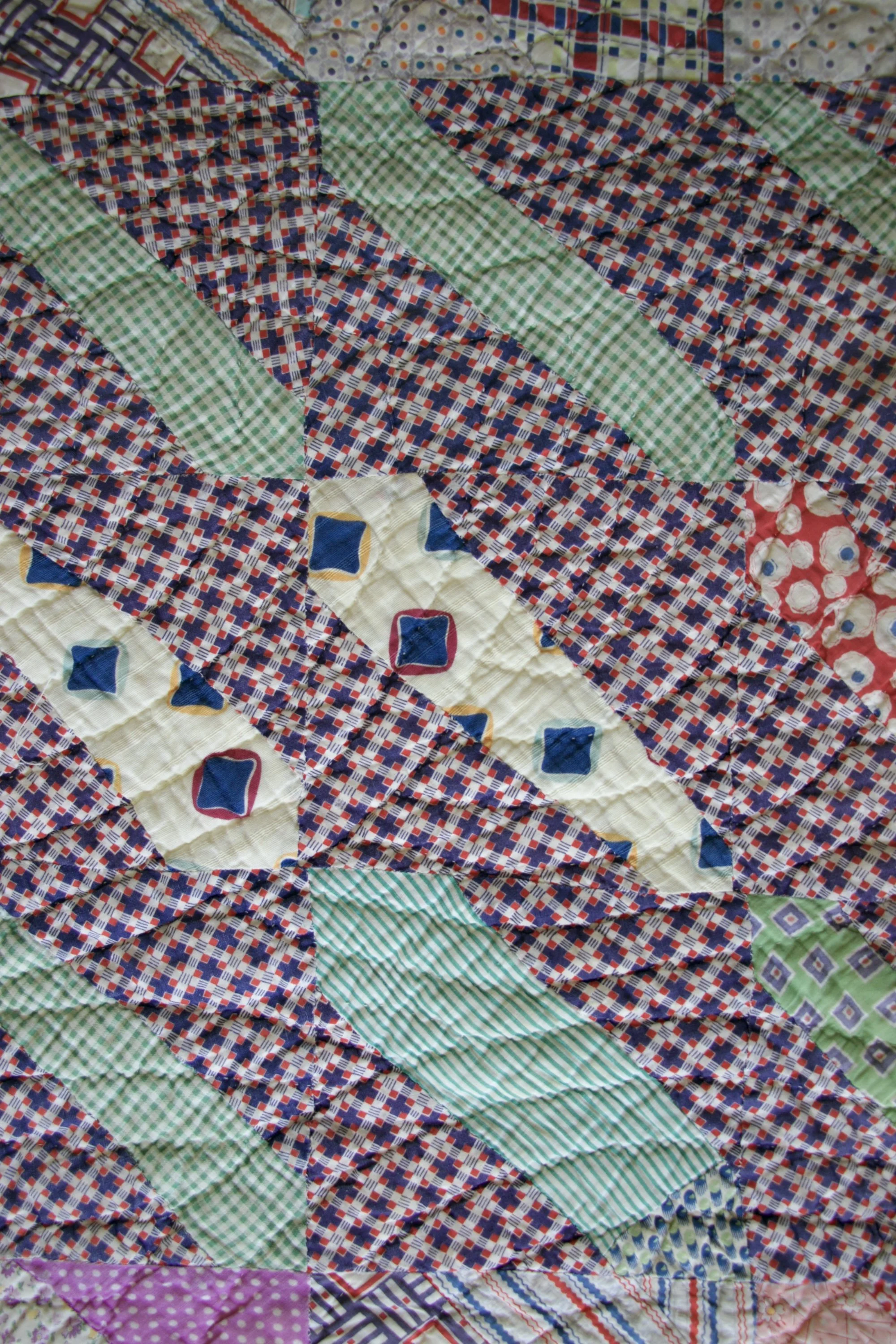
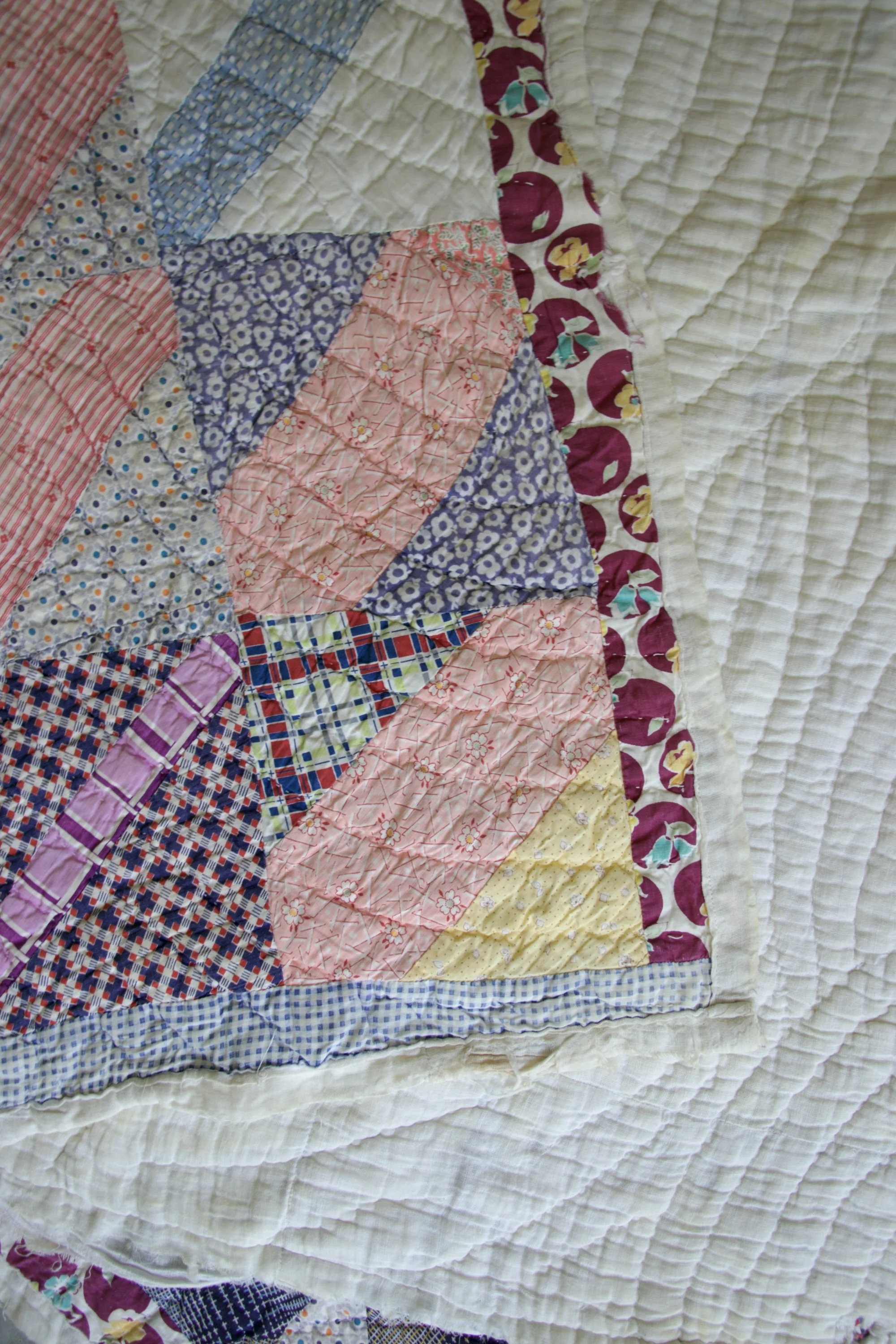
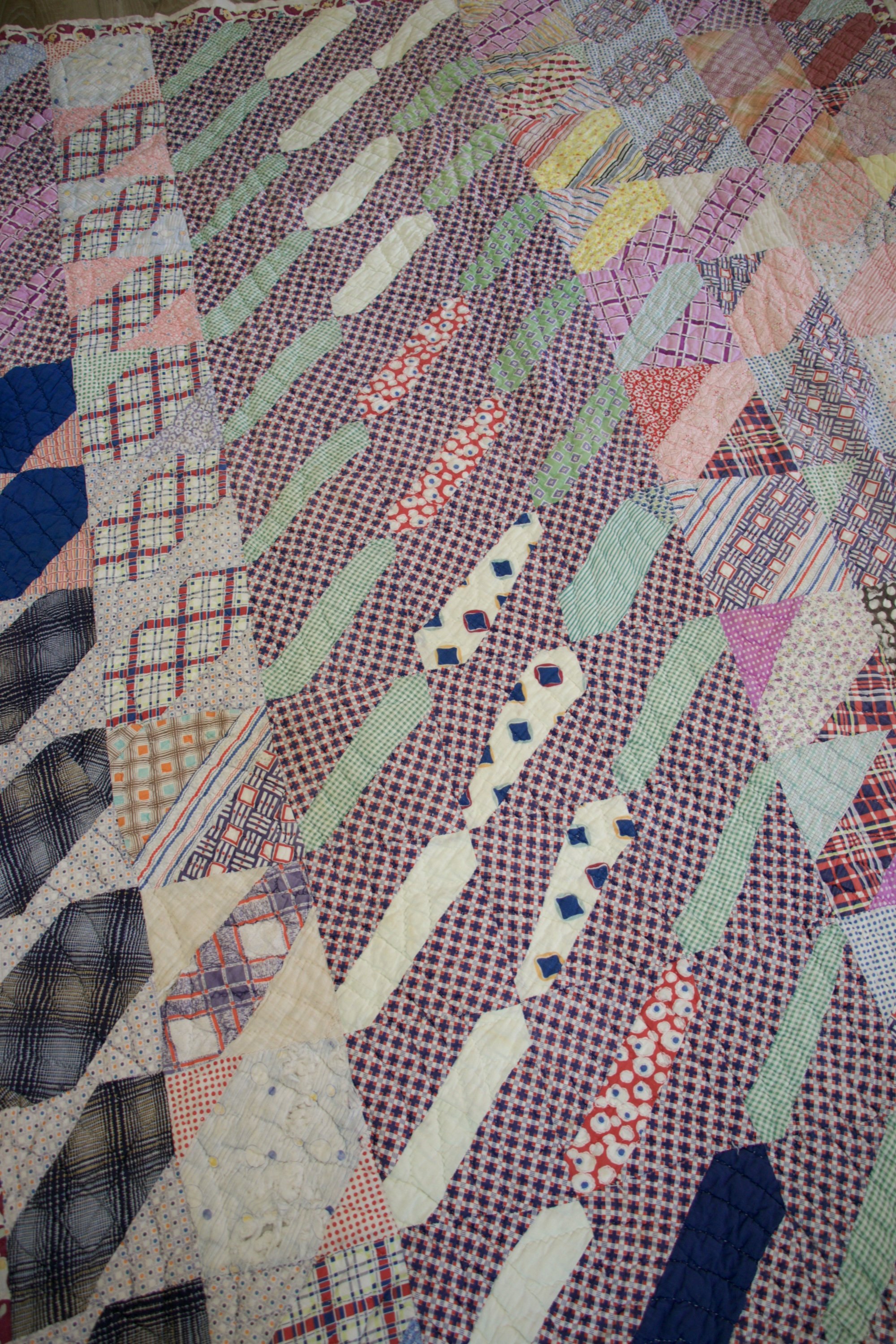
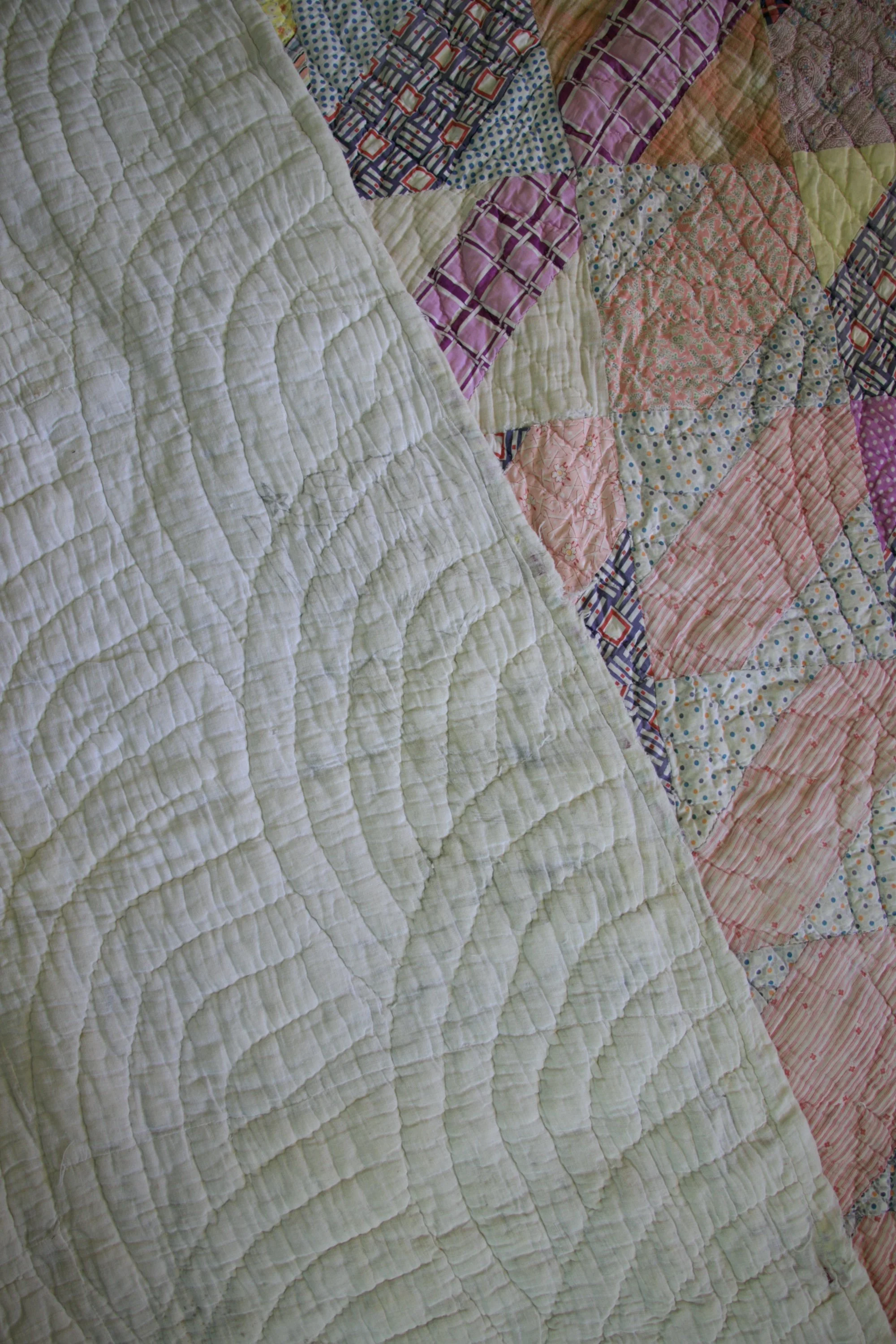
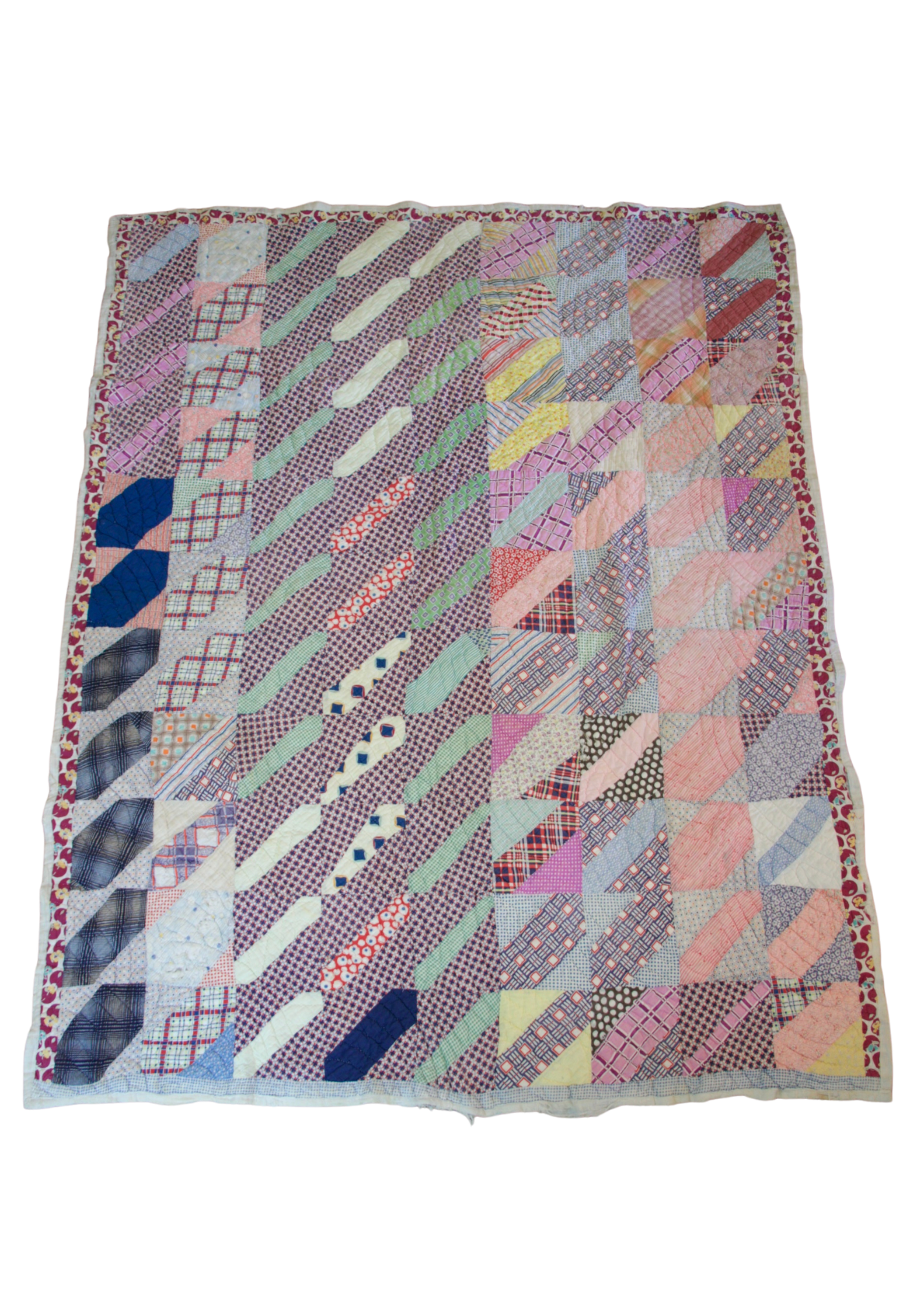
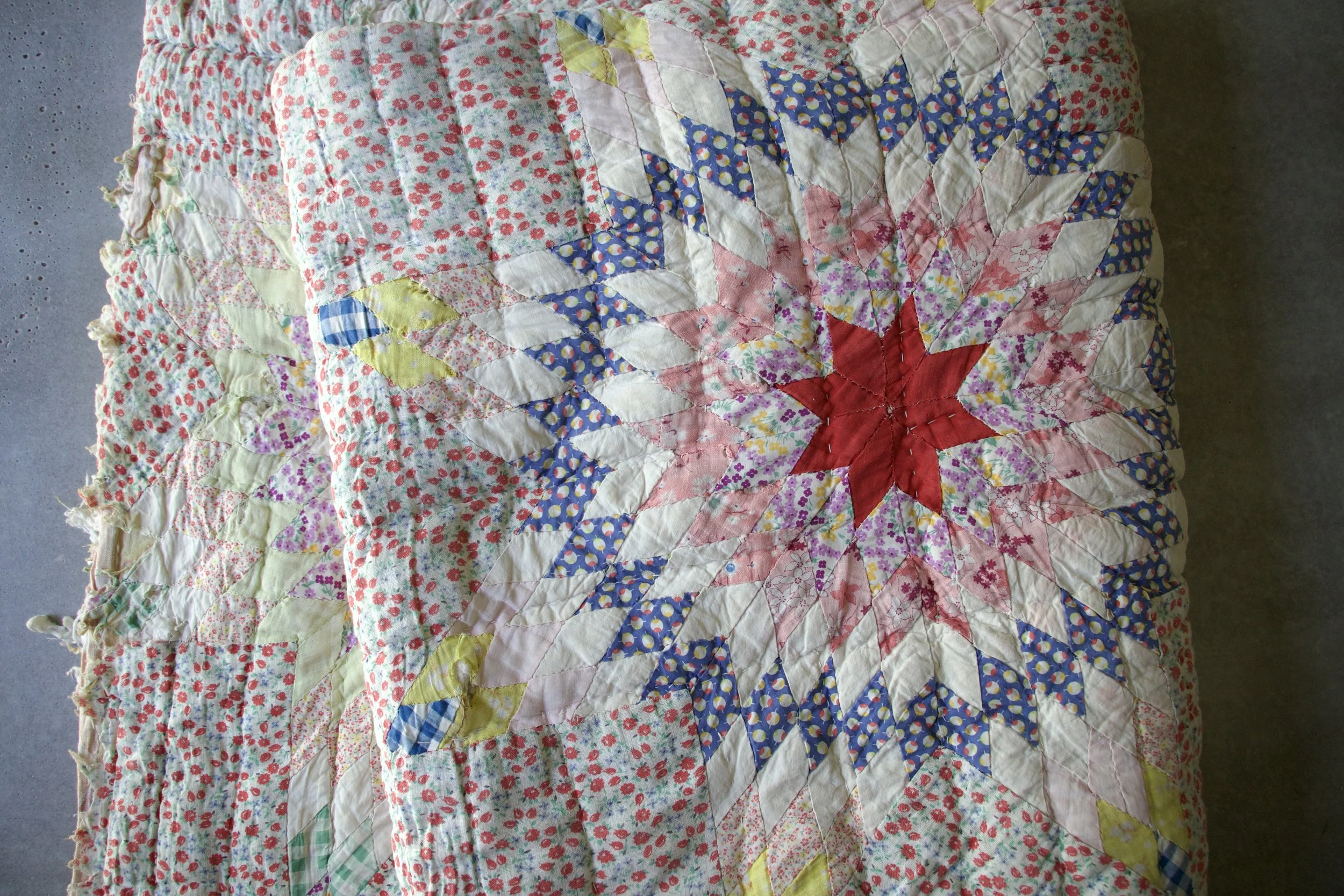
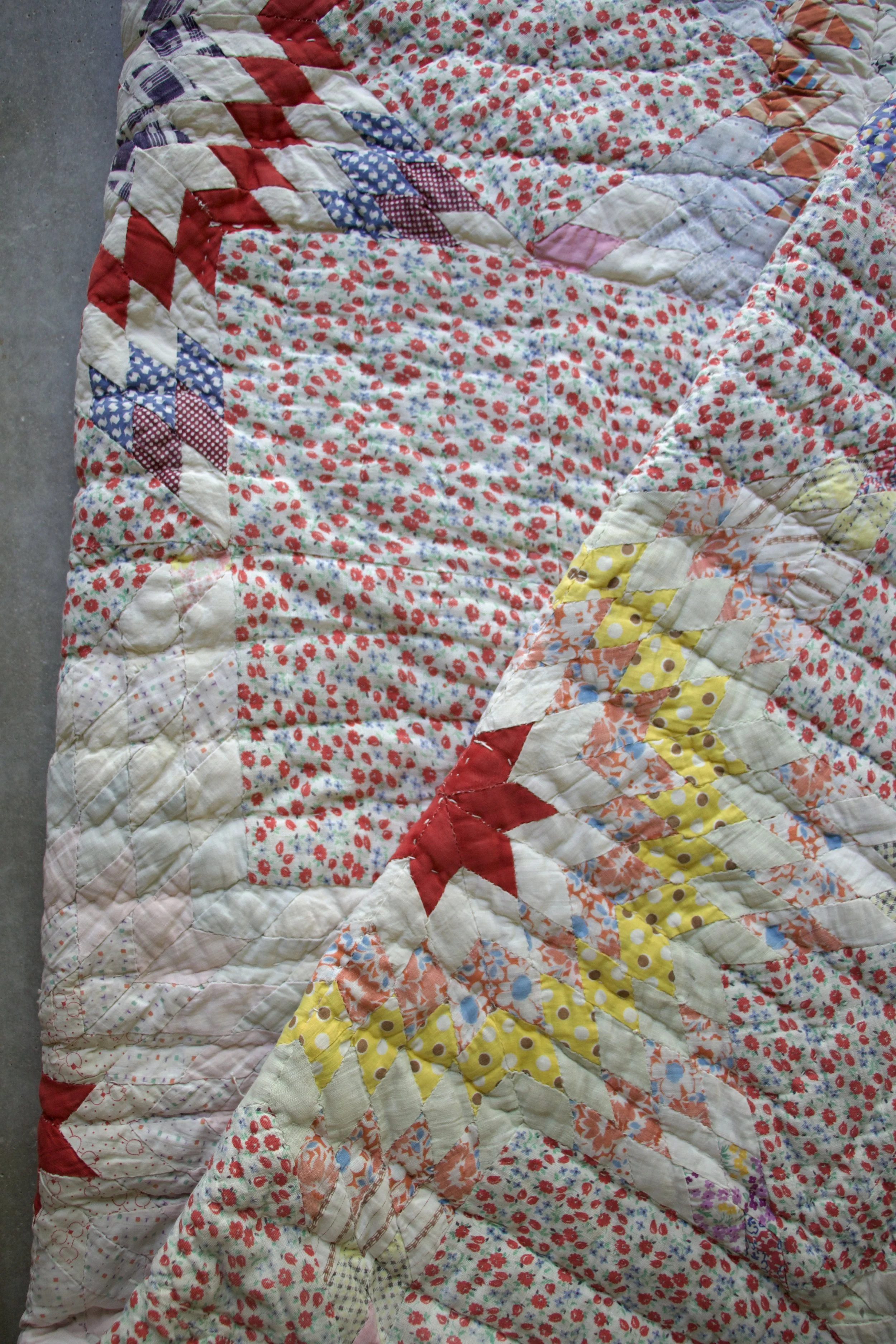
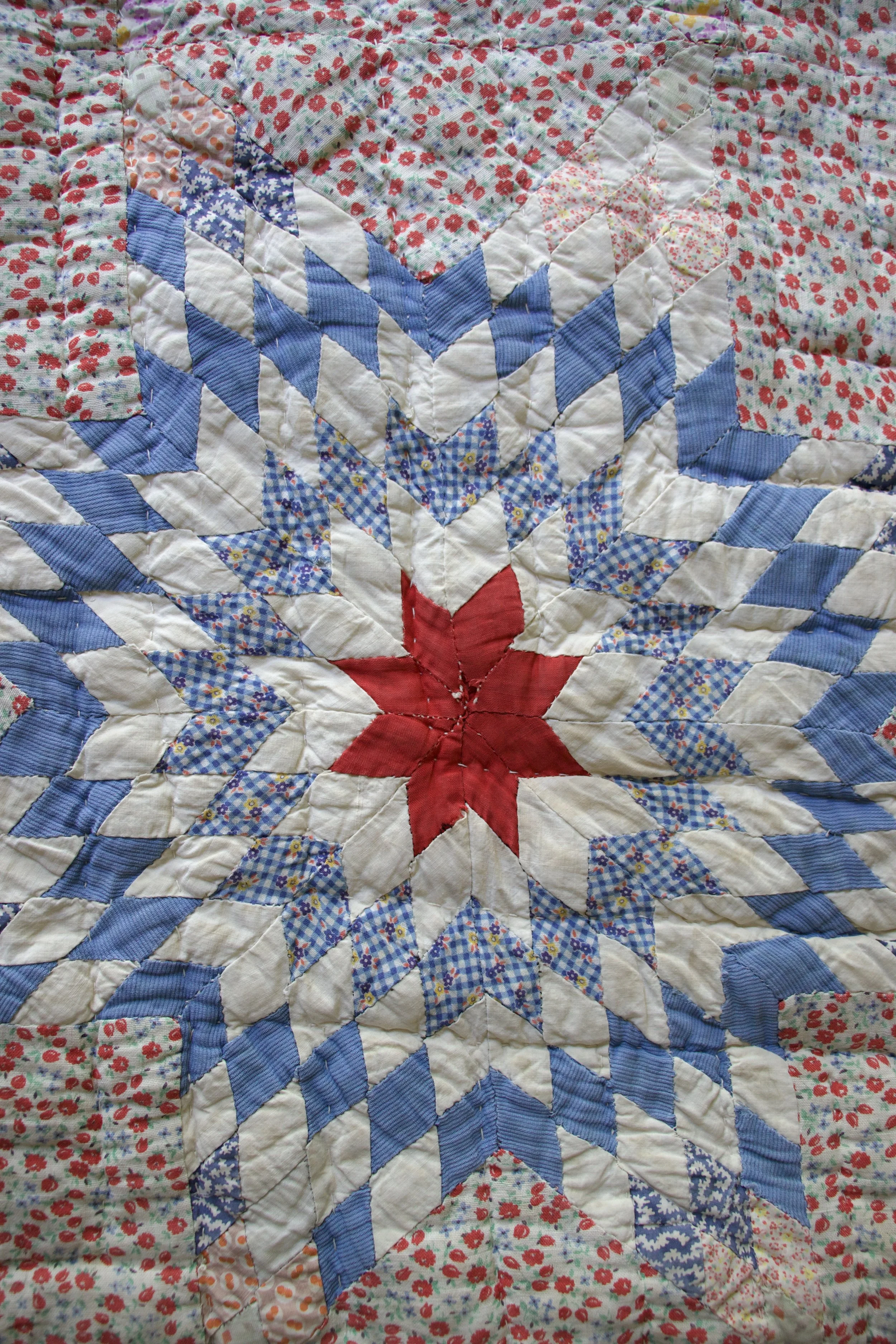
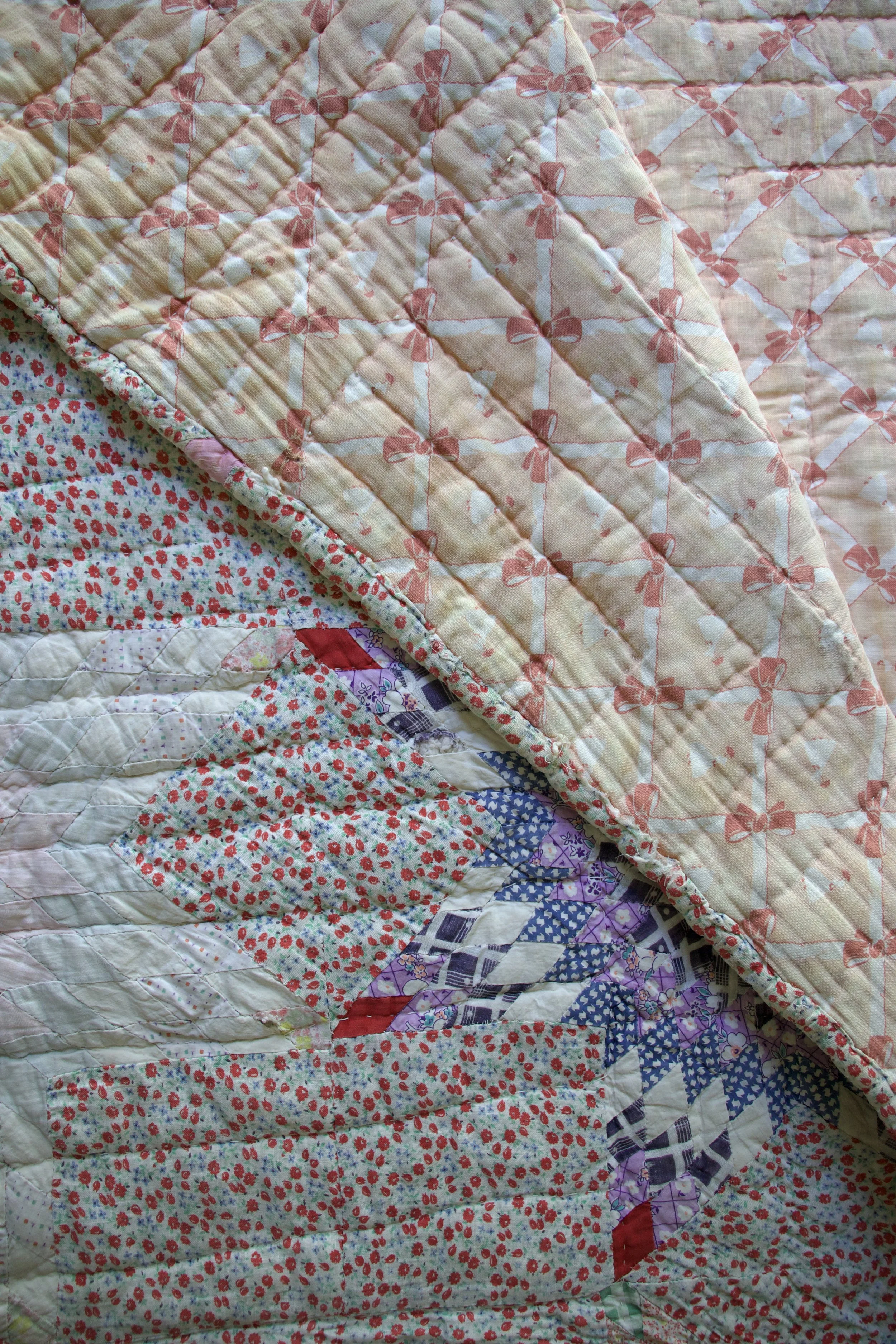
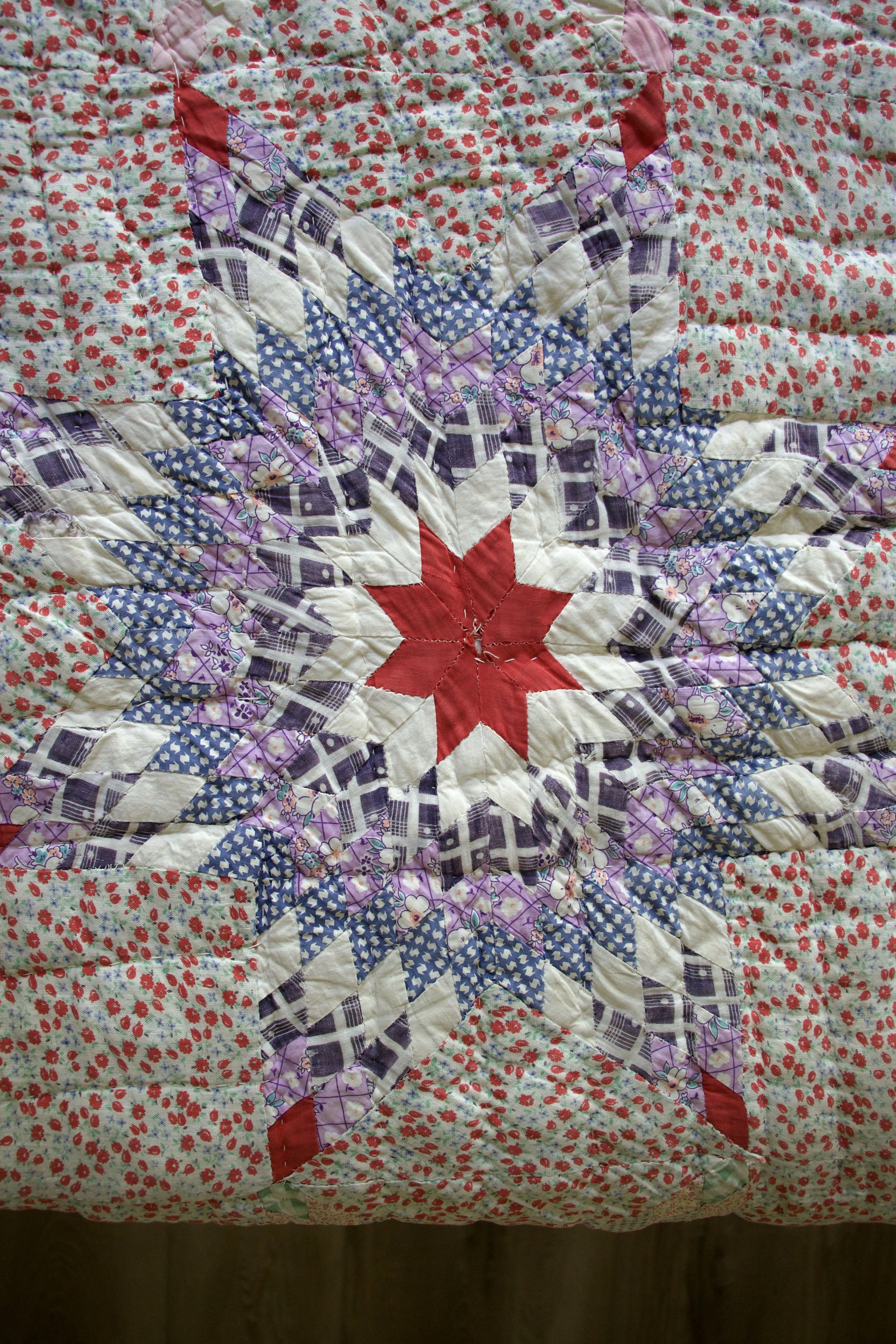
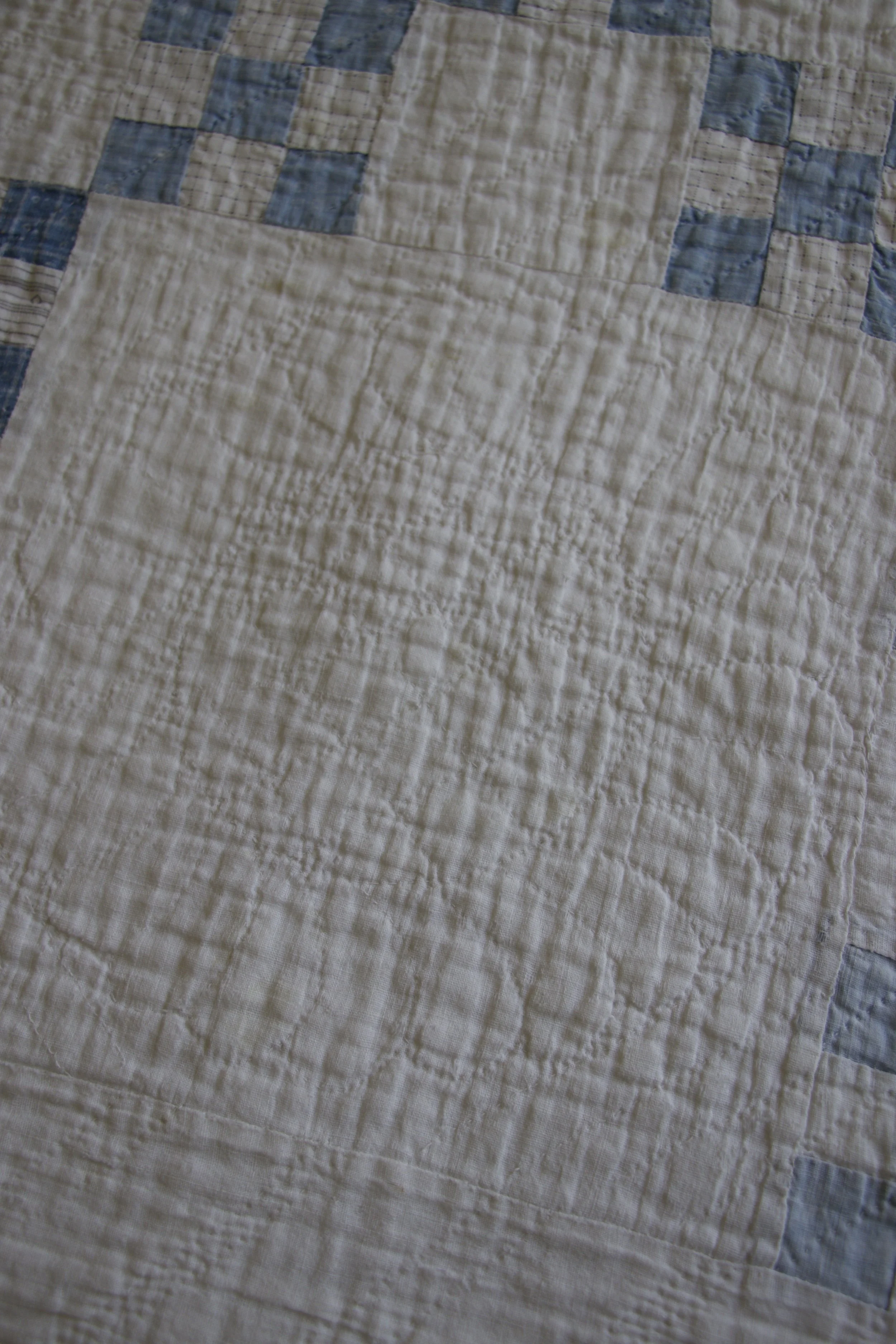
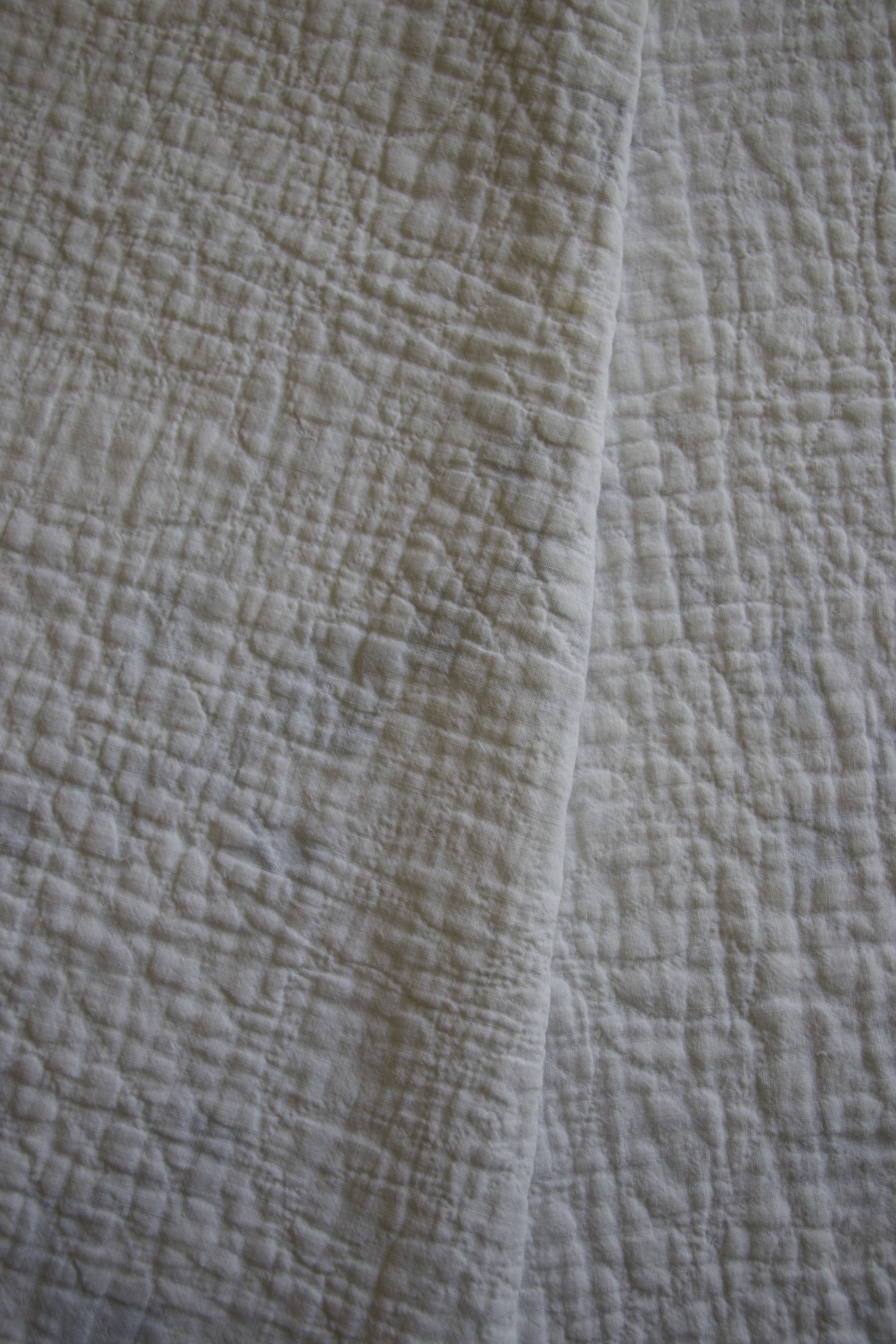
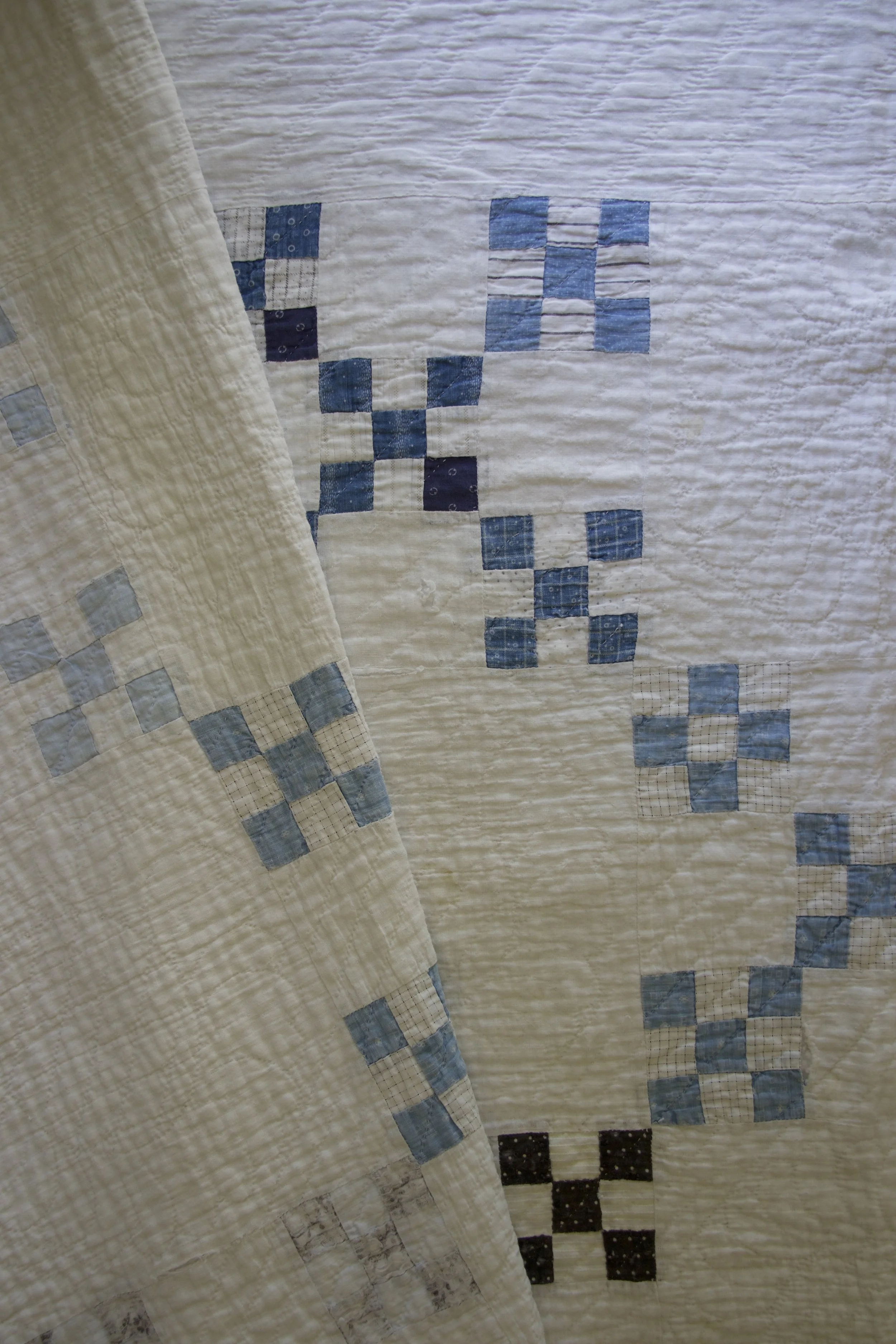
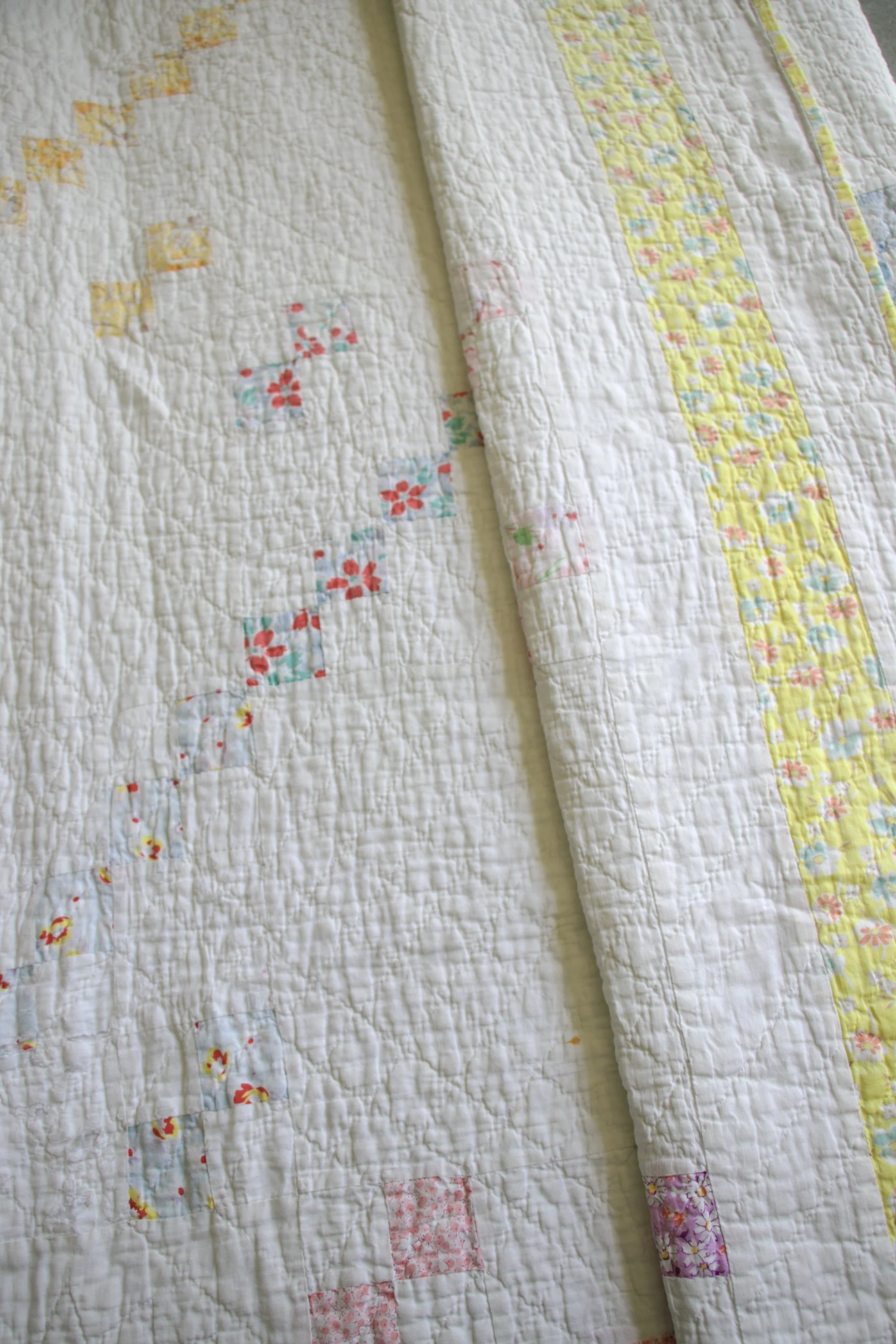
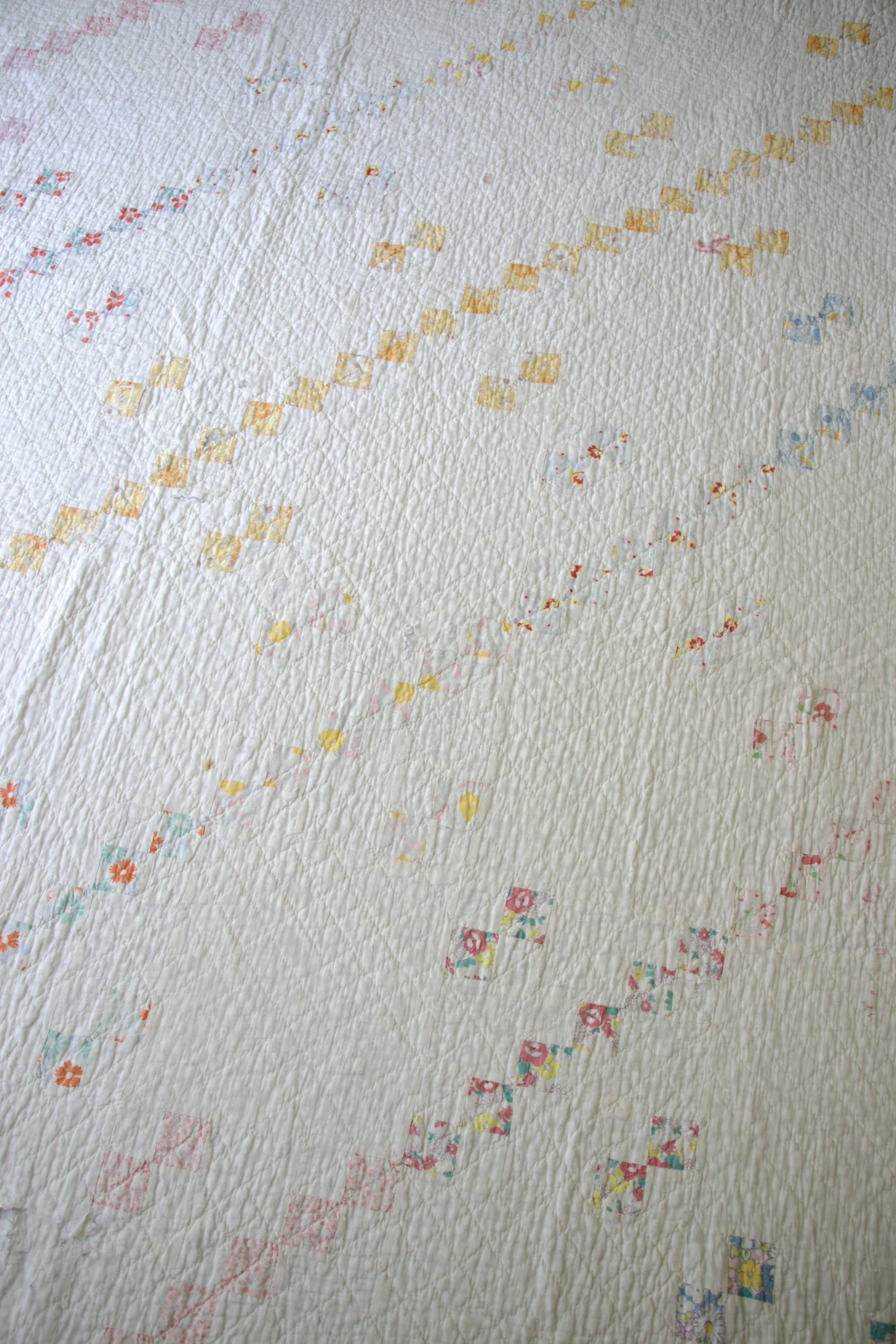
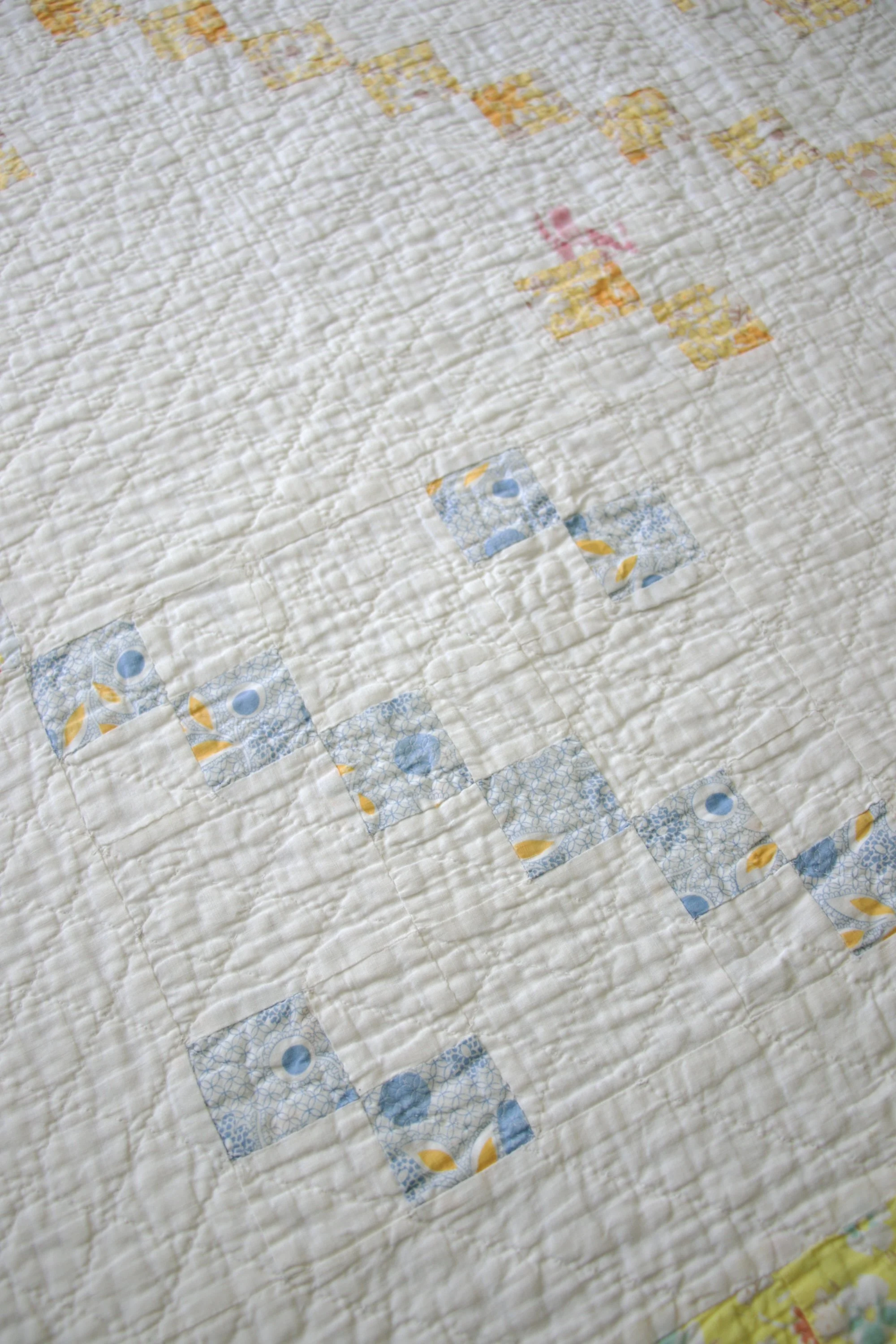
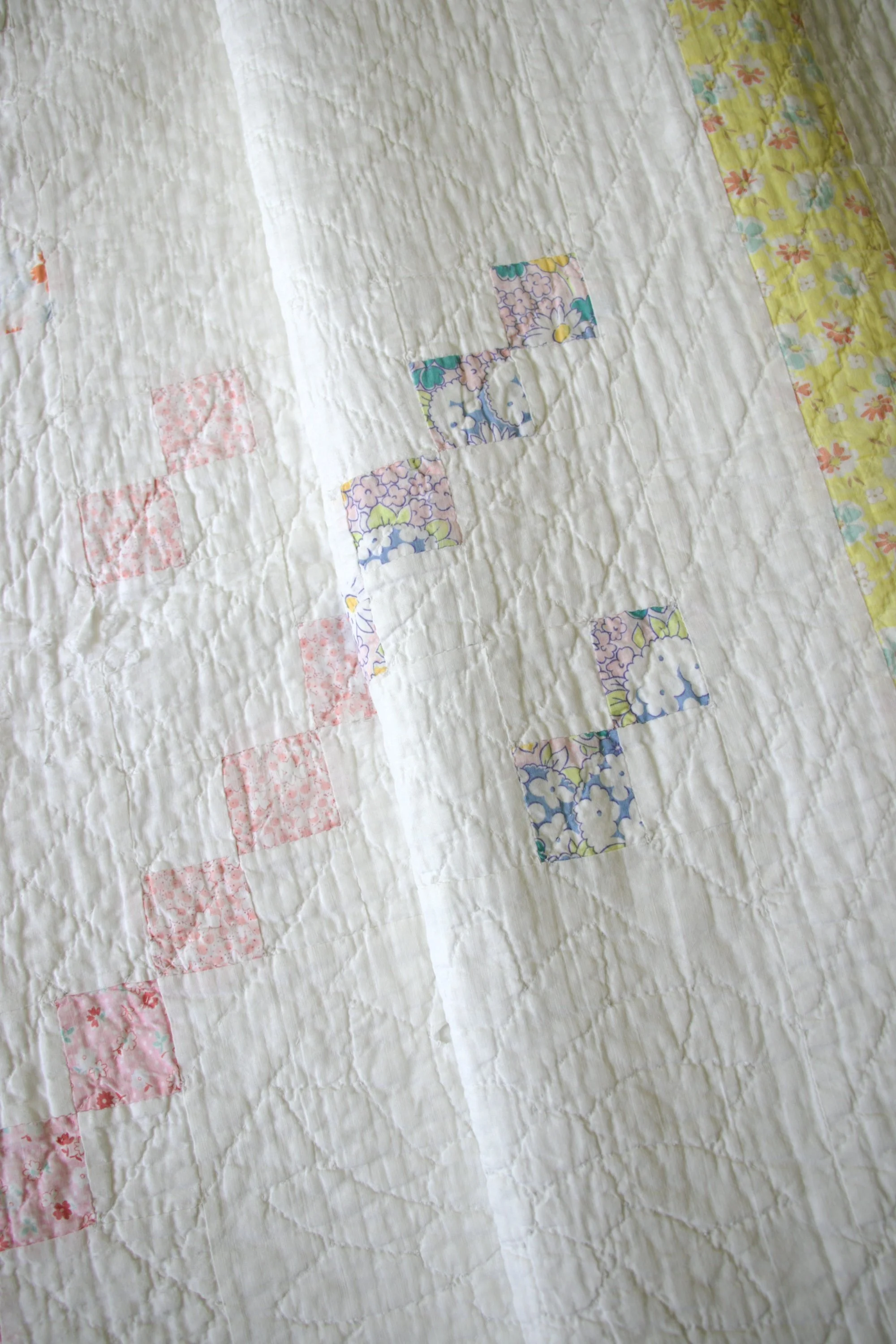
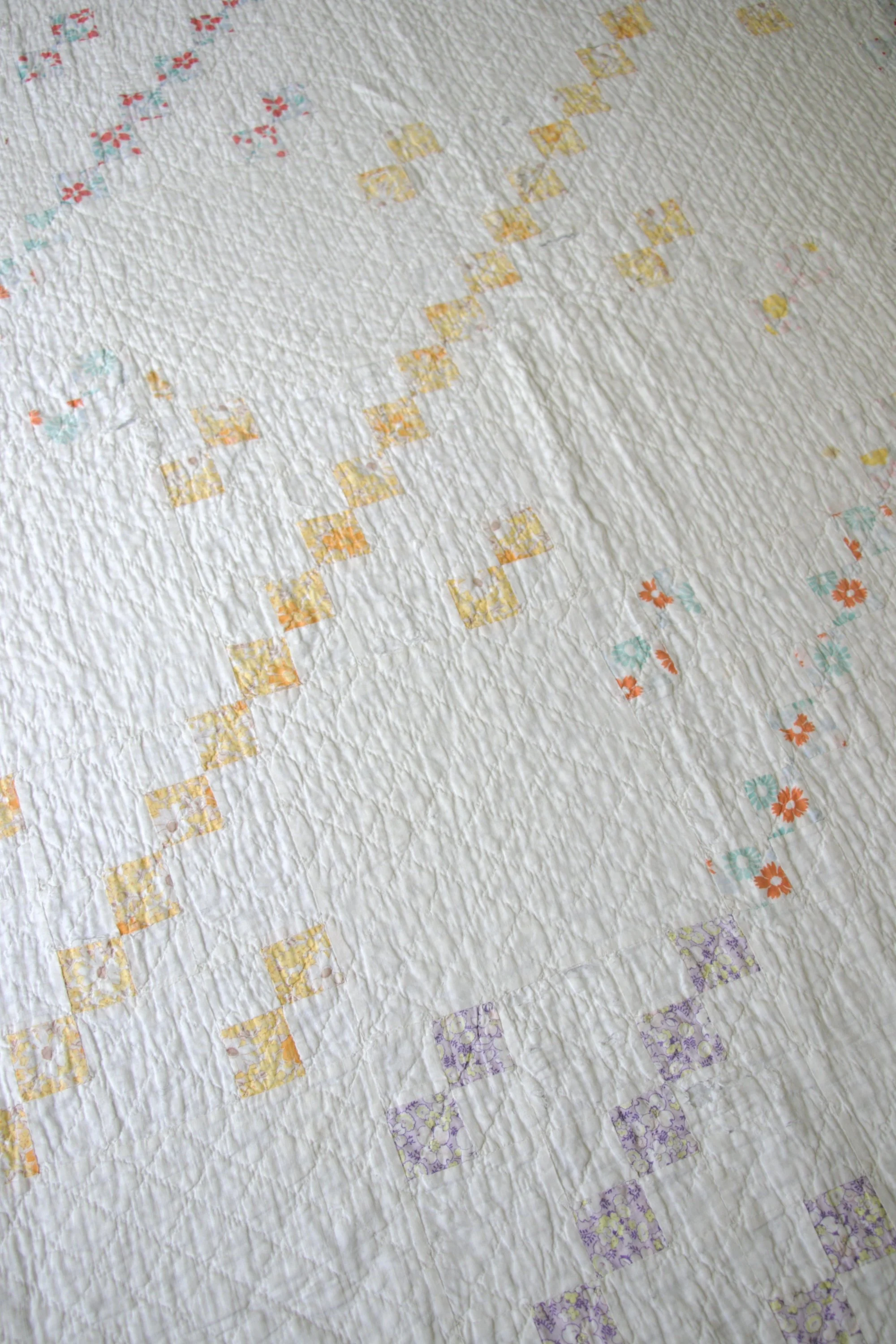
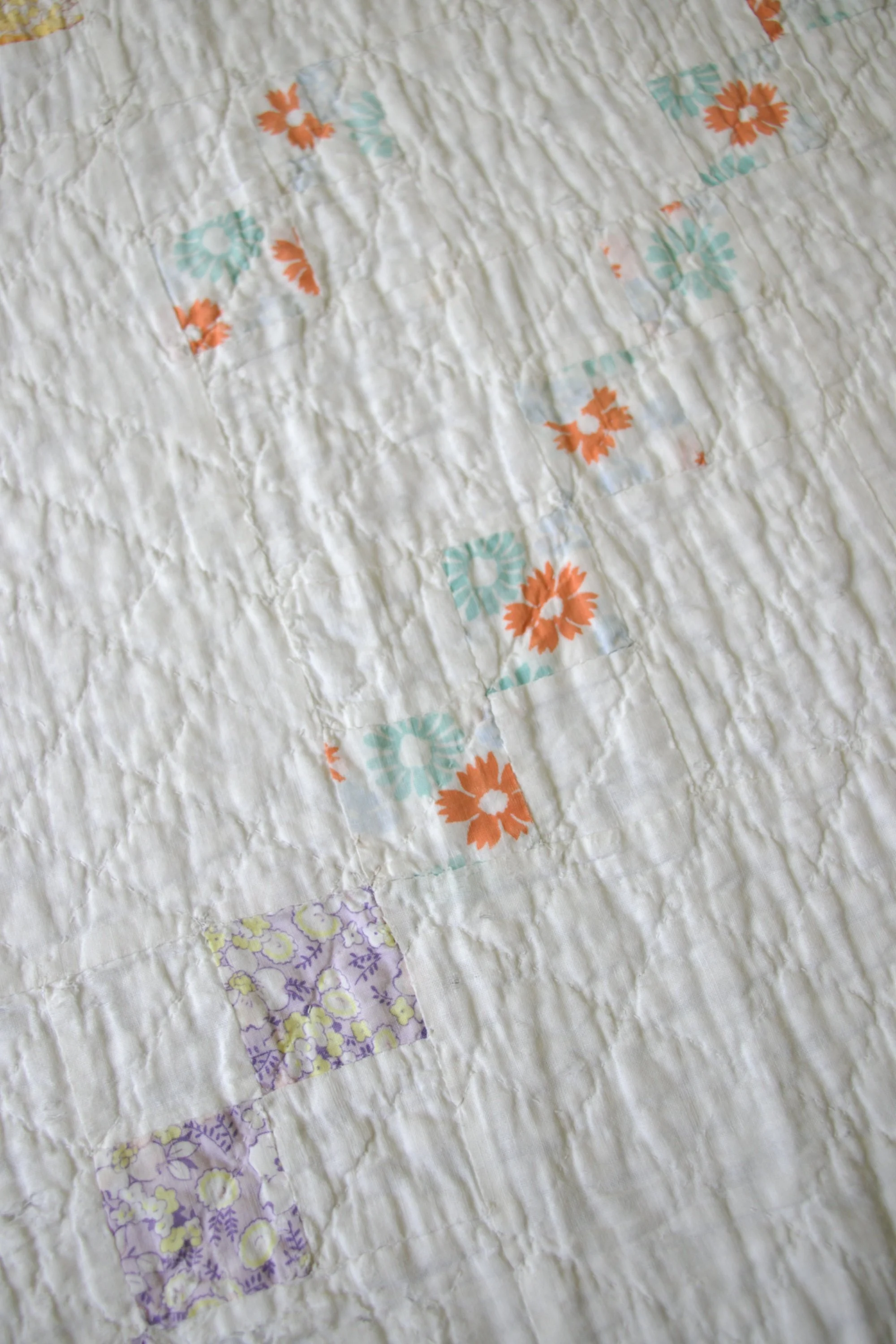
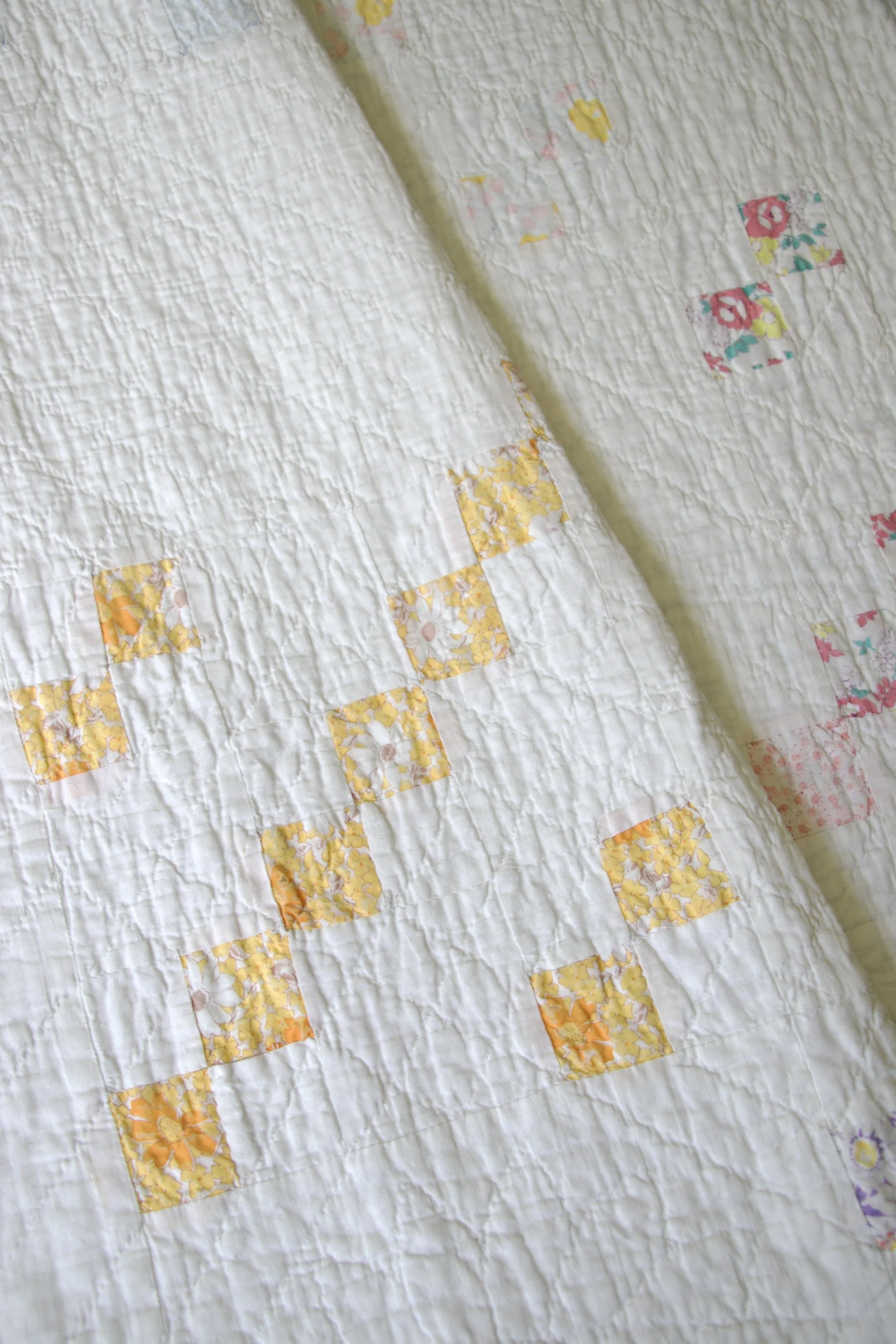
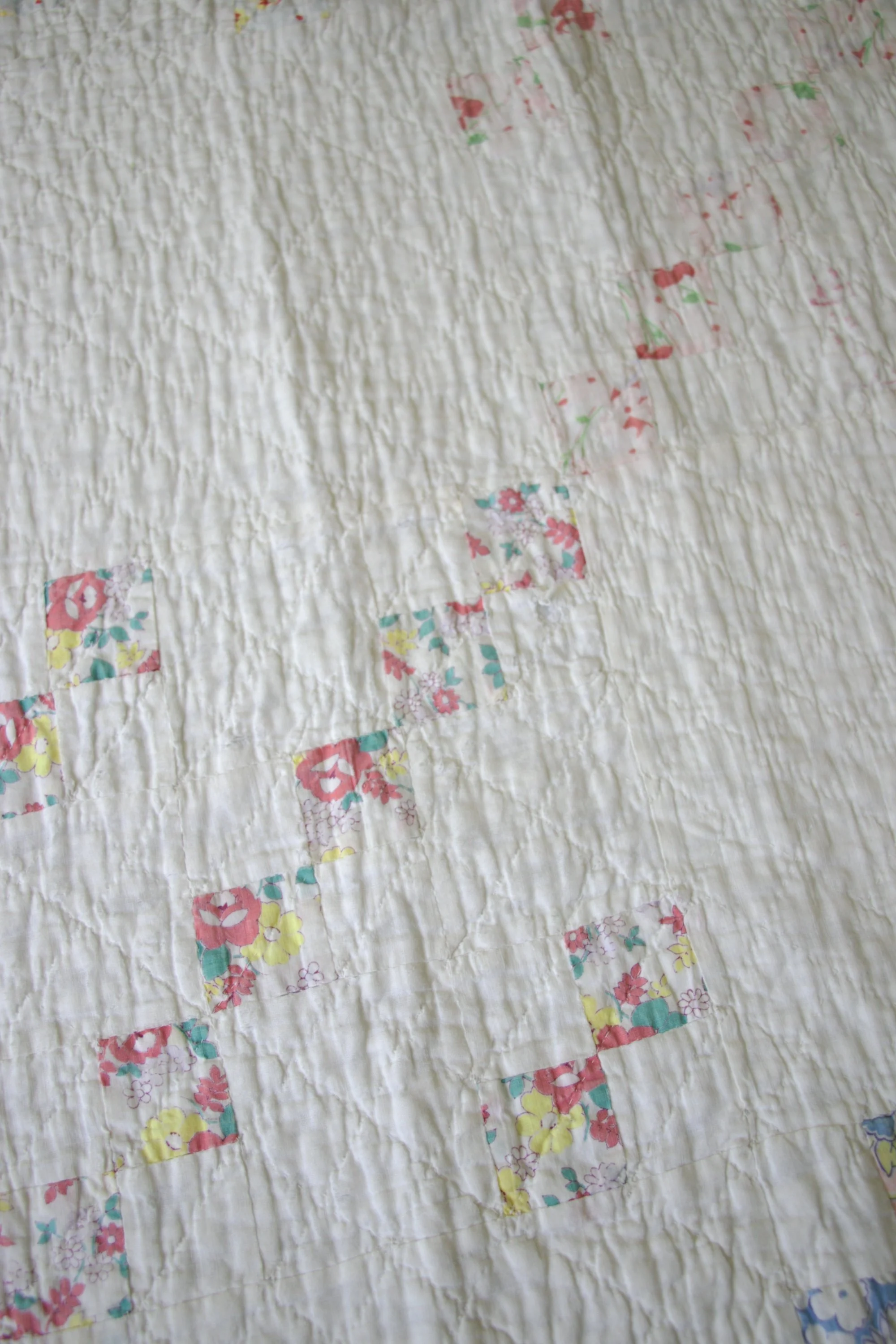
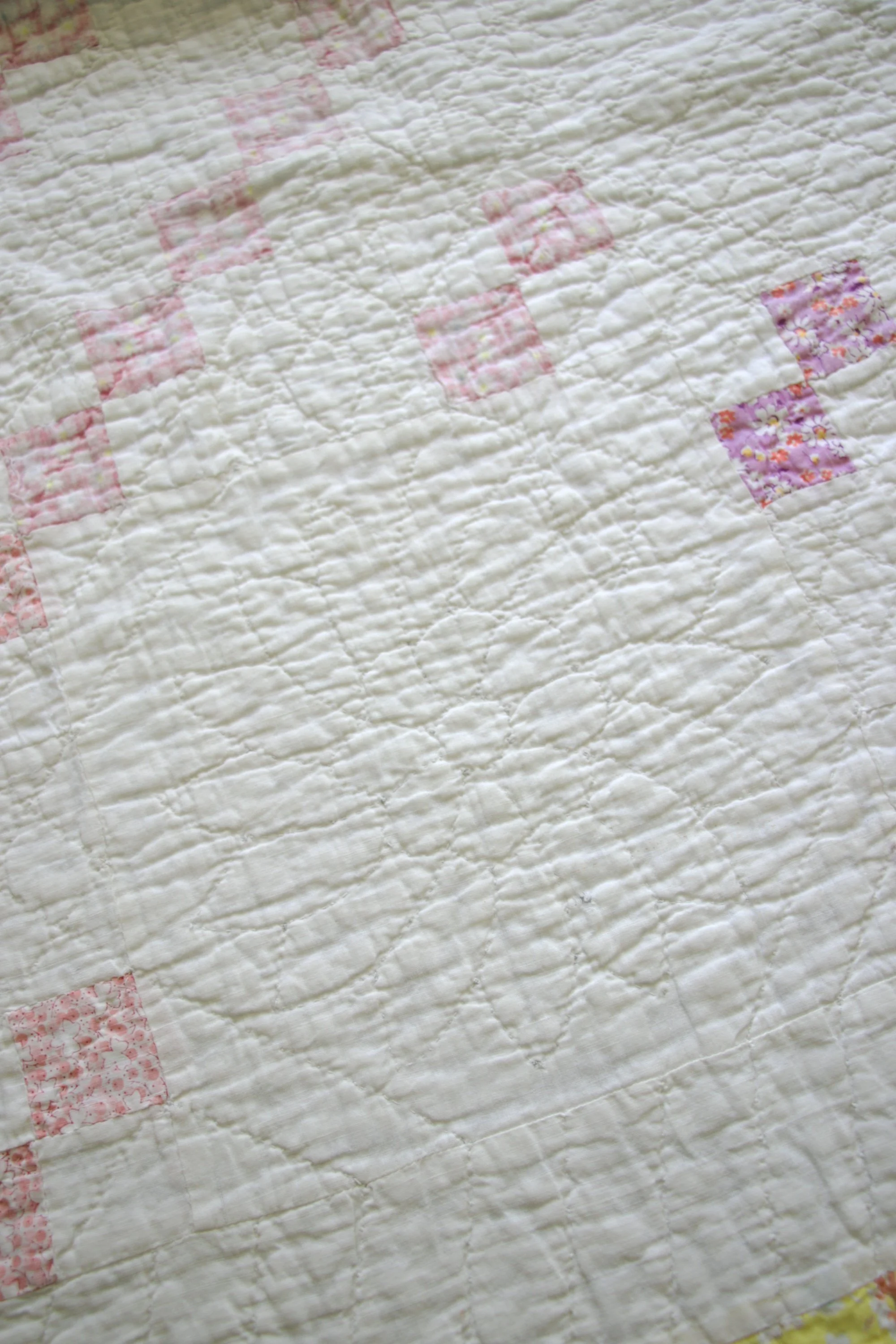
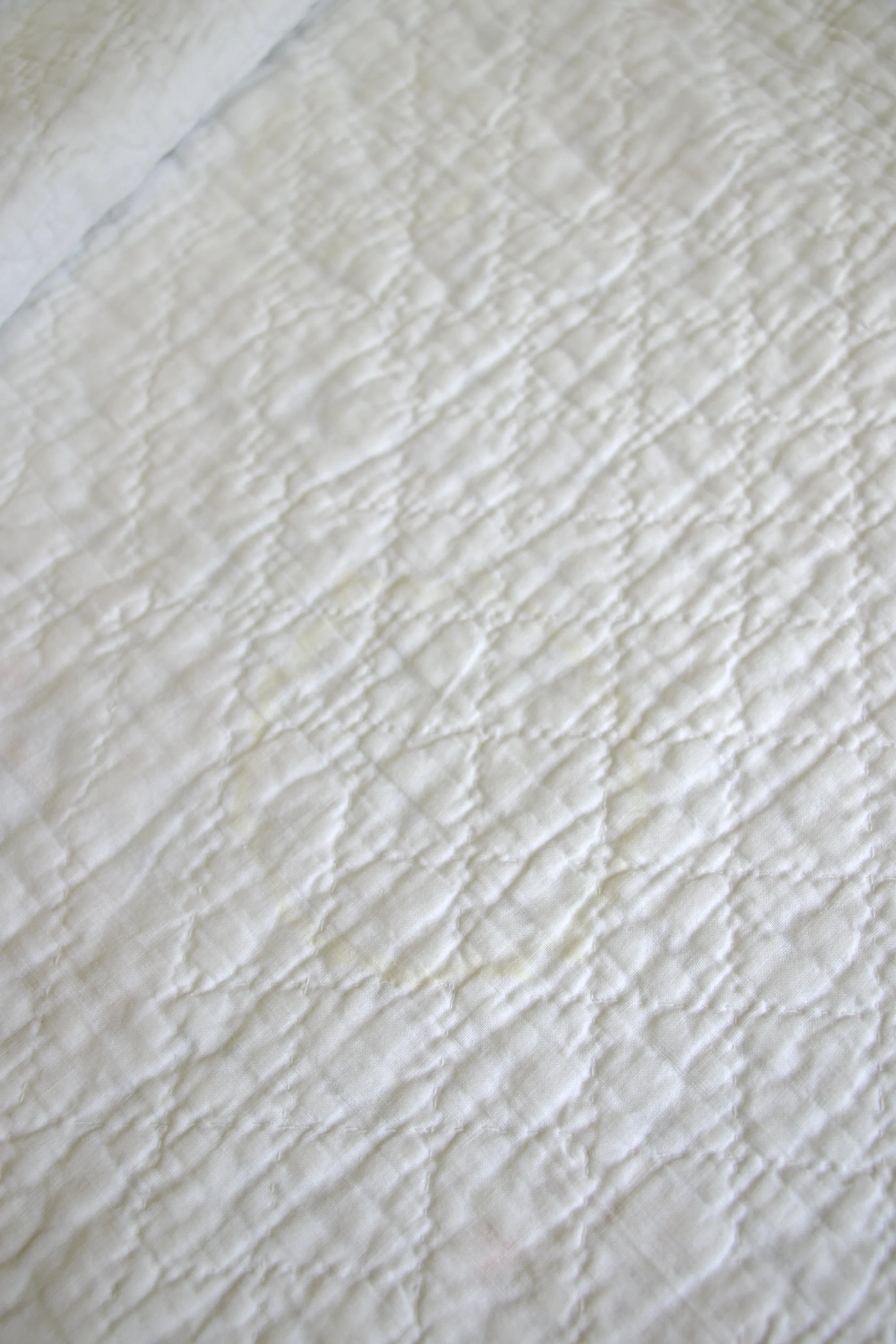
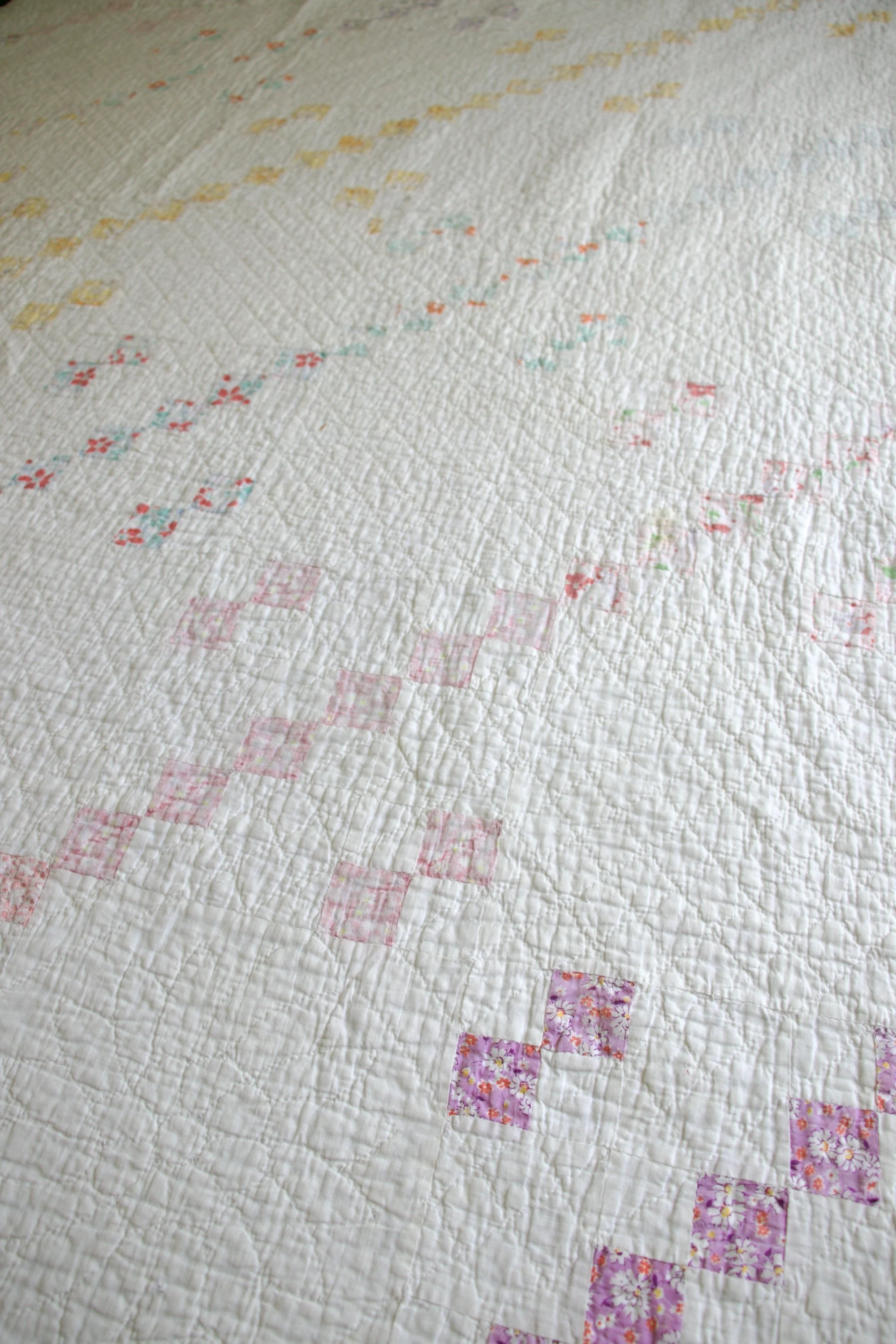
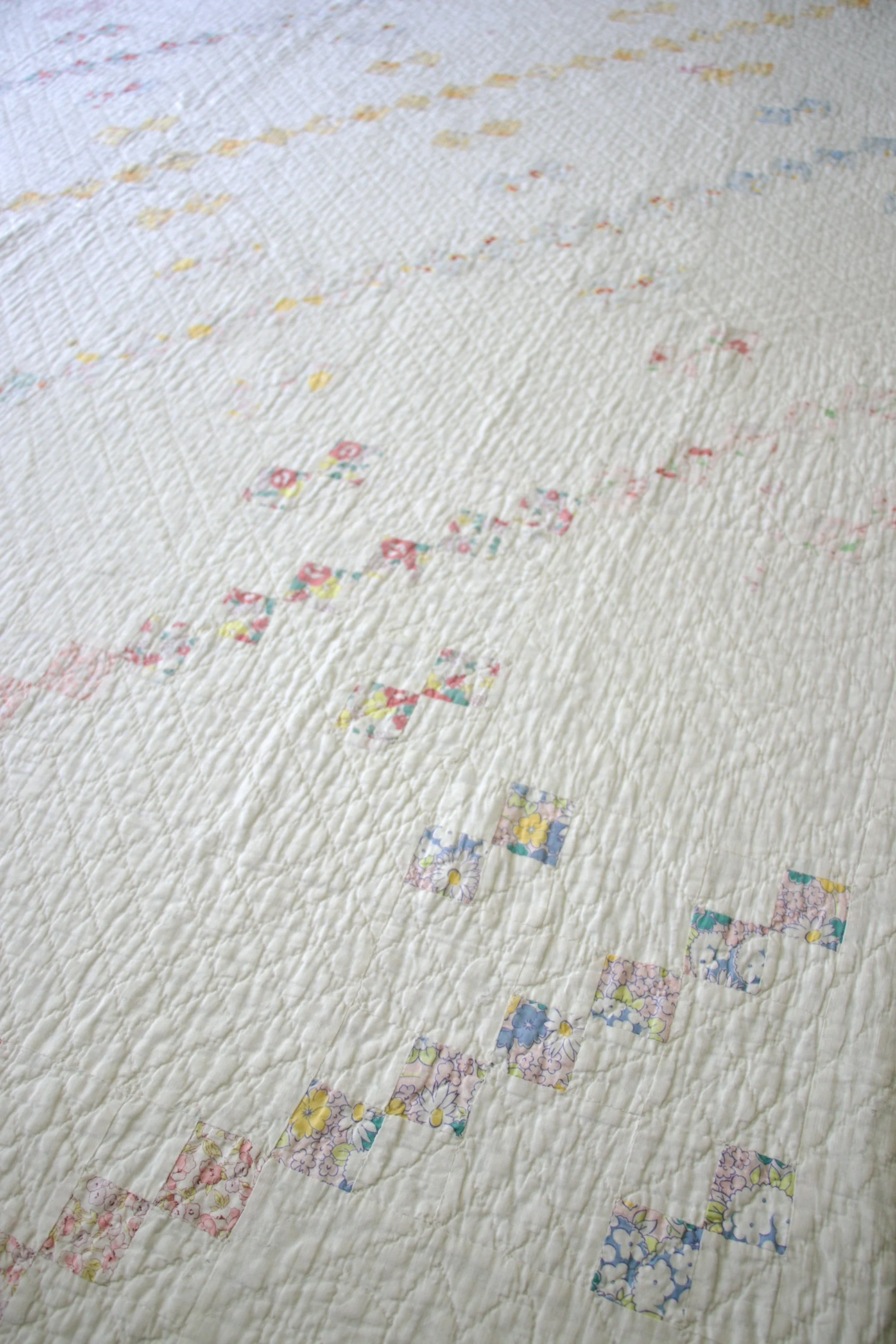
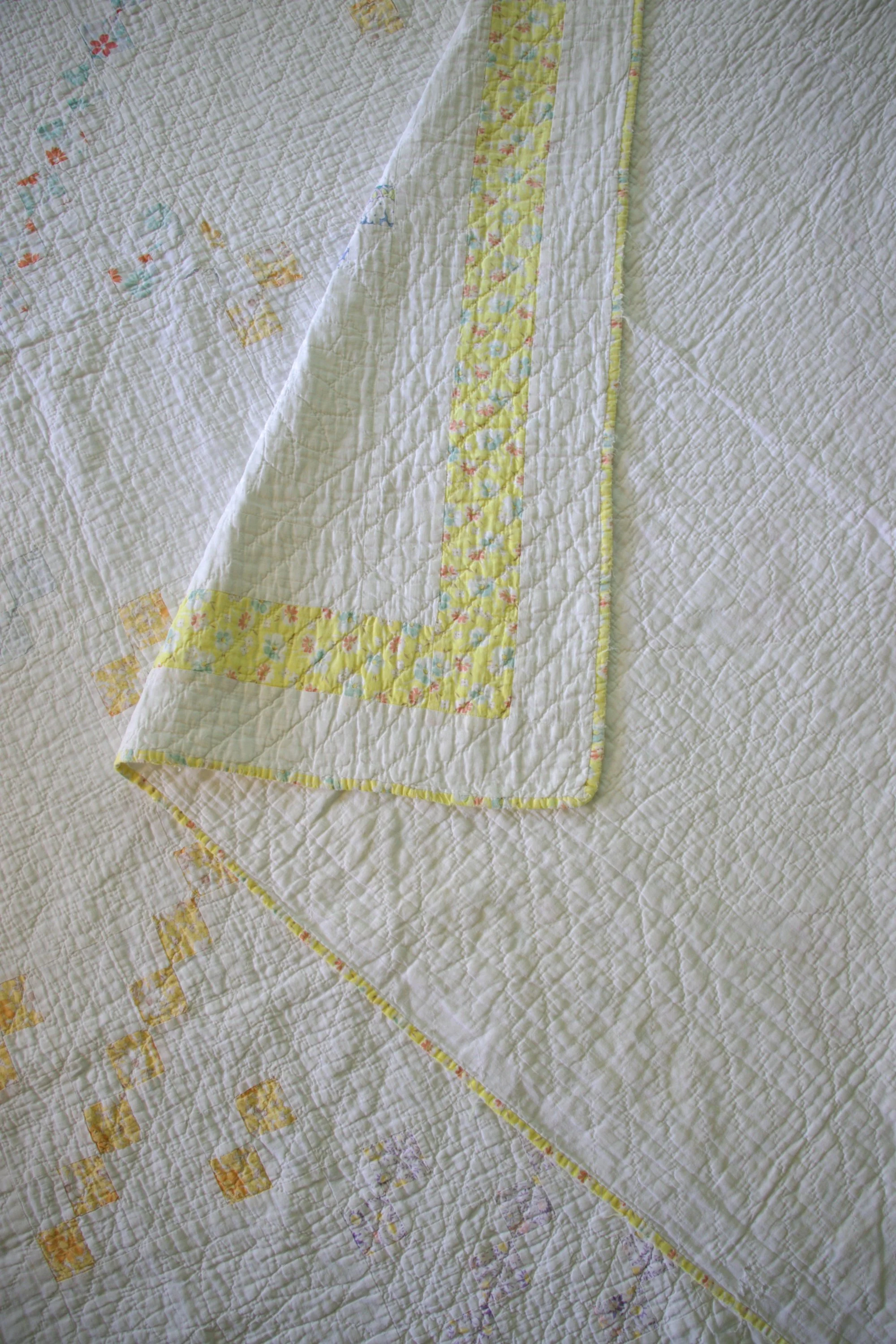
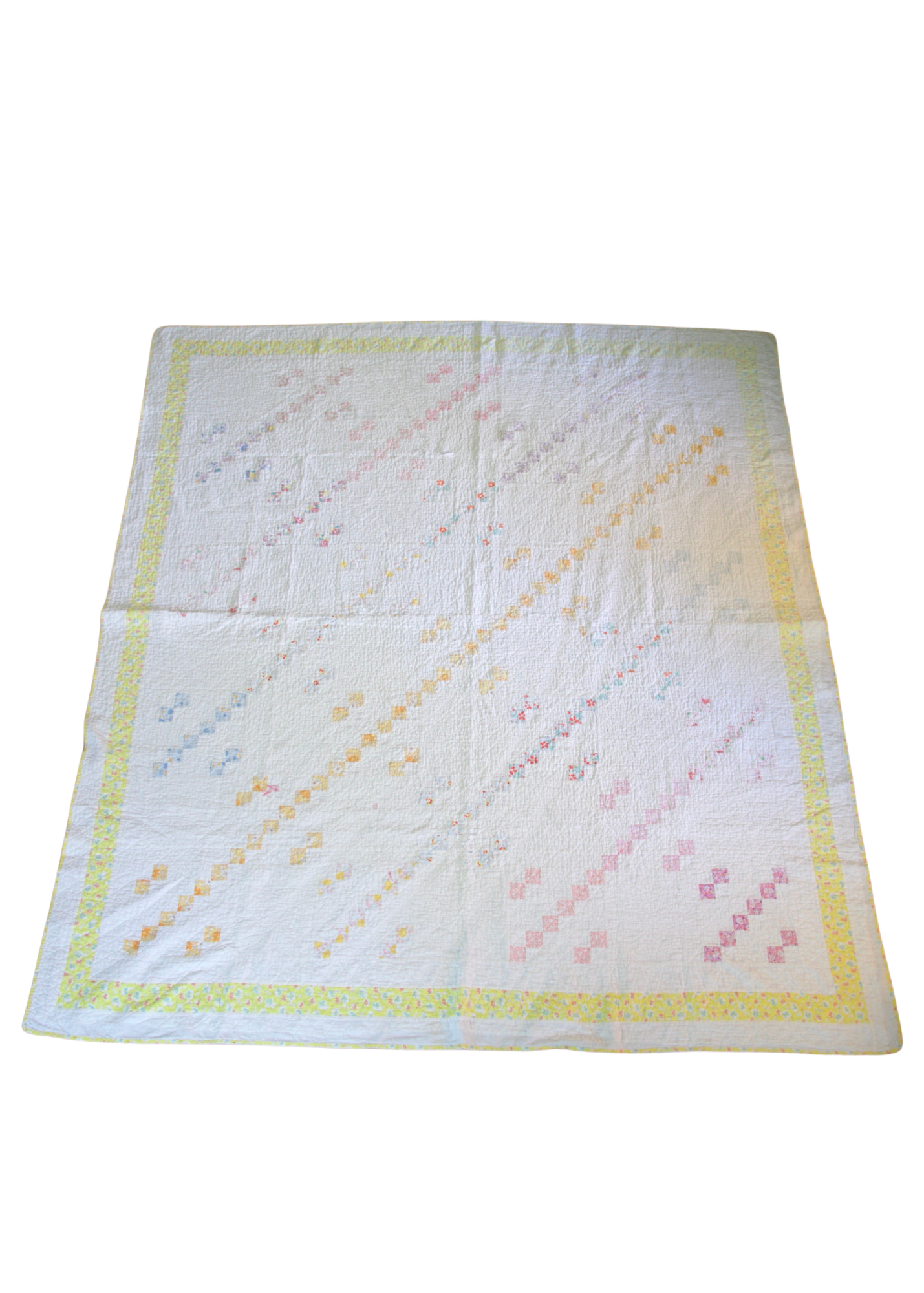
Hand pieced and hand quilted, this antique quilt is worked in a delicate palette of blush pink, soft ivory, and lavender plaid. The piecing forms a nine patch arrangement that creates movement across the quilt top, while graceful hand quilting in curved lines softens the geometry and adds rich texture throughout. A combination of solid cottons, plaids, and printed fabrics gives the quilt a homespun, deeply personal quality.
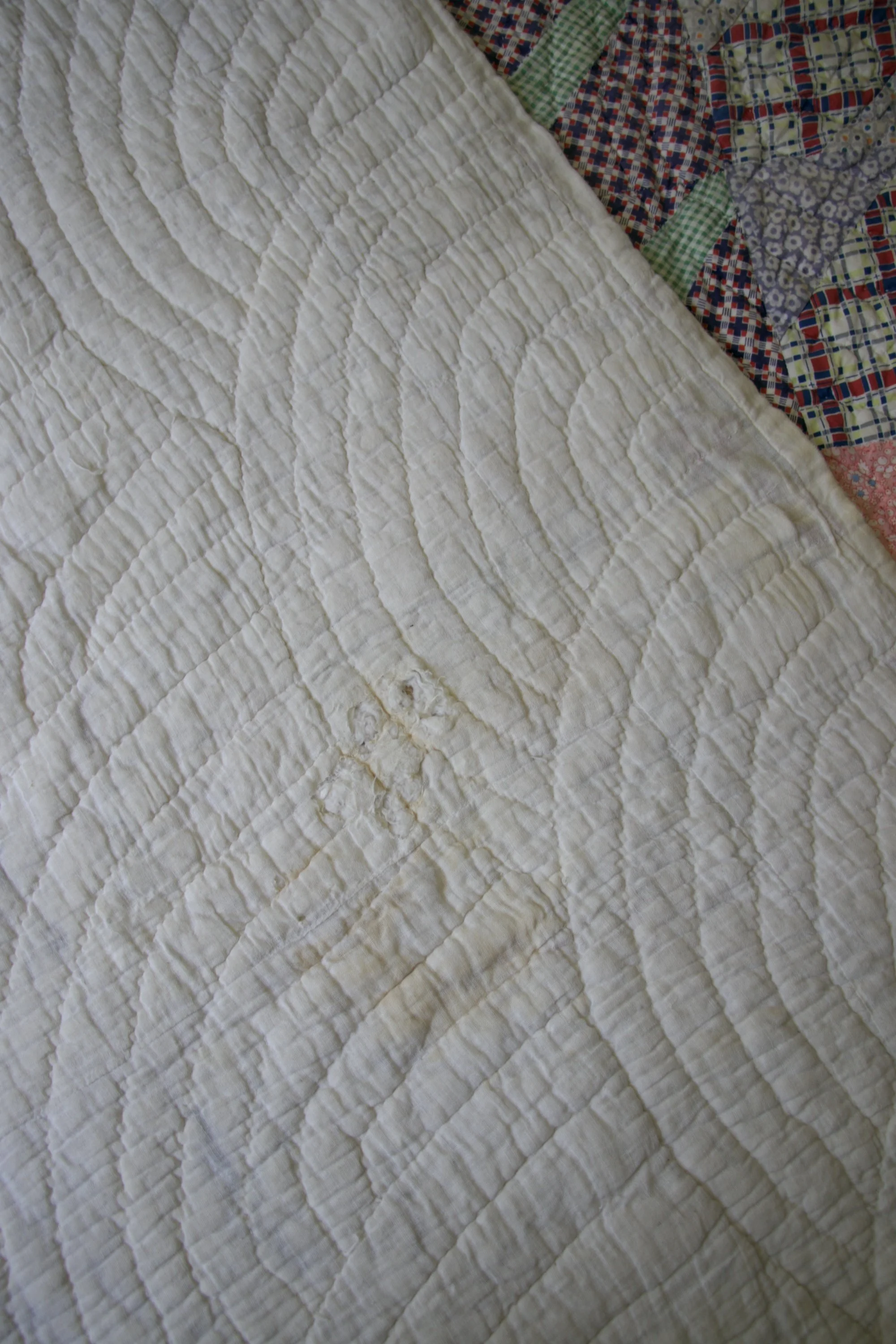
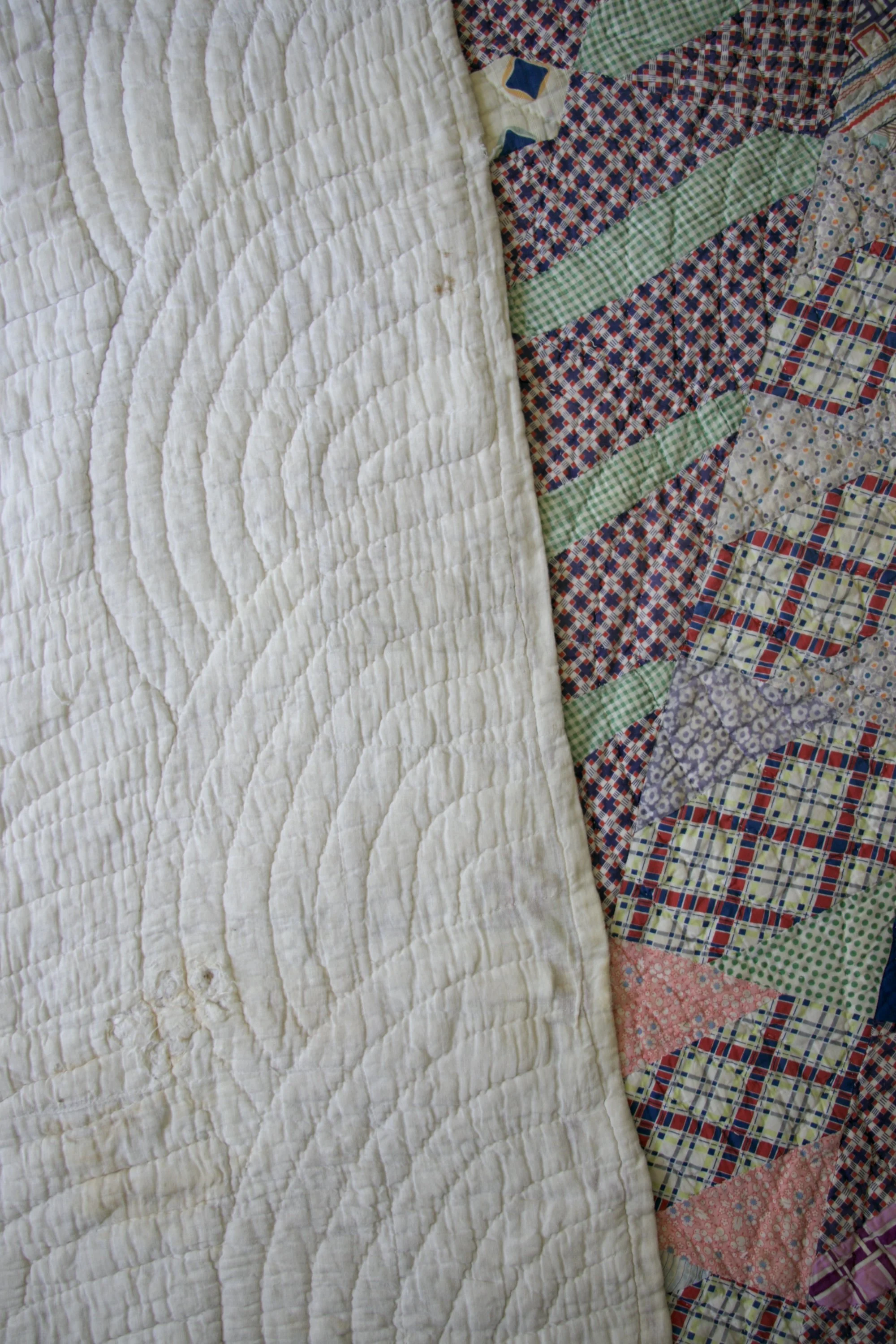
This example shows substantial age and wear, including scattered fabric loss, thinning, and visible mends or weakened areas, all consistent with a quilt that was heavily used and cherished over time. Its worn condition speaks to its long life in the home and gives it the unmistakable character of a true survivor.
Historical Period
Likely late 19th century to early 20th century, with many characteristics commonly associated with 1880s–1910s American utility quilts.
About the Pattern
The Nine Patch is one of the most enduring and foundational patterns in American quiltmaking, created from a simple grid of nine squares arranged three across and three down. Valued for both its versatility and economy, the pattern could be made from small scraps, shirtings, or dress prints, and was often adapted into larger chain or lattice arrangements. Its balanced geometry and clean structure made it a favorite for both everyday utility quilts and more decorative compositions.
Fabric Notes
The quilt appears to be made primarily from cotton fabrics, including a mixture of solids, plaids, and lightweight printed dress cottons. The lavender plaid pieces and blush-toned shirting-style fabrics suggest the maker was working from available household textiles and garment remnants, a common practice in domestic quiltmaking. The soft fading and wear throughout are consistent with age, repeated laundering, and long-term use.
—————————————————————————————————-
*Disclaimer: Please remember that you’re purchasing a quilt that is decades—sometimes well over a century—old. Signs of age are part of their story. I do my best to photograph and describe any condition issues honestly.
You may find:
• Fading or discoloration
• Small stains or age spots
• Light wear, thinning, or fabric repairs
• Minor imperfections consistent with age and use
Each of these are little piece of American history—stitched by hand from cotton, feed sacks, flour sacks, clothing, and treasured scraps by women who made beauty from what they had. Every quilt carries a story, and it’s been an honor to help preserve these heirlooms for the next generation.
Circa 1890–1910
Medium Weight
Size: 62”x65”
Pattern: Nine Patch
Condition: This quilt is in well-loved antique condition with notable fabric loss, fraying, thinning, and age-related wear throughout. It is best appreciated as a decorative textile, study piece, or collection quilt rather than for heavy everyday use.
Hand pieced and hand quilted, this antique quilt is worked in a delicate palette of blush pink, soft ivory, and lavender plaid. The piecing forms a nine patch arrangement that creates movement across the quilt top, while graceful hand quilting in curved lines softens the geometry and adds rich texture throughout. A combination of solid cottons, plaids, and printed fabrics gives the quilt a homespun, deeply personal quality.
This example shows substantial age and wear, including scattered fabric loss, thinning, and visible mends or weakened areas, all consistent with a quilt that was heavily used and cherished over time. Its worn condition speaks to its long life in the home and gives it the unmistakable character of a true survivor.
Historical Period
Likely late 19th century to early 20th century, with many characteristics commonly associated with 1880s–1910s American utility quilts.
About the Pattern
The Nine Patch is one of the most enduring and foundational patterns in American quiltmaking, created from a simple grid of nine squares arranged three across and three down. Valued for both its versatility and economy, the pattern could be made from small scraps, shirtings, or dress prints, and was often adapted into larger chain or lattice arrangements. Its balanced geometry and clean structure made it a favorite for both everyday utility quilts and more decorative compositions.
Fabric Notes
The quilt appears to be made primarily from cotton fabrics, including a mixture of solids, plaids, and lightweight printed dress cottons. The lavender plaid pieces and blush-toned shirting-style fabrics suggest the maker was working from available household textiles and garment remnants, a common practice in domestic quiltmaking. The soft fading and wear throughout are consistent with age, repeated laundering, and long-term use.
—————————————————————————————————-
*Disclaimer: Please remember that you’re purchasing a quilt that is decades—sometimes well over a century—old. Signs of age are part of their story. I do my best to photograph and describe any condition issues honestly.
You may find:
• Fading or discoloration
• Small stains or age spots
• Light wear, thinning, or fabric repairs
• Minor imperfections consistent with age and use
Each of these are little piece of American history—stitched by hand from cotton, feed sacks, flour sacks, clothing, and treasured scraps by women who made beauty from what they had. Every quilt carries a story, and it’s been an honor to help preserve these heirlooms for the next generation.

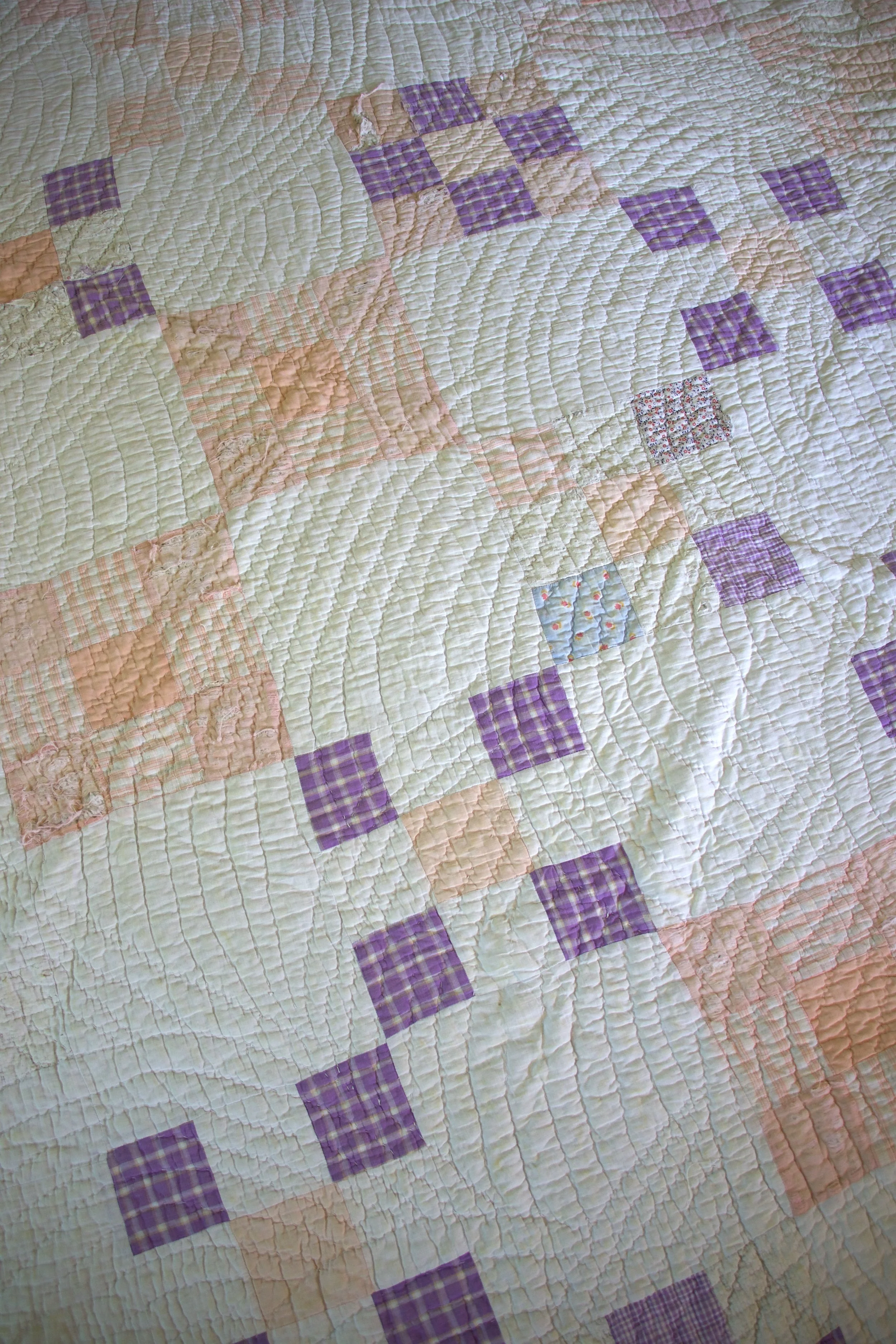 Image 1 of 11
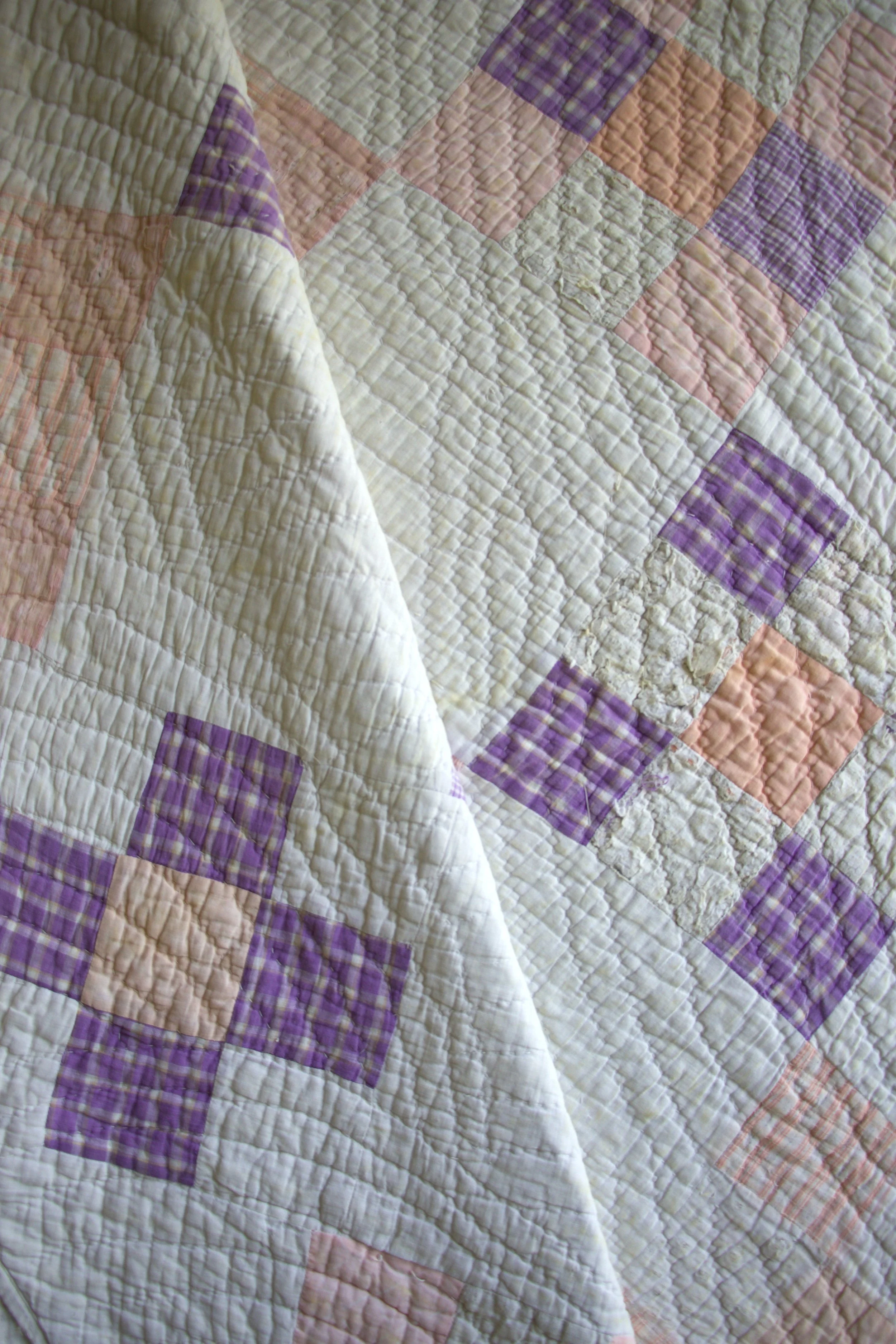 Image 2 of 11
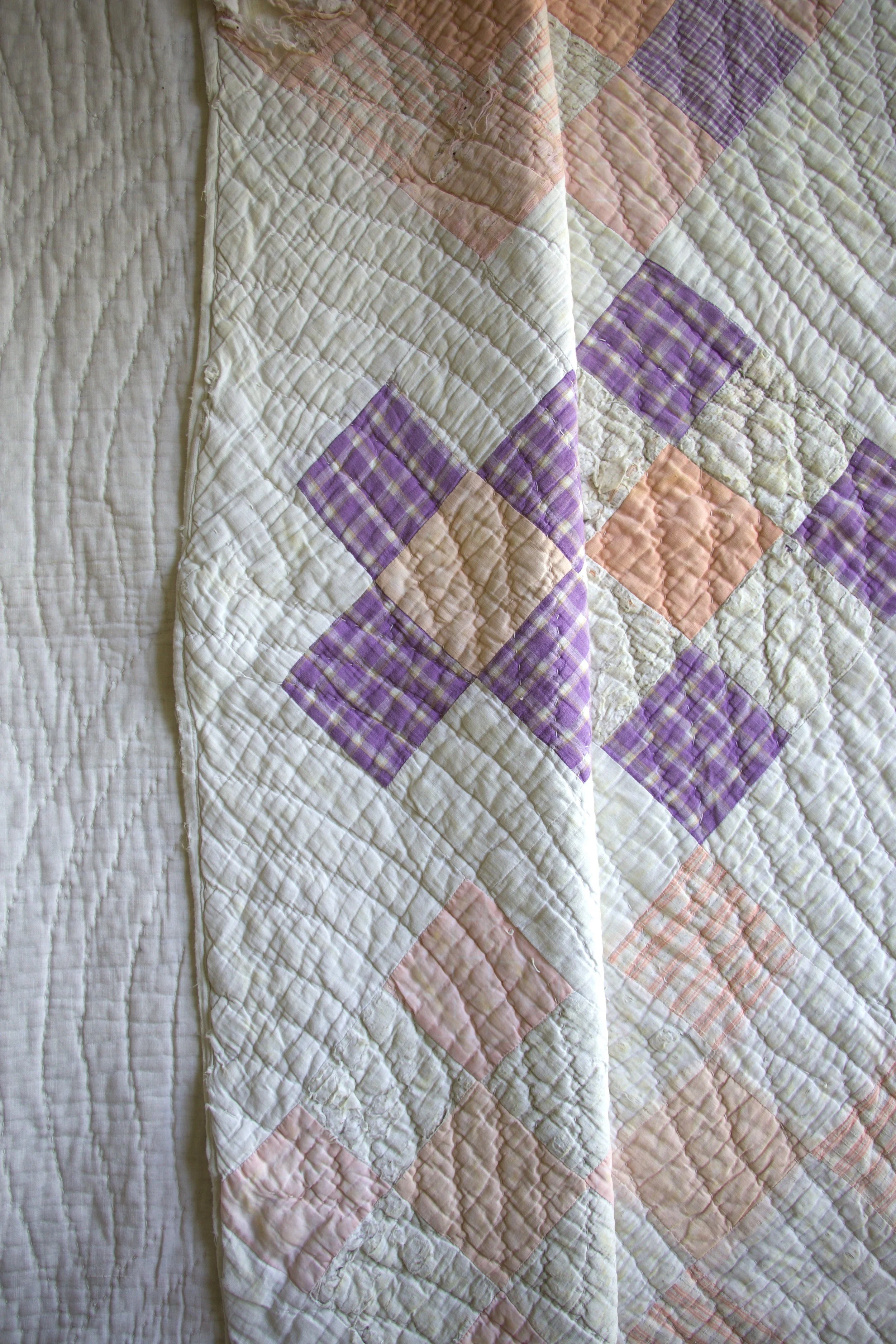 Image 3 of 11
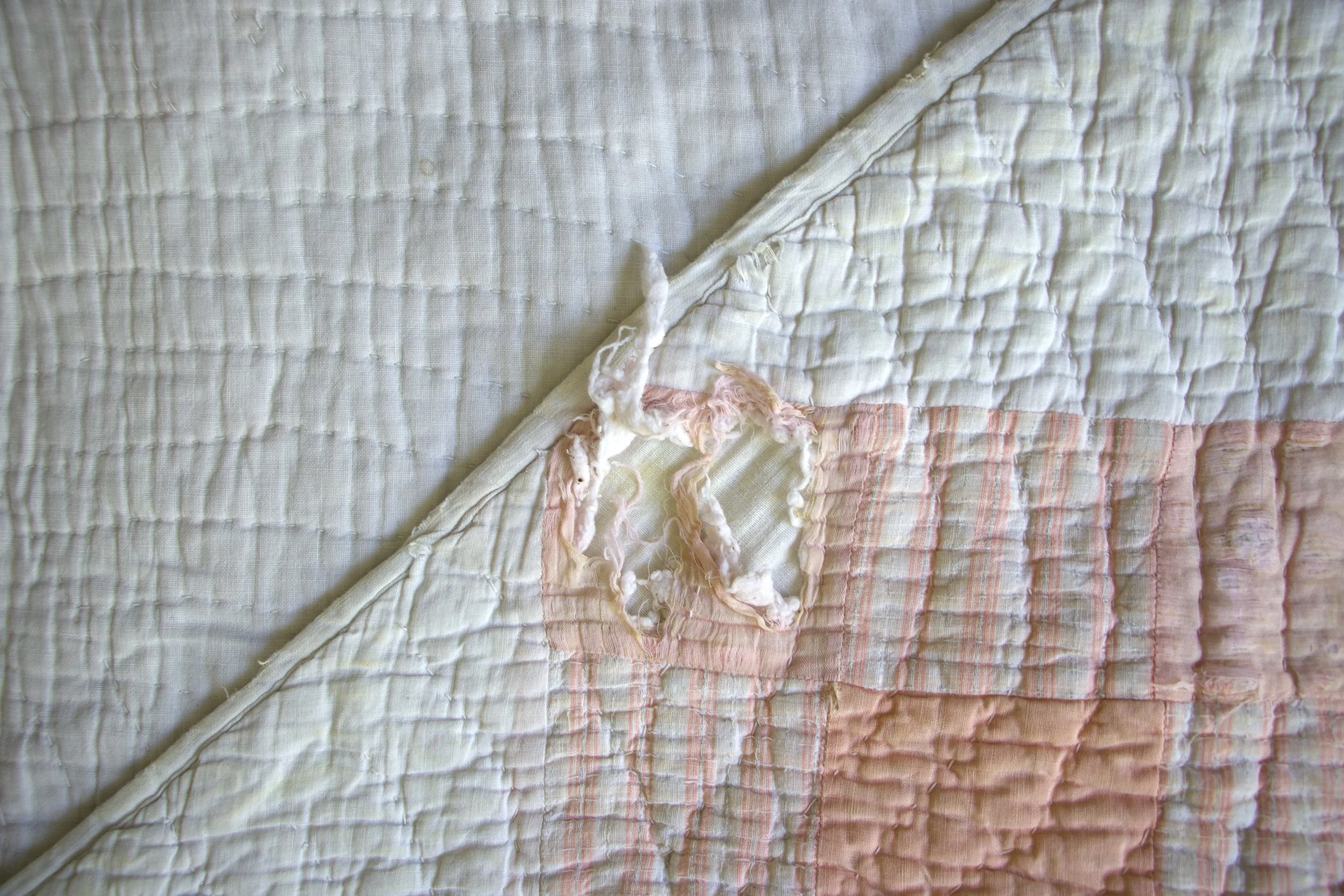 Image 4 of 11
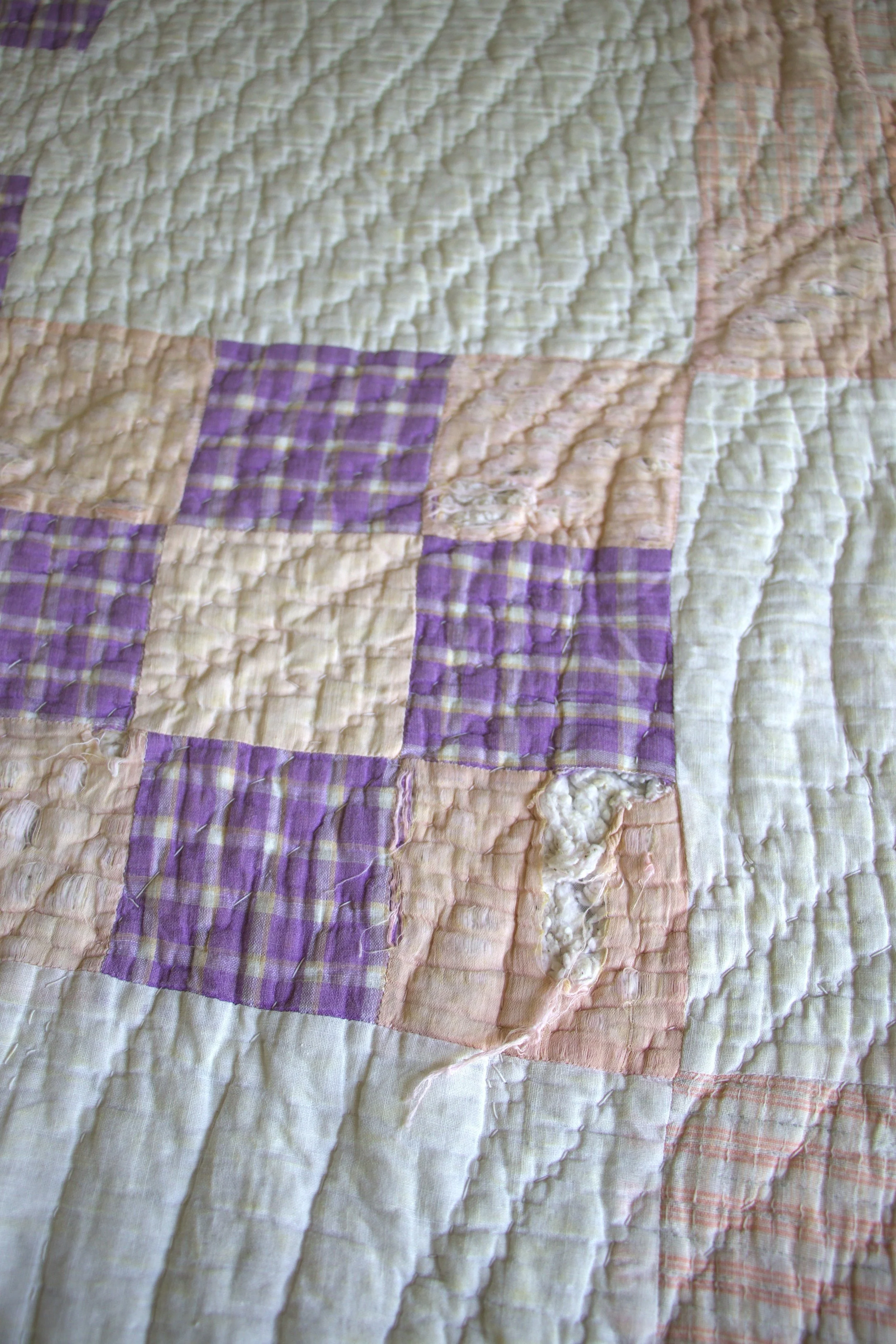 Image 5 of 11
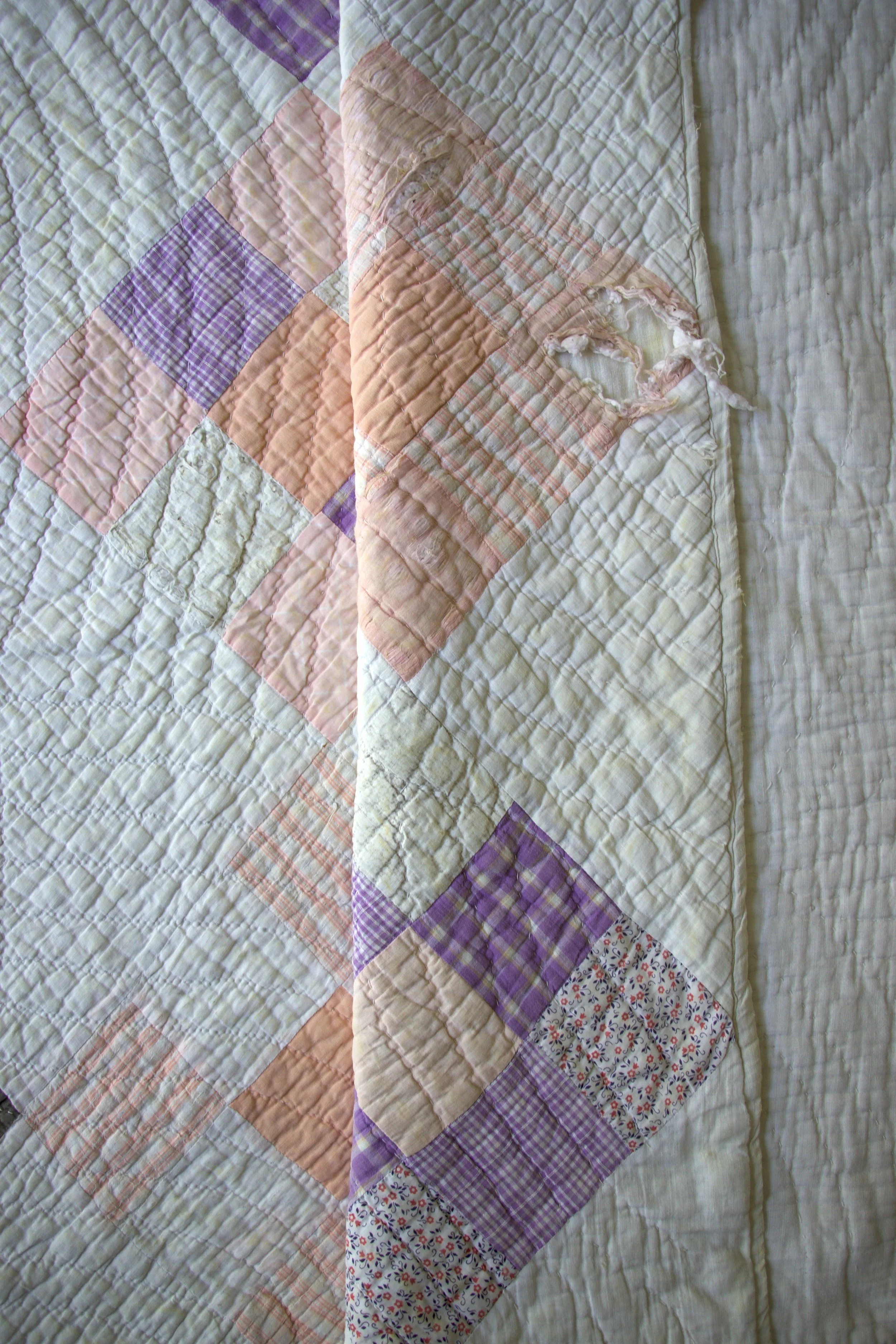 Image 6 of 11
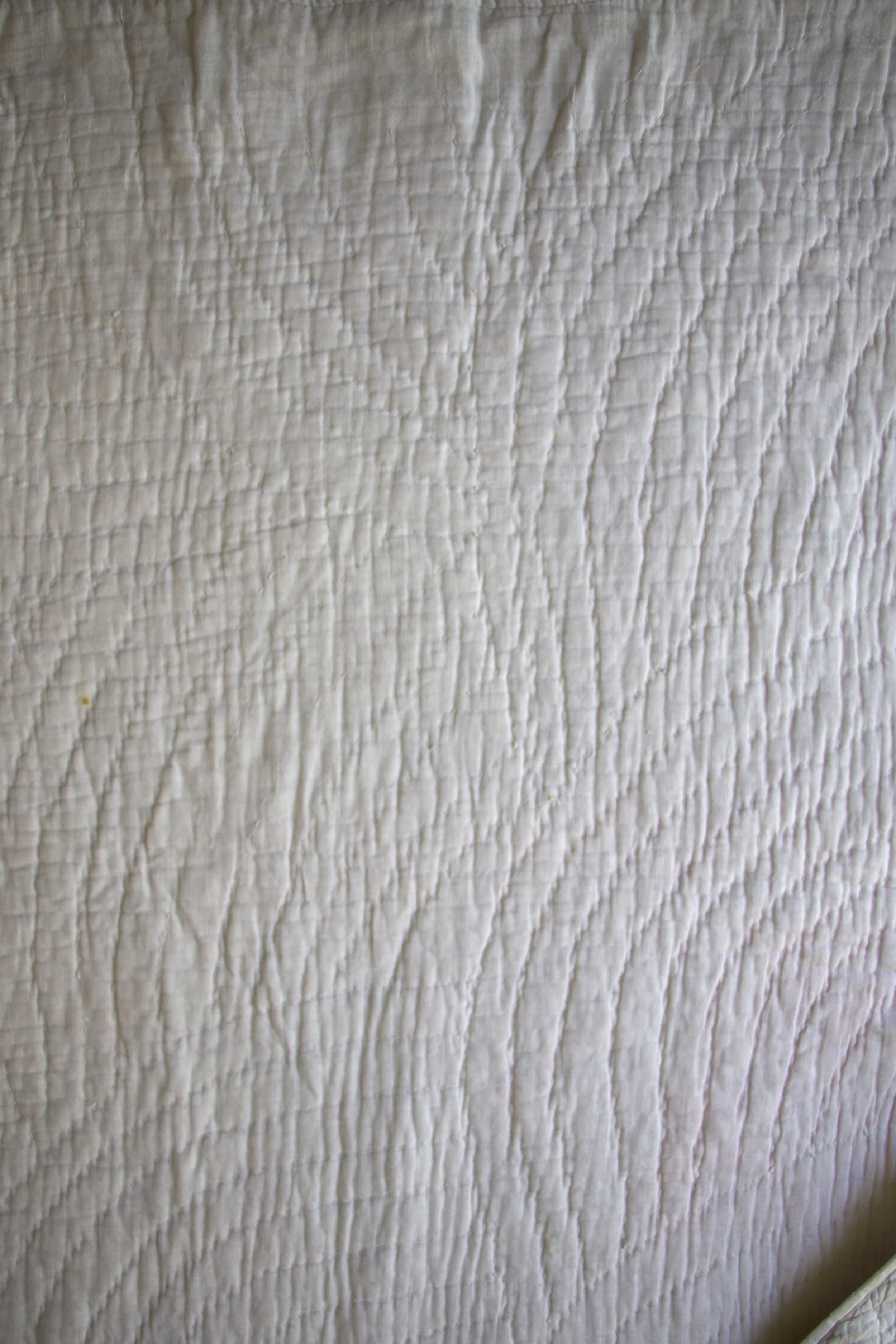 Image 7 of 11
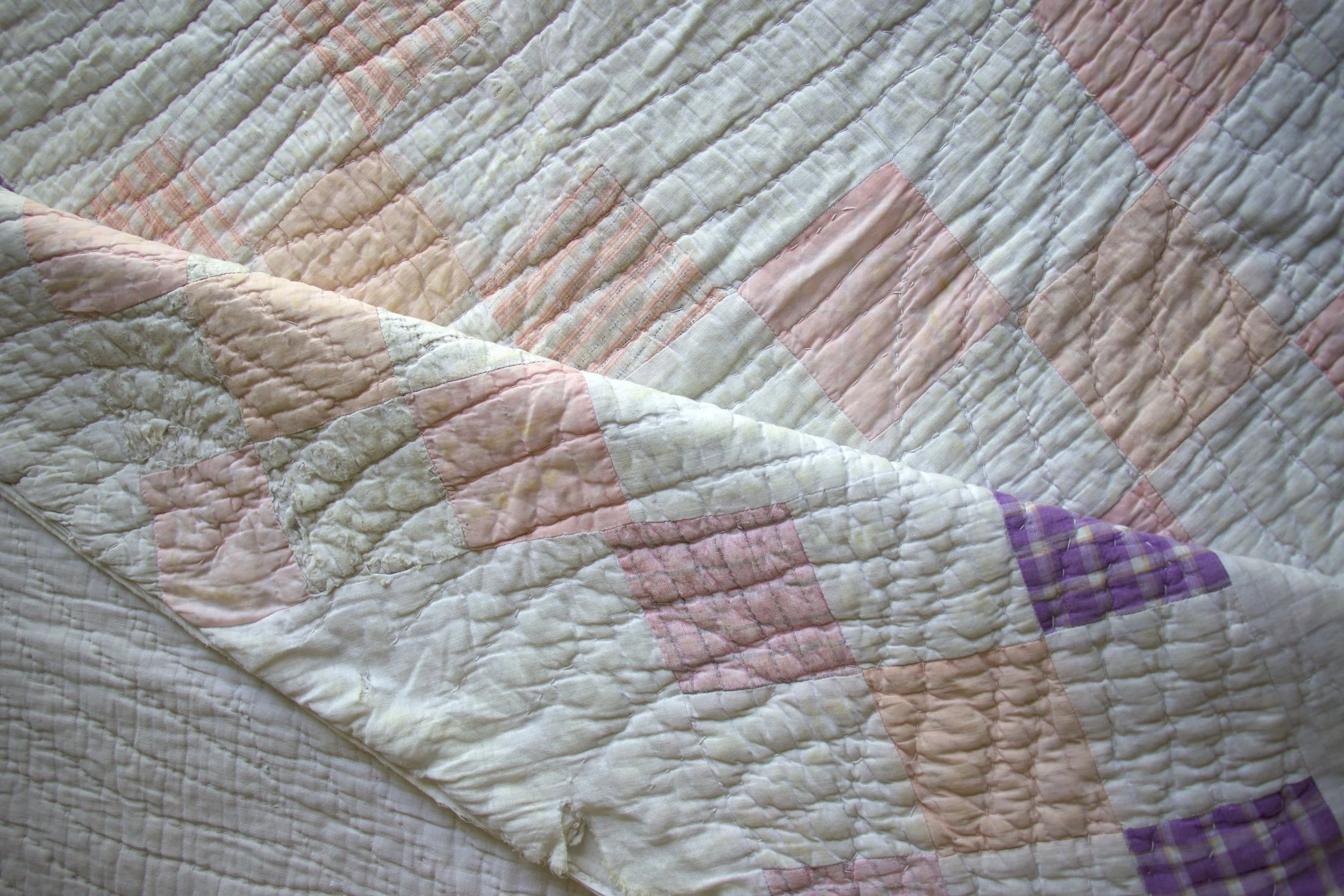 Image 8 of 11
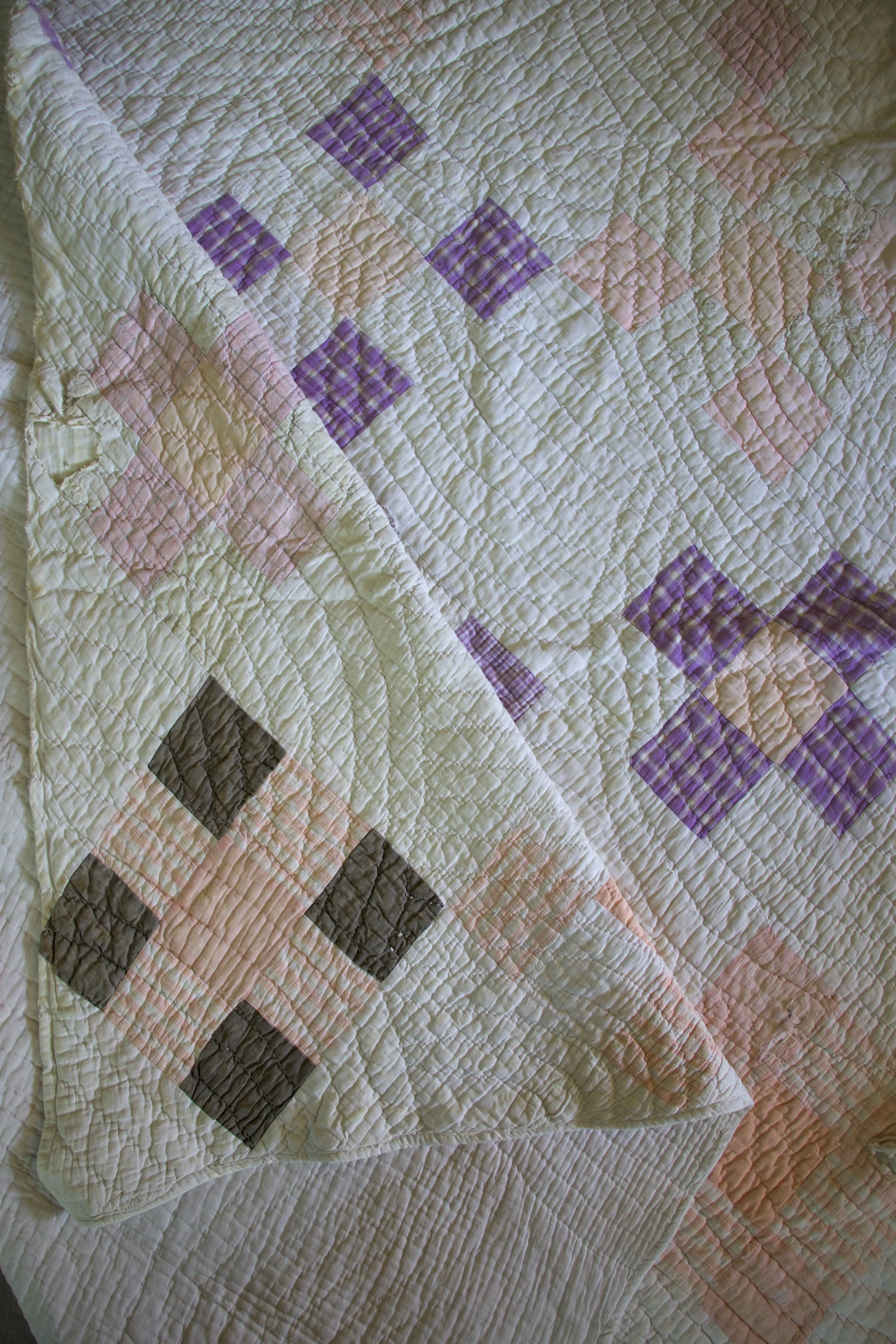 Image 9 of 11
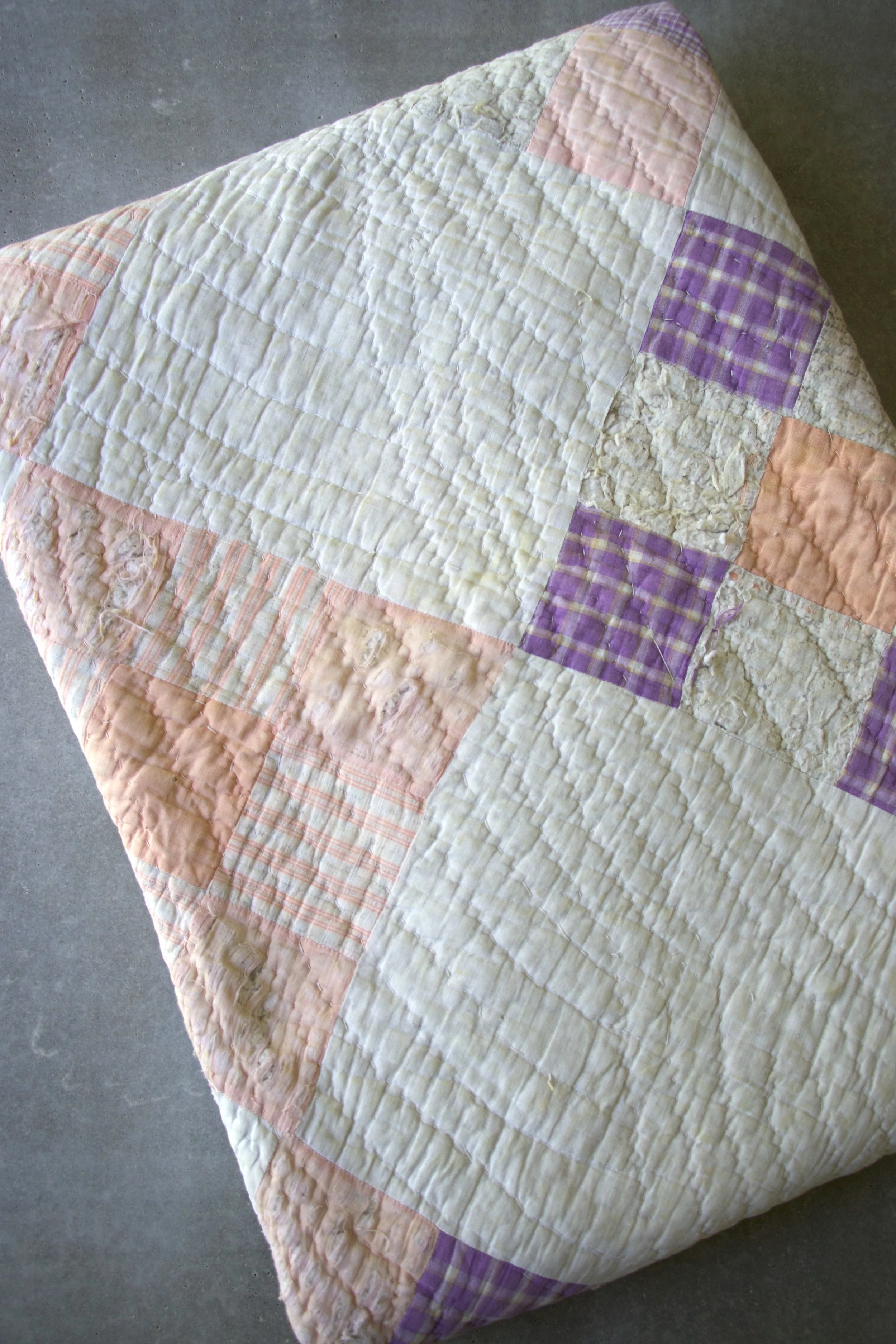 Image 10 of 11
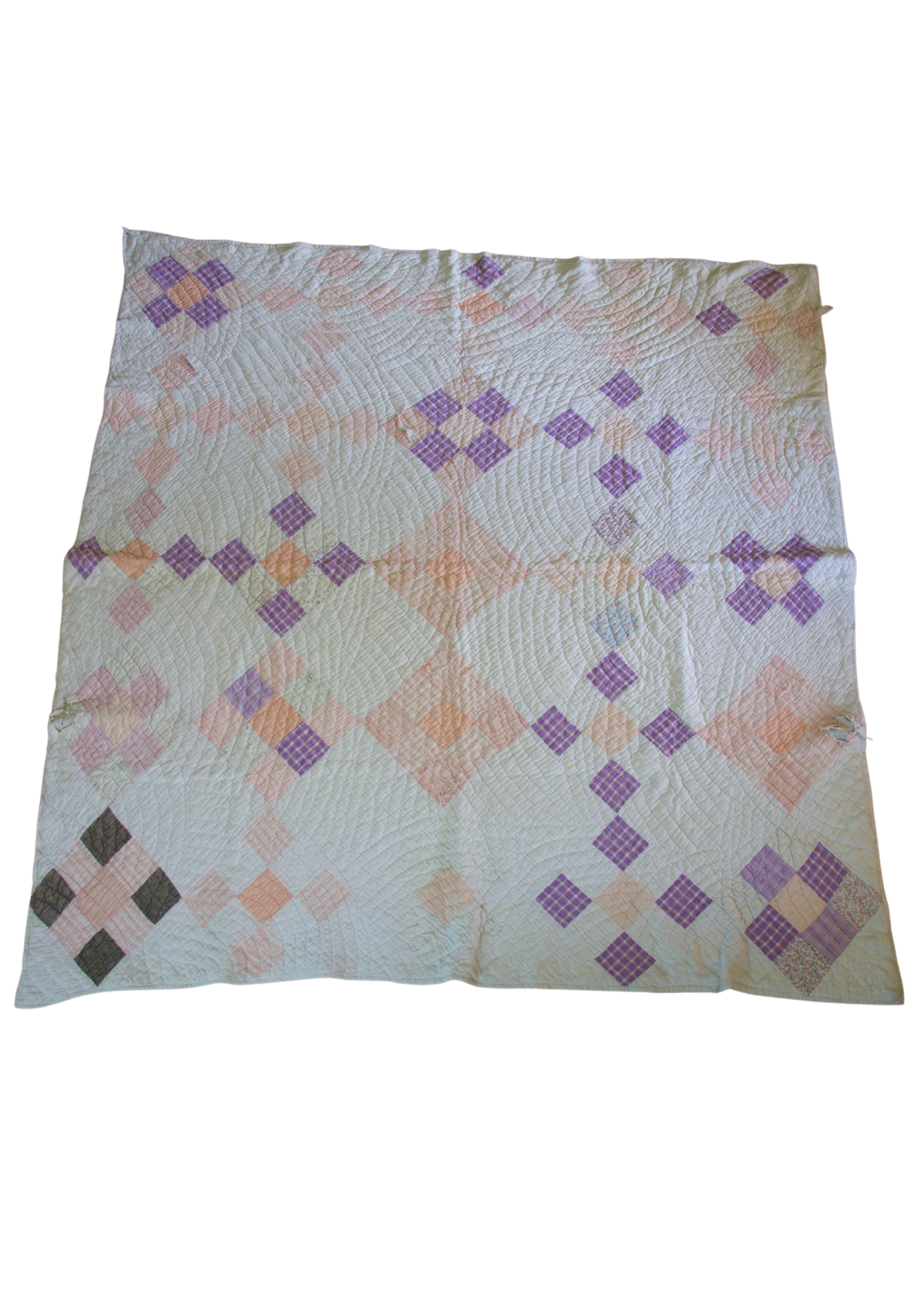 Image 11 of 11